

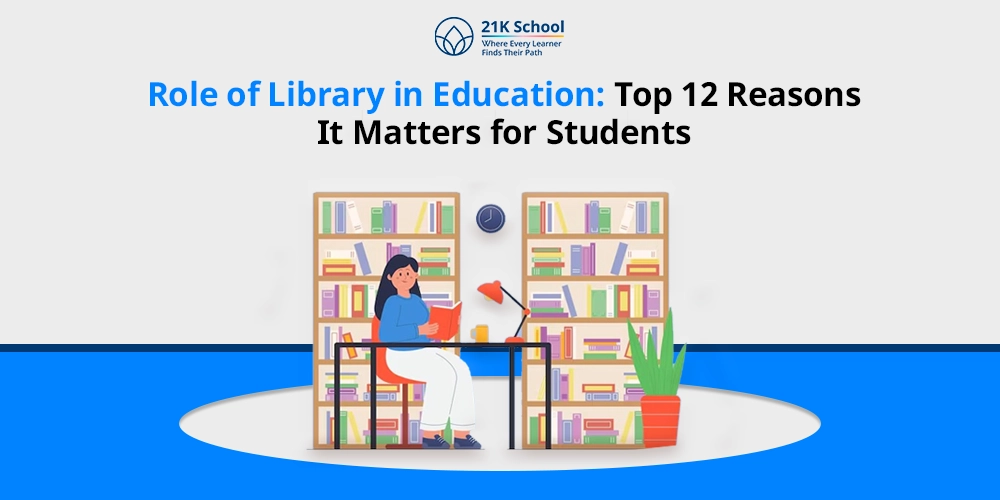
Do you know why the library is generally considered as one of the essentials in education?
The library plays a crucial role in the education system, which is a source of knowledge, inspiration, and learning. It gives the students and teachers broad access to numerous resources and books, journals, digital learning information and technology that improve teaching and learning.
In addition to containing information, libraries also encourage reading, research abilities and critical thinking. They provide an engaging space in which students get a chance to pursue concepts, enhance creativity, and acquire lifelong learning skills.
The existing digital world is also turning the library into a learning centre that is exciting, striking the balance between the old and the emerging information technology. On the whole, libraries are important in the formation of a well-rounded person throughout the lifelong learning process.
Contents
- What is the Role of the Library in Education: Top 12
- 1. Encourage Reading Habits
- 2. Enhance Literacy
- 3. Enhance Academic Achievement
- 4. Promotes Critical Thinking Skills
- 5. Promotes Lifelong Learning
- 6. Helps in Technology Integration
- 7. Information Literacy
- 8. Promotes Collaboration
- 9. Promotes Research Skills
- 10. Skill Development
- 11. Curriculum Integration
- 12. Develops Cultural Awareness
- Final Thought
What is the Role of the Library in Education: Top 12
Libraries are associated not only with the students, but they are also useful to teachers.
Libraries assist in fostering reading practices, lifelong Learning, literacy, access to information and so on. These are the roles played by libraries in education.
1. Encourage Reading Habits
Libraries are important in nurturing the affection of reading in students. Libraries introduce learners to curiosity and encourage them to read other than textbooks by getting them access to a large range of books, magazines, journals, and digital materials.
Cosy reading environments and reading programmes are also additional factors that help students in the development of a reading habit that trains the comprehension and vocabulary.
2. Enhance Literacy
Libraries facilitate every kind of literacy reading, writing, digital and information literacy. They provide the materials at different reading levels and interests, assisting the students in enhancing their language and communication skills.
Another way that librarians can support struggling readers is by planning literacy programmes and workshops to enhance the educational process of all learners.
3. Enhance Academic Achievement
Academic performance is somehow related to the availability of a well-endowed library. Libraries provide textbooks, reference sources, previous papers, and research databases, which help the students in doing the assignments and practising exams.
Silent study areas and the professional advice of the librarians would also help in isolated and autonomous learning.
4. Promotes Critical Thinking Skills
Libraries also encourage critical thinking skills and information analysis, contrary to taking information at face value. Libraries, as well, allow learners to compare and judge and synthesise ideas since they expose learners to a variety of sources and views.
Librarians also teach the process of learning how to distinguish credible sources from unreliable ones, that is very important in the world of information in which we are living today.
5. Promotes Lifelong Learning
The libraries instil a spirit of lifelong learning that goes beyond school. They also provide means and chances of self-growth, competencies development and gaining new interests of any age.
Libraries are always lifelong learning partners, whether one wants to learn a new language, discover the world of science, or study something about themselves.
6. Helps in Technology Integration
The contemporary libraries incorporate technology in the learning process through the provision of access to computers and the internet, e-books, as well as online databases. They impart the digital literacy required in the modern world in research and communication.
Librarians can also direct the students to make good use of technology by teaching them to work in a digital learning environment and equip them to work in technology-driven industries.
7. Information Literacy
The work of libraries in creating information literacy is to educate students to effectively find, analyse, and utilise the information. Librarians educate students on how to evaluate credibility, reference resources in the appropriate format and how to prevent plagiarism.
These competencies are useful to ensure that students are able to perform effective research and informed decisions in academic, professional and personal situations within society, which encourages responsible and ethical usage of information.
8. Promotes Collaboration
Libraries are shared group learning spaces where the students share project and discussion assignments. Group areas and resources also encourage teamwork and communication and problem-solving skills.
It is also through the libraries that cooperative learning is enhanced, where one learns to share ideas, borrow divergent opinions and learn to relate with others, hence becoming more productive, confident and collaborative learners in learning institutions.
9. Promotes Research Skills
Libraries are key to the acquisition of good research skills. They provide access to reference materials, databases and academic journals. Librarians take students through research processes, including gathering information, processing data and reporting the results.
Such experiences improve critical inquiry, organisation and analytical reasoning, equipping students with intellectual preparation to advanced education, professional research and integrated education.
10. Skill Development
Libraries are useful in developing the necessary academic, occupational and personal skills in learners. They conduct writing workshops, communication workshops, digital literacy workshops, and problem-solving workshops.
Creativity and practical knowledge are encouraged in other libraries with makerspaces and innovation studios. These opportunities enable the students to acquire confidence flexibility and realistic skills that can be useful in achieving success both at school and in their professional lives.
11. Curriculum Integration
Libraries also supplement the classroom instruction by corresponding their resources with the school curriculum. The collaboration between teachers and librarians includes the process of creating reading lists, selecting reference materials, and incorporating library sessions into the lesson.
This will make sure that the students have access to other learning materials that bring about a deeper insight, a solidification of what is taught in the classroom and will bring a richer and more holistic learning experience.
12. Develops Cultural Awareness
Libraries enhance cultural awareness by stocking books and media of other cultures and traditions. They carry cultural shows, exhibitions and events that promote respect to divergent views.
Multicultural literature exposure makes students understand the value of diversity, empathy, and inclusive learning. This brings in understanding of the world and equips learners to co-exist in a multicultural world.
Final Thought
The libraries have an important role that cannot be omitted in the education sector. They have been used as knowledge centres aiding students, teachers, and their research works by providing them with a broad array of learning strategies.
In addition to the fact that libraries are book repositories, libraries contribute to the development of the sense of creativity and curiosity and independent thinking. They help the learners to gain the required academic and life skills such as reading, research, problem-solving and information literacy.
The libraries of the modern world have become digital learning libraries that are open to technology and improve teamwork and innovation.
Libraries still to this day are at the centre of any learning institution and the centre of an educated society with cultural awareness, lifelong learning, and intellectual development.

You may also want to read