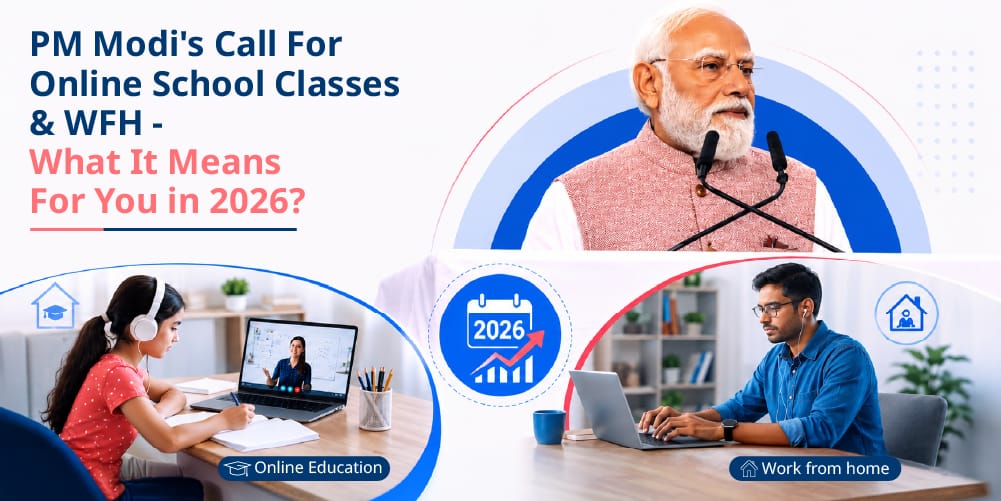
PM Modi's Call for Online School Classes & WFH - What It Means for You in 2026?
 Written byAnkita SinghaContent Specialist
Last modified: Jul 22, 2026 12 min read
On May 11, 2026, speaking at the Sardardham Hostel inauguration in Vadodara, Gujarat, Prime Minister Narendra Modi asked schools across India to consider shifting to online classes for some time. This is due to "the West Asia conflict" which is one of the major crises of this decade.
So, as a parent/ guardian, do you have the questions like:
- Is my child’s schooling about to change again in 2026?
- Can my child's current school move to hybrid learning ?
To understand the whole scenario, we will go through detailed information including the facts of what was said by our PM Modi, and what it could mean in practice.
What PM Modi actually said on may 11, 2026?
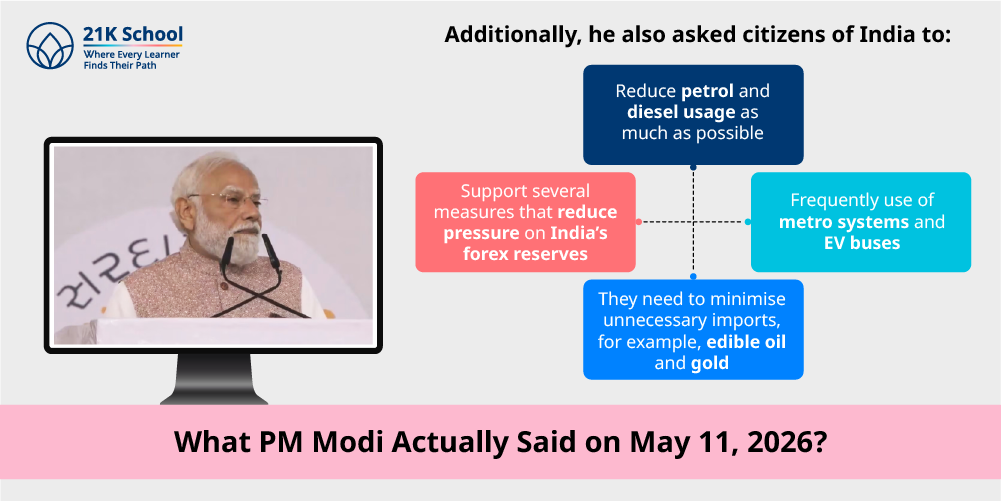
During the Sardardham Hostel inauguration in Vadodara, Prime Minister Narendra Modi addressed the negative impact on the nation’s economic and logistical issues because of the West Asia crisis and the wider US-Iran conflict.
In the speech, he said, there should be arrangements for online classes for some time and both government and private offices should encourage work from home.
However, there is no panic situation because no mandatory guidelines for school closure orders have been issued.
Additionally, he also asked citizens of India to:
- Reduce petrol and diesel usage as much as possible
- Frequent use of metro systems and EV buses
- They need to minimise unnecessary imports, for example, edible oil and gold
- Support several measures that reduce pressure on India's forex reserves
Why this is different from the COVID-era online shift?
Shifting to "online classes" in 2026 is different from the 2020 and 2021 COVID-era online shift.
In the COVID-era, schools simply transferred offline education to online teaching where applications like Zoom and Google Meet were used in critical situations.
However, today India has strengthened the powers of dedicated accredited online school models designed for quality education for each learner.
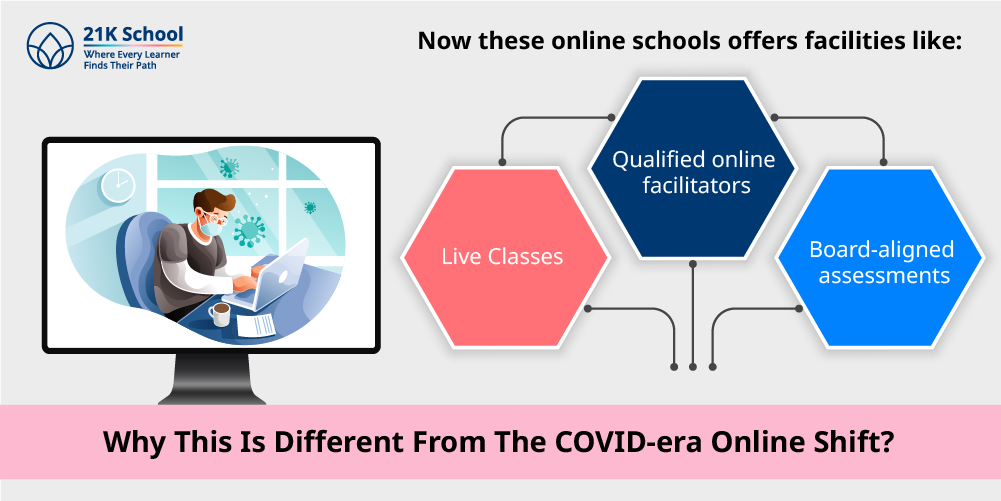
Now these online schools offer facilities like:
- Live Classes
- Qualified online facilitators
- Board-aligned assessments
Here, you may explore the key advantages of online classes for school students .
To understand in depth, go through the key differences between COVID-era online classes and online school in India 2026 models:
| S.No. | Dimension | COVID Online Classes (2020-21) | Online Schooling in 2026 |
|---|---|---|---|
| 1. | Trigger | Mandatory lockdown | Voluntary appeal during West Asia crisis |
| 2. | Format | Emergency Zoom/Meet retrofit of offline school | Choice between school-led hybrid OR full-time accredited online school |
| 3. | Accreditation | Same school’s offline accreditation | Dedicated accredited online schools like 21K School now exist (CBSE, Cambridge, Pearson) |
| 4. | Facilitator Readiness | Improvised, mixed quality | Trained online Facilitators, structured digital pedagogy |
| 5. | Parent Control | No alternative | Active choice based on family circumstances |
| 6. | Technology Integration | Temporary systems | Purpose-built digital learning ecosystems |
| 7. | Assessments | Frequently disrupted | Structured online assessment frameworks |
What "Online classes for some time" could mean in practice?
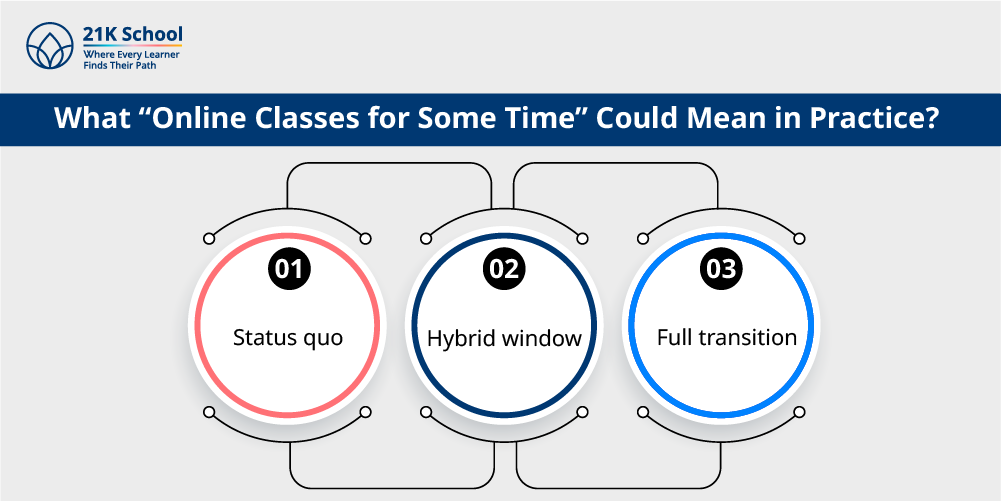
Parents wonder what "online classes for some time" could mean in practice. There are three key reasons why PM Modi calls for online school classes and work-from-home (WFH).
Three scenarios:
1. Status quo
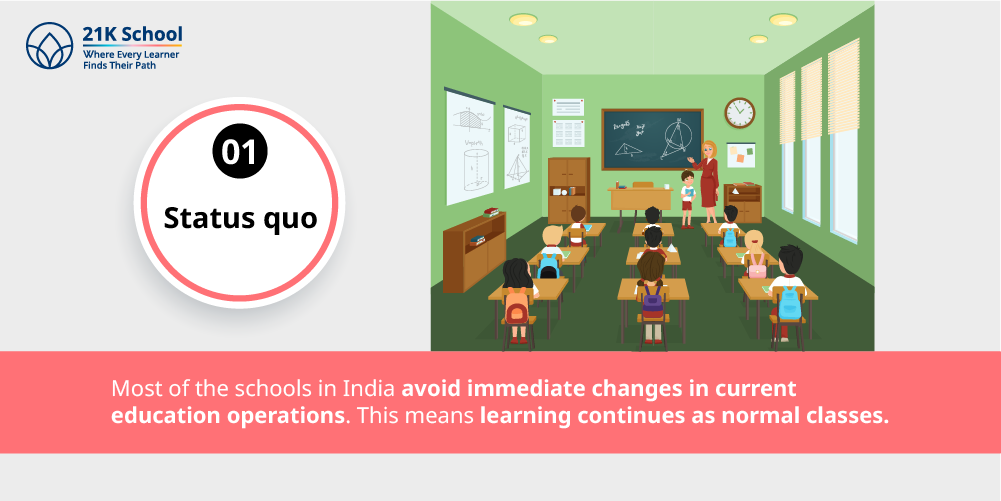
Most of the schools in India avoid immediate changes in current education operations. This means learning continues as normal classes.
2. Hybrid window
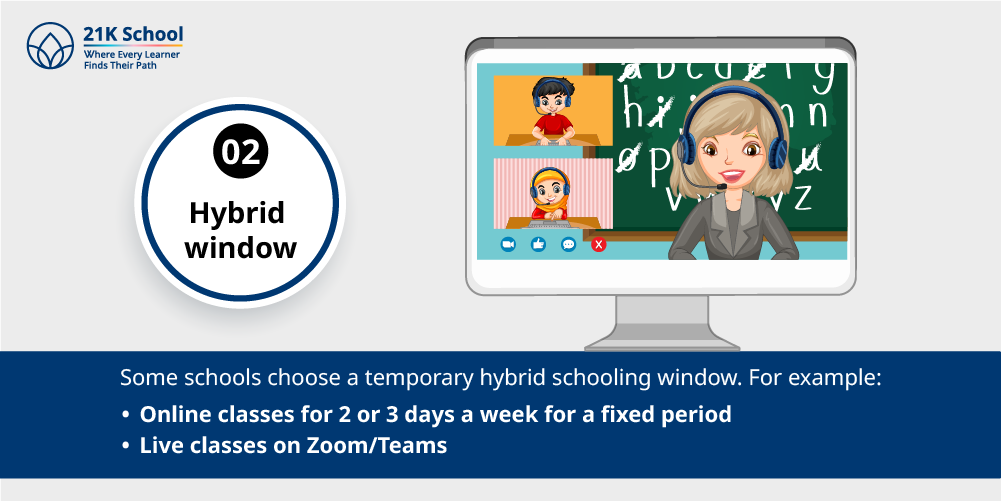
Some schools choose a temporary hybrid schooling window. For example:
- Online classes for 2 or 3 days a week for a fixed period
- Live classes on Zoom/Teams
3. Full transition
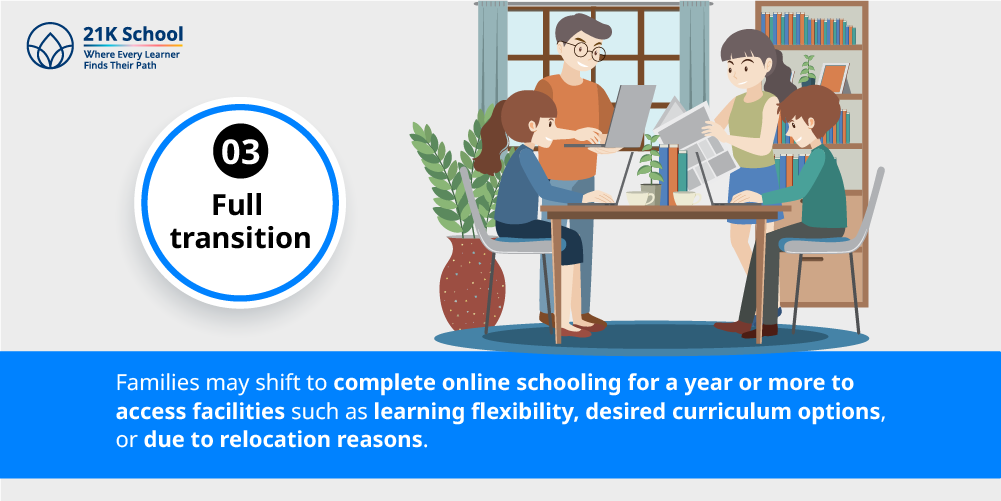
-
Families may shift to complete online schooling for a year or more to access facilities such as learning flexibility, desired curriculum options, or due to relocation reasons.
The parent’s decision framework
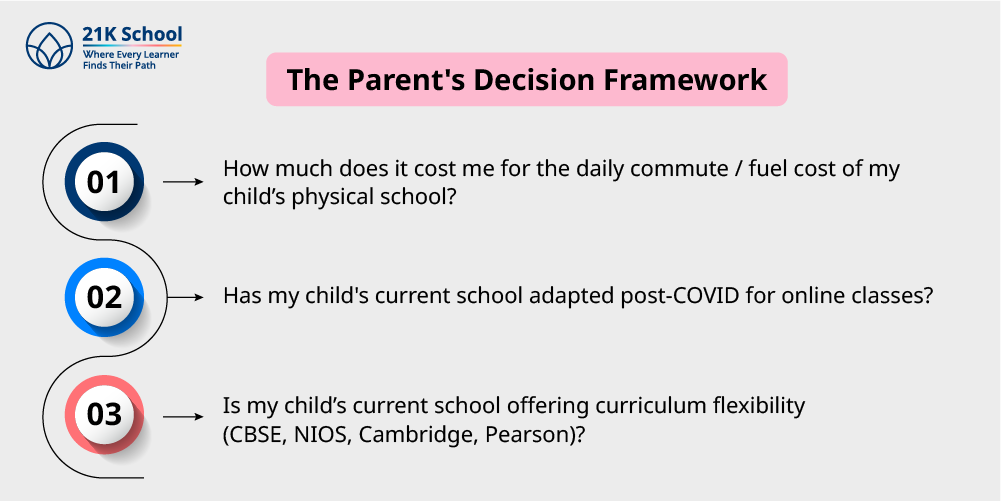
Parents are often concerned about whether there is an education-related announcement. They simply seek an answer: Should I change anything right now?
The answer is "not immediately".
Parents need to prepare themselves to handle situations, stay updated with notifications, and choose the ideal way of education for their child.
Three questions to walk parents through:
1. How much does it cost me for the daily commute / fuel cost of my child's physical school?
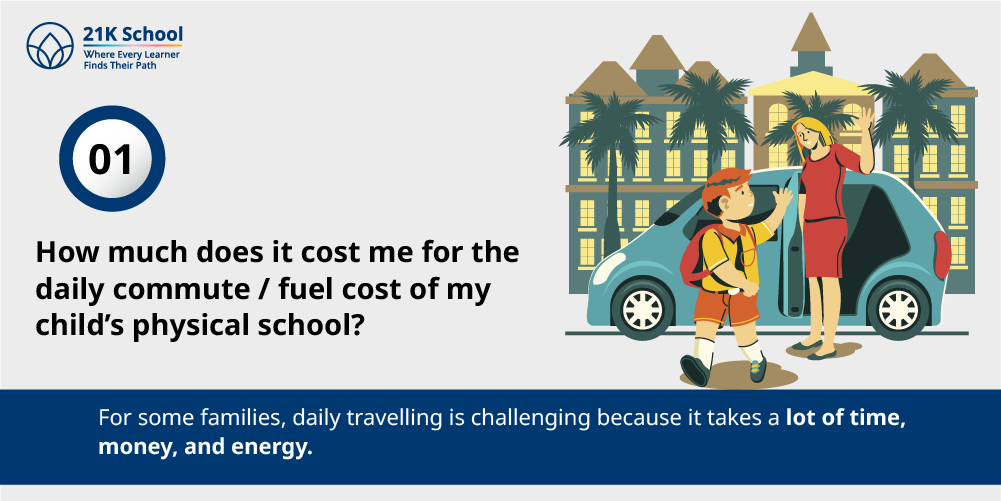
For some families, daily travelling is challenging because it takes a lot of time, money, and energy.
Rise in fuel costs and transportation fees, especially due to the West Asia conflict has made offline schooling stressful. However, hybrid or online learning is one of the most convenient options for parents and learners.
2. Has my child’s current school adapted post-COVID for online classes?
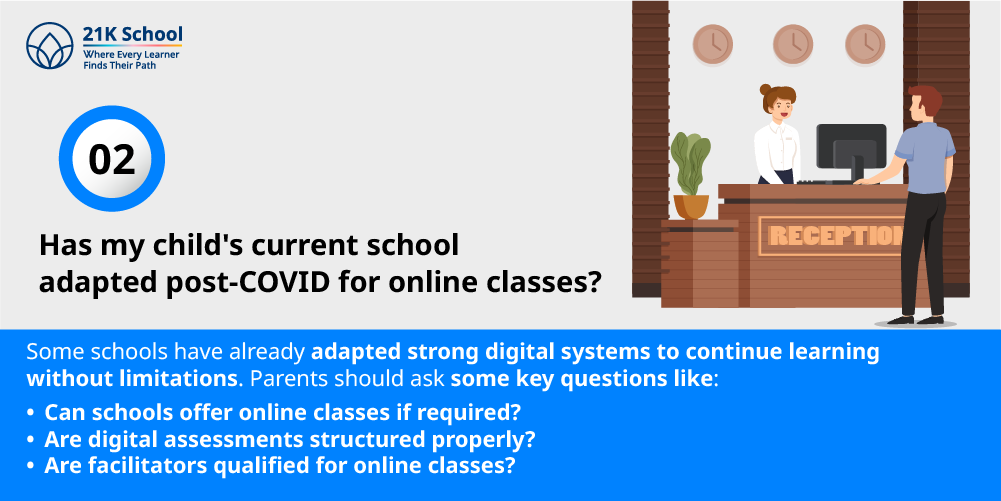
Some schools have already adapted strong digital systems to continue learning without limitations. Parents should ask some key questions like:
- Can schools offer online classes if required?
- Are digital assessments structured properly?
- Are facilitators qualified for online classes?
3. Is my child's current school offering curriculum flexibility (CBSE, NIOS, Cambridge, Pearson)?
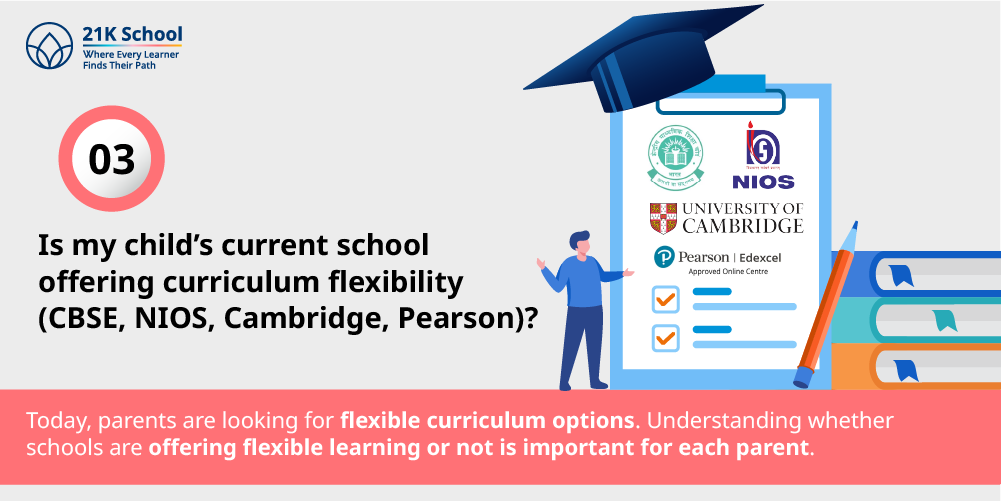
Today, parents are looking for flexible curriculum options. Understanding whether schools are offering flexible learning or not is important for each parent.
Some learners need flexible pacing, international curricula, other creative arts and travel flexibility. To avoid challenges some families are choosing full-time accredited online schooling such as 21K School to fulfil their child’s needs.
What to look for in an accredited online school?
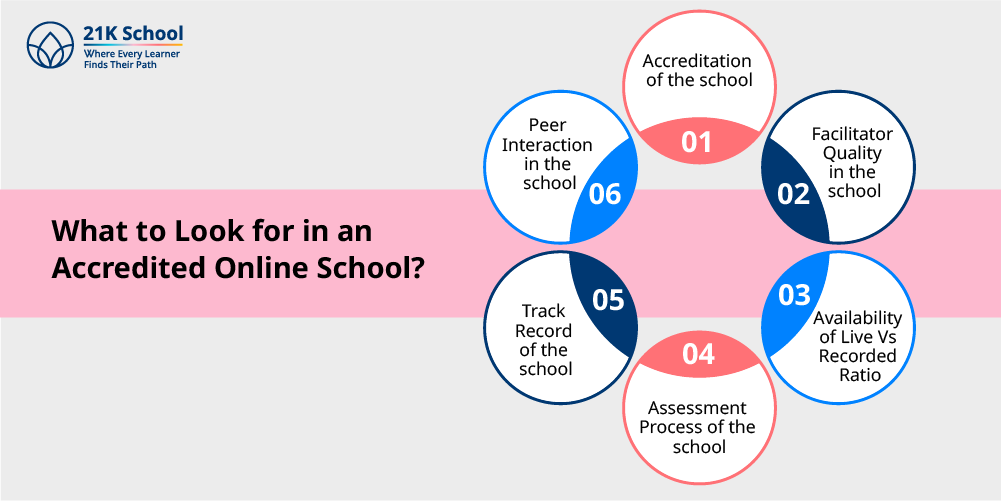
The key pointers to look for in an accredited online school cover:
1. Accreditation of the school
It is necessary to check the accreditation and affiliations of the schools, including the centre numbers of an accredited online school.
- For example, 21K School is accredited to Cambridge International (IA702), Pearson Edexcel (94883), CBSE , and NIOS .
2. Facilitator quality in the school
It is essential to evaluate the qualifications, online teaching experience, and skills of facilitators of an accredited online school.
- For example, 21K School has certified and experienced facilitators offering dedicated class sizes of 24 or 20 learners (Class of 24 or Class of 20) for maintaining the right learner:facilitator ratio .
3. Availability of live vs recorded ratio
An effective online school must have regular/live classes and a proper study schedule .
- For example, 21K School offers dedicated live classes by certified facilitators along with access to the recorded lessons to help its learners in the revision process.
4. Assessment process of the school
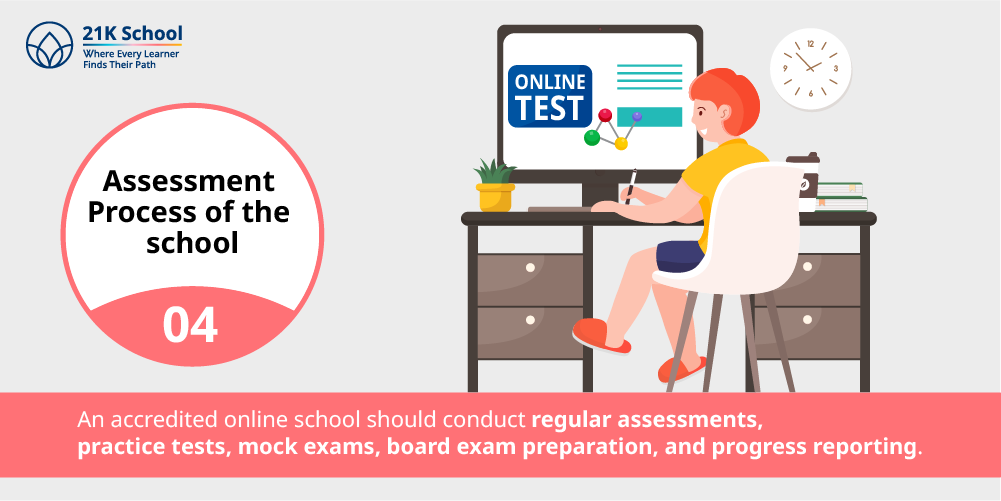
An accredited online school should conduct regular assessments, practice tests, mock exams, board exam preparation , and progress reporting.
- For example, 21K School adopts a proper assessment and regular feedback process incorporating parents, allowing learners to prepare and perform well in exams .
5. Track record of the school
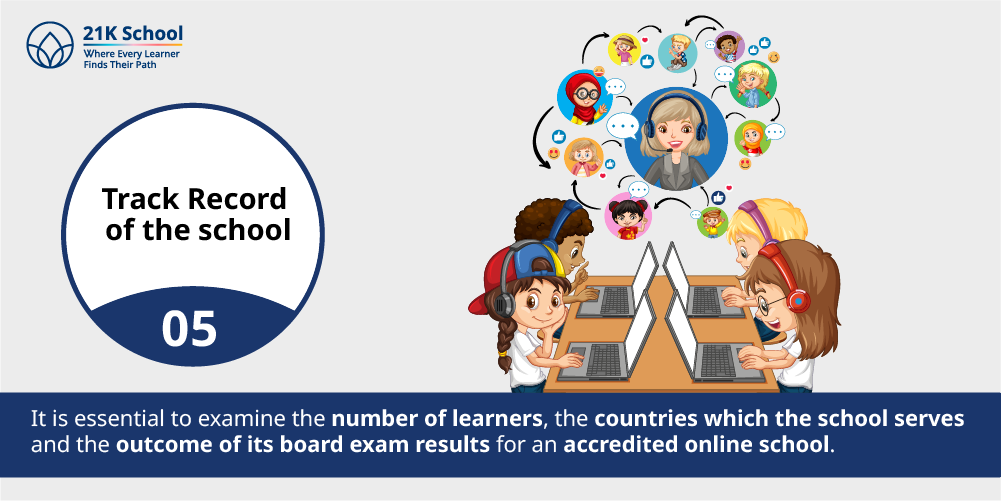
It is essential to examine the number of learners, the countries which the school serves and the outcome of its board exam results for an accredited online school.
- For example, 21K School has more than 20,000+ learners across 78+ countries, which reflects its credibility, legitimacy, and parents’ faith in its strong education system.
6. Peer interaction in the school
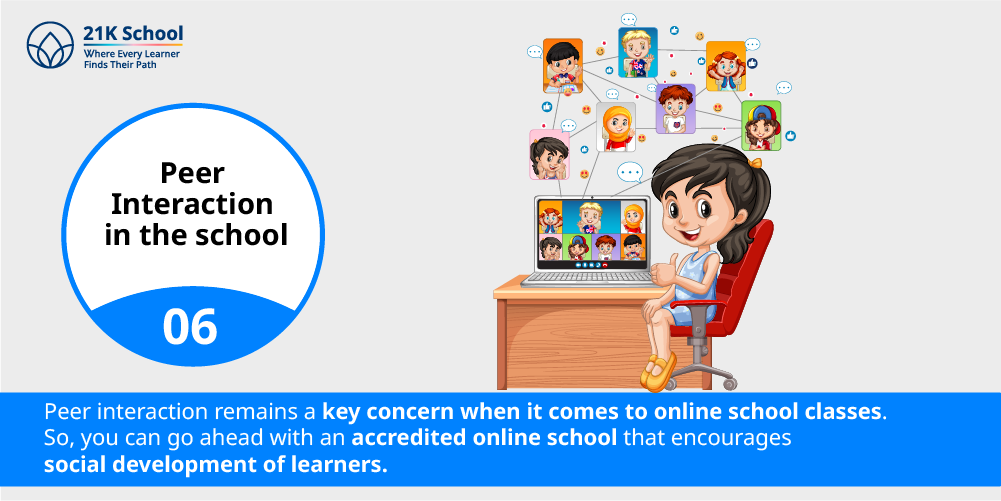
Peer interaction remains a key concern when it comes to online school classes. So, you can go ahead with an accredited online school that encourages social development of learners.
- For Example, 21K School focuses on peer interaction through clubs, house system, collaborative projects and in-person meetups.:
Online school classes- common parent concerns answered
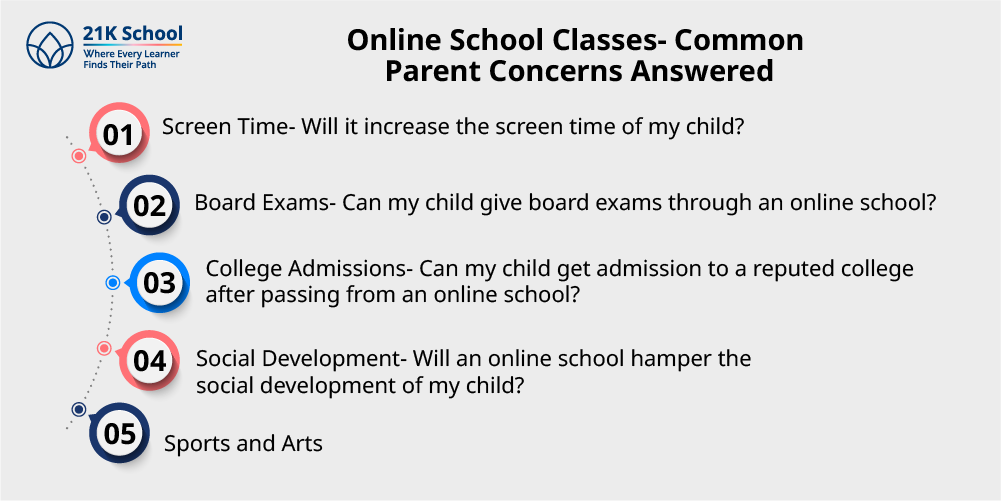
The following are some of the most common fears parents have related to the online school classes and the way they are addressed:
1. Screen time- will it increase the screen time of my child?
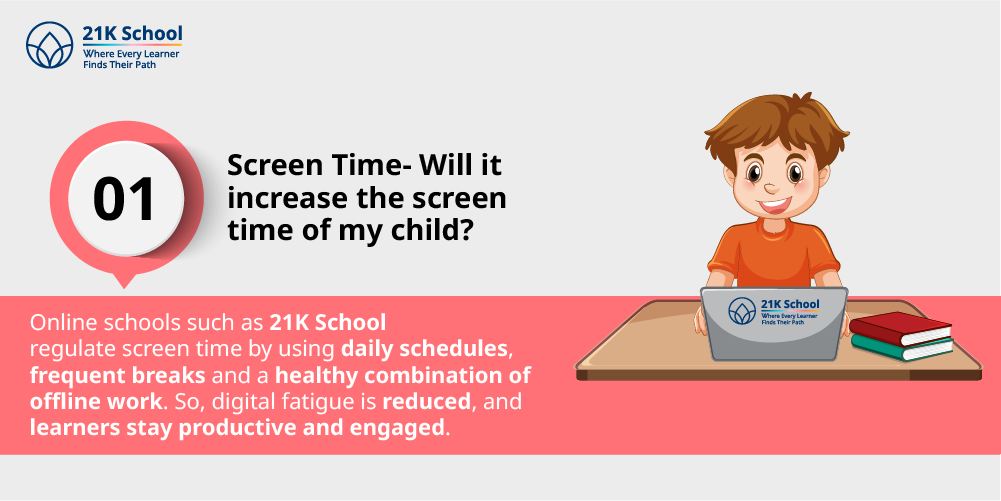
Online schools such as 21K School regulate screen time by using daily schedules, frequent breaks and a healthy combination of offline work.
So, digital fatigue is reduced, and learners stay productive and engaged.
2. Board exams- can my child give board exams through an online school?
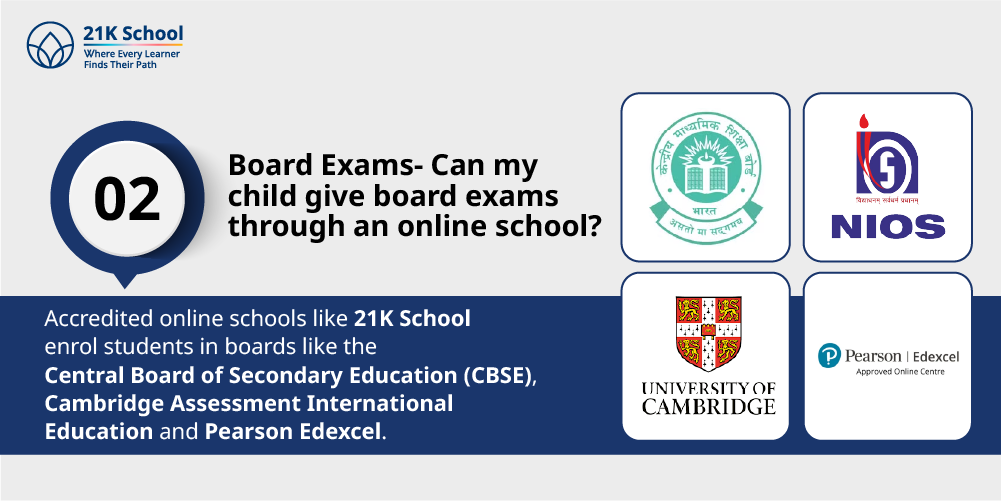
Accredited online schools like 21K School enrol students in boards like the Central Board of Secondary Education (CBSE), Cambridge Assessment International Education and Pearson Edexcel.
Board exams are usually done by students at approved physical examination centres.
3. College admissions- can my child get admission to a reputed college after passing from an online school?
Both Indian and international universities accept certificates obtained in recognised online schools.
Colleges tend to favour qualification by means of CBSE, Cambridge and Pearson regardless of the mode of qualification, online or offline.
4. Social development- will an online school hamper the social development of my child?
Online schools like 21K School promote socialisation using house systems, student organisations, learner communities, and regional gatherings.
These opportunities assist the students to develop friendships, teamwork and communication skills outside of the virtual classroom .
5. Sports and arts
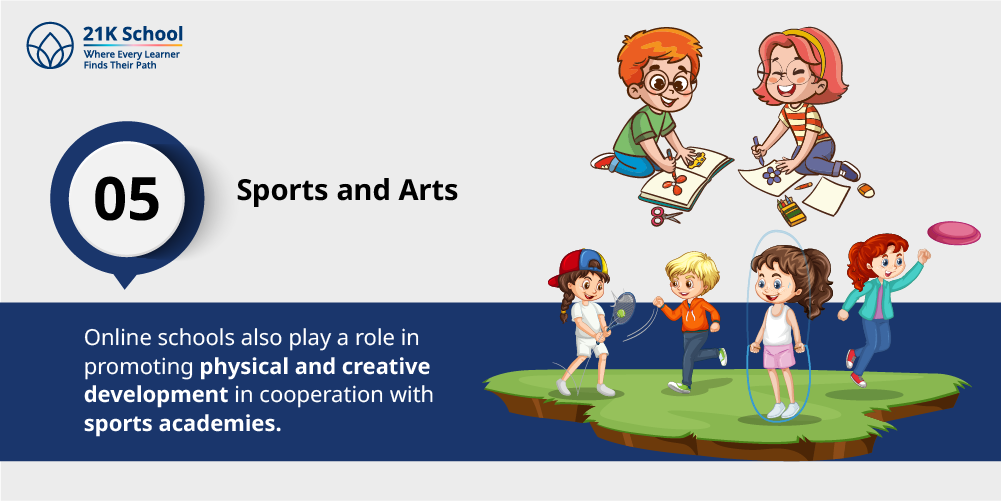
Online schools also play a role in promoting physical and creative development in cooperation with sports academies. These after-school programs are conducted under the guidance of professionals.
This enables the learners to be actively involved in their interests in sports, music, art and other creative subjects as well as academics.
How does the 21K School fit in?
21K School is India's first accredited fully online K-12 School.
It is a fully accredited institute- CBSE, NIOS, Cambridge International (IA702), and Pearson Edexcel (94883). It offers two learning pathway options– Indian Pathway and British Pathway.
With more than 20,000+ learners across 78+ countries, 21K offers technology-driven learning , flexible batch timings, and future-ready learning to young learners.
The live classes with certified facilitators, structured curriculum delivery, access to recorded learning sessions, and anywhere learning make it the first choice for many learners.
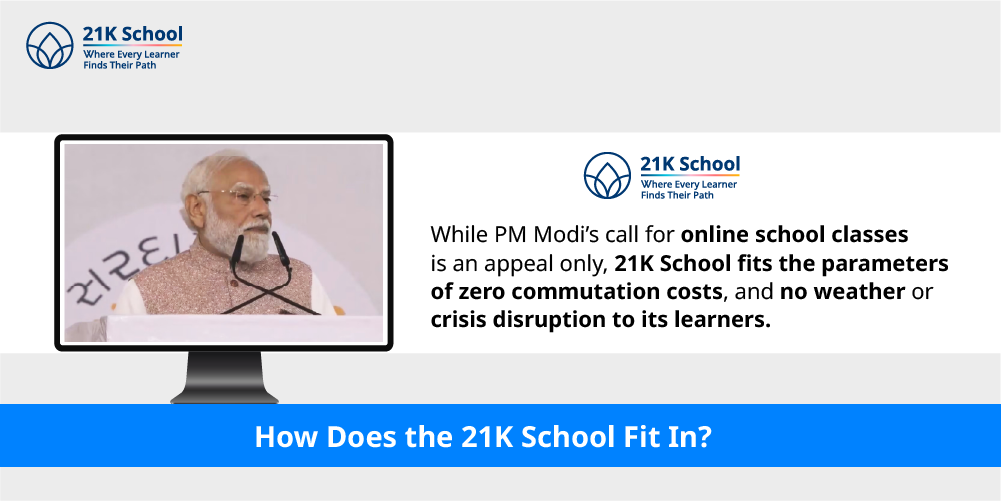
While PM Modi's call for online school classes is an appeal only, 21K School fits the parameters of zero commutation costs, and no weather or crisis disruption to its learners.
The structured live classes, curriculum continuity, and certified online facilitators make learning fun and engaging at the same time.
Conclusion
So, PM Modi's call for online school classes and work-from-home (WFH) is an appeal that has brought the online school classes back into the parents' vocabulary after the COVID-era.
While in 2020, online school classes were a retrofit only, in 2026, the shift of learners to an accredited online school is a legitimate path with reduced commutating costs and curriculum fit.
Parents can now start searching for the best online schools for their children and assessing their feasibility in terms of live classes, structured curriculum and flexible learning.
For more details on accredited online schools in India, visit 21K School today!
Frequently asked questions
7 questions
Did PM Modi mandate that schools shift to online classes?
No, PM Modi did not mandate that schools shift to online classes. There is no official order issued by the Centre or the State authorities regarding the same.
Will Indian schools shut down again like during COVID?
No, there is no indication of the Indian schools shutting down again like during COVID. The PM's appeal to schools to shift to online schools is framed as an austerity measure but not a public health response.
Is online school recognised by CBSE in India?
Yes, online schools like 21K School are recognised by CBSE in India. It follows the National Curriculum Framework and hence can effectively register learners for Class 10 and Class 12 board examinations.
Can my child write board exams from an accredited online school?
Yes, your child can write board exams from an accredited online school like the offline school students. The accredited online schools offer the boards like CBSE, Cambridge IGCSE/A Level, or Pearson Edexcel at the designated board exam centres.
How is a full-time online school different from COVID-era online classes?
A full-time online school is different from COVID-era online classes as it is not an alternative like the COVID-era online classes which were an emergency retrofit of the offline classes.
What grades does online schooling work best for?
The online schooling works best for the learners from Kindergarten to Grade 12, only when it is from an accredited institution like 21K School. Online school learners can enjoy the play-based learning, parent-supported live sessions at earlier grades, while can get the benefits of curriculum flexibility and board exam structure at higher grades.
How do I move my child from offline to online school mid-year?
It is easy to move your child from offline to online school mid-year with the help of the admissions team at accredited online schools like 21K School. The team guides you through the CBSE registration and ensures the continuity of the grade-level learning for saving your child's academic year.
About the author
Ankita Singha
Content Specialist
Ankita Singha is an Education Content Specialist at 21K School, India’s first accredited fully online K-12 School. She focuses on the in-depth research and creation of the well-drafted guides on early childhood education, school admission processes, and CBSE/ICSE curriculum guidance. With more than 2 years of experience at 21K School, a fully accredited institute- Cambridge International (IA702) and Pearson Edexcel (94883), Ankita works closely with the school’s curriculum heads and academic coordinators. Ankita’s every article reflects on the official board guidelines, practical realities, and current policies of online education in 78+ countries. Ankita’s content has helped thousands of parents in understanding the topics like RTE eligibility, NIOS pathways, and age-appropriate admission criteria.
Every 21K School guide is written by our education team and reviewed by a subject facilitator before publishing.
Exploring a CBSE-pathway online school?
Talk to an advisor about 2026–27 admissions — no obligation.
Talk to an advisorComments
No comments yet — be the first to share your thoughts or ask a question.