

Have you ever thought about how many kinds of knowledge there are?
Knowledge determines the way people perceive the world, how they make judgments and resolve issues. It does not just involve facts in books or lessons in classroom learning , but it is a very wide and varied concept that comprises experiences, skills, beliefs, and insights gained in life.
Since knowledge may be in various forms, scholars tend to classify and group it in various categories in the aim of understanding the ways through which knowledge is acquired, used, and shared.
The discussion of the different kinds of knowledge makes us realise how diverse human learning is and makes us understand that there are many ways in which people acquire knowledge in both professional and informal settings.
Contents
- What are the Types of Knowledge?
- 1. Explicit Knowledge
- 2. Implicit Knowledge
- 3. Tacit Knowledge
- 4. Procedural Knowledge
- 5. Declarative Knowledge
- 6. Philosophical Knowledge
- 7. Institutional Knowledge
- 8. Dispersed Knowledge
- 9. Expert Knowledge
- 10. Conceptual Knowledge
- 11. Metacognitive Knowledge
- 12. Embedded Knowledge
- 13. Domain Knowledge
- 14. Strategic Knowledge
- 15. Self-Knowledge
- Concluding Thought
What are the Types of Knowledge?
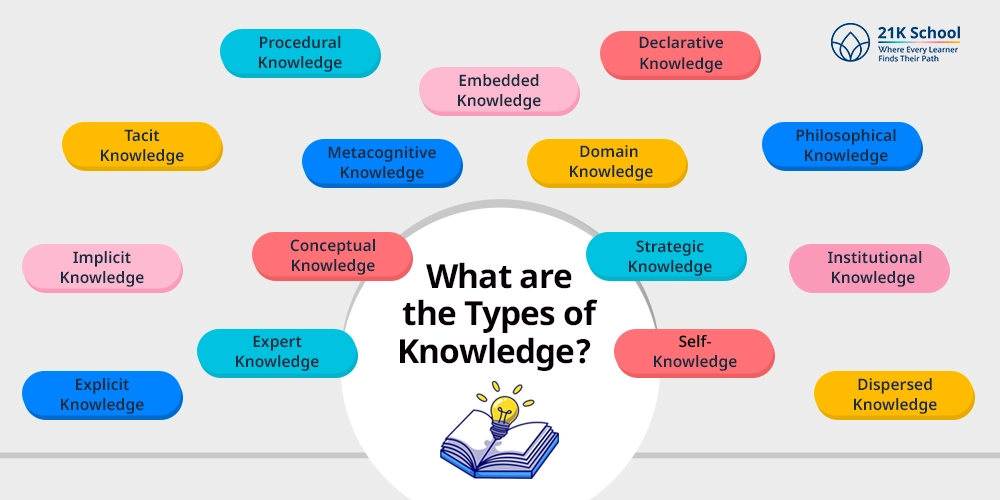
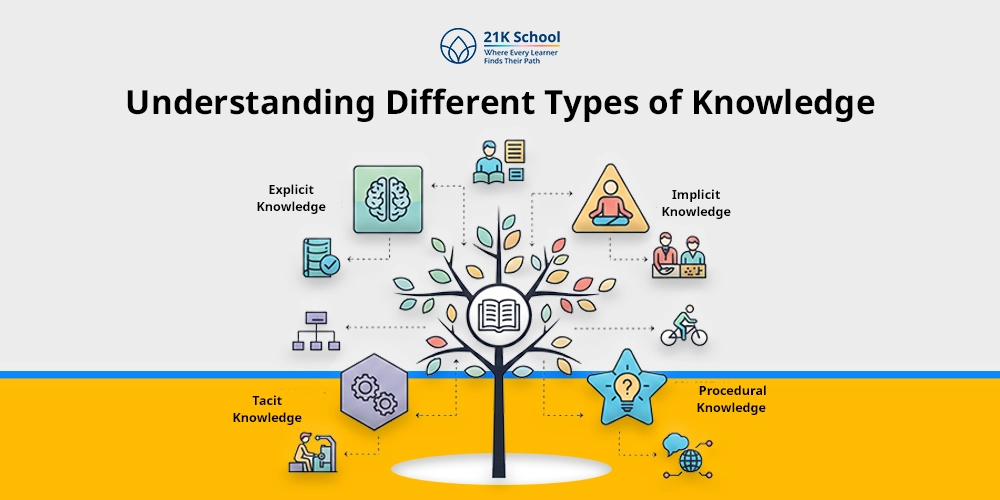
The knowledge is not restricted to a single type of knowledge but rather has a broad spectrum of knowledge, namely explicit knowledge, implicit knowledge, tacit knowledge, procedural knowledge, declarative knowledge, expert knowledge, etc. Below are the mentioned types of knowledge.
1. Explicit Knowledge
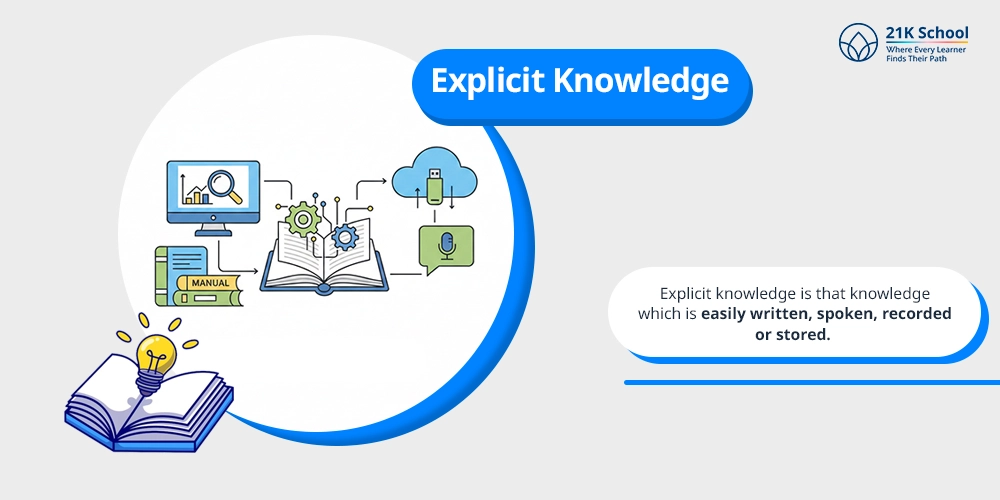
Explicit knowledge is that knowledge which is easily written, spoken, recorded or stored. It consists of manuals, textbooks, databases and instructions.
Due to its structure and formality, explicit knowledge is simple to disseminate, educate, as well as transfer among individuals or companies. It is necessary in education , training, and standardised processes because it is very understandable and easy to access.
2. Implicit Knowledge
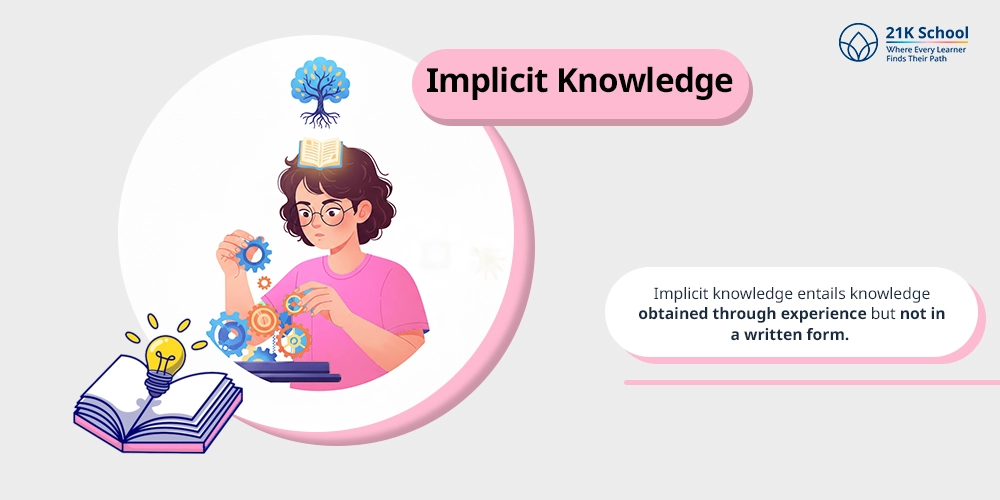
Implicit knowledge entails knowledge obtained through experience but not in a written form. It defines the way individuals behave or make choices, even when such people are not able to articulate the rationale behind the same.
The knowledge is acquired over time with practice , observation and personal understanding. Although more difficult to state than overt knowledge, it greatly informs behaviour, intuition, as well as problem-solving in day-to-day scenarios.
3. Tacit Knowledge
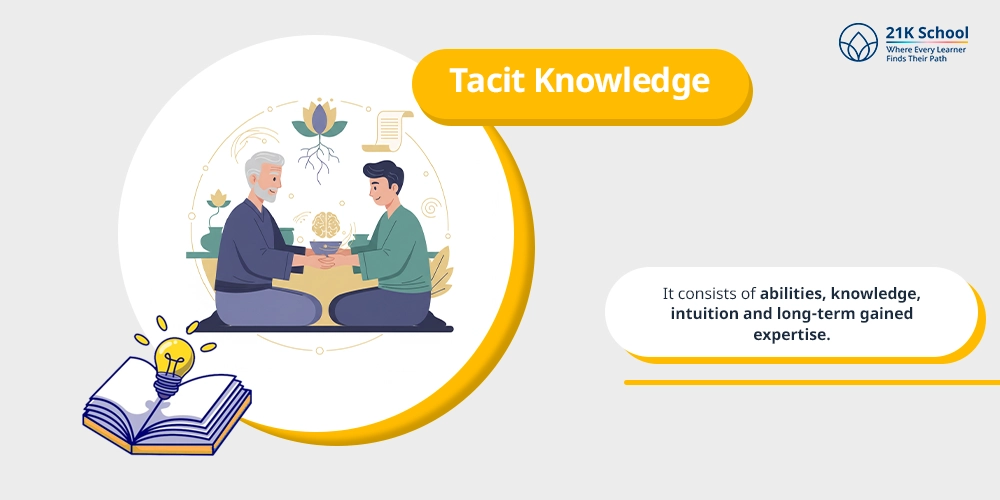
Tacit knowledge is very personal, intuitive and sometimes hard to convey. It consists of abilities, knowledge, intuition and long-term gained expertise. The examples are creativity, craftsmanship, leadership skills or social intelligence.
Tacit knowledge cannot be documented in full in words or manuals, so mentorship, observation, and practice are the best ways of transferring the knowledge.
4. Procedural Knowledge
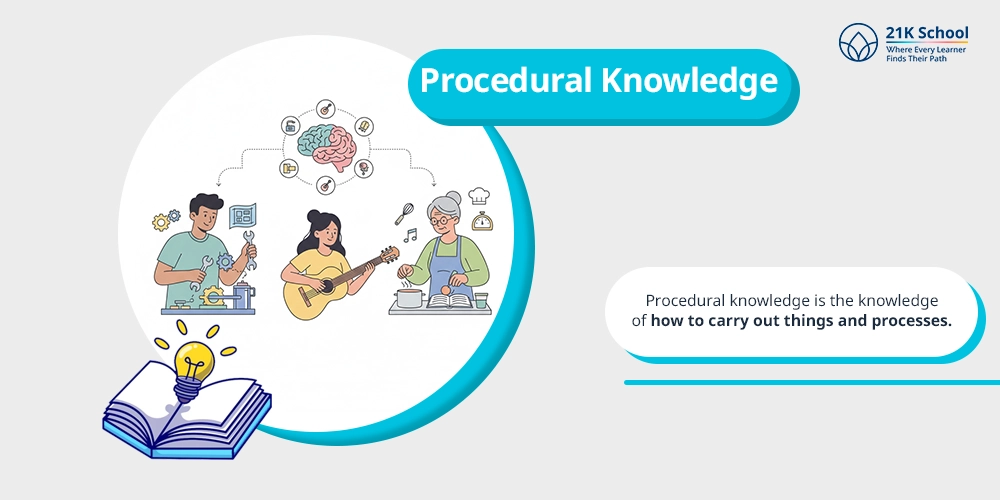
Procedural knowledge is the knowledge of how to carry out things and processes. It encompasses the ability to solve equations, play an instrument, operate machinery or cook.
This learning comes with repetitive practice, and one learns in the long run. Procedural knowledge is action-centred and performance-centred as opposed to factual knowledge, which is important in becoming a master of complex tasks.
5. Declarative Knowledge
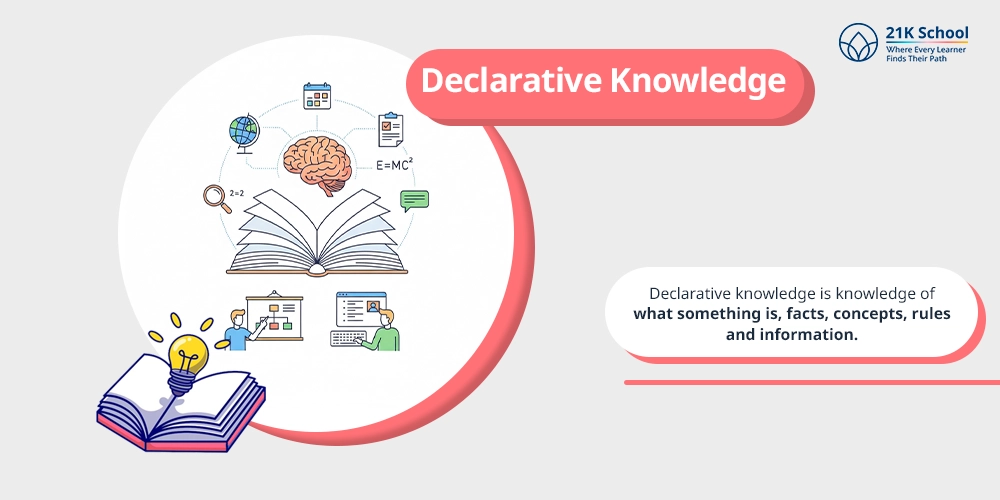
Declarative knowledge is knowledge of what something is, facts, concepts, rules and information. It incorporates the knowledge of events, definitions, theories, and principles that are easily stated or written.
It is the primary knowledge of academic learning and assists in the basis of subsequent learning. Declarative knowledge underlies reasoning as well as communication and more sophisticated skill development.
6. Philosophical Knowledge
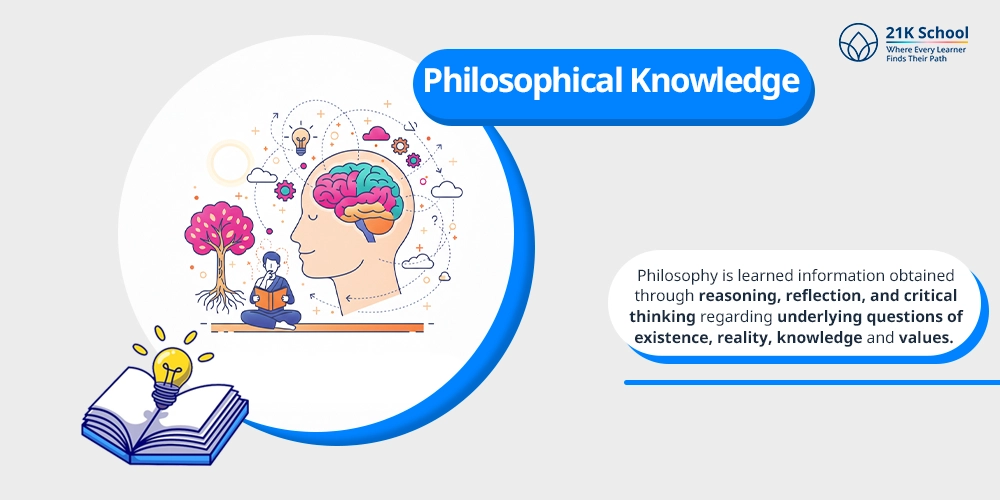
Philosophy is learned information obtained through reasoning, reflection, and critical thinking regarding underlying questions of existence, reality, knowledge and values.
It addresses such issues as truth, morality and purpose, aiming at elucidation and logical consistency, not empirical evidence. It forms a profound comprehension of life, thinking and human knowledge.
6.1. Posteriori Knowledge
A posteriori knowledge comes with experience and observation, and it is based on the senses.
In education, it involves experiential learning or classroom work or practical work, e.g. observing the reaction of a chemical in a laboratory, or studying historical events in textbooks, sources.
6.2. Priori Knowledge
A priori knowledge has nothing to do with experience and is founded on the basis of reason and logic.
In education, it encompasses the knowledge of mathematical proofs, grammar rules, logical reasoning, e.g. knowing that all elements in a given language are of a gender or that a given theoretical problem can be solved using deductive logic.
7. Institutional Knowledge
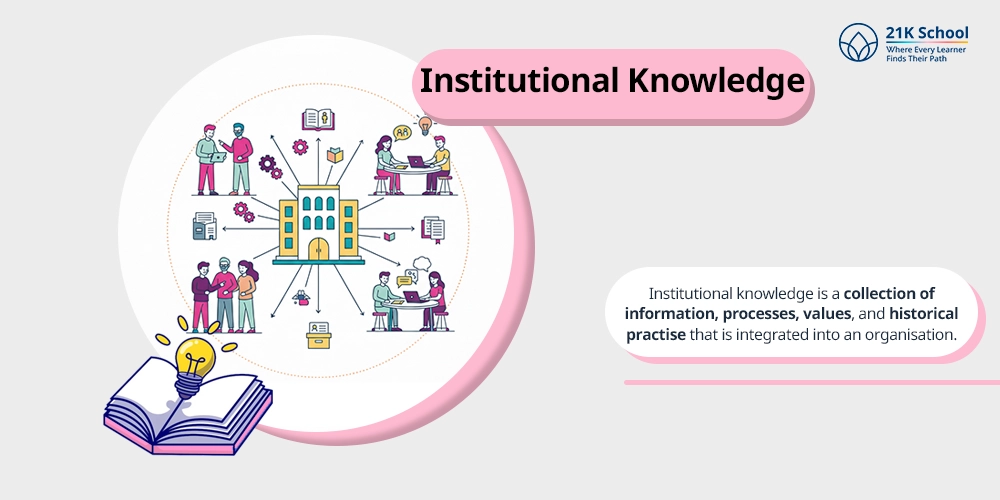
Institutional knowledge is a collection of information, processes, values, and historical practise that is integrated into an organisation. It entails the way things are done traditionally, the existence of policies and the personnel assigned specific work.
This will be essential in ensuring continuity and efficiency. By losing employees, organisations risk the loss of institutional knowledge unless it is well documented, shared and preserved.
8. Dispersed Knowledge
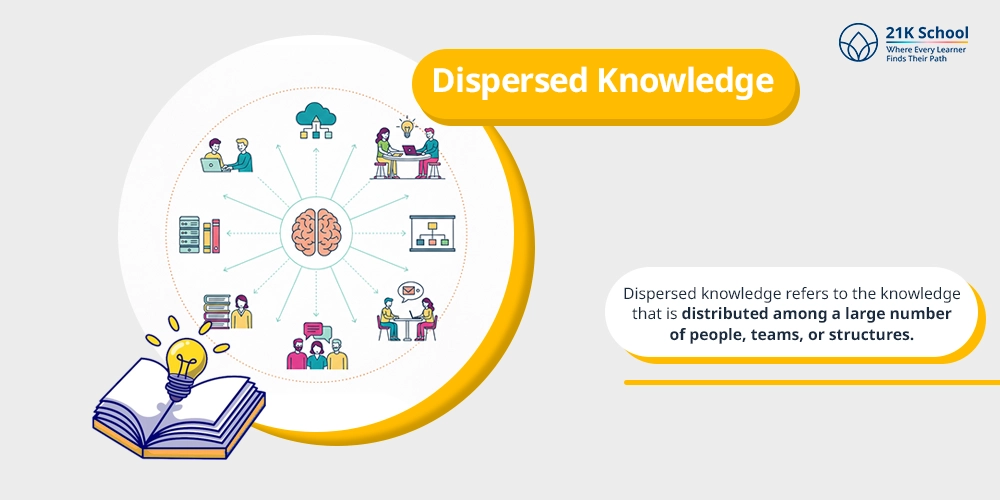
Dispersed knowledge refers to the knowledge that is distributed among a large number of people, teams, or structures. There is no one individual with all the knowledge, and when combined, it is mighty. Dispersed knowledge is needed in markets, communities, and large organisations to operate successfully.
It emphasises the concept that complicated decisions can be better made by a great number of people who possess various experiences and ways of thinking.
9. Expert Knowledge
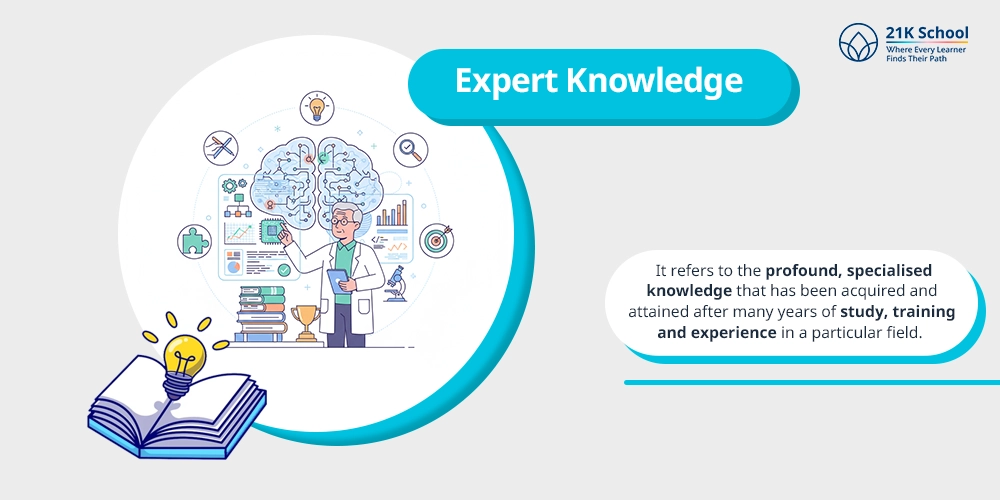
Expert knowledge refers to the profound, specialised knowledge that has been acquired and attained after many years of study, training and experience in a particular field. Specialists will be able to identify trends, resolve intricate issues, and make appropriate decisions in the short term.
They combine explicit, tacit and procedural knowledge most of the time. Due to the level of depth, professional wisdom is greatly cherished in the fields of medicine, engineering, law, and science.
10. Conceptual Knowledge
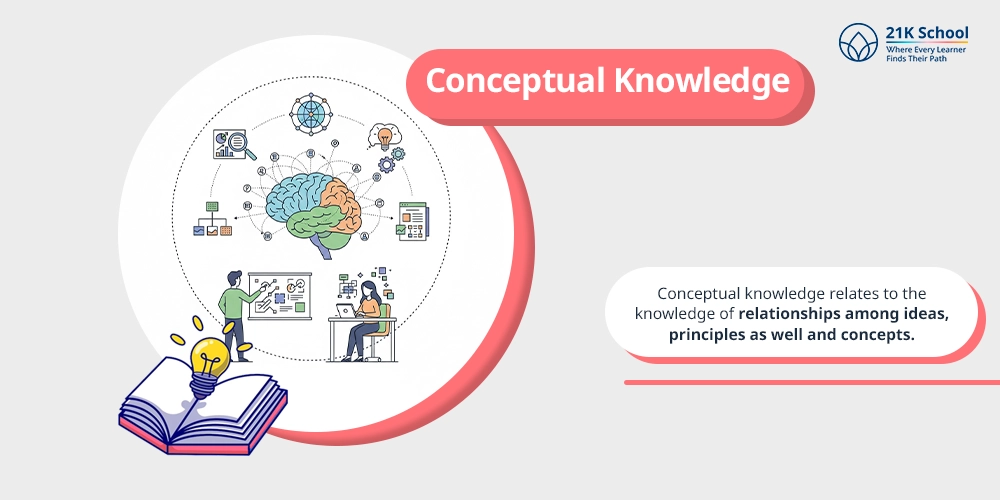
Conceptual knowledge relates to the knowledge of relationships among ideas, principles as well and concepts. It enables individuals to make meaning out of information, observe patterns and generalise theories to new circumstances.
Conceptual knowledge is more focused on meaning and relationships as opposed to memorisation of facts. Such knowledge is useful in critical thinking , solving problems and transferring learning to other subjects or contexts.
11. Metacognitive Knowledge
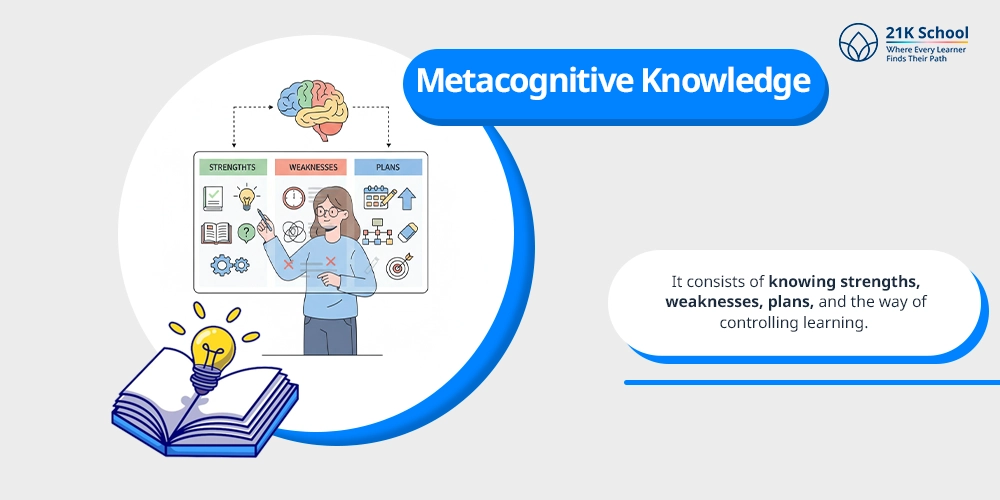
Metacognitive knowledge refers to knowledge about the way one thinks and learns. It consists of knowing strengths, weaknesses, plans, and the way of controlling learning.
Individuals who possess good metacognitive abilities are able to strategise, track and assess their cognition. Such knowledge improves problem solving , self-enhancement, as well as academic performance as individuals modify strategies to attain improved results.
12. Embedded Knowledge
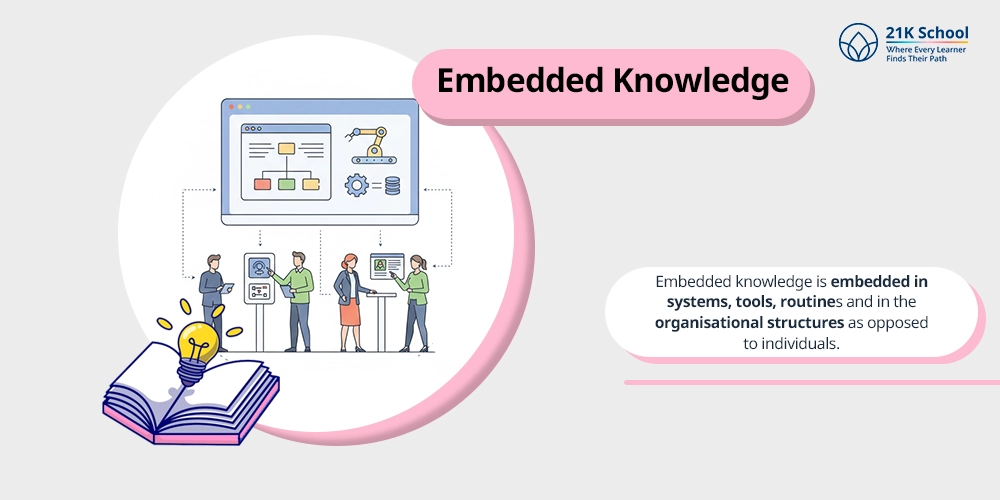
Embedded knowledge is embedded in systems, tools, routines and in the organisational structures as opposed to individuals. It is presented in the software design, processes at work or technology which directs the actions automatically.
Embedded knowledge is used by people without necessarily having its explicit understanding. This knowledge serves to ensure consistency, efficiency and reliability in automated or standardised activities.
13. Domain Knowledge
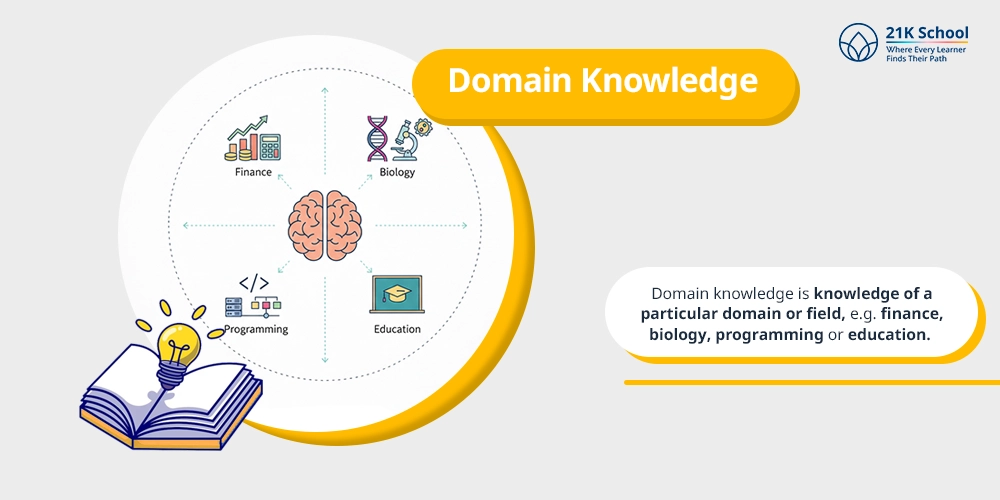
Domain knowledge is knowledge of a particular domain or field, e.g. finance, biology, programming or education. It comprises terms, principles, procedures and set practices in that field.
Domain knowledge assists people in solving problems and communicating with experts, as well as making sound decisions. It is the basis of professional competence and advanced learning.
14. Strategic Knowledge
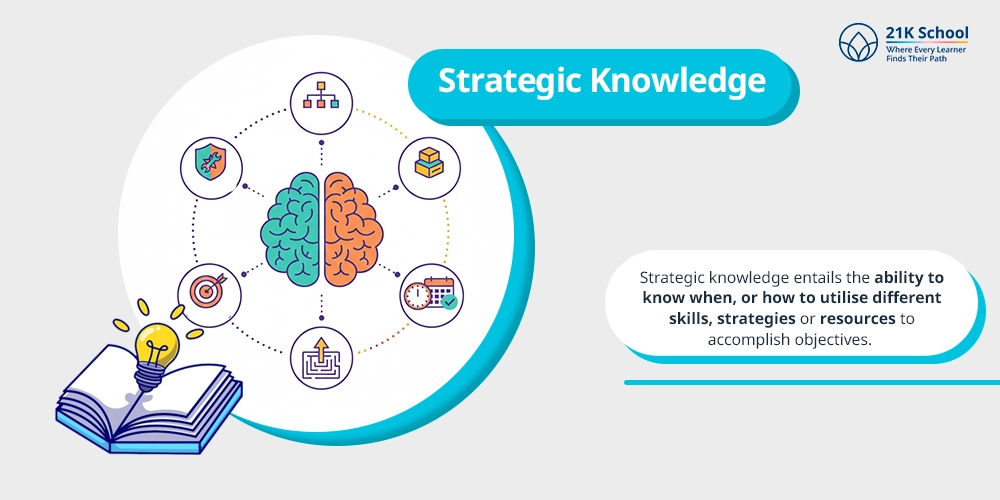
Strategic knowledge entails the ability to know when, or how to utilise different skills, strategies or resources to accomplish objectives.
It assists one in the process of planning, prioritising and adapting to evolving circumstances. Such knowledge is needed in leadership, decision making , and problem solving skills because it incorporates experience, understanding and judgement into meaningful action.
15. Self-Knowledge
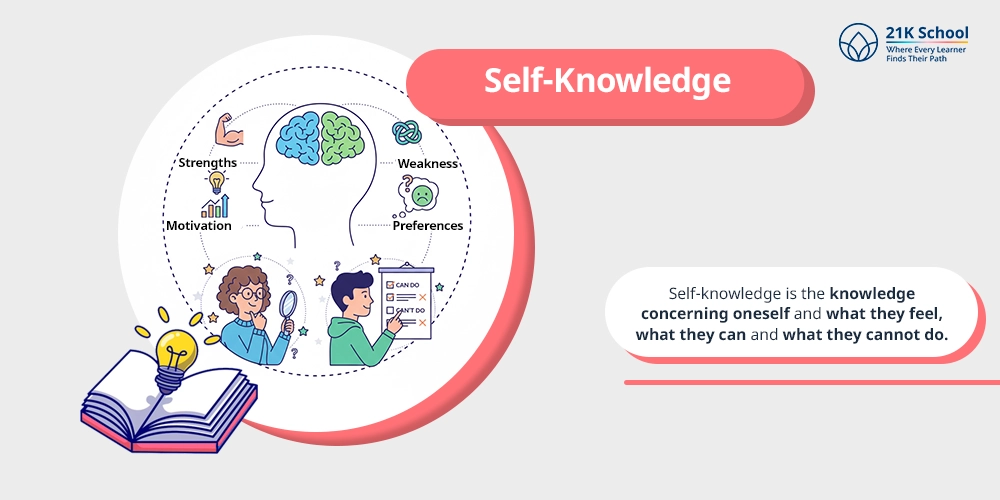
Self-knowledge is the knowledge concerning oneself and what they feel, what they can and what they cannot do. It is a process of knowing the personal strengths, weaknesses, motivations, as well as preferences.
This is knowledge that enables people to make wise choices, enhance their relationships and engage in productive goals. Emotional intelligence , personal development, and well-being heavily depend on self-knowledge, as it helps people to do what they are supposed to do.
Concluding Thought
Knowing the various kinds of knowledge, we are able to realise the complexity and diversity of human learning. All types: explicit, tacit, procedural, strategic and self-reflective types all have a specific role in the development of our abilities, choices and development.
Through understanding such differences, we are able to learn more about the way people learn, solve problems and engage with the world.
The ability to identify and implement different types of knowledge enhances personal growth and also enhances communicational, collaborative, and effective academic, professional, and daily settings

You may also want to read