

Do you know the credit system in education ?
In this evolving world of education, students look for effective methods to enhance their learning.
One of the popular reforms known as the credit system in education is introduced to enhance students’ learning in modern education .
In this detailed guide, we explore the credit system in education, its types, benefits and how it works to enhance students’ learning.
Contents
What is the Credit System in Education?
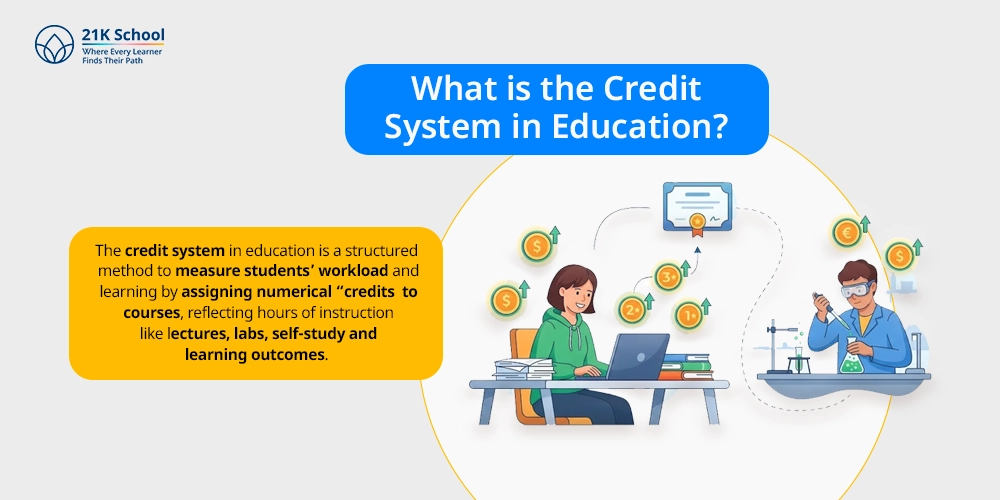
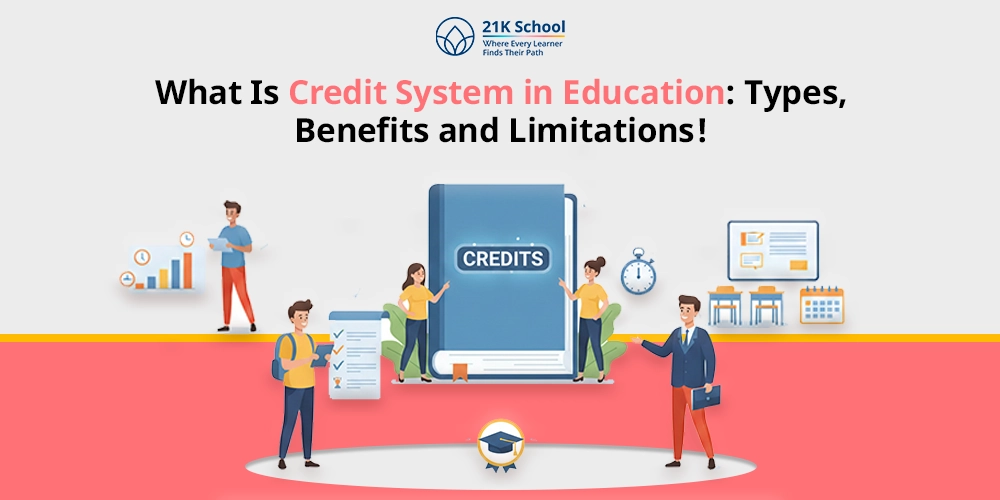
The credit system in education is a structured method to measure students’ workload and learning by assigning numerical “credits” to courses, reflecting hours of instruction like lectures, labs, self-study and learning outcomes .
However, each course offers a specific or fixed number of credits. The credit system focuses on learning outcomes, skills acquired, and academic progress of students.
How Does the Credit System in Education Work?
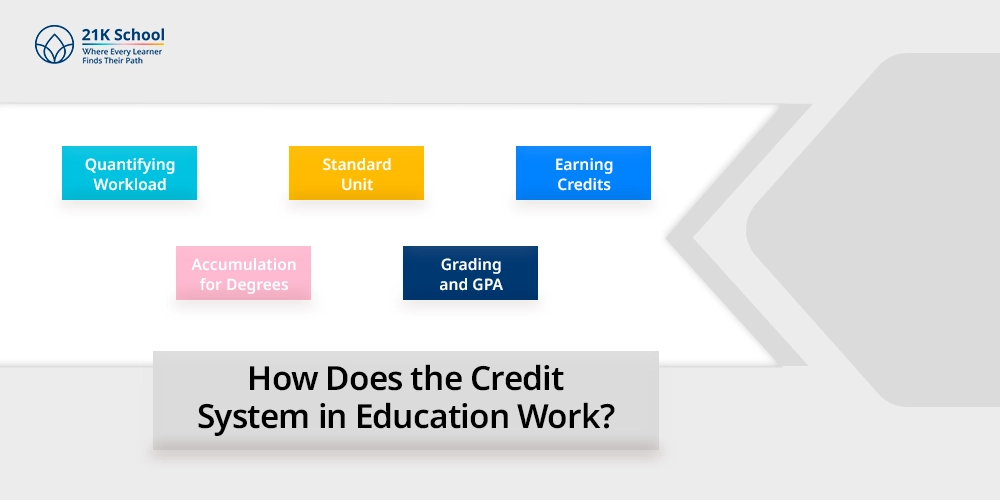
Go through this five-step process that showcases how does the credit system in education works in real life:
1. Quantifying Workload
Initially credits are measured by understanding students’ efforts in different activities like lectures, assignments, self-study etc.
2. Standard Unit
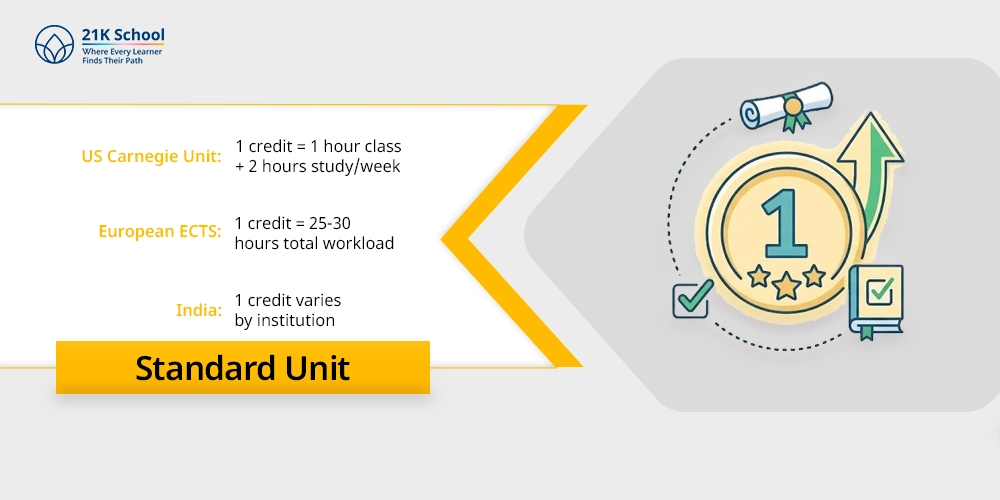
The standard unit of credit systems vary by country/region.
- US Carnegie Unit: 1 credit = 1 hour class + 2 hours study/week
- European ECTS: 1 credit = 25-30 hours total workload
- India: 1 credit varies by institution
3. Earning Credits
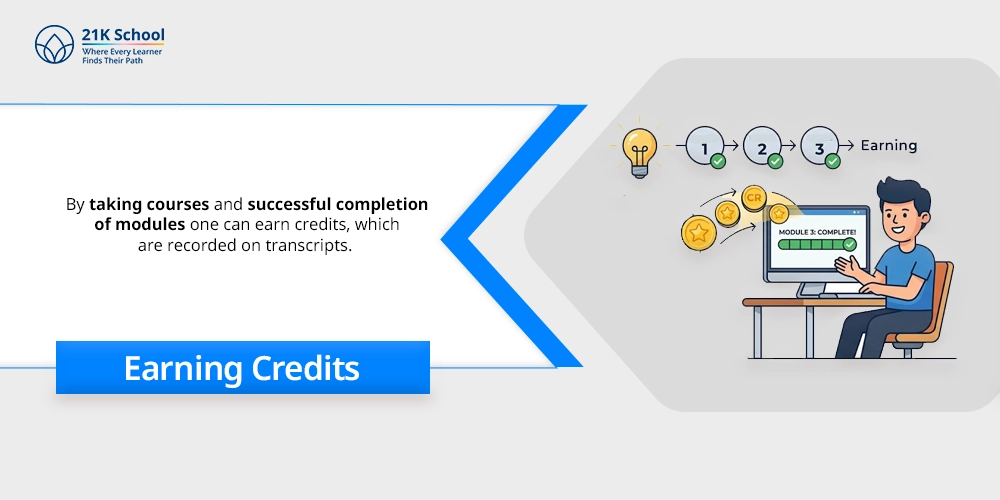
By taking courses and successful completion of modules one can earn credits, which are recorded on transcripts.
4. Accumulation for Degrees
Remember that degrees require a specific total credit count such as:
120 for a US Bachelor’s, 60 per year in Europe.
5. Grading and GPA
Later, grade points are weighted by credits to find SGPA per semester and overall CGPA.
4 Types of Credit System in Education
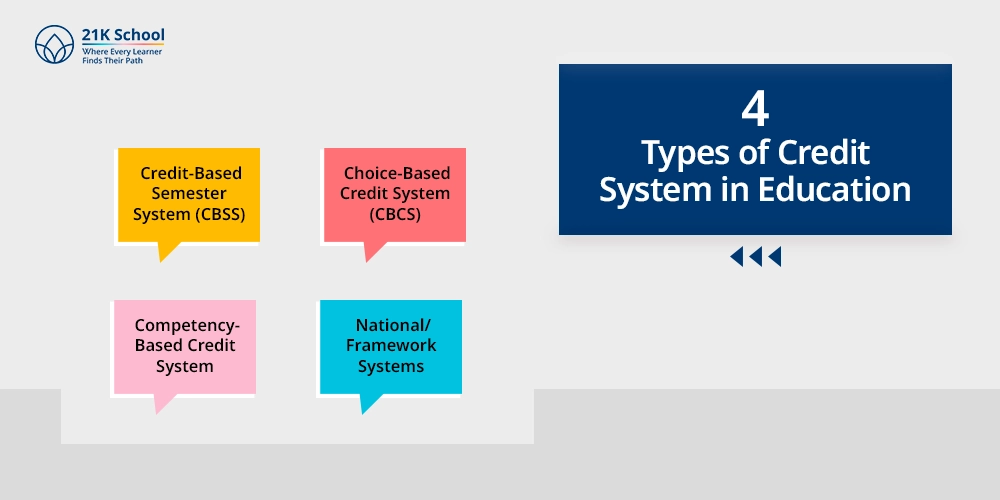
Discover an overview different types of credit system in education:
1. Credit-Based Semester System (CBSS)
In the Credit-Based Semester System (CBSS), the academic year is divided into two semesters or short terms in which each semester includes various courses that consist of a fixed number of credits.
For regular evaluation and learning, it is used by a lot of universities and colleges.
2. Choice-Based Credit System (CBCS)
The Choice-Based Credit System (CBCS) is one of the advanced and flexible types of credit systems of education.
It’s a student-centric higher education model provides opportunities to students to pick core, elective, minor, and skill-based courses.
3. Competency-Based Credit System
Competency-Based Credit System is a type of credit system which enhances students’ skills and learning results.
It is ideal for vocational education and professional training of students.
4. National/Framework Systems
The National Credit Framework (NCrF) in India is a part of NEP 2020, creating a unified system integrating school, higher, and vocational education credits.
Through this students can pause, resume, or change their educational journey without any loss.
5 Benefits of the Credit System in Education
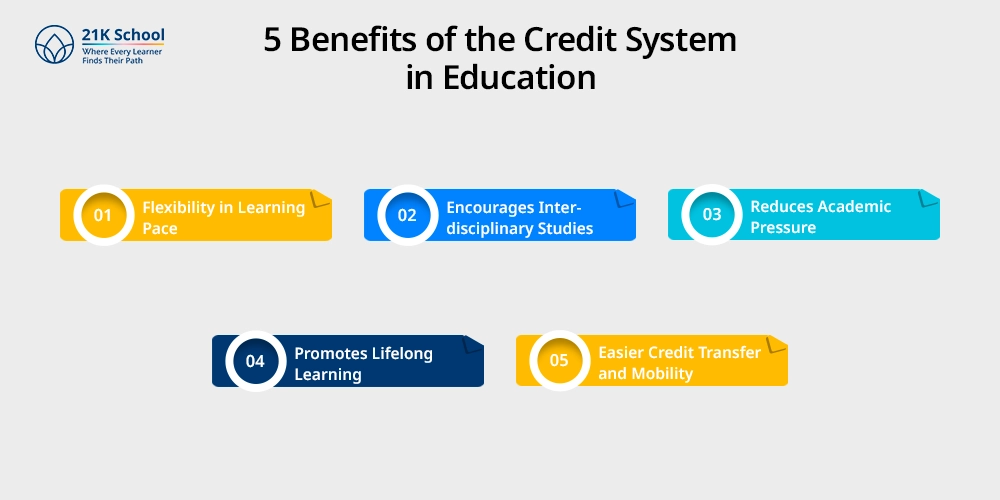
To use credit system effectively, must understand the benefits of the credit system in education:
1. Flexibility in Learning Pace
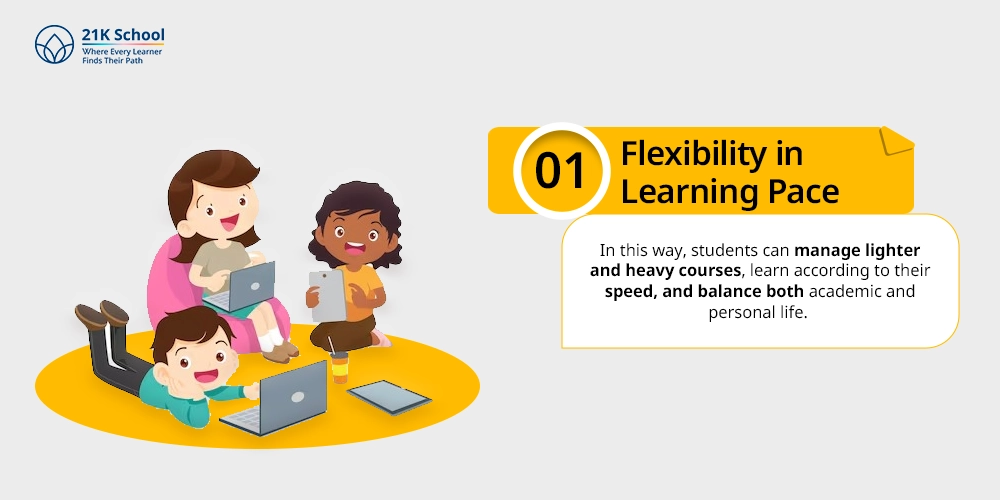
One of the benefits of the credit system in education is flexibility in the learning pace of students.
In this way, students can manage lighter and heavy courses, learn according to their speed, and balance both academic and personal life.
2. Encourages Interdisciplinary Studies
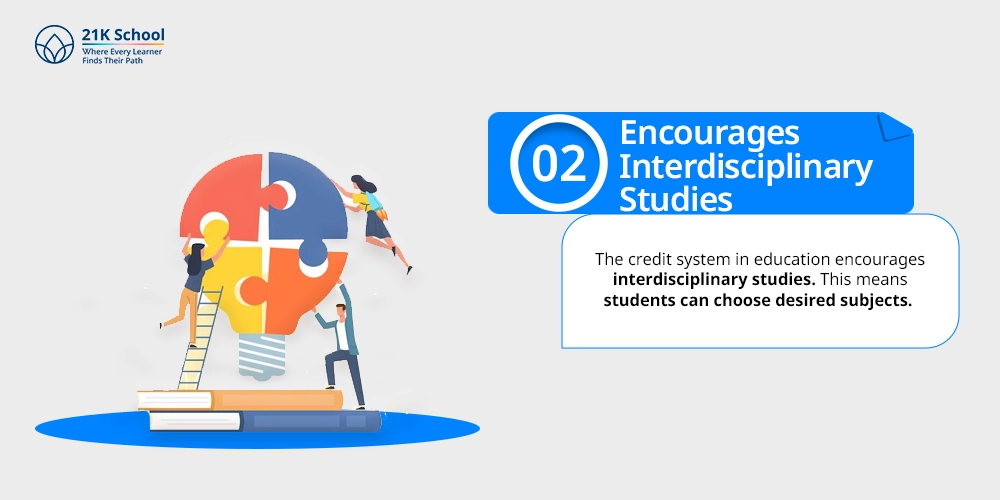
The credit system in education encourages interdisciplinary studies. This means students can choose desired subjects.
This will help them to improve skills like creativity, critical thinking skills , and real-world problem-solving skills .
3. Reduces Academic Pressure
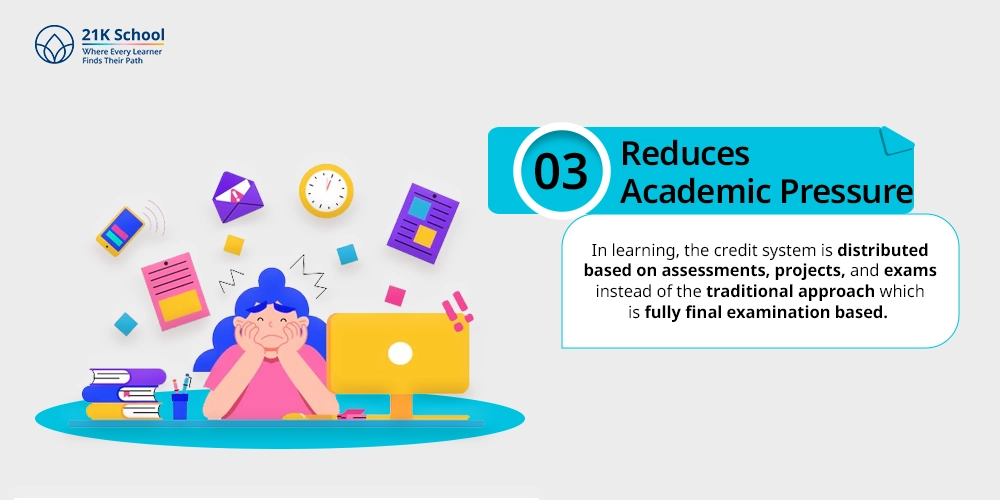
In learning, the credit system is distributed based on assessments , projects, and exams instead of the traditional approach which is fully final examination based.
This reduces academic pressure on students.
4. Promotes Lifelong Learning
The credit system in education promotes lifelong learning by helping students to:
- Return to learning after break
- Enroll in short term courses for skills improvement
- Gather credits for future benefits
5. Easier Credit Transfer and Mobility
Through the credit system in education students can easily transfer credit between institutions, study abroad etc.
It promotes flexible learning where students can shift between academic and vocational streams.
4 Limitations of the Credit System
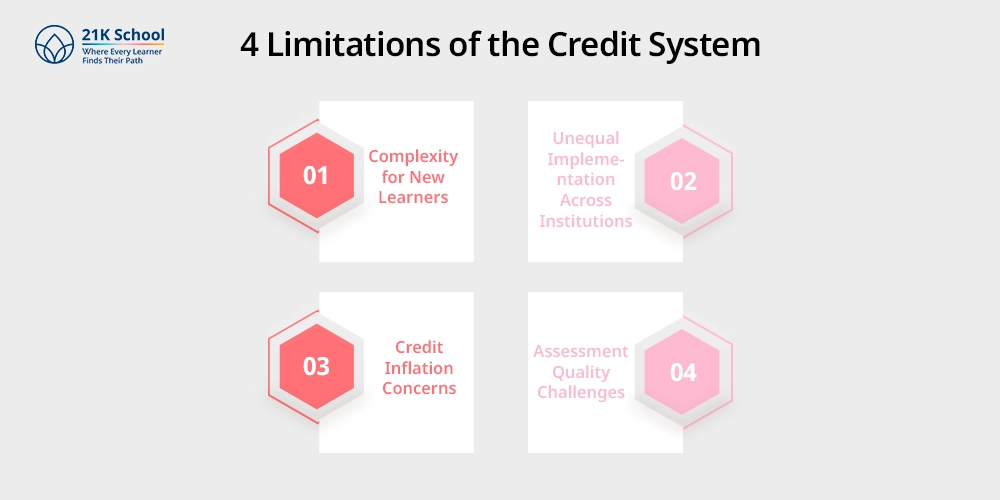
With benefits the credit system also has some limitations. Some common points include:
1. Complexity for New Learners
Students who are new to the credit system after learning through the traditional system may find it complex.
Without guidance, they are unable to access the benefits of the credit system in education.
2. Unequal Implementation Across Institutions
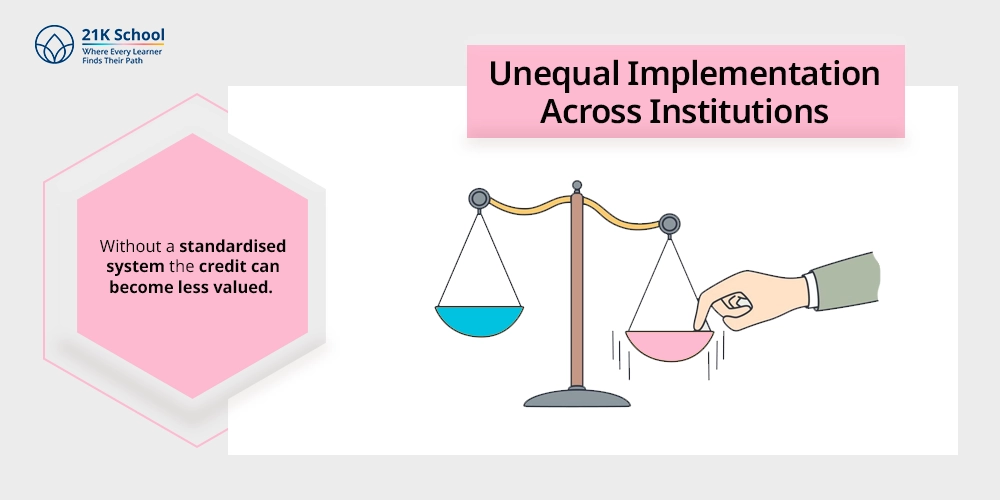
Students often struggle with the unequal implementation across institutions. Without a standardised system the credit can become less valued.
3. Credit Inflation Concerns
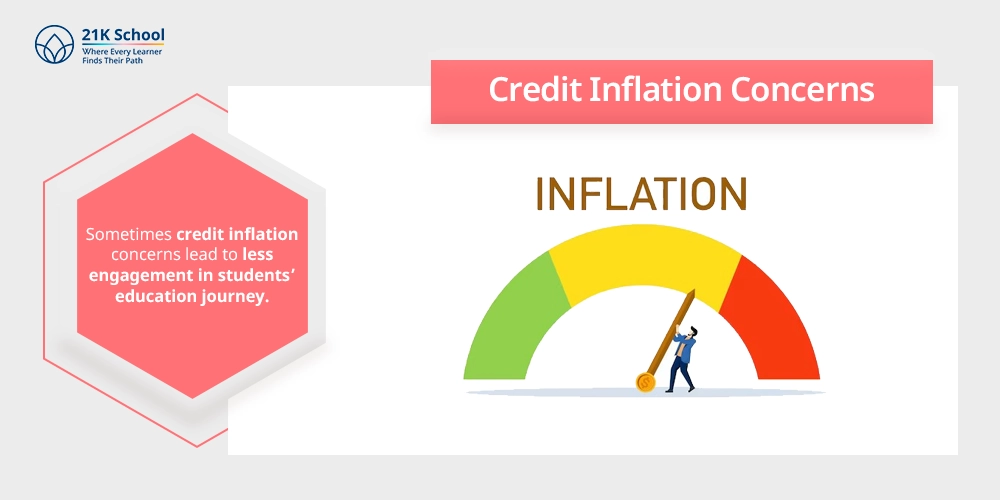
Sometimes credit inflation concerns lead to less engagement in students’ education journey. Students often mislead and focus on credit accumulation instead of skills development.
4. Assessment Quality Challenges
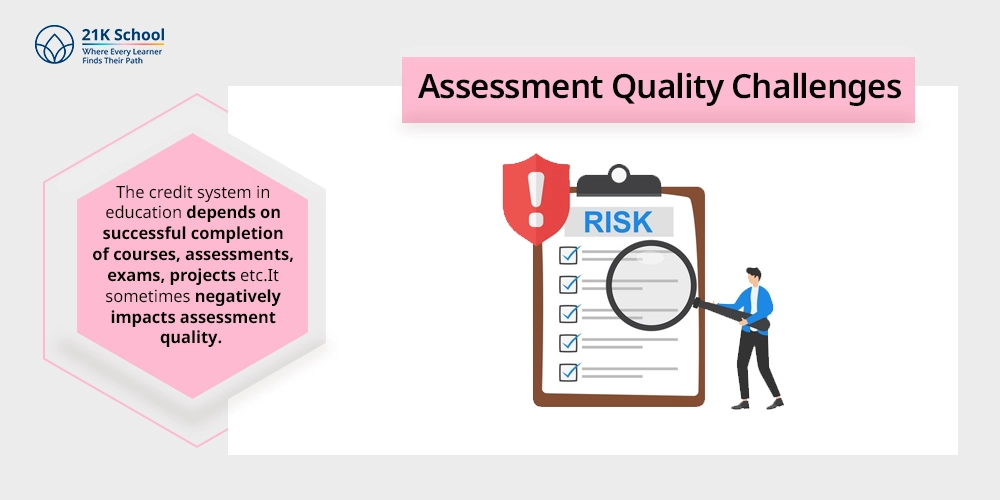
The credit system in education depends on successful completion of courses, assessments, exams, projects etc. However, it sometimes negatively impacts assessment quality.
Conclusion
One of the ideal ways of modern learning is known as the credit system in education through which students learn in a more flexible, learner-centric approach.
With proper guidance and awareness one can avail all the benefits of the credit system. Stay tuned to prepare for educational success in an ever-changing world.

You may also want to read