

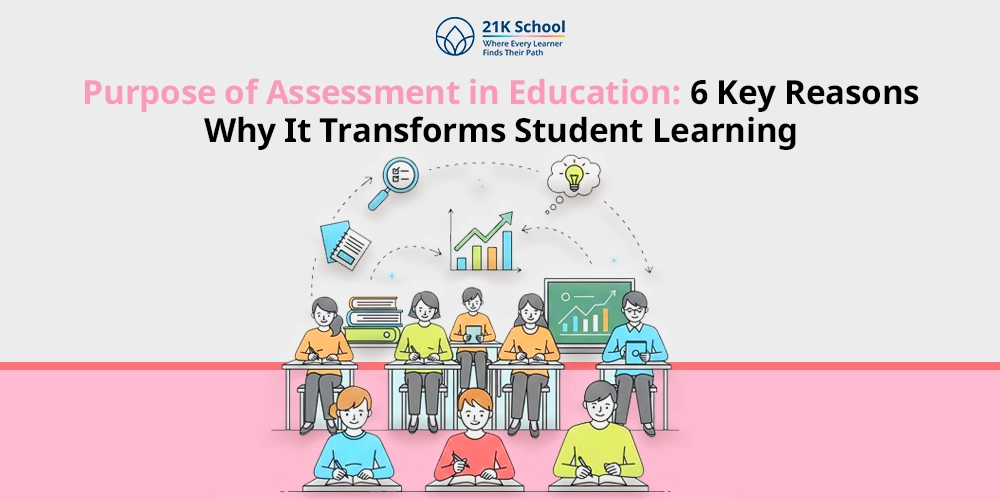
In the educational journey, assessments play an important role in helping to understand the progress of a particular student.
But, have you ever thought about the main purpose of assessment in education ?
Assessment is not just a test, it is a process of identifying whether students are in the right direction of learning or if they need any customisation for improvement.
In this guide, we will share everything about the main purpose of assessment in education, its scope, and types in detail.
Contents
What is Assessment in Education?
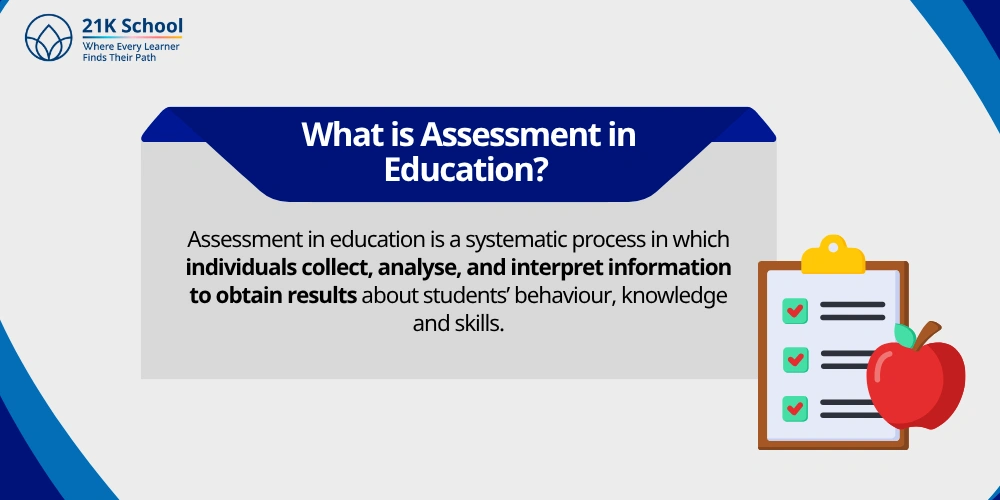
Assessment in education is a systematic process in which individuals collect, analyse, and interpret information to obtain results about students’ behaviour, knowledge and skills.
Through assessment teachers can understand the overall development of students and design teaching strategies for improvement.
In simple terms, assessment helps in understanding what students have learned, how well they know, and effective steps to support better learning.
6 Key Purposes of Assessment in Education
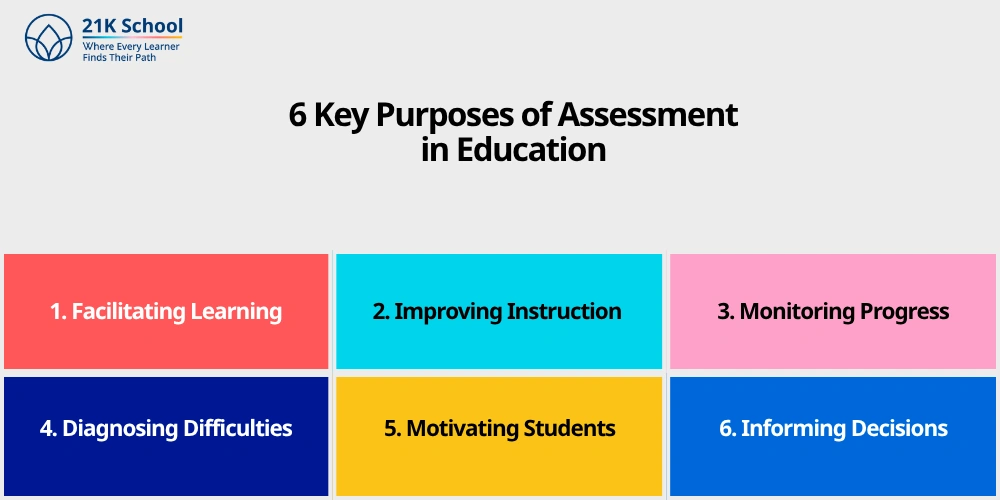
Every students’ learning depends on how well they know and understand. To measure effectively, assessment in education is essential.
Go through the 6 key purposes of assessment in education:
1. Facilitating Learning
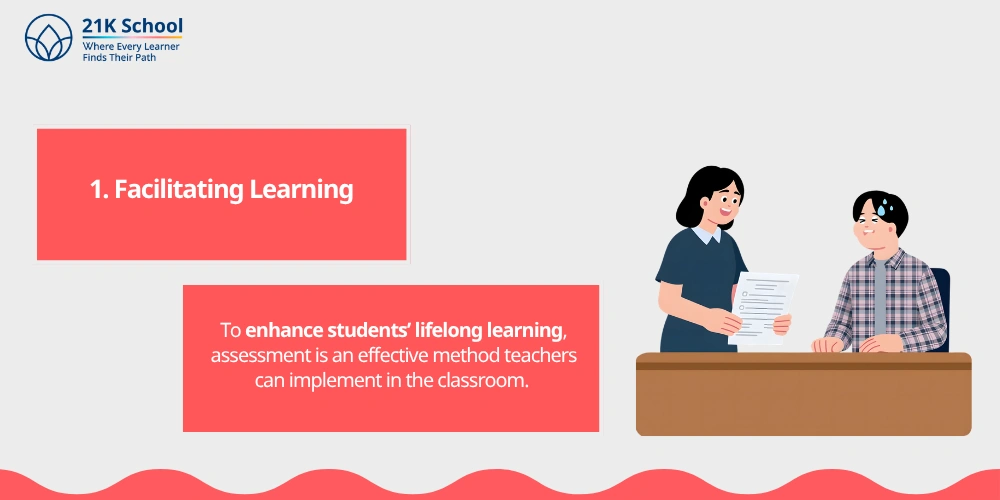
To enhance students’ lifelong learning , assessment is an effective method teachers can implement in the classroom.
In daily learning activities, oral tests, quizzes, and written exams engage students in active learning. In this way, teachers provide effective feedback to support them.
2. Improving Instruction
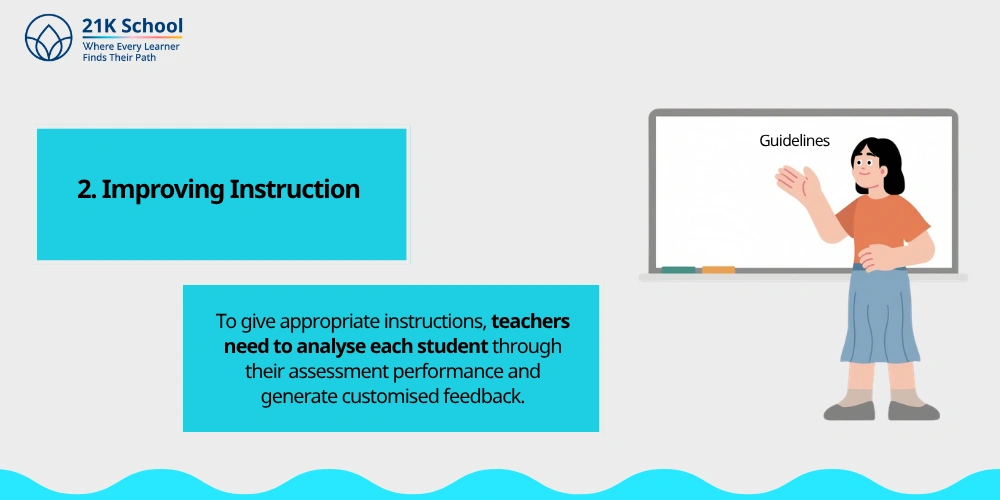
A general instruction in the classroom may have less of an effect than customised instructions for each student.
To give appropriate instructions, teachers need to analyse each student through their assessment performance and generate customised feedback.
3. Monitoring Progress
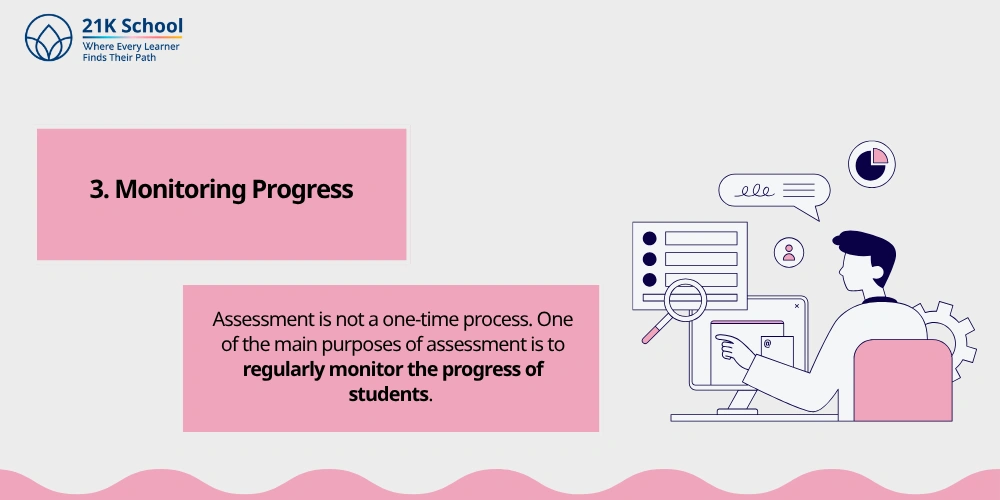
Assessment is not a one-time process. One of the main purposes of assessment is to regularly monitor the progress of students.
This directly helps to provide customised solutions for improvement in learning.
4. Diagnosing Difficulties
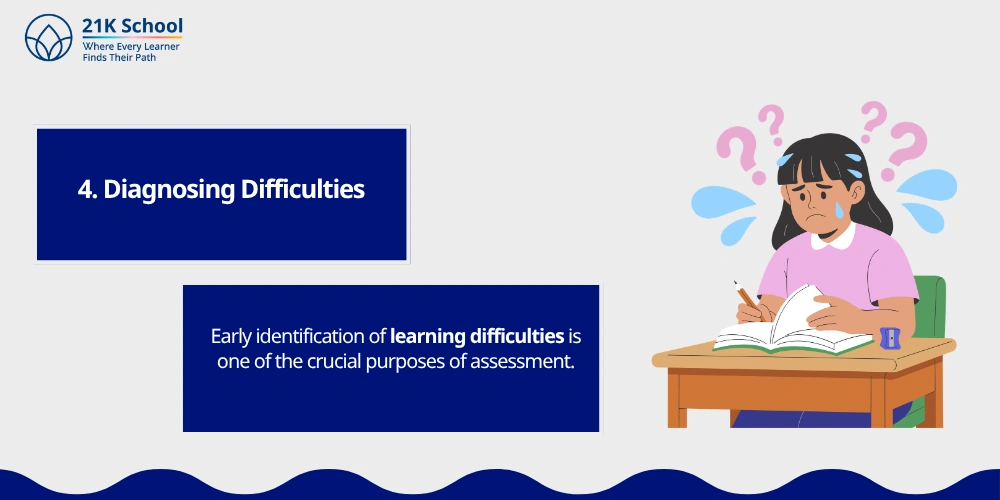
Early identification of learning difficulties is one of the crucial purposes of assessment.
Here, the teacher analyses the problem early to find effective solutions as soon as possible.
5. Motivating Students
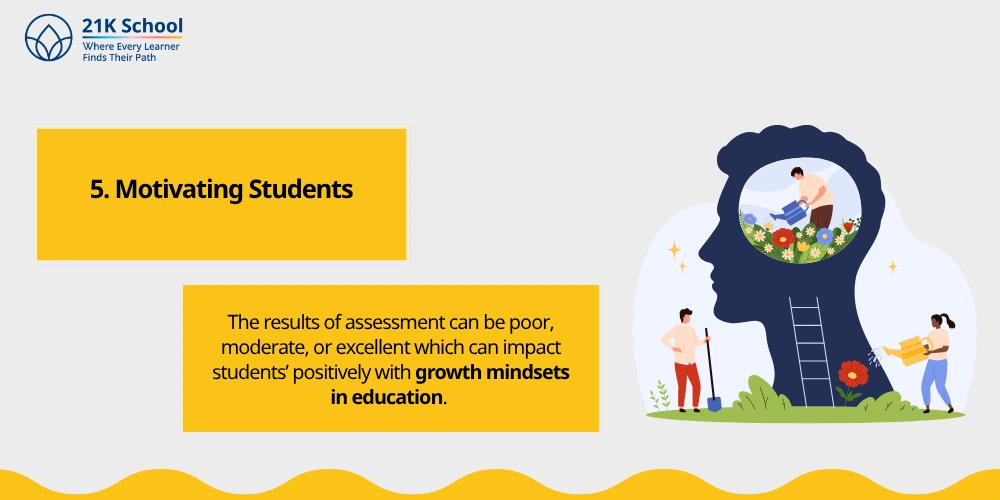
The results of assessment can be poor, moderate, or excellent which can impact students’ positively with growth mindsets in education.
However, teachers play a major role here by motivating students how to bounce back from setbacks. In this way through assessments students can learn to become resilient.
6. Informing Decisions
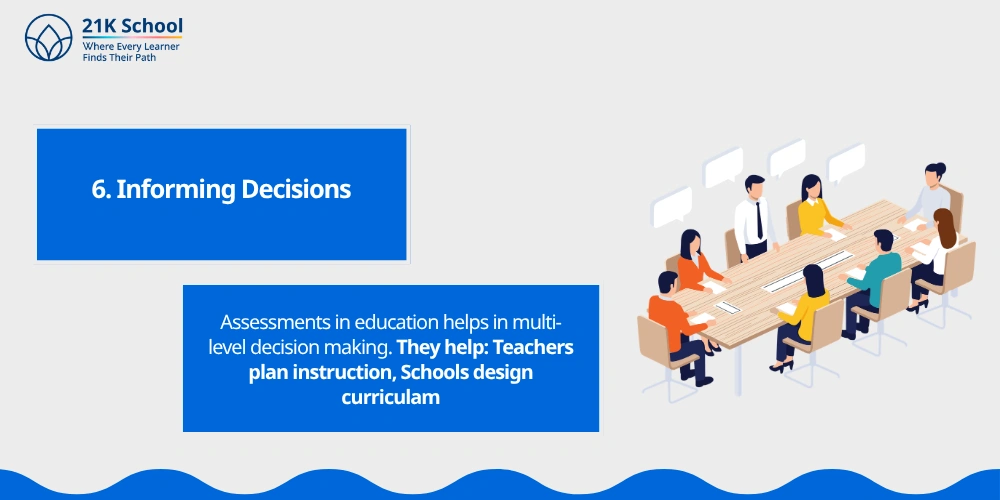
Assessments in education helps in multi-level decision making. They help:
- Teachers plan instruction
- Schools design curricula
- Administrators evaluate programs
- Policymakers improve education systems
5 Main Types of Assessments and its Main Purpose in Education
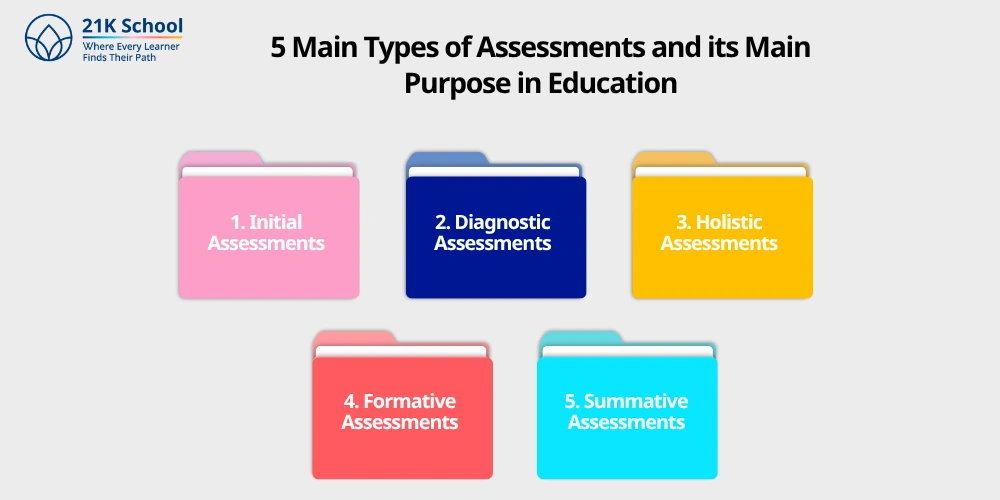
To understand how well students learned, assessments are important in education. Check out the 5 main types of assessments and its main purpose in education:
1. Initial Assessments
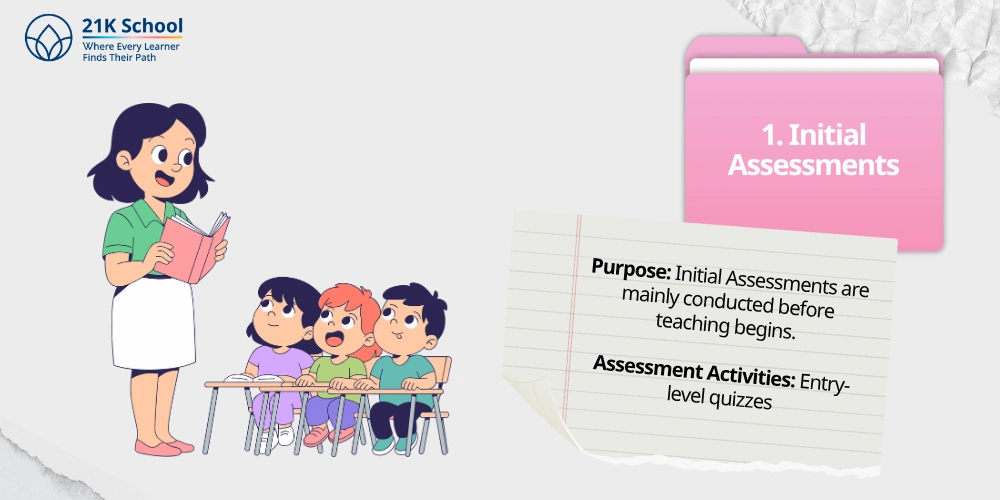
Purpose: Initial Assessments are mainly conducted before teaching begins. The purpose is to understand students’ previous knowledge and skills to customise accordingly.
Assessment Activities: Entry-level quizzes, oral questioning, pre-tests etc.
2. Diagnostic Assessments
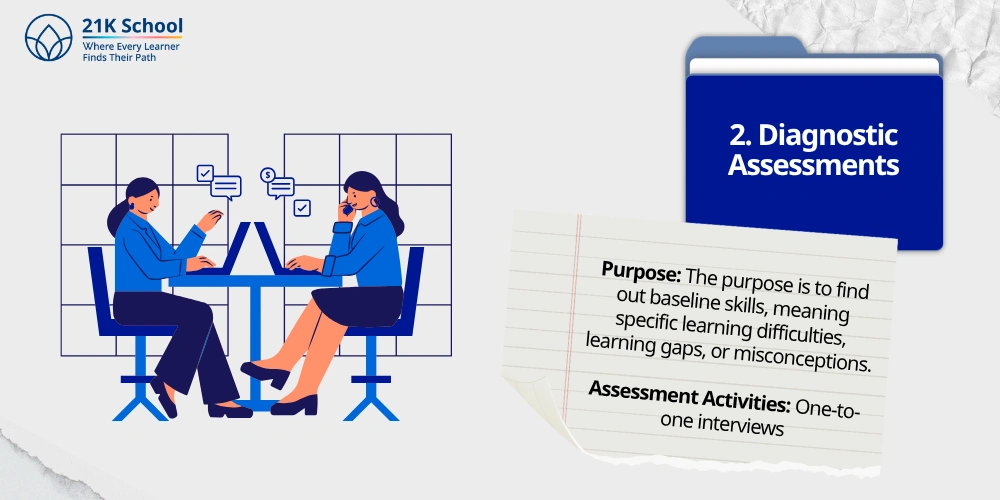
Purpose: The purpose is to find out baseline skills, meaning specific learning difficulties, learning gaps, or misconceptions.
Assessment Activities: One-to-one interviews, skill-based worksheets, observation of learning behavior, IQ tests, puzzles.
3. Holistic Assessments
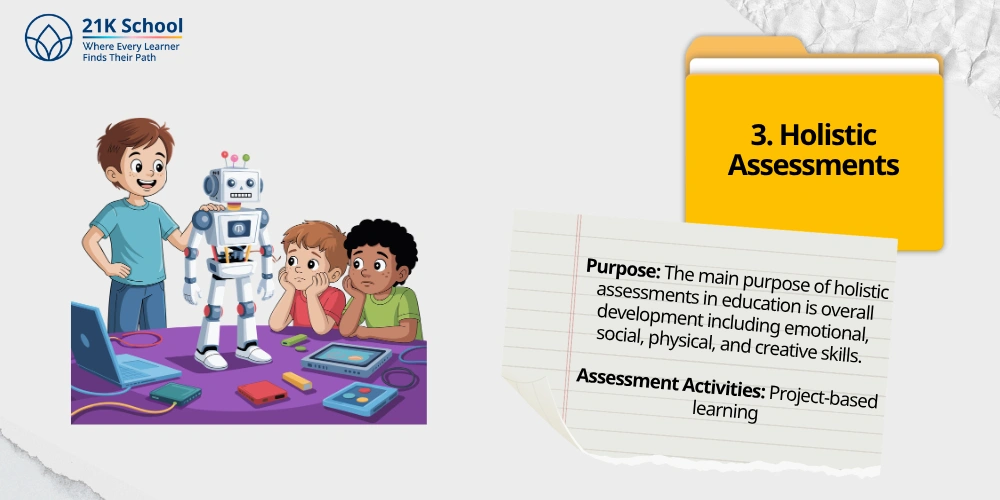
Purpose: The main purpose of holistic assessments in education is overall development including emotional, social, physical, and creative skills .
Here, students not only grow academically but also become proficient in other activities.
Assessment Activities: Portfolio assessment, project-based learning , creative assignments etc.
4. Formative Assessments
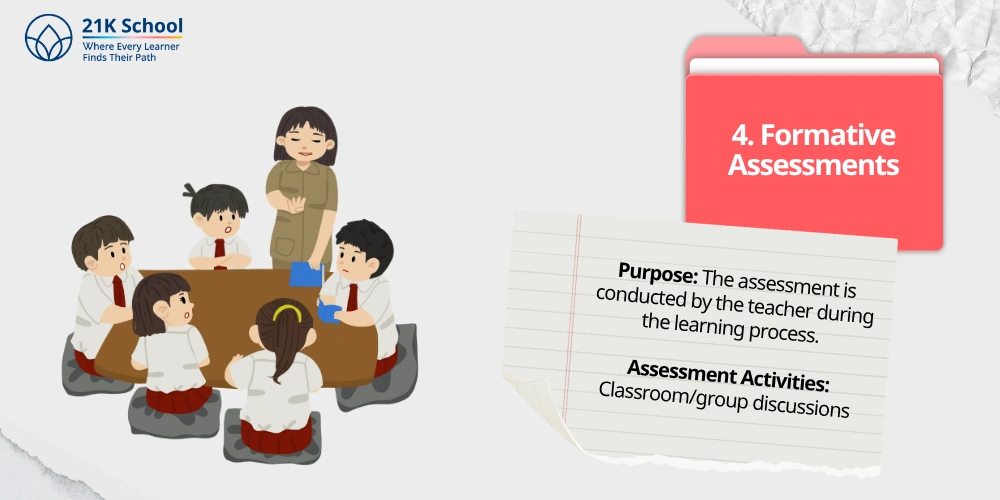
Purpose: The assessment is conducted by the teacher during the learning process. They analyse and provide feedback which improve both learning and teaching at the same time.
Assessment Activities: Class quizzes, homework assignments, Classroom/group discussions etc.
Also, explore various formative assessment tools for students’ overall performance and future growth.
5. Summative Assessments
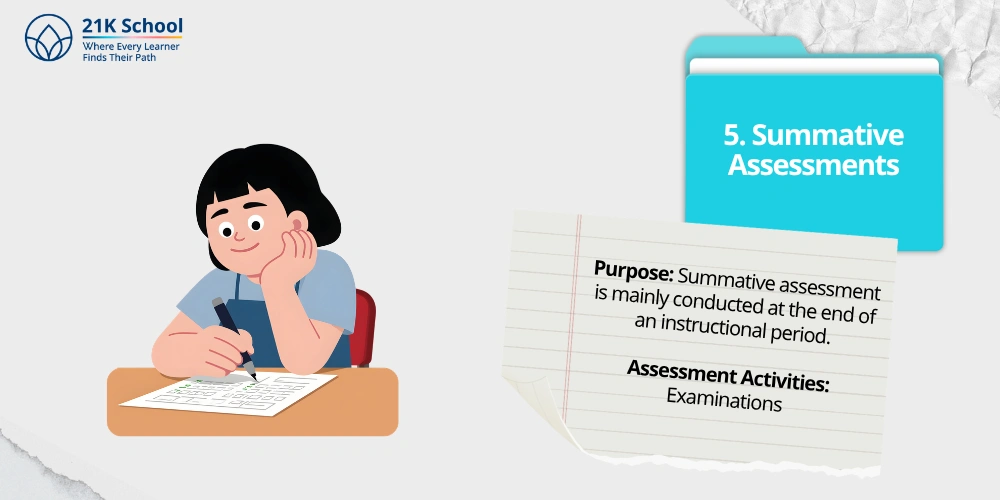
Purpose: Summative assessment is mainly conducted at the end of an instructional period. The main purpose is to provide evidence and confirmation of programme results like grade or certificate. It measures the overall performance.
Assessment Activities: Examinations, written assignments, final projects or presentations.
Purpose of Assessment in Special Education
For special education, assessments are designed differently to fulfill the needs of students with disabilities. Here, assessments play a critical and sensitive role to uplift students.
Assessment in special education helps to identify their disabilities and its level. It also evaluates the current situation by tracking.
In this way, teachers can support students to learn in an educational inclusive environment.
4 Scope of Assessment in Education
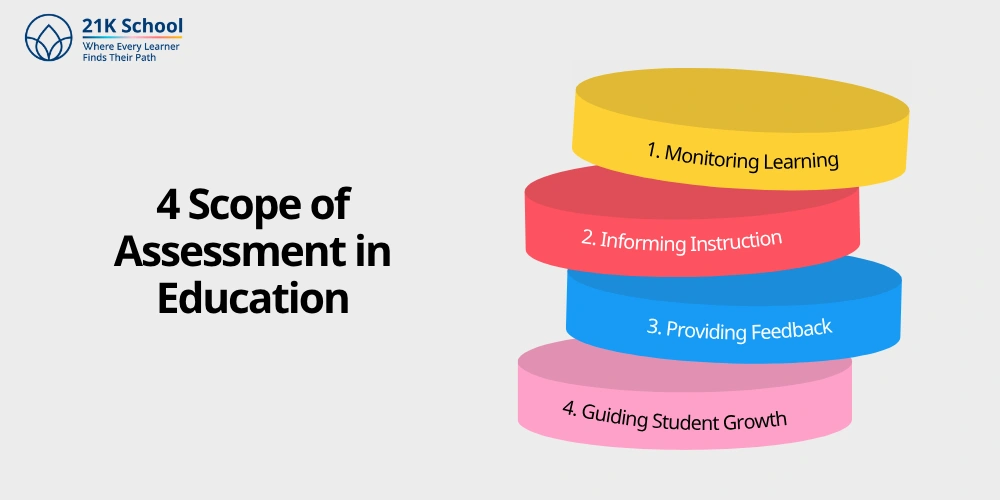
The scope of assessment in education is evolving with time. The key points to consider are:
1. Monitoring Learning
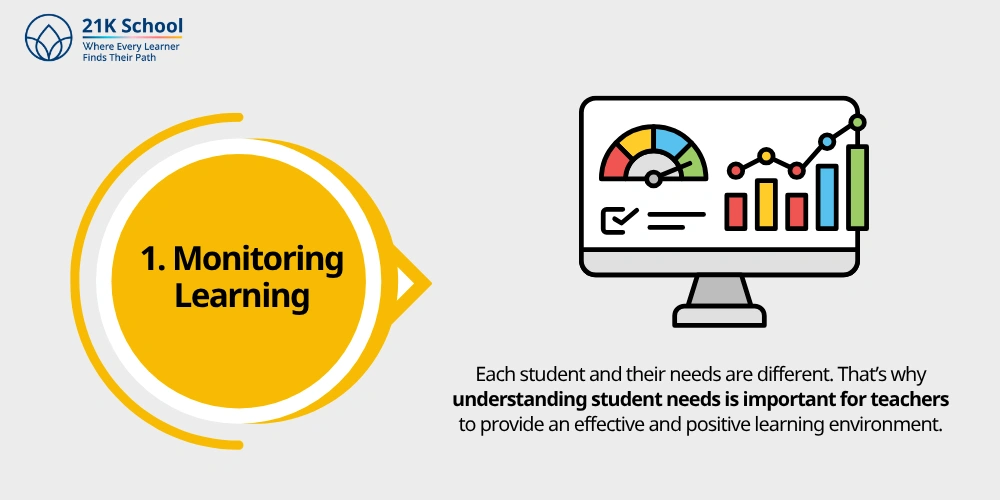
Each student and their needs are different. That’s why understanding student needs is important for teachers to provide an effective and positive learning environment.
Including assessment in education, teachers can monitor students progress throughout the learning journey.
2. Informing Instruction
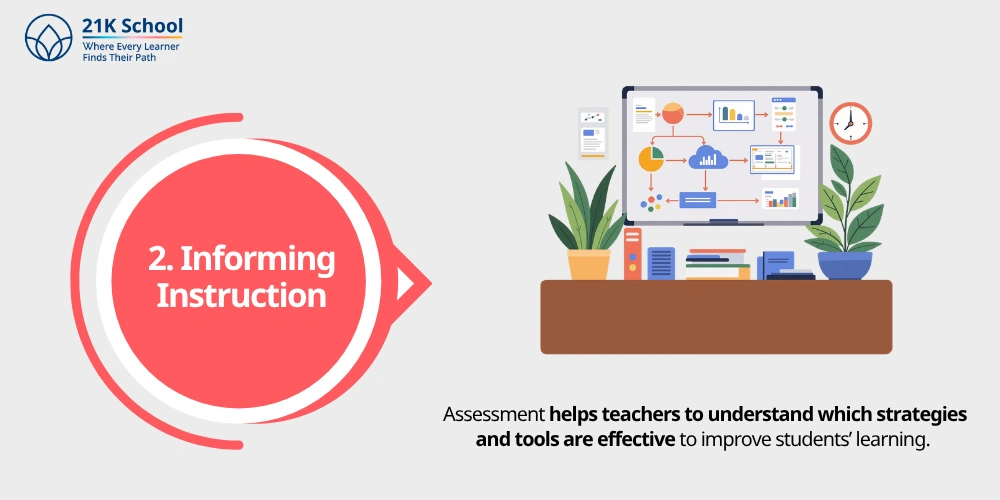
Assessment helps teachers to understand which strategies and tools are effective to improve students’ learning.
It is important for higher education and career development.
3. Providing Feedback
Monitoring or observation is ideal to understand particular student progress to provide customised feedback.
In this way, teachers and students engage to improve learning outcomes.
4. Guiding Student Growth
By getting feedback students are encouraged to work towards improvement. It helps in self-reflection, self-evaluation, and opportunities for revision.
Conclusion
Including assessment in each class can be beneficial for both teachers and students to understand the progress with time.
Timely monitoring, analysing data, and providing feedback ensures students are on the right path to get desired success in their educational journey.
Above mentioned details from the main purpose of assessment, its types, and scope help to align learning effectively. Integrate assessments in education for continuous learning .

You may also want to read