

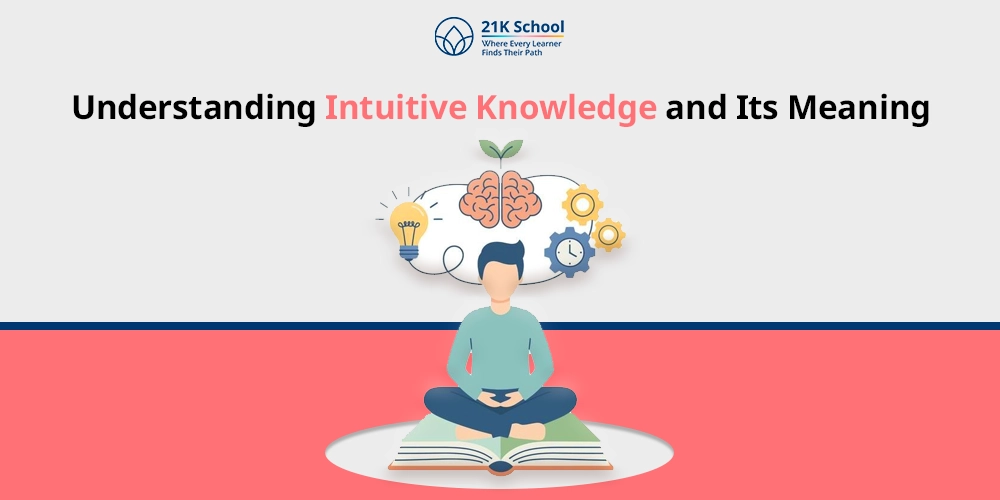
Intuitive Knowledge or Instinct? How Your Mind Makes Instant Decisions
Due to its implicit but strong impact on human cognition, intuitive knowledge has been in the focus of philosophy, psychology and daily experience.
It is what people tend to use when making swift decisions, identifying patterns, or reacting to situations unconsciously.
Intuitive knowledge influences the way people think and behave; it influences learning and creativity to professional expertise. Studying this concept states that human knowledge has no limits and is not restricted to logic, reason, and formal means of learning.
Contents
What is Intuitive Knowledge?
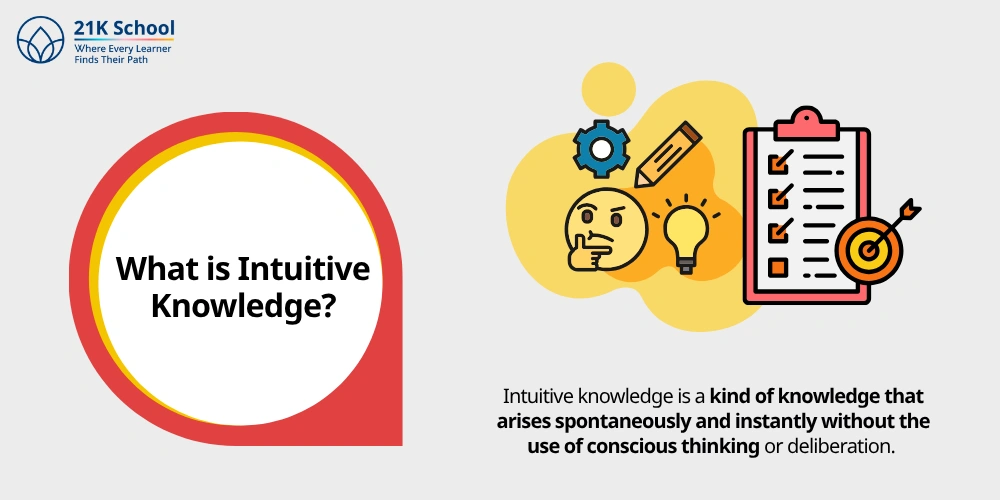
Intuitive knowledge is a kind of knowledge that arises spontaneously and instantly without the use of conscious thinking or deliberation. It is usually influenced by individual experience, observation and subconscious processing.
This kind of knowledge will enable people to understand situations, discern patterns or make decisions in a short period of time.
Intuitive knowledge is generally referred to as the gut feeling or inner sense and is the opposite of logical thinking, and plays an important role in everyday life, creativity, learning and making a professional judgement
Types of Intuitive Knowledge
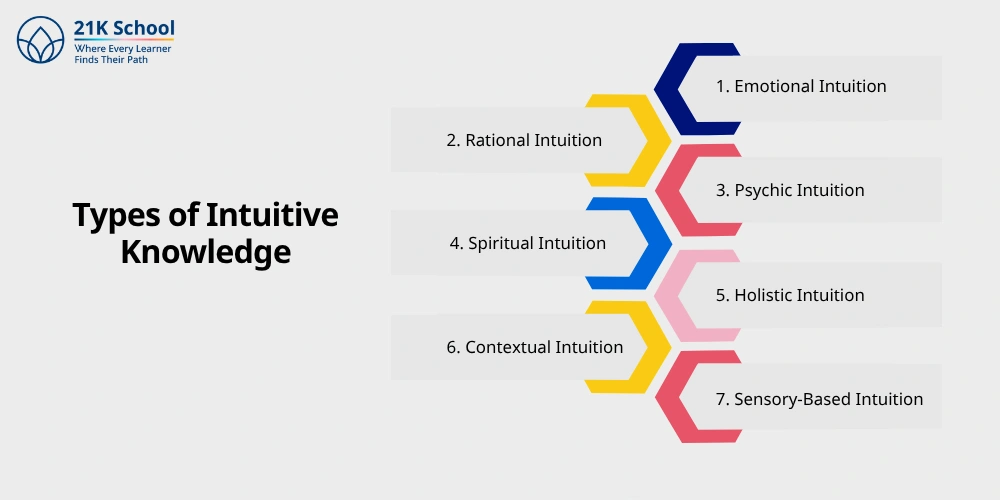
Types of intuitive knowledge elucidate how people obtain knowledge without any mental activity, which includes emotional knowledge, intellectual knowledge, spiritual knowledge and sensory knowledge that will influence the day-to-day decision making and learning method.
1. Emotional Intuition
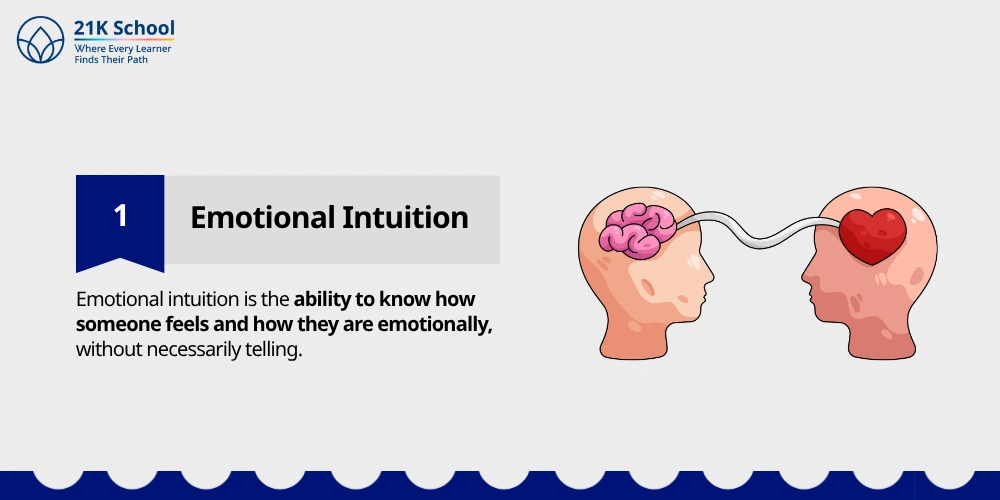
Emotional intuition is the ability to know how someone feels and how they are emotionally, without necessarily telling. It enables a person to feel something in themselves or in others, either through tone, body language or mood.
This form of intuition assists in the formation of relationships, dealing with social dynamics and making empathetic choices as it is able to detect emotional signals without thinking them through, fast.
2. Rational Intuition
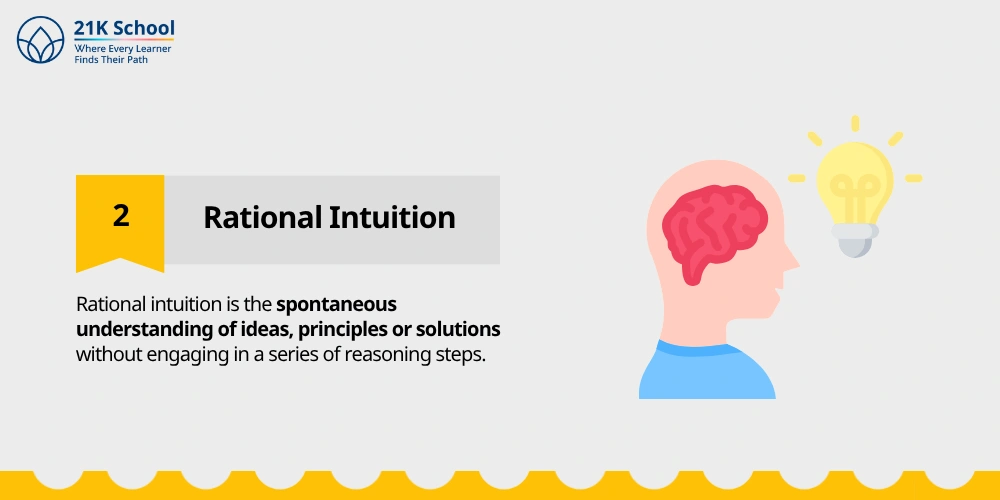
Rational intuition is the spontaneous understanding of ideas, principles or solutions without engaging in a series of reasoning steps. It is frequently acquired by experience and education, particularly in the intellectual or professional field.
People with rational intuition can easily observe patterns, make judgement or draw conclusions that seem reasonable despite the fact that the rational process is only partially conscious.
3. Psychic Intuition
Psychic intuition refers to the perception of acquiring information that is not through the ordinary use of senses or rational thinking. It encompasses experiencing premonitions, intuitions about things yet to happen or perceiving something without necessarily having it noticed.
Although psychic intuition is not scientifically established, it is a popular subject of discussion in spiritual and cultural practice and shapes the personal beliefs and choices of most people.
4. Spiritual Intuition

Spiritual intuition is the sense of direction inside the person, which is related to ones personal beliefs, values or a higher consciousness. It can actually crop up during thought, contemplation or when an individual is in a state of deep awaerness.
It is a form of intuition that enables people to discover meaning, purpose and moral direction and affects their ethical decision making and their personality development, not necessarily based on material or rational values.
5. Holistic Intuition
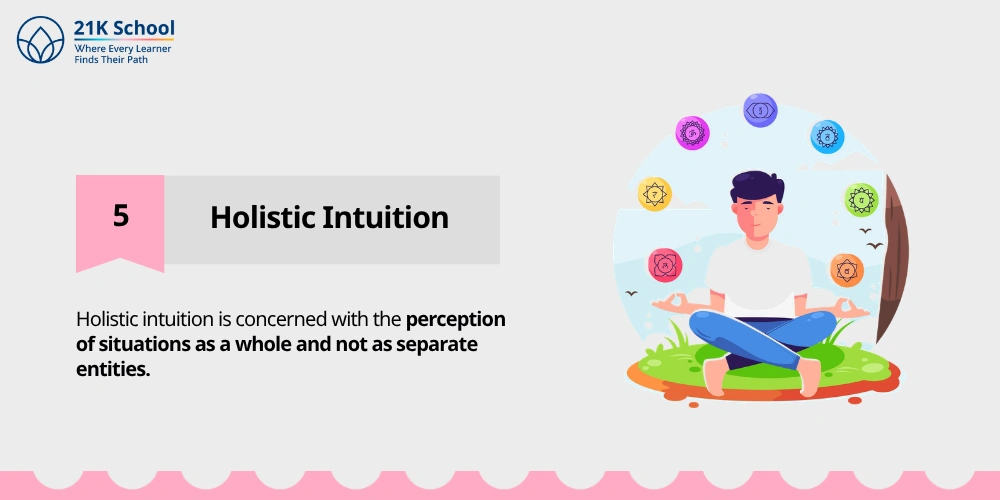
Holistic intuition is concerned with the perception of situations as a whole and not as separate entities. It enables one to combine emotions, intelligence and environmental aspects at the same time.
This form of intuition comes in handy in complicated circumstances; it helps individuals to identify patterns, associations, and results by looking at the bigger picture as opposed to looking at it through a microscope.
6. Contextual Intuition
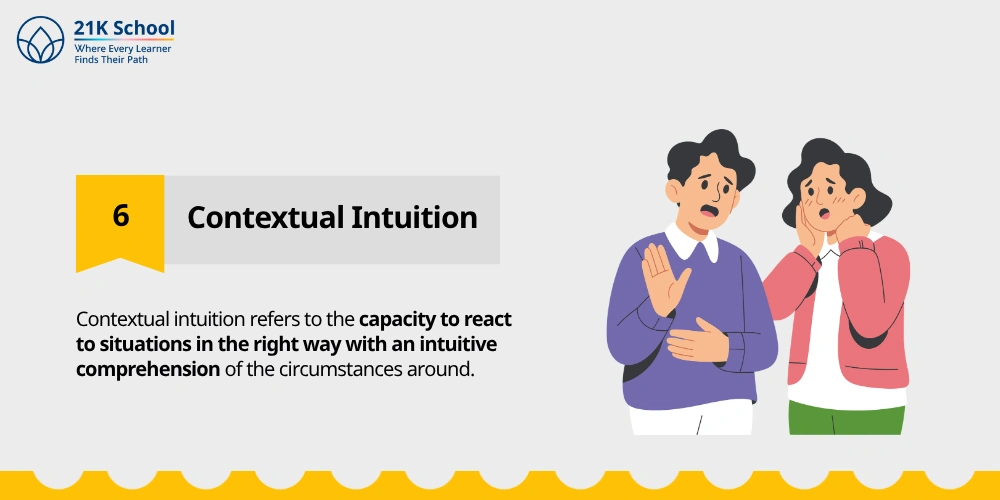
Contextual intuition refers to the capacity to react to situations in the right way with an intuitive comprehension of the circumstances around. It is based on experience, cultural sensitivity and contexts.
People can also rely on contextual intuition that shapes the behaviour, communication, or decisions in relation to the environment without necessarily being aware of all of the factors with which they make decisions.
7. Sensory-Based Intuition
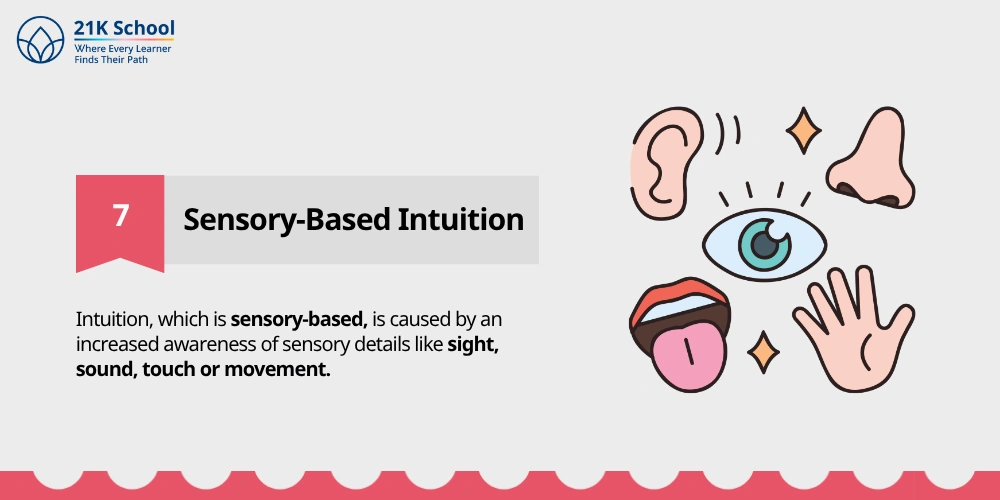
Intuition, which is sensory-based, is caused by an increased awareness of sensory details like sight, sound, touch or movement. It does not require much conscious effort to interpret the minute sensory details.
This form of intuition is typical among an experienced professional, such as an athlete, artist or driver and functions as a response built from experience and sensory practices.
Characteristics of Intuitive Knowledge
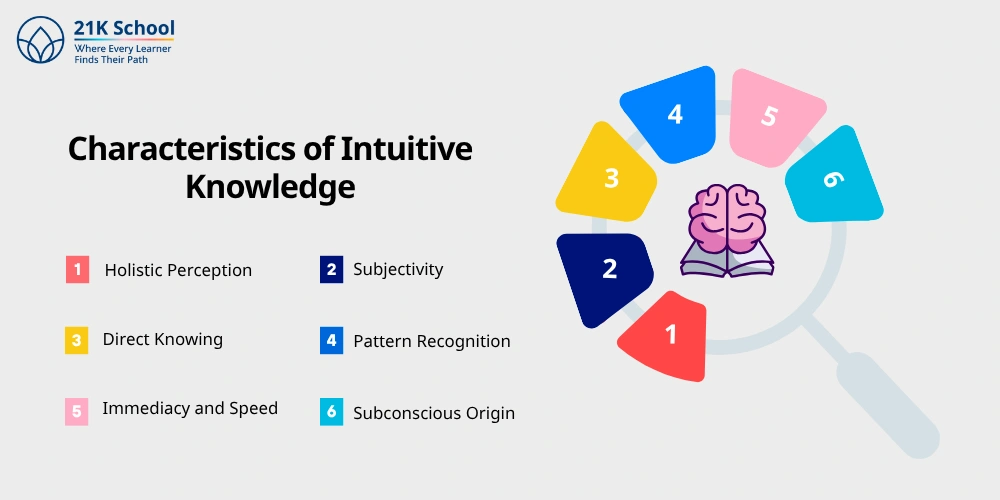
Features of intuitive knowledge highlight how knowing occurs, focusing on holistic perception, subjectivity, pattern recognition, and quick insight without the use of conscious logical thought processes.
1. Holistic Perception
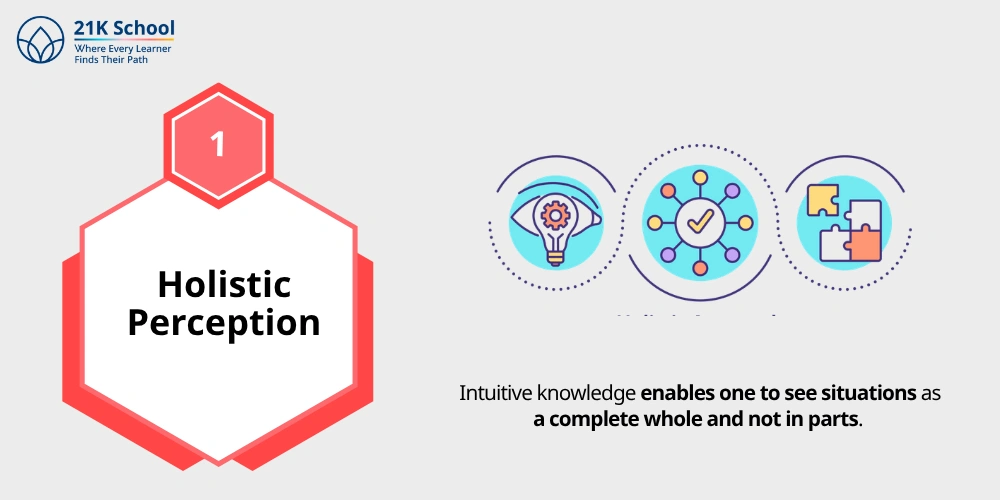
Intuitive knowledge enables one to see situations as a complete whole and not in parts. It combines both feelings and experience, and external stimuli, allowing us to see things from a wider perspective.
This holistic view assists in making those decisions that take into consideration several factors simultaneously, and without depending on detailed analysis or linear thinking.
2. Subjectivity
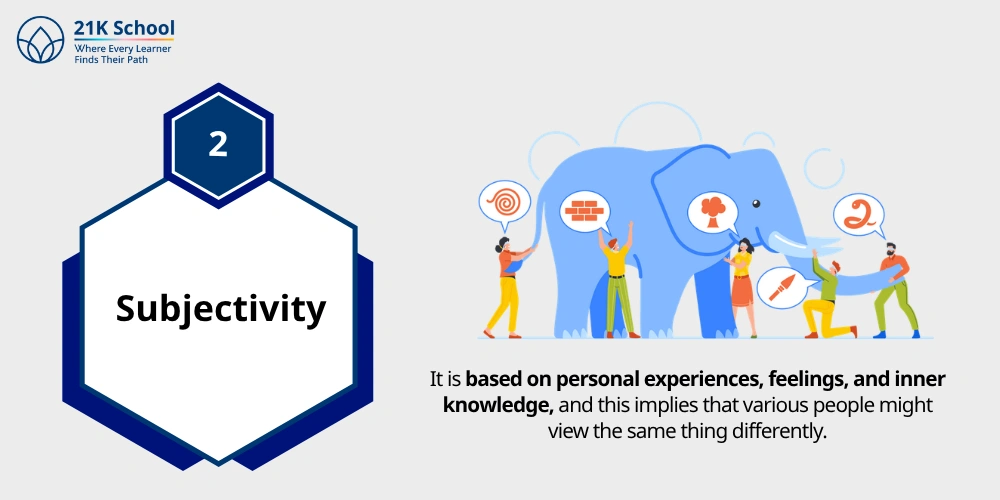
The intuitive knowledge is personal and subjective in nature. It is based on personal experiences, feelings, and inner knowledge, and this implies that various people might view the same thing differently.
This subjectivity causes intuition to be specific to a certain individual and, therefore, it is the reflection of personal judgement, values and vision and does not represent universal or fully objective facts.
3. Direct Knowing
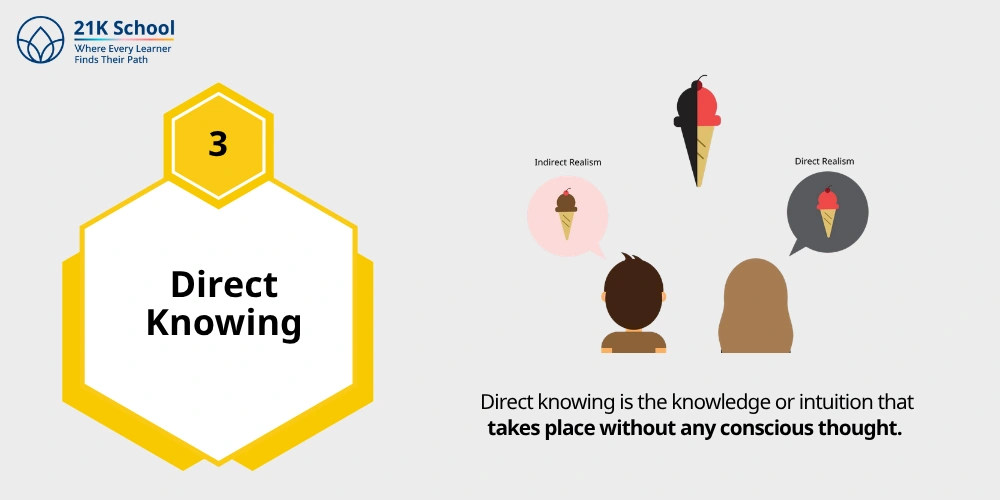
Direct knowing is the knowledge or intuition that takes place without any conscious thought. It is the instant knowledge of the truth or right, when the response or comprehension of something simply feels right.
The trait enables people to understand complicated ideas or solutions without a logical examination step by step.
4. Pattern Recognition
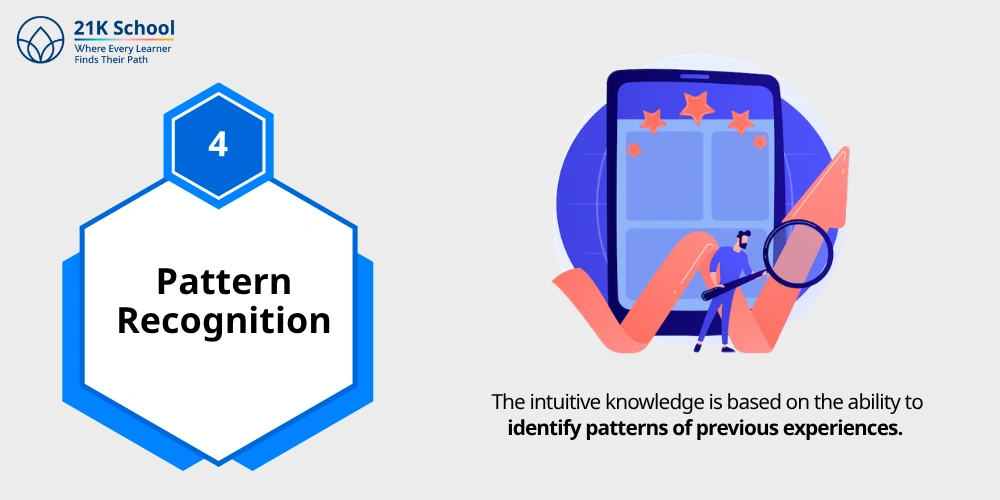
The intuitive knowledge is based on the ability to identify patterns of previous experiences. People are able to identify trends, relationships, or anomalies without the need to analyse all the information consciously.
Pattern recognition facilitates accelerated response/solution to a problem, particularly in a familiar or complex circumstance, whereby logic by itself might be delayed or inadequate.
5. Immediacy and Speed
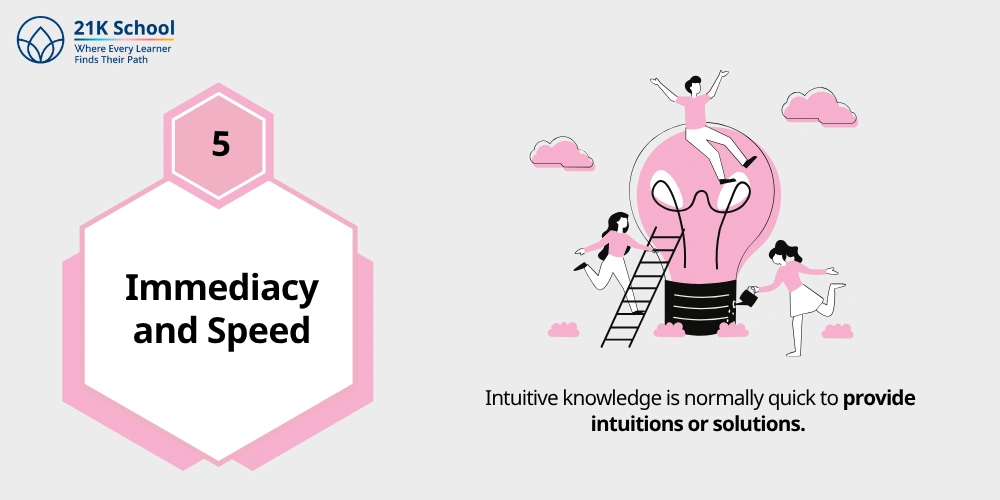
Intuitive knowledge is normally quick to provide intuitions or solutions. Intuition, in comparison to slow and sequential analytical reasoning, offers fast responses, thus allowing one to make decisions on time.
It is this immediacy that makes it viable in a dynamic and unexpected or high-pressure situation where quick judgment is needed.
6. Subconscious Origin
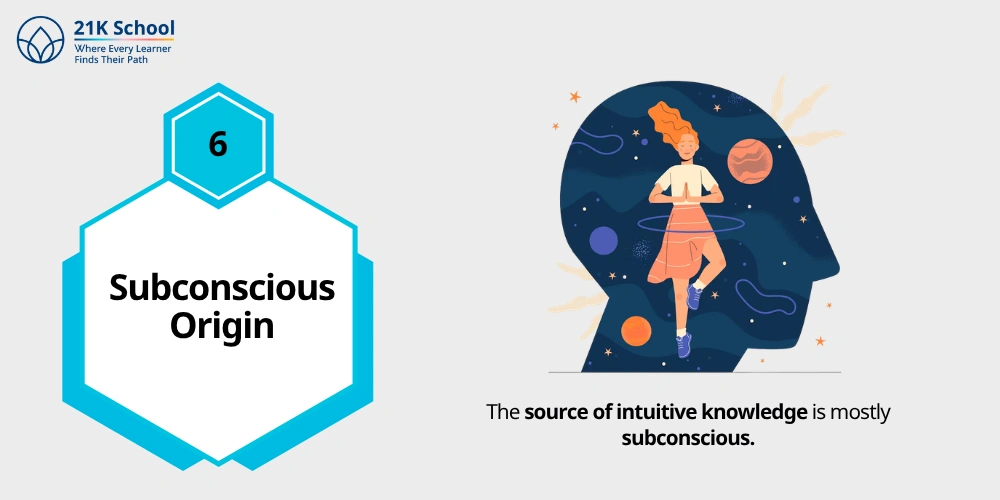
The source of intuitive knowledge is mostly subconscious. The experiences of the past, learning and observation can be stored below the conscious mind so that the mind will be able to come up with insights without necessarily thinking.
It is this unconscious foundation that renders intuition automatic and effortless, but very rich in information provided by previous knowledge and perception.
Benefits of Intuitive Knowledge
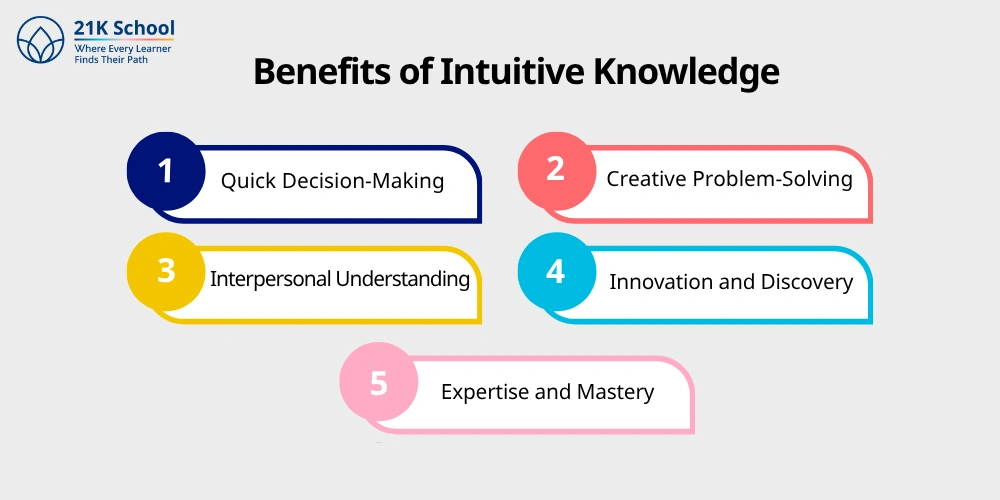
Intuitive knowledge has benefits, such as faster decision-making skills, increased creativity, improvement in interpersonal understanding, innovation, and expert judgment, which help individuals to perform well under difficult, uncertain or time-demanding circumstances.
1. Quick Decision-Making
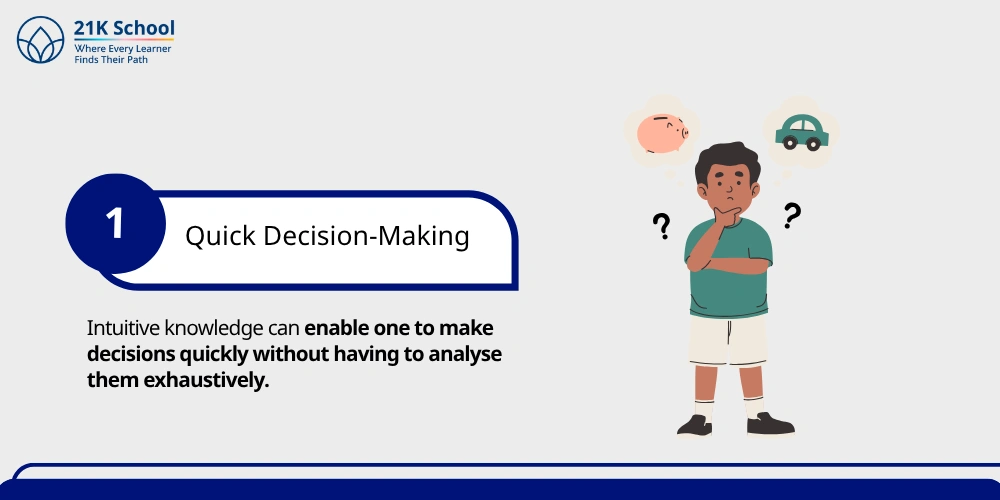
Intuitive knowledge can enable one to make decisions quickly without having to analyse them exhaustively. With the help of gut feelings, experience, and subconscious processing, individuals are able to react effectively to a situation in times that are very time-sensitive or high-pressure situations.
This fast thinking is of particular benefit during emergency situations, dynamic learning environments, and professional situations, when quick decisions are vital.
2. Creative Problem-Solving
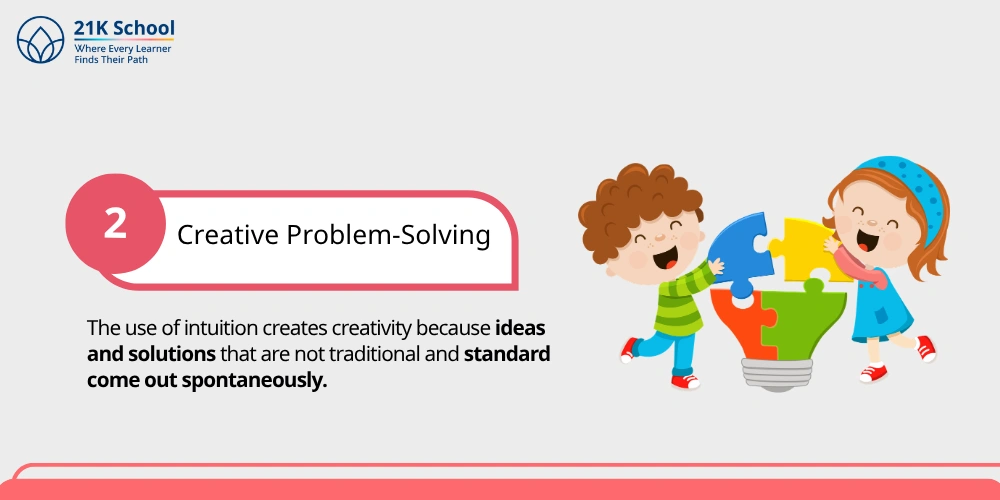
The use of intuition creates creativity because ideas and solutions that are not traditional and standard come out spontaneously. It makes one find relationships and opportunities that might not be evident through logical thinking.
Intuitive knowledge draws on subconscious processes to aid creative thinking and develops problem-solving skills to solve a problem in a creative yet flexible manner.
3. Interpersonal Understanding
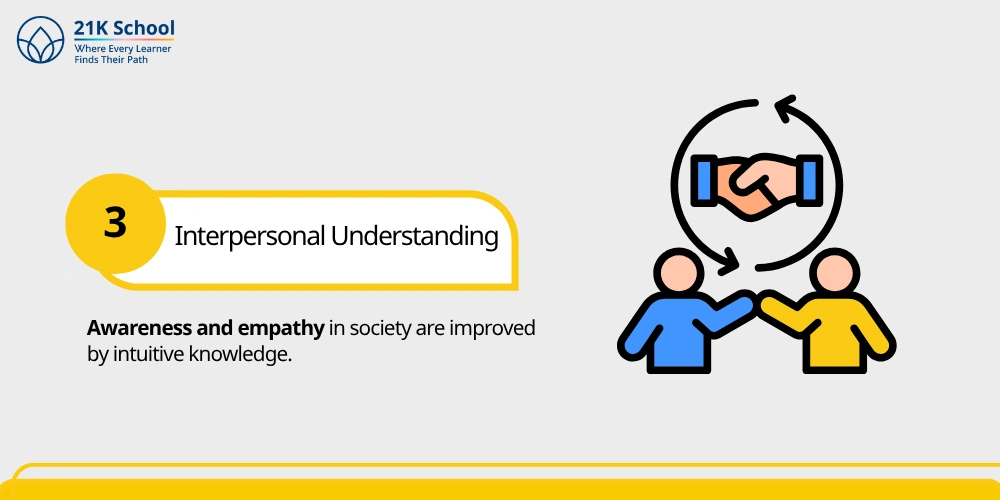
Awareness and empathy in society are improved by intuitive knowledge. Humans are able to detect the emotions, motives, or intentions of others without explicit communication on the same level.
This competency enhances relationship, teamwork, and conflict management because it enables one to react (appropriately), develop trust and relate more with others.
4. Innovation and Discovery
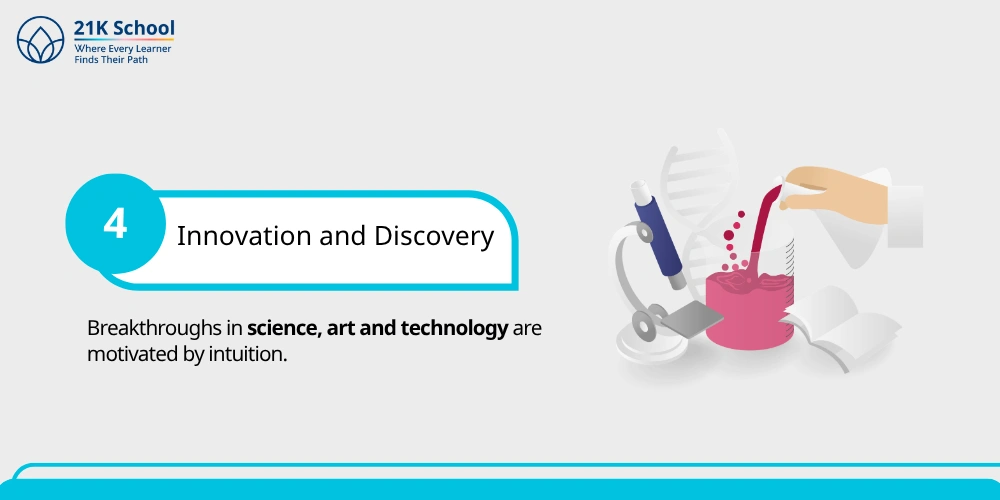
Breakthroughs in science, art and technology are motivated by intuition. By recognising patterns and possibilities beyond conscious thinking, people are able to come up with original ideas and make new discoveries.
Intuitive insights are used by many inventors, artists, and researchers in experimenting and innovating their work.
5. Expertise and Mastery
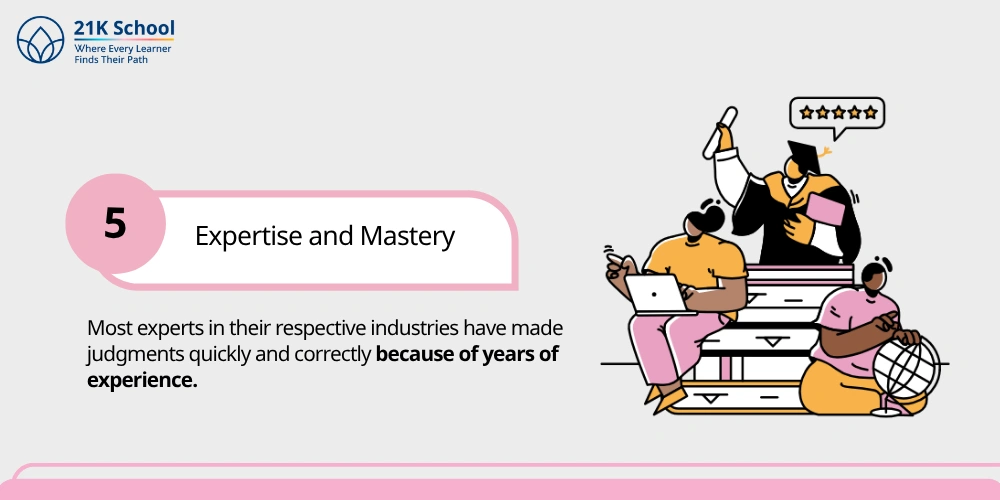
One of the characteristics of expertise is intuitive knowledge. Most experts in their respective industries have made judgments quickly and correctly because of years of experience.
This subconscious knowledge helps professionals to work effectively, make predictions and show skills without necessarily having to analyse it consciously.
Limitations and Risks of Intuitive Knowledge
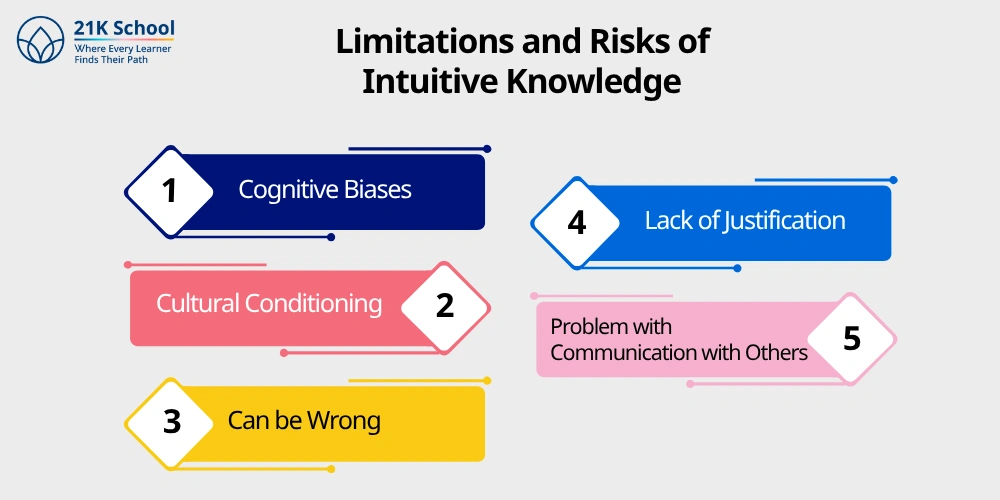
Intuitive knowledge has weaknesses and threats such as the presence of bias, subjectivity, cultural factors, possibility of error and lack of justification, and that is why there is a need to balance intuition, criticality and evidence.
1. Cognitive Biases
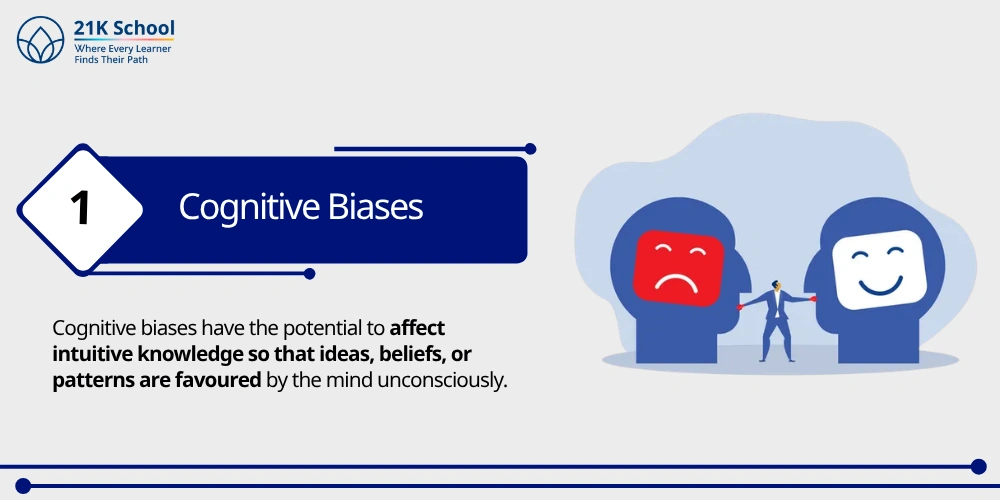
Cognitive biases have the potential to affect intuitive knowledge so that ideas, beliefs, or patterns are favoured by the mind unconsciously. These prejudices may distort perception and cause incorrect judgment.
Indicatively, confirmation bias can lead someone to trust intuitions that align with their expectations and disregard evidence to the contrary. Awareness of biases is essential to ensure that the intuitive decisions are not systematically wrong.
2. Cultural Conditioning
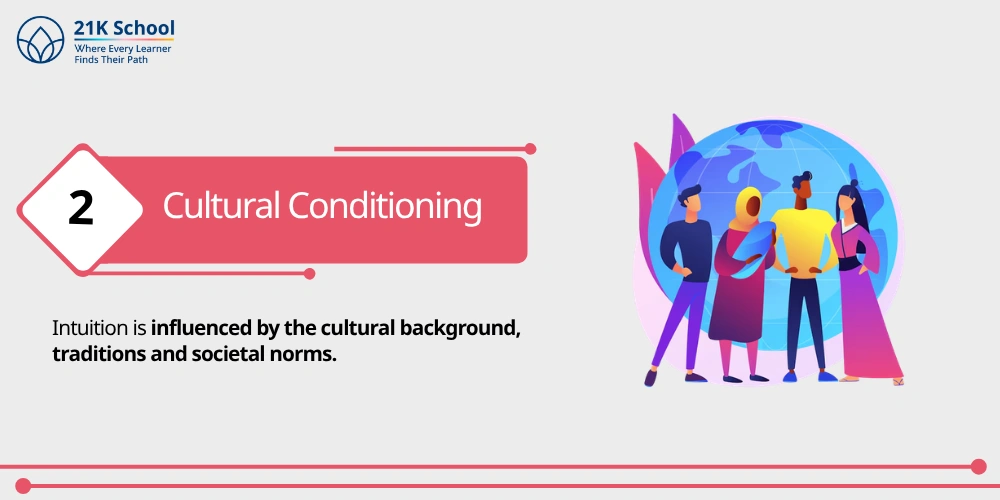
Intuition is influenced by the cultural background, traditions and societal norms. What is intuitively acceptable in one culture will be misconstrued or unacceptable in another.
Through cultural conditioning, the universality of intuitive knowledge is limited since it reflects acquired norms instead of the objective truth. Without cultural awareness, one may simply use his or her intuition and make wrong decisions, misunderstand, and make a misjudgment.
3. Can be Wrong
The intuitive knowledge is not always infallible and may yield mistakes. Intuition might also make the wrong conclusion that seems right because it does not require rational analysis.
In particular, when faced with an unknown, complicated or high-stakes scenario, excessive use of intuition may lead to errors. Intuitive insights may need to be verified in order to be sure they have been reasoned or proven right.
4. Lack of Justification
Intuition is sometimes sub-conscious and it is hard to give rational explanations or findings that can justify the choice. This lack of justification may undermine credibility, especially in professional, academic or even collaborative contexts where decisions have to be transparent.
Intuitive insight could be wrong or even denied, even when it is accurate and cannot be expressed effectively or justified through argument.
5. Problem with Communication with Others
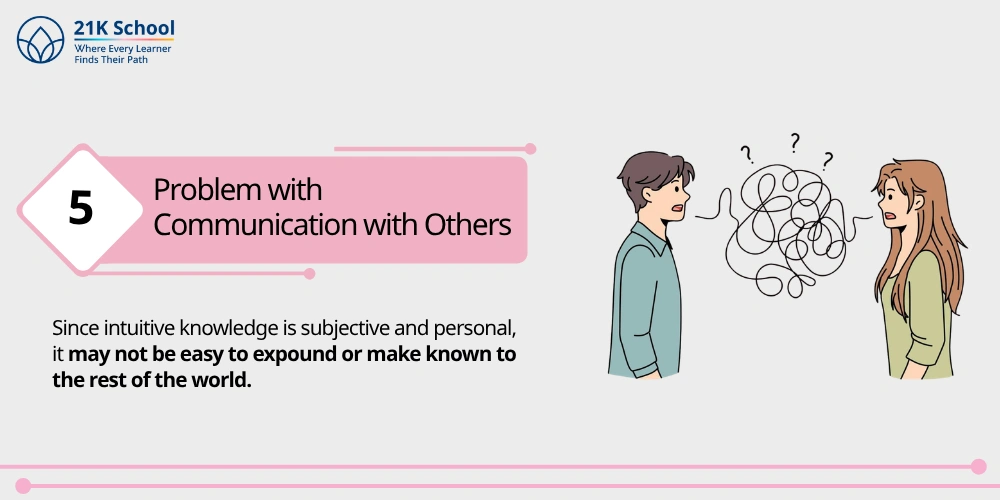
Since intuitive knowledge is subjective and personal, it may not be easy to expound or make known to the rest of the world. Unless there is visible reasoning, people may not comprehend or have trust in things that are not seen.
It complicates collaboration, teamwork or group decision-making process because, based on intuition, the perceptions of all subjects can be inconsistent and cannot be necessarily transformed into universally applicable explanations.
How to Develop Intuitive Knowledge
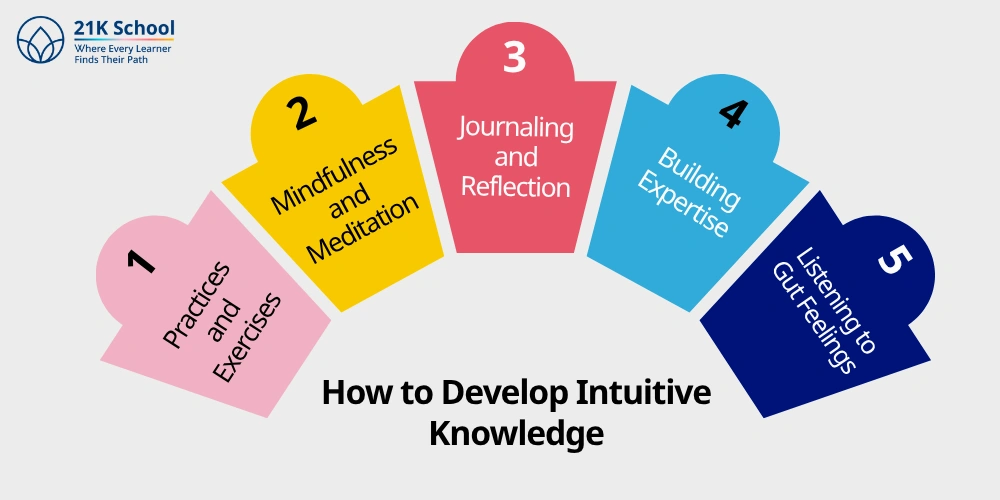
Development of intuitive knowledge is a time-consuming process; it is a process that needs concentration, thought, practise, experience, and attention to inner voices to help individuals strengthen the subconscious, pattern recognition and make decisions confidently.
1. Practices and Exercises
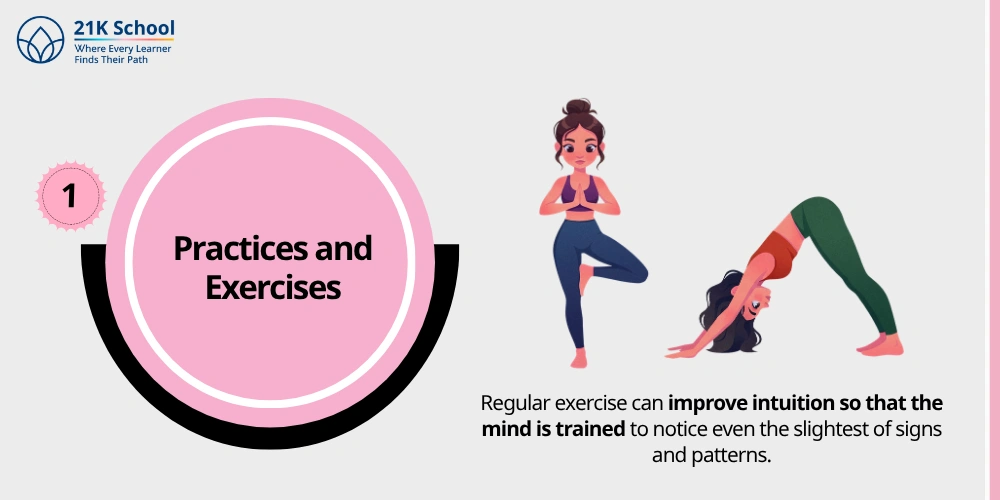
Regular exercise can improve intuition so that the mind is trained to notice even the slightest of signs and patterns. Visualisation activities, problems to solve, and artistic activities that cause the subconscious to process information more effectively.
With constant monitoring, contemplation, and analysis, it is possible to enhance the art of looking at the intuitive information and become capable of responding in a timely manner in a variety of situations.
2. Mindfulness and Meditation
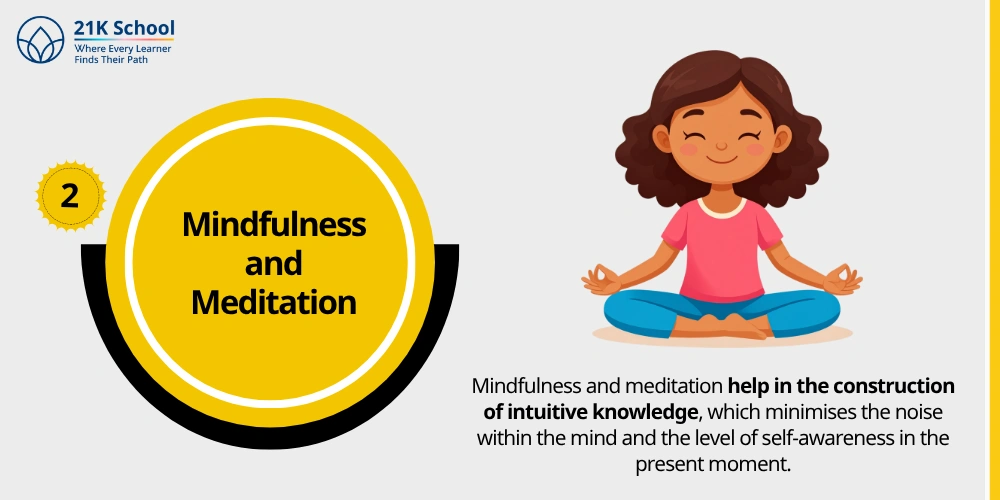
Mindfulness and meditation help in the construction of intuitive knowledge, which minimises the noise within the mind and the level of self-awareness in the present moment.
They are those practises that help to improve the concentration in kids, detectiveness and sensitivity to the details of the environment and what is going on inside.
Releasing the conscious mind helps people to make better decisions, learn more about themselves, and be able to see the intuition trying to find a solution to complicated situations.
3. Journaling and Reflection
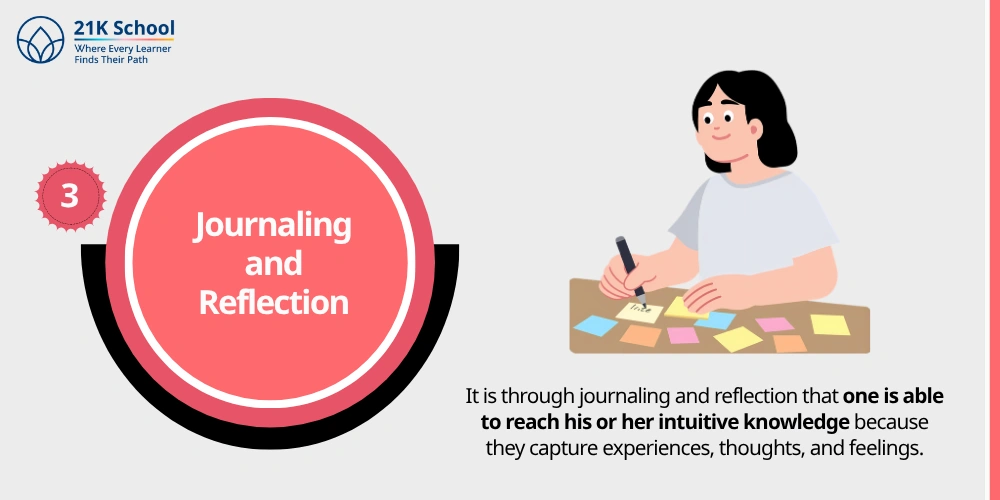
It is through journaling and reflection that one is able to reach his or her intuitive knowledge because they capture experiences, thoughts, and feelings. The process of revising these entries as time goes by assists in finding recurrent patterns, insights and subconscious gut feelings.
The process builds a stronger self-awareness and simplifies intuitive clues to be identified, deciphered, and implemented in the decision-making or the creative handling of problems.
4. Building Expertise
Knowledge gained through developing skill in one direction increases intuitive knowledge because the mind is trained to see the trends and solutions unconsciously. Professionals are usually driven by intuition when they need to make quick and correct decisions without strictly analysing them.
The capacity to reach intuitive insights well and without apprehension is honed through consistent learning, practise and exposure in a particular field.
5. Listening to Gut Feelings
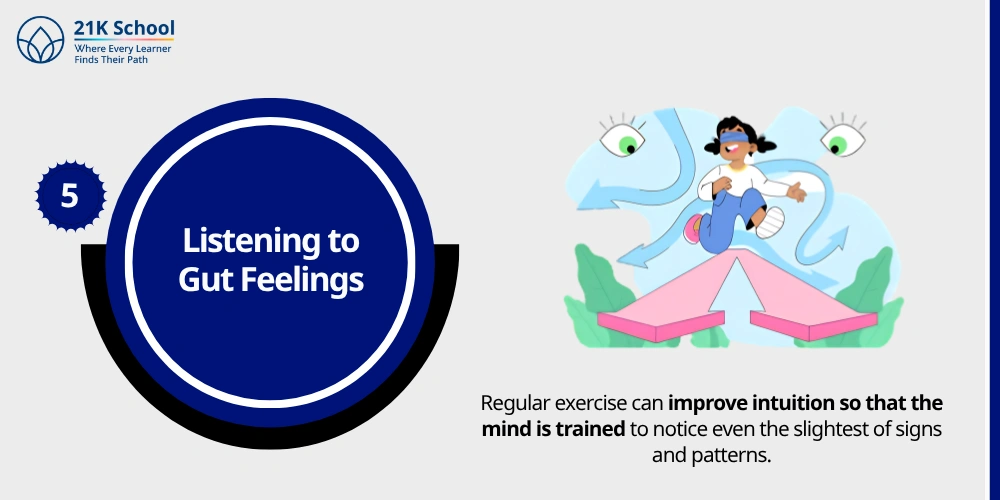
Listening to gut feelings contributes towards developing intuition because gut feelings should take into consideration finer internal signals. Such automatic reactions usually mirror through experience and automatic processing.
Through the trust and observation of these emotions, people can discover when these intuitions are effective, enhance their judgment capabilities and improve their attachment to the inner sense and strike a balance between inner sense and critical thinking skills.
Examples of Intuitive Knowledge
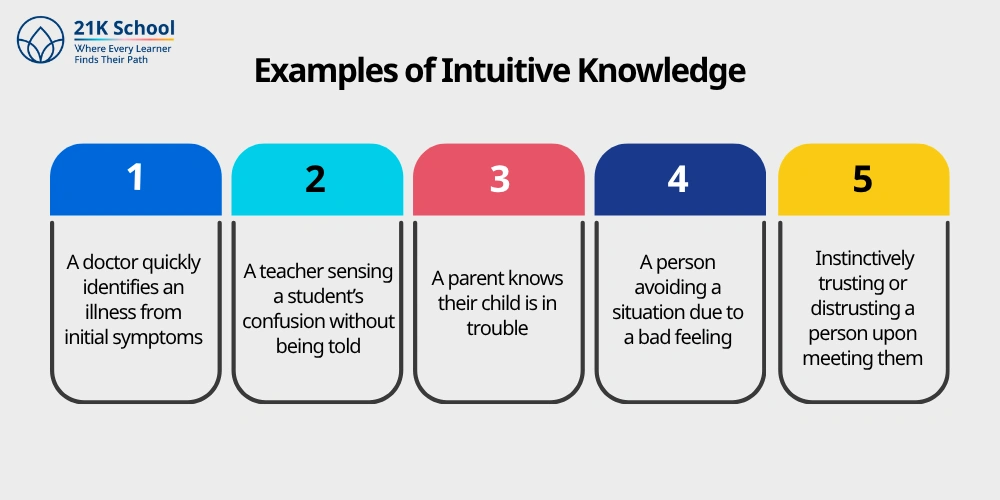
Intuitive knowledge examples explain how individuals reach immediate conclusions, feel, perceive trends and take actions without thinking and analysing the situation on the ground.
1. A doctor quickly identifies an illness from initial symptoms
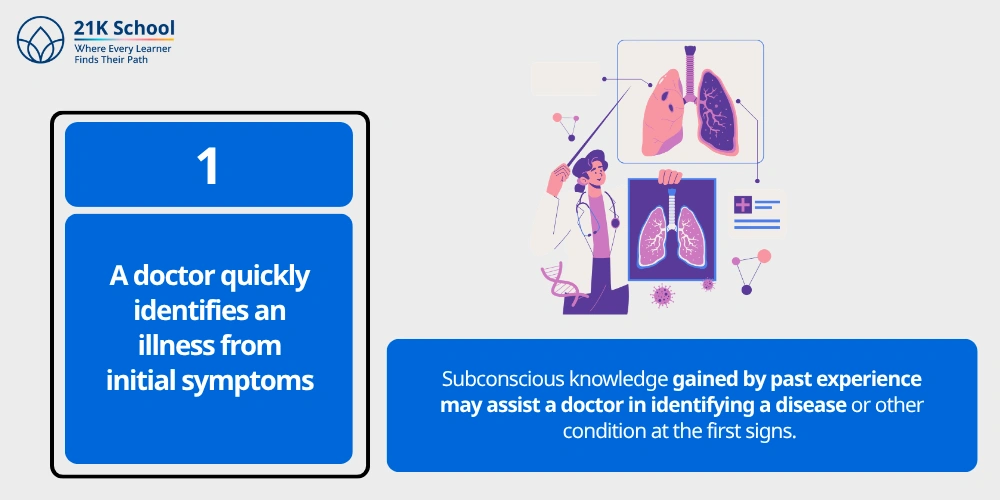
Subconscious knowledge gained by past experience may assist a doctor in identifying a disease or other condition at the first signs. It can be quickly diagnosed and treated without the form of a step-by-step analysis.
2. A teacher sensing a student’s confusion without being told
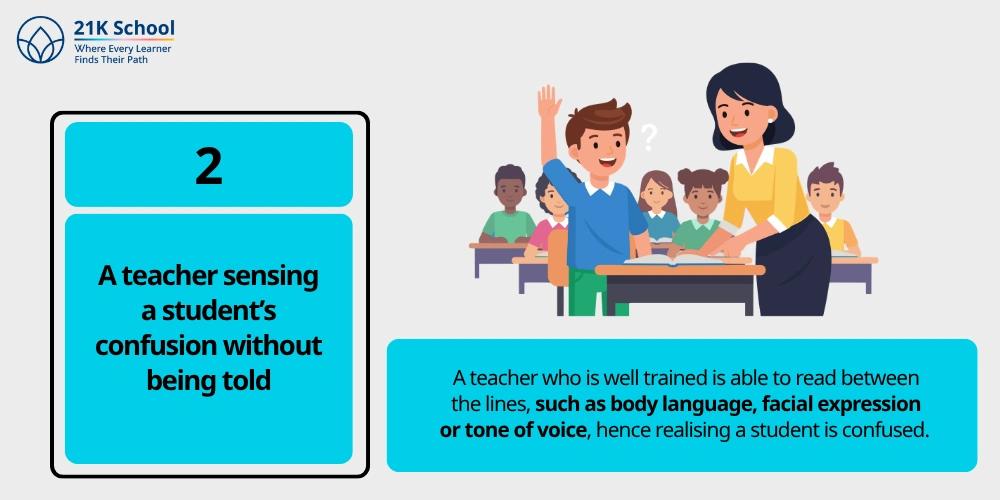
A teacher who is well trained is able to read between the lines, such as body language, facial expression or tone of voice, hence realising a student is confused. This intuitive knowledge assists the teacher in changing the instruction and offering assistance without the student stating that they are having problems.
3. A parent knows their child is in trouble
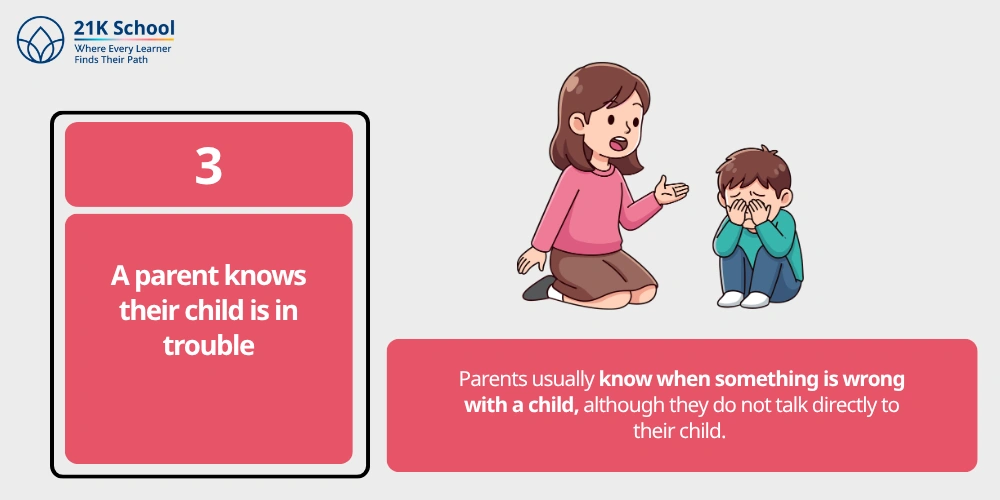
Parents usually know when something is wrong with a child, although they do not talk directly to their child.
This subconscious cognition is based on emotional connection, previous experience, and subtle observations, through which they are able to act in a short time and in a protective manner.
4. A person avoiding a situation due to a bad feeling
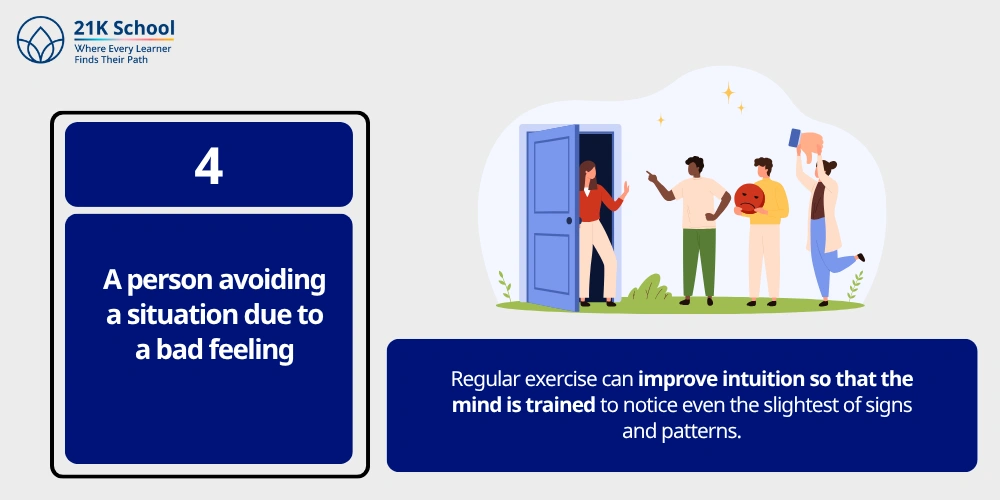
In some cases, individuals experience a feeling of unaccounted discomfort in some circumstances, and therefore, they are inclined to escape a possible danger or threat.
This is an intuition that comes out of the processing of the environmental cues and past experiences at a subconscious level, and it determines decisions without any conscious thought.
5. Instinctively trusting or distrusting a person upon meeting them
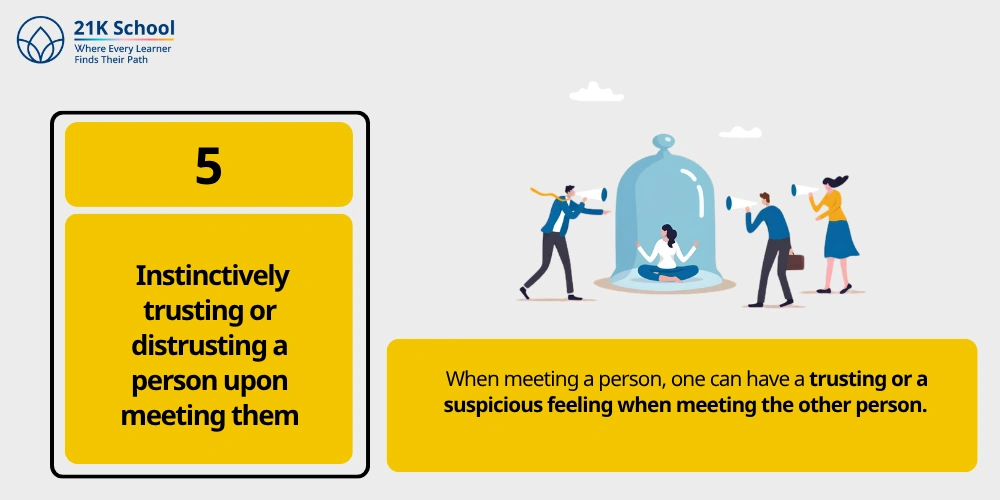
When meeting a person, one can have a trusting or a suspicious feeling when meeting the other person. This intuition is formed through past experience, watching other people and unconsciously noticing the patterns of social learning.
Conclusion
It is a strong and mostly undervalued feature of human knowledge that is intuitive. It allows making decisions fast, creative problem-solving and gaining more insight into interpersonal relationships, which works in combination with rational thinking and experience.
Intuition may be limited, with its drawbacks such as bias or subjectivity, but intuition can be developed with the help of mindfulness, practice, reflection, and expertise.
Intuitive knowledge helps one to improve learning, professional judgement, and personal development by identifying and cultivating new knowledge that is easy to understand and has the ability to bridge the gap between conscious and subconscious thinking.

You may also want to read