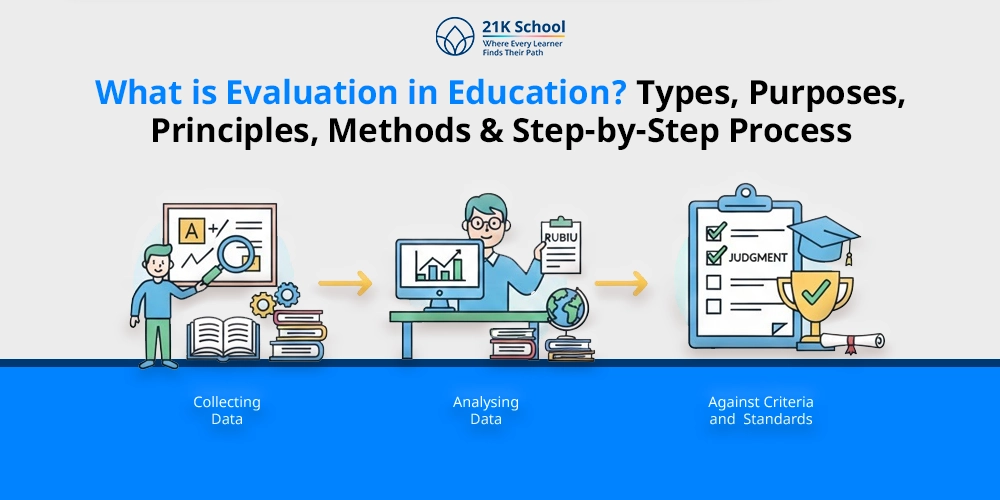
What Is Evaluation in Education? Types, Purposes, Principles, Methods & Step-by-Step Process
 Written byAnkita SinghaContent Specialist
Last modified: Jul 28, 2026 8 min read
Do you know how teachers understand the needs of students? Whether it is a final examination or class test evaluation helps teachers to analyse student’s progress.
However, evaluation is not limited to marks or scores; it. Through evaluation teachers are able to analyse how to improve teaching, learning , and overall academic growth.
To understand everything about evaluation, from its meaning to principles and steps to implement, keep reading.
What is evaluation in education?
Evaluation is a process that involves making judgments of a particular task of a student by collecting, analysing, and interpreting data against specific criteria and standards.
According to Ralph W. Tyler, an American educator and psychologist, "Evaluation is the process of determining the extent to which educational objectives are being realised."
In simple words, evaluation is a process used to collect data in order to determine whether goals or objectives have been met.
For example, a teacher in the classroom evaluates the progress of each student by analysing test marks.
4 types of evaluation in education
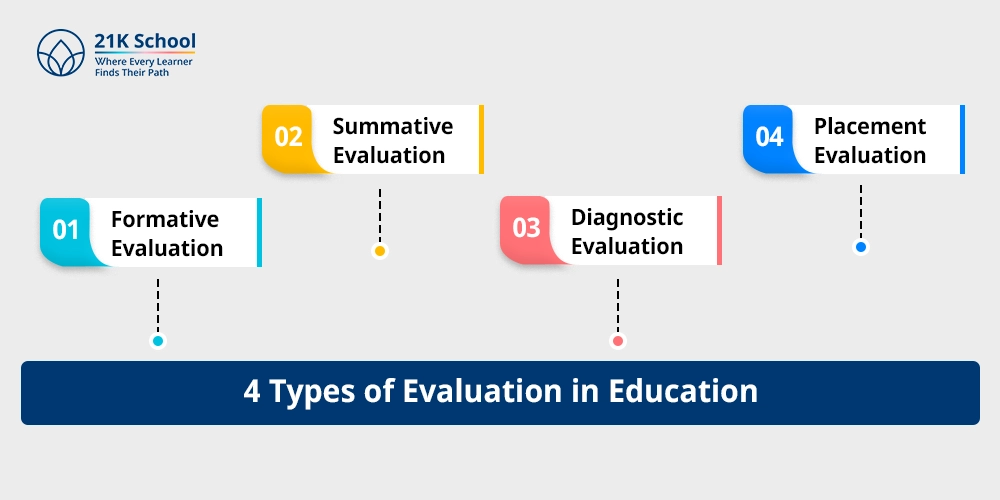
There are different types of evaluation in education , and each has a specific purpose and will be used at different intervals in the teaching-learning process:
1. Formative evaluation
Formative evaluation is an ongoing process which continues with learning and allows teachers to change their instruction based on how students are progressing, in the classroom.
It aims to monitor student progress, analyse learning gaps, and provide feedback. Some common methods include classroom observation, tests, quizzes etc.
2. Summative evaluation
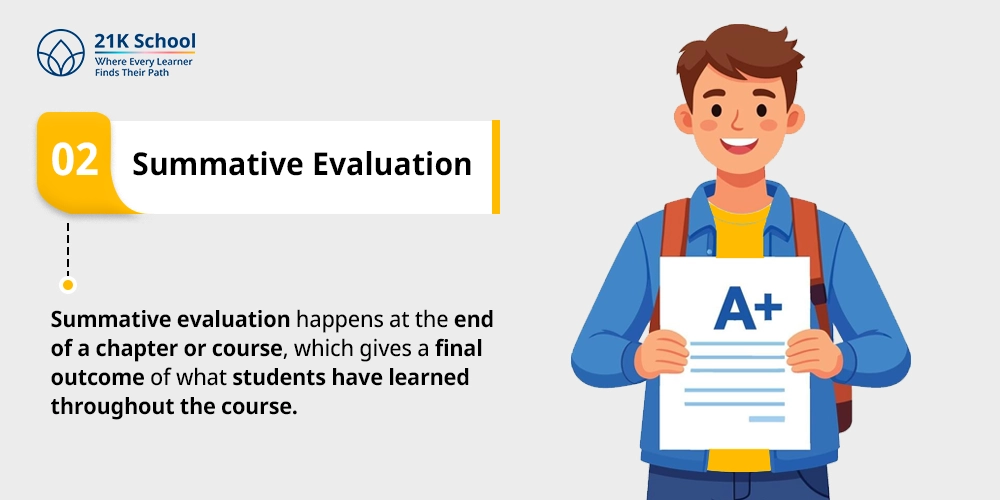
Summative evaluation happens at the end of a chapter or course, which gives a final outcome of what students have learned throughout the course.
It aims to evaluate overall learning comprehensively to determine grades and provide instructions for improvement. Final/yearly examinations and practical presentations are some ideal methods.
3. Diagnostic evaluation
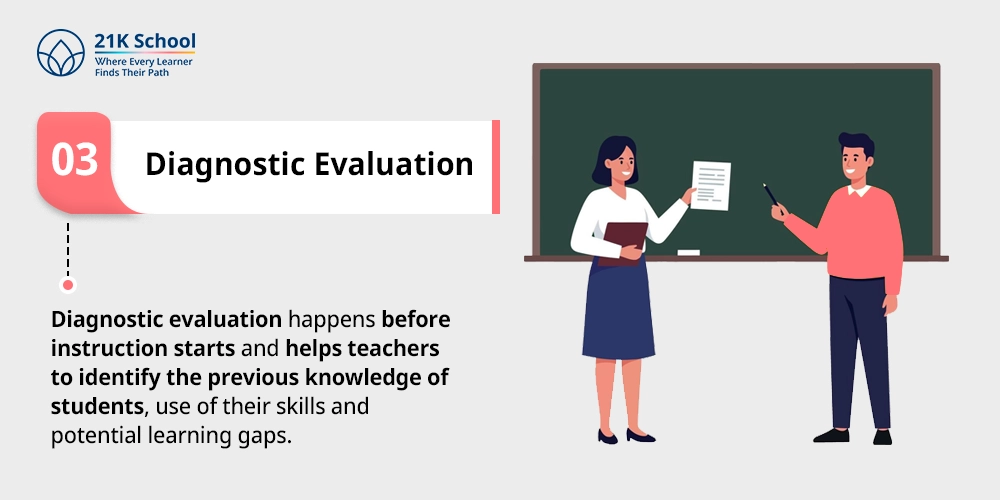
Diagnostic evaluation happens before instruction starts and helps teachers to identify the previous knowledge of students, their use of their skills and potential learning gaps.
Common methods used by teachers in the classroom are diagnostic quizzes, pre-tests etc.
4. Placement evaluation
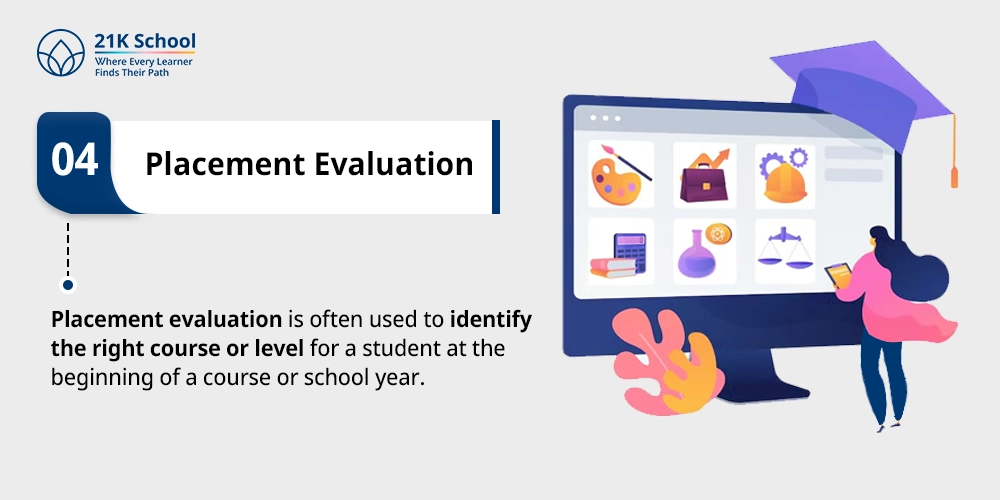
Placement evaluation is often used to identify the right course or level for a student at the beginning of a course or school year.
5 main purposes of evaluation in education
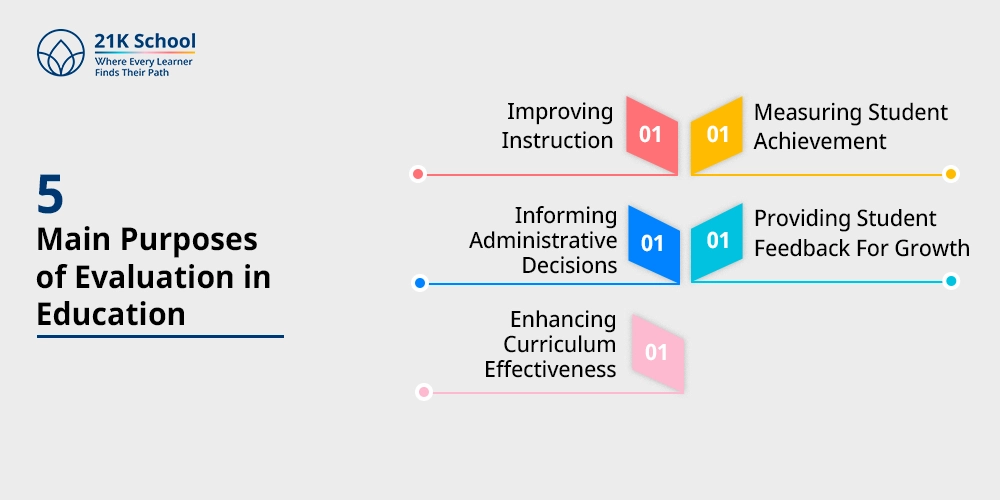
The objective of evaluation is to make informed judgments to improve effectiveness and guide future decisions. Understand the main purposes of evaluation in education:
1. Improving instruction
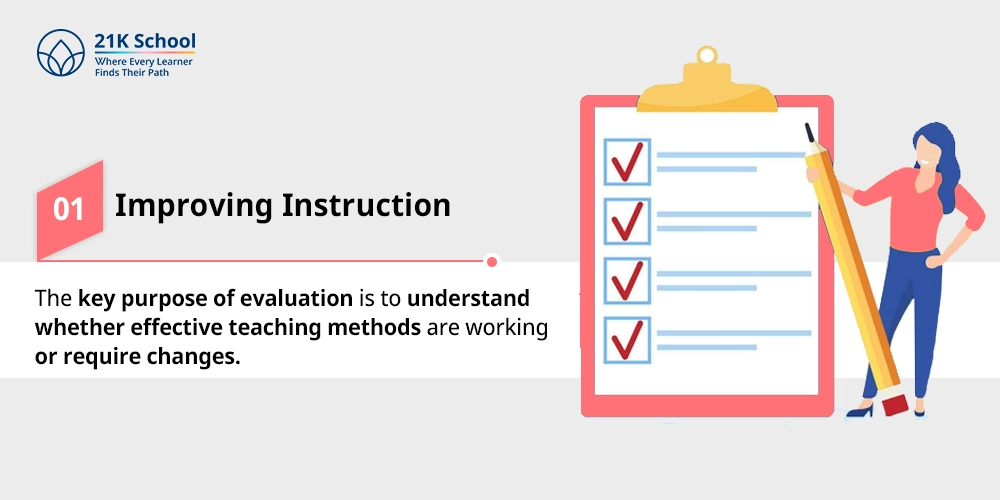
The key purpose of evaluation is to understand whether effective teaching methods are working or require changes.
It helps in planning the lesson and strategies accordingly.
2. Measuring student achievement
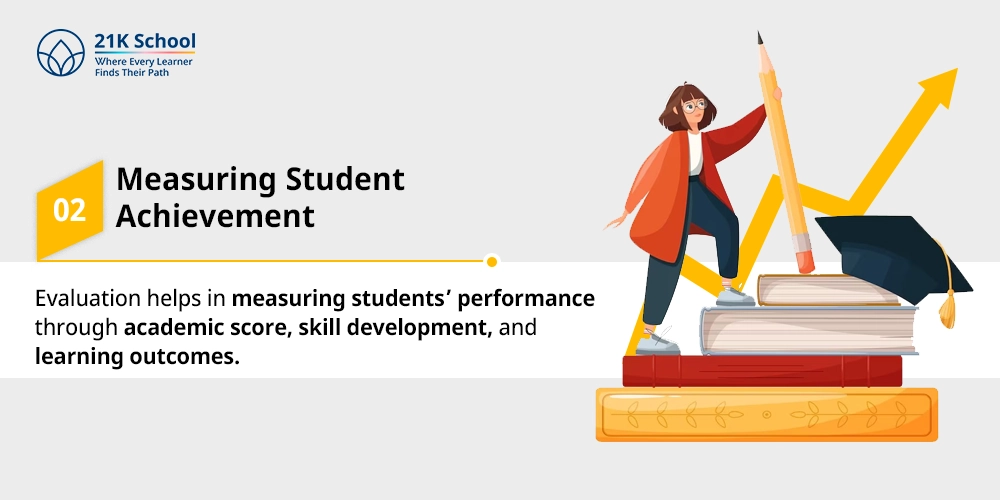
Evaluation helps in measuring students' performance through academic score, skill development, and learning outcomes.
In this way, teachers find out whether objectives are achieved or not.
3. Informing administrative decisions
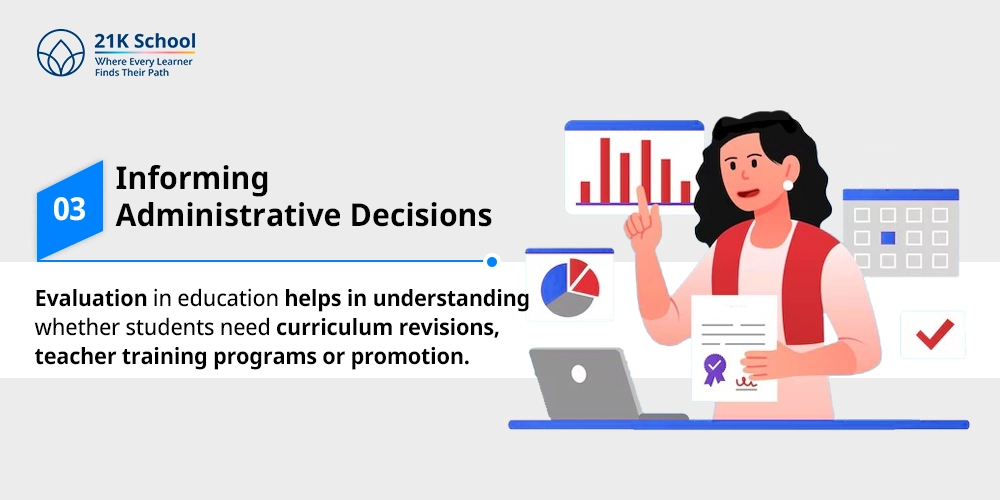
Evaluation in education helps in understanding whether students need curriculum revisions, teacher training programs or promotion.
4. Providing student feedback for growth
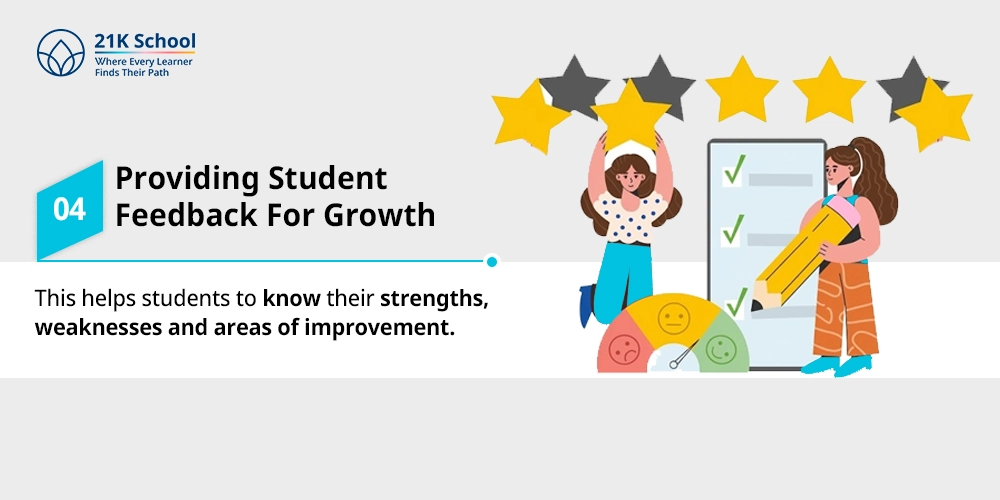
Providing student feedback is essential for their academic growth. This helps students to know their strengths, weaknesses and areas of improvement.
5. Enhancing curriculum effectiveness
Evaluation is ideal to enhance the curriculum by matching learner needs, meets educational standards, and updating or restructuring the requirements.
7 key principles of evaluation in education
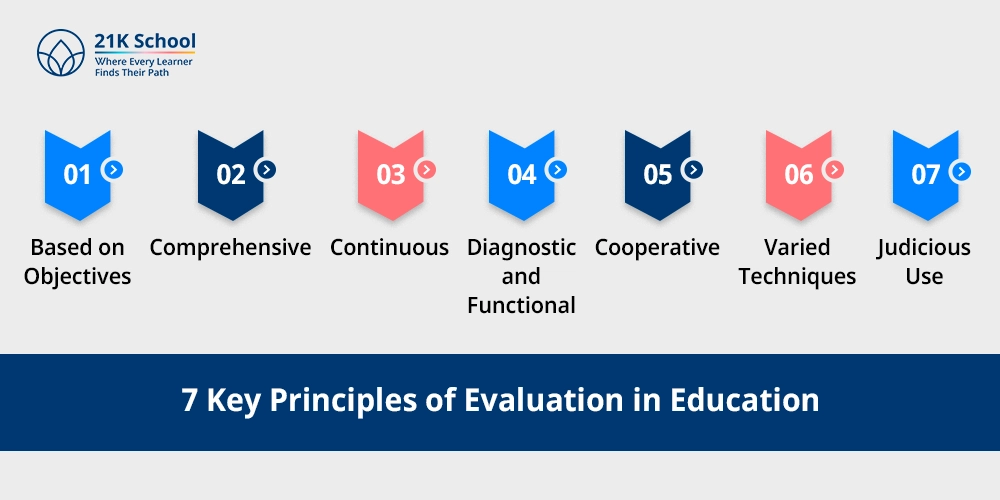
To make evaluation purposeful, check out the 7 key principles of evaluation in education:
1. Based on objectives
Evaluation must be based on clearly defined learning objectives.
2. Comprehensive
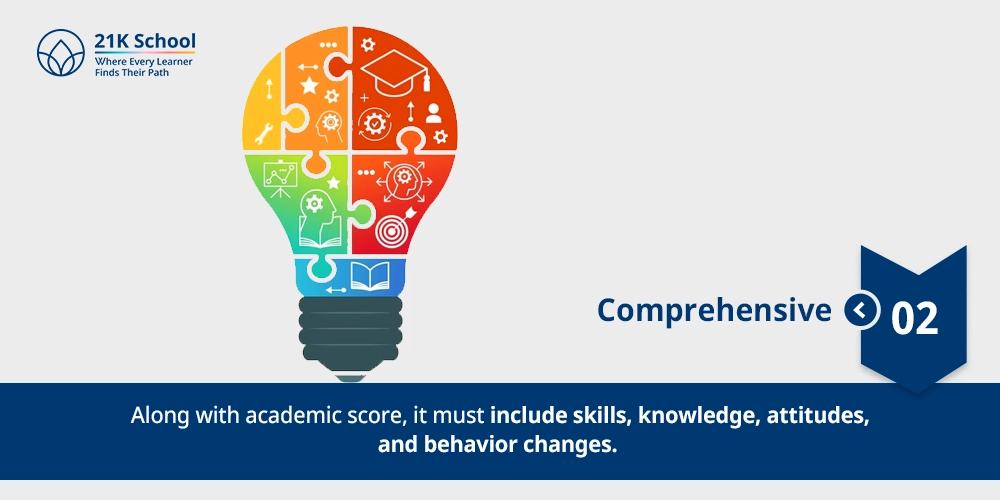
Along with academic score, it must include skills, knowledge , attitudes, and behavior changes.
3. Continuous
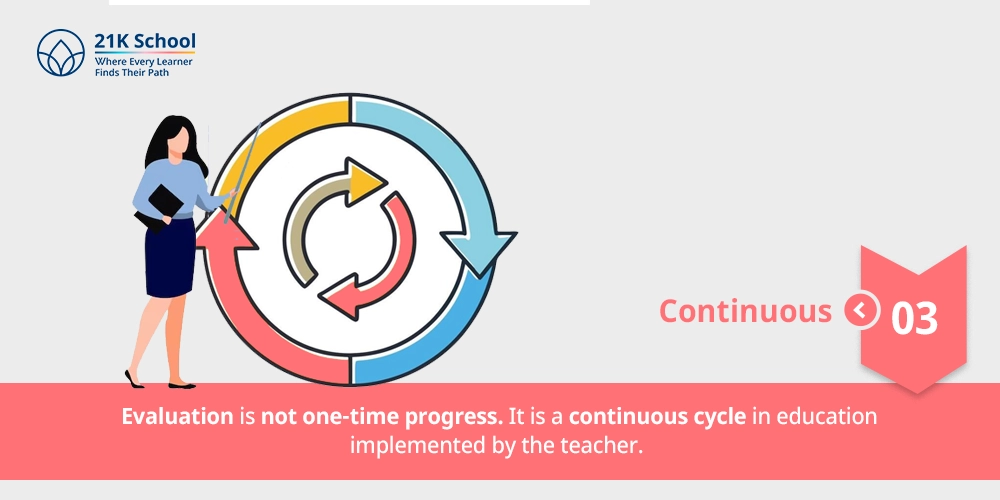
Evaluation is not one-time progress. It is a continuous cycle in education implemented by the teacher.
4. Diagnostic and functional
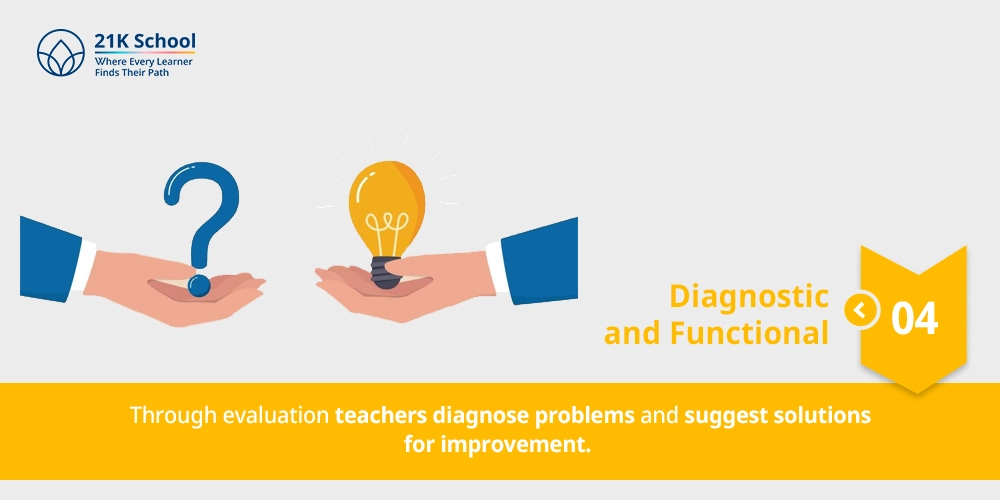
Through evaluation teachers diagnose problems and suggest solutions for improvement.
5. Cooperative
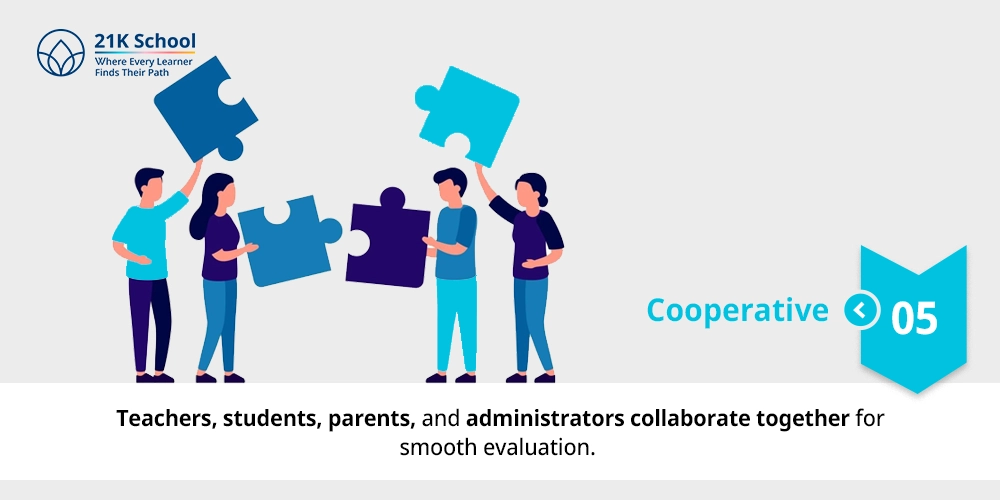
Teachers, students, parents, and administrators collaborate together for smooth evaluation.
6. Varied techniques
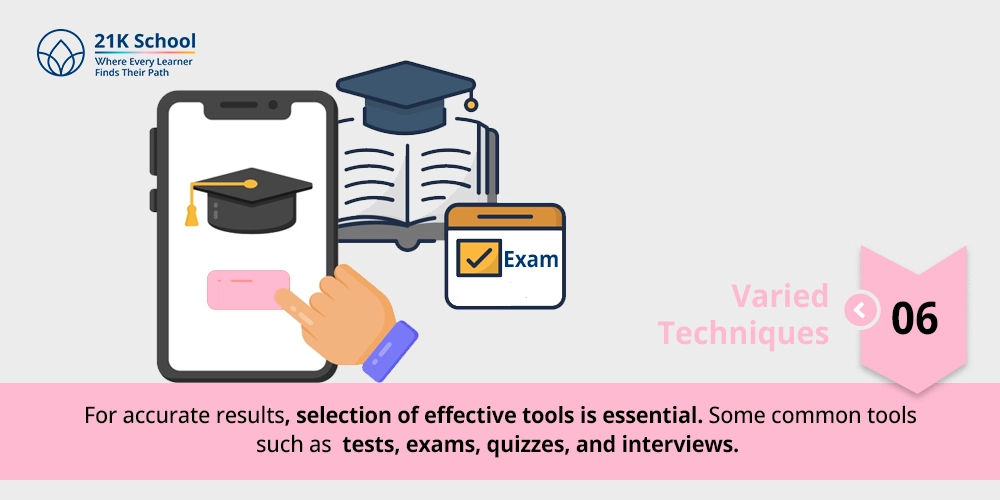
For accurate results, selection of effective tools is essential. Some common tools such as tests, exams, quizzes, and interviews.
7. Judicious use
Use results effectively to avoid any kind of mistake or over-reliance on scores.
7 process of evaluation in education
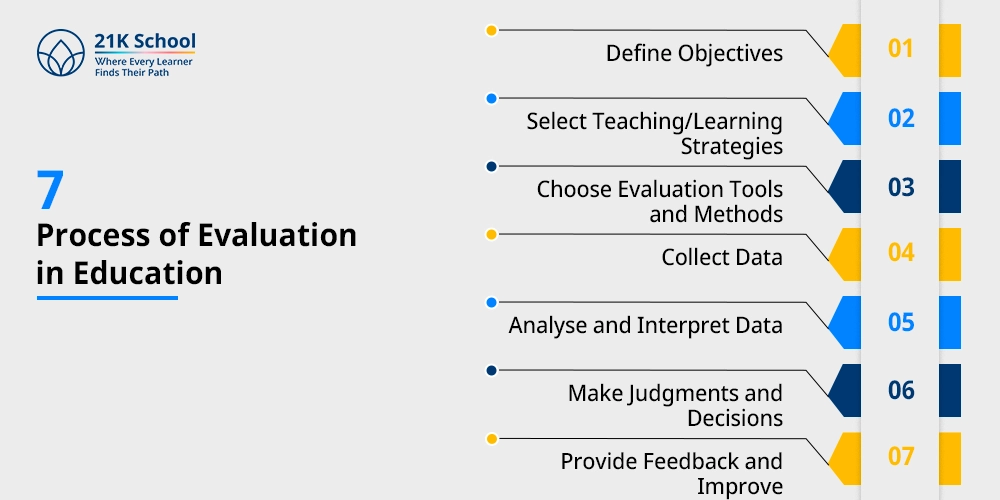
Evaluation is not limited to checking test scores, it is about overall judgement of how well teaching methods, lesson plans, and learning materials are working. Go through the detailed step-by-step process of evaluation in education:
1. Define objectives
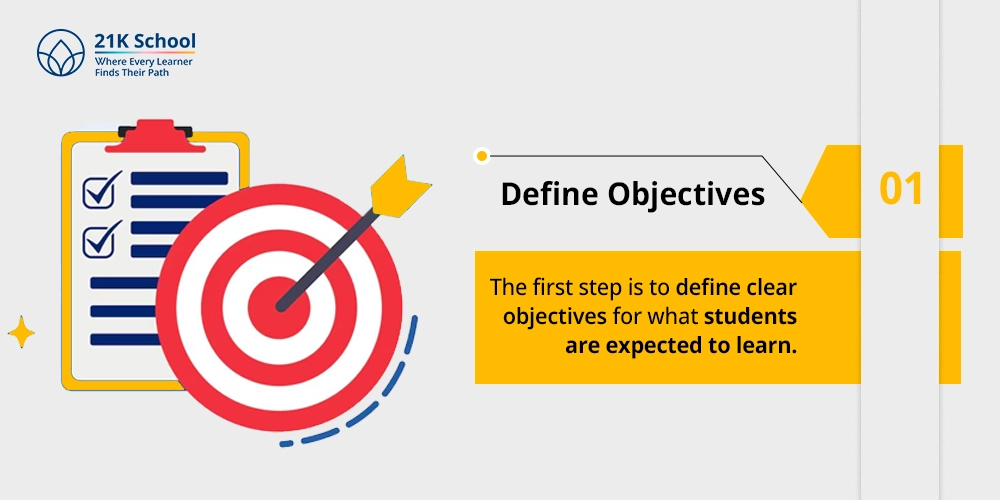
The first step is to define clear objectives for what students are expected to learn.
2. Select teaching/learning strategies
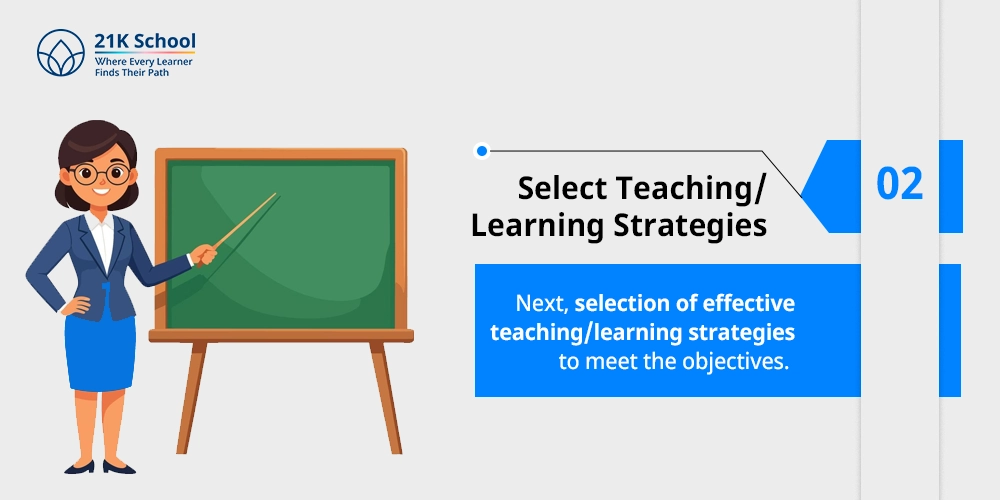
Next, selection of effective teaching/learning strategies to meet the objectives.
3. Choose evaluation tools and methods
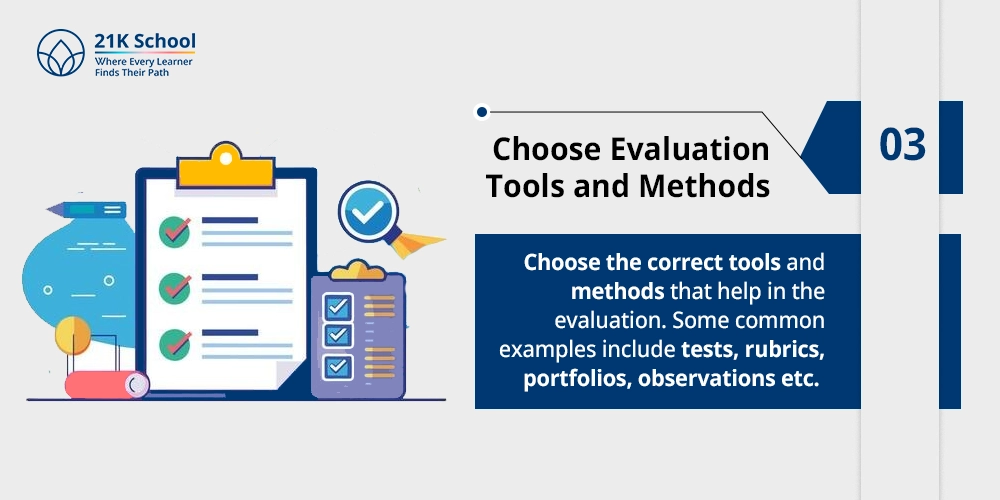
Choose the correct tools and methods that help in the evaluation. Some common examples include tests, rubrics, portfolios, observations etc.
4. Collect data
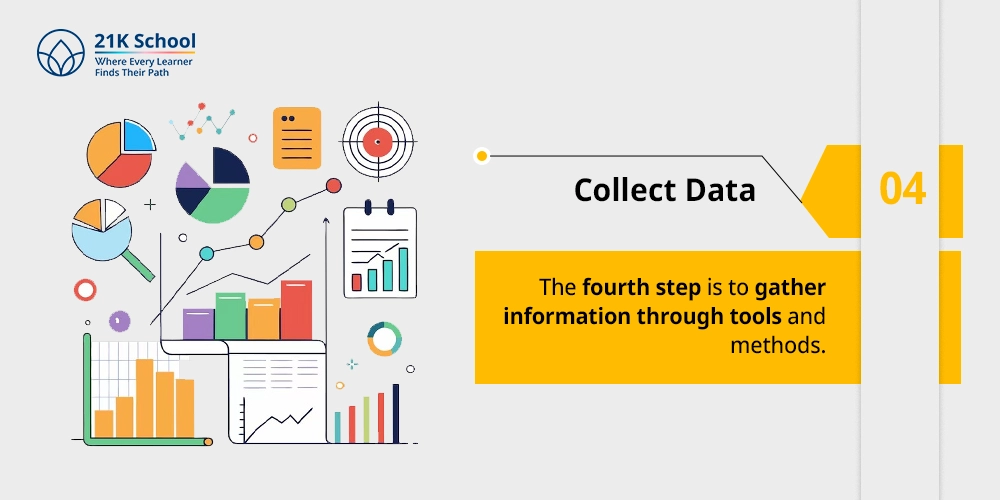
The fourth step is to gather information through tools and methods.
5. Analyse and interpret data
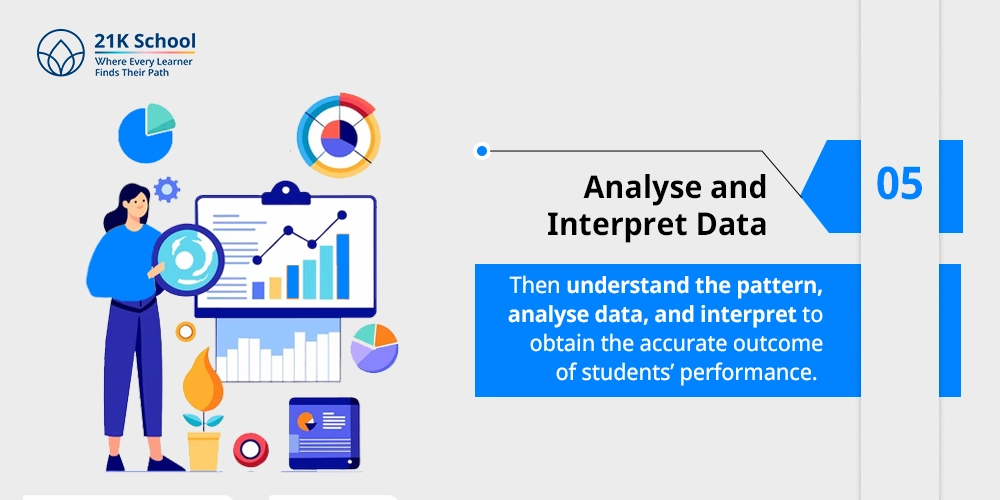
Then understand the pattern, analyse data, and interpret to obtain the accurate outcome of students’ performance.
6. Make judgments and decisions
Through results make judgments and take decision whether the objectives are accomplished or not.
7. Provide feedback and improve
Share the feedback and help students by providing guidance and strategies for improvement if needed.
8 common methods of evaluation in education
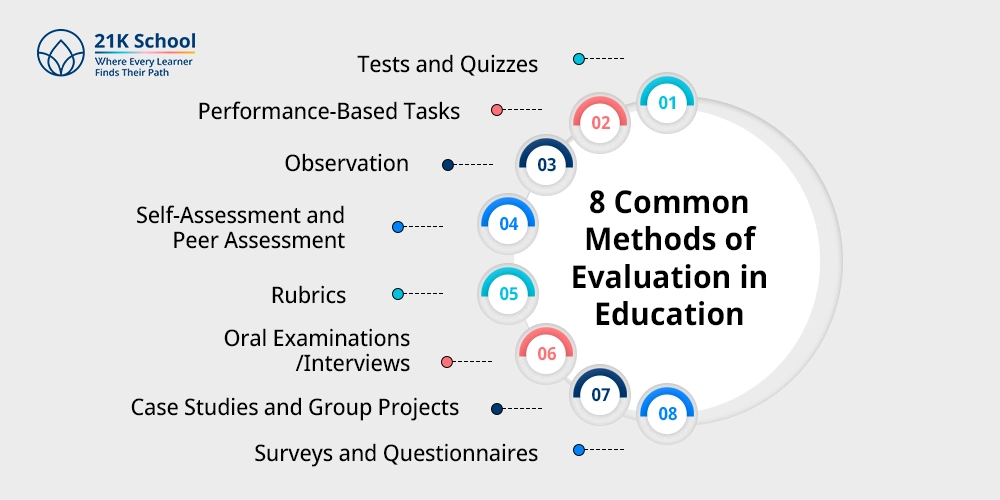
Explore the common methods of evaluation in education to implement effectively while learning:
1. Tests and quizzes
Through tests and quizzes teachers can implement formative evaluation in the classroom.
2. Performance-based tasks
Implementation of performance-based tasks like practical work, experiments, presentations are ideal ways of evaluation.
3. Observation
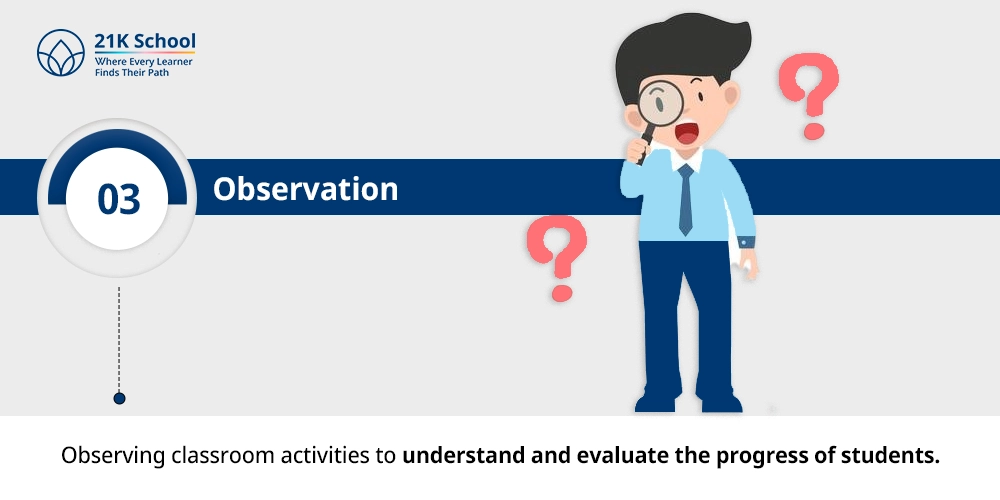
Observing classroom activities to understand and evaluate the progress of students.
4. Self-assessment and peer assessment
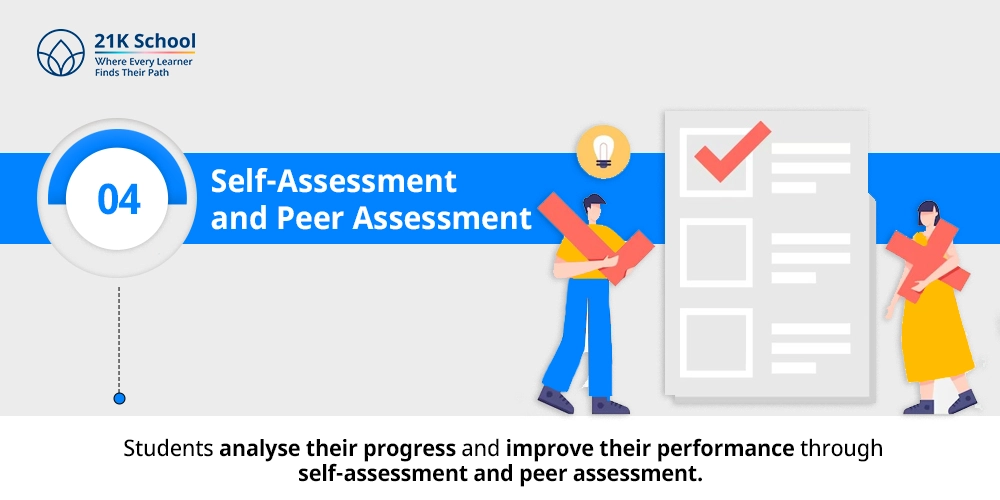
Students analyse their progress and improve their performance through self-assessment and peer assessment .
5. Rubrics
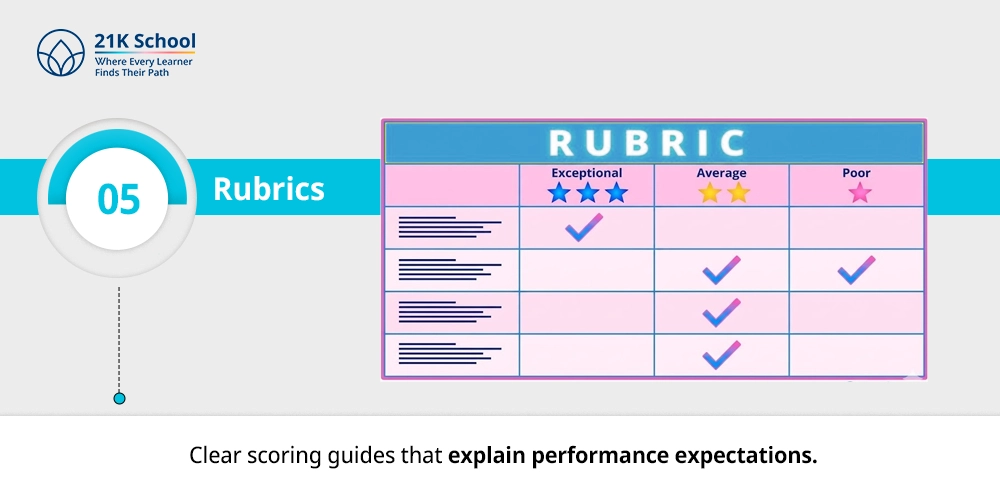
Clear scoring guides that explain performance expectations.
6. Oral examinations/interviews
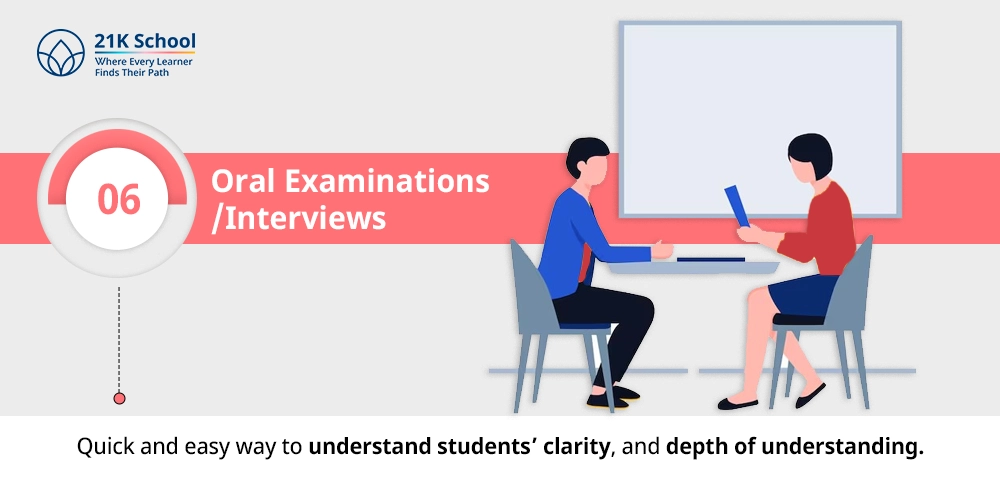
Quick and easy way to understand students’ clarity, and depth of understanding.
7. Case studies and group projects
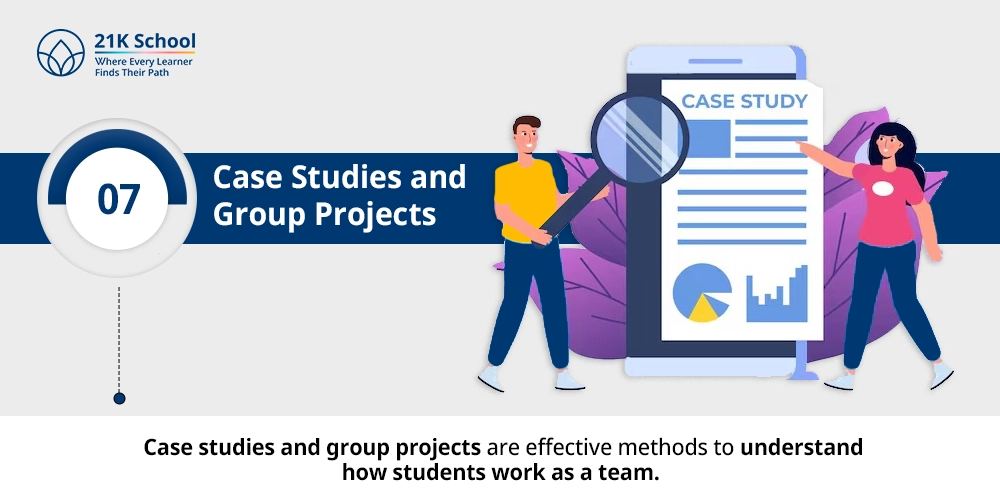
Case studies and group projects are effective methods to understand how students work as a team.
8. Surveys and questionnaires
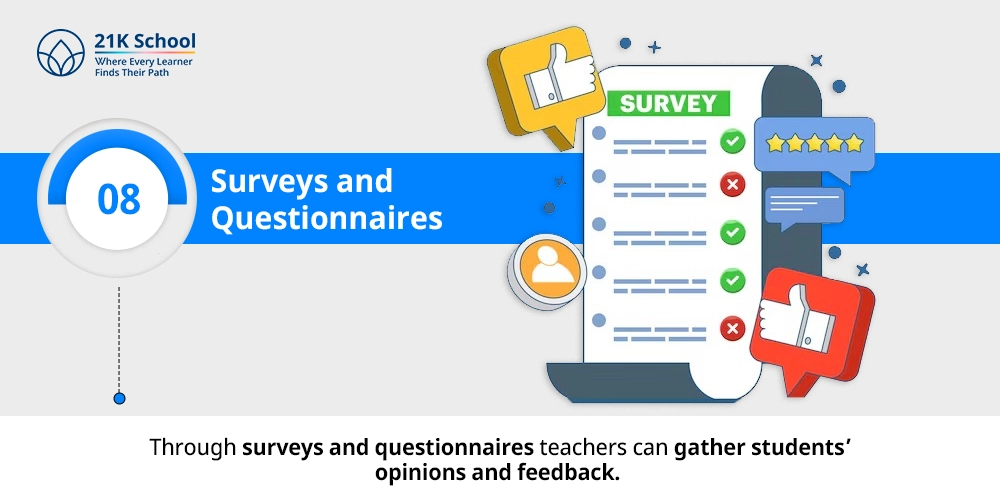
Through surveys and questionnaires teachers can gather students’ opinions and feedback.
Difference between assessment and evaluation in education
To understand the difference between assessment and evaluation in education clearly given below is a detailed comparison table:
| Number | Particulars | Assessment | Evaluation |
|---|---|---|---|
| 1. | Focus | Individual progress and development. | Achievement of objectives and standards. |
| 2. | Purpose | To improve learning and performance. | To judge effectiveness or outcomes. |
| 3. | Approach | Diagnostic and learner-centered. | Judgmental and criteria-based. |
| 4. | Nature | Formative and continuous. | Summative and conclusive. |
| 5. | Examples | Quizzes, self-reflections. | Final grades, program evaluations. |
Conclusion
Evaluation is not limited to calculating marks, it is also an effective way to improve teaching and learning of students for academic improvement.
By understanding different types, purpose, principles, methods, step-by-step processes help students to achieve effective results.
In students’ learning, evaluation is crucial to keep them on the right pathway.
Frequently asked questions
7 questions
What is the role of a teacher in the evaluation process?
The key responsibilities of teachers in evaluation are: designing and implementing assessments analyse information provide feedback curriculum evaluation for improvement
Who is the father of evaluation in education?
Ralph W. Tyler is the father of evaluation.
What are the functions of evaluation?
Some of the main functions of evaluation are: provide feedback clarifying the objectives motivates students bringing changes in the curriculum
Why is evaluation important to build a better education system?
Evaluation is important to build a better education system because it gives feedback, improves teaching and learning, helps in identifying strengths, weaknesses, and progress.
What are the characteristics of evaluation in education?
The key characteristics of evaluation in education are: continuous and ongoing process structured and systematic approach provides constructive feedback holistic development of students
What is evaluation in physical education?
In physical education, evaluation is a continuous and systematic procedure in which students' performance is evaluated by collected data against set criteria to make informed decisions to provide feedback for improvement.
What are the benefits of evaluation in education?
Some common benefits of evaluation in education are: understand students progress effective feedback motivation and goal setting ownership of learning
About the author
Ankita Singha
Content Specialist
Ankita Singha is an Education Content Specialist at 21K School, India’s first accredited fully online K-12 School. She focuses on the in-depth research and creation of the well-drafted guides on early childhood education, school admission processes, and CBSE/ICSE curriculum guidance. With more than 2 years of experience at 21K School, a fully accredited institute- Cambridge International (IA702) and Pearson Edexcel (94883), Ankita works closely with the school’s curriculum heads and academic coordinators. Ankita’s every article reflects on the official board guidelines, practical realities, and current policies of online education in 78+ countries. Ankita’s content has helped thousands of parents in understanding the topics like RTE eligibility, NIOS pathways, and age-appropriate admission criteria.
Every 21K School guide is written by our education team and reviewed by a subject facilitator before publishing.
Exploring a CBSE-pathway online school?
Talk to an advisor about 2026–27 admissions — no obligation.
Talk to an advisorComments
No comments yet — be the first to share your thoughts or ask a question.