

Have you ever wondered how SWOT analysis is a significant aspect of education?
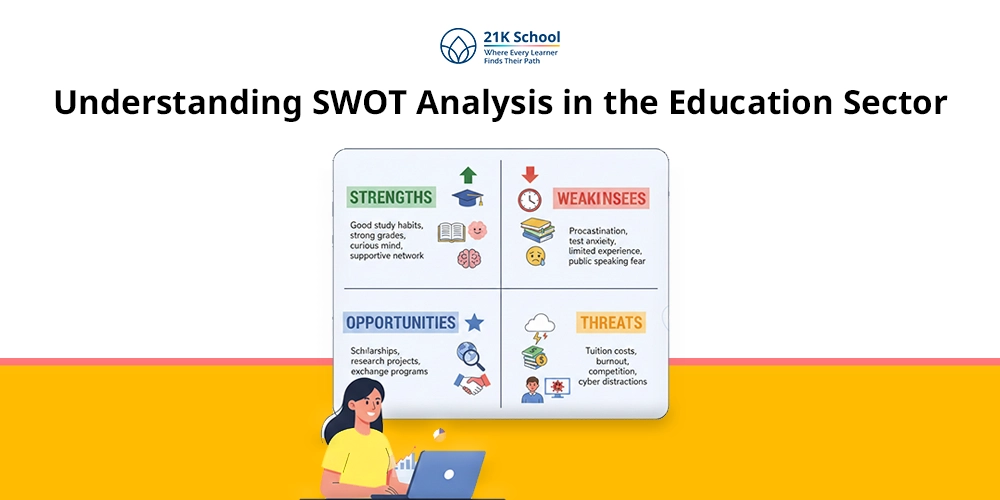
SWOT analysis is a strategic instrument that is applied in reviewing the Strengths, Weaknesses, Opportunities, and Threats of an organisation or system.
SWOT analysis, when applied to education , aids the institutions, teachers, and policy makers in evaluating the efficiency of teaching techniques, school preparation, facilities, and results.
It provides a guideline on how to improve the quality of education and ensure the holistic development of a student by determining the internal strengths and weaknesses, external opportunities and challenges.
Contents
What is SWOT Analysis in Education?
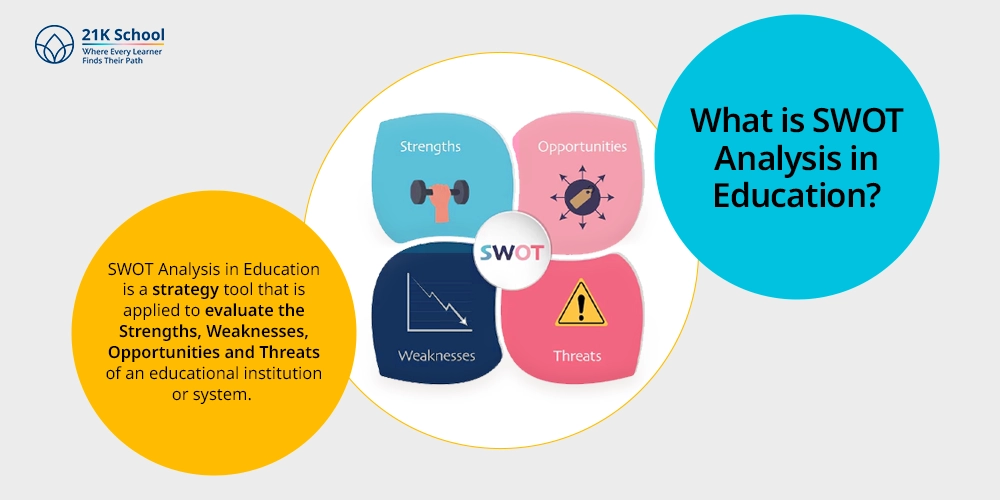
SWOT Analysis in Education is a strategy tool that is applied to evaluate the Strengths, Weaknesses, Opportunities and Threats of an educational institution or system.
It considers internal factors such as the teaching standards, facilities and the performance of the students and external ones such as the technological shift in education , social patterns, and competition.
Such analysis assists teachers and policymakers to make informed choices, cope with difficulties, utilise opportunities, and enhance the quality of the entire education and student performance.
How to Conduct a SWOT Analysis for Students
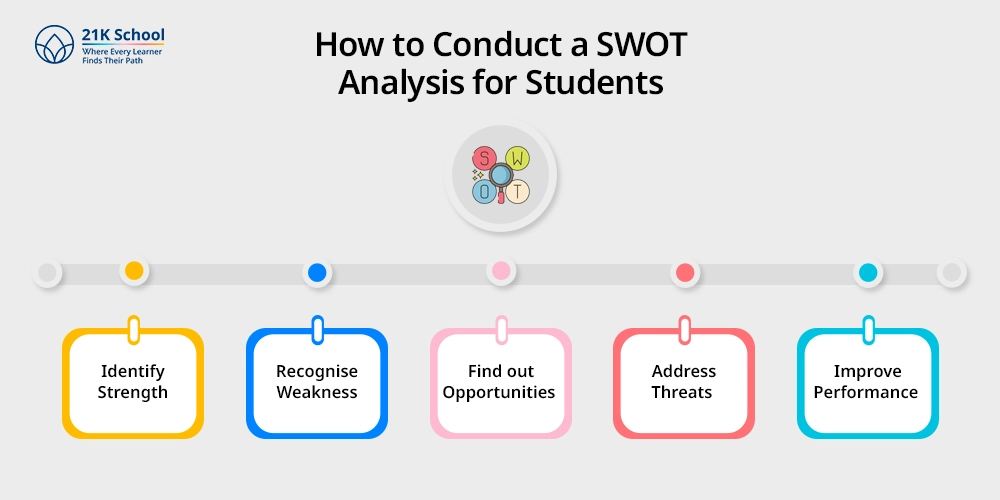
A SWOT analysis is useful to enable students to analyse their strengths, weaknesses, opportunities, and threats. Such a self-assessment is clear, goal-setting, and strategy formulating such that one would excel academically, gain confidence, and become a better person.
1. Identify Strength
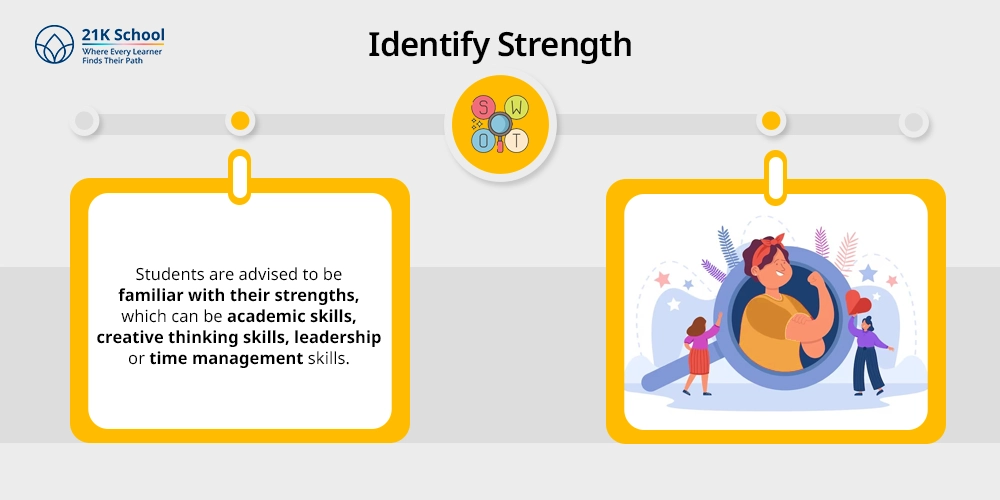
Students are advised to be familiar with their strengths, which can be academic skills, creative thinking skills , leadership or time management skills . Looking back on their previous successes, teacher feedback, and the areas where they feel good, can be beneficial in making them realise what makes them different.
The awareness of their strengths will enable the students to concentrate on activities in which they are good at, stimulate self-confidence, and apply the strengths to coping with difficulties and attaining higher academic and personal results.
2. Recognise Weakness
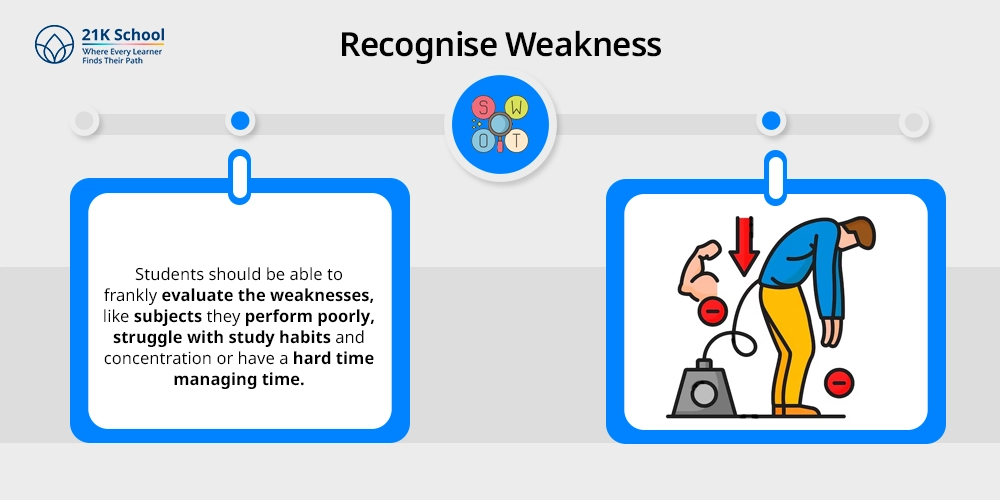
Students should be able to frankly evaluate the weaknesses, like subjects they perform poorly, struggle with study habits and concentration or have a hard time managing time. These weaknesses can be identified by seeking the feedback of teachers, peers or mentors.
It is important to note that such limitations enable the students to identify opportunities for improvement, to get support when they need it and to work in a systematic manner to overcome the obstacles and to make the weaknesses their strengths to develop.
3. Find out Opportunities
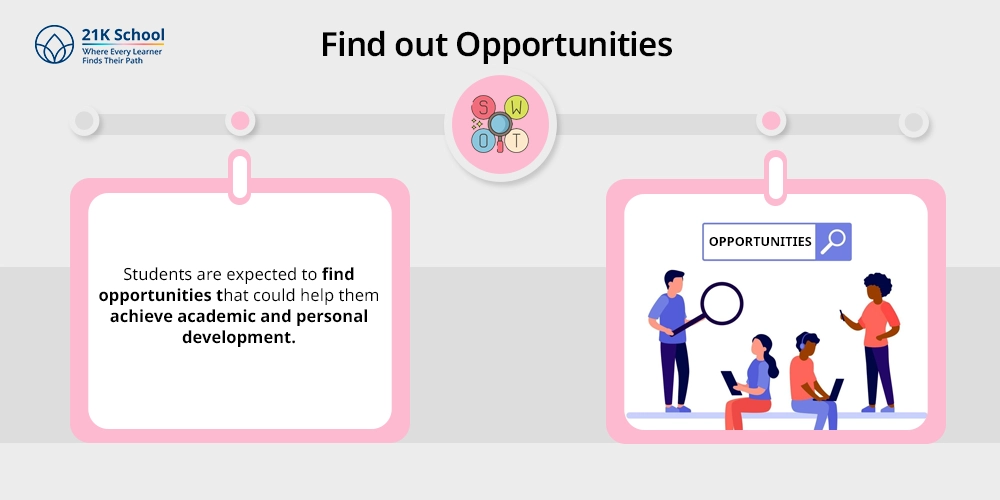
Students are expected to find opportunities that could help them achieve academic and personal development. This comprises access to scholarship, extra-curricular activities , online courses, mentorships, workshops, contests, and involvement in the community.
Identifying opportunities enables students to develop their skills, develop new interests and improve career opportunities. Through taking the initiative to utilise such opportunities, they will be able to acquire valuable experience, build their resume, and get ready to pursue further education/careers.
4. Address Threats
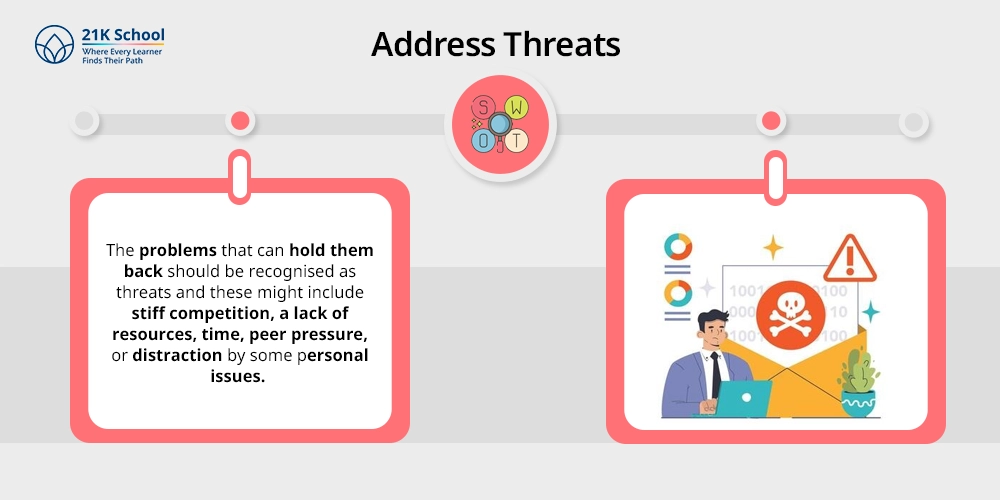
The problems that can hold them back should be recognised as threats and these might include stiff competition, a lack of resources, time, peer pressure, or distraction by some personal issues.
Being aware of these risks would help the students develop strategies to control or prevent them. Through planning, time management , and support, they will be able to minimise the effects of such obstacles and keep their goals in mind.
5. Improve Performance
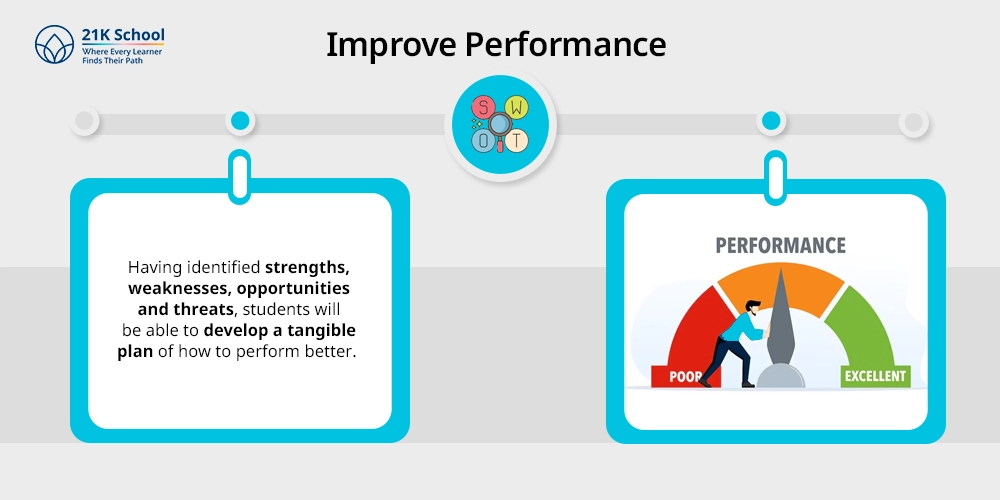
Having identified strengths, weaknesses, opportunities and threats, students will be able to develop a tangible plan of how to perform better. This can be to strengthen the strengths, address the weak areas, use opportunities and reduce the threats.
Goal setting should be specific, practised, receive feedback and track the progress of students to attain improved academic outcomes, confidence, and skills necessary for success in personal growth and the future.
Importance of SWOT Analysis in Education
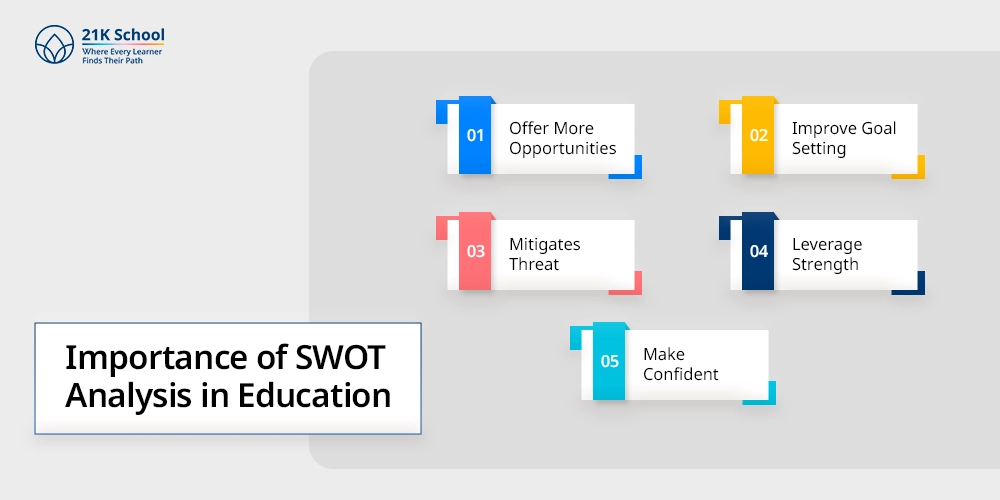
SWOT analysis is a critical learning tool that assists students, teachers and schools to assess their internal strengths and weaknesses as well as external opportunities and threats in learning. This is the significance of SWOT analysis stated below.
1. Offer More Opportunities
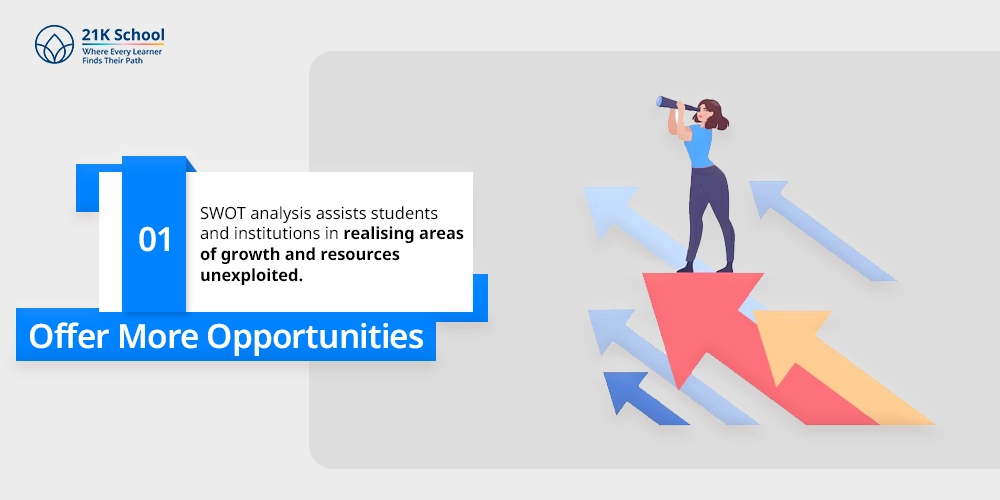
SWOT analysis assists students and institutions in realising areas of growth and resources unexploited. Through identification of opportunities, learners are able to discover new programmes, scholarships, workshops and competitions to build skills, knowledge and career opportunities.
It allows making choices that are informed to promote academic achievement and personal growth in general.
2. Improve Goal Setting
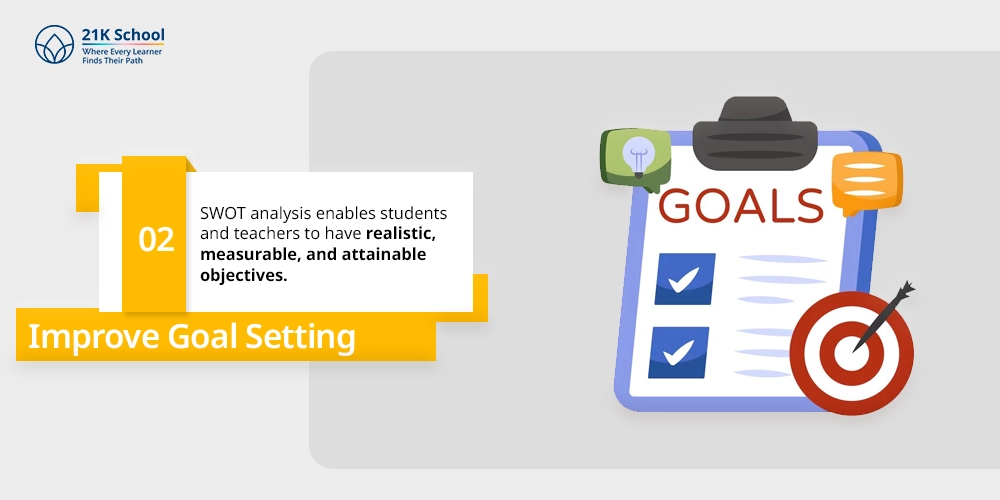
SWOT analysis enables students and teachers to have realistic, measurable, and attainable objectives. This knowledge of strengths, weaknesses, opportunities and threats will enable them to devise step-by-step plans that are made to individual or institutional specifications.
It guarantees the organisation of the work towards short and long-term educational and personal goals.
3. Mitigates Threat
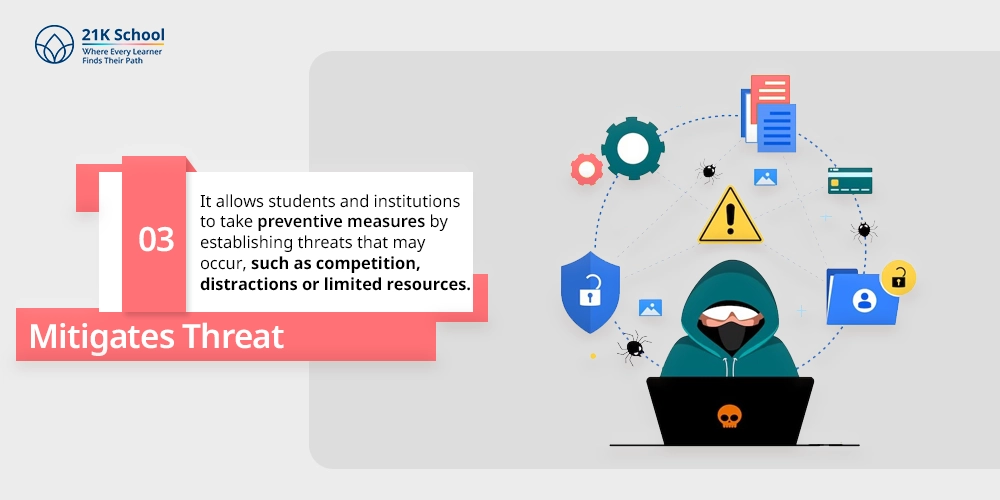
SWOT analysis allows students and institutions to take preventive measures by establishing threats that may occur, such as competition, distractions or limited resources.
It enables proactive measures to mitigate risks, dealing with obstacles, and continuing to attain consistent performance towards goals, which smooths out the academic performance and personal development.
4. Leverage Strength
In SWOT analysis, focus is placed on strengths as abilities, success, or resources. The understanding of these enables the students to apply them in the most efficient way so as to enhance their education results, gain confidence and achieve academically.
Knowledge of these strengths enables individuals and organisations to plan well on how to harness them to produce optimal performance and learning results.
5. Make Confident
SWOT analysis builds confidence because one is in a position to clearly know their capabilities and challenges. Being aware of strengths, weaknesses, opportunities and threats can enable students to make well-informed choices, strategising and taking a methodological approach to work.
The clarity minimises anxiety, builds self-belief and promotes proactive problem solving .
Benefits of SWOT Analysis Education
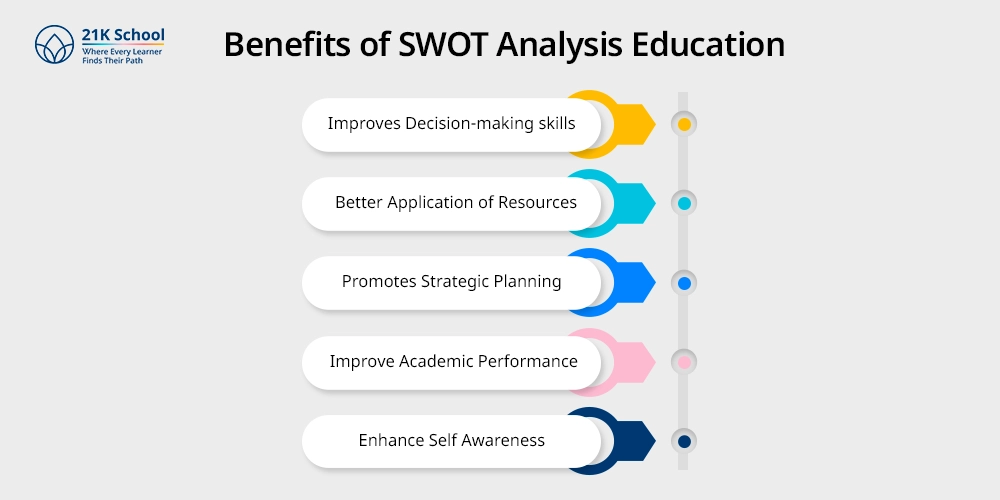
The SWOT analysis has many advantages in the educational sector as it aids students and institutions in analysing their strengths, weaknesses, opportunities, and threats. The advantages of SWOT analysis education are as follows.
1. Improves Decision-making skills
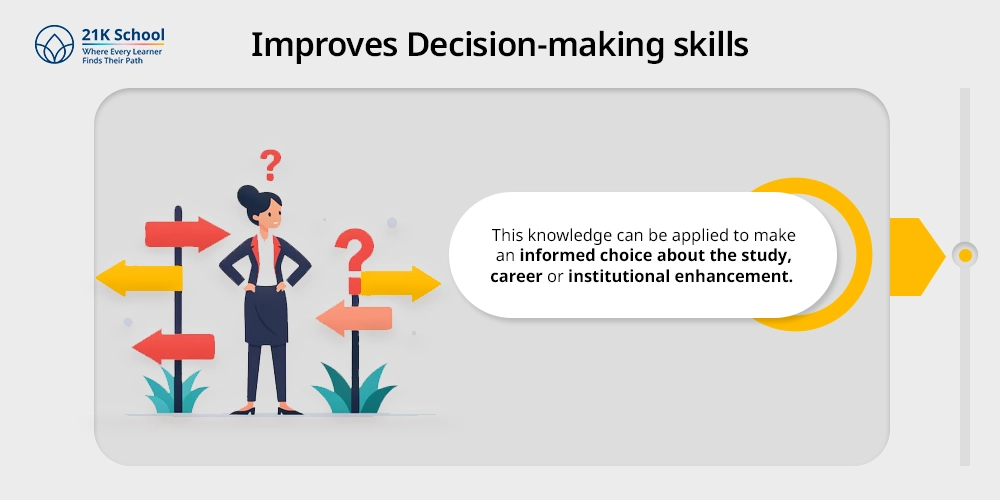
SWOT analysis assists in analysing the strengths, weaknesses, opportunities, and threats, which help students and educators make decisions. This knowledge can be applied to make an informed choice about the study, career or institutional enhancement.
The ability to think critically, evaluate options adequately, and make decisions that can result in improved academic and personal performance is the result of taking everything into account and allows learners to think critically.
2. Better Application of Resources
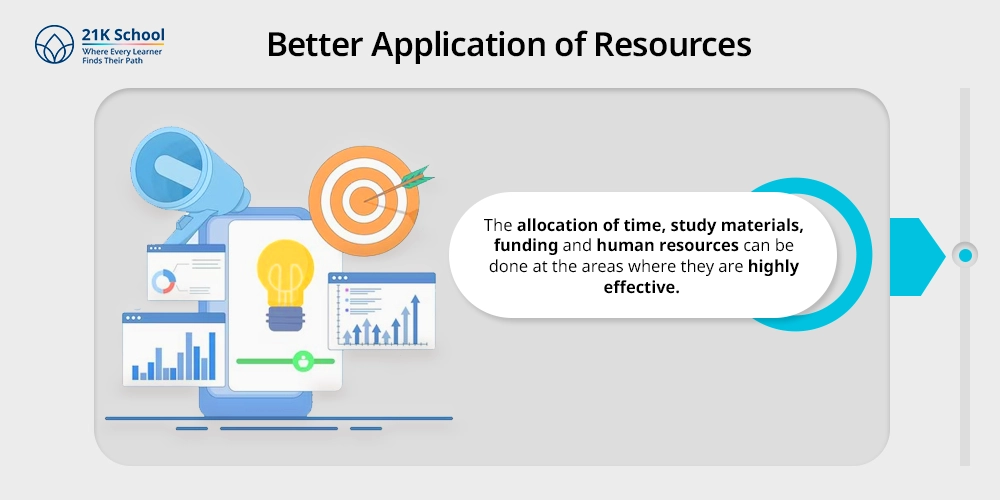
SWOT analysis helps students and institutions to make efficient use of resources by identifying their strengths and weaknesses. The allocation of time, study materials, funding and human resources can be done at the areas where they are highly effective.
Effective application of resources is important to guarantee the highest possible productivity, lower wastage, and facilitate academic development, competence creation, and the overall success in educational activities .
3. Promotes Strategic Planning
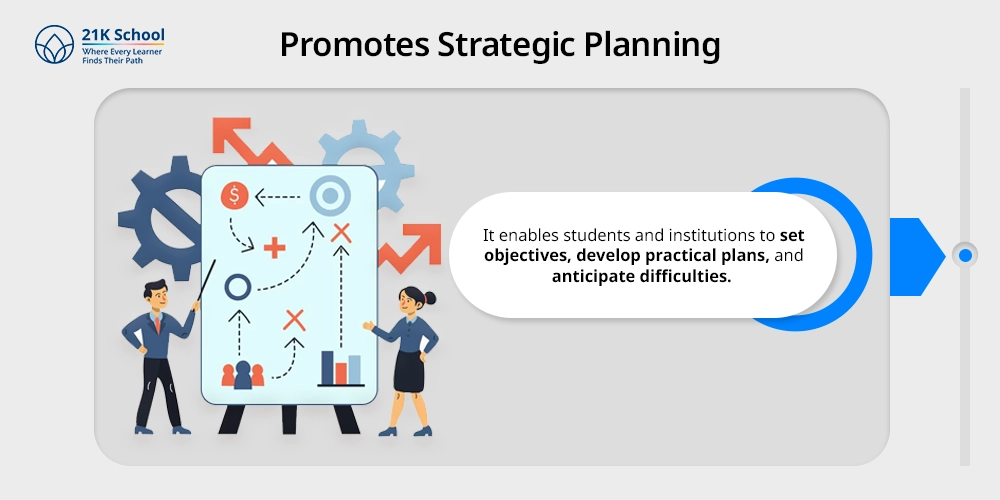
SWOT analysis promotes long-term planning as it considers internal and external factors that influence education. It enables students and institutions to set objectives, develop practical plans, and anticipate difficulties.
SWOT-based strategic planning provides a system of progress, concentration in learning , and the possibility to take advantage of the opportunities and to deal with possible risks efficiently.
4. Improve Academic Performance
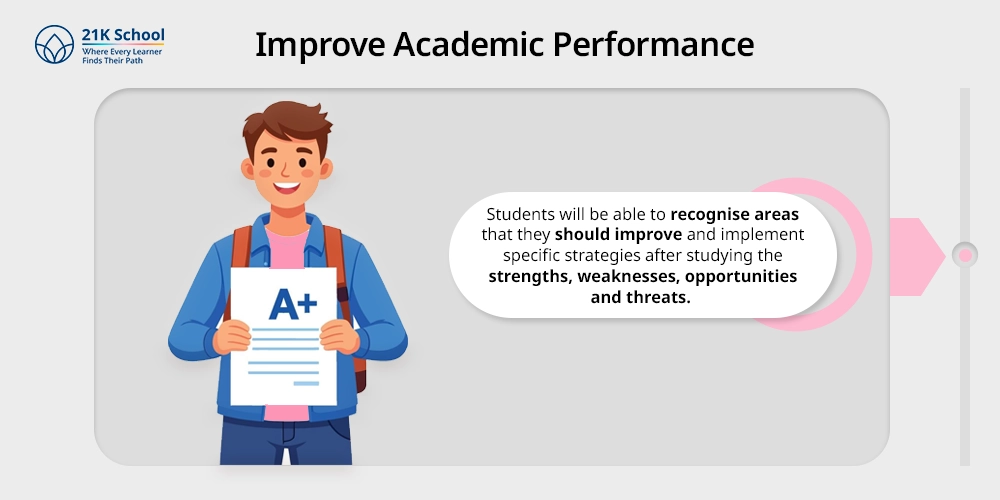
Students will be able to recognise areas that they should improve and implement specific strategies after studying the strengths, weaknesses, opportunities and threats.
This objective-oriented teaching style improves the effectiveness of learning, fills gaps in knowledge, and builds upon advantages to achieve higher grades, steady improvement, and overall academic success.
5. Enhance Self Awareness
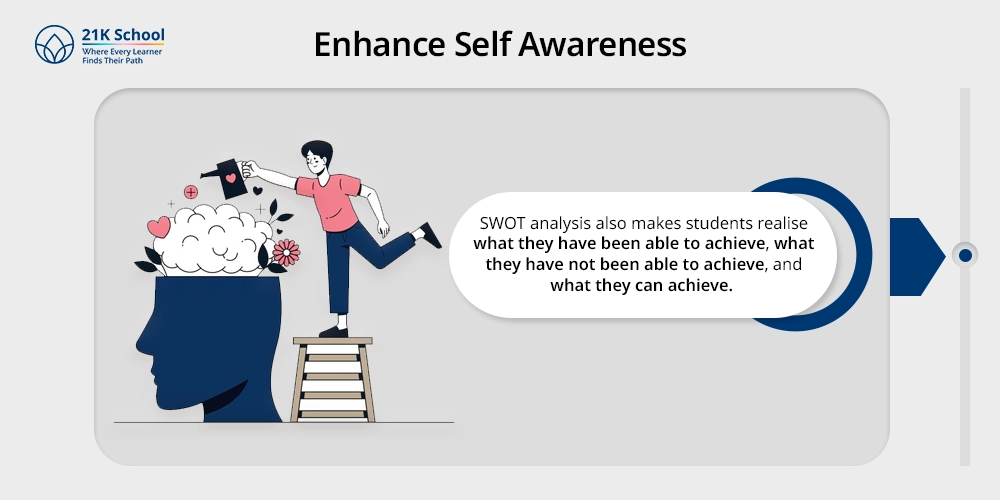
SWOT analysis also makes students realise what they have been able to achieve, what they have not been able to achieve, and what they can achieve. Through this, self-awareness leads to improved decision making, personal development and setting of goals.
When one realises their strengths, this builds confidence, and when one realises they weaknesses, they will strive to improve and end up becoming balanced in academics, building skills and general growth of the person.
Concluding Thoughts
SWOT analysis is an essential part of education, with the help of which the students and institutions can objectively assess the strengths, weaknesses, opportunities, and threats.
Various learners can make decisions based on their knowledge of these factors, performance, capitalise on their strengths, overcome obstacles, and develop a sense of self.
This will encourage the use of strategic planning, personal development, and skills, which in the long run lead to holistic learning and equip students with the ultimate success in school and career life.

You may also want to read
What is CBSE? Full Form, History, Structure & Key Benefits
- Last updated on: 14 Mar, 2026
- 14 min read