

Learning is not limited to memorising information from textbooks, it is also about using them in the real-world for deep understanding.
One of the ideal teaching methods that increase students engagement in learning and promote critical thinking skills is project-based learning.
PBL is an ideal approach where students reshape classrooms, and transform the future of online education .
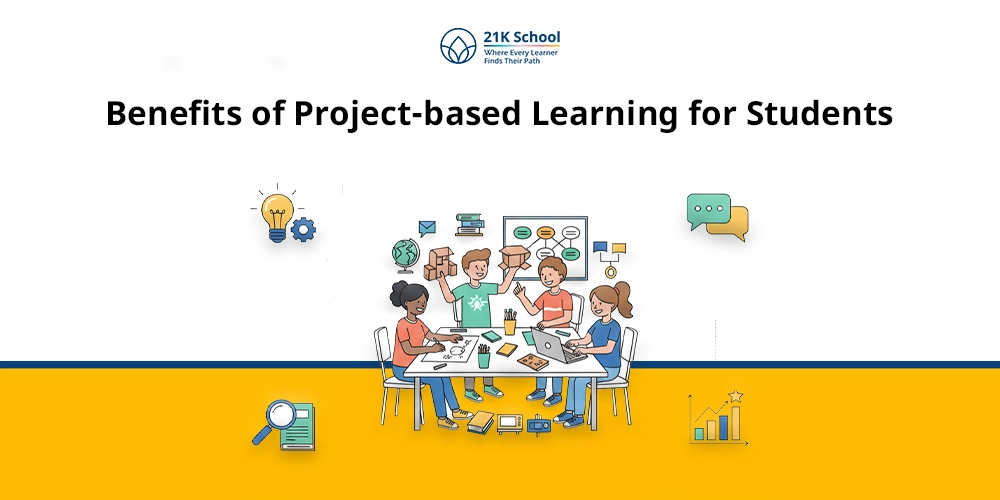
So, to understand the use we will go through a detailed analysis of the benefits of project-based learning for students’ lives.
Contents
- 1 What is Project-based Learning?
- 2 17 Benefits of Project-based Learning for Students
- 2.1 1. Personalised Learning
- 2.2 2. Critical Thinking
- 2.3 3. Better Engagement
- 2.4 4. Creativity
- 2.5 5. Problem Solving
- 2.6 6. Promotes Lifelong Learning
- 2.7 7. Project Management
- 2.8 8. Academic Understanding
- 2.9 9. Communication
- 2.10 10. Curiosity
- 2.11 11. Increased Motivation
- 2.12 12. Empowerment
- 2.13 13. Heightens Memory Retention
- 2.14 14. Supports Different Learning Styles
- 2.15 15. Collaborative Learning
- 2.16 16. Development of 21st Century Skills
- 2.17 17. Self-Confidence
- 3 Conclusion
What is Project-based Learning?
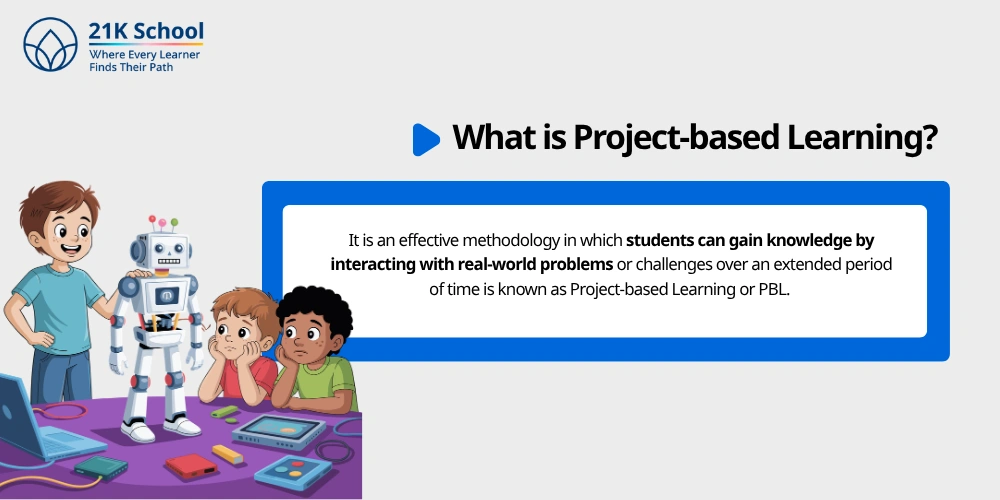
It is an effective methodology in which students can gain knowledge by interacting with real-world problems or challenges over an extended period of time is known as Project-based Learning or PBL.
For students active learning and deeper understanding PBL is a powerful teaching method .
In simple words, it allows students to acquire information that is used in the real-world to understand problems and find solutions.
17 Benefits of Project-based Learning for Students
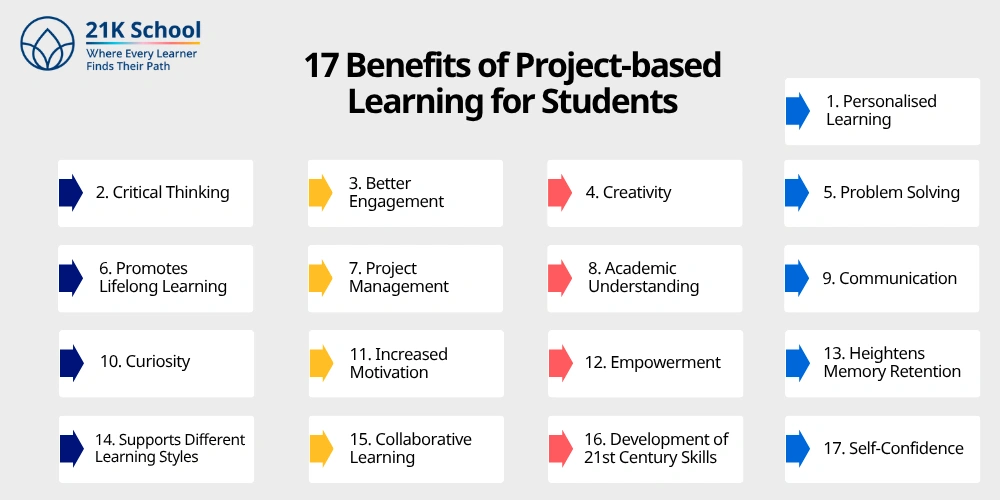
Mentioned below points are top 17 benefits of project-based learning for students:
1. Personalised Learning
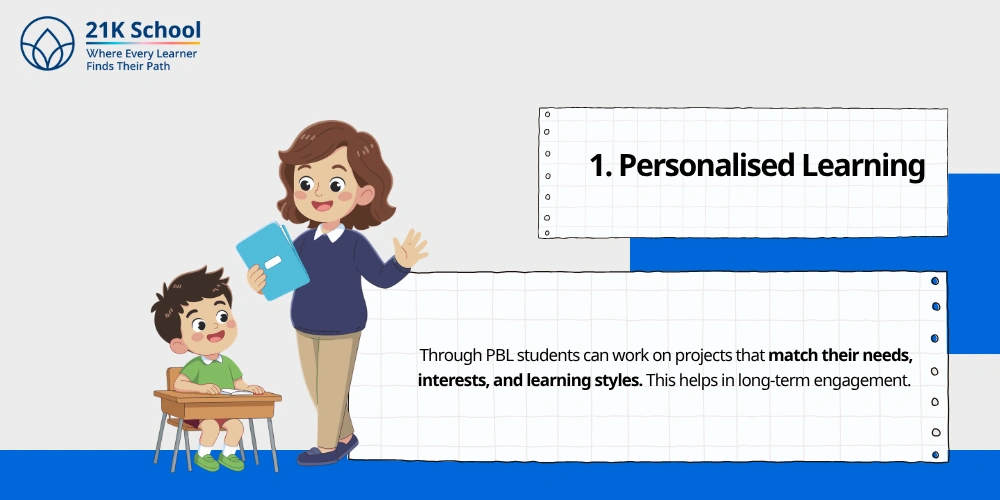
Through PBL students can work on projects that match their needs, interests, and learning styles. This helps in long-term engagement.
Students who have ownership in education perform better in the classroom.
2. Critical Thinking
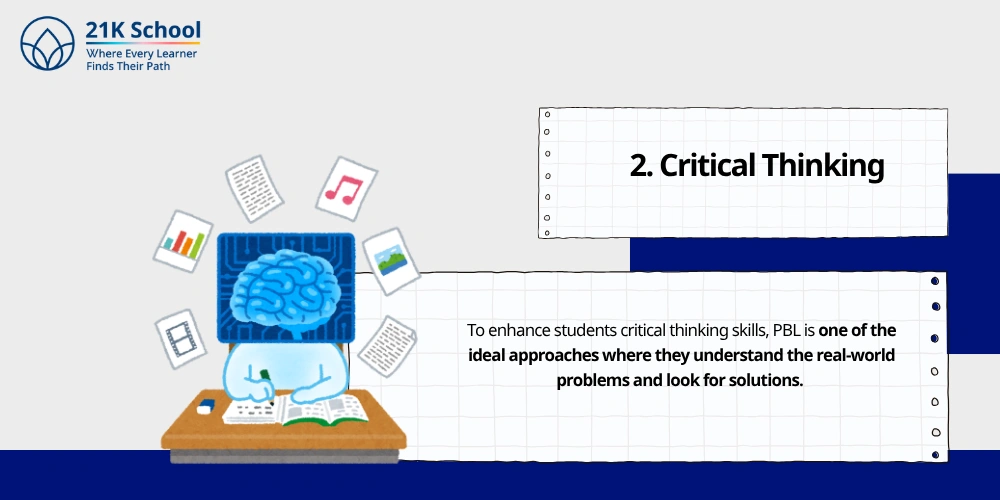
To enhance students critical thinking skills , PBL is one of the ideal approaches where they understand the real-world problems and look for solutions.
By analysing information, evaluating sources, and considering different alternatives, students can make informed decisions.
3. Better Engagement
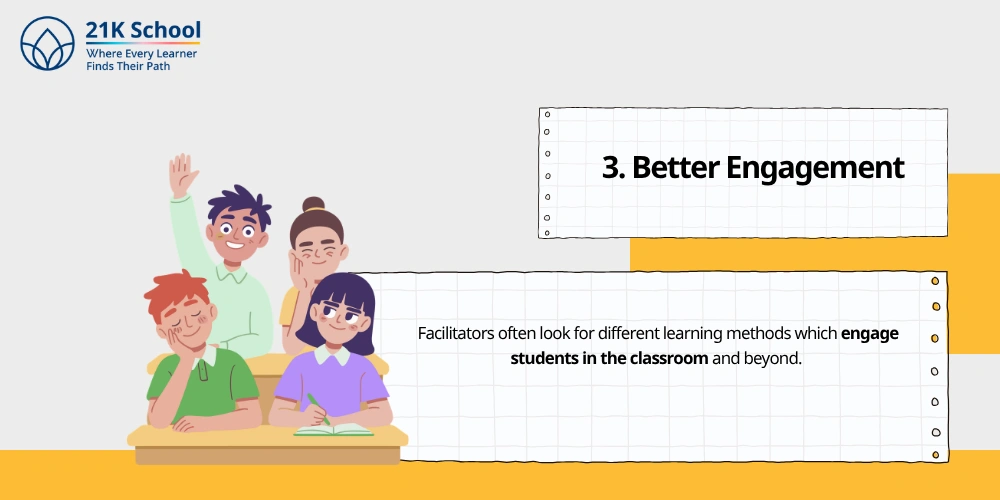
Facilitators often look for different learning methods which engage students in the classroom and beyond.
And to do so, project-based learning is an impactful option which offers active and hands-on learning experience.
4. Creativity
Students who participate in group discussions , conduct experiments, create designs often engage in fun learning activities and become creative.
Creativity through PBL helps in improving imagination power, thinking differently, and innovative solutions.
Remember, a new idea or fresh solution needs creative thinking skills .
5. Problem Solving
Reading problems and finding solutions is a traditional approach of learning in which students often lack interest.
However, instead of reading demonstrating the problem in real-life, applying the best alternative to solve the problem will increase interest and problem-solving skills of students.
6. Promotes Lifelong Learning
To promote lifelong learning , facilitators in the classroom use project-based learning which showcases knowledge in a meaningful manner and applicable in reality.
Students become curious while applying in real-life and ask multiple questions and learn beyond solutions.
7. Project Management
Managing projects with learning help students to build organisational skills such as set goals, break tasks into manageable steps, create timelines, distribute responsibilities etc.
It is also helpful to become disciplined especially for higher education
8. Academic Understanding
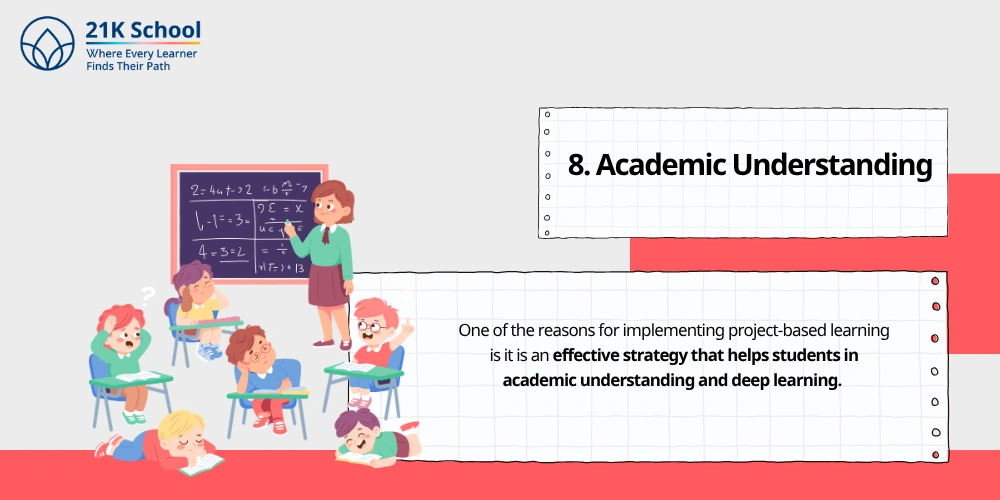
One of the reasons for implementing project-based learning is it is an effective strategy that helps students in academic understanding and deep learning.
For example, creating a science project as a team on renewable energy helps in understanding the concept of environmental science.
9. Communication
Engaging on a project through PBL is effective to improve students communication skills . Here, individuals connect with peers, teachers, parents to express ideas.
Communication is an important skill that is not only helpful in classroom collaboration but also personal development.
10. Curiosity

Students who use one approach to learning often reduce interest which leads to low academic performance.
However, exploring new ideas, gathering information, and investigating potential answers in real-life situations is more engaging which increases students academic performance and curiosity.
11. Increased Motivation
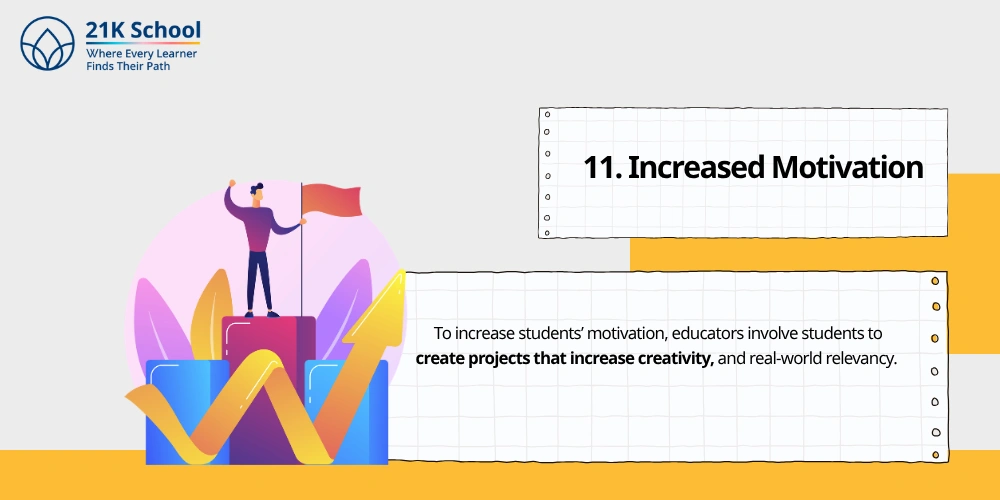
To increase students motivation , educators involve students to create projects that increase creativity, and real-world relevancy.
Completion of projects or resolving problems boost their motivation to participate in more project work and learn new concepts.
12. Empowerment
Project-based learning empowers students’ responsibility and provides an environment to learn independently by asking questions, finding solutions and choosing the best alternative.
In this way students become decision makers, creative thinkers, and take responsibility to complete projects on time.
13. Heightens Memory Retention
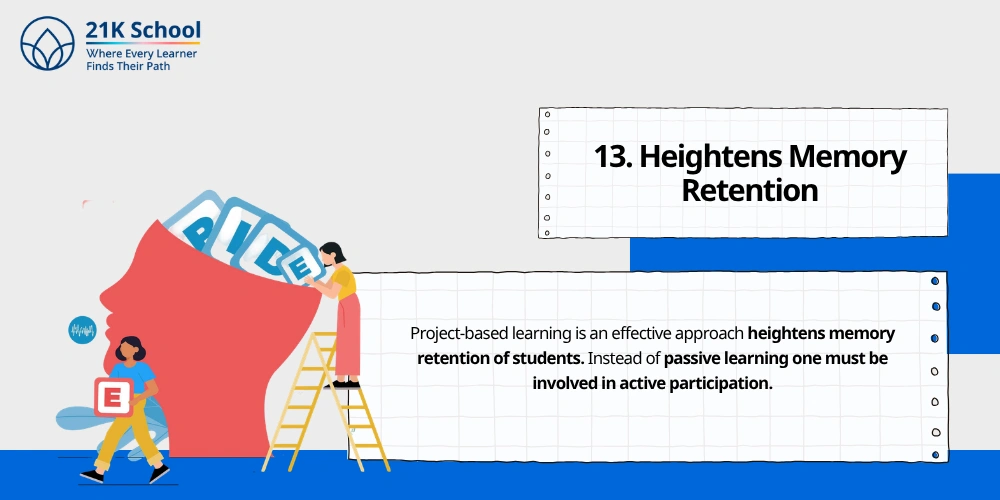
Project-based learning is an effective approach heightens memory retention of students. Instead of passive learning one must be involved in active participation.
The combination of analysis, discussion, finding solution, and presentation help in long-term retention.
14. Supports Different Learning Styles
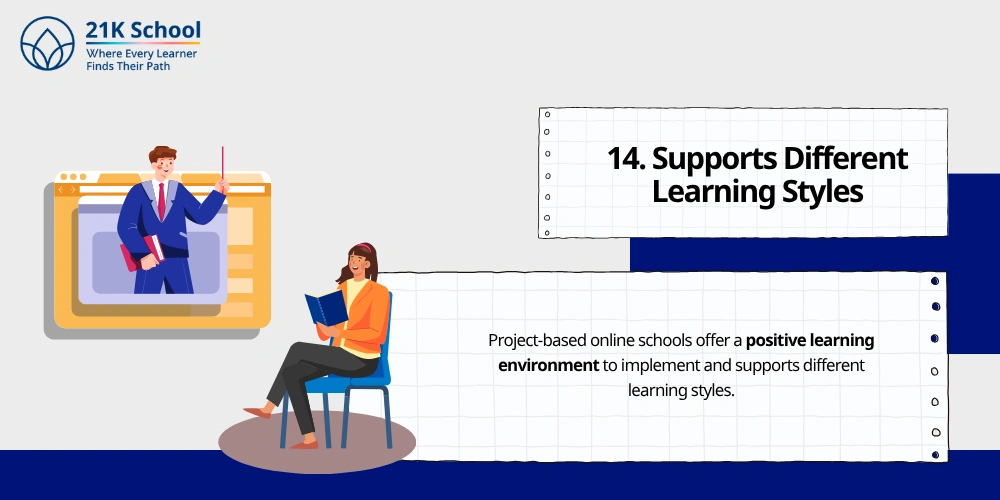
Project-based online schools offer a positive learning environment to implement and supports different learning styles.
Including project-based learning activities , facilitators make sure students are gaining necessary information without lacking.
15. Collaborative Learning
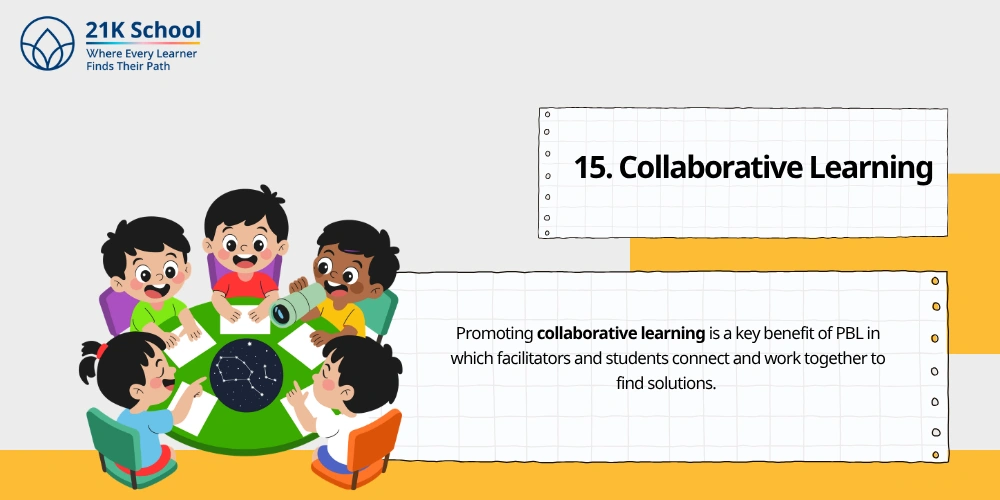
Promoting collaborative learning is a key benefit of PBL in which facilitators and students connect and work together to find solutions.
It helps in the development of interpersonal and leadership skills in students.
16. Development of 21st Century Skills
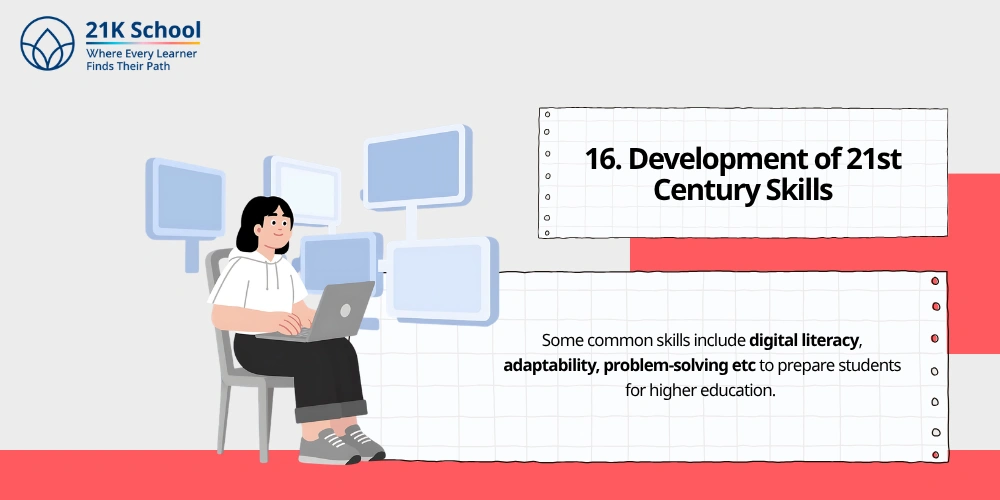
In today’s evolving education, development of 21st century skills is a necessity for each student.
Some common skills include digital literacy , adaptability, problem-solving etc to prepare students for higher education.
17. Self-Confidence

Students after completing projects feel a sense of achievement which leads to self-confidence .
With time students overcome challenges, make decisions, and see the results to increase efficiency and positiveness towards learning.
Conclusion
To fulfill students 21st century requirements implementing project-based learning is a wise decision.
Understanding the 17 benefits of project-based learning help students to reduce rote learning and connect with the real-world.
To increase engagement and active participation in classroom learning , PBL is ideal for all types of students from regular to students with disabilities.
It’s time for students to engage deeply, explore passionately, and emerge as empowered citizens of the world.

You may also want to read