


Alphabet-teaching is basic. Or else, how do you imagine your kids reading the books you get them?
Without knowing alphabets no academic learning can happen. Beginning from introducing the letters, then to name them, then finding how they sound, and then to practice writing them.
These are all necessary while our children are in their early-childhood education years. So, how to teach a child to write these English alphabets?
Let’s find out some of the best strategies to teach a child these alphabets and notice their progress daily with this article.
Contents
- 1 How to Teach a Child to Write English Alphabets: 12 Easy Ways
- 1.1 1. Start With Pre-Writing Skills
- 1.2 2. Introduce Alphabet Recognition First
- 1.3 3. Teach Letters in a Logical Sequence
- 1.4 4. Use Multi-Sensory Methods to Teach Each Letter
- 1.5 5. Focus on Correct Stroke Formation
- 1.6 6. Practice on Wide-Lined or Three-Line Paper
- 1.7 7. Keep Writing Sessions Short and Enjoyable
- 1.8 8. Integrate Writing With Everyday Activities
- 1.9 9. Encourage Independent Writing Gradually
- 1.10 10. Use Positive Reinforcement and Gentle Correction
- 1.11 11. Monitor Progress and Address Challenges Early
- 1.12 12. Make Writing a Fun and Creative Experience
- 2 Wrapping It Up
How to Teach a Child to Write English Alphabets: 12 Easy Ways
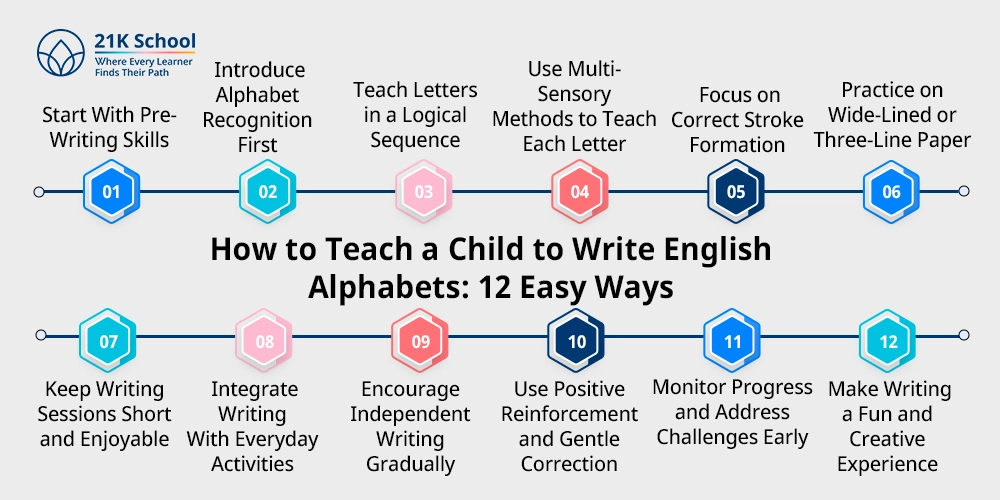
Some simple and easy ways of teaching kids the English alphabet letters include:
1. Start With Pre-Writing Skills
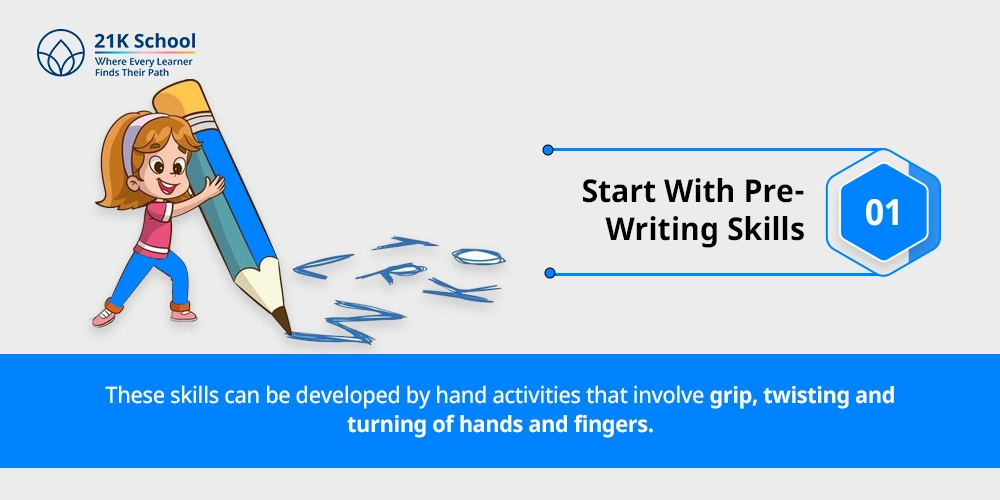
Children are small and their fine-motor skills are still to adapt and develop fully. Which is why we need to first focus on their pre-writing skills .
These skills can be developed by hand activities that involve grip, twisting and turning of hands and fingers.
Once the eye-hand-mind coordination is established through simple strokes, drawing, twitching tongs, and squeezing sponge balls, children become ready to perform.
Basically, drawing vertical, horizontal, and circular lines can initiate the process of writing alphabets.
2. Introduce Alphabet Recognition First
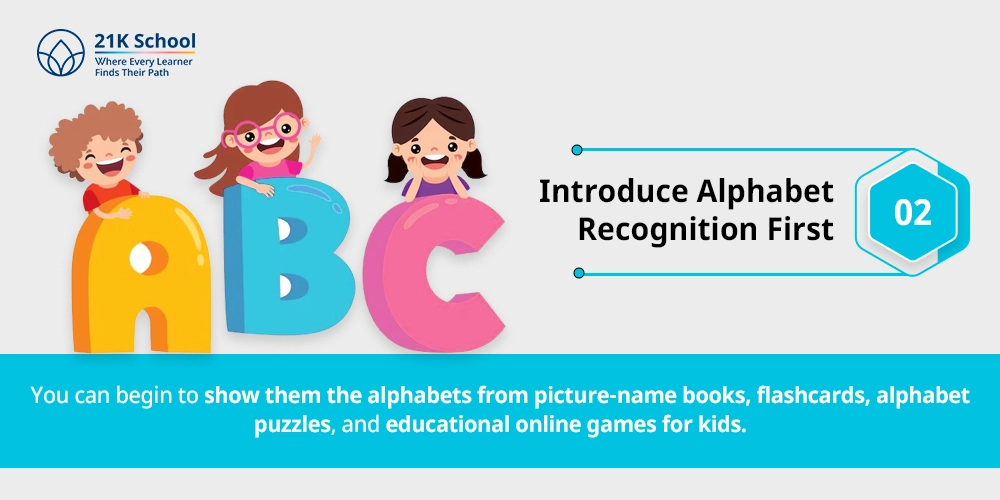
Before a child learns to write, he or she needs to identify letters and name them.
You can begin to show them the alphabets from picture-name books, flashcards, alphabet puzzles, and educational online games for kids .
Circle letters you come across in your daily activities when reading the street signs, labels, etc.
When the child can recognize letters and realize that there is a specific shape and sound of each letter, writing feels more achievable.
Recognition of letters could be the base that would foster literacy and minimize misunderstanding when you write.
3. Teach Letters in a Logical Sequence
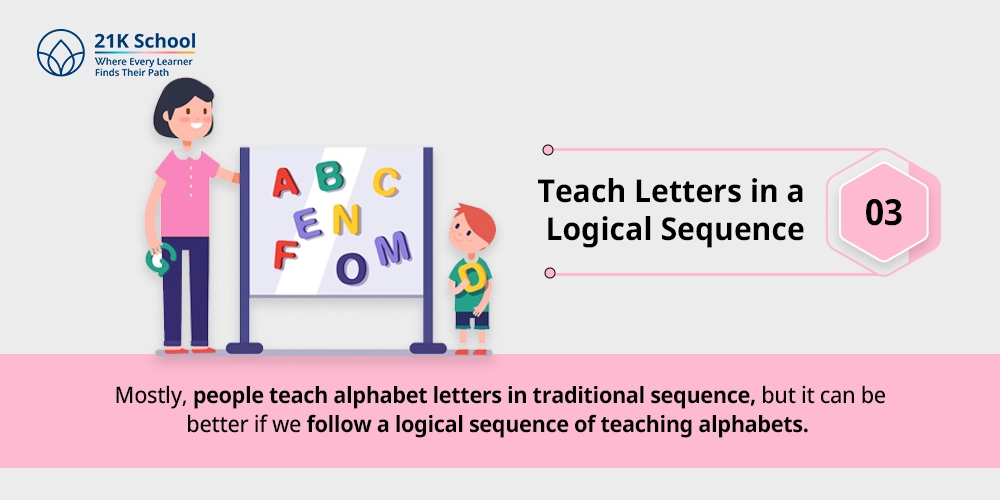
Mostly, people teach alphabet letters in traditional sequence, but it can be better if we follow a logical sequence of teaching alphabets.
The first group of letters should include horizontal and vertical lines that would be easy to draw for kids in the beginning. These could be L, T, I, H, E, or F.
Then the second and third group of alphabets with curved and diagonal lines respectively, would include C, D, G, P, or Q, and A, W, Y, K, X, M, or N.
This would also help them to write letters easily when asked in the pre-school exams.
4. Use Multi-Sensory Methods to Teach Each Letter
Children get to learn effectively when a variety of senses is engaged in learning.
The multi-sensory activities would assist in strengthening the retention of shapes of letters and the formation of strokes.
Letters drawn in sand, or alphabet-molds made of playdough, using sticks, or straws can provide the children with tactile experiences forming enrooted memories.
When writing those alphabets, if a song with that same alphabet is played, the child would remember the alphabet for a longer time.
Writing on walls or scribbling big letters on the floor can also strengthen learning in a fun and physical manner.
5. Focus on Correct Stroke Formation
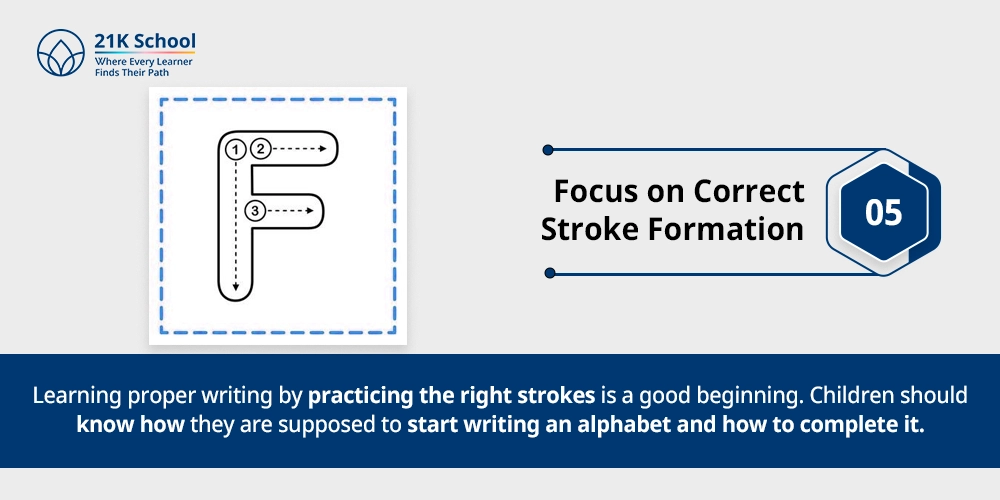
Learning proper writing by practicing the right strokes is a good beginning. Children should know how they are supposed to start writing an alphabet and how to complete it.
First show distinctly how to do it, so that the child can observe it and then can do it on their own.
When children lack the skills to put decent strokes at a young age, they usually become slow and poor in handwriting.
You can also find how to improve the handwriting of your kids in an early period of growth.
Always say the same words or phrases when teaching the letter individually. For example: something like a small interesting poem that sounds funny or interesting to kids.
Tell them to write slowly at the start. Even when they make errors initially, they will get better with time.
6. Practice on Wide-Lined or Three-Line Paper
Beginners require additional areas to have control.
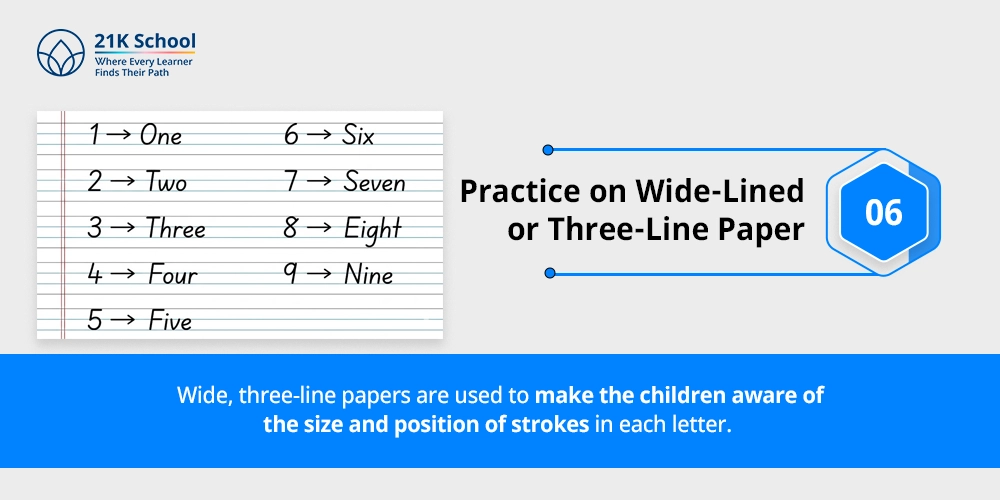
Do you remember our cursive handwriting books with three lines? Wide, three-line papers are used to make the children aware of the size and position of strokes in each letter.
Lines on top, middle and bottom of these three-lines adjustment can accommodate all tall, small, and tailed letters.
Wrist position may also be enhanced by writing on a wide-lined surface.
Later, as the child starts to develop precision, they can gradually shift to narrow lines for practicing alphabet writing.
7. Keep Writing Sessions Short and Enjoyable
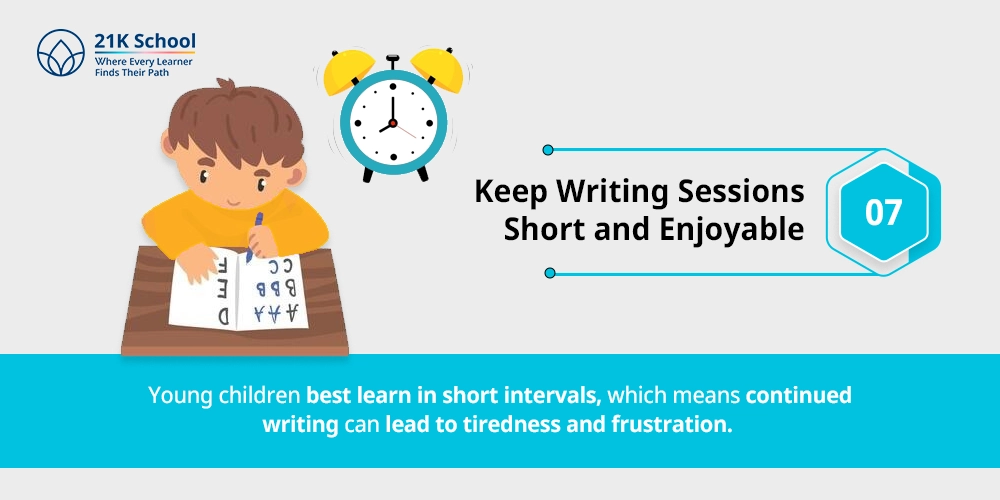
Young children best learn in short intervals, which means continued writing can lead to tiredness and frustration.
First train them to sit and write letters for five or ten minute sessions. Slowly push the sessions longer as the child’s stamina improves.
Make the idea of learning and writing letters interesting by using colored pencils, gel pens, highlighters, or erasable markers.
Children are motivated and confident when they feel enjoyment while writing.
8. Integrate Writing With Everyday Activities
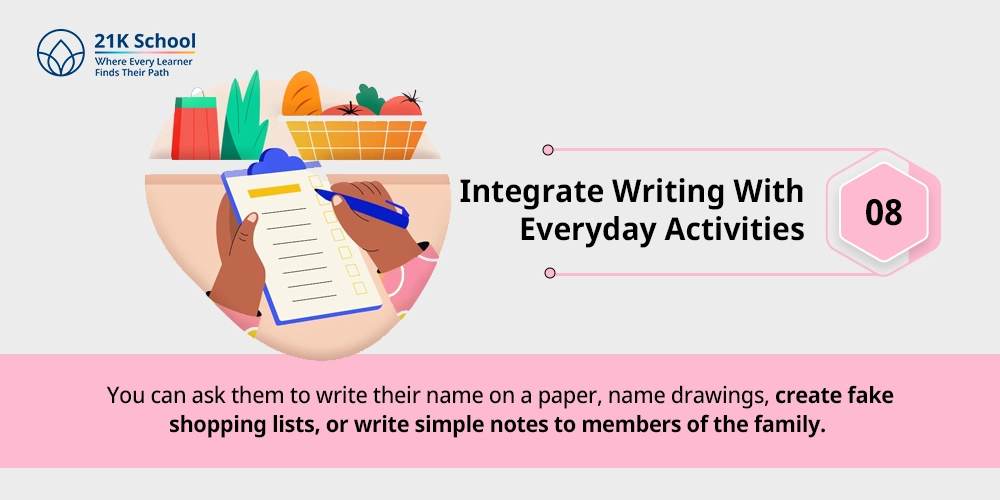
Writing can be made easier when children feel familiar with it. So, let them practice writing alphabets in their daily activities.
You can ask them to write their name on a paper, name drawings, create fake shopping lists, or write simple notes to members of the family.
When telling a story, tell them to name a few common letters on the covers of books.
Muscle memory can be encouraged by even merely tracing letters on a fogged mirror or writing in the air with a finger.
Children begin to appreciate the importance of writing alphabets once it becomes a part of their real life.
9. Encourage Independent Writing Gradually
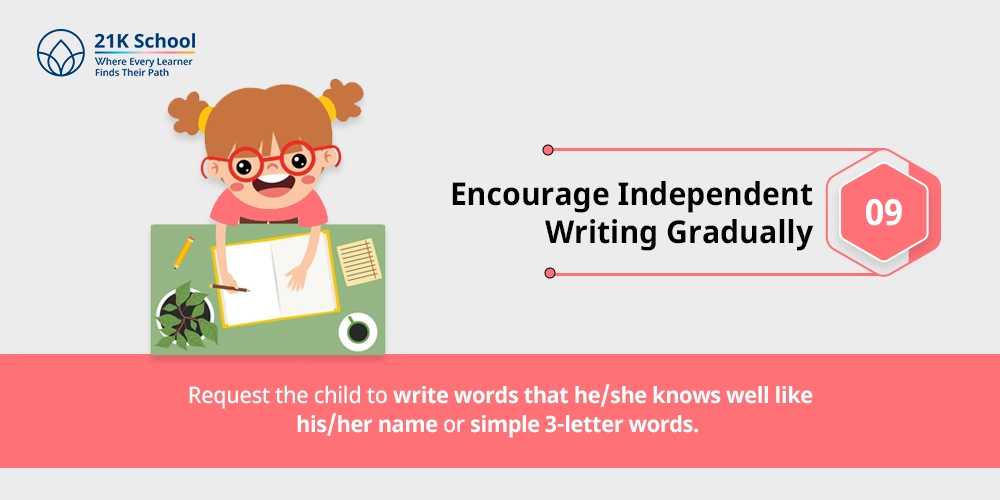
After the child has mastered using letters through instruction, promote self-learning slowly.
Request the child to write words that he/she knows well like his/her name or simple 3-letter words.
Praise their efforts without forcing perfection. When the child is facing trouble, guide them by putting your hand on theirs, and do half-tracing.
Independent writing can develop confidence and literacy skills in kids.
10. Use Positive Reinforcement and Gentle Correction
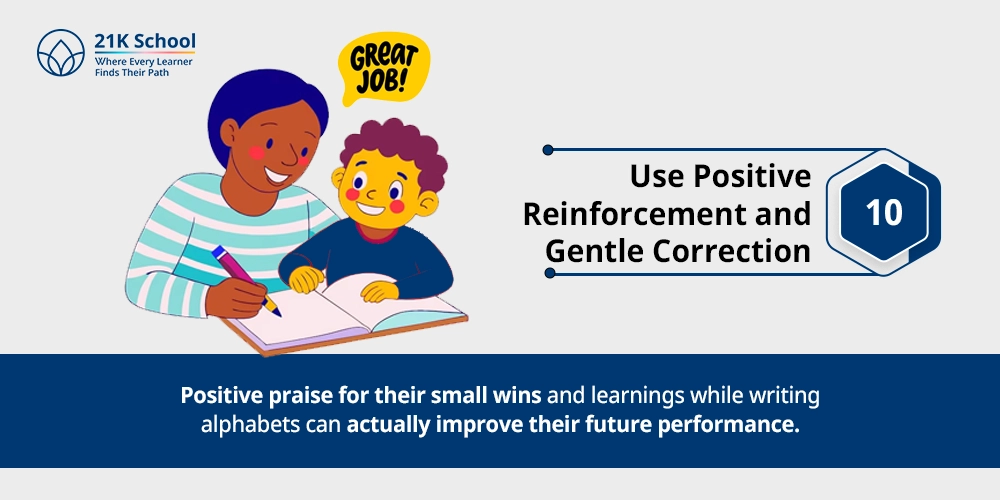
When kids feel celebrated, they learn better.
Positive praise for their small wins and learnings while writing alphabets can actually improve their future performance.
Tell them when they write an alphabet correctly or beautifully.
Even when they make mistakes, tell them gently how they can improve instead of scolding unnecessarily.
This will encourage a growth mindset in them, which is needed in future as well.
A positive learning environment would keep the children motivated and would also discourage anxiety towards writing.
11. Monitor Progress and Address Challenges Early
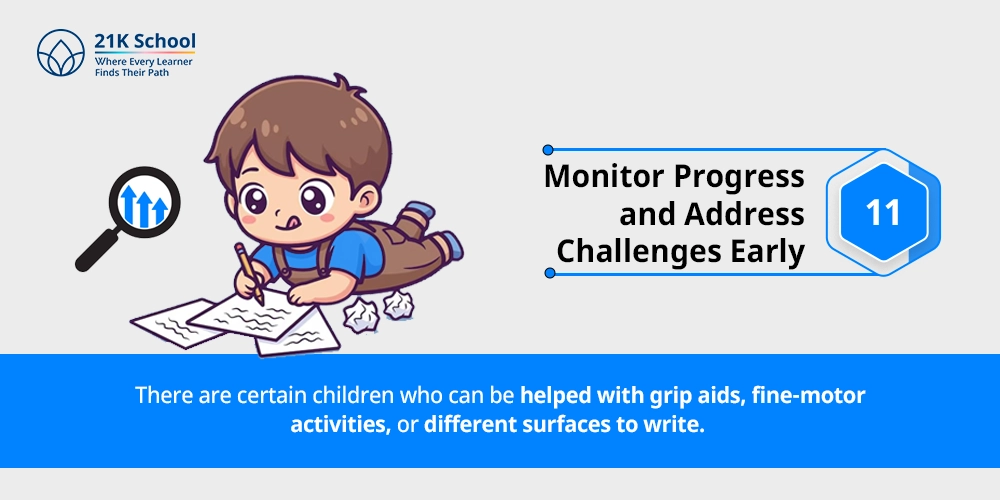
Notice the grip of the child, his/her posture, stamina, and letter formation from an early age.
In case of consistent mistakes and frustration while holding a pencil, extra assistance should be provided.
There are certain children who can be helped with grip aids, fine-motor activities , or different surfaces to write.
When your child still faces difficulties, it may be good to consult a professional therapist or special educator.
Early intervention helps to avoid the difficulties in further ages and maintain the learning process.
12. Make Writing a Fun and Creative Experience
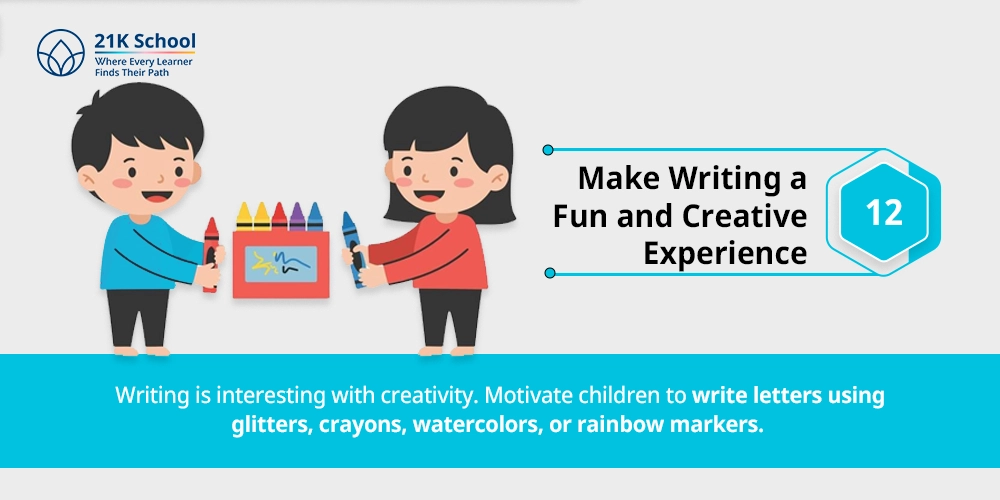
Writing is interesting with creativity. Motivate children to write letters using glitters, crayons, watercolors, or rainbow markers.
Develop crafts of alphabets i.e. use toothpicks to make the letter A or make the letter S appear as a snake.
The more creative the activity, the higher the level of emotional and cognitive involvement in the activity of kids.
Fun experiences generate positive perceptions about writing that lead to the development of a lifelong learning
of alphabets.
Wrapping It Up
Teaching alphabets can be easy if practiced consistently after improving the pre-writing skills of learners.
Once the fine-motor abilities are working properly along with gross motor development, learners are ready to dive into the fascinating world of handwriting and learning about alphabets.
Teaching alphabets is unignorable because it acts as the foundation for your child’s education.
Only when they know about these letters, will they be able to read a book or study anything.
So, go through the above given tips and teach your children alphabets with patience and understanding

You may also want to read