

Have you ever thought about how IB is different from other Boards?
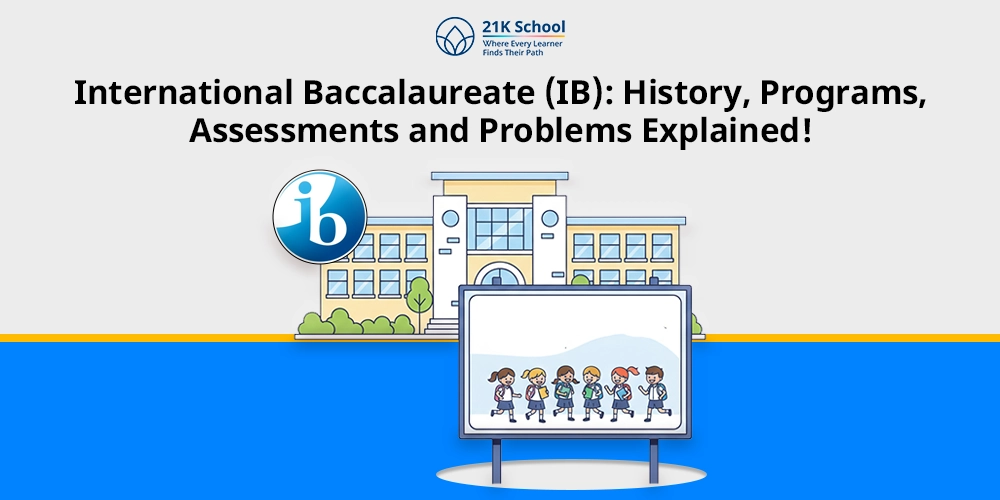
International Baccalaureate (IB) is an internationally recognised educational programme, which aims at creating questioning, knowledgeable and caring young people. IB was established in 1968, and it is a demanding curriculum which has been designed to promote critical thinking, intercultural awareness and whole person development.
The curriculum is divided into four educational programmes, i.e. the Primary Years Programme (PYP), the Middle Years Programme (MYP), the Diploma Programme (DP) and the Career-related Programme (CP) that take care of students between early childhood and up to pre-university.
IB stands out with its emphasis on inquiry-based learning , global orientation and whole person development, utilising the Theory of Knowledge (TOK), the Extended Essay (EE) and Creativity, Activity and Service (CAS) within the Diploma Programme.
The IB has been recognised by universities throughout the world because the student is not only equipped with knowledge but also with critical thinking skills in life that would bring several successes to their ever-growing and volatile world.
Contents
- 1 What is the International Baccalaureate (IB)
- 2 Four Programs of International Baccalaureate (IB)
- 3 History of International Baccalaureate (IB)
- 4 Assessment Process of the International Baccalaureate
- 5 Benefits of the International Baccalaureate (IB)
- 6 Growing Presence of IB in India
- 7 Common Problems of the International Baccalaureate (IB)
- 8 Why Choose the International Baccalaureate?
- 9 Final Thought
What is the International Baccalaureate (IB)
International Baccalaureate (IB) is a highly recognised education programme across the world, which is meant to create academic, personal, and social skills in the minds of students.
It focuses on critical thinking, intercultural relations, and holistic growth in order to prepare students for higher education and international citizenship. The IB promotes inquisitive learning, autonomous study and introspection, creating all-round humans able to solve complex tasks and be an active participant in the world.
1. Extended Essay
The Extended Essay is a self-directed, independent research project of 4,000 words. A student learns about an area of interest in one of the IB subjects, where they build research, analytical, and writing skills.
The EE stimulates intellectual inquiry, critical analysis, and academic rigour, which assist students to learn how to form an argument, undertake research and communicate their results appropriately.
2. Theory of Knowledge
Theory of Knowledge is a course which focuses on what knowledge is and how we know what we are saying we know. It challenges students to be sceptical, to assess evidence and consider various modes of knowing, such as perception, reason, emotion and language.
TOK promotes critical thinking and assists students in connecting the academic fields with reality.
3. Creativity, Action, Services
CAS is an ingredient part of the IB Diploma Programme that places an emphasis on out-of-classroom experiential learning . Students participate in creative activities, sports activities and community service projects so as to build personal growth, leadership and social responsibility.
CAS helps to reflect on experiences and their influence, and contributes to the balanced growth and the feeling of giving back to the community.
Four Programs of International Baccalaureate (IB)
The International Baccalaureate has four programmes, which are meant to assist the learners in various aspects of their learning methods . All programmes are based on age-related learning, skills acquisition, and international knowledge. The four programmes of IB are their follows.
1. Primary Years Programme (PYP, ages 3-12)
PYP is interested in the multi-faceted development of young learners where curiosity, learning through inquiry and creativity are encouraged. It concentrates on abstract knowledge and not memorisation, and integrates the disciplines into practical and real-life circumstances.
2. Middle Years Programme (MYP, ages 11-16)
MYP helps learners to acquire critical thinking, problem-solving and interdisciplinary knowledge. It fills the space between the classroom environment and reality, and assists in bringing about self-growth and global consciousness.
Cooperative projects, community service and inquiry-based learning are exercised, and the students have the ability to gain skills in communication and self-management.
MYP also encourages reflection and lifelong learning , which prepares students for the demands of higher education and also encourages curiosity, resilience and the ability to make responsible decisions in a complex, interdependent and interrelated world.
3. Diploma Programme (DP, ages 16-19)
The DP is a rigorous pre-university programme that inculcates intellectual, personal and social ability. Students will be allowed to study six courses: the Extended Essays course, Theory of Knowledge course, and Creativity, Activity, Service (CAS).
The programme is emphasised on time management , research, critical thinking, independent learning and ethical thinking.
It not only prepares students to perform well in higher education , but also promotes intercultural tolerance, restraint and even-handed development, and they are therefore bound to achieve well both in studies and personal lives in the international environment.
CP is an academic and career-related learning experience among students who desire to belong to some professions. It integrates the practice competency, professional training and work training as well as the basic academic disciplines.
The students also participate in the CP core that comprises personal and professional skills development, service learning, language acquisition, and reflective projects.
The programme prepares the students to advance with further studies, offer apprenticeship or work in the labour market and to acquire practical problem solving, professional ethics and even flexibility in an ever-changing employment world.
History of International Baccalaureate (IB)
It was established in 1968 in Geneva, Switzerland, under the name of the International Baccalaureate (IB) with the purpose of developing an internationally recognised and high-quality education programme for students who were regularly transferred across borders. It was originally meant to offer a common curriculum and assessment framework which would be accepted by all the universities across the world, especially among the children of diplomats and expatriates.
The IB was created by a team of teachers around the world who held the opinion that education must foster peace, understanding across cultures and thinking.
The initial programme was the IB Diploma Programme (DP), which was to be offered to 16-19-year-old students. It also focused on academic strictness, self-research and international insights, unlike the conventional national education systems.
The IB added more programmes to the Diploma Programme as its success increased. The Middle Years Programme (MYP) was introduced in 1994 for students between the ages of 11 and 16 and aims at helping students relate the knowledge acquired in school to the real world.
This was succeeded by the Primary Years Programme (PYP) in 1997, which was aimed at students aged between 3-12 years with the focus on inquiry-based learning. Recently, in 2012, the Career-related Programme (CP) was launched in order to integrate academic learning with career orientation learning.
Assessment Process of the International Baccalaureate
The system of assessment that the International Baccalaureate (IB) uses is designed not only to test the level of academic knowledge but also the level of critical thinking, research skills, and personal growth. It is an integrative approach which possesses both internal and external assessments in assessing student performance.
1. Internal Assessment
Internal assessment (IA) is evaluated and marked by the teacher of the student in the school, and, lastly, it is moderated by the IB. It consists of courses, assignments, laboratory assignments, oral examinations or other assignments.
The internal assessment allows the teachers to be able to test the practical knowledge and critical thinking, along with independent learning. It also enables the students to present creativity, problem-solving, as well as research, not under a written examination.
2. External Assessment
Examinations and formal assessments can be used in undertaking external assessment in the IB, and expert assessments by external examiners. They tend to be written either in an exam, essay or a project, depending on the subject matter.
External assessment maintains a standardised grading in all IB schools throughout the globe, and this is reasonable and credible. They assess knowledge, analytical and how students can use the knowledge as an organised academic process.
3. Core Components Assessment
- Extended Essay (EE): A 4,000-word independent research essay that is externally examined and accumulates research and writing experience.
- Theory of knowledge (TOK): Studies critical thinking and reflexivity concerning knowledge. The test will include an essay and a presentation.
- Creativity, Activity, Service (CAS): The CAS is not rated in numerical terms, but is an obligatory part of the curriculum, and the students should be able to reflect on the experiences to prove their individual progress and social responsibility.
Benefits of the International Baccalaureate (IB)
The International Baccalaureate has many benefits that make academic performance and personal growth easier. The holistic and competence-based education enables its students to think critically, be responsible, and survive in the global learning environment. Here are the benefits of IB.
1. Holistic Development
The IB is based on the development of the entire learner through the balancing of the academic and personal, social, and emotional intelligence development. The students are involved in activities that foster creativity, physical health, moral consciousness and service.
This holistic practice will allow the learners to become confident, reflective and responsible people ready to confront academic challenges and real-life situations with strength and compassion.
2. Skill-Based Learning
Critical thinking, research, communication skills , collaboration skills , and time management are the skills which IB focuses on. Instead of learning the facts by heart, students are taught to analyse the information, solve problems, and make the knowledge meaningful.
The transferable skills equip the learners to higher education levels and the workplace, as well as lifelong learning in a dynamic learning environment.
3. Global Curriculum
The IB curriculum may be termed as internationally minded because it instils in students the inclination to learn more about other cultures, perceptions and world issues as well. The lessons are presented in a way that is real-world applicable so that the students can be able to associate their life experiences in the local area with the global aspect.
This globalism is also related to intercultural awareness, open-mindedness, and respect and prepares students to operate in a globalised world in a thoughtful and responsible manner.
4. Enhanced Application
Based on the rigidity in the academic courses and focus on independent research, leadership and service that this programme offers, IB students can create decent university applications.
Such aspects as the Extended Essay and CAS are the signs of initiative, devotion, and intellectual interest. The merit of universities producing IB graduates like them is that they are able to cope with their workloads, think and adjust to an academic world that requires tolerance to difficult situations.
5. Professional Growth
IB promotes self-discipline, ethical decision-making, self-directed learning and reflection, which are all associated with professional growth. Coursework and experiential learning give students an opportunity to experience teamwork, handling projects, and solving problems.
These skills will enable the learners to smoothly fit into a career, internship or advanced educational institutions, which will help long-term personal and career prosperity.
6. Global Recognition
Universities and employers around the world accept and admire the IB. Its standards and strict evaluation assure international credibility among countries and education systems.
The IB graduates frequently receive credit or advanced status at universities. This international reputation makes international education and international career accessible, giving the students mobility and a competitive advantage.
Growing Presence of IB in India
The International Baccalaureate has been growing rapidly in India due to the growing faith by families and teachers in international standards of education.
IB programmes are characterised by a great interest in inquiry, critical thinking and holistic development, which is why increasing numbers of schools, both within urban and emerging centres of education, are adopting them. The existence of IB in India can be checked below.
1. Popularity of IB in India
Seeking quality and internationally recognised education, parents are on the hunt to find high-quality education, and, consequently, the International Baccalaureate is gradually gaining popularity among parents in India.
The fact that it centres on academic excellence, holistic learning , critical thinking and creativity also equips students to further their education in higher levels and also to foreign countries, thus making it a good alternative to the traditional exam-driven education.
2. Adoption in Schools
IB programmes in big city schools in India and new educational centres have been applying IB programmes in order to offer project-based learning and experiential learning.
IB schools strive to produce well-rounded student through a combination of subjects and will promote research on their part and focus on application to ensure that they are able to overcome challenges and opportunities that will await them in the global market in the future.
3. Focus on Critical Skills
Critical thinking, which is focused on in IB, is also present in the skills involved in higher education and is congruent with careers as well. The use of knowledge in a practical way deals with critical thinking, which is likewise applied in higher education and also in careers.
The same competencies taught to students through probing, analysing and being adaptable in any area also assist them to move with confidence , independently and resilience in the complex academic and professional set up.
4. Global Curriculum and Recognition
The globally recognised IB curriculum is enticing to those families who incline to international education and employment opportunities. Its standards make it acceptable in different countries, and it also forms intercultural perceptions, ethical standards, as well a world outlook.
The actualisation will result in the graduates being admitted to the best universities around the world and will prepare the graduates to excel in multicultural learning , learning institutions and employment.
5. Shift Toward Student-Centred Learning
The IB development in India is a trend in student-centred learning , having an intellectual, personal and social growth focus.
By promoting inquiry, reflection and self-directed learning, IB creates self-directed, responsible and globally aware students. A high proportion of academic excellence to creativity, emotional intelligence and social responsibility make them successful in the next life.
Common Problems of the International Baccalaureate (IB)
The International Baccalaureate (IB) is challenging yet rewarding. The issues that the students must be able to endure are the academic stress, heavy workloads and over-expressed expectations.
It is imperative to know the issues which are common among students and overcome them in order to achieve prosperity and moderation. These are the common problems of the International Baccalaureate (IB).
1. Expensive
IB programmes may be expensive in terms of registration, examinations and resource charges. Most of the schools also offer IB courses at higher fees, rendering IB courses not as affordable to families with low financial capacity.
This will lead to the denial of qualified students the opportunity to enrol despite the fact that they may benefit from its high-quality curriculum and international popularity, thus placing a barrier to fair access.
2. Intense Workload
The workload of IB students is heavy with several subjects, internal tests, the Extended Essay, and CAS. It can be difficult to organise and coordinate academic, extracurricular and personal duties and meet deadlines.
Lack of time management skills can make students stressed or burn out. Programmes that entail rigorous academic requirements present rigorous demands that need great organisational skills and hard work in order to cope successfully.
3. Fewer Adaptability
The IB programme is very rigid and can hardly accommodate any changes. The students will not be able to switch subjects, learn at a different pace, or concentrate exclusively on the fields where they have personal interest.
The strict structure of the IB does not permit it to be easily adapted to changing academic objectives or other methods of learning in instruction, as opposed to the situation with some national schemes.
4. Not Suitable for Everyone
IB is scholarly, and it involves self-motivation, personalised learning , and superb organisational skills. Students who are less intensive, or more vocational, might find it difficult to meet its requirements.
Also, the research, examination, and extracurricular activities can be too much to bear for some learners, and therefore, the programme would not suit all learners.
5. Limited Seats
IB programmes are also provided in a limited number of schools throughout the world, and most of them have restricted enrolment, given the demand.
Interested students can be denied the opportunity to be exposed to the programme by geographic location and availability. As a result, even very motivated students might have difficulties getting admission to an IB school, and this restricts access to an education at the global standards.
Why Choose the International Baccalaureate?
Selecting the International Baccalaureate will involve selecting more than traditional education.
IB fosters academic quality, critical thinking, and international sensitivity, and students are equipped to achieve success in their tertiary education and excel in a dynamic world. This is the reason to prefer the International Baccalaureate (IB).
1. Rigorous and Well-Rounded Curriculum
The International Baccalaureate curriculum is challenging and well-balanced to provide a solid academic background and stimulate critical thinking and creativity.
Students learn many diverse topics in addition to the essential elements that encourage research on their part, self-reflection, and personal development. This is a strategy that would provide the learners with intellectual and holistic development.
2. University Preparation
IB is also an effective way to make a student ready to be educated at the university level, as the focus is on the independent learning process, academic writing abilities, and research capabilities.
Among the parts, the Extended Essay, the Theory of Knowledge, etc., enable students to work with complex tasks, as well as learn to think critically. Graduates without much work experience are often readily assimilated into higher learning by virtue of their good academic discipline.
3. Subject Choice
The IB subject mix also gives flexibility and choice to various subject groups of the students to expound on their personal interests and competencies.
Students can take Sciences, Humanities, Languages, Mathematics and the Arts, and they can take higher and standard levels. This organisation assists in fieldwork and the scope of study.
4. Globally Recognised
The International Baccalaureate is well known among Universities and institutions around the globe. The fact that its assessment standards are always consistent and backed by the international curriculum makes it credible and acceptable around the world.
Students who have an IB qualification are in a good position to apply to foreign universities with no hesitation.
5. Intercultural Understanding
One of the core concerns of the IB is cultural awareness and global citizenship. During the course of studying, students work with different points of view, cultures and global problems.
This assists them to grow empathetic, open-minded and respectful of differences, thus helping them survive in the interconnected and multicultural world.
6. Career Preparation
The IB provides the students with transferable skills that include problem-solving, collaboration, communication, and adaptability. Inquiry-based learning and practical applications in the real world provide such practical experience to the student to aid future career objectives.
The Career-related Programme also enhances professional preparedness in addition to academic performance.
Final Thought
International Baccalaureate is a seldom found, internationally recognised learning programme, which is balanced in academic excellence, personal, social and emotional excellence.
The IB provides students with more sophisticated learning, a holistic curriculum and mindfulness of critical thinking, creative thinking and global perspectives to guarantee their achievement in higher education, useful careers and accountable citizens of the world.
Although this is not an easy task, the benefits will bring the learner long-term skills of success in the fast-changing world of interconnection.

You may also want to read