

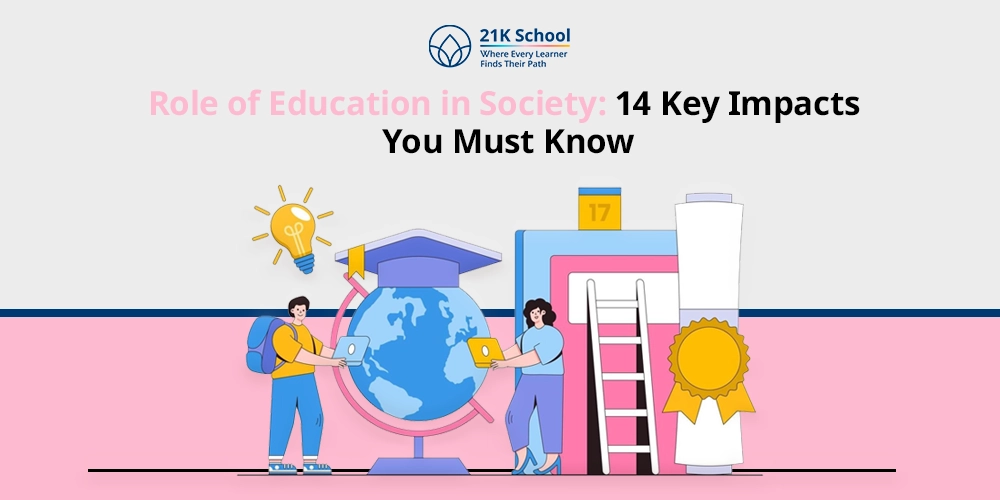
Have you ever wondered how education plays an essential role in our society?
Education is a key factor in the development of society because it creates values, knowledge and skills in the person. It gives individuals the ability to think, engage in informed decision-making and be productive in social, economic and cultural life.
With education, societies maintain their own heritage without losing it, but promote innovation and development. It facilitates equality by providing people with a chance to develop themselves and climb the social hierarchy.
In addition, education enhances democracy by promoting cultural awareness, responsibility, and respect for the citizens, hence it is an effective cornerstone for the sustainable development of society.
Contents
- 1 Top 13 Roles of Education in Society
- 1.1 1. Reducing Poverty
- 1.2 2. Improving the Nation’s Health
- 1.3 3. Improving Social Life
- 1.4 4. Reducing Crime
- 1.5 5. Increase Student Enrollment
- 1.6 6. Promoting Fairness and Justice
- 1.7 7. Holistic Development
- 1.8 8. Economic Growth
- 1.9 9. Empowering Lives
- 1.10 10. Women Empowerment
- 1.11 11. Promotes Lifelong Learning
- 1.12 12. Increase Employment
- 1.13 13. Encourages Independent Thinking
- 2 Final Thought
Top 13 Roles of Education in Society
Education plays a significant role in society in that it determines knowledge, skills, values and character. It gives power to people, enhances equality and economic development and creates responsible, enlightened, and progressive societies. This is the role that education can play in society.
1. Reducing Poverty
Education can eliminate poverty since it equips an individual with knowledge, skills and qualifications which promote better employment chances. It enhances the earning capacity and enables people to leave the poverty trap between generations
With education, there is a high chance that the educated people will get stable employment, manage the resources effectively, and boost the economy, which will transform the living standards of the family and community.
2. Improving the Nation’s Health
The education on issues concerning hygiene, nutrition, disease prevention, and healthy lifestyles is education that optimises national health. The educated population is also prepared to make rational health decisions, seek medical attention when appropriate and enhance the population’s health.
This will help in cutting down the mortality rates, managing the proliferation of diseases, and the net outcome would be a healthier and more productive society, which would eventually lead to another reduction of the cost of healthcare.
3. Improving Social Life
Education is good because it instils good morals such as cooperative learning, tolerance, respect and empathy, which enhances social life. It helps individuals to understand the social norms and cultural differences, and this leads to improved relationships and bonds in society.
Educated citizens are engaged in social activities, solve conflicts, and make positive contributions to social harmony and mutual understanding.
4. Reducing Crime
Education assists in curbing crime through moral teachings, the development of critical thinking skills and legal ways of earning a living.
Educated people get to know more about consequences and moral responsibility. With better job opportunities and awareness of social issues, citizens are less inclined to commit crimes, making their societies safer and the society more stable.
5. Increase Student Enrollment
Education programmes enhance the number of students joining schools because of the emphasis on the value of education towards personal and professional development. Scholarships, awareness campaigns and better access motivate more students to go to school through government policies.
Increased enrollment would result in an increased level of literacy, human resources, and eventual development of the society through a highly educated workforce.
6. Promoting Fairness and Justice
Education brings about fairness and justice because individuals are sensitised to their rights, responsibilities and laws. It provides individuals with the power to stand up against discrimination, inequality, exploitation, and racial issues in schools.
A learned society is the democratic one, which values equality and moral behaviour, which takes into consideration tenets of democracy and ensures that people are treated as equals irrespective of their gender, class or background.
7. Holistic Development
Education facilitates holistic development since it leads to intellectual, emotional, social, physical, and moral development. It is not confined to the education system to constitute creativity, communication, leadership, and life skills.
It is this harmonious growth that makes people take up challenges in life with confidence, make significant contributions towards society, and attain the general well-being of the self.
8. Economic Growth
Education spurs economic growth because it helps in the creation of a skilled and competent workforce. Highly educated people enhance productivity, inventiveness and entrepreneurship.
Countries that have a good education level will be able to attract investments, enhance industrial growth and compete in the world. With the increase in the level of income, education assists in establishing sustainable economic growth and national wealth.
9. Empowering Lives
Educational ability is the power of life due to the production of confidence, independence, and decision-making. It makes individuals aware of their potential, pursue their goals and improve their quality of life.
Education empowers individuals mentally to make their own decisions, to be self-reliant, and to become active in the process of deciding their own future and society.
10. Women Empowerment
Women are empowered through education by being equipped with knowledge, skills and awareness on rights. With education, women become economically independent, informed about their health choices, and help in the development of their families and the community.
It reduces the level of gender inequality, delays early marriages, increases child education and empowers the society by making sure that women are accorded active roles in all aspects.
11. Promotes Lifelong Learning
Curiosity and flexibility help in a lifelong learning process that one undergoes through education. It encourages the personality of individuals to continually update their knowledge and expertise in a dynamic world.
Lifelong learning enables individuals to be relevant at their jobs, accommodate the changes in technology, and improve both as individuals and as professionals at various periods of life.
12. Increase Employment
Education improves jobs due to the capability of performing better, qualifications and job preparedness. Companies are willing to hire educated workers who can think out of the box and can adjust to change fast.
Education does not give a variety of career choices, but also reduces unemployment to a minimum and contributes to entrepreneurship, making the individual financially stable and enabling society to grow.
13. Encourages Independent Thinking
Independent thinking is developed in education by creating capabilities to think, analyse problems, and develop problem-solving skills. It teaches people to question assumptions, analyse facts, and create their own perceptions.
Independent thinkers are able to make informed choices, be creative in their innovations, and contribute to the democratic processes, making the society more dynamic, responsible, and progressive.
Final Thought
Education helps to support a progressive and well-functioning society. It is vital in reducing poverty, promoting health, promoting justice, empowering people, and promoting economic development.
Through education, people can address the issues that surround the world and emerge as responsible citizens because education facilitates individual thinking, lifelong learning, as well as social harmony.
Education is among the instruments that cannot be overlooked in the development of countries and the world since a strong education system is not only able to transform the lives of people but also produce harmonious, inclusive, and sustainable societies.

You may also want to read