

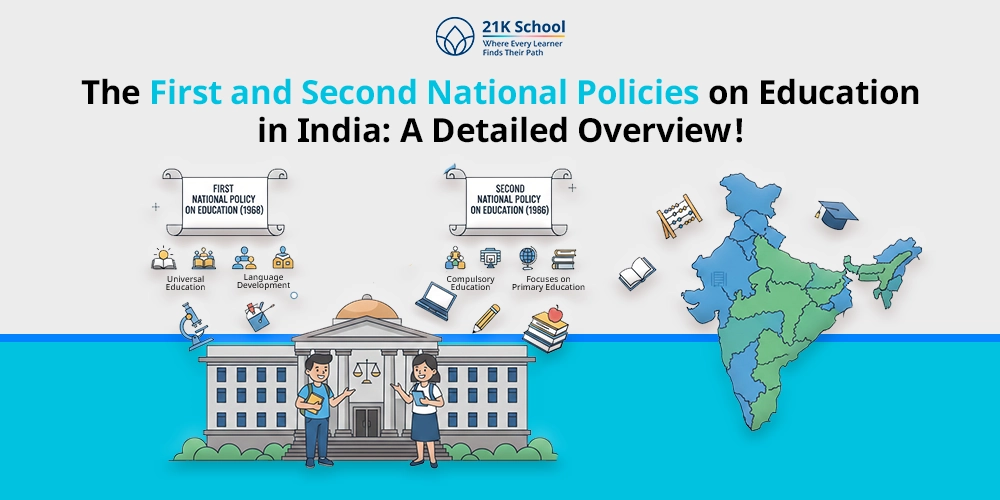
Do you know what the first and second national education policies
are in India?
Since independence, education has remained a major pillar of the social, cultural and economic development of India. The Government of India has developed detailed policies over the years to shape the development and modernisation of the education
system.
The two most important are the First National Policy on Education (1968) and the Second National Policy on Education (1986) because they aimed at ensuring that access was provided to all, that quality was improved, and that equity was promoted in the process of addressing the emerging educational and developmental demands of the country.
Both policies laid the groundwork for subsequent reforms, including the 12 national policies for inclusive education that ensure equitable access for students.
Contents
- 1 What are the First and Second National Policies on Education in India?
- 2 What is the First National Policy on Education in India?
- 3 6 Key Goals of First National Education Policy
- 4 What is the Second National Policy on Education in India?
- 5 6 Key Goals of the Second National Education Policy
- 6 First vs Second National Policy on Education
- 7 Final Thought
What are the First and Second National Policies on Education in India?
Since the time of independence, education has played a key role in defining the social, economic and cultural development of India. The Government of India has realised that education plays a key role in nation-building and, as such, has periodically developed elaborate education policies in response to the evolving national priorities and global needs.
Among these are the First National Policy on Education (1968) and the Second National Policy on Education (1986), which are the landmark documents that formed the basis of modernising and broadening the Indian education system.
The First National Policy on Education was developed within the framework of the post-independence reconstruction and was oriented to national integration, equality in educational opportunities, and scientific temper development.
Almost twenty years later, a Second National Policy on Education was launched to deal with long-held problems of access, quality, and equity , as well as with the positive effects of the rapid socio-economic evolution and technological development.
These two policies are together indicative of the changing perception of education as a social transformation tool, human resource development and inclusive growth in India.
What is the First National Policy on Education in India?
Using the recommendations of the Kothari Commission, the First National Policy on Education in India was introduced in 1968. It was focused on creating a national education system that would enhance equality, national integration and economic growth.
The policy stressed free and compulsory education of children until the age of 14 and also aimed to decrease differences between the various classes of the population.
It proposed the trilogical formula of languages to promote the harmony of languages and the reinforcement of national unity. For the general quality of education in the country, special emphasis was laid on science, mathematics and teacher education.
6 Key Goals of First National Education Policy
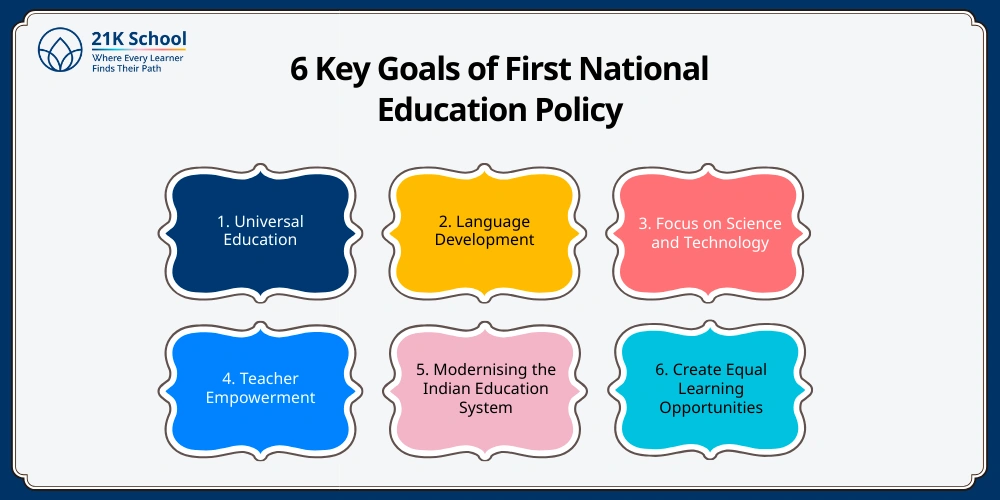
The aspects of the First National Education Policy were to ensure universal education and equality. It focused on language development, the education of science and technology and empowering teachers. The policy was also determined to bring the education system into the light of day to establish equal learning opportunities.
1. Universal Education
The First National Policy on Education was meant to provide free and compulsory education to the entire children up to the age of 14 years.
It concentrated on the school access, the enrolment in schools, school dropouts, as well as the access to basic education by every child irrespective of social and economic standing, which was pivotal in the development of the country.
2. Language Development
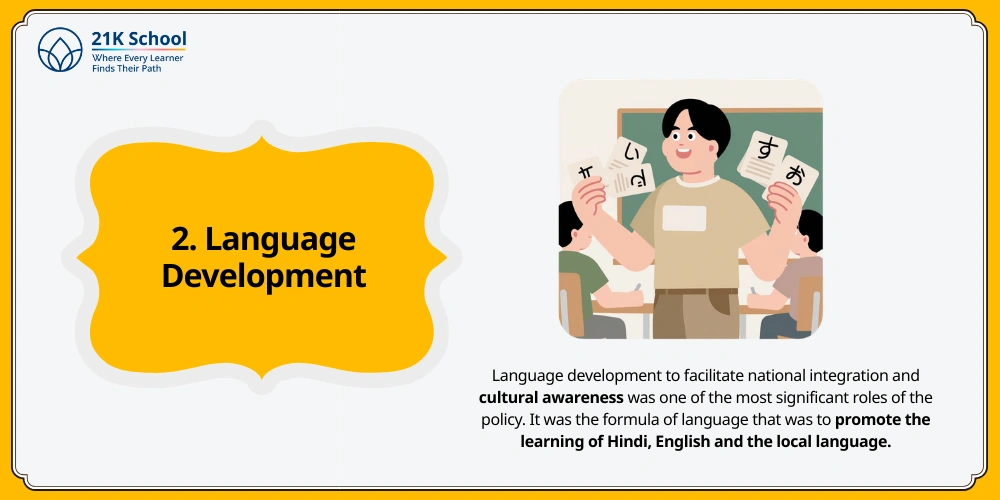
Language development to facilitate national integration and cultural awareness was one of the most significant roles of the policy. It was the formula of language that was to promote the learning of Hindi, English and the local language.
This was a strategy to improve the communication process, linguistic diversity and induce a sense of understanding between Indian regions.
3. Focus on Science and Technology
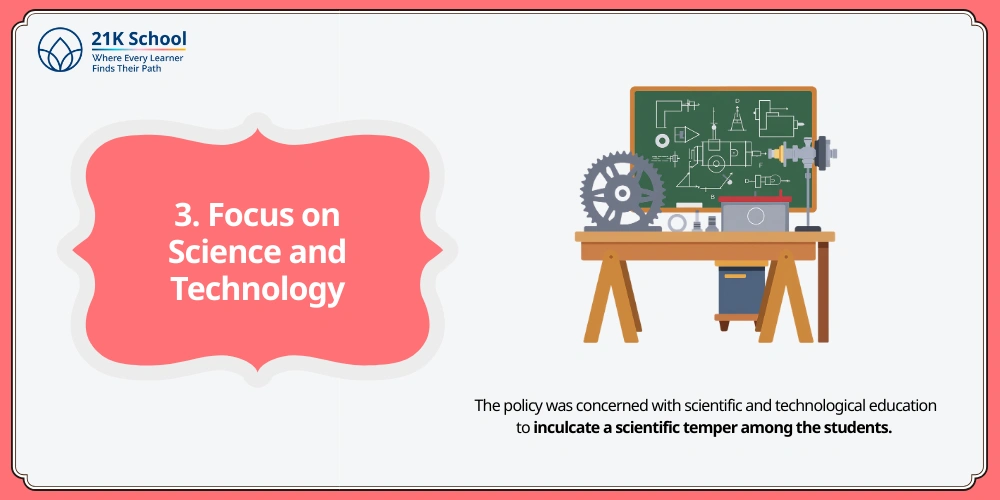
The policy was concerned with scientific and technological education to inculcate a scientific temper among the students. It was felt that it had to advance its economy, technology, and become self-sufficient through the improvement of science and mathematics.
It promoted contemporary pedagogy and experiential learning to equip students in industrial and technological progress.
4. Teacher Empowerment
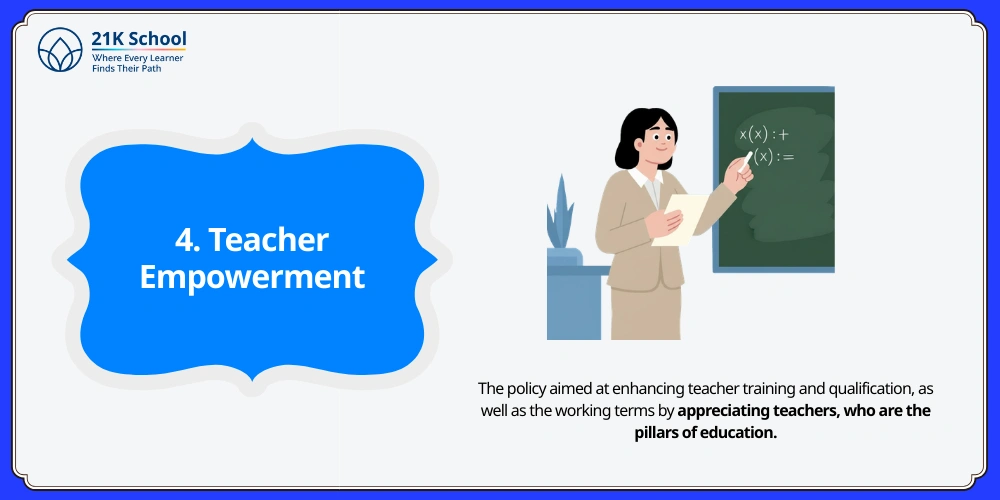
The policy aimed at enhancing teacher training and qualification, as well as the working terms by appreciating teachers, who are the pillars of education.
It was to make teachers more professionally competent, socially uplifted, and even inspired to allow them to make educational changes and even contribute to improved educational levels .
5. Modernising the Indian Education System
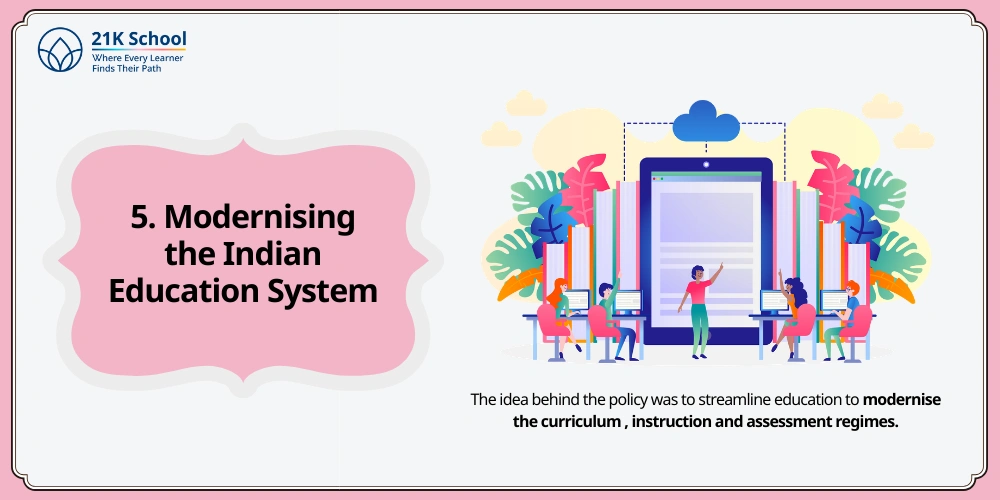
The idea behind the policy was to streamline education to modernise the curriculum , instruction and assessment regimes.
It encouraged the usage of new theories, science and planning of learning as a method of ensuring that learning was in tandem with the current requirements. Education needed to be brought up to date in accordance with national development priorities.
6. Create Equal Learning Opportunities
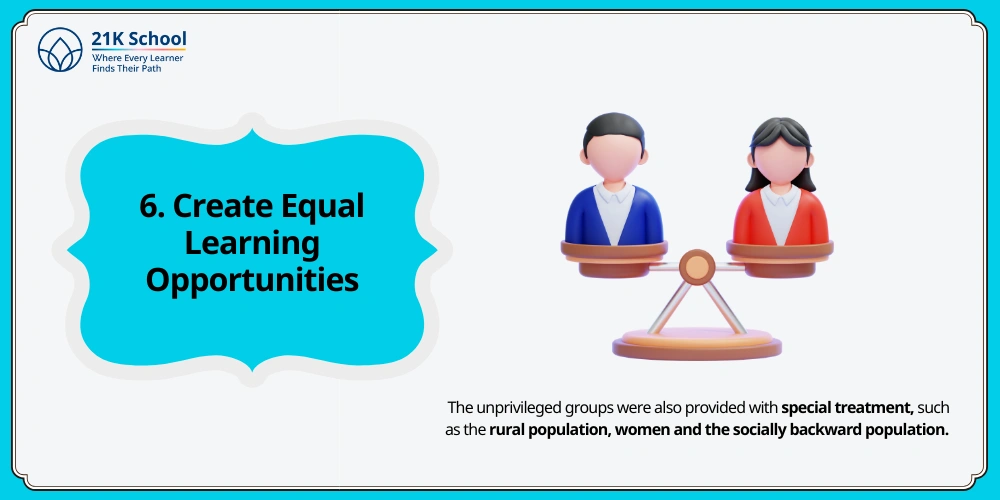
The vision of the policy involved the creation of equal learning opportunities. The unprivileged groups were also provided with special treatment, such as the rural population, women and the socially backward population.
This was to create fewer education differences and give each person equal opportunities to study, develop and become a productive member of society.
What is the Second National Policy on Education in India?
The Government of India had introduced the Second National Policy on Education (NPE), 1986 to meet the rising demands of the evolving society and to enhance access, quality, and equity in education.
It was designed to revolutionise the Indian education system with a great focus on universal elementary education, adult and continuing education and women, Scheduled Castes, Scheduled Tribes, and other disadvantaged groups.
The policy emphasised the application of technology in education , vocationalization of secondary education, and better education of teachers. It also emphasised value education and national integration, and as such, education was considered an important tool in social and economic development.
6 Key Goals of the Second National Education Policy
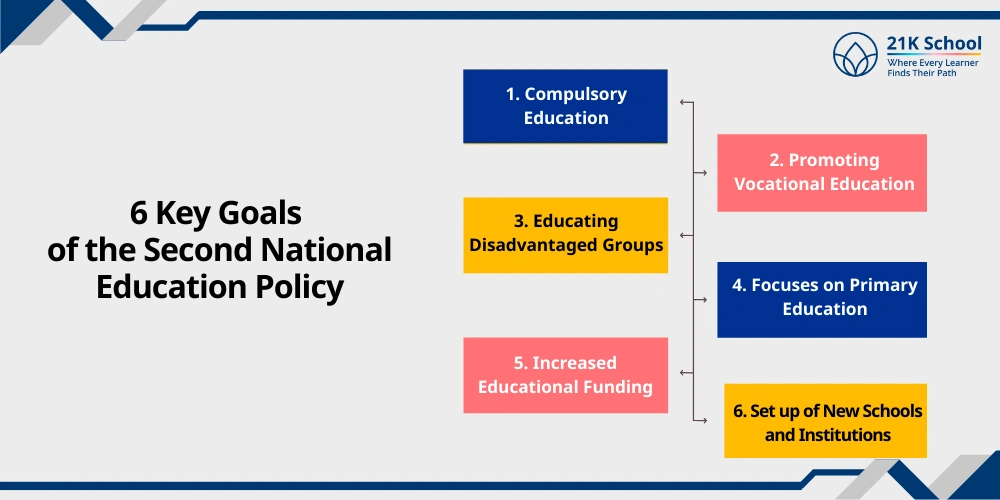
The major objectives of the second national policy on education were to reform the education system through increasing access, quality and enhancing equality.
This was the policy directed to the mandatory education, development of skills and positive support to the underprivileged populations in order to satisfy the social and economic demands of the country.
1. Compulsory Education
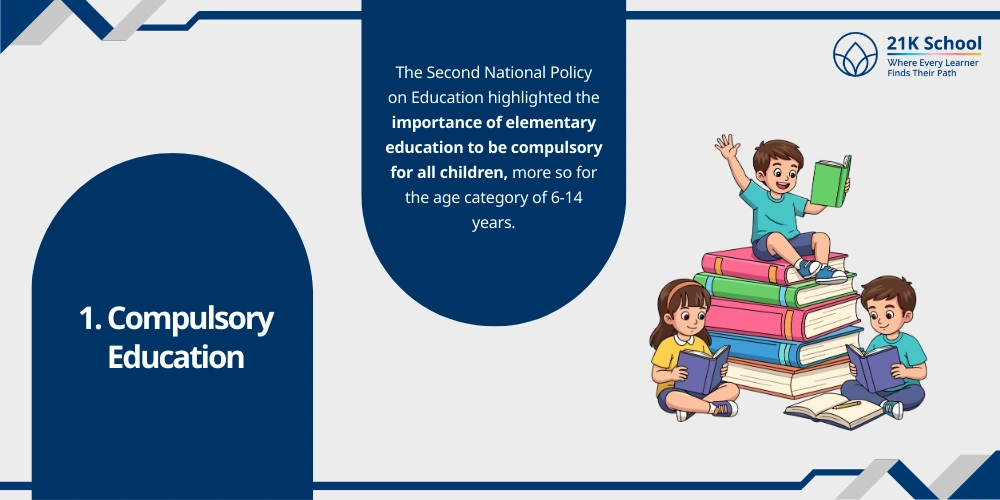
The Second National Policy on Education highlighted the importance of elementary education to be compulsory for all children, more so for the age category of 6-14 years.
It was meant to attain a goal of universal enrolment and retention by enhancing the infrastructure within the schools, lowering the school dropout rate in India , and quality of learning to see that education was a fundamental right of every child.
2. Promoting Vocational Education
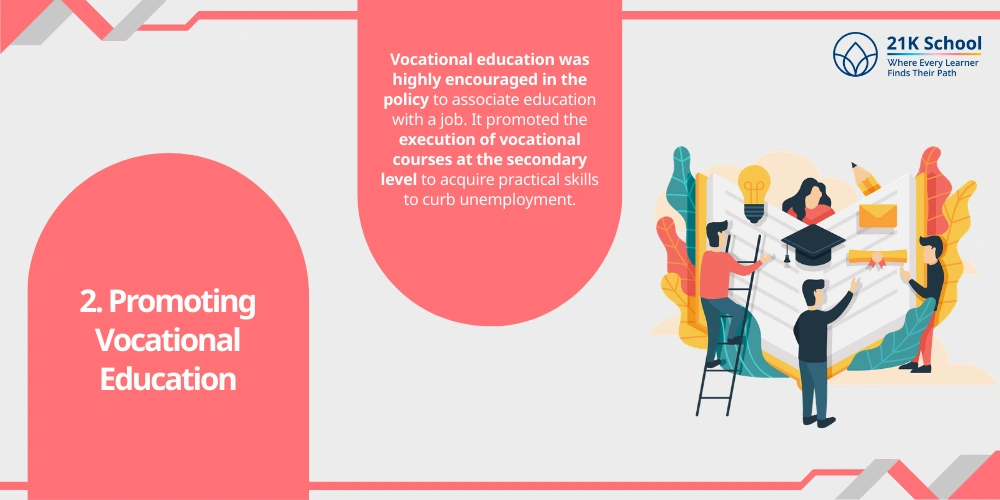
Vocational education was highly encouraged in the policy to associate education with a job. It promoted the execution of vocational courses at the secondary level to acquire practical skills to curb unemployment.
This was to make education more relevant in economic development by imparting to the students the skills of self-employment and industry demands.
3. Educating Disadvantaged Groups
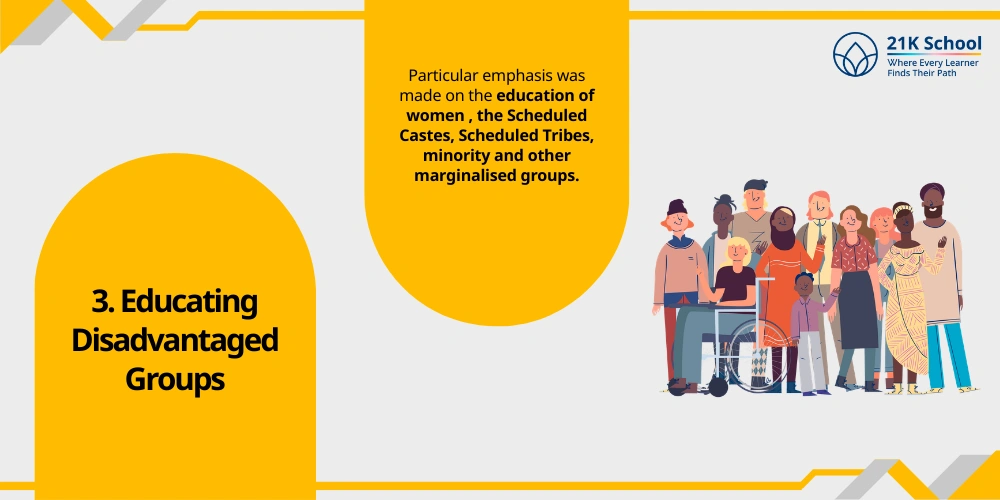
Particular emphasis was made on the education of women , the Scheduled Castes, Scheduled Tribes, minority and other marginalised groups.
The policy was meant to suppress social and educational inequalities by providing scholarships, hostels, incentives and special schools to have equal participation and be empowered by education.
4. Focuses on Primary Education
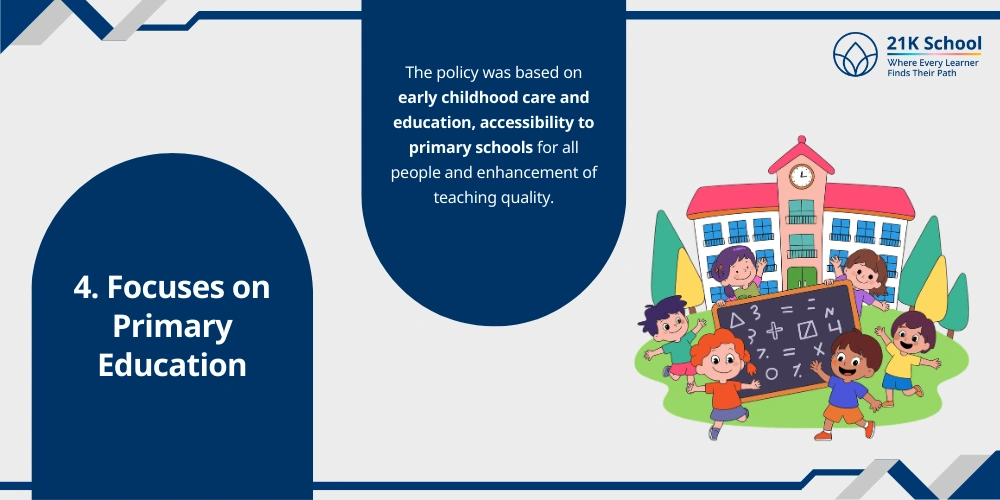
It was the primary education that was found to be the backbone of the whole education system. The policy was based on early childhood care and education, accessibility to primary schools for all people and enhancement of teaching quality.
Primary education also had to be reinforced to the extent that it could make it possible to introduce literacy, numeracy and lifelong learning .
5. Increased Educational Funding
The policy has focused on the need to allocate more funds towards education by the central and state governments.
It was found that there was a need to have adequate money to improve the infrastructure, remunerate teachers, train them and improve learning facilities, hence making education quality and accessible nationwide.
6. Set up of New Schools and Institutions
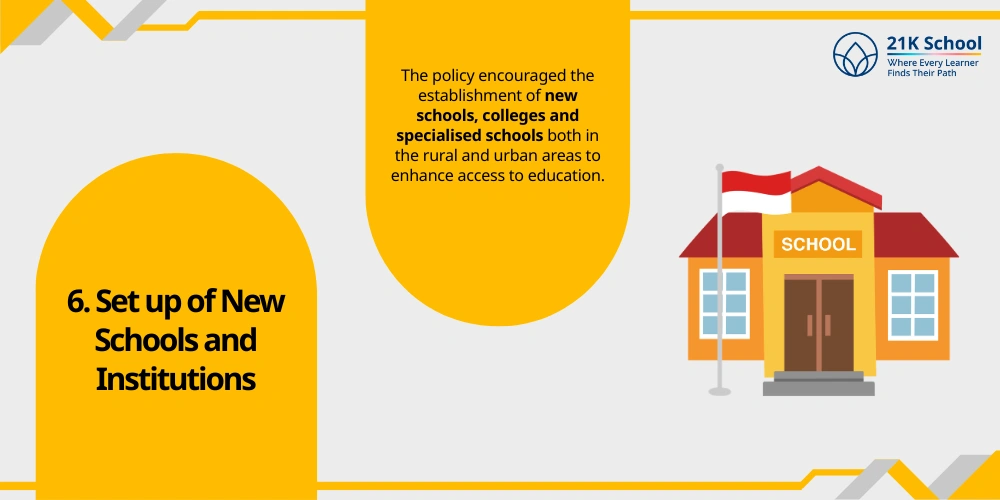
The policy encouraged the establishment of new schools, colleges and specialised schools both in the rural and urban areas to enhance access to education.
This was the expansion with the aim of reducing the geographic inequalities and to educate more students and disseminate higher education, research and professional training in India.
First vs Second National Policy on Education
The First and Second National Policies in education reveal the transformation of the national priorities in education as national integration and equality became the priority in 1968, and access, quality and inclusiveness became the priorities in 1986.
The two national education policies have certain differences between the first and the second, as illustrated below.
| Aspect | First National Policy on Education | Second National Policy on Education |
| Year | In 1968, the First National Policy on Education was instituted. | In 1986, the Second National Policy was adhered to. |
| Context | The initial national policy was developed after independence to bring about integration and modernisation of education as a way to foster national unity and decrease inequalities. | The second national policy was the one that dealt with access, quality and equity in the face of socio-economic developments and technology. |
| Objectives | The former policy was concentrating on universal education, equality, national integration, and scientific temper. | The second policy is centred on the mandatory education, vocational training, empowerment of the disadvantaged groups, etc. |
| Key Reforms | The policy on NPE first came up with the three-language formula, the modernisation of the curriculum and the focus on teacher training and science education. | The second NPE policy encouraged vocational education
, utilisation of technology, expansion of schools, and adult education programmes. |
| Focus Area | First NPE focused on universal education, language building, science and technology, teacher empowerment and equality. | The second NPE concerned elementary education, vocational training, primary education, funding, disadvantaged groups and new schools and institutions. |
| Impact | The First NPE provided the basis of an up-to-date system of education and unity of the nation. | The Second NPE enhanced equity, access, quality, and socio-economic and technological preparedness of students. |
Final Thought
Both the First and Second National Policies on Education have been key in the development of the educational landscape of India. Although the 1968 policy emphasised the development of an integrated system, equality, and scientific temper, the 1986 policy discussed access, quality, and inclusiveness in a fast-evolving society.
The two of them interrelate to demonstrate how India is still using education as a tool of social change, economic development, and national unity.
These policies continue to steer the country towards a more equal and knowledge-based future with universal education and giving power to the teachers and vocational training.
To understand how modern education has evolved, explore the key features of NEP 2020 that are reshaping Indian education today.

You may also want to read