

Have you ever wondered what the difference between value education and moral education is?
Both value education and moral education play a significant role in shaping the character and behaviour of a person, but they also vary in their field and their point.
The purpose of moral education is to teach right and or wrong behaviour, and that of value education focuses on the development of human values that are general, such as respect, empathy , responsibility and integrity
The difference between the two forms of education is used to help the learner understand how ethical consciousness and value-based thinking a components of personal development, social harmony and responsible citizenship in the present-day society.
Contents
What is Value Education?
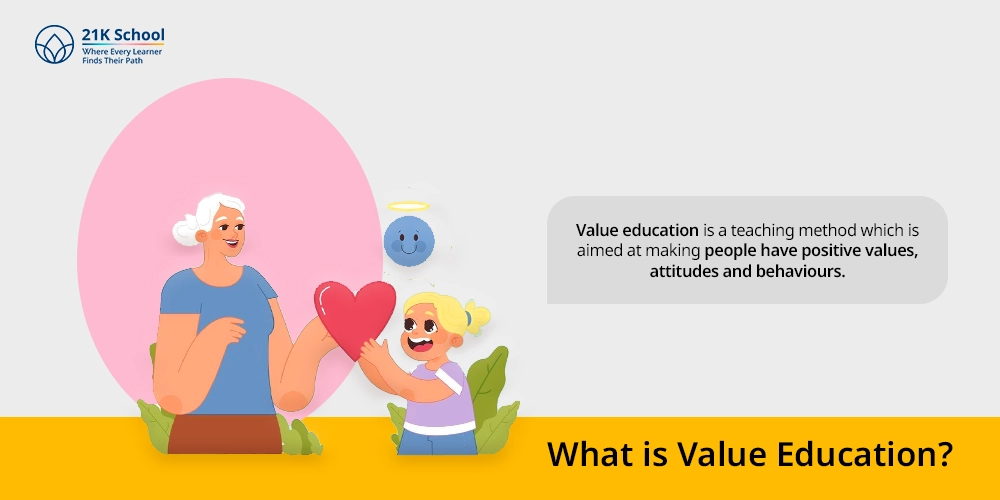
Value education is a teaching method which is aimed at making people have positive values, attitudes and behaviours. It makes learners comprehend the significance of such qualities as honesty, respect, empathy, responsibility, and compassion.
Value education helps to promote personal development, social cohesiveness, and responsible citizenship by promoting ethical reasoning and understanding of self, which help individuals to make superior decisions and become active contributors to the community.
What is Moral Education?
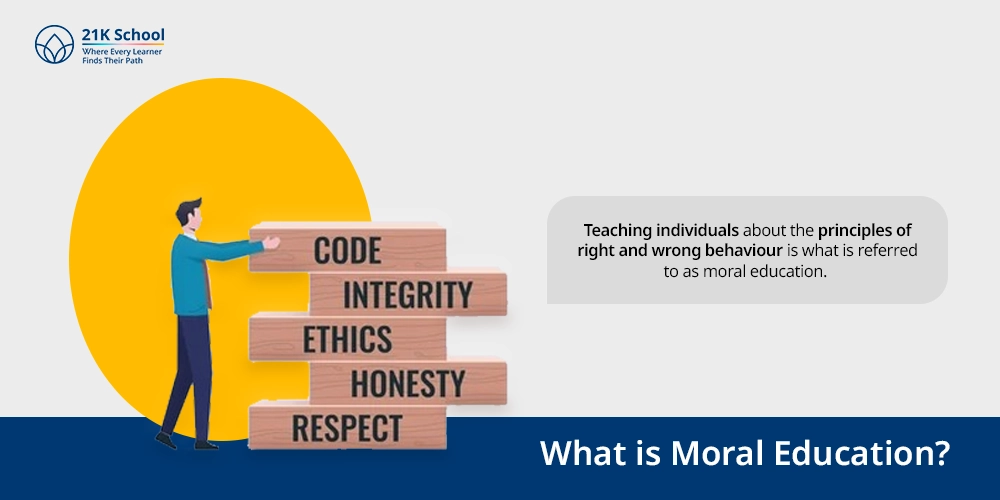
Teaching individuals about the principles of right and wrong behaviour is what is referred to as moral education .
It is concerned with the creation of a good moral character by helping learners to perceive the ethics, fairness, honesty, responsibility, and respect towards other people. Moral learning assists one in making ethical choices, differentiating between right and wrong things, and acting responsibly in society.
Difference Between Value Education and Moral Education
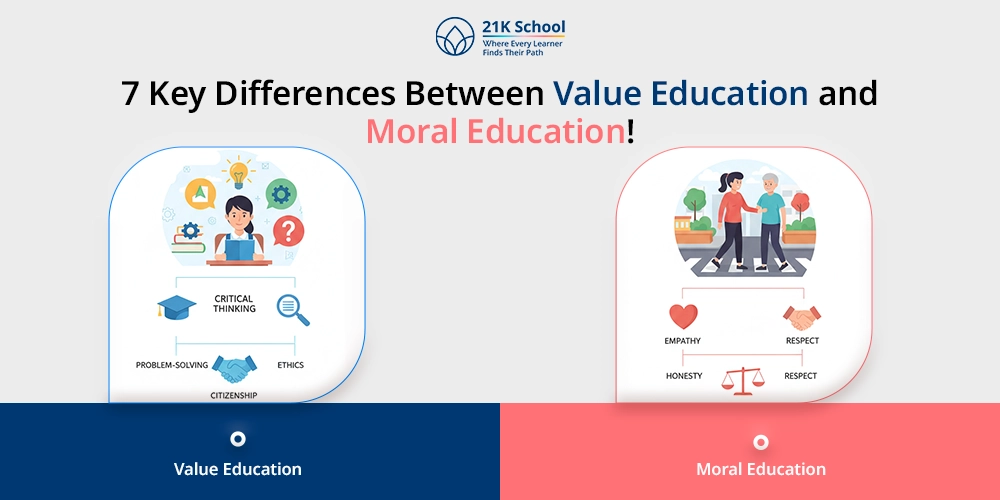
Value education and moral education are very similar and yet different. However, although value education aims at building general moral concern, attitudes, and principles of life, moral education seeks to comprehend and apply the correct and incorrect behaviour in daily undertakings.
| Aspect | Value Education | Moral Education |
| Meaning | Value education instils human values such as respect, empathy, and responsibility that determine personality and conduct. | Moral education imparts the aspect of right and wrong, and has people conduct themselves in a morally upright way as per the social norms. |
| Scope | Value education is vast in terms of personal, social, emotional, and ethical development. | Moral education is more limited, and it is concerned primarily with moral rules, ethical behaviour and acceptable conduct. |
| Goal | Value education is aimed at personal holistic development and good social service. | The aim of moral education is to have moral character, which enables people to make morally right choices rather than wrong ones. |
| Method | Value education provides value in the experiences, discussions, reflection, and role models. | The basis of moral education is the moral lessons, moral stories, moral rules and explicit teaching on what to do and what not to do. |
| Objective | Value education is an initiative that ensures the inculcation of life values that shape attitudes and choices. | Moral education is supposed to assist a person in knowing the moral norms and uphold ethical conduct in everyday life. |
| Example | Value education has empathy, diversity, respect, social responsibility, and integrity. | Moral education entails honesty, obedience, fairness, telling the truth, and shunning negative or immoral behaviours. |
| Dependence | Value education is a personal experience which is internally motivated. | Moral education is directed outwardly and follows rules, discipline and parental, teacher instructions or societal direction. |
1. Meaning
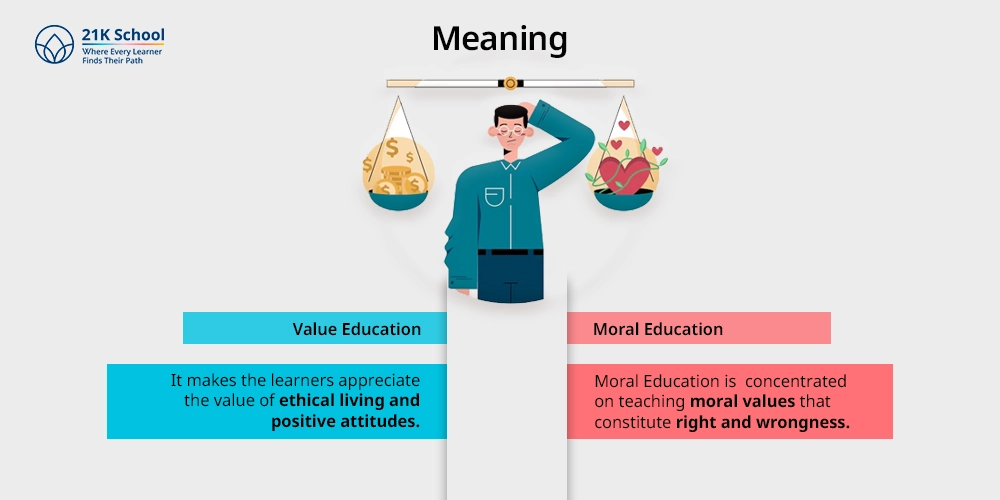
Value Education: Value Education has its focus on value development of core human values, including respect, empathy, honesty, responsibility, and compassion that define the personality and behaviour of the individual. It makes the learners appreciate the value of ethical living and positive attitudes.
Moral Education: Moral Education is, however, concentrated on teaching moral values that constitute right and wrongness, that assist one to behave morally according to the social rules and expectations.
2. Scope
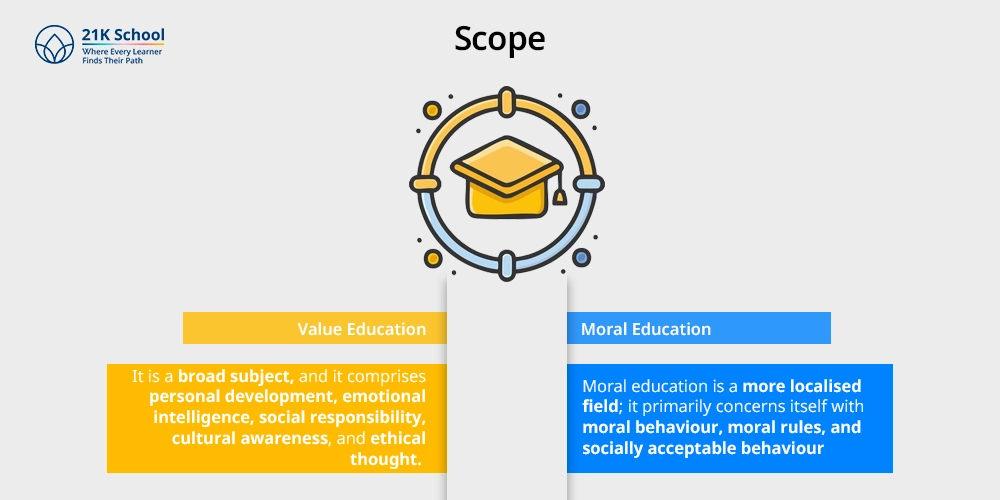
Value Education: Value education is a broad subject, and it comprises personal development, emotional intelligence , social responsibility, cultural awareness , and ethical thought. It changes how individuals think, feel and act under various situations in life.
Moral Education: Moral education is a more localised field; it primarily concerns itself with moral behaviour, moral rules, and socially acceptable behaviour, which helps people to follow moral rules in their daily life.
3. Goal
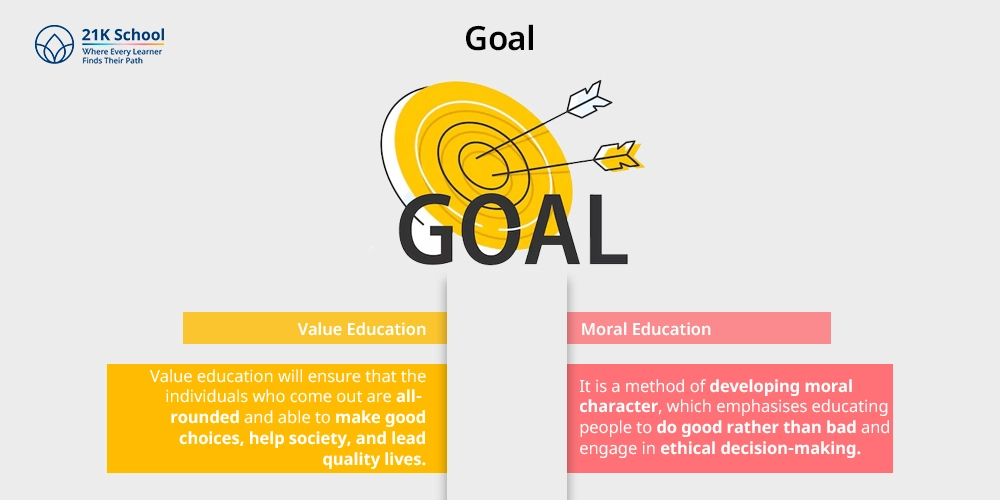
Value Education: Value education will ensure that the individuals who come out are all-rounded and able to make good choices, help society, and lead quality lives. It attempts to establish inner strength, integrity and harmony in society.
Moral Education: Moral education is a method of developing moral character, which emphasises educating people to do good rather than bad and engage in ethical decision-making in their actions and decisions on things.
4. Method
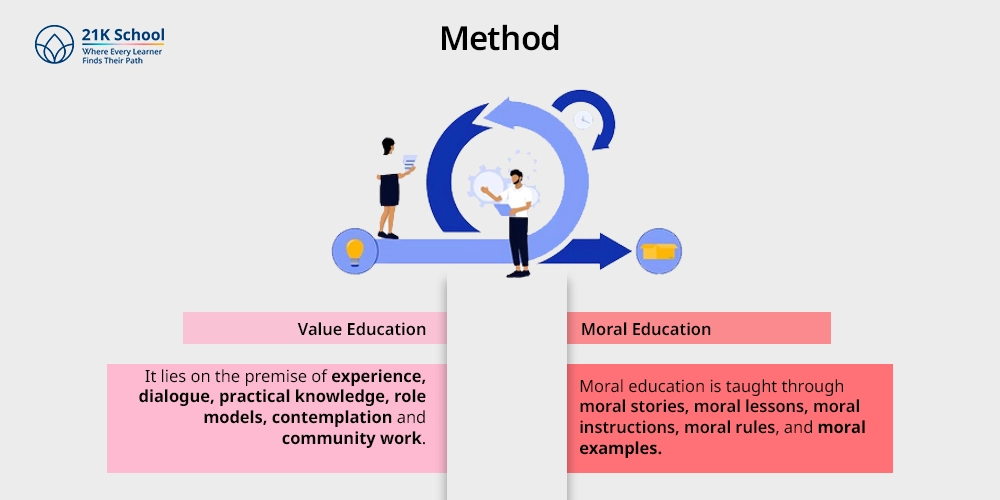
Value Education: Value education lies on the premise of experience, dialogue, practical knowledge , role models, contemplation and community work. It fosters self-discovery and appreciates internalisation.
Moral Education: Moral education is taught through moral stories, moral lessons, moral instructions, moral rules, and moral examples directed usually by the teachers, the parents, or the social institutions, which provide a clear line of distinction between right and wrong behaviour.
5. Objective
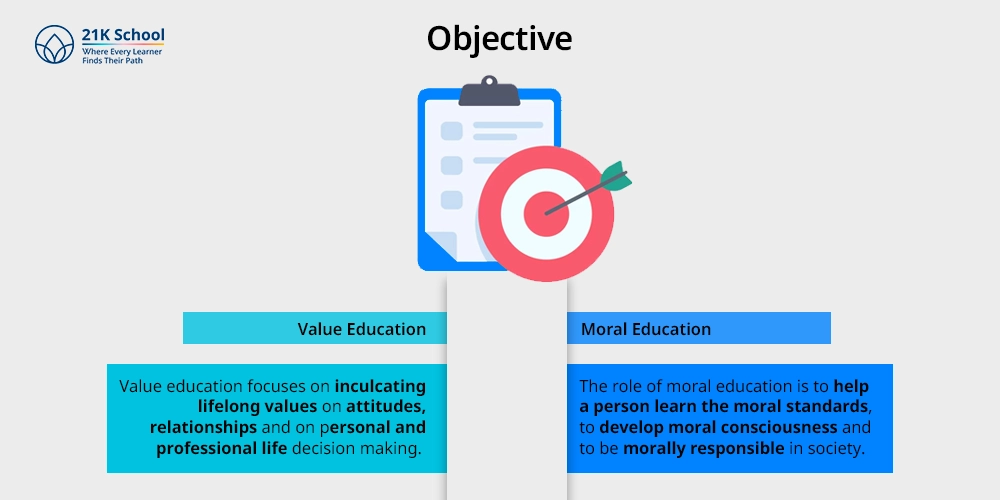
Value Education: Value education focuses on inculcating lifelong values on attitudes, relationships and on personal and professional life decision making. It is alleged to produce responsible, compassionate and moral individuals.
Moral Education: The role of moral education is to help a person learn the moral standards, to develop moral consciousness and to be morally responsible in society at large.
6. Example
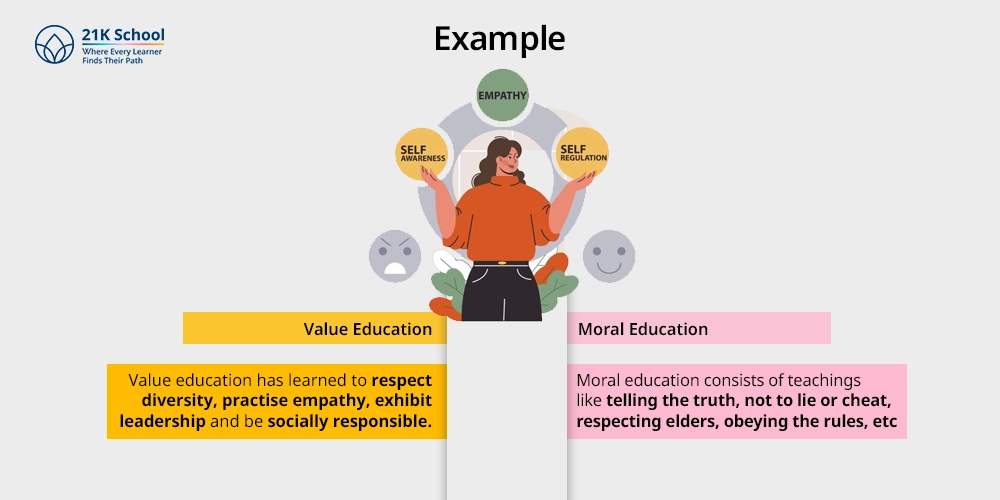
Value Education: Value education has learned to respect diversity, practise empathy, exhibit leadership and be socially responsible. It promotes people to behave in a humane, just and righteous way in different circumstances.
Moral Education: Moral education consists of teachings like telling the truth, not to lie or cheat, respecting elders, obeying the rules, serving others and making the distinction between moral and immoral acts.
7. Dependency
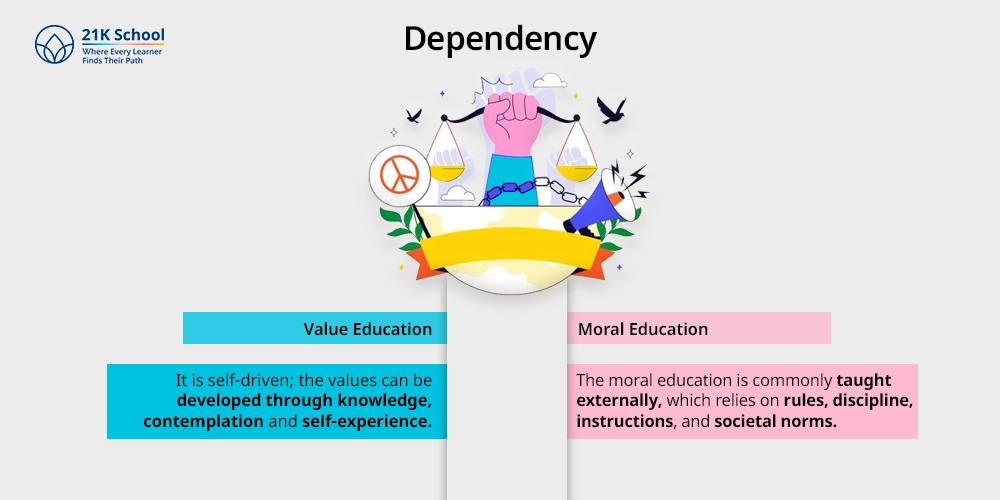
Value Education: Value Education is self-driven; the values can be developed through knowledge, contemplation and self-experience. Values are adopted by people based on the principles of conscience and faith.
Moral Education: The moral education is commonly taught externally, which relies on rules, discipline, instructions, and societal norms as defined by parents, teachers, institutions or cultural traditions to influence moral behaviour.
Conclusion
Value education is essentially important as well as moral education in developing the character and behaviour of an individual, although they have different purposes.
Whereas the moral education approach aims at helping people make decisions between what is right and wrong with regulations and ethics, value education helps develop more personal and human values that define attitude, choice, and development.
The combination of them assists in creating responsible, compassionate, and ethical individuals who will be able to contribute to society positively. However, it is essential to note here that both value education and moral education are often used interchangeably in educational literature. The value education is frequently considered the broader umbrella term that encompasses moral education.

You may also want to read