

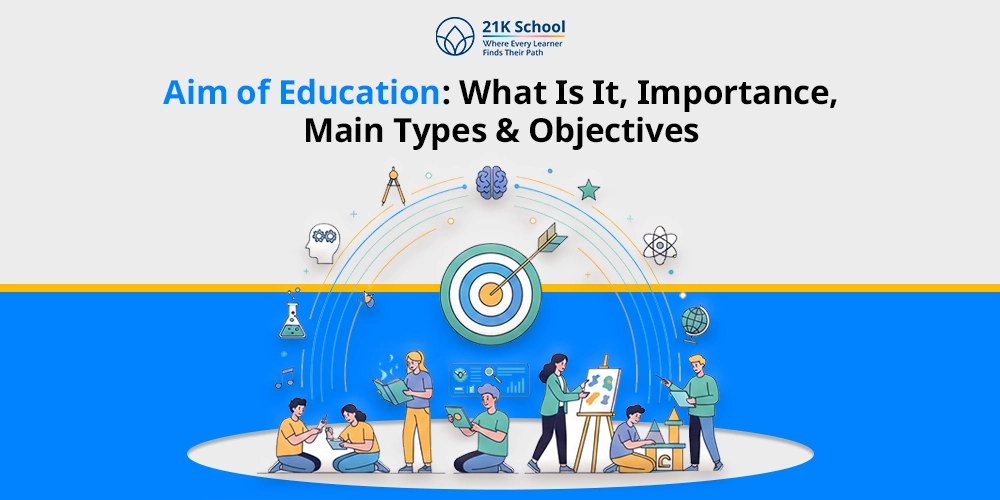
What is the real aim of education: knowledge, success or wisdom?
Education is not merely a process of knowledge learned in books or classes; it is a lifetime process that imprints a personality, talents and knowledge of a person in relation to the world.
Education is not merely a task of training students to take exams or work in a profession, but also intended to enable them to grow intellectually, morally, socially, and emotionally.
Education enables people to think critically, make responsible decisions, and make a positive contribution to society.
Contents
What is the Aim of Education
Education is projected to mould an individual in every aspect of life. It assists people in acquiring knowledge, developing social skills and good values and character.
Education is not only geared towards preparing students to work or take exams, but also to learn how to think critically, make good decisions and live responsibly in society. As a result of education, individuals are taught about discipline , respect, and social responsibility, and this allows them to be useful in the development of their community and their country.
In the end, education is actually designed to make informed, confident, and morally responsible human beings so that they can make meaningful and successful human lives.
Aims and Objectives of Education
Educational goals and objectives determine the area of focus and the goal of the teaching and learning process. Aims are the overall objectives of the education, and objectives are more specific steps to the actualisation of the aims.
| Aspect | Aims of Education | Objectives of Education |
| Scope | Aims are broad statements of what will be accomplished by learning in the long run. | Objectives are very specific and narrow. They break down the general objectives into small and achievable steps in a series. |
| Time Frame | Aims are long-term, and they may take several years. | The objectives are short-term goals that can be accomplished within a specific period, i.e. lesson, a week or an academic term. |
| Measurability | The aims are not quantifiable since they are abstract. | Objectives are quantifiable because they are specific. |
| Purpose | The intentions facilitate defining the general pace of education. | Objectives allow the learners and teachers to identify certain steps in order to achieve the goals. |
| Examples | They may be the acquisition of knowledge, character of morality, social responsibility and generally the personality development. | They include, but are not restricted to, improvement of reading skills, time management, teamwork and problem-solving skills. |
Why are Aims in Education Important?
Educational goals are also imperative as they give the process of learning some direction and purpose.
Education is thus based on the overall development of the learners through the establishment of certain goals and objectives, and in the process, knowledge, skills, values and character are developed in a meaningful and balanced manner.
1. Promotes Holistic Education
Learning is not only academic-based through educational goals. They are concerned with the overall development of students, which encompasses intellectual, emotional, social, moral and physical development.
By promoting it through holistic education , the objectives will enable the children to become holistic people who are able to face the problems of life and thus play a significant role in society.
2. Motivate Learners
Educational goals are clear and will motivate the students by providing them with a sense of purpose. By knowing the reason why they are studying, the learners are motivated to attain their targets.
Goals create a sense of direction, stimulate persistence, and assist in achieving self-confidence, interest in the learning method , and a positive attitude to personal and academic development in the children.
3. Guides Curriculum
The teachers and curriculum planners are guided by the educational goals. They also decide on the subject to be covered, learning activities, as well as teaching methods , so that all the lessons hold some connection to the overall objective of the education.
This makes learning focused, meaningful and goal-oriented, such that students can learn efficiently insofar as their knowledge, skills and values are concerned.
4. Gives Purpose
Goals are a way of giving an organisation a direction. They provide an indicator of what the students should know concerning knowledge, skills, character and social responsibility.
The objectives are utilised to give the learners, the teachers, and the policymakers a cause to make education focused on achieving meaningful results and make the results well-rounded, responsible, and competent to society.
5 Types of Aim in Education
Educational purposes can be classified based on the role they have on the life of human beings and society. These are associated with self-development, social integration, self-reliance and the economy and the well-being of the nation at large.
1. Individual Aim
The personal goal of learning has a focus on the general growth of a learner. It assists in the development of individual abilities, interests and talents and personalities.
Education enables individual to think independently, be creative, possess self-confidence and realisation, thereby leading meaningful and fulfilling lives to their potential.
2. Social Aim
The social purpose of education is to equip one with harmonious living in society. It imparts social principles including cooperation, tolerance, respect and responsibility.
Through education, learners can know their social obligations, cultural practices, and ethical beliefs that can make them responsible members of society capable of making positive contributions to social development and the well-being of the community.
3. Vocational / Economic Aim
The vocational or economic use of education is interested in providing individuals with the ability to work in jobs and become economically self-sufficient. It provides valuable competencies, technical skills and work preparation that are needed in other professions.
Education also helps individuals to earn a living, reduce unemployment to economic growth, besides gaining financial security and self-sufficiency.
4. National Aim
The nationalism and patriotism of people to such an extent that the national education mission makes the nation united. It makes students study the history of their country, cultural awareness and values.
Education breeds responsible citizens, those who are familiar with the way of honouring the democratic values, and who tend to guard the national interests, and those who make efforts to achieve the progress, stability, and development of the State.
5. Complete / Comprehensive Aim
The ultimate or entire objective of education unites all other objectives. It is concerned with the balanced growth of individuals-intellectual, physical, moral, social, emotional intelligence and vocational.
Through education, learners can become responsible citizens, mature and productive in society, thereby becoming capable individuals, resulting in personal development and general development of human beings.
8 Key Aims of Education
The general development of a person and society is a primary goal of educational purposes. Education not only provides knowledge but also skills, values and attitudes that are needed to develop oneself and to achieve success in a career path and also to transform into responsible citizens.
These objectives define the learning process into all-rounded individuals capable of contributing positively to society and capable of living a lifelong learning .
1. Personal Development
Education assists in the general development of a person by forming intellectual, emotional, physical and social skills. It assists learners in finding out their interests, talents and strengths.
Education helps one acquire self-confidence, self-awareness, and independence, which helps them to live balanced, meaningful, and purposeful lives.
2. Development of Knowledge and Skills
Knowledge and practical skills are one of the primary goals of education. It assists students to learn different subjects, attain problem-solving skills and well as using learning in practical life.
Education develops mental skills such as analytical skills, communication skills , and creativity that are vital towards personal and professional achievement.
3. Preparation for Career
Education equips their future careers of the individuals through classroom learning , vocational skills, and professionalism.
It provides the competencies required by the learners to secure jobs, assists them in making the right career choices as well and aids economic independence, productivity, and success in a competitive job market.
4. Enhance Learning Capabilities
Education enhances learning , comprehension, and adaptability. It nurtures the ability to think critically, wonder and reason out.
Through inquiry and exploration, education could enable learners to become effective learners and acquire new knowledge, adapt and solve complex problems in life.
5. Character Development
Education is essential for moral values and character. It instils honesty, discipline , responsibility, respect and empathy.
Through social interaction and ethical learning, education also helps people gain good character, decision-making skills , good moral judgement and accountable actions in personal and social life.
6. Promotes Lifelong Learning
Education promotes lifelong learning even after schooling. It also forms interest, flexibility and a good attitude to learning.
Lifelong learning assists people to be in contact with the new knowledge, skills, and technologies, thus personal development, promotion of career and involvement in society.
7. Social Responsibilities
Through education, people are equipped to learn and execute societal duties. It fosters a sense of social, civic and community values.
Education gives learners cooperation, tolerance, and respect towards diversity; they become responsible citizens who bring social harmony and growth.
8. Promotes Decision-Making Skills
Through education, one becomes able to make responsible and informed decisions. It builds critical thinking, logic and problem-solving techniques .
Students get to know how to think through things, weigh the alternatives, and weigh the cost of taking actions and making wise decisions in personal, academic, and work life.
Conclusion
Learning is not limited to learning and exams. It strives to develop individuals, intellectually, morally, socially, emotionally and vocationally in order to enable people to live meaningful and responsible lives.
Education makes whole human beings when it is concerned with personal growth, social harmony, financial stability, nation building and lifelong learning.
Finally, the actual goal of education is to develop wisdom and character and competence to ensure that people become productive members of society and successfully adapt to the world of changes.

You may also want to read