


Why is motivation important in the development of students?
Motivation increases the interest and persistence of students to achieve and acquire knowledge . Motivation is the basis of success in all levels of education . It determines how the students tackle difficulties and overcome complications.
Students become motivated and encouraged, thus making the learning process interactive and enjoyable. This is the period when the students feel engaged, interested in the exploration of ideas, and turn into creative and committed thinkers.
Thus, it is crucial to comprehend how motivation contributes to learning by both a teacher and a student because it not only defines academic performance but also defines lifelong learning activities.
Contents
What is Motivation in Learning?
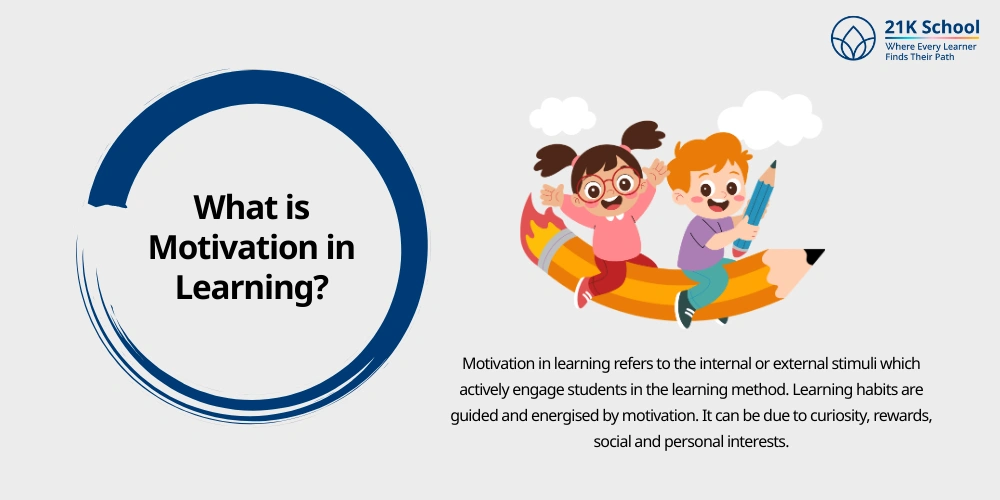
Motivation in learning refers to the internal or external stimuli which actively engage students in the learning method . Learning habits are guided and energised by motivation. It can be due to curiosity, rewards, social and personal interests.
A highly motivated student will find it easier to enjoy the learning process and use such knowledge more effectively in the real world.
Types of Motivation in Learning
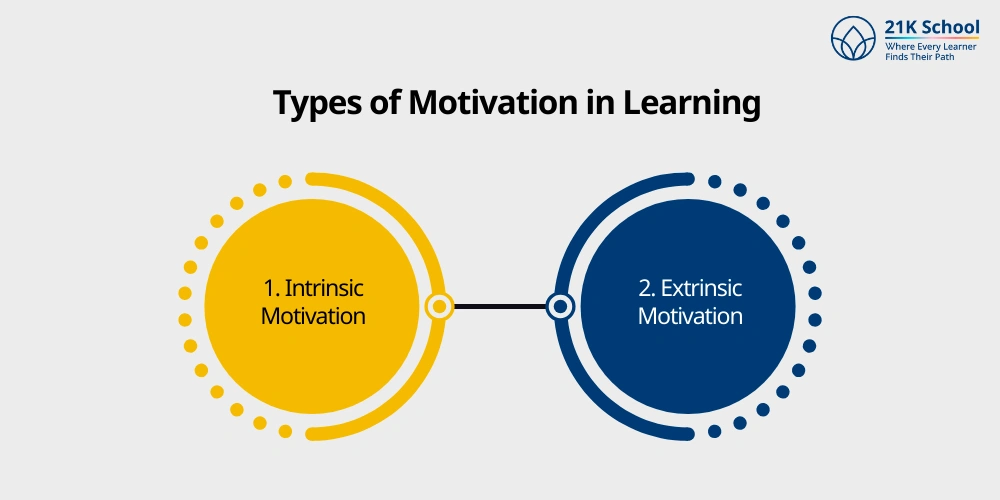
It should be noted that there are two main types of motivation which impact the way students approach their education , i.e., Intrinsic and Extrinsic motivation.
1. Intrinsic Motivation

Such motivation makes the students active during the learning process because it is based on personal interest, curiosity, as well as passion.
In the case of a student, for example, when studying a new language and a new culture, students develop a desire to learn about other cultures. Such motivation fosters knowledge of concepts, the ability to remember concepts over a long period, and innovation.
It enables the students to have an interest in learning and gaining knowledge, not merely in passing exams.
2. Extrinsic Motivation

This is the kind of motivation that will motivate students to work more in order to receive rewards or recognition and escape punishments. As an illustration, a learner undertakes a module or a course to acquire a certificate that will help him or her in their future profession.
Even though extrinsic motivation is not capable of developing to the same level as intrinsic motivation, it can be useful to keep students concentrated on their academic objectives.
Roles of Motivation in Learning
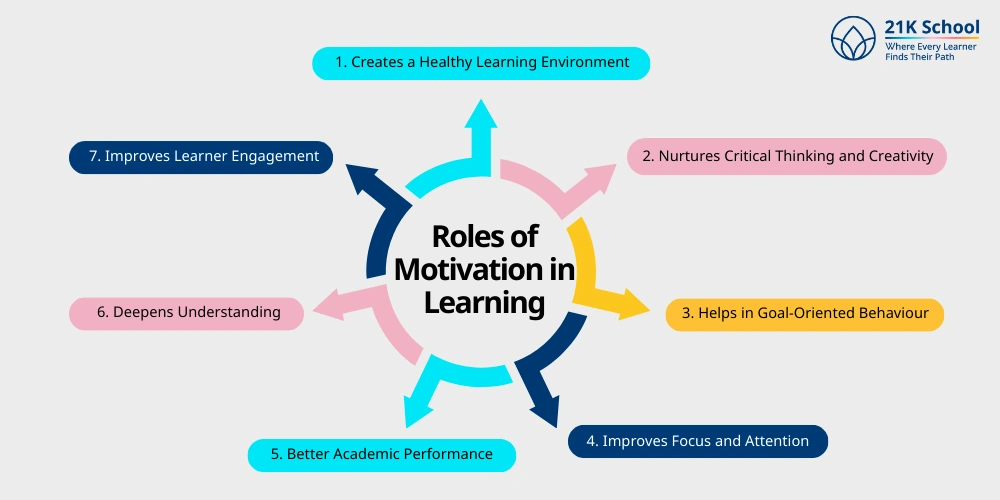
Motivation helps motivate the students in all areas of their learning processes. The key learning motivational roles are listed below.
1. Creates a Healthy Learning Environment
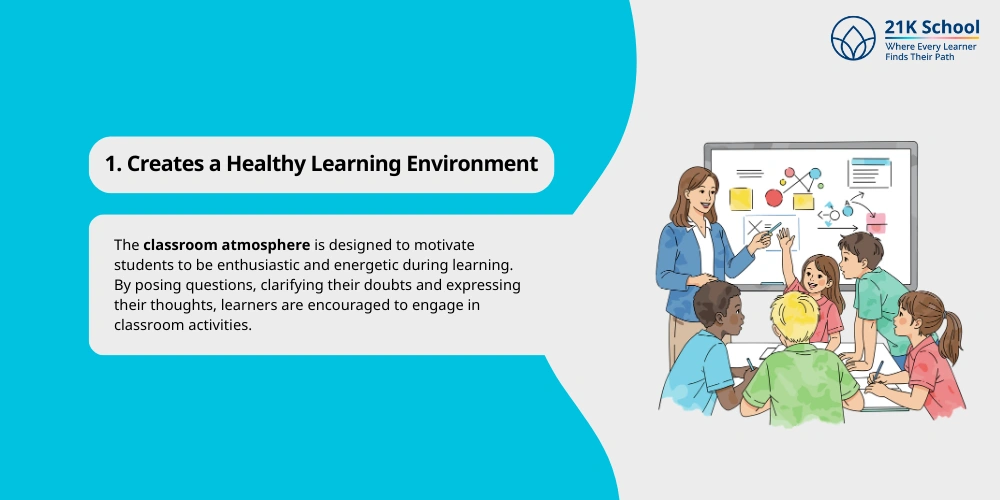
The classroom atmosphere is designed to motivate students to be enthusiastic and energetic during learning. By posing questions, clarifying their doubts and expressing their thoughts, learners are encouraged to engage in classroom activities.
Educators also enjoy a feeling of satisfaction when the students are interested in learning. This kind of learning atmosphere eases tension and establishes a good relationship between students and teachers . It promotes good competition and understanding that helps in fruitful learning.
2. Nurtures Critical Thinking and Creativity
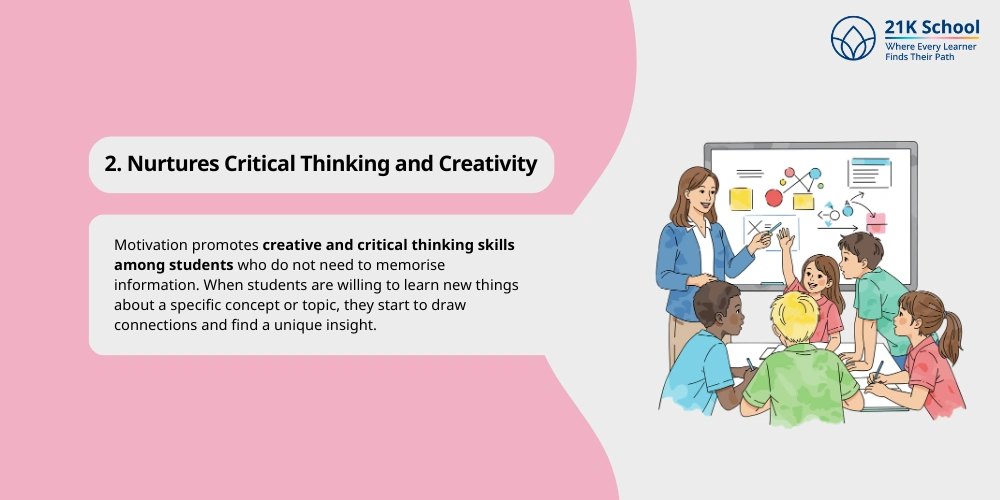
Motivation promotes creative and critical thinking skills among students who do not need to memorise information. When students are willing to learn new things about a specific concept or topic, they start to draw connections and find a unique insight.
Such creative thinking also enables the students to come up with problem-solving skills that will go beyond classroom knowledge by a long way.
3. Helps in Goal-Oriented Behaviour
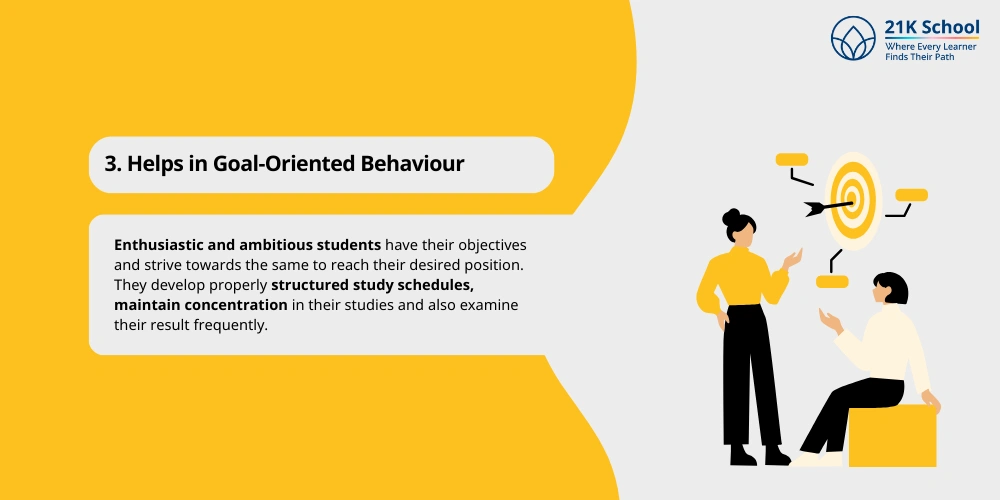
Enthusiastic and ambitious students have their objectives and strive towards the same to reach their desired position.
They develop properly structured study schedules , maintain concentration in their studies and also examine their result frequently. Motivation can make the students confront challenges and difficulties with confidence .
They never get demotivated even after facing failures, but they use them as a learning experience. Such an attitude makes them goal-oriented and focused so that they can be in control of their academic performance.
4. Improves Focus and Attention

A motivated student is more attentive in the classroom and more involved in doing the assignments.
Motivation gives the power to remain focused on lessons and accomplish tasks and assignments at the right time. As soon as the learners see the meaning of their learning, their concentration level will increase progressively .
They get more engaged in the teaching method as they attend classes on a regular basis and are involved in the classroom activities.
5. Better Academic Performance

One of the most significant factors in academic success is motivation. Motivated students have higher chances of performing better academically and having a greater retention ability.
Educators who use motivational strategies like target setting, monitoring and constructive feedback tend to achieve improved results.
6. Deepens Understanding
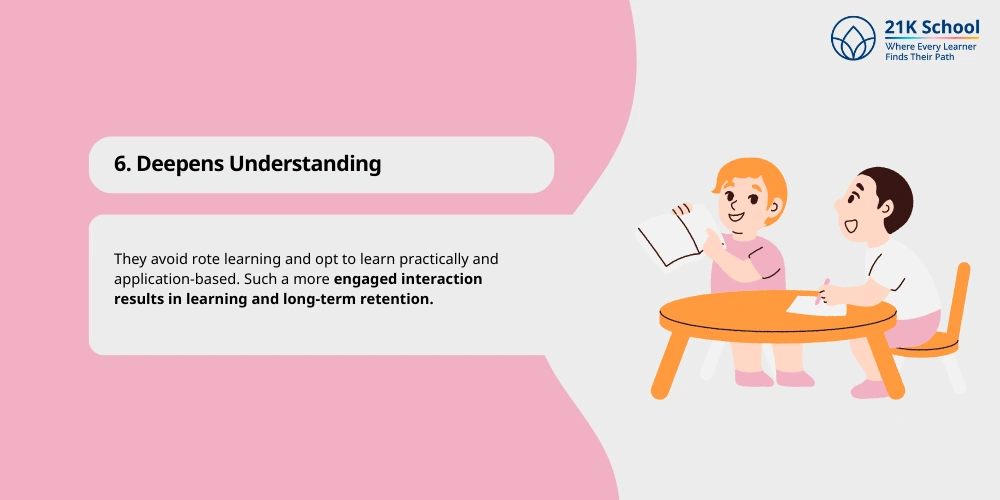
Motivated learners strive to get to the depth of the concepts to be able to comprehend them better.
They avoid rote learning and opt to learn practically and application-based. Such a more engaged interaction results in learning and long-term retention. The level of learning contributes to the development of analytical abilities and theoretical knowledge .
7. Improves Learner Engagement
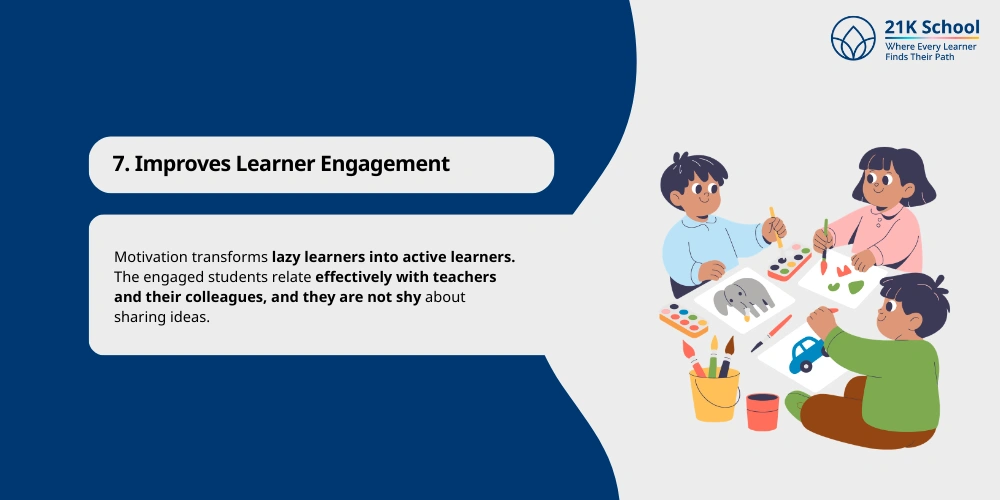
Motivation transforms lazy learners into active learners. The engaged students relate effectively with teachers and their colleagues, and they are not shy about sharing ideas.
The interaction not only boosts performance in school but also in communication and teamwork. Motivated students own and drive their learning process, hence learning is meaningful and outcome-oriented.
Conclusion
In the modern education environment, motivation is what helps to connect skills and achievement. It identifies the effectiveness of students in terms of the acquisition, processing and application of knowledge.
Through intrinsic and extrinsic motivation, the teachers will be able to foster curiosity, confidence and adaptability among the students. Nowadays, students are not learning grades or marks
only, but they are also learning how to build their knowledge and skills
.
Thus, one of the best ways to improve the performance and activity of students is motivation development in learning. That would guarantee academic excellence and cognitive development of children
throughout life.

You may also want to read