

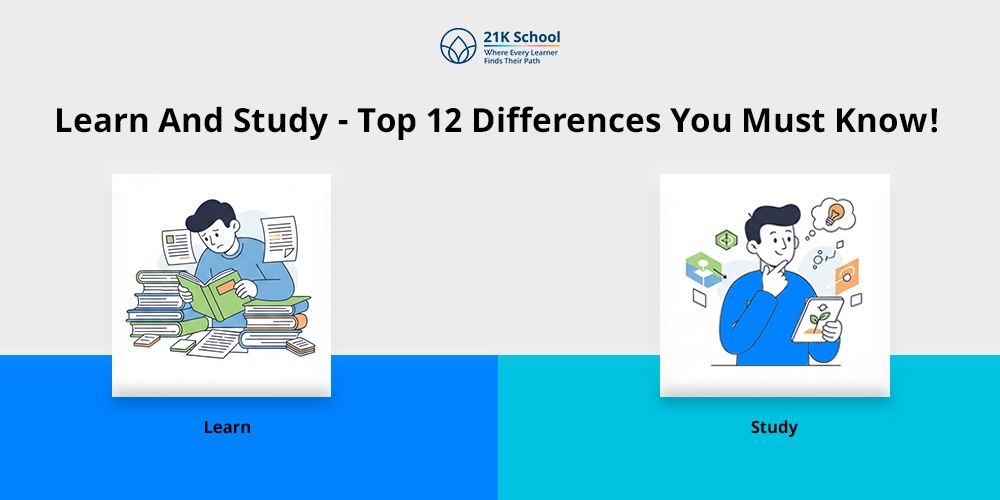
In education, two important terms are interchangeably used by students. The word learn and study.
But, not now because by exploring the key comparison between “learn” and “study” helps in understanding the major difference in a few minutes.
Let’s explore the difference between learn and study in depth and help parents, teachers, and students to understand its role in education .
Contents
What Is Learn or Learning?
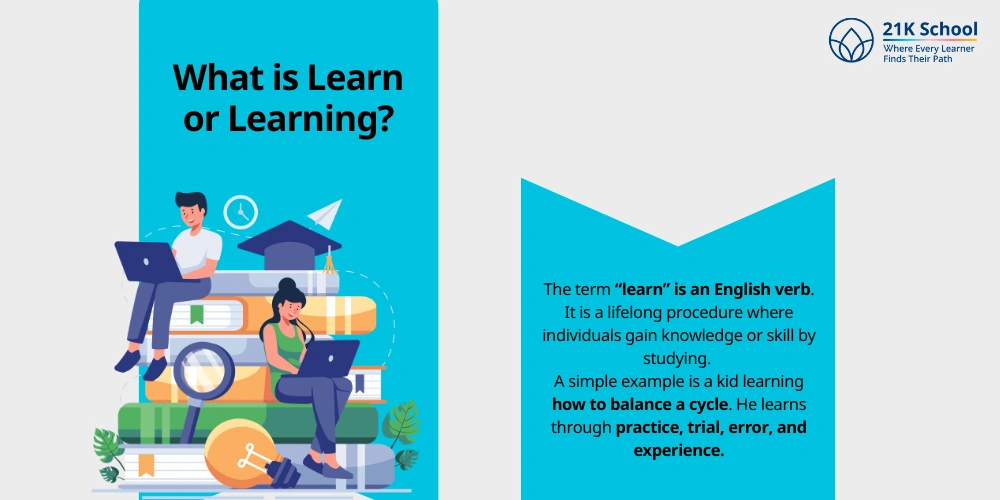
The term “learn” is an English verb. It is a lifelong procedure where individuals gain knowledge or skill by studying.
A simple example is a kid learning how to balance a cycle. He learns through practice, trial, error, and experience.
What Is Study or Studying?
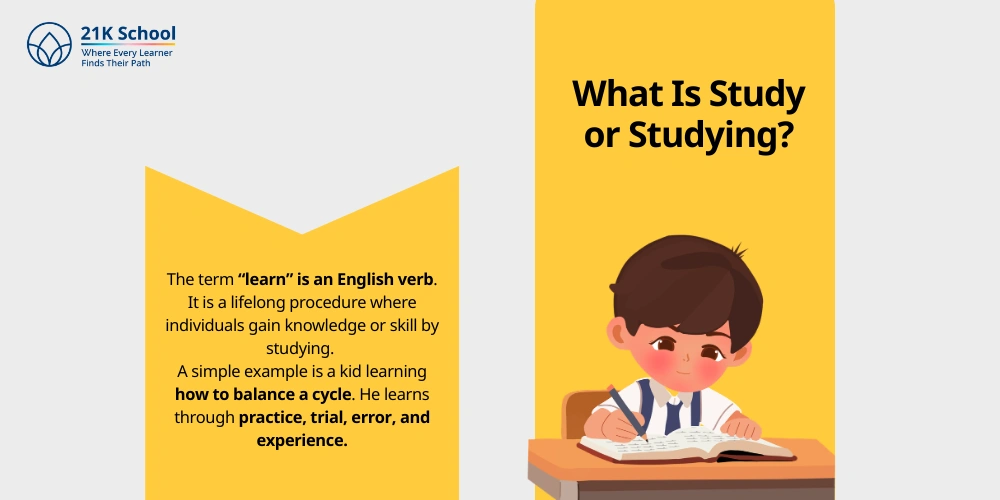
The term “study” is also an English verb. It means concentrating on learning different subjects through reading, attending class, or research.
An example of study includes, a student is reading History chapter and highlighting the important dates and information to prepare notes.
Learn vs Study: 12 Differences
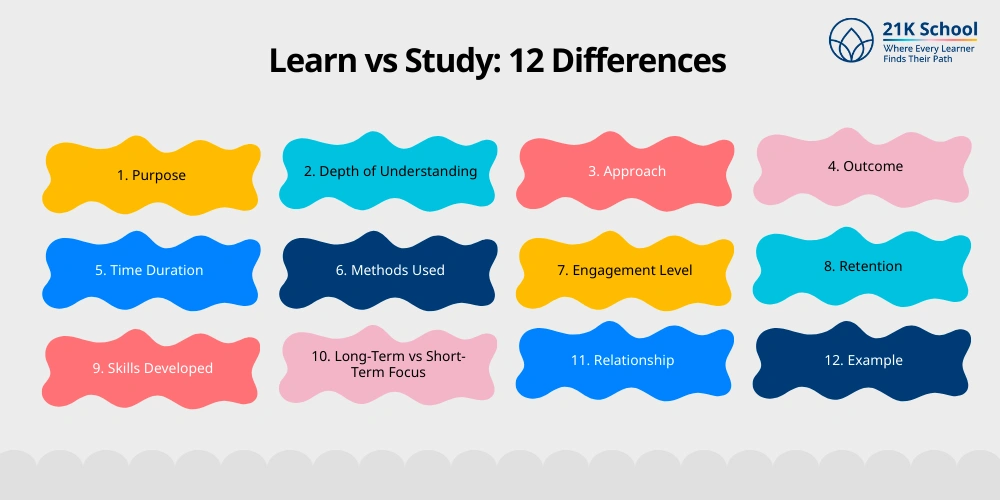
To know the difference between learn and study go through the following table:
| S No. | Particulars | Learn | Study |
| 1. | Purpose | To understand and apply knowledge | To gather information or prepare for exams |
| 2. | Depth of understanding | Deep and long-lasting | May be surface-level |
| 3. | Approach | Experience-based & holistic | Material-based & structured |
| 4. | Outcome | Skill development, behavioural change | Exam readiness, memorisation |
| 5. | Time duration | Long-term and continuous | Short-term, time-bound |
| 6. | Methods used | Practice, observation, application | Reading, revising, memorising |
| 7. | Engagement level | High, active involvement | Moderate or low, depending on interest |
| 8. | Retention | Strong long-term memory | Short-term recall |
| 9. | Skills developed | Critical thinking , creativity, problem-solving | Memory skills, discipline, organisation |
| 10. | Long-term vs short-term focus | Long-term personal growth | Short-term academic goals |
| 11. | Relationship | Learning can happen without studying | Studying can lead to learning but not always |
| 12. | Example | Learning to speak a language by using it daily | Studying grammar rules for an exam |
Let’s understand the detailed information on 12 key difference between learn and study:
1. Purpose
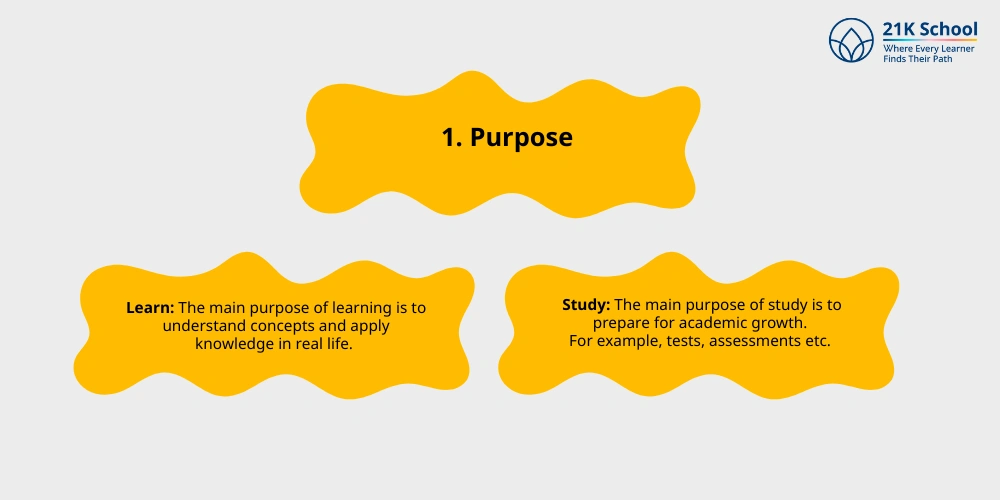
Learn: The main purpose of learning is to understand concepts and apply knowledge in real life.
Study: The main purpose of study is to prepare for academic growth. For example, tests, assessments etc.
2. Depth of Understanding
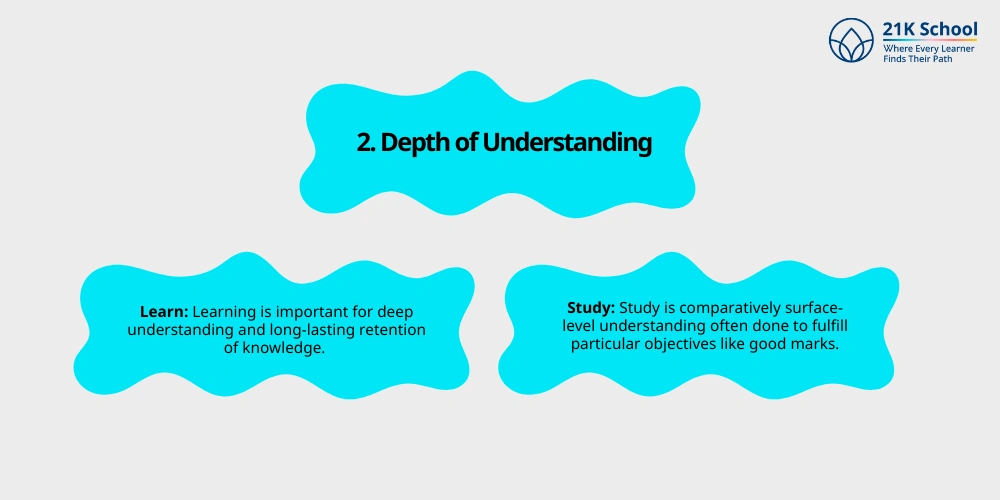
Learn: Learning is important for deep understanding and long-lasting retention of knowledge . Here, students can explain, apply, and teach each other.
Study: Study is comparatively surface-level understanding often done to fulfill particular objectives like good marks.
3. Approach
Learn: Through learning a holistic and experience-based approach is used.
Study: On the other hand, study includes a structured approach which includes reading, memorising, writing etc.
4. Outcome
Learn: The outcome of learning is skill development, behavioural change, expertise in a particular field etc.
Study: While the outcome of study is preparation for exams , completion of academic tasks etc.
5. Time Duration
Learn: Learning is a lifelong process that can be started anytime.
Study: On the other hand, study is temporary mainly preferred to fulfill objectives like academic growth or examination.
6. Methods Used
Learn: Learning involves practice, observation, application, experimentation, discussions, real-world application etc.
Study: While studying involves reading, memorising, highlighting, revising etc.
7. Engagement Level
Learn: Learning includes high and active involvement.
Study: While studying passive, moderate or low, depending on interest.
8. Retention
Learn: Through learning students can lead to long-term retention.
Study: Study often leads to short-term memory especially if students choose rote learning .
9. Skills Developed
Learn: Learning helps to develop skills like:
- Critical thinking
- Problem-solving
- Creativity
- Communication skills
Study:
Studying helps to develop skills like:
- Memory power
- Discipline
- Organisational skills
- Time management skills
10. Long-Term vs Short-Term Focus
Learn: Learning is a lifelong process and always aims for long-term focus.
Study: While study is mainly short-term focus to complete a particular objective.
11. Relationship
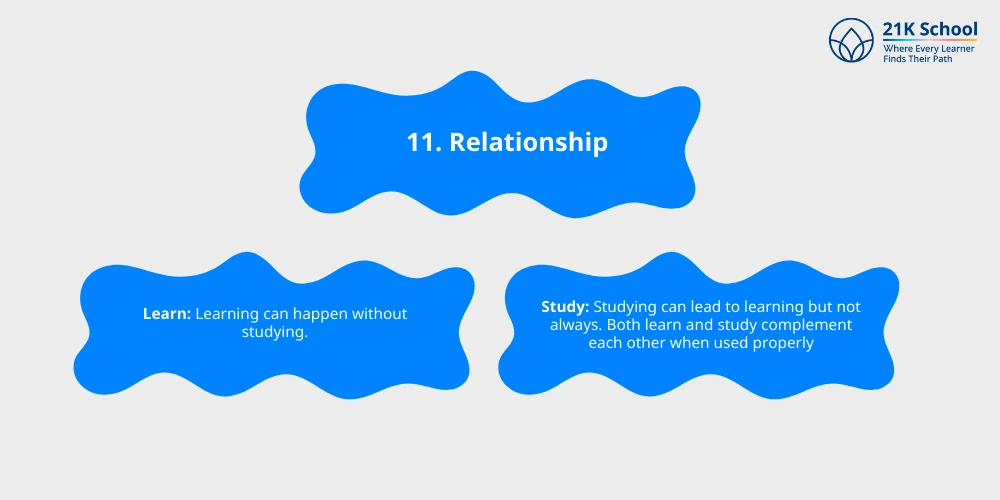
Learn: Learning can happen without studying.
Study: Studying can lead to learning but not always. Both learn and study complement each other when used properly
12. Example
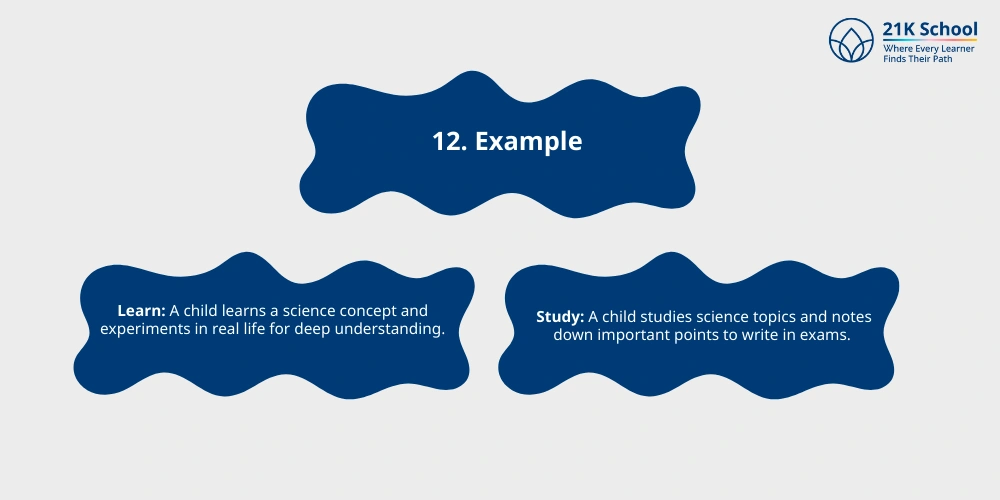
Learn: A child learns a science concept and experiments in real life for deep understanding.
Study: A child studies science topics and notes down important points to write in exams.
Conclusion
Both the terms learn and study are different but important in students’ lives. And to understand these terms effectively, exploring the difference is the ideal way.
The blog contains everything you need to know about learning and studying. Going through the table format to get a quick view or detailed explanation for deep understanding.
Remember to balance both in life to make academic and personal journey.

You may also want to read