

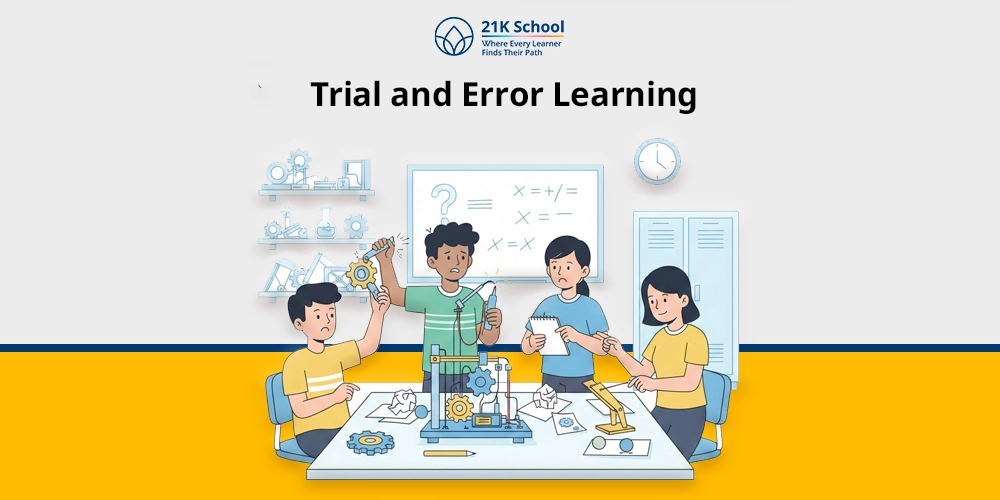
Have you ever thought about how trial-and-error learning is effective to learn new things?
One does not always learn instantly and perfectly, but most of the time makes errors and finds a better way out through experience. Trial and error learning describes the way people learn through trying various ways of response, failing and improving themselves according to the results.
This approach is quite important to human behaviours, ability development, and solving problems, since it encourages persistence, experimentation, and experiential learning . It is more often observed in everyday life, learning and the psychological research of learning.
Contents
What is Trial and Error Learning?
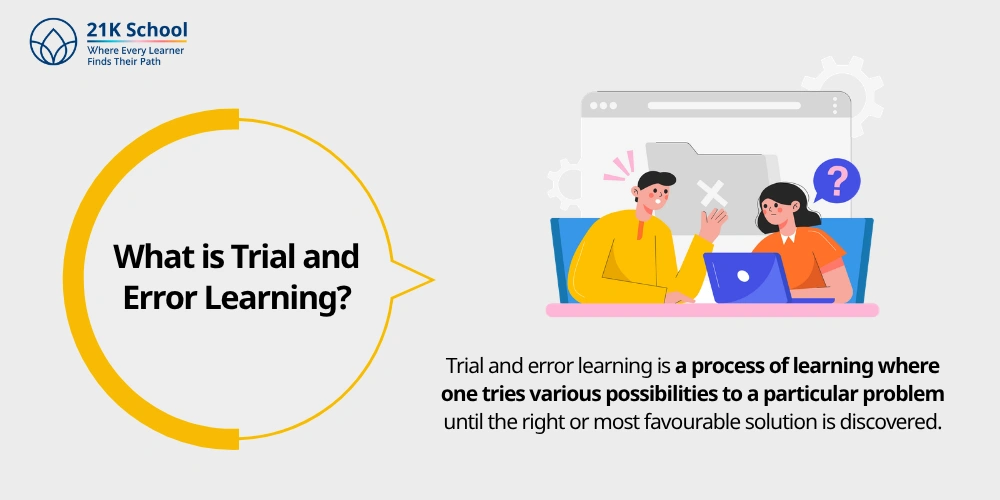
Trial and error learning is a process of learning where one tries various possibilities to a particular problem until the right or most favourable solution is discovered.
Through repetition, incorrect responses are eliminated while successful ones are reinforced
It is a form of learning that focuses on experience, practice and learning through errors, and is significant in the development of skills, developing good habits as student and problem-solving in human beings and in animals.
Thorndike’s Law of Learning (Trial and Error)
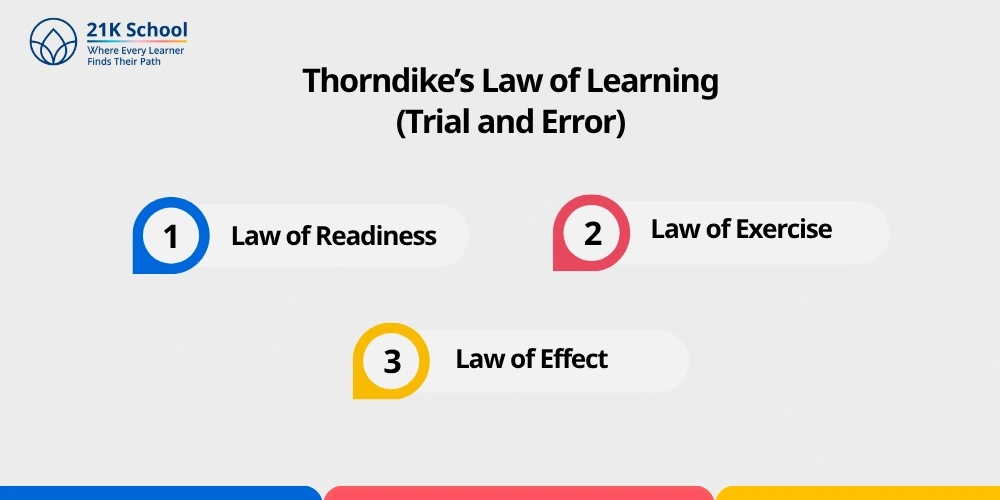
The Law of Learning, as developed by Thorndike, describes the action of learning behaviour by trial and error. Through practice, preparation and positive results, learning becomes faster and stronger, the opposite is also true; thus, errors in doing things provide the way to correct, and the successful actions and steps are reinforced. The law of learning created by Thorndike follows.
1. Law of Readiness
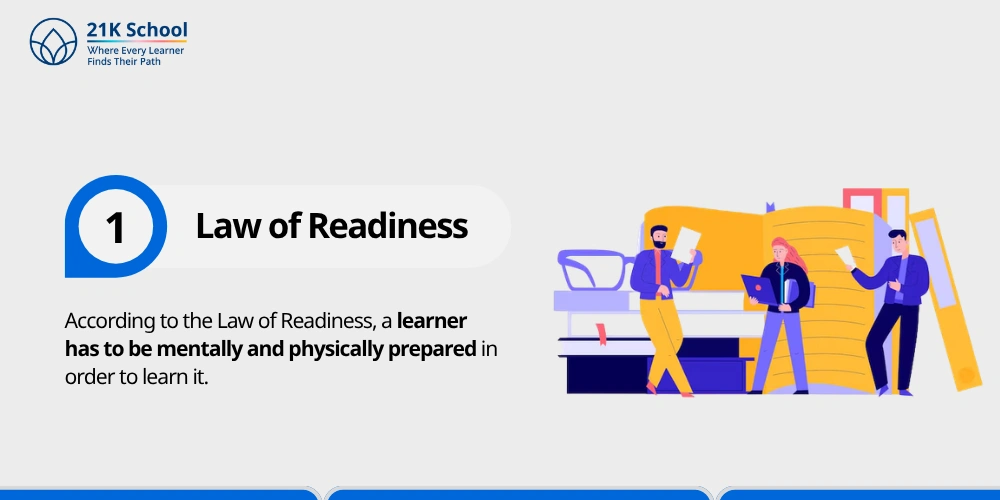
According to the Law of Readiness, a learner has to be mentally and physically prepared in order to learn it.
Learning is fulfilling when the individual is willing to do something and allowed to do it. Forcing learning, however, when the learner is not ready, gives rise to frustration, making the learner less interested in their learning and less effective.
2. Law of Exercise
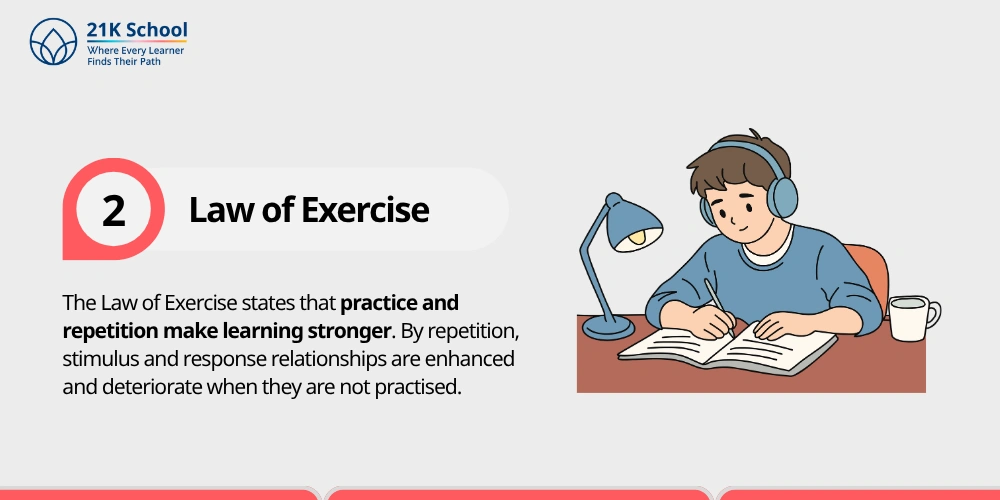
The Law of Exercise states that practice and repetition make learning stronger. By repetition, stimulus and response relationships are enhanced and deteriorate when they are not practised.
The frequent revision, drills, and repeated experiences can ensure longer retention of information among learners and improved efficiency of performing skills over time.
3. Law of Effect
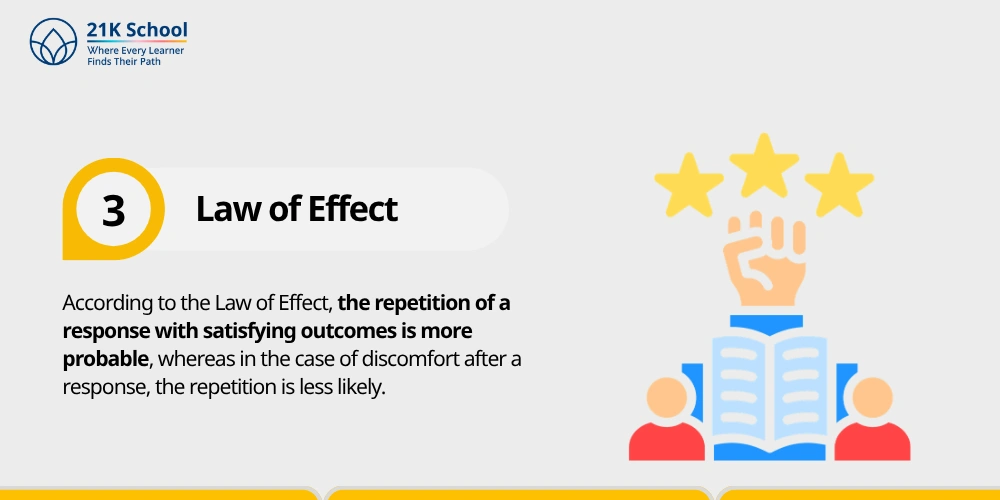
According to the Law of Effect, the repetition of a response with satisfying outcomes is more probable, whereas in the case of discomfort after a response, the repetition is less likely.
When we are positively reinforced, learning becomes stronger, and when we have negative experiences, learning becomes weaker. In this law, rewards, feedback and motivation are emphasised as essential in the learning method .
Thorndike’s Puzzle Box Experiment
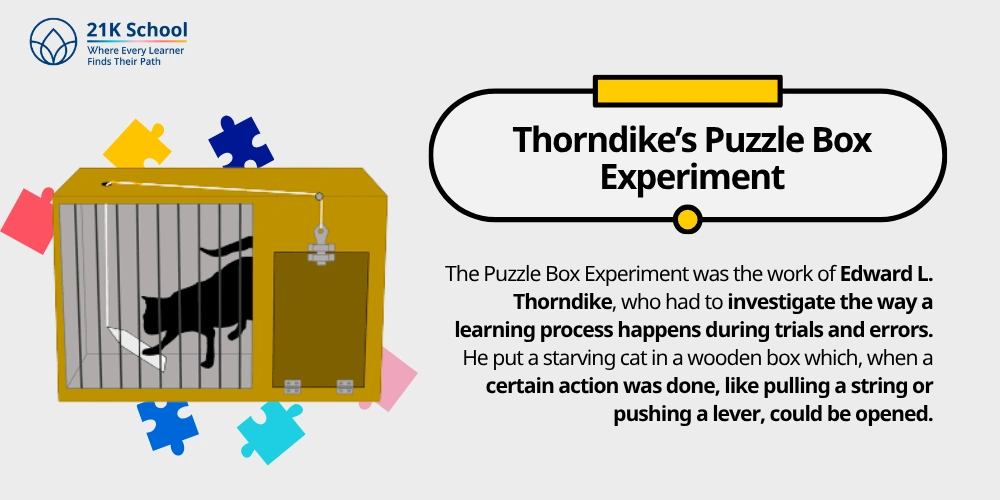
The Puzzle Box Experiment was the work of Edward L. Thorndike, who had to investigate the way a learning process happens during trials and errors. He put a starving cat in a wooden box which, when a certain action was done, like pulling a string or pushing a lever, could be opened.
Food that was outside the box would be a reward. Initially, the cat made unsuccessful movements such as scratching and biting in between. Eventually, by chance, it performed the correct action and escaped to get the food.
Through repetition, the cat slowly filtered out the false actions and learnt the correct action within a short period with repetition. Thorndike came up with the conclusion that learning takes place as a result of trial and error, with the reward reinforcing the successful response.
3 Types of Trial and Error Learning
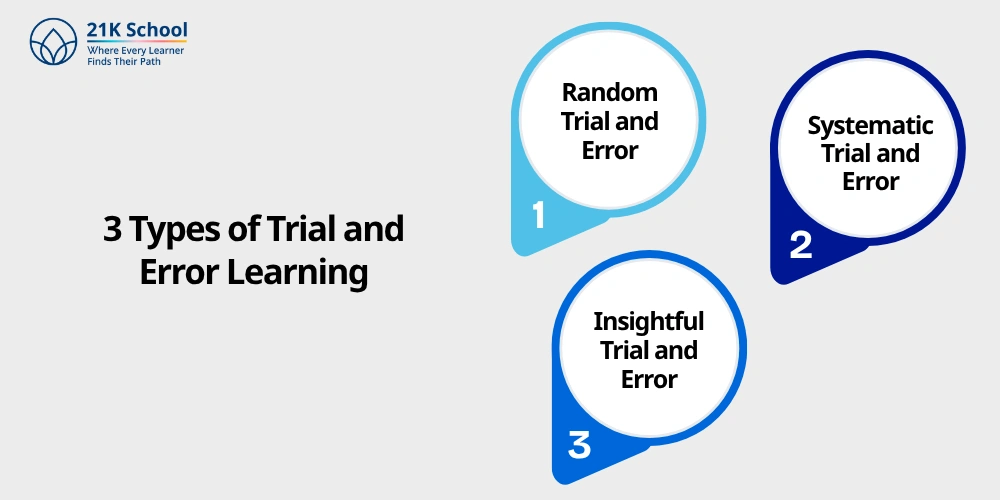
Learning by trial and error takes three forms, which are random, systematic and insightful. Each of the types is different in approaches, organisation, and thinking, as it enables the learners to slowly find out the right answer by experience and practice.
1. Random Trial and Error
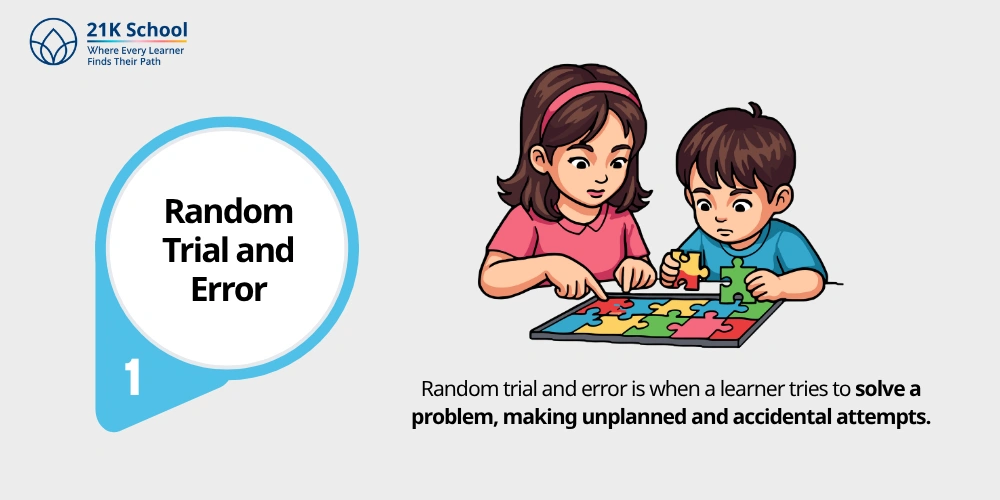
Random trial and error is when a learner tries to solve a problem, making unplanned and accidental attempts.
Reactions are attempted without comprehension of the situation. A lot of mistakes are made before achieving success. This kind of learning is typical of amateur learners, young children and animals, where learning occurs gradually through successive failures and by chance.
2. Systematic Trial and Error
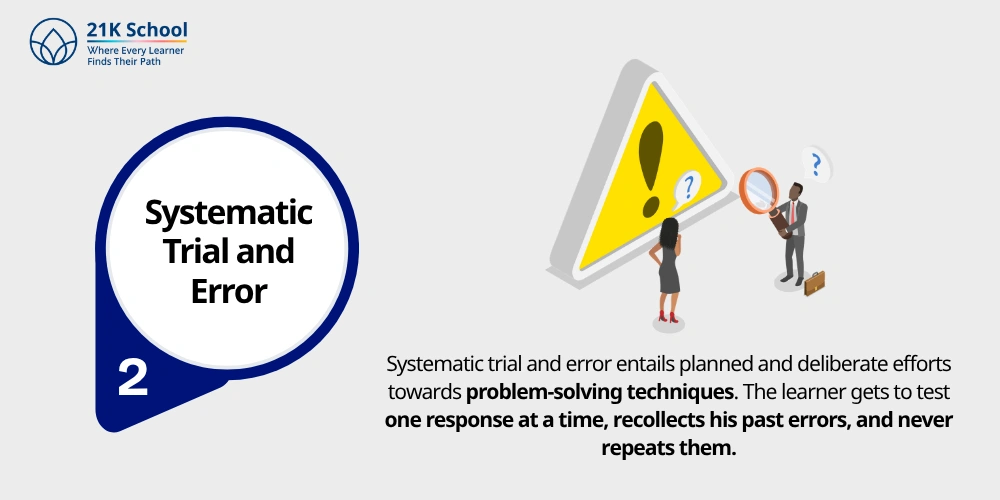
Systematic trial and error entails planned and deliberate efforts towards problem-solving techniques . The learner gets to test one response at a time, recollects his past errors, and never repeats them.
Mistakes are minimised, and learning becomes more efficient and quicker. This type is common among adults, where they use logic, experience and thoughtfulness during learning.
3. Insightful Trial and Error
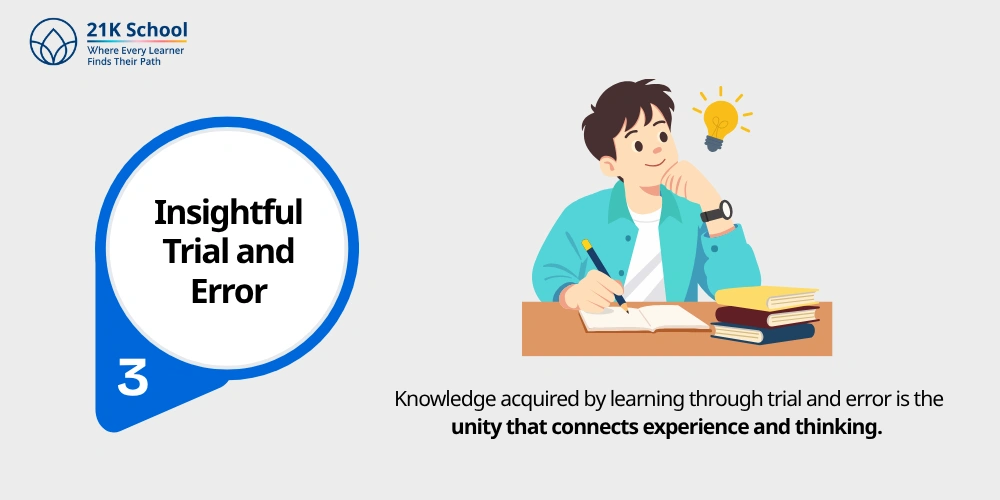
Knowledge acquired by learning through trial and error is the unity that connects experience and thinking. The mistakes are more rapidly picked up by insight, which may, however, still make them.
This kind is an indication of higher-order thinking and is mostly common in situations of problem-solving that involve an aspect of reasoning.
6 Key Steps in Trial and Error Learning
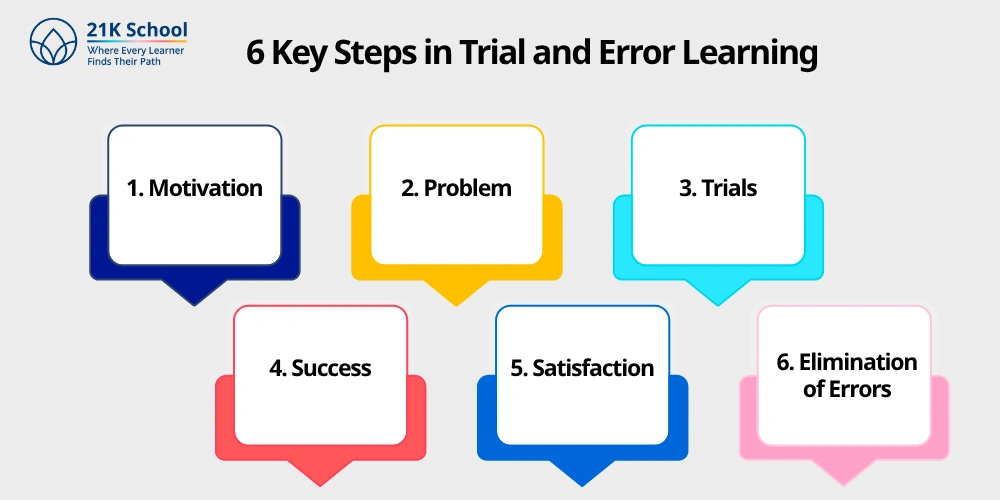
Learning by trial and error uses 6 main steps, namely motivation, identification of the problem, repetition, success, satisfaction and removal of errors, which direct learners to acquire skills after practising and experiencing.
1. Motivation
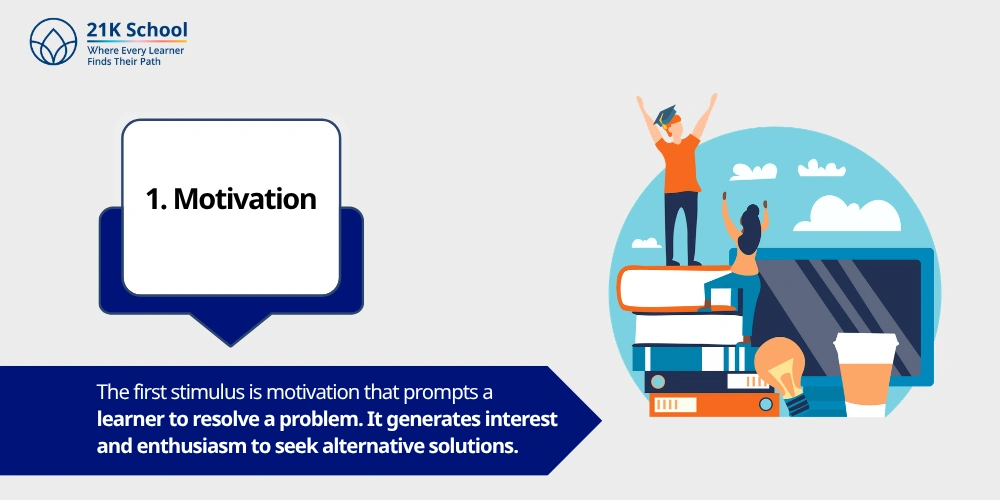
The first stimulus is motivation that prompts a learner to resolve a problem. It generates interest and enthusiasm to seek alternative solutions.
Lack of motivation may make the learner not participate in trial-and-error learning. Motivation in education can be either hunger, curiosity, rewards or self-goals, and the learner can be motivated to pursue the attempt to solve the problem to the end.
2. Problem
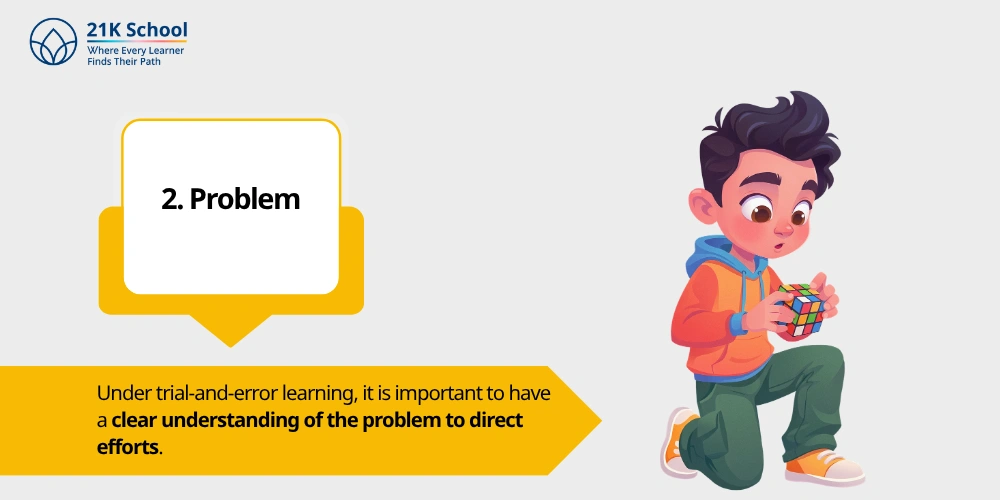
It determines the achievement that the learner should attain. Under trial-and-error learning, it is important to have a clear understanding of the problem to direct efforts.
An identified problem focuses efforts, minimises unplanned steps and assists the learner to find potential solutions to achieve success.
3. Trials
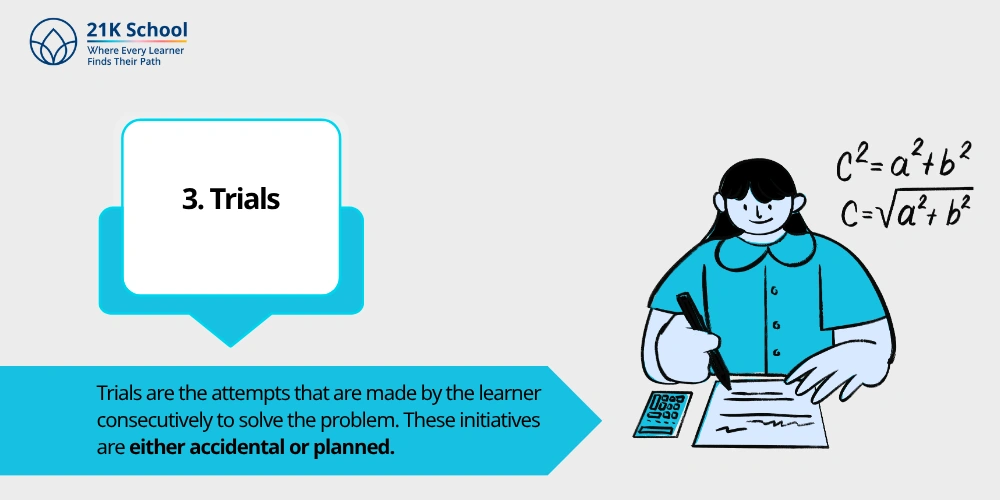
Trials are the attempts that are made by the learner consecutively to solve the problem. These initiatives are either accidental or planned.
Each trial provides an experience and feedback, and will teach the learner which responses are effective and which are not. The learner progressively gets closer to getting the correct solution through repeated trials.
4. Success
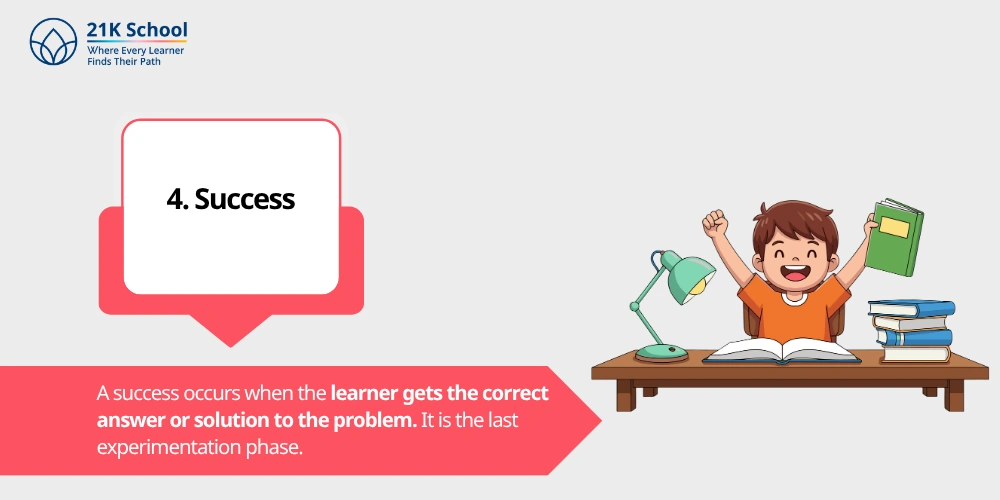
A success occurs when the learner gets the correct answer or solution to the problem. It is the last experimentation phase.
Success supports learning through showing a learner that a certain action will lead to the desired outcome, and the learner should repeat and remember the correct response in the future.
5. Satisfaction
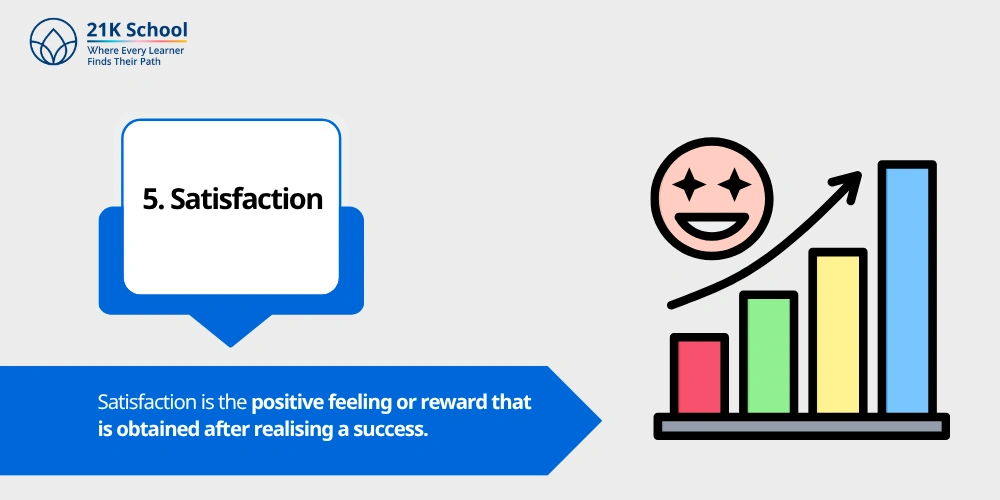
Satisfaction is the positive feeling or reward that is obtained after realising a success. It reinforces the right solution, and the learner will try to use the same solution to a similar problem.
Satisfaction reinforces motivation and creates confidence in children, and thus learning is more effective and memorable.
6. Elimination of Errors
Elimination of errors occurs as learners stop making incorrect responses. Errors are identified, taken to learn from and not repeated.
With time, the learning process through trial and error is more productive, resulting in a reduced number of mistakes and quicker learning of a problem, which results in the mastery of the task or skill.
Top 5 Characteristics of Trial and Learning
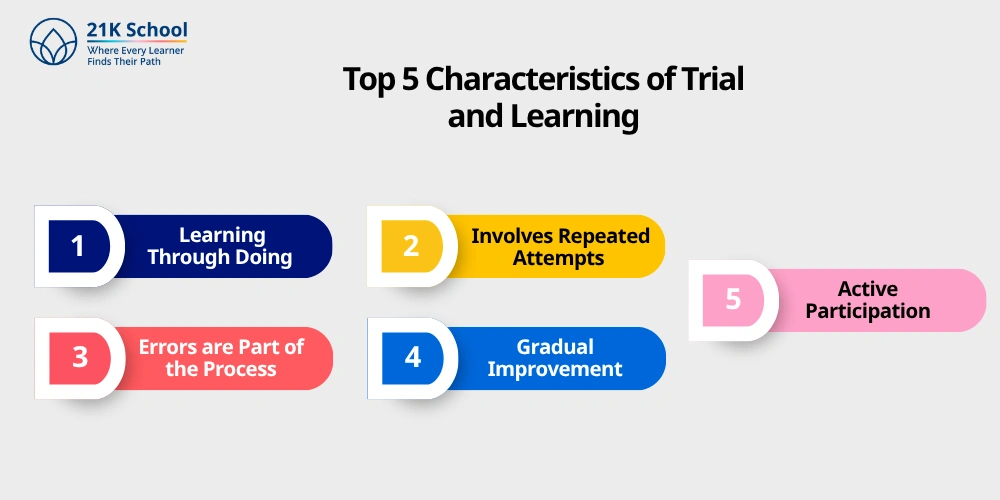
Trial and error Learning is active, practical; it involves trial and error, learning through error, improvement and progress, and full involvement. Its significant peculiarities help to develop problem-solving skills , persistence, and successful gaining of experience.
1. Learning Through Doing
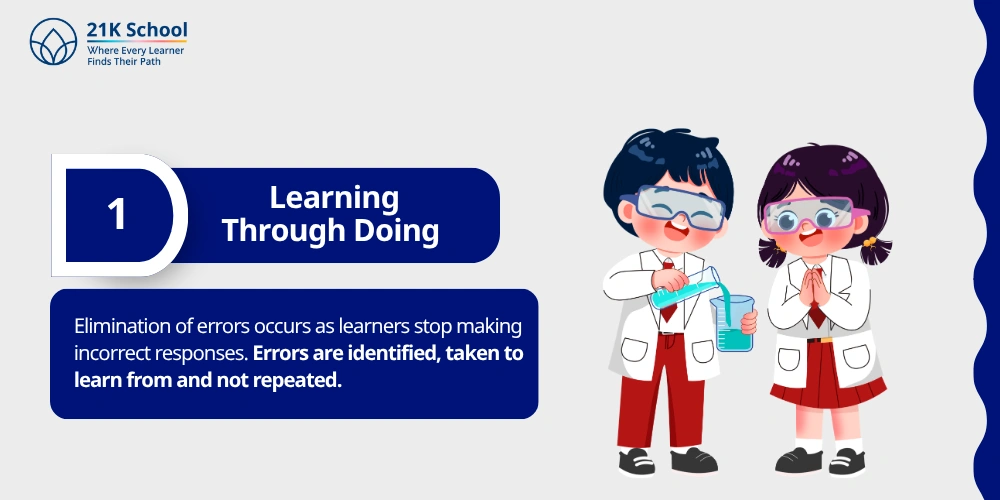
Experience-based learning is trial-and-error learning. Children do not sit and do, but make some attempts to act differently from watching and repeating the instructions.
The results of the actions are gained through knowledge, whether physical or mental trouble to carry out the activity.
2. Involves Repeated Attempts
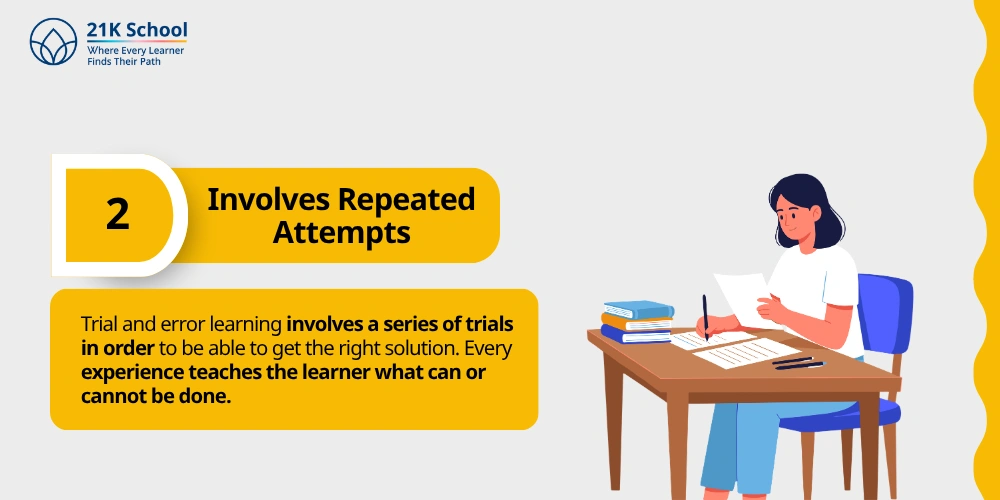
Trial and error learning involves a series of trials in order to be able to get the right solution. Every experience teaches the learner what can or cannot be done.
Perseverance and practise permit slow comprehension and learning. The trial attempts made by a learner, the closer one or the other gets to the desired effect and internalises the appropriate answer.
3. Errors are Part of the Process
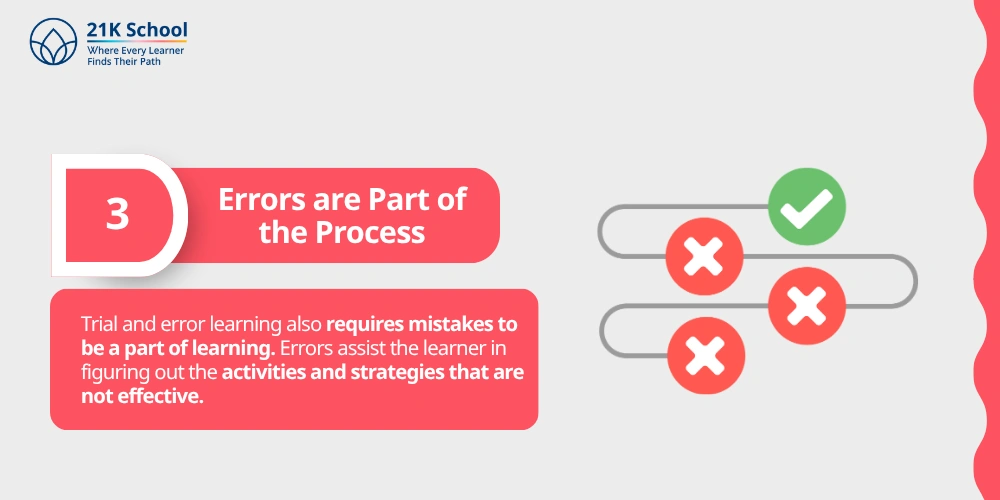
Trial and error learning also requires mistakes to be a part of learning. Errors assist the learner in figuring out the activities and strategies that are not effective.
Instead of them being discouraging the learners, errors are considered a chance to learn the problem more, correct actions, and move closer to the correct solution in the long run.
4. Gradual Improvement
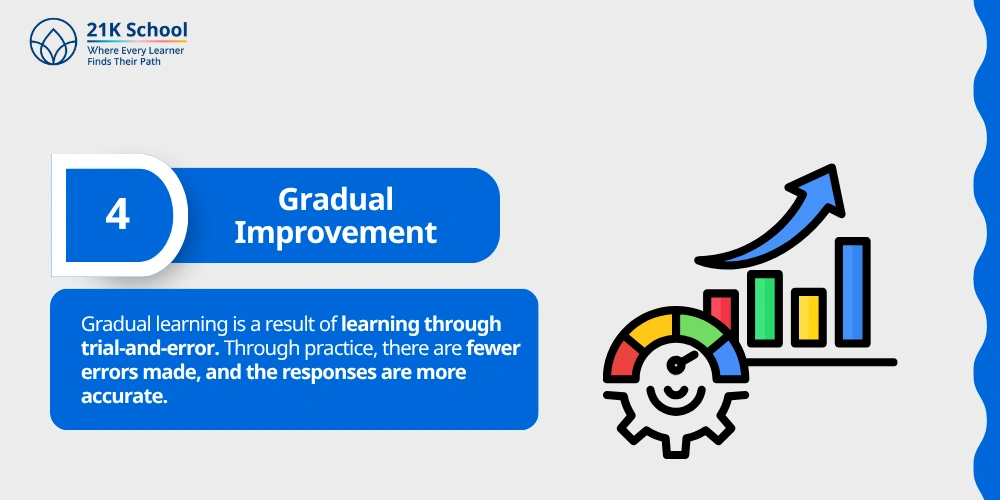
Gradual learning is a result of learning through trial-and-error. Through practice, there are fewer errors made, and the responses are more accurate.
This gradual improvement promotes competencies, learning and self-esteem. As time goes by, students learn to master the task, and the problem-solving process becomes faster and more effective.
5. Active Participation
This learning must engage all the learners online in the process. To be a successful person, one has to act and experiment with solutions, monitor the results and adjust the actions.
Active observation is not sufficient, and learners should be able to think, experiment and be critical to know what answers would produce the most desirable results. The student engagement will ensure greater understanding and retention of knowledge.
Trial and Error Learning in Psychology
Introduced by Edward L., the trial-and-error learning in psychology refers to the process of learning by trial and error, whereby one tries to learn something by making mistakes and improving gradually. People make various reactions to a problem until the appropriate one is found.
Any failures are eradicated, and successes are redirected with practice and rewards.
This approach is significant because it emphasises the role of experience, motivation in learning, and reinforcement in behaviour shaping and skill development in human beings and animals.
Ending Note
Learning by trial and error is one of the most basic ways of learning, as people gain through trial and error and improve their activities. It focuses on taking action, being tenacious, and experience.
This process, which can be observed in both human beings and animals, lays stress on the significance of motivation, practice, feedback, and reinforcement.
The trial-and-error learning is a necessary component of education and personal growth and development of skills because it enhances problem-solving, progressive, and critical thinking .

You may also want to read