

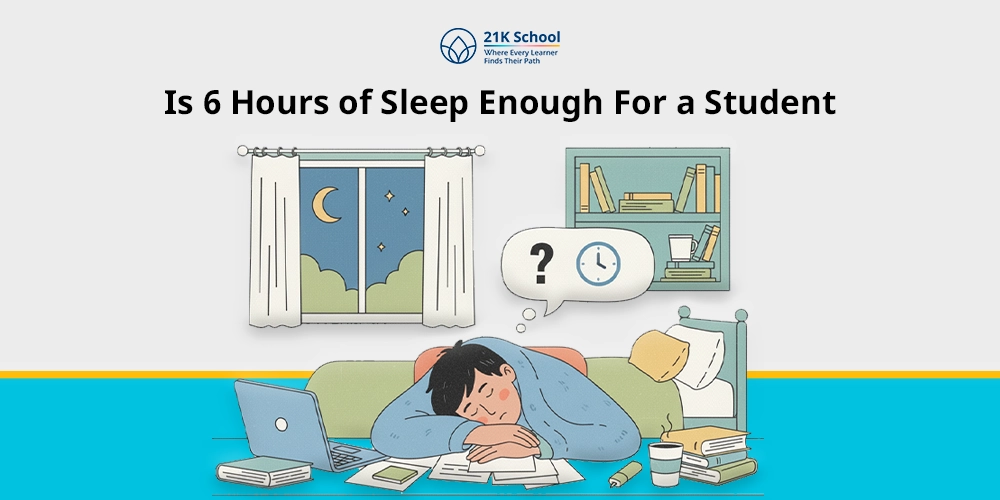
It’s common for individuals to think that if they pull late-nighters for studies, their academic performance would be better than other students.
But, is that really so? Is just 6 hours of sleep enough for a student?
To your surprise, taking 6 hours of sleep for longer periods of time can affect your cognitive abilities, problem-solving , mental health as well as physical health.
What we hear from our childhood that 7-9 hours of sleep is necessary for individuals, is actually correct.
Let’s find out more on is 6 hours of sleep enough, how sleep helps children’s well-being and academic performance, while also discussing some tips for a sound sleep.
Contents
Is 6 Hours of Sleep Enough For a Student
A majority of students might be losing sleep, assuming that six hours is enough for them.
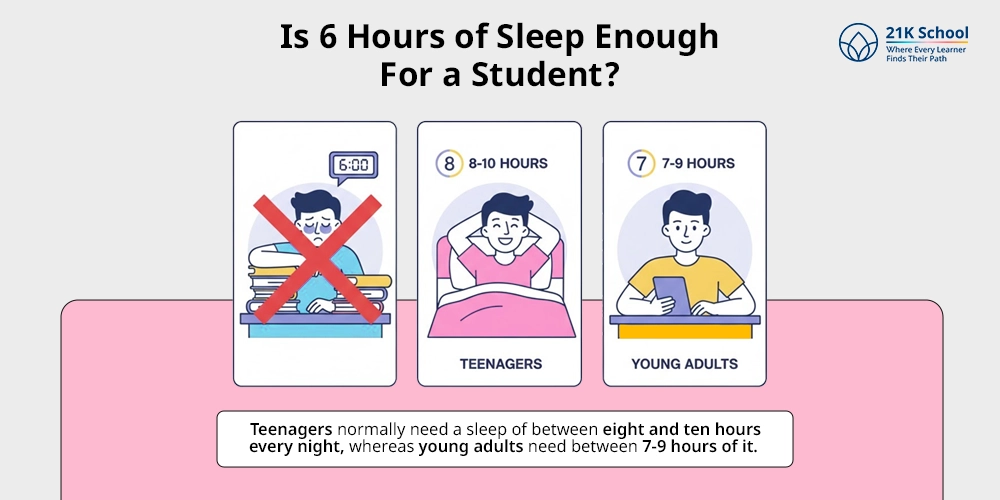
Teenagers normally need a sleep of between eight and ten hours every night, whereas young adults need between 7-9 hours of it.
This implies that 6 hours of sleep on a regular basis causes sleep debt.
A student might feel functional or even fine on such a less quantity of sleep. Although his or her cognitive output, emotional stability, and physical well-being might be quietly depleting.
Behavioral adaptation may occur in the body but the brain never gets used to the chronic limitation of sleep.
Students can think that they are doing well but objective tests involving memory, reaction time, and concentration tell the opposite.
Six hours of sleep may help a student last a day or two, especially during hectic exams. But, if it becomes a long-term habit, it would just be meager.
Find how many hours of sleep is enough for a student because the effect of sleep deprivation is reflected in almost all body systems.
It adds to study-stress levels, impairs immunity, decreases intellectual functioning, and interferes with moods.
In the long run, the academic performance of the student, motivation, and student mental-health may get impacted negatively even though the student may feel that they are fine.
What Happens When a Student Sleeps?
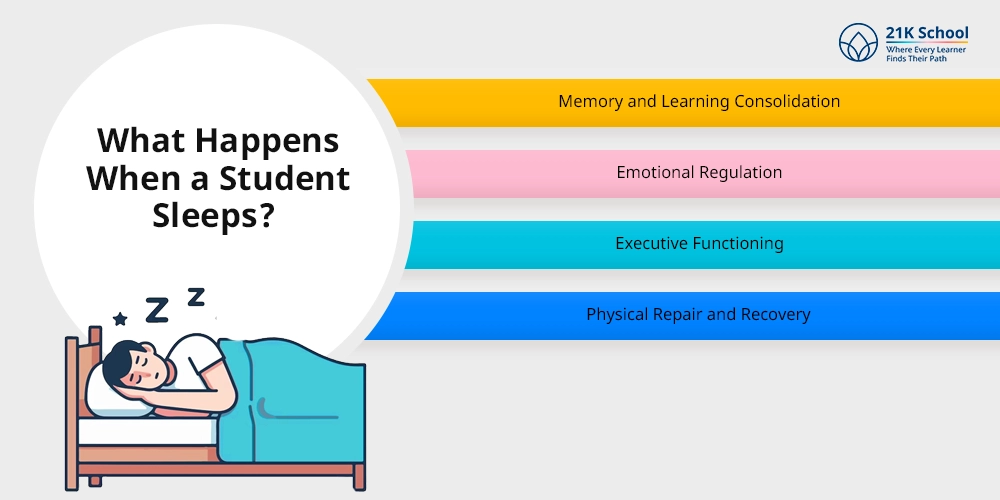
A number of crucial activities occur in the body and the brain when a student falls asleep.
These work in cycles all through the night, and if deprived of it, one can miss-out on the benefits of sleep.
1. Memory and Learning Consolidation
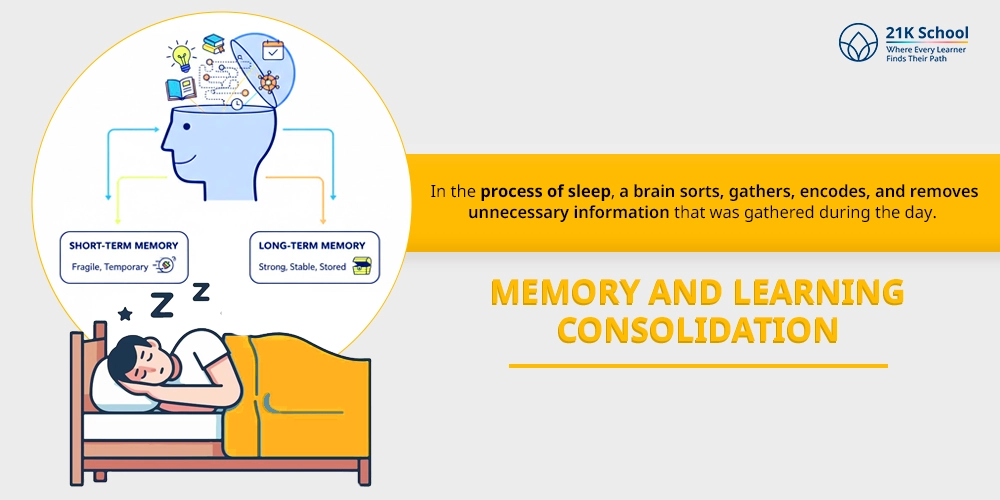
Among all the roles of sleep that are of utmost importance, memory consolidation is one of them.
In the process of sleep, a brain sorts, gathers, encodes, and removes unnecessary information that was gathered during the day.
The inter-neural connections are reinforced during deep sleep. It is this REM sleep which enables new information to get a place in the long-term memory.
The brain cannot retain the learned material without enough sleep.
This is the reason why most students that study late at night forget most of what they studied the following day.
2. Emotional Regulation
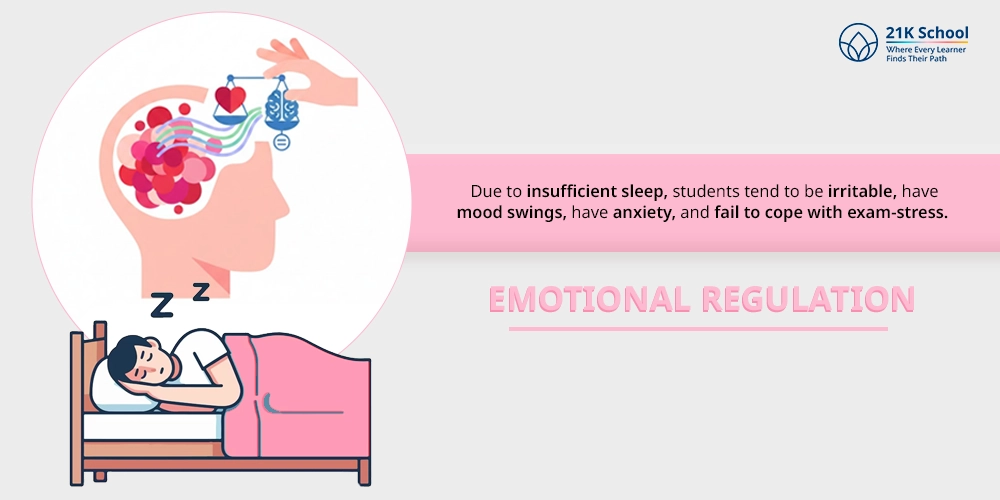
Emotional regulation is also a major importance of sleep.
Amygdala, the brain part that regulates emotional responses, is hyper-reactive when the brain lacks sleep.
Due to insufficient sleep, students tend to be irritable, have mood swings, have anxiety, and fail to cope with exam-stress .
These frustrations are devastating because the students might overreact to the situations that they would not have bothered them under normal conditions.
Daily academic life can become complicated as emotional imbalance may influence learners’ relations, motivation, and general well-being.
3. Executive Functioning
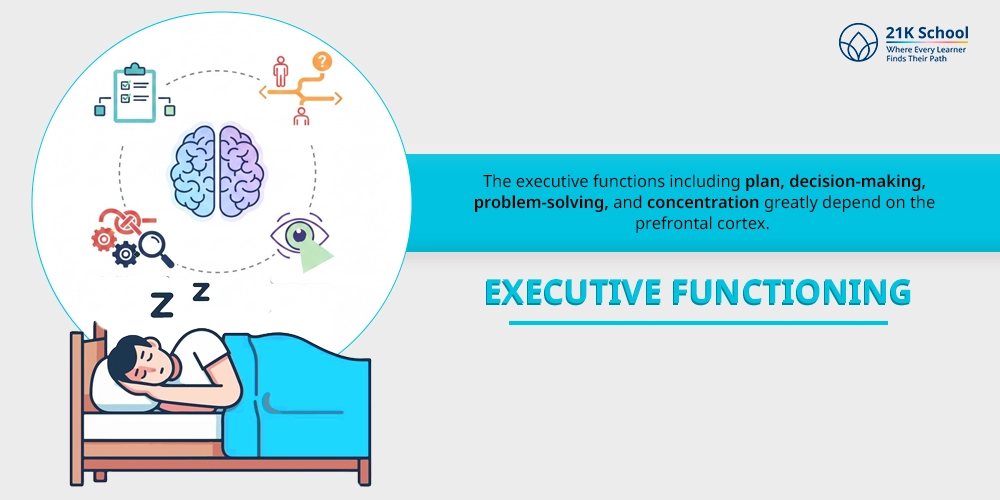
The executive functions including plan, decision-making , problem-solving, and concentration greatly depend on the prefrontal cortex.
This region of the brain is very vulnerable to the loss of sleep.
An exhausted mind can fail to organize itself well, utilize time well, or focus on something.
The executive function can poorly affect the academic performance of students, even though they might be giving their best.
4. Physical Repair and Recovery
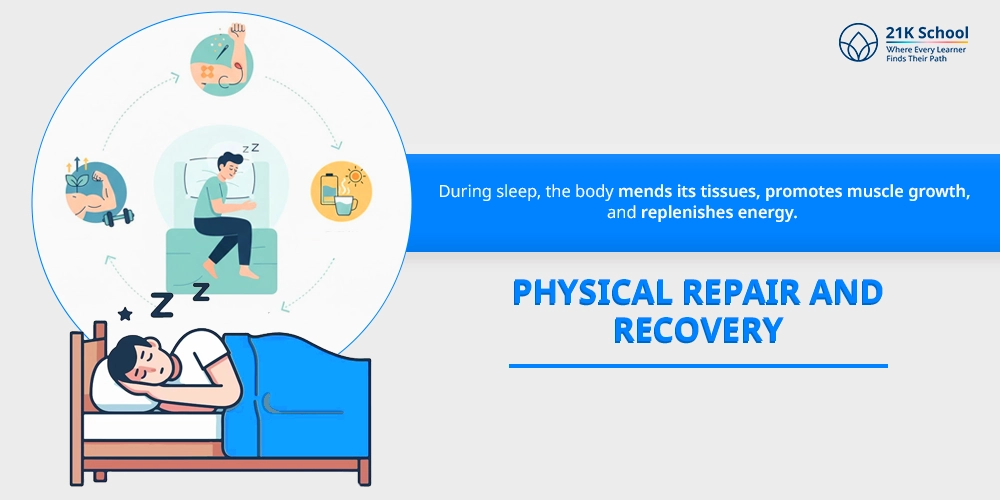
During sleep, the body mends its tissues, promotes muscle growth, and replenishes energy.
The immune system is boosted when one is asleep to help in resisting infections.
Sleep deprived students tend to get up feeling sore or mentally exhausted since the body was deprived of the time to repair itself.
If this happens for extended days or weeks, it may cause common diseases and physical exhaustion.
Is Six Hours of Sleep Enough for Academic Performance?
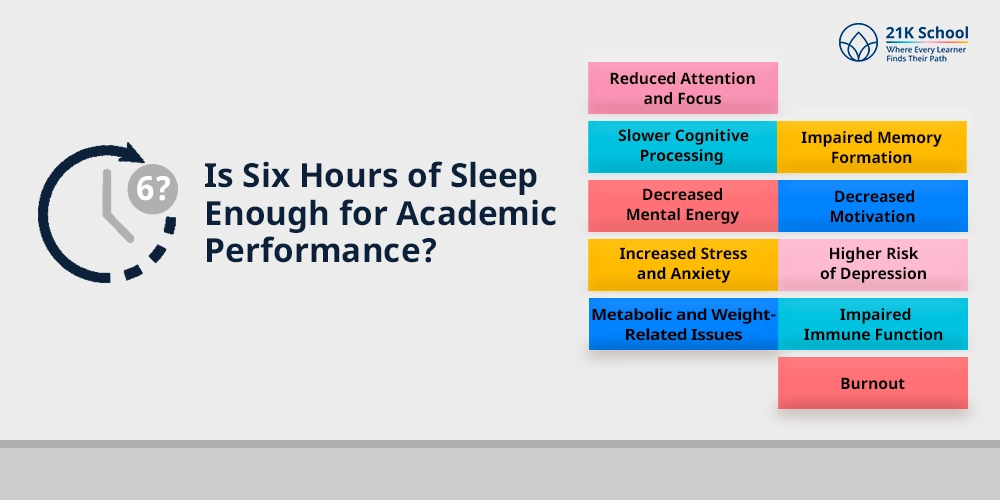
As we saw earlier, 6 hours of sleep is generally not enough for learners and their study-performance.
The negative effects of inadequate sleep on academic performance include:
1. Reduced Attention and Focus
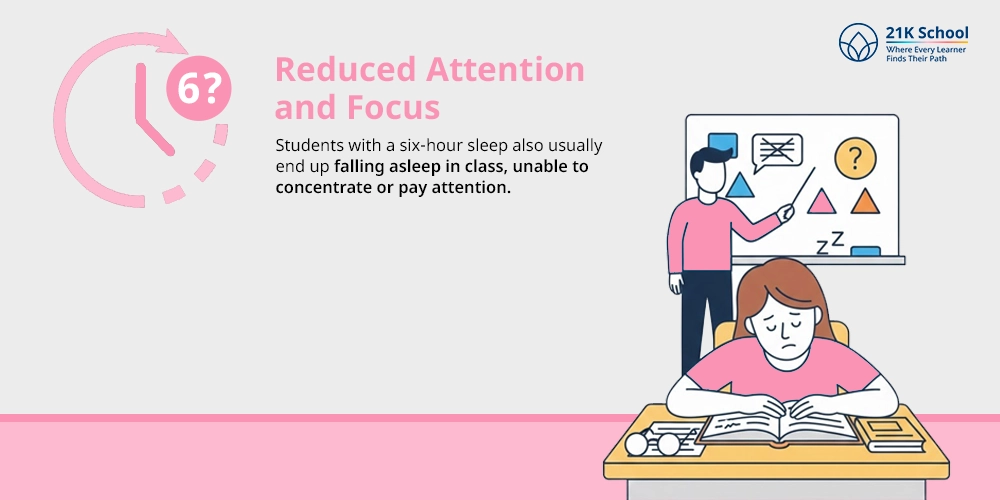
Where there is inadequate sleep, attention and concentration is diminished.
Students with a six-hour sleep also usually end up falling asleep in class, unable to concentrate or pay attention.
They might be seen reading the same sentences and lines over and over again as their brain just cannot keep track.
This renders learning to be very difficult and ineffective.
2. Impaired Memory Formation
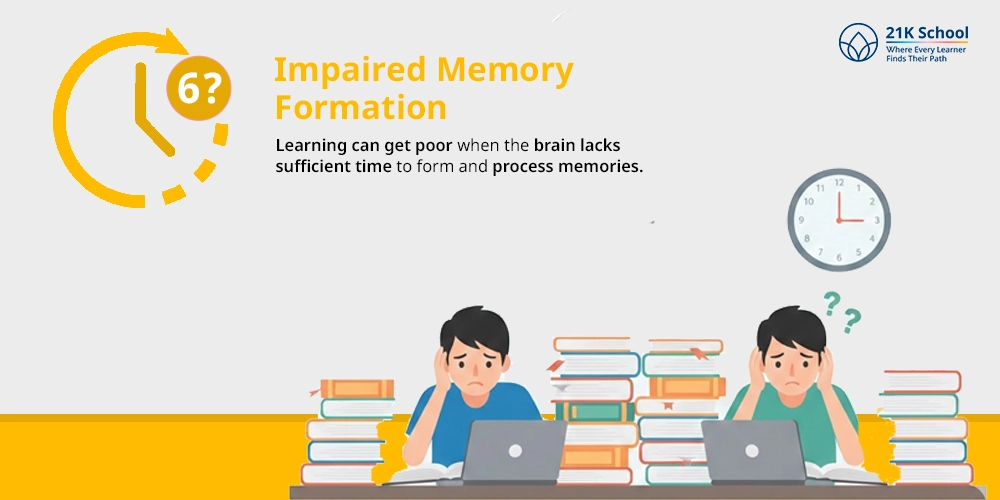
Learning can get poor when the brain lacks sufficient time to form and process memories.
Students can spend hours studying but fail to remember the lessons when exams come on.
They can even forget their homework instructions or can have difficulties remembering what they studied yesterday.
This results in an annoying process of studying more yet remembering less.
3. Slower Cognitive Processing
The mental speed at which one can think, analyze, and react to questions is hampered with less sleep.
A student might experience a task to be more mentally draining when they are sleep-deprived.
This might also result in students finding the task more time-consuming than usual.
Practical situations would include late assignment submission and less participation in classroom activities.
4. Decreased Motivation
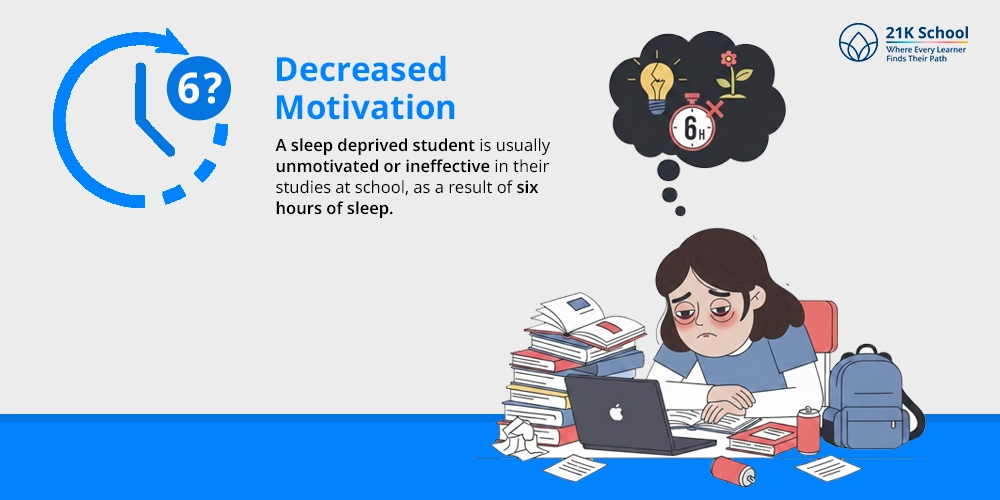
Motivation gets poorly affected due to less sleeping hours.
Even daily-routine actions appear daunting when one is tired from the brain.
A sleep deprived student is usually unmotivated or ineffective in their studies at school, as a result of six hours of sleep.
So now, one can say that laziness can also be a physiological effect of sleep deprivation and not just someone’s poor habit.
5. Decreased Mental Energy
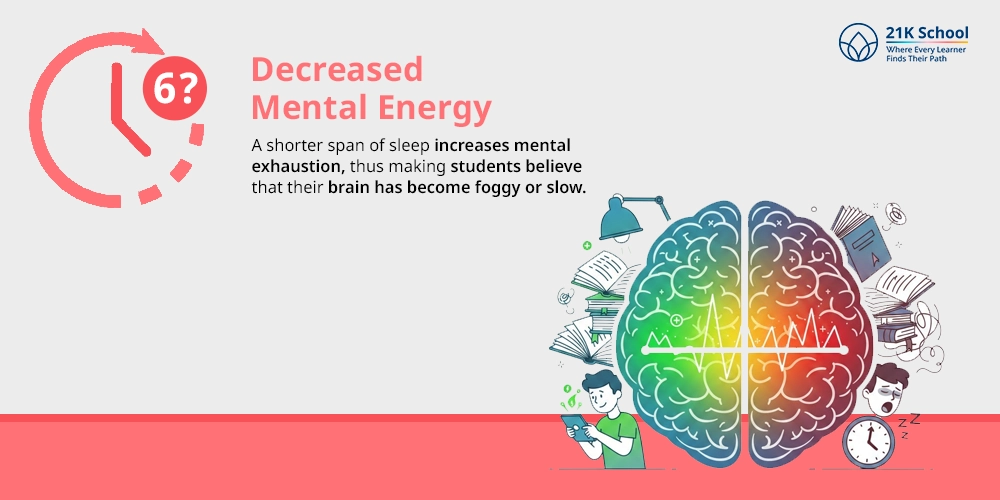
A shorter span of sleep increases mental exhaustion, thus making students believe that their brain has become foggy or slow.
This cognitive burnout is prone to creativity, problem-solving, and even processing of incoming information.
Schoolwork involves daily additional work, which can burn an individual’s excitement in the long run.
6. Higher Risk of Depression
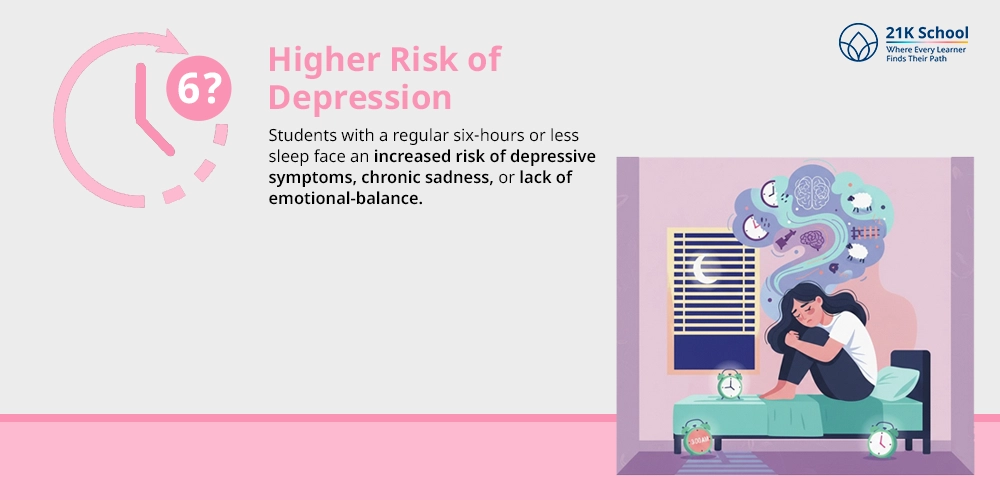
Depression is greatly associated with chronic sleep deprivation.
Sleep influences equilibrium of neurotransmitters such as serotonin and dopamine that play a crucial role in determining mood.
Students with a regular six-hours or less sleep face an increased risk of depressive symptoms, chronic sadness, or lack of emotional-balance.
7. Increased Stress and Anxiety
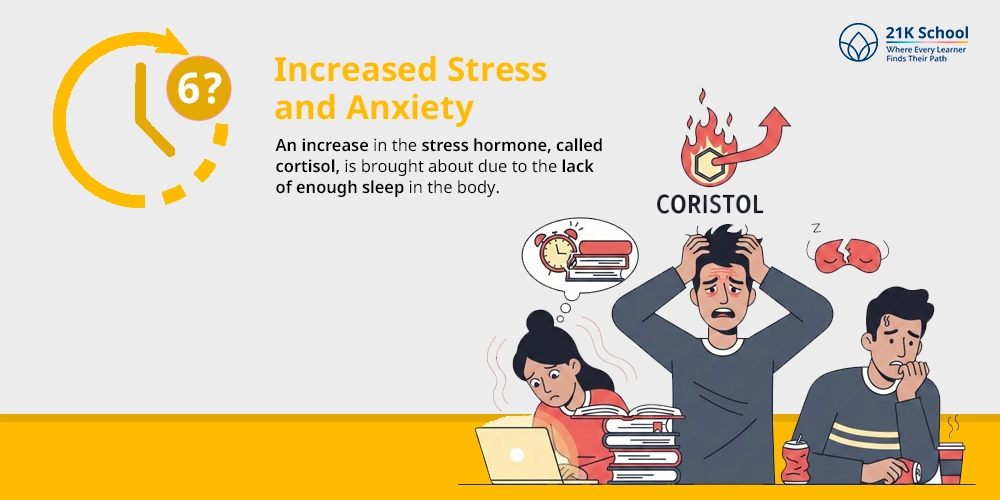
An increase in the stress hormone, called cortisol, is brought about due to the lack of enough sleep in the body.
This creates anxiety and academic pressure among students.
Students who lack sleep complain of constant stress especially in the months of exams or during hectic study-routine .
8. Impaired Immune Function
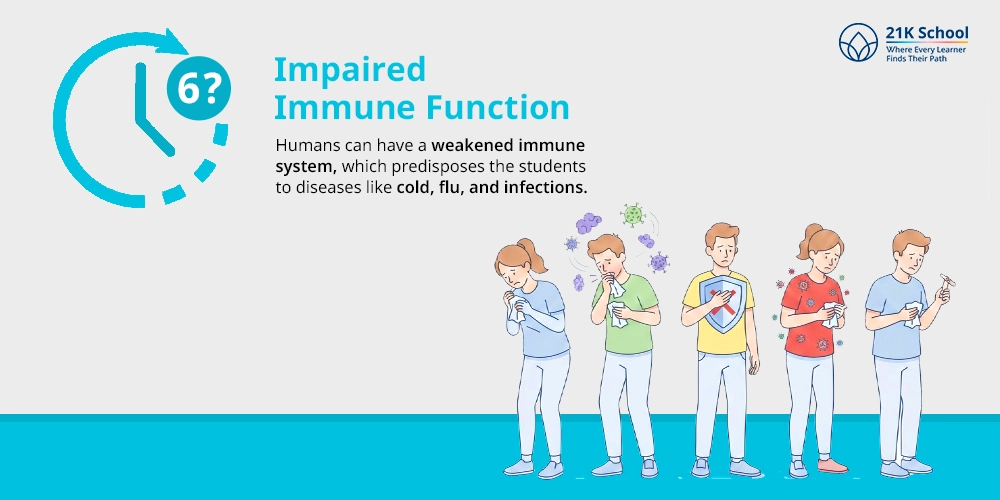
Humans can have a weakened immune system, which predisposes the students to diseases like cold, flu, and infections.
Due to a bad physical-health, learners might skip classes leading to attendance shortage.
This absenteeism often disrupts their learning process to fall behind on homework, while causing stress.
9. Metabolic and Weight-Related Issues
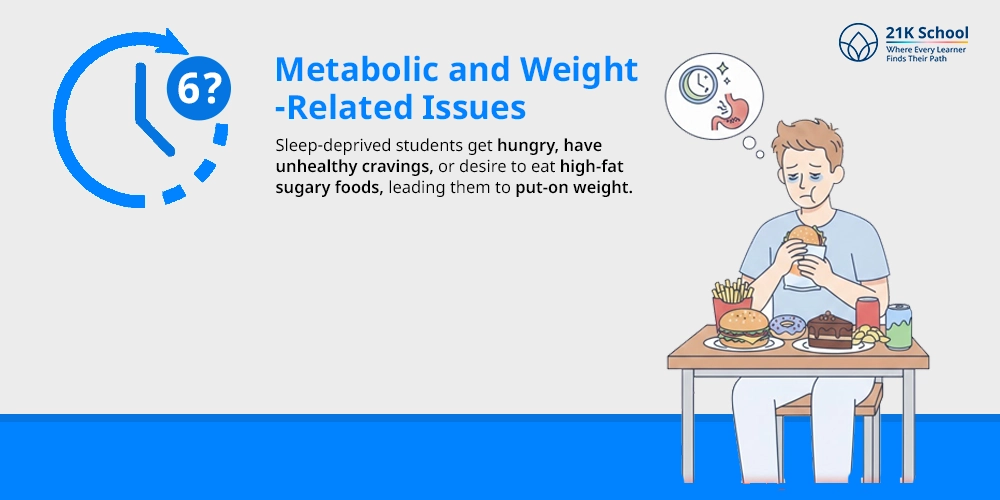
Sleep is known to have effects on hunger and metabolic hormones.
Sleep-deprived students get hungry, have unhealthy cravings, or desire to eat high-fat sugary foods, leading them to put-on weight.
Not just that, sleep deprivation decreases the level of metabolism, because of which a healthy lifestyle feels more difficult.
10. Burnout
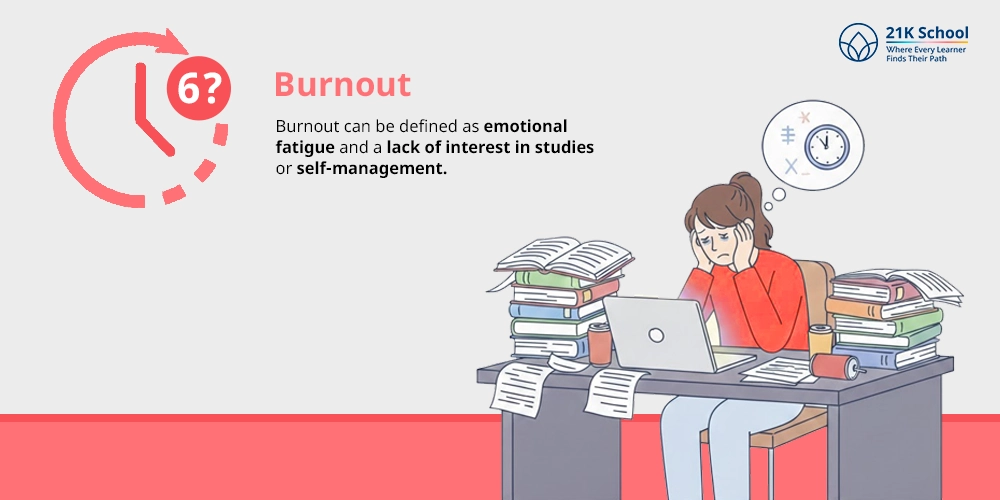
Lack of proper rest that leads to burnouts arises when the students stretch themselves over time.
Burnout can be defined as emotional fatigue and a lack of interest in studies or self-management .
Burnout is hard to overcome once developed, and the first step to do so is to employ better sleep patterns.
Strategies for Students to Improve Sleep Quality
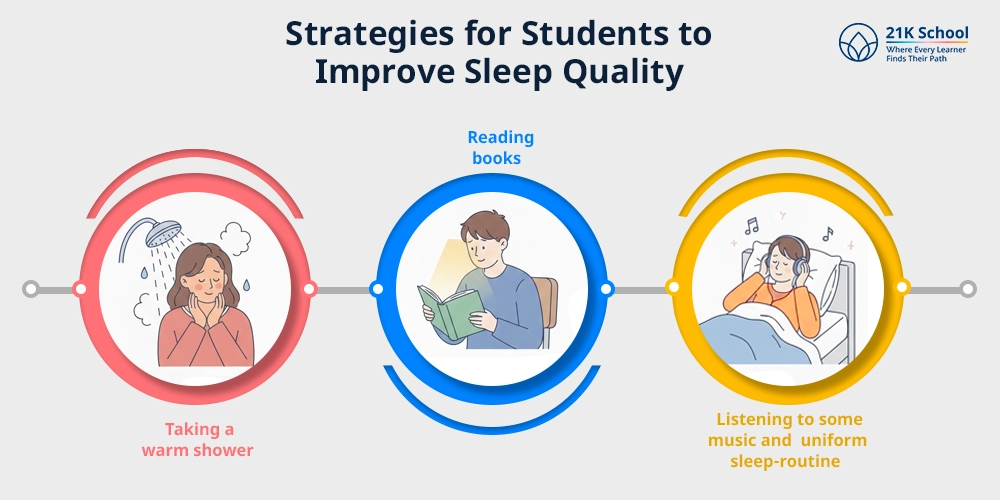
Improving sleep patterns requires creating healthy behaviors that favor sleep.
One of the effective strategies can be the establishment of a uniform sleep-routine by sleeping at the same time and getting up at the same time each day.
This maintains the inner clock of the body, thus enabling one to fall asleep faster.
The establishment of a relaxing evening habit also warms the body to rest.
Light stretching like taking a warm shower, reading books, or listening to some soft music can help relax the mind.
Another thing that is important is limiting screen time for kids before going to sleep.
The production of melatonin, which is the hormone that facilitates sleeping, is disturbed by the blue light produced by phones and computers.
Creating a relaxing sleeping environment is also important. A cool, quiet, and dark room allows faster sleeping.
Working out can also help to sleep better, but these exercises should be avoided when you are about to sleep or 1-2 hours prior to it.
Academic planning and time-management help in managing academic workloads, keeping late-night studies to a minimum, hence, maintaining healthy sleep patterns.
Energy is enhanced by taking short naps, whereas long or late naps should be avoided as they will disrupt night-time sleep.
Learners with persistent sleep problems can find it helpful to talk to a counselor or a medical professional.
Wrap It Up
Most learners might lag behind in maintaining their aspects of living when taking only 6 hours of sleep.
Although it might be fine in the short run, sleeping inadequately in the long-run impacts memory, emotional stability, concentration, physical wellbeing and school achievements.
Students work optimally when they get regular sleep of seven to nine hours, according to age.
One of the best methods to help the students improve their learning, improve their mood, and preserve their long-term health is to improve their sleep.

You may also want to read