


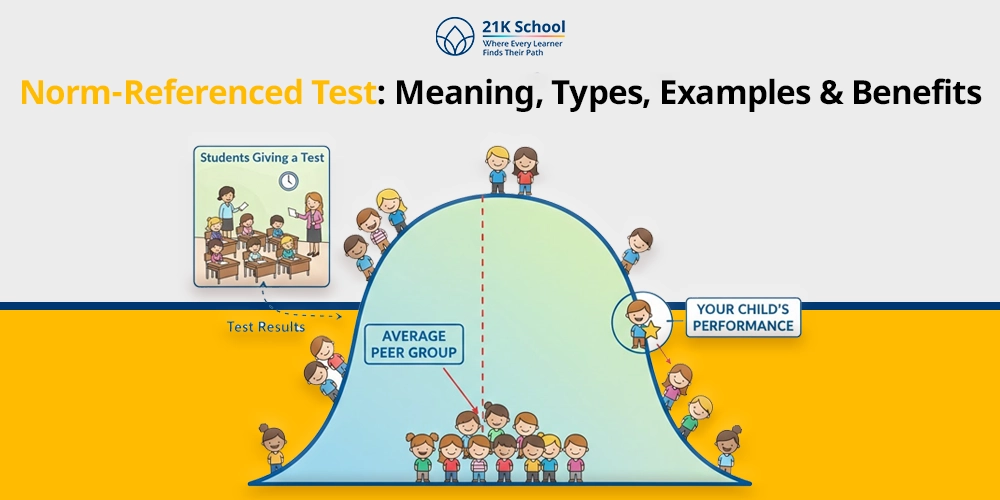
Have you ever wondered how the norm-referenced test is applied in order to measure the ranks of the students?
Norm-referenced tests are normally applied to become familiar with the performance of a learner compared to others. These tests do not emphasise what has been mastered but rather the relative position in a group.
They are broadly used in education systems in order to select, place and rank students.
Through the ability to compare scores on a vast population, norm-referenced testing is able to bring out the differences in the levels of achievement and give a wider picture of individual performance as compared to other students.
Contents
What is a Norm-Referenced Test?
A norm-referenced test is an evaluation test that gauges the performance of a learner in relation to other learners who undergo the same test. This is primarily done to rank individuals and indicate their relative standing in a group as opposed to an attempt to measure specific learning outcomes.
Such tests are typically applied in selection and placement, as well as competitive tests. The outcomes are useful in determining the differences in the level of achievement between learners and assessing the performance of one person as compared to others.
Top 6 Characteristics of Norm-Referenced Test
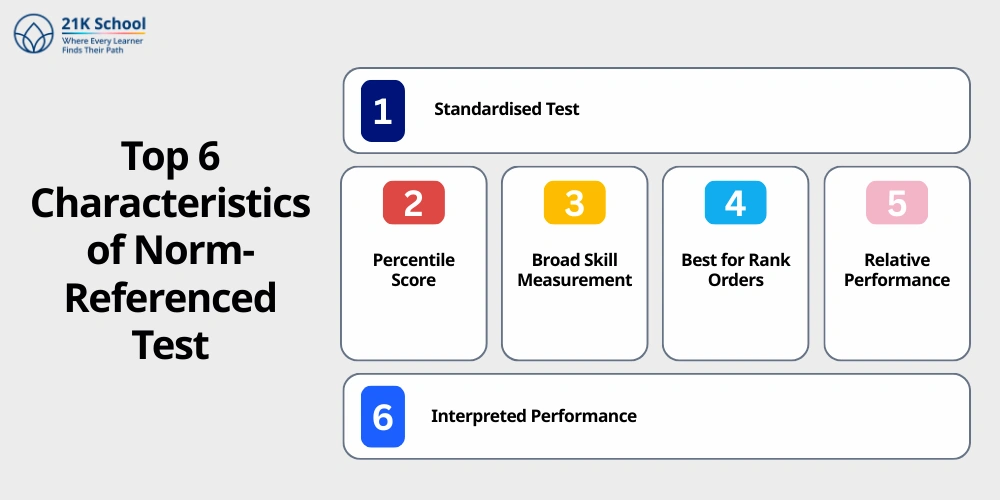
Norm-referenced tests are tests that compare the performance of an individual student to those of his or her peers, and they reveal relative ranking.
They are also objective, standardised and can be applied to discover the strengths, weaknesses and placement of instructional decisions. The norm-referenced test possesses the following properties.
1. Standardised Test
A norm-referenced test is often standardised, i.e., administered and marked in a standard, consistent and uniform manner to all test takers. This is a guarantee of equality and dependability and enables one to compare people.
Standardisation entails the use of fixed instructions, time constraints, and scoring processes, which are useful in the removal of bias and making results significant in the comparison of performance in a large population.
2. Percentile Score
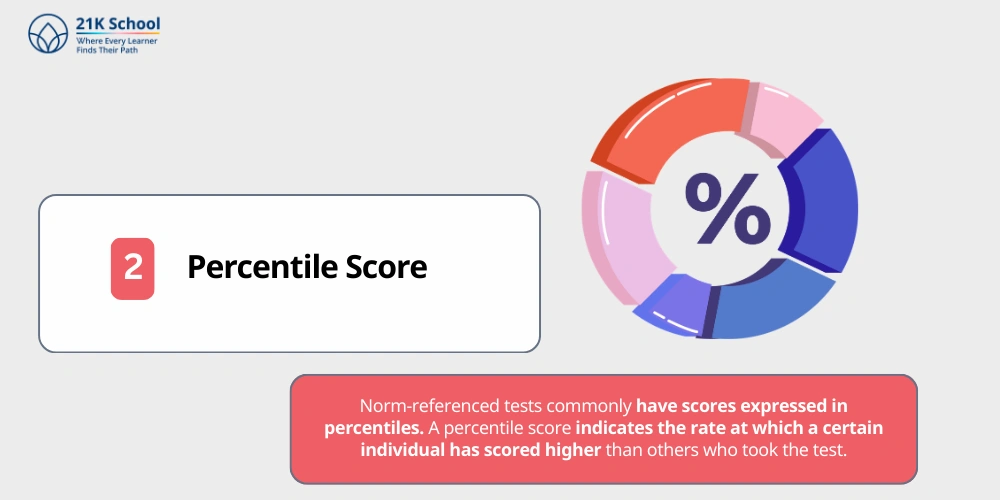
Norm-referenced tests commonly have scores expressed in percentiles. A percentile score indicates the rate at which a certain individual has scored higher than others who took the test.
Percentiles are used to realise relative position and not absolute performance, and hence it is easier to compare people within a population.
3. Broad Skill Measurement
These tests tend to test a broad area of skills instead of testing a certain subject. They allow a thorough picture of the abilities of a student by evaluating the overall skills , like reasoning, problem-solving , or understanding.
This generalised strategy enables the educators to evaluate the generalised performance of the individuals instead of analysing whether they have mastered specific areas of content.
4. Best for Rank Orders
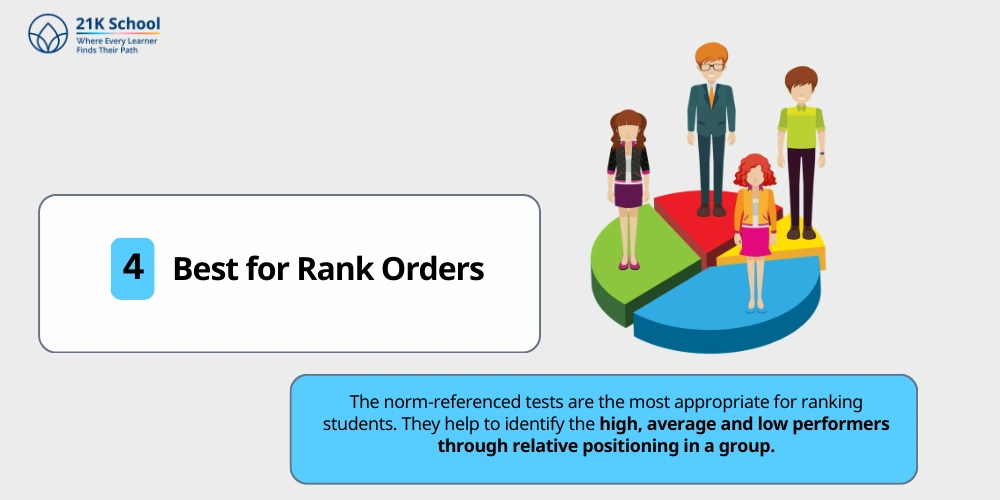
The norm-referenced tests are the most appropriate for ranking students. They help to identify the high, average and low performers through relative positioning in a group.
The ranking may be used in the selection process, the placement or eligibility decision making, in competitive examinations or scholarships, where the point is to differentiate the students without necessarily quantifying the exact knowledge .
5. Relative Performance
Norm-referenced testing is focused on relative performance. The performance of a student can also not make sense unless the student is in comparison with other students.
The success of a student is not determined by the number of mastered contents but through the order in the group, which indicates the differences in achievement and not the absolute skill.
6. Interpreted Performance
When using norm-referenced tests, performance is explained by being compared to the norm group. The scores of individuals are compared with the average or normal levels of performance, and the educators are able to establish the strengths, weaknesses and the percentile ranking.
The interpretation assists in decision-making , including the identification of gifted students or those students who require further assistance.
5 Main Types of Norm-Referenced Test

Norm-referenced tests are characterised by the performance of the student in comparison to that of other students. The different types, e.g., percentile, standard scores, and grade or age equivalents, make the results interpretation easy. The norm-referenced tests are the following.
1. Percentile Ranks
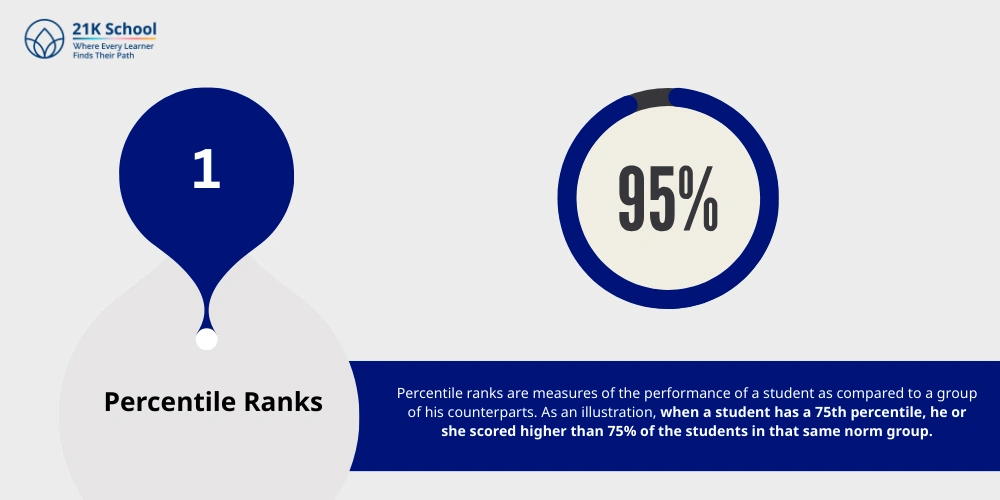
Percentile ranks are measures of the performance of a student as compared to a group of his counterparts. As an illustration, when a student has a 75th percentile, he or she scored higher than 75% of the students in that same norm group.
Percentiles are used, ranging between 1 and 99, to show the teacher the relative positions of the students, but this does not represent the actual difference in the scores of the students.
2. Standard Scores
Standard scores also convert the raw test scores to a standardised scale with a constant mean and standard deviation. Common ones include IQ scores or z-scores.
They allow the comparison of different tests and subjects. Conventionally, a normal score of 100 can be average. This technique illustrates the level of deviation of a student from the group mean in quantifiable units.
3. Stanines
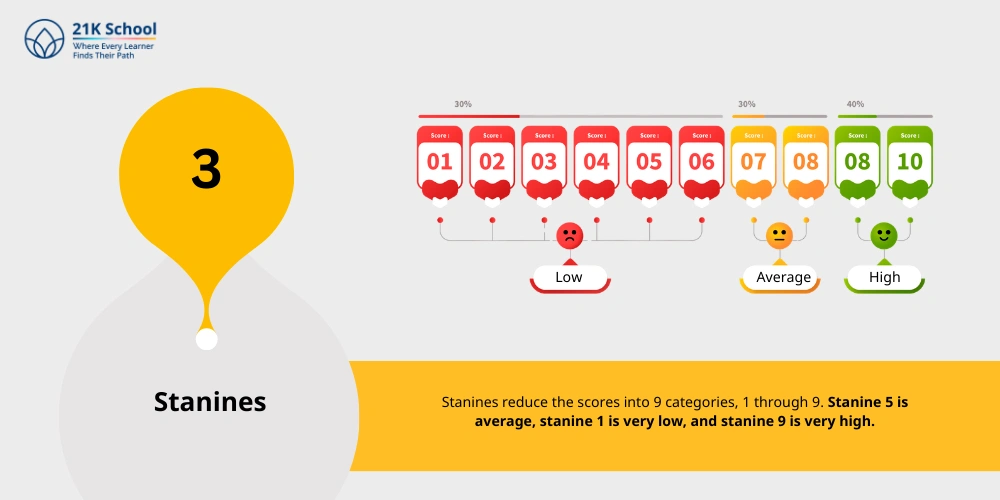
Stanines reduce the scores into 9 categories, 1 through 9. Stanine 5 is average, stanine 1 is very low, and stanine 9 is very high.
Each stanine signifies an interval of percentiles, and this makes the teacher know the performance without considering the actual marks. It can be used to speedily compare students, tests, or subjects and downplay minor differences in the scores.
4. Grade Equivalents
Grade equivalents are used to specify the level of school grade of a student based on the test scores. As an example, a 5.4 grade equivalent would mean that the student achieved the performance of an average student during the fourth month of the fifth grade.
They are not accurate indicators of grade mastery and cannot be taken literally, but they assist educators in having a relative understanding of the academic growth in relation to their peers.
5. Age Equivalents
Age equivalents indicate the average age at which the children attain the same test score. By way of example, an age equivalent of 9 years, 6 months implies that the student was doing the same as an average student of 9.5 years.
They give a rough idea of the developmental progress, although they are misleading because small variations in score might be interpreted as big differences in age equivalence.
6 Best Benefits of Norm-Referenced Test
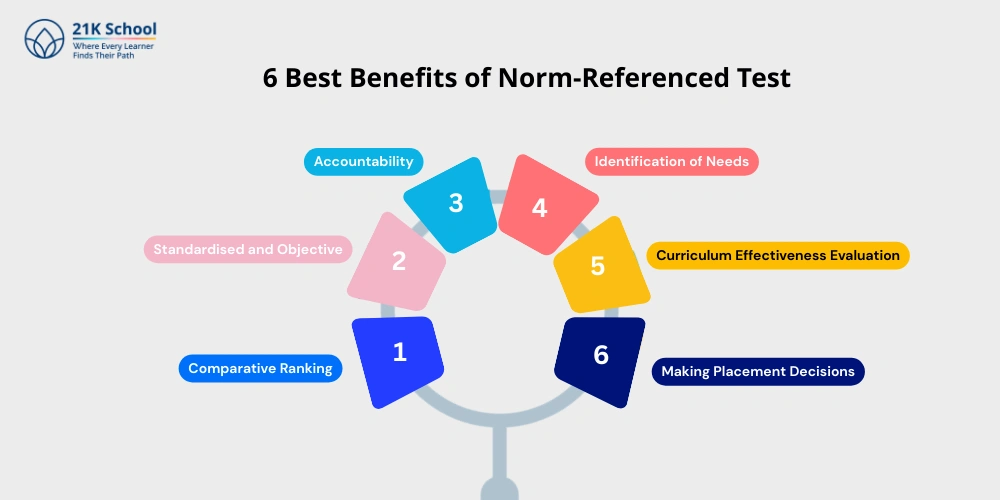
Norm-referenced tests are useful in the comparison of student performance with students of various levels, in the identification of weaknesses and strengths, in placement decisions, and in keeping education accountable by having objective and standardised measurements. The advantages of the norm-referenced test include the following.
1. Comparative Ranking
NRTs enable students to be put in comparison to others, with relative performance. Teachers are able to know the best students, average students, and those students in need.
Comparative ranking allows schools to see the position of a student in a broader community and therefore make informed choices in regard to teaching methods , assistance and recognition of achievement disparity among learners.
2. Standardised and Objective
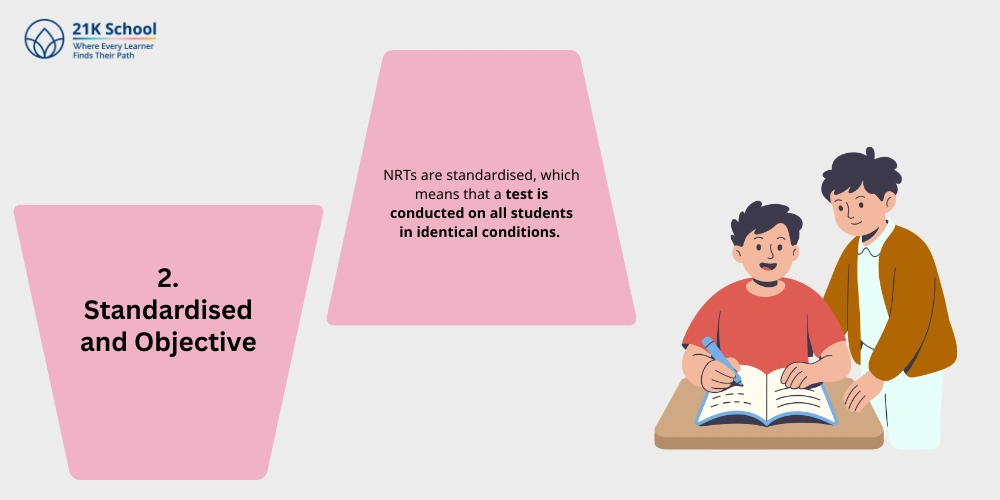
NRTs are standardised, which means that a test is conducted on all students in identical conditions. This will ensure objectivity, which limits the subjectivity of the teacher during scoring or perception.
Standardisation can be used to make fair comparisons between students, schools and regions, and this generates plausible information concerning performance. It also instils a standardised method of evaluating the outcomes of the learning method and leaves room for personal prejudices.
3. Accountability

The one would be norm-referenced testing, which would give objective information about the performance of the students and would put the schools, teachers and policymakers on their feet. They demonstrate achievement and areas of concern; teachers ought to be accountable for the performance of students.
This objective responsibility also helps increase the quality of teaching and policymaking and ensures that the education standards are being met in all groups of students.
4. Identification of Needs

The NRTs help identify the strong and the weak aspects of the students by comparing them with the other students. Students who are not performing to a high standard can be identified to receive special attention, and the good performing students can receive enrichment.
Through identification of learning or learning gaps, the teachers are in a position to create interventions, remedies or high achievement instructions to meet the needs of the individual learners.
5. Curriculum Effectiveness Evaluation
The outcomes of NRT show the quality of the preparation of students against national or regional standards. When most of them are underperforming, it could be indicative of inefficiency in the teaching strategies, the content delivered or the distribution of the resources.
The assessment of curriculum effectiveness assists schools in realigning programmes so as to enhance the learning process and also guarantee that students meet the anticipated standards in educational performance.
6. Making Placement Decisions
NRTs are useful in making advanced classes, special programmes, or remedial support. Comparison of scores of students with their peers will enable a school to identify those students who are ready to be enriched, accelerated or provided with additional assistance.
This makes a difference in that the educational placements are aligned with the abilities and learning needs of students, and relevant challenges and support are offered to help them achieve maximum academic growth.
6 Common Disadvantages of Norm-Referenced Test

Norm-referenced tests are limited, although they are required to rank. They are comparison-orientated and not mastery-orientated, do not apply well to all learners, do not fit the curriculum, and can be demotivating and misguiding. The following are the demerits of the norm-referenced test.
1. Only Focuses on Ranking
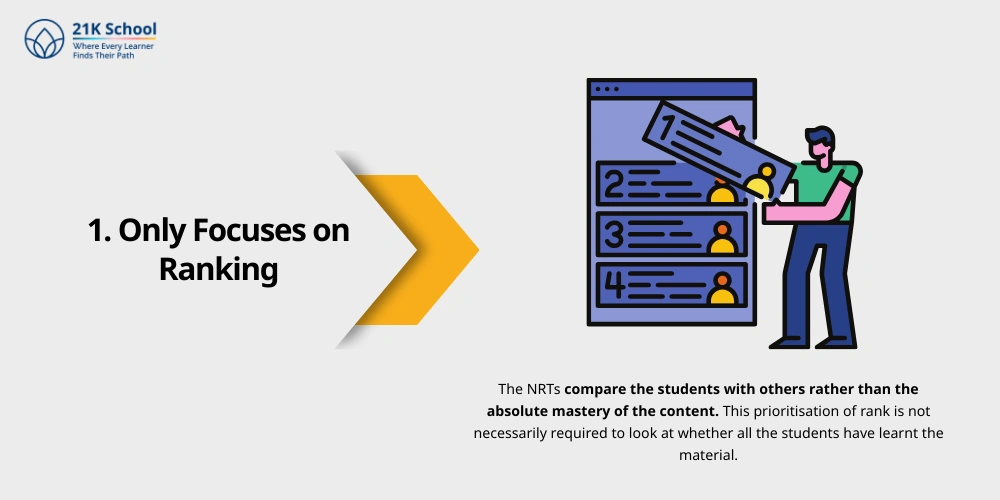
The NRTs compare the students with others rather than the absolute mastery of the content. This prioritisation of rank is not necessarily required to look at whether all the students have learnt the material.
The student may get a low score and be aware of most things, or a high score without in-depth knowledge. Positioning is not excessive, providing information about specific skills or knowledge gaps.
2. Limited Scope

Norm-referenced tests are more likely to have a low content area and skills. They would also focus on what is easy to measure, such as reading or mathematics, at the cost of being creative, critical or practical.
Such a limited scope means that they cannot identify exactly the level of intelligence of a student, his or her talents and potential, which leaves many educational outcomes to be left unexplored.
3. Not Suitable for Everyone

NRTs may not evaluate the students in the same way, as they differ in learning, language barriers, and cultural differences.
The poor students are the students with disabilities, who are non-native or any various other backgrounds, since tests assume that the field is levelled. This can lead to incorrect comparisons and unfair evaluation of the real student capabilities and potential.
4. Inaccurate Norms
The validity of NRTs is determined by the representativeness of a norm group. In case the norm sample is outdated, very small, or unrepresentative, scores can be misleading as to the relative performance of students.
Misleading norms may lead to wrong inferences, including underrating or overrating skills, which influence placement, support and curriculum choices.
5. Mismatch of Curriculum

NRTs are standardised and might not conform to the local curriculum. In some cases, students may score low even though they have mastered the material that was required of them, just because the test focuses on the aspects that have not been taught.
Such a discrepancy decreases the fairness and relevance of the test as an invalid measure of the actual academic performance of a certain school or programme.
6. Demotivation of Students

Students who are always scoring low might be demoralised or nervous. The comparison can be constant with peers and hence decrease self-esteem and desire to study, particularly when results are overemphasised.
The high performers might also experience unnecessary pressure. NRTs are capable of developing a competitive atmosphere that hinders intrinsic motivation and focuses more on scores than on the learning process.
Best 5 Examples of Norm-Referenced Test
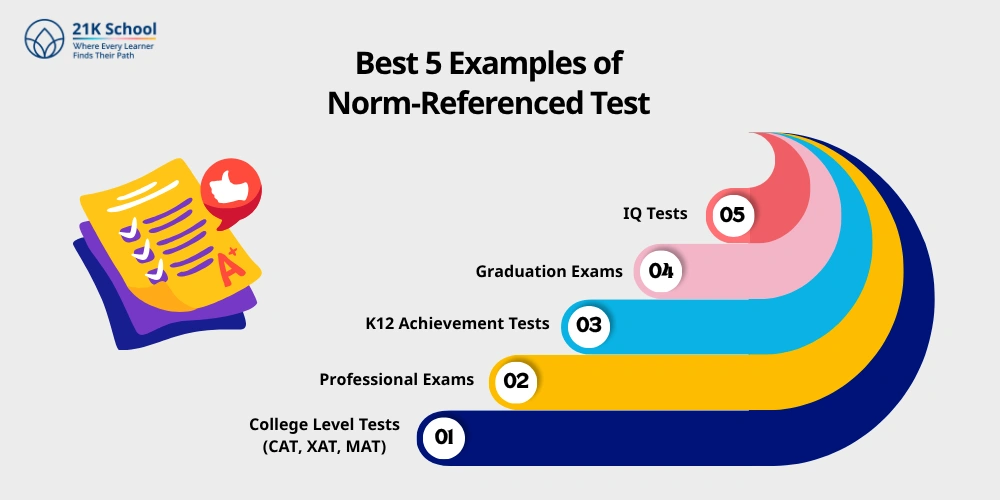
The norm-referenced tests are popular in education and business circles. College entrance exams (CAT, XAT, MAT), professional certification tests, achievement tests of K-12, graduation tests, and others, which compare the performance of an individual to a greater group, are examples of this kind. The examples of the norm-referenced test can be checked below.
1. College Level Tests (CAT, XAT, MAT)

These tests put students in competition to enter competitive colleges or management courses. As an illustration, the CAT (Common Admission Test) ranks candidates across the country, thus assisting the high achievers to get scarce positions.
On the same note, XAT and MAT assess the aptitude, reasoning, and quantitative ability of the applicants as compared to others, thereby rendering these tests norm-referenced in nature.
2. Professional Exams

The tests that compare the members of a normative group include professional certification tests, like the CPA (Certified Public Accountant) or the GRE subject tests.
It is not just the minimum standards but relative ranking which will help the employers or the institutions to select the most competent professional in the field that is a competitive field.
3. K12 Achievement Tests
They are standardised school tests, such as SAT subject tests or even state-level achievement tests, which are administered to determine the academic performance of the students in comparison with the rest of the students.
The tests help identify the bright students, underachievers and the overall trend of the learning behaviour of the students throughout the grades to make decisions on instruction and intervention at the schools.
4. Graduation Exams

Certain norm-referenced tests are administered at high school or college level, and rank the students in such a way that honours, or admission to higher-level courses or other prizes, are awarded.
As an illustration, the use of percentile-based graduation tests reveals the performance of a student in comparison with the national or state-wide performance of other students and not simply showing whether he or she passes.
5. IQ Tests

Intelligence Quotient (IQ) tests, such as the Stanford-Binet or Wechsler tests, are tests that compare the cognitive capabilities of an individual to a standardised age group.
The results are in comparison to the average performance of peers and are usually expressed as a mean of 100, which would indicate how an individual is performing, cognitively, in comparison with other individuals of their age group.
Norm-Referenced Test vs Criterion-Referenced Test
Both the Norm-Referenced Test and the Criterion-Referenced Test are concepts that vary as far as the process of assessment is concerned.
These tests have different purposes and meanings. Norm-referenced tests refer to the tests that are used to compare students to others, whereas the criterion-referenced tests are the tests that are used to determine the level of skills or standards mastered, which helps in determining level of achievement in learning and teaching.
However, many tests combine both the test to assess students performance based on information.
| Aspect | Norm-Referenced Test | Criterion-Referenced Test |
| Definition | Norm-referenced test is a test that makes a comparison of a student and other students. | Criterion-referenced test refers to a test which compares the performance of a student with a set of standards or learning objectives. |
| Purpose | A norm-referenced test is aimed at ranking students and demonstrating relative performance. | The criterion-referenced test is used to find out whether a student has mastered a particular skill or concept. |
| Focus | The norm-referenced test is concerned with the comparison of students. | The criterion-referenced test is concerned with personal achievement and mastery. |
| Scoring | Norm-referenced tests are reported in percentiles, ranks or grades in accordance with group performance. | Scores in a criterion-referenced test are used to indicate the meeting of learning outcomes or criteria. |
| Example | IQ tests, SAT, and competitive exams. | Unit tests, driving tests, skill-based assessments. |
Conclusion
Norm-referenced tests are those tests that judge the students based on the performance of other students and focus on relative performance, not on mastery. They are objective and standardised and help in the selection, placement and also in the discovery of strengths or weaknesses.
Relative performance can be seen in such scores as percentiles, stanines and grade equivalents. Nevertheless, NRTs do not always test particular skills, can dishearten certain learners and may not correlate with local curricula.
Combined with other tests, they are useful in making educational judgments and determining where a student ranks among others.

You may also want to read

What is CBSE? Full Form, History, Structure & Key Benefits

- Last updated on: 25 Mar, 2026
- 14 min read