


To be honest, I was someone who used to avoid statistics during my graduation period just because it involved maths.
Later, I realised that statistics was a part of our education system. Statistics help you gather data, analyse it, and interpret it to make adequate decisions in general life and in the educational journey.
In the education system, the government, teachers, administrators, and educational institutions use these statistics to improve their teaching methods and find faults in the previous ones.
In this article, we shall learn about what statistics is, but after that, we will understand the importance of statistics in education.
Contents
- What is Statistics in Education?
- Importance of Statistics in Education
- 1. Understanding Student Performance and Learning Outcomes
- 2. Enhancing Instructional Plans and Teaching Styles
- 3. Data-Driven Decision Making
- 4. Development and Research
- 5. Performance Monitoring
- 6. Assessment, Evaluation, and Grading
- 7. Educational Planning and Policy-Making
- 8. Quality Assurance and Institutional Effectiveness
- 9. Professional Development of Educators
- 10. Enhancing Student Statistical Literacy
- Role of Statistics in Educational Research
- Final Comments
What is Statistics in Education?
In education, statistics is the systematic act of gathering, storing, analysing, interpreting, and reporting data concerned with teaching and learning .
Such information can be in the form of examination results, attendance, student comments, and graduation rates.
There are different levels where educational statistics can be implemented, such as classrooms, institutions, and national education systems.
On an institutional level, student outcomes are evaluated to find if the teaching methods are working properly.
Educational administrators and policymakers change the pedagogical approaches to enhance these learning outcomes on a national level.
Importance of Statistics in Education
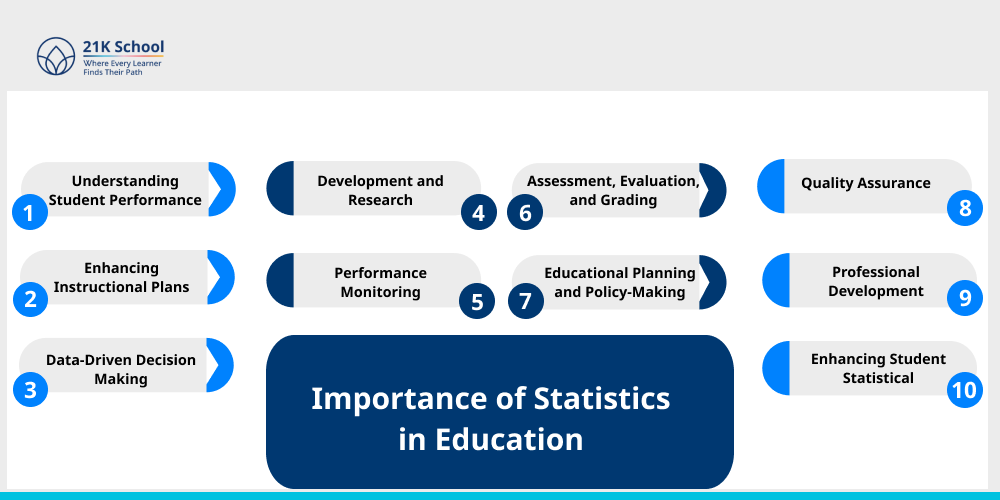
Statistics is utilised in many areas of educational development. This is why the importance of statistics in education should be mentioned more often, considering the following:
1. Understanding Student Performance and Learning Outcomes
Statistics enables teachers to take a step beyond the superficial data on student success.
Using statistical data, the teacher can determine patterns of learning, misconceptions, and learning trends among students.
As an example, statistical comparison can provide information about the presence or absence of performance gaps among various groups of students. It can also determine whether these gaps are increasingly expanding or narrowing over time.
After knowing the statistical results, educators can modify learning strategies to enable learners to study well and attain good marks in future.
2. Enhancing Instructional Plans and Teaching Styles
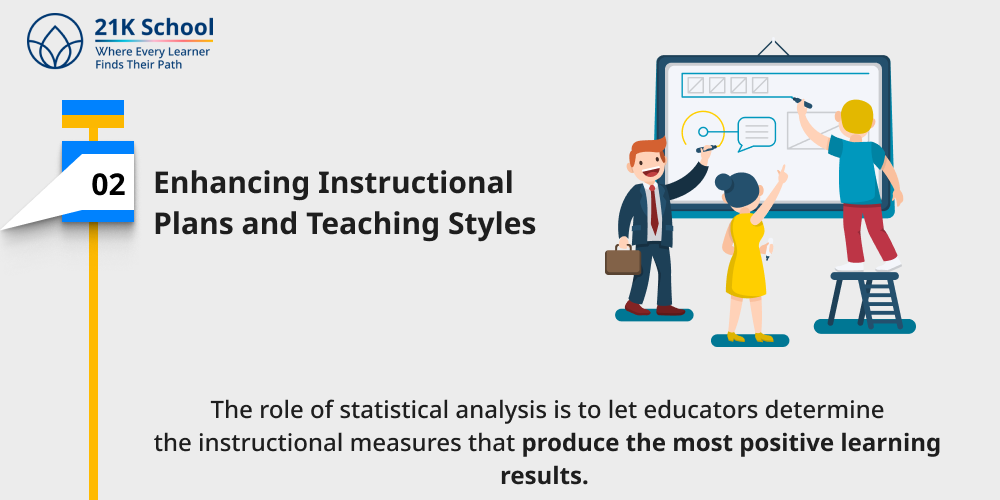
Feedback is becoming central in modern teaching with the assistance of data. The role of statistical analysis is to let educators determine the instructional measures that produce the most positive learning results.
Through analysis of the correlations between instructional strategies and achievement, teachers may reform lessons and implement different evidence-based instruction.
In the long run, statistics assist in setting up teaching methods which are innovative and effective at the same time.
3. Data-Driven Decision Making
The decision-making process in education has changed its perspective to evidence-based.
Statistics provide leaders and administrators in schools with the ability to make good decisions on how to allocate resources, classes, programs, and to adopt technology in education .
Decisions made based on data analysis allow institutions to explain decisions, reduce inefficiencies, and obtain measurable achievements. This creates a sense of confidence among parents, teachers, and learners while preferring an educational setting among others.
4. Development and Research
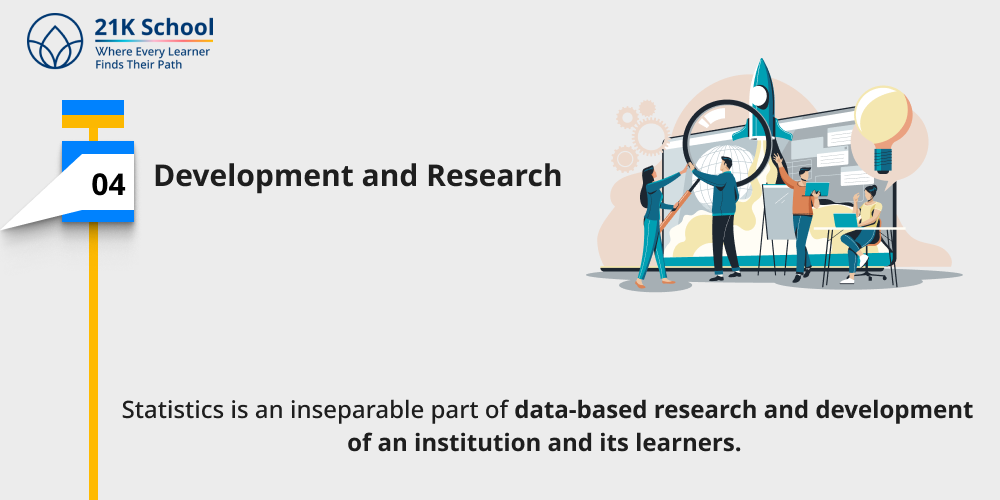
Statistics is an inseparable part of data-based research and development of an institution and its learners. Through the raw data collected, the policymakers reach a directional agenda about the changes needed in the curriculum.
It also holds the system accountable by predicting the learning outcomes and learners’ overall performance based on the level of facilities and strategies used.
5. Performance Monitoring
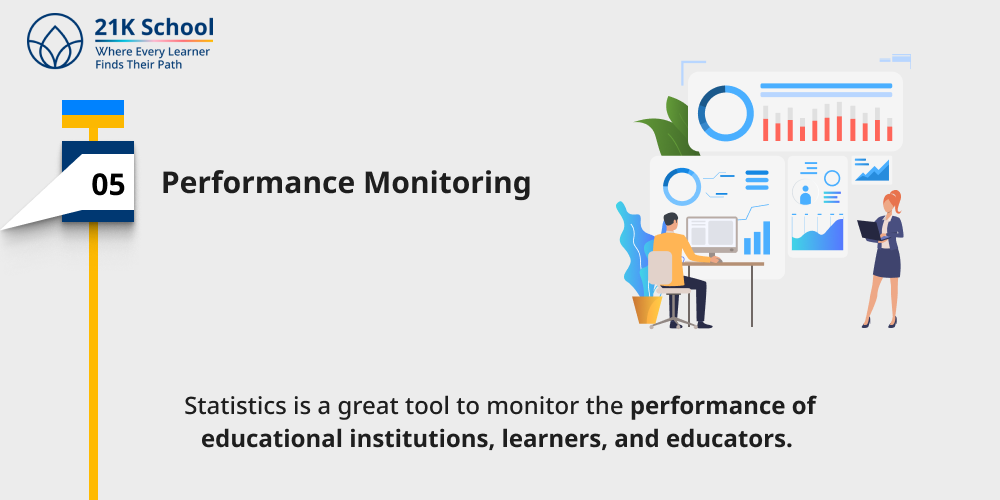
Statistics is a great tool to monitor the performance of educational institutions, learners, and educators.
Final amendments in professional training of teachers and learners are made to everybody so that they can show their best potential and align with quality educational outcomes.
Statistics can even analyse the particular areas that need improvement. This saves time, money, and effort.
6. Assessment, Evaluation, and Grading
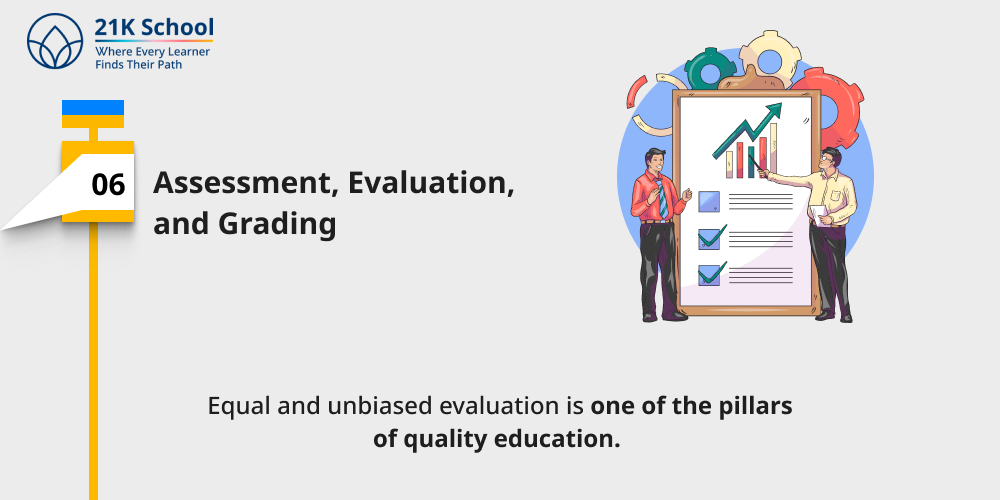
Equal and unbiased evaluation is one of the pillars of quality education .
Statistics help in the development and evaluation of assessment tools, assuring reliability and validity.
Statistical analysis aids educators in identifying bias, verifying assessment difficulty, and setting grading standards.
This makes evaluation of student learning true to the test and evaluation procedures by making them transparent and justifiable.
7. Educational Planning and Policy-Making
At the institutional level, statistics is very important in the planning and policy-making in education.
Statistical outcomes assist governments in predicting increases in enrolment rates, employability, retention rates, and infrastructure demands.
Results of data analysis are used in policy-making, which involves allocation of funds, curriculum reform, teacher recruitment, and access to education.
Educational structuring would lack direction, and stakeholders would have only a vague idea about handling future challenges without statistics.
8. Quality Assurance and Institutional Effectiveness
Statistics are useful in providing quality assurance to institutions.
Accreditation and evaluation are based on the information related to student outcomes and course performance, so that it results in stakeholder satisfaction.
The statistical evidence can be used to enable institutions to identify their strengths and weaknesses. The administrators can then compare performance with the standards to have various methods of continuous improvement.
This planned assessment increases the education quality and trust in society towards learning institutions.
9. Professional Development of Educators
One of the major predictors of student success is teacher effectiveness.
The statistics are used to establish what professional development is needed, based on the classroom outcomes, observation data, and feedback mechanisms.
Evidence-based professional development programs make sure that development training is in accordance with the real needs of learners.
Consequently, teachers are better placed to accommodate emerging learning requirements.
10. Enhancing Student Statistical Literacy
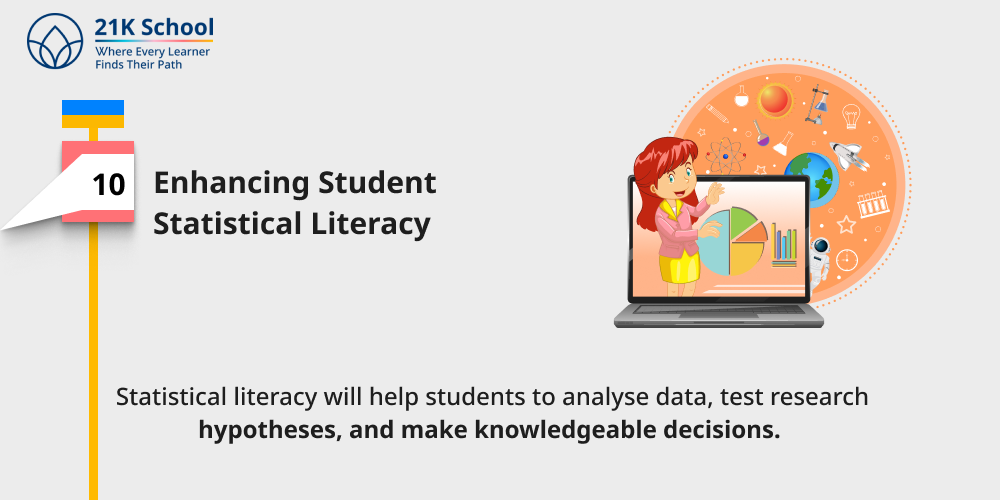
In addition to institutional gains, statistics is crucial in enhancing the qualities of analytical and critical thinking in students.
Statistical literacy will help students to analyse data, test research hypotheses, and make knowledgeable decisions.
Given the volume of data that surrounds us, we need statistical knowledge to be a responsible citizen and lifelong learner.
Role of Statistics in Educational Research
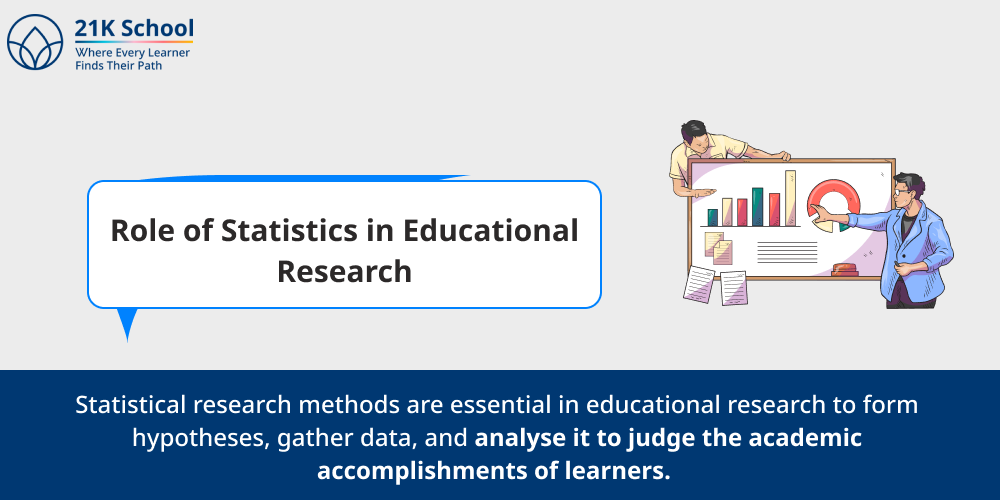
Statistical research methods are essential in educational research to form hypotheses, gather data, and analyse it to judge the academic accomplishments of learners.
Descriptive statistics present an overview of educational data, whereas inferential statistics help a researcher to analyse the results of a sample population.
It helps to modify raw data into simple, actionable information to change the teaching strategies or assessment tools. It also directs higher authorities to look at the trends in dropout rates and literacy rates to predict the latest changes needed in the schools and universities.
Educational research would be less rigorous and informative of its intended purpose without statistics.
Final Comments
You must have noticed statistics everywhere around you in present times. Knowing their importance in education is equally significant. This is why students should be introduced to statistics from an early age and get familiar with it
Statistics is used to improve our educational systems, and the facilities administrators and policy-makers want to provide in the coming years. Not just that, the general public can rely on this data to ask questions for the commencement of better policies and teaching methods that would prepare their children for a better future.

You may also want to read
Understanding the Aims and Objectives of Physical Education
- Last updated on: 02 Sep, 2026
- 7 min read