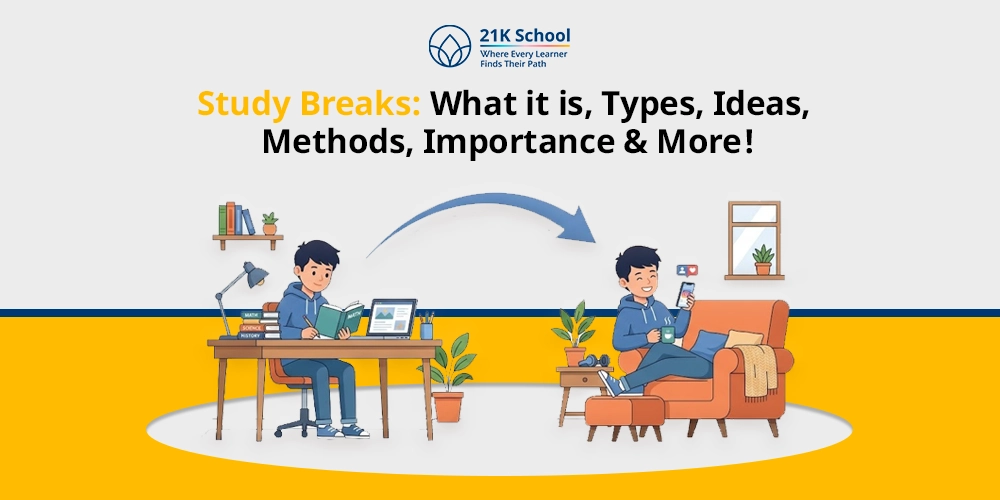


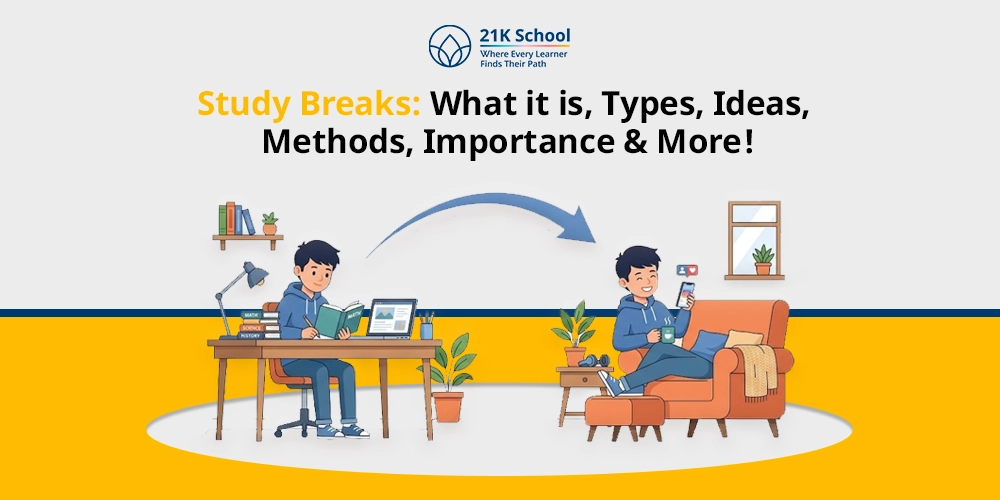
Taking breaks is also important in the learning process and in eventual academic success. Studying without a break may cause mental exhaustion, lack of concentration and poor information retention.
Well-planned breaks can be used to refresh the mind and enhance concentration in child and productivity. Short walks, stretches, or mindful relaxation are activities that will enable the brain to take a break and process information.
With balanced time spent on concentrated studying and taking a break, students may study more and be motivated during the long studying hours and exam sessions.
Contents
What is the Perfect Study Break Should Be Like?
The optimal study break is short, invigorating and meaningful. It should not be longer than 5-15 minutes, which is not very long to forget what you are studying.
The relaxation would involve low-energy, restful activities like stretching, walking, taking water, breathing deeply and listening to relaxing music.
But please, do not do anything that overstimulates you in endless scrolling or gaming. A good study break may alleviate student stress, assist you in focusing again, and get you re-energised and more willing to resume studying and in a clearer state of mind.
5 Types of Study Breaks
There are various types of study breaks, which allow students to refresh the brain, increase attention, and enhance efficiency in case of a long study session. The types of study breaks can be checked below.
1. Micro Study Breaks
Micro pauses are short pauses that last one to five minutes. They make sure that mental fatigue is not experienced in the scenario of prolonged study hours. The small activities like closing your eyes, flexing your arms and breathing will reawaken your mind.
These brief breaks will improve focus, reduce study stress, and make it very easy to be fully concentrated throughout without disruption when studying.
2. Active Study Breaks
Active study breaks involve body and brain movement in order to refresh the body and brain. Walking, light exercises, yoga, or stretching exercises are all activities that promote blood flow besides reducing the consequences of sitting at a single point.
Such breaks help to reduce stress, sharpen focus, and improve moods, and it is less difficult to get back to studying with a fresh focus and motivation.
3. Passive Study Breaks
The passive study breaks are concerned with rest and relaxation without any physical activities. Examples entail listening to some calming music, meditation, taking a short nap or mindfulness. These are the pauses that enable the brain to relax and to rejuvenate after doing lots of thinking.
Passive breaks can also be particularly useful when one is mentally drained or when one is becoming overwhelmed with complicated study content.
4. Creative Study Breaks
Imaginative study breaks enable students to be creative in some form, such as drawing, writing, colouring or playing musical instruments. The use of creativity exercises various sections of the brain, minimises stress, and clears the mind.
These are the breaks that help to increase motivation, avoid boredom and think in a flexible manner before going back to academic work.
5. Social Study Breaks
Social study breaks involve interaction with other people, e.g. chatting with friends, family members or classmates. It can be just a few words, laughing or sharing ideas, and it will make one feel less lonely.
This can be healthy since stress can be alleviated, which increases emotional intelligence, so that studying can be viewed as less tiring and more balanced when done in a short-term fashion and positively.
Top 10 Study Break Ideas
Ideas of study breaks provide easy and rejuvenating things to do that restore your energy and stress, and allow you to be more focused as you resume studying. Some ideas for study breaks can be found below.
1. Do Yoga
Yoga helps to stretch your muscles, enhance posture and release tension formed due to sitting on the chair most of the time. It is also a stress reliever since movement is accompanied by controlled breathing that calms the mind.
The simplest 5-10-minute routine may increase flexibility and improve focus as well as provide your brain with a soft switch, which will help you resume your studying more awake and relaxed.
2. Drink Water
It is important to stay hydrated in order to maintain brain activity and energy. Dehydration may lead to tiredness, headaches and lack of concentration. Water intake during breaks also replenishes body fluids lost in the process of studying and boosts alertness and digestion.
Mild dehydration may have an impact as well, and can blur memory and attention, and so drinking water regularly keeps your body and mind in an optimum state to learn faster and remember effectively.
3. Short Walk
Even a walk as short as five to ten minutes will boost blood circulation to the brain and muscles. It makes your mind less tired, wakes up your mind and gives you a natural source of energy.
Outdoor activities or walks are also exposing you to sunlight, which enhances mood and vitamin D. It is a simple, healthy method of taking breaks with long study periods and coming back with a fresh mind.
4. Do Breathing Exercise
Deep breathing will relax the nervous system and ease stress. Such techniques elevate oxygen concentration in the brain and enhance concentration and alertness.
They aid in retarding racing thoughts and bring clarity of mind. Anxiety can be minimised by only a few minutes of controlled breathing, and tackling complicated topics or study loads becomes less difficult.
5. Have a Healthy Snack
Healthy snacks, such as nuts, fruits, or yoghurt, restore energy and stabilise the level of sugar in the blood. Eat foods that do not result in energy crashes, such as sugary or oily foods.
Health snacks are good sources of nutrients which boost brain functionality, memory and concentration. Having a little snack to feed your body will further send the signal to your head to take a short break and will overall increase your productivity in your studies.
6. Solve Puzzles
Doing a puzzle such as a crossword, Sudoku, or brain teasers makes your brain work, unlike studying. It improves problem-solving skills, logic and creativity, as well as providing a pleasant intellectual challenge.
Puzzles give you a brief and concentrated rest that enlivens your brain without bombarding it. This modification in mental action will stop burnout and keep your mind alert to go back to your studies.
7. Power Nap
Even a 10-20 minute nap can significantly increase alertness, memory and learning efficiency. Naps keep you awake and do not go into deep sleep, and thus alter your rhythm.
Power naps will enable the consolidation of information and recharge on a quick note so that you remember what you have studied. They come in handy, particularly on long study days or when concentration is in danger of being lost by tiredness.
8. Talk to Your Friend or Family
Emotional support, lessening stress, and raising mood are results gained through social skills. Taking a study break to talk to your friends or family will revive your mind and act as a reset button. Even short discussions can create a positive effect, reduce stress, and avoid loneliness.
Both exchanging ideas or funny jokes will promote laughter and rest to get back to studying with more enjoyment and productivity.
9. Stretch
Exercise is useful in loosening muscle tension and stiffness, which occurs as a result of long sitting. It improves the circulation of blood and posture, as well as prevents pain and fatigue.
The neck, shoulder and back stretches will leave one in a refreshing mood, and you will be in a better position to concentrate. Stretching also lets your brain have a little refresh, relieves stress and makes your mind more alert to continue studying.
10. Take a Shower
A shower cleanses your body and mind and makes you forget about fatigue and lethargy. Showering under hot water will relax tensed muscles, whereas showering under cold water can wake up and make one more active.
Taking a shower in between studying sessions makes you feel refreshed, clean and inspired. It is a mood boost, de-stressor, and brain pre-cleanse that leaves you better prepared to study more productively and actively.
Top 5 Importance of Study Breaks
The significance of the study breaks is that they prevent burnout, enhance concentration, enhance memory retention, and enhance motivation over the long duration of studying. The significance of a break in studying is as follows.
1. Maintains Health-Wellbeing
Breaks in the course of the study are useful to preserve both physical and mental health of children. . Long hours of sitting and studying may lead to headaches, eye strain, body pain, etc.
Regular rests enable the body to rest, enhance posture and refresh the mind.
2. Keep Students Active
Frequent breaks in studying will encourage the students to move around as opposed to sitting in one position. Light exercises like taking a walk, stretching, or other minor physical activities increase blood circulation and prevent stiffness.
Active break helps to increase energy, clarity, and also allows students to get back to studies after having refreshed, motivated, and more comfortable to study longer hours.
3. Focuses on Productivity
Breaks in the study enhance productivity since mental overloading is avoided. The constant learning process may decrease productivity and hinder comprehension. Breaks should be short and timely so that the brain can process information more actively.
Returning after a break helps students to be more focused, less prone to errors and achieve more in less time, which leads to improved learning methods and high grades.
4. Reduces Fatigue and Burnout
Learning can be tiresome and cause burnout, especially when one spends too much time learning. Relaxation may be provided by breaks to enable the brain to have a rest and prevent emotional depletion.
Resting breaks will help to re-energise, get rid of frustration, and maintain a learning motivational level. This renders the studying process much easier, and the students do not get overwhelmed, hence remain consistent.
5. Reduce Mental Stress
Breaks during study are relevant in alleviating mental stress. Examination pressure, deadlines and work pressure can be a source of anxiety.
Breaks enable the students to rest, relax, and have a way to clear their minds. This can reduce the level of stress, elevate mood, and assist in better focus, and the study process becomes a much better and less stressful one.
Top 5 Study Break Methods
The study break techniques give you organised means of taking a break, refreshing your brain and improving concentration, productivity and overall efficiency. Here you may examine the top study break techniques.
1. Pomodoro Method
The Pomodoro Method involves 25 minutes of studying followed by a 5-minute break.
Such a method helps to control attention, time management and mental burnout. The mind is refreshed with breaks, and the bulky study work becomes less threatening and less stressful.
2. 52-17 Rule
In a 52-17 rule, a person has to learn for 52 minutes and rest for 17 minutes. Such a balance allows an individual to be extremely attentive during the time spent studying and to be relaxed at the right time during rest.
There will be no need to rush in terms of rest, as the long rest will help to restore energy, reduce fatigue, and improve productivity in general, which is suitable in the areas of work that require full attention.
3. 90 Minutes Ultradian Rhythm Method
It is a process that is based on the body’s natural energy. The students learn for 90 minutes and then take a break of 20-30 minutes.
It favours profound learning, innovativeness, and clarity of mind. This is because when natural rhythms are respected, the burnout is reduced and memory is better retained, as the brain will have time to rest.
4. 50-10 Method
The 50-10 technique will include 50 minutes of study and a 10-minute rest. It gives a balance between concentration and rest.
The technique is effective in longer sessions of study, which enables pupils to be alert, to take the strain off their eyes, and to be at a constant, healthy productivity without the feeling of a tired mind.
5. Flexible Study Method
The flexible study approach enables students to be able to change the time they study and take breaks depending on how much energy they have and the difficulty of the work.
It encourages self-directed learning and lessens stress. Listening to their mind and body, students will be able to prevent burnout and remain motivated, as well as find a studying habit that fits them best.
However, every individual has their own learning method and style, and no single approach is equally effective for everyone.
Top 8 Things to Do in Study Breaks
Study breaks can be spent relaxing, moving around, and refreshing your mind to be able to get back to studying in a focused state. These are the things that you can do during your study breaks.
1. Physical Exercise
Study breaks that involve physical exercise also refresh the body and mind. It can be as simple as stretching, jumping jacks or yoga, which make tiresome long-seat posture less stiff.
Physical activity elevate energy and elevate mood and concentration, allowing students to get back to studying feeling dynamic, more alert and focused on their work.
2. Relaxation Activities
The relaxation exercises may also be applied to calm down the mind and relieve the stress of studying. Deep breathing, light stretching, or mindfulness techniques can help the brain to relax. The exercises minimise stress levels, promote muscle relaxation, and improve emotional balance.
Relaxation can be used during breaks, and breaks help students to refocus and look at their studies in a better and more relaxed state of mind.
3. Go for a Walk
Taking a study break walk will give a person some fresh air and a slight form of physical activity. Exercise helps in clearing the mind, eye strain and enhancing creativity.
It improves circulation as well as energy levels. Even taking a brisk walk will help you get your mind off what you were doing, and it is not so difficult to resume studying, having a fresh mind.
4. Social Activities
The social activities occur during study breaks as brief discussions with a friend or family member. Communicating, laughing, or discussing something can make the mood better and lessen stress or loneliness.
Such interactions are emotional and relaxing. Short social interactions enable the students to be rejuvenated and ready to continue their studies.
5. Do Meditation
Study breaks can be performed in order to relax the mind and enhance concentration. Anxiety and mental clutter are minimised by simple breathing or mindfulness meditation.
It enables the brain to unwind and revert. Meditation break sessions, which are regular, allow one to control their emotions better and increase their focus, as well as allow students to resume studying with a calm and balanced mind.
6. Power Nap
Power nap can be used in taking a study break to refresh energy and enhance alertness. Brief naps of 15-20 minutes can be used to overcome fatigue, but they are not groggy.
Power naps enhance memory, concentration and mood and are therefore particularly beneficial when completing long study sessions or when tired of the mind.
7. Listen to Relaxing Music
Study breaks are best accompanied by relaxing music to relax the mind and thereby alleviate stress. Low-key instrumental or relaxing music may reduce anxiety and elevate mood. Music enables the brain to relax and get some rest.
Students usually become less tense, concentrated and prepared to study again successfully after the break.
8. Organise Your Work
Planning study time assists in providing some sense of clarity and minimising stress. Time management is enhanced by organising notes, systematising material, or scheduling. It eliminates confusion and wastage of time in the future.
An organised workspace allow the students to go back to studying with more control and be better equipped.
What not to do in Study Breaks
What to avoid in your study breaks are habits that run out of energy, waste your time and lose focus rather than rejuvenating you. These are what students should not do when taking study breaks.
1. Don’t Watch Television
Watching television can be distracting during study breaks and time-consuming. It tends to increase breaks that are not scheduled and discourages the desire to resume studying.
The television also hyperstimulates the brain, and it becomes difficult to get back on track. Students can also be tired of watching television, experiencing laziness and lack of concentration, rather than being refreshed.
2. Avoid Long Naps
Students can be sleepy and groggy because of long naps to study. Excessive sleeping interferes with the study timetable and productivity.
It also has the capacity to affect nighttime sleep patterns. Smaller power naps are better as it re-opens the mind without causing one to feel tired and to feel that it is difficult to resume the studies.
3. Avoid Screen Time
During breaks, one may spend so much time on the screen, which may overwork the eyes and the brain. Mental rest is reduced by social media on phones, tablets or laptops.
Screen time for kids is therefore avoided, and helps the brain actually rest and enhances concentration once back to studying.
4. Avoid Multitasking
Study breaks affect rest effectiveness through multitasking. Attempting to do everything simultaneously does not allow the mind to rest well.
It is able to cause stress and confusion in the mind. Breaks during the study should be easy and relaxed, and the brain should have a complete rest before engaging in academic activities once more.
5. Avoid Chatting with Others
Students may lose focus and squander time during long or extended chatting durations during the study breaks. Discussion can be carried further than the break and lose focus.
Although brief conversations are not an issue, over-talking may decrease concentration and enthusiasm. The relaxing breaks are very quiet and allow students to resume studying with a better focus.
6. Don’t Eat Junk Food
It is possible to become tired and have low concentration after eating junk food in between studies. High-fat and high-sugar foods cause energy crashes.
They also have an adverse long-term impact on health. Eating healthy foods such as nuts or fruits as snacks throughout the breaks helps in energy preservation and in enhancing concentration in the study.
Final Ending
Taking a break during studies is not a way of being distracted but rather a necessary element of learning. They are also useful in terms of physical health, decreasing mental stress, and enhancing focus and productivity when properly planned.
Various kinds and ways of study breaks provide the student with the opportunity to select what fits his or her energy requirements and study requirements.
The balanced learning sessions and regular rests are the things which help a person to get a good academic performance, and in the long term, it leads to a better understanding, better memory and better academic success.

You may also want to read