

The sensory activities are important in managing people with autism as they help them to explore, process and respond to sensory data more efficiently.
These activities are aimed at using the senses-touch, sight, sound, movement and smell in an organised and pleasing manner.
Sensory play has the potential to enhance attention, emotional intelligence, motor development, and communication skills and minimise anxiety and sensory overload in everyday life.
Contents
What are Sensory Activities for Autism?
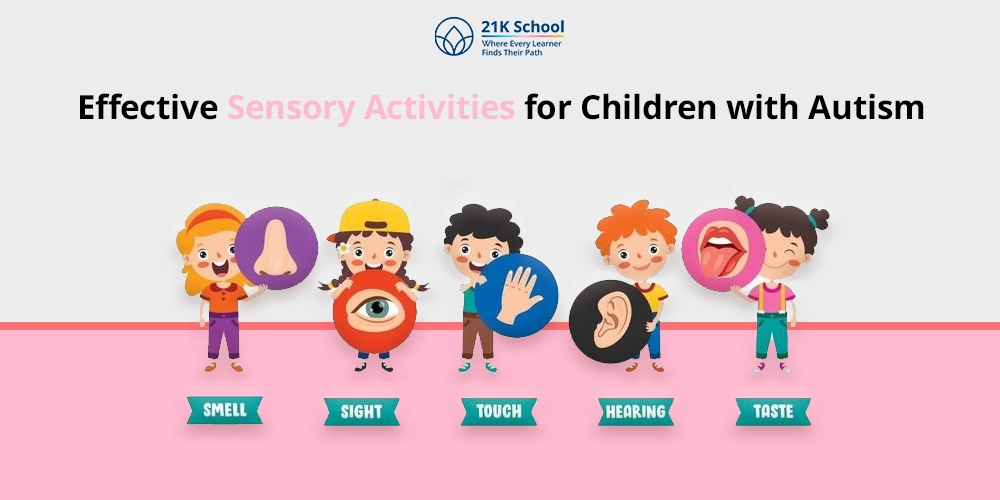
Autistic sensory activities are aimed at experiences which serve to excite and to entertain the senses of touch, sight, sound, movement, taste, and smell. These activities assist people with autism in responding more to sensory input.
They are capable of enhancing attention, coordination, emotional regulation and social interaction, besides allowing them to mitigate students stress, anxiety and sensory sensitivities safely and interestingly.
Top Engaging Sensory Activities for Autism
Sensory activities assist autistic people to explore their senses, enhance concentration in kids and to manage emotions. A broad selection of activities to participate in keeps learning, relaxing, and having meaningful interaction in an entertaining, supportive manner.
1. Tactile (Touch) Activities
Such activities are aimed at the sense of touch, as they allow an individual with autism to experiment with the feeling of various textures and sensations.
Tactile play is known to aid sensory processing, fine motor, and emotional regulation and may minimise anxiety. Some of the tactile activities can be checked below.
1.1. Sensory Bins (rice, beans, sand, water beads)
Sensorial bins enable physical exploration of different textures and materials. Pouring, sorting and scooping assist in the enhancement of fine motor skills, concentration and sensory tolerance.
They are also helpful in stimulating curiosity, imaginative play and peaceful participation in a controlled and relaxing environment.
1.2. Playdough
Playdough offers resistance and flexibility, which enhances the strength of the muscles and coordination of the hands. The process of squeezing, rolling and shaping dough presents a relaxing form of tactile stimulation and prompts creativity.
It assists in making people focused, less stressed, and in the acquisition of fine motor control and hand-eye coordination.
1.3. Finger Painting or Sponge Painting
Such activities also enable experimentation with textures and temperatures at will and encourage creativity in kids and self-expression.
Direct contact with paint is also beneficial in alleviating the tactile defensiveness over time. Painting is an enjoyable, sensorial, and fun way of enhancing motor skills, coordination and emoting.
1.4. Weighted Blankets or Lap Pads
Weighted objects simulate deep pressure, and this may be a relaxing process for the nervous system. They are used to enhance concentration, decrease anxiety and encourage relaxation by providing the feeling of safety and body awareness in the time of rest, study or changeover.
1.5. Messy Play
Such activities as mud, slime, foam or shaving cream are part of messy play. It encourages the adoption of different textures and sensations. Such a play will aid in the exploration of senses, imagination, self-confidence, and emotional control, in addition to getting people to feel more at ease with their touch.
2. Visual Activities
The visual activities are supposed to stimulate the senses to aid attention, visual processing and emotion control. Such activities are stress relief, relaxing, involving, and beneficial to people with autism to focus on, organise, and comprehend routine and patterns.
2.1. Lava Lamps, Bubble Tubes
Bubble tubes and lava lamps create slow rhythmic visual motion, which is calming and hypnotising. The soft movement that is seen helps to alleviate anxiety, assists in relaxation and enhances visual tracking abilities. These images can be useful in the event of relaxing breaks or wasting time.
2.2. Light Projectors or Fairy Lights
The fairy lights and light projectors give a soft, coloured effect of visuals that are not overwhelming the senses. They will be able to ensure relaxation, enhance visual concentration, and make the environment pleasant and soothing.
2.3. Matching Colours, Sorting Shapes
Visual discrimination, problem-solving and reasoning are associated with the sorting of shapes and the linkage of colours. These activities aid early learning ideas, enhance the level of attention and promote organised play.
They also contribute to making people have an idea of patterns, categories, and visual organisation.
2.4. Puzzles and Visual Schedules
Puzzles develop visual-spatial ability, memory and concentration and encourage individual problem-solving skills. Visual schedules are developed with visual images or symbols illustrating the daily life routines and assisting the autistic individuals to understand the expectations, reduce anxieties, and easily alternate the activities.
2.5. Watching Fish Tanks or Slow-moving Visuals
The gradual images of fish tanks are calming to watch. The fluid movement and the repetition help in the reduction of stress levels, improvement of concentration and mindfulness. These pictures come in handy, especially when it comes to emotional regulation and relaxation.
2.6. Drawing and Colouring
Drawing and colouring promote visual-motor coordination, self-expression and creativity. The use of colours and filling up spaces assists in enhancing focus in studies and fine motor skills. These activities may also be relaxing and offer a secure method of visual expression of feelings.
3. Auditory Activities
Auditory activities are based on sound experiences, which assist a person with autism in processing and reacting to sounds. Such activities may help in the development of the listening skills, communication, emotional control, and sensory integration, and also minimise the sensitivity to the overwhelming noises.
3.1. Listening to Soft Music or Nature Sounds
The gentle rain or waves of the sea, or gentle music, may be soothing. They help in reducing anxiety, improving concentration and developing a positive learning atmosphere during relaxation, learning or sleeping routines.
3.2. Playing Musical Instruments
It is possible to explore the sound actively by using such instruments as drums, bells, or xylophones. It enhances auditory awareness, coordination and motor skills and promotes self-expression, creativity, and turn-taking in an entertaining and fun learning manner.
3.3. Noise-canceling Headphones
Noise-cancelling headphones help to reduce the level of background noise. They enable one to feel at ease in noisy environments, help them control their emotions and make autistic individuals feel they are more in control, less stressed and focused in their daily activities or outings.
3.4. Rhythm Clapping or Echo Games
Rhythm clapping and echo games are games that are based on imitating sounds or beats. These activities help to strengthen listening, attention, memory, and imitation skills, as well as to facilitate communication and social skills in a pleasant, well-organised format.
3.5. Audio Stories
Listening comprehension, imagination, and language are developed with the help of audio stories. They enable one to interact and perceive the story unhindered by visual distractions; it is a relaxing means of studying, resting and developing auditory processing skills.
4. Proprioceptive (Body Awareness) Activities
Proprioceptive exercises provide deep pressure and joint feedback that help those with autism to understand body position and movement. Body awareness, coordination and emotional regulation can be assisted through these activities; they can also be specifically relaxing or helpful in organising the nervous system.
4.1. Jumping on a Trampoline
Trampoline jumping gives good work to the joints and muscles. It helps in improving balance, coordination and body awareness and releases excess energy.
This practice is simultaneously thought-provoking and relaxing, and it may also be useful in improving self-control and attention.
4.2. Pushing/Pulling Heavy Objects
Exercises such as pushing carts or pulling resistance bands provide deep pressure feedback to muscles and joints. This serves the purpose of developing strength, co-ordination and control of sensory requirements. It may also make one less fidgety and help them to be calm.
4.3. Wall Push-ups
Wall push-ups provide resistance and deep pressure to the upper body, which is regulated. They help to strengthen the muscles, body awareness and posture, as well as to offer relaxing sensory feedback. The simple practice may be introduced between or during changeover breaks.
4.4 Carrying Weighted Items
Carrying heavy backpacks, books, or grocery bags gives periodic proprioceptive data. This may be helpful in increasing body awareness, concentration and control. It is also able to augment a feeling of obligation as it satisfies the senses in the daily undertakings.
4.5. Squeezing Stress Balls
Stress balls also give the hands and fingers deep pressure. It has the ability to strengthen grip, fine motor coordination and concentration, as well as provide an easy way to break up stress and anxiety or energy overload.
5. Vestibular (Movement & Balance) Activities
In some respects, the exercises of a vestibular nature can be called an exercise that creates a sense of balance, coordination, and space in people with autism. Such fun learning activities can help in controlling the body, concentration and emotional control and can be calming or stimulating depending on the kind and intensity of movement.
5.1. Swinging
Swinging offers back and forth, rhythmic or circular movement that aids in the regulation of the nervous system. It may bring relaxation to others, excitement to others and enhance their balance, coordination, and awareness of their body.
5.2. Rocking Chairs
The rocking chairs provide repetitive, slow movements that induce relaxation and emotional control. The predictable movement is able to alleviate anxiety, enhance concentration and bring about comfort when one is resting, reading or in silent activities.
5.3. Spinning Tops
Spinning tops provide a guiding movement and eye-hand activities. Their rotation or watching helps in the acquisition of coordination, timing, and stability, in addition to giving enjoyable vestibular feedback. When not excessive, it is a soothing and invigorating one.
5.4. Balance Boards
Balance boards provide a test of balance and posture to aid in strengthening the core muscles and enhancing balance. They improve body awareness, coordination and concentration and can be used in both play and structured play therapy.
5.5. Yoga Poses
Yoga postures are deliberate and slow motions that help in sustaining body control, flexibility and balance. They promote mindfulness, deep breathing, and emotional control and enhance strength and coordination in a disarming, progressive manner.
6. Olfactory (Smell) Activities
Olfactory activities are concerned with a sense of smell and may have a powerful impact on emotions, enhances childrens mental health, and behaviour.
To people with autism, the activities would assist them to develop tolerance to various scents, relax and be more aware of their senses in a non-stressful, non-anxious manner.
6.1. Smelling Scents
The process of experimenting with various smells, such as flowers, spices or scented cards, also contributes to the creation of smell recognition and processing of sensory data. This activity may be soothing or stimulating, and it promotes curiosity and tolerance to new sensory impressions.
6.2. Scented Playdough
Scented playdough is an integrated combination of smell and feel. Rolling and working the dough will enhance fine motor skills, and pleasant odours can induce relaxation, concentration and pleasure in the play or learning process.
6.3. Essential Oil Diffusers
Essential oil diffusers emit some faint fragrances like lavender or chamomile into the air. In safe doses and use, these aromas can help in a relaxing atmosphere, alleviate anxiety, and assist in emotional control.
6.4. Herb Gardening
Herb gardening enables one to smell natural and fresh aromas such as rosemary, mint, or basil. The given hands-on activity will promote sensory discovery, accountability, and closeness to nature and facilitate relaxation and sensory interaction.
7. Oral Sensory Activities
Oral sensory activities involve the mouth and the jaw and assist persons with autism to control sensory input, oral-motor, and control chewing, biting, or sucking needs. These exercises may assist concentration, the ability to control oneself and be calm, besides ensuring safe oral stimulation.
7.1. Chewy Tubes
Chewy tubes give a safe resistance to biting and chewing, which can be used to reduce oral sensory seeking behaviours. They make jaw muscles stronger, enhance oral motor skills and provide a calming effect in a stressful or overstimulating situation.
7.2. Crunchy Snacks
Firm snacks such as carrots or crackers give a good oral input and also aid in the development of chewing. They meet the sensory needs, facilitate concentration and regulation during mealtime or snack hours.
7.3. Blowing Bubbles
Blowing bubbles involves an oral activity and management of the breath. This enjoyable exercise enhances the strength of the lips, coordination, and respiratory levels, as well as provides a relaxing and entertaining sensory experience.
7.4. Drinking Liquids through Straws
Use of straws complicates oral muscles and coordination. It also enhances the muscles of the jaw and lips, oral sense, and oral lip-reading, which can help control behaviour and increase concentration.
8. Structured Sensory Games
Planned, intentional sensory experiences offered through structured sensory games assist individuals with autism to be able to explore their senses, regulate their senses, and ultimately enjoy their senses.
These activities enhance concentration, coordination, emotional control and interpersonal skills in a secure and involving manner.
8.1. Obstacle Courses
In obstacle courses, there is movement, balance and coordination. They enhance gross motor development, problem-solving, and spatial awareness and provide proprioceptive and vestibular feedback in a well-organised, entertaining manner.
8.2. Sensory Scavenger Hunts
It is the sensory scavenger hunt where the objects are searched for or found using their texture, colour, sound or smell. They promote focus, exploration and sensory discrimination abilities besides introducing excitement and interest to learning or play.
8.3. Calm-down Corner
A quiet corner is a special room that is furnished with sensory aids, i.e. cushions, soft lights or fidgets. It provides a safe place of self-control, a stress reliever or a de-stressor where the individual can manage the overwhelming emotions or sensory impressions.
8.4. Timed Sensory Breaks during School or Work
The scheduled sensory breaks allow people to experience their favourite sensory activities, and this allows them to be focused, as well as to cope with emotions. The brief pauses increase productivity, reduce anxiety and sustain general sensory integration during the day.
Final Thought
Resources required to support people with autism include sensory activities, which give them an opportunity to discover, manage, and have fun with their senses in a safe and interactive way.
These activities improve the attention, gross motor skills, emotional control, and student engagement with others in both the sense of touch and vision, hearing, balance and mouth sense.
The reason is that sensory games and routines that are designed to suit every individual will reduce anxiety and promote independence and overall well-being, and enable people to thrive in their daily lives.

You may also want to read