

What is the role of poetry in enabling students to create beyond textbooks and tests?
Poetry has been a tool of great power in the education system since it gives students the creative means of conveying ideas, feelings and experiences. Poetry, in addition to its artistic worth, leads to the development of language skills , and enriches vocabulary, as well as stimulating critical and imaginative thought.
Poetry helps learners relate to culture and emotion and to something deeper than just by the use of rhythm and imagery, and narration. Within the classroom, it helps to develop confidence, communication and love towards reading and writing.
Reading poetry, students can not only learn to enjoy literature but also to know the world around them and themselves better.
Contents
What is Poetry in Education?
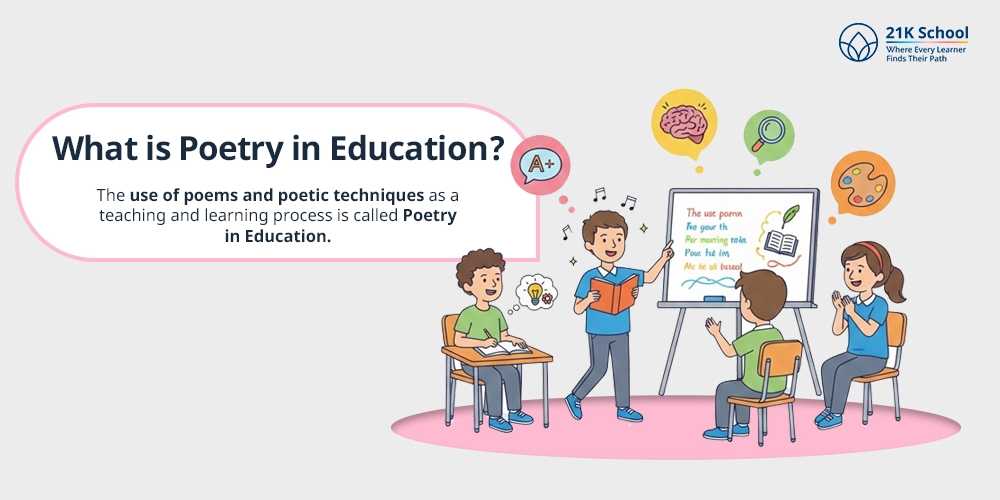
The use of poems and poetic techniques as a teaching and learning process is called Poetry in Education. It entails the inclusion of poetry in the curriculum to improve the language, creativity and critical thinking of the students.
Poetry in education is not merely about reading or memorising verses; poetry stimulates students to communicate themselves, think critically and feel with the materials they are learning .
It may be applied to learn vocabulary, grammar, literature, as well as some other fields such as history or social studies, through making the learning process more interesting and to recall.
Importance of Poetry in Education
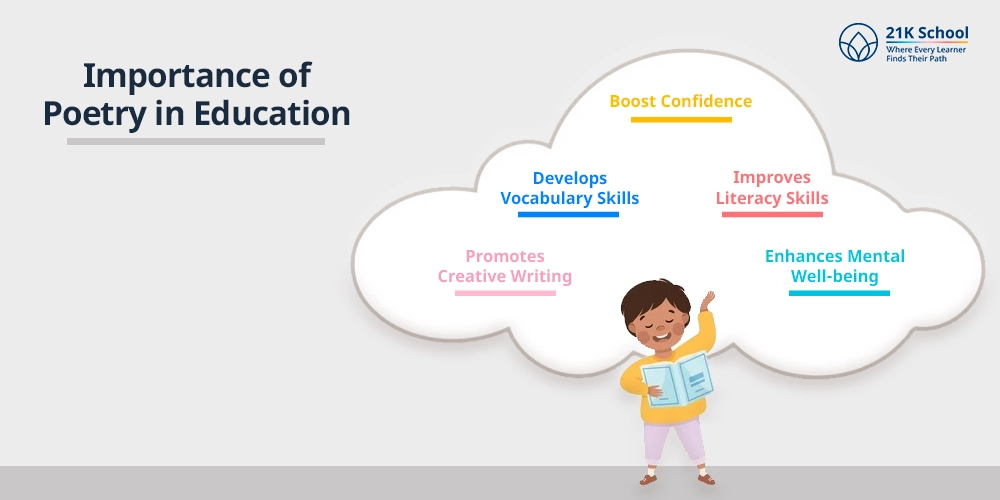
Poetry is important in education as it assists in the cultivation of literacy, the enhancement of emotional intelligence and creativity, and the creation of cultural awareness and community. Poetry is important in education in the following way.
1. Boost Confidence
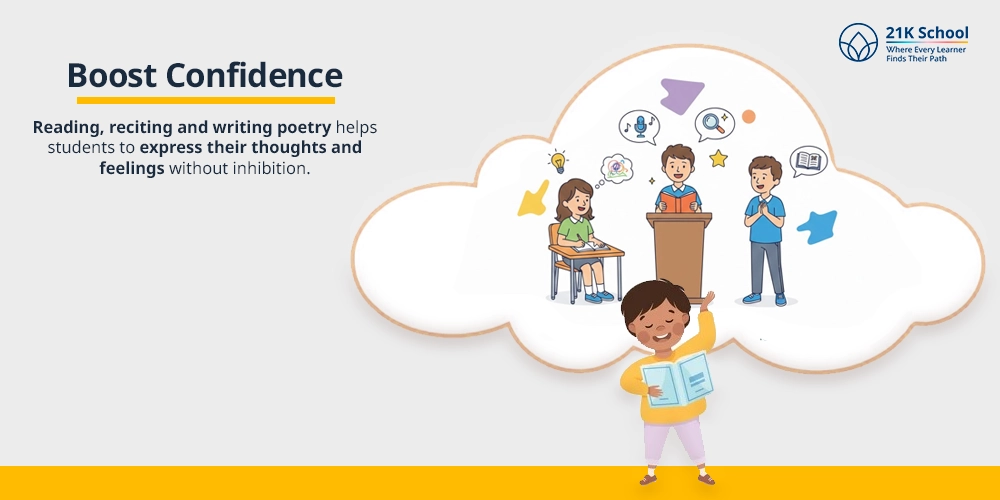
Reading, reciting and writing poetry helps students to express their thoughts and feelings without inhibition. This self-disclosure gives self-confidence in speaking and presenting ideas.
Reading works to peers will promote social speaking talent and eliminate fearfulness, which will help students to build confidence in themselves. The self-confidence that one gains by means of poetry is likely to spread to other spheres of study and self-development.
2. Develops Vocabulary Skills
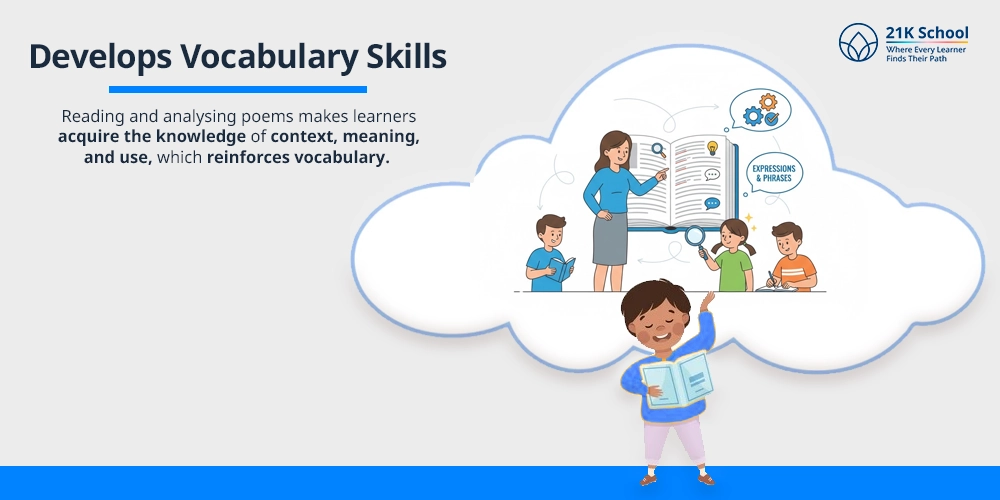
Through poetry, students are exposed to a wide and varied language, such as new words, expressions and phrases. Reading and analysing poems makes learners acquire the knowledge of context, meaning, and use, which reinforces vocabulary.
Poetry-writing stimulates the use of words and synonyms and improves the level of understanding and the ability to express ideas. Good vocabulary also facilitates improved communication skills in different subjects.
Learn more about how to improve students vocabulary .
3. Improves Literacy Skills
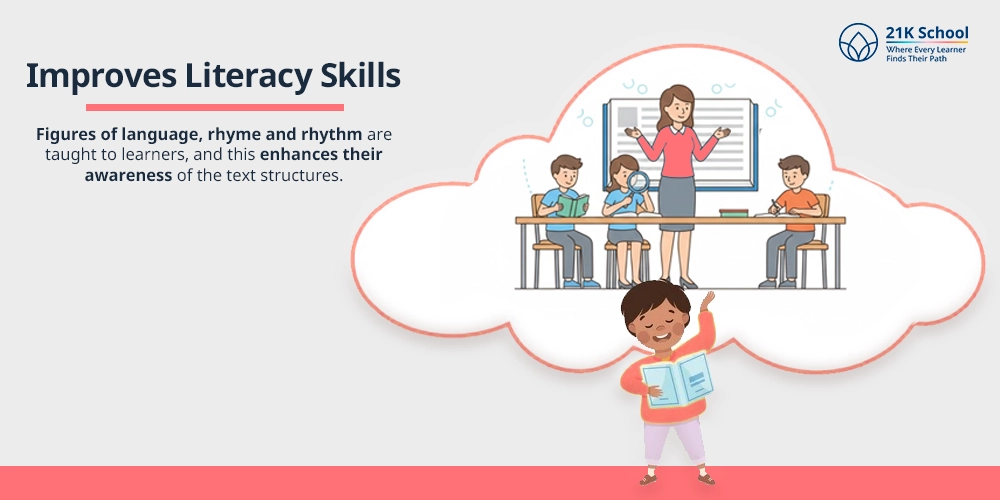
Poetry reading improves fluency, critical thinking and literacy skills. Figures of language, rhyme and rhythm are taught to learners, and this enhances their awareness of the text structures.
The poetry also promotes the reader to read and analyse information, which helps the learners to share not straightforward ideas. Exposure to poems regularly enhances the general literacy levels, which include writing, listening, and verbal skills.
4. Promotes Creative Writing
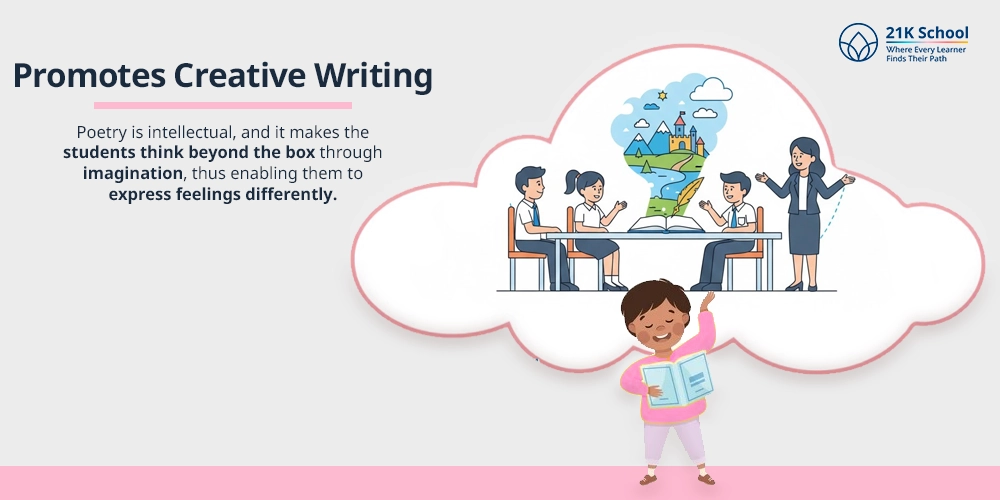
Poetry is intellectual, and it makes the students think beyond the box through imagination, thus enabling them to express feelings differently. The composition of the poems allows the learners to more or less work on the narration, the metaphor and symbolism.
Writing involves creativity, and this can be applied in writing, which extends to essay writing, narration and writing. Poetry develops the creative minds, and hence, the learning methods are more active.
5. Enhances Mental Well-being
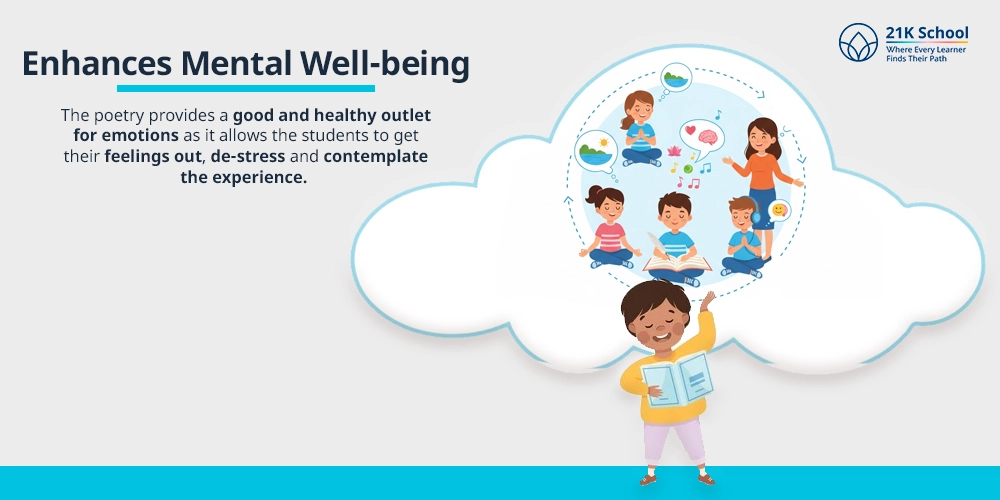
The poetry provides a good and healthy outlet for emotions as it allows the students to get their feelings out, de-stress and contemplate the experience.
Poems can be read or written to enhance emotional intelligence and mindfulness. It supports self-expression and empathy and teaches in a good atmosphere.
Benefits of Poetry in Education
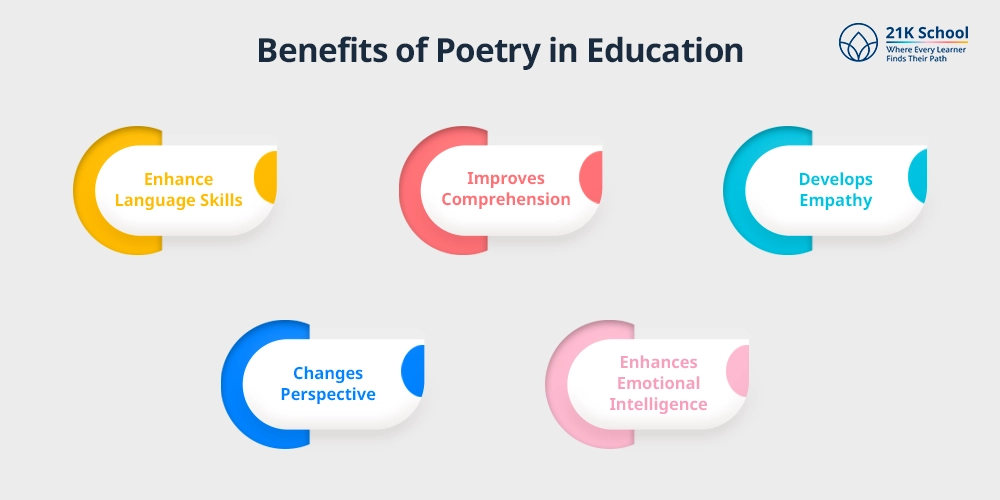
Educational poetry has its positive impact on the students, enabling them to improve their language, reading ability, emotional intelligence, empathy and so forth. The following are the advantages of poetry in education.
1. Enhance Language Skills
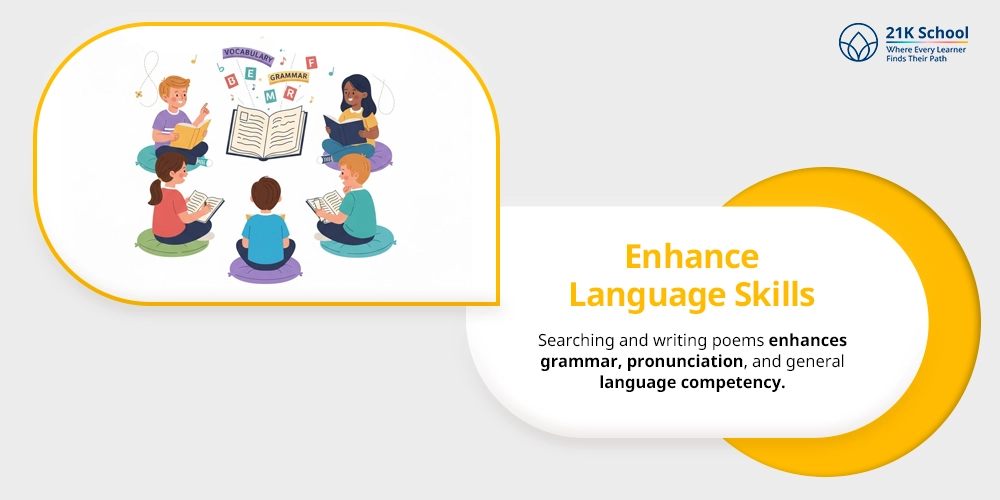
Poetry presents the students with an abundance of vocabulary, sentence-building and expressive forms. Searching and writing poems enhances grammar , pronunciation, and general language competency.
It promotes exploration of words, similes, metaphors and rhythm, which enhances both written and oral communication.
2. Improves Comprehension
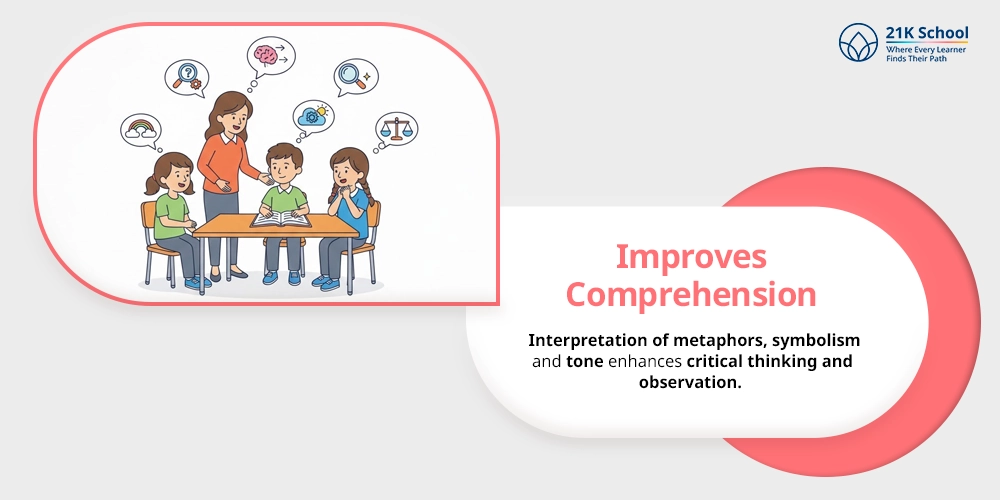
The analysis of poetry builds up reading skills on a critical level, as the students perceive the meanings, themes, and figurative language. Interpretation of metaphors, symbolism and tone enhances critical thinking and observation.
The practice enhances the understanding of literature as well as in other subjects, helping the learners to be able to process the complex information and make meaningful inferences from the text.
3. Develops Empathy
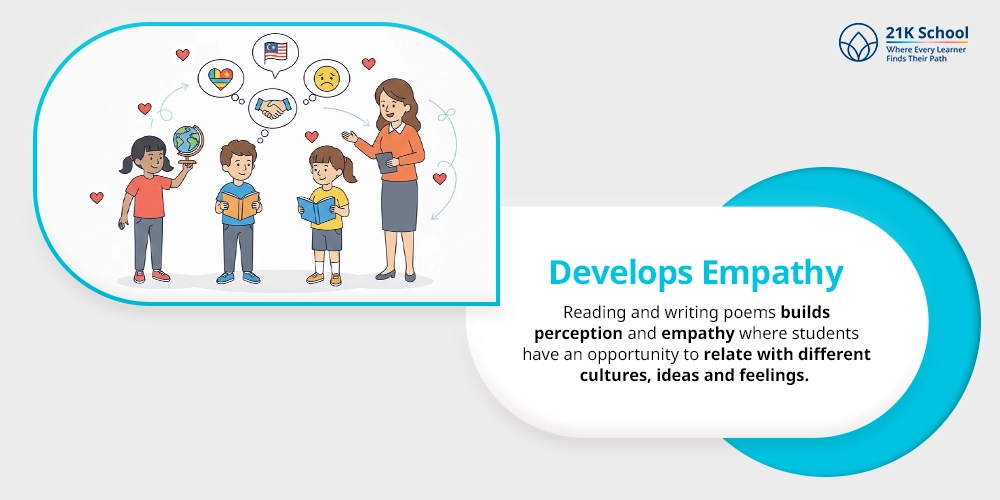
Poetry may involve feelings, experiences and visions that may not be one’s oneself. Reading and writing poems builds perception and empathy where students have an opportunity to relate with different cultures, ideas and feelings.
Experiencing life in the role of others enables the learner to be empathetic, which strengthens interpersonal relationships and makes inclusive learning environment and socially conscious.
4. Changes Perspective

Poetry is thought-provoking and makes the reader think. It allows the students to perceive situations, feelings, and thoughts differently. This allows horizons to open up, fosters open-mindedness and results in innovative problem-solving .
Through the involvement with varying perspectives and creative manifestations, learners form a polymorphous worldview, which could be helpful in education as well as in personal life.
5. Enhances Emotional Intelligence
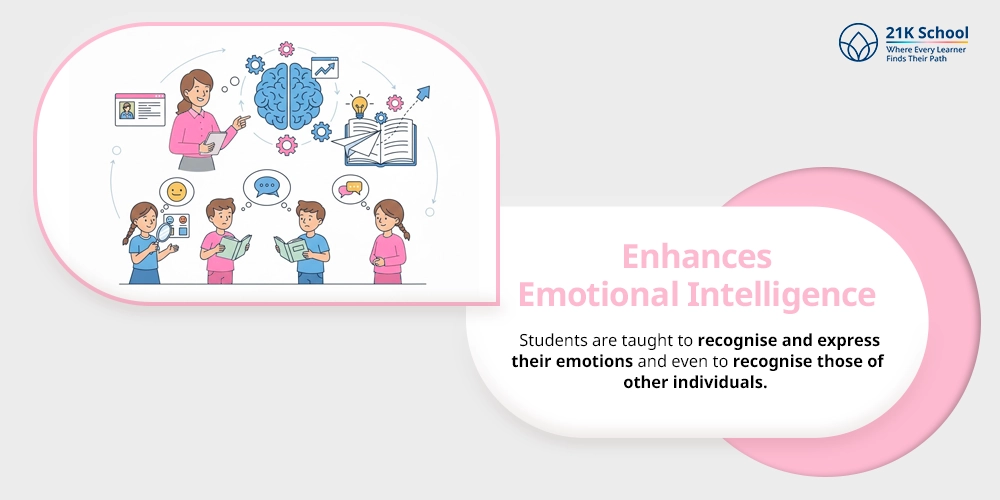
Reading poetry increases self-awareness, emotional expression and control. Students are taught to recognise and express their emotions and even to recognise those of other individuals.
This reinforces emotional intelligence, which assists the learners to deal with stress , effectively communicate and have closer relationships. Poetry turns into a means of self-improvement and psychological happiness.
How to Teach Poetry in Schools- 4 Ways
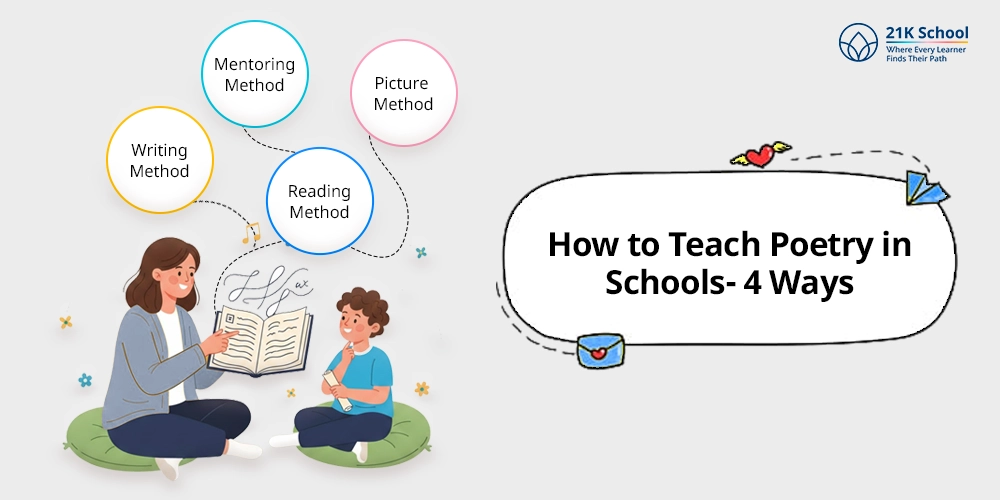
As a way of teaching poetry, a combination of techniques and strategies can be used whereby the students are encouraged to engage in reading a poem and come up with their own poems. Students can indulge in poetry in a number of ways. This is the way poetry can be taught to students.
1. Reading Method
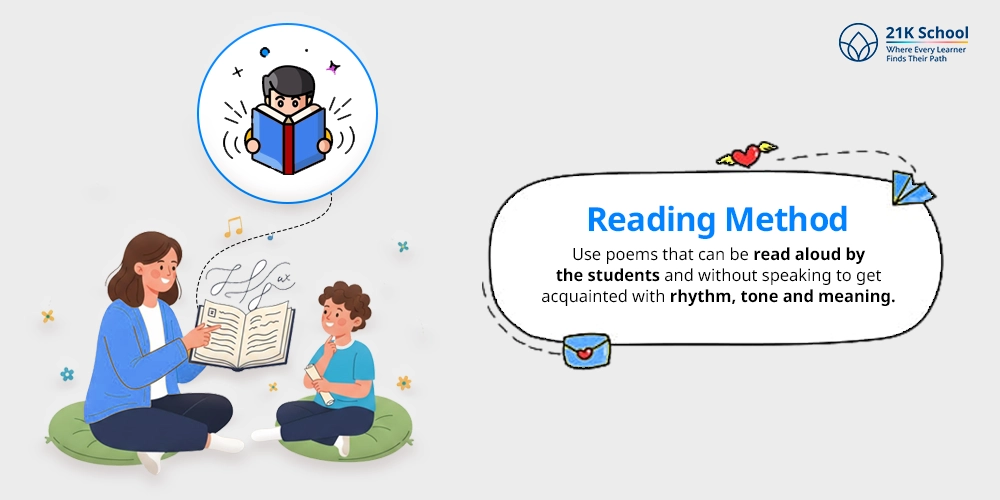
Use poems that can be read aloud by the students and without speaking to get acquainted with rhythm, tone and meaning. Negotiate the language, style, and themes of the poet in order to understand and appreciate.
The fact that reading various poems enables students to interpret various views, cultures and emotions, leads to analytical and emotional involvement to literary works.
2. Writing Method
Help students to create their own poems, trying different forms, rhymes, and metaphors. Writing promotes self-expression, creativity and critical thinking.
Prompts or themes can be given to the students by the teachers in order to motivate them and enable them to not only build up their language level, but also build their daring and make the process of learning fun .
3. Mentoring Method
The teacher’s role is a mentor role where individual guidance, feedback and encouragement are involved. The poetic skills of the students, the understanding of complex concepts, and inspiration can be improved with the help of discussion, critique, and individual assistance.
Mentoring will be used to offer a complementary environment in whereby the learners will feel comfortable experimenting with ideas and improve their abilities.
4. Picture Method
Show pictures, drawings or other visual materials that motivate the students to write poems. Visual materials stimulate imagination and allow learners to tell about scenes, emotions, and stories in a poetic way.
It is almost a technique of connecting observation and expression, and, therefore, makes poetry accessible, appealing, and enjoyable, particularly to younger or visual learners.
Conclusion
Educational poetry is critical in enhancing the intellectual and emotional skills of students. It improves language, understanding, imagination and reasoning as well as developing empathy , self-confidence and emotional intelligence.
Reading, writing, and discussing poems allow students to learn how to express themselves, to be sensitive to different points of view, and to be moved by ideas and feelings.
Incorporation of poetry in learning renders the learning process meaningful, fun and transformational both personally and in terms of academic development.

You may also want to read