

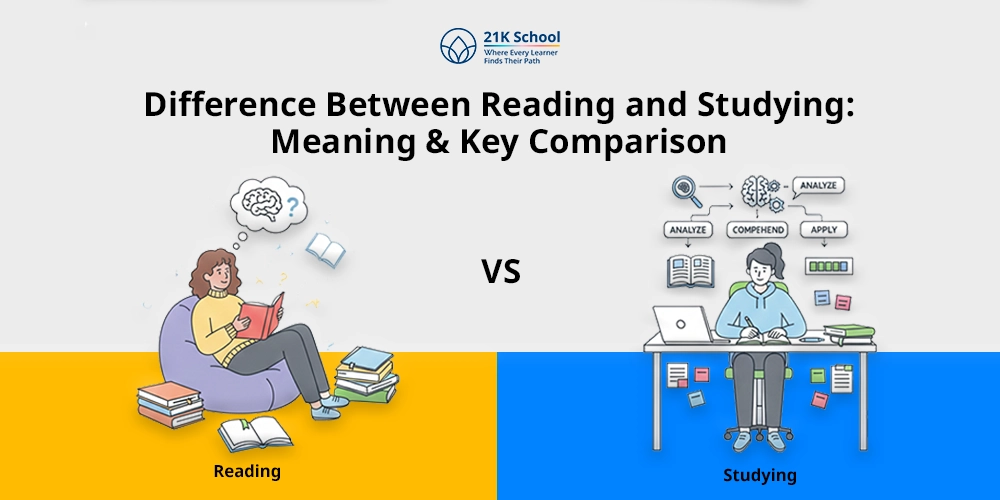
Students are often confused between two important terms: reading and studying. However, both terms are different and play essential roles in education .
Understanding both the terms guides learners to make sure they are at the right pathway.
Both reading and studying fill students with knowledge and information that helps them to follow the process of learning. Reading is a basic or foundation skill that leads to effective studying.
Further, we will understand what each term means, their individual goals, and key differences between reading and studying that set them apart.
Contents
What is Reading?
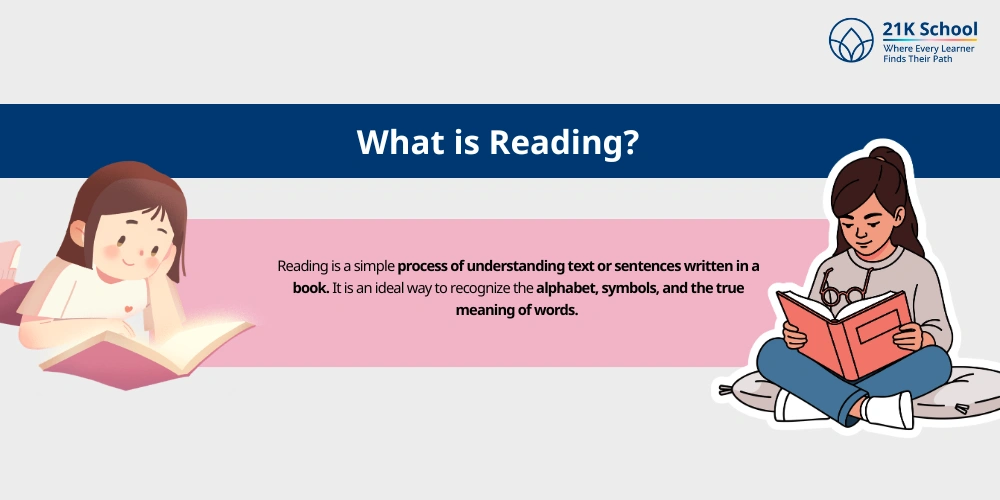
Reading is a simple process of understanding text or sentences written in a book. It is an ideal way to recognize the alphabet, symbols, and the true meaning of words.
There are many reasons for reading, for example, to gain information, self-entertainment, reading for someone else’s pleasure, relaxation, casual learning, or something as a good habit .
Reading is a foundational skill ideal for students to gain in early childhood. It helps them to aim for better academic performance .
Also, explore various reading activities for kids .
What is Studying?
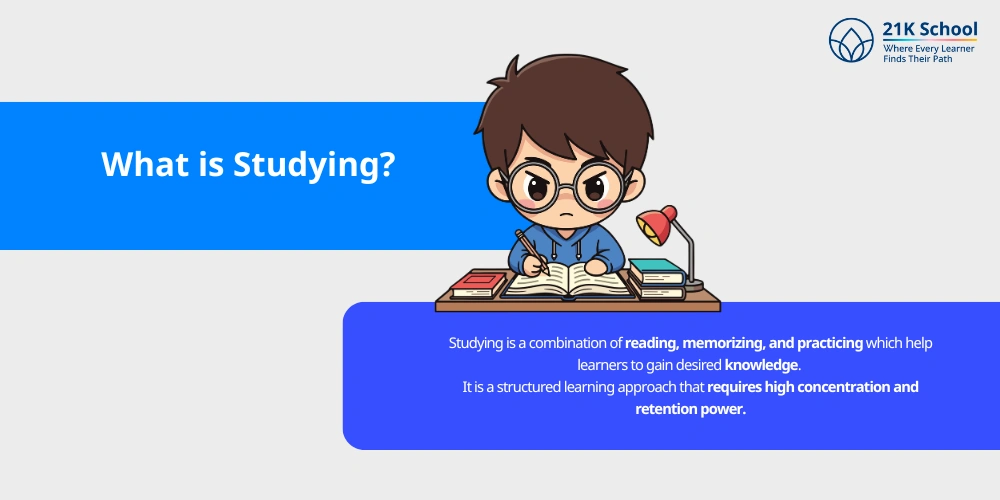
Studying is a combination of reading, memorizing, and practicing which help learners to gain desired knowledge .
It is a structured learning approach that requires high concentration and retention power.
Students who study not limit themselves in reading but also are involved in understanding, retaining, and applying knowledge.
Some common examples of studying are solving maths problems, participating in science experiments , and memorizing for upcoming class tests.
10 Key Difference Between Reading and Studying
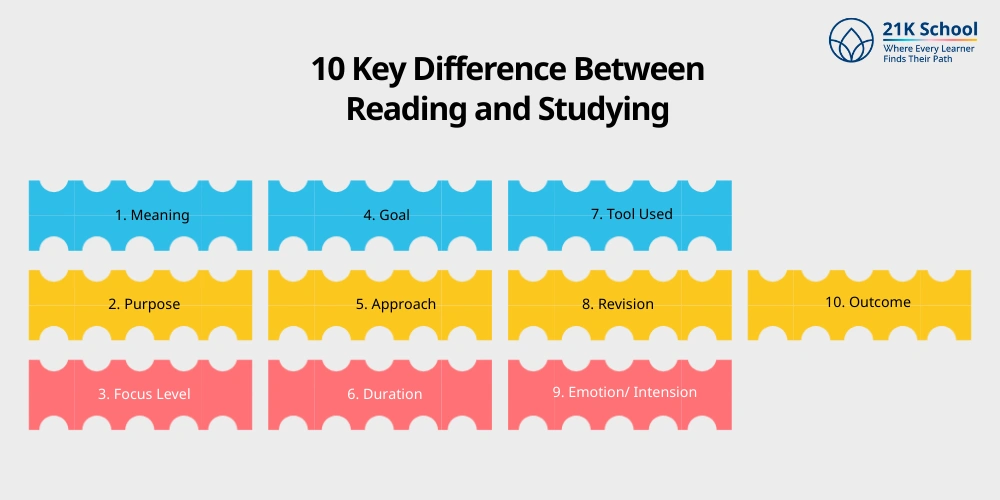
To understand the difference between reading and studying clearly given below is a detailed comparison table:
| S No. | Particulars | Reading | Studying |
| 1. | Meaning | Reading means students understand written words, text or sentences. | Studying means analyzing and memorizing concepts of learning. |
| 2. | Purpose | The main purpose of reading is general understanding or enjoyment. | The main purpose of studying is to learn, understand, and memorise information or concepts. |
| 3. | Focus level | Focus level in reading is moderate. | Studying requires high focus to retain information for the long-term. |
| 4. | Goal | The main goal of reading is to comprehend or enjoy. | The goal of studying is to get good marks in examinations and career growth. |
| 5. | Approach | While many may consider the approach in reading to be passive, skilled readers engage in active reading strategies. | The approach in studying is active. |
| 6. | Duration | Duration can be short or spontaneous. | Duration depends on the learner’s plan and time-bound. |
| 7. | Tool used | Tools such as books, newspapers, magazines, or articles. | Tools like notes, textbooks, highlighters, flashcards, and summaries. |
| 8. | Revision | It is rarely reviewed. | Students practice, active recall, and retain information. |
| 9. | Emotion/ intension | Curiosity, relaxation, or entertainment. | Determination, commitment, and goal-driven effort. |
| 10. | Outcome | The outcome is temporary understanding for pleasure. | To achieve long-term learning goals and improvement in academic performance. |
Go through the explanation of key difference between reading and studying:
1. Meaning
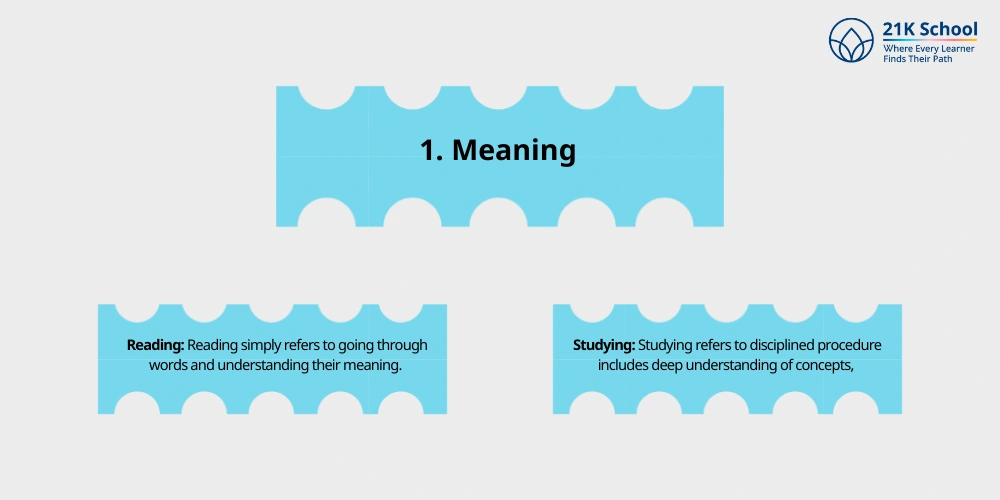
Reading: Reading simply refers to going through words and understanding their meaning.
Studying: Studying refers to disciplined procedure includes deep understanding of concepts,
2. Purpose
Reading: The main purpose of reading is stay informed, or enjoy a story.
Studying: In studying, the purpose is to deepen understanding, retention and scoring good marks in examinations .
3. Focus Level
Reading: As compared to studying, reading needs less focus and retention power.
Studying: On the other hand, studying requires more focus, undistracted learning environment, and retention power.
4. Goal
Reading: The goal of reading is to understand and explore content.
Studying: The goal of studying is to learn and retain information by analyzing and applying in future.
5. Approach
Reading: Reading is considered to be passive but skilled readers engage in active reading strategies.
Studying: On the other hand, studying is active in which learners ask questions, summarize, highlight etc.
6. Duration
Reading: Reading is a flexible task that can be done anytime as per learners interest.
Studying: While studying is a structured approach needs planning and organising before starting.
7. Tool Used
Reading: To read, students can use tools like books, newspapers, magazines, or articles. Understand the benefits of reading books in students’ lives.
Studying: To study, various tools like notes, textbooks, highlighters, flashcards, and summaries can be used.
8. Revision
Reading: Revision is rarely part of reading. Individuals often read once and move on.
Studying: Revision is an important part of studying. It becomes necessary before the examination.
9. Emotion/ Intension
Reading: Reading is usually generated due to curiosity, relaxation, or entertainment. To know more, one must read the benefits of reading for students .
Studying: Studying mainly begins with the purpose of academic or career growth.
10. Outcome
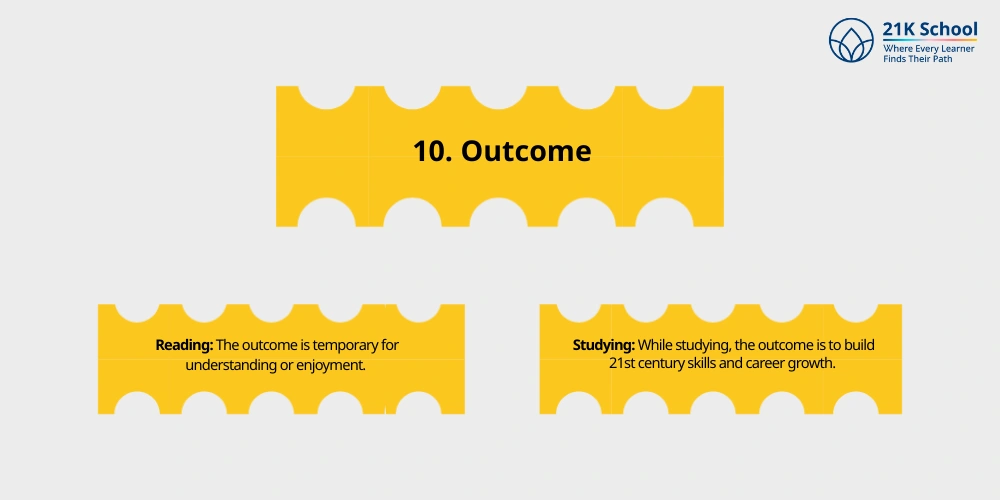
Reading: The outcome is temporary for understanding or enjoyment.
Studying: While studying, the outcome is to build 21st century skills and career growth.
Conclusion
In students’ lives, both reading and studying are important to achieve future success.
From increasing curiosity through reading to memorizing concepts everything plays a major role to gain desired results.
Remember, reading is the foundation and studying strengthens the structure. Students can go through, how to develop a reading habit in students in the 21st century.
So, while starting the educational journey understanding each key difference between reading and studying is essential.
Next time while starting make sure to understand the main purpose whether you are reading or studying.

You may also want to read