8 Proven Blended Learning Strategies to Boost Student Engagement
 Written byKumar ShivamContent Specialist
Last modified: Jul 31, 2026 9 min read
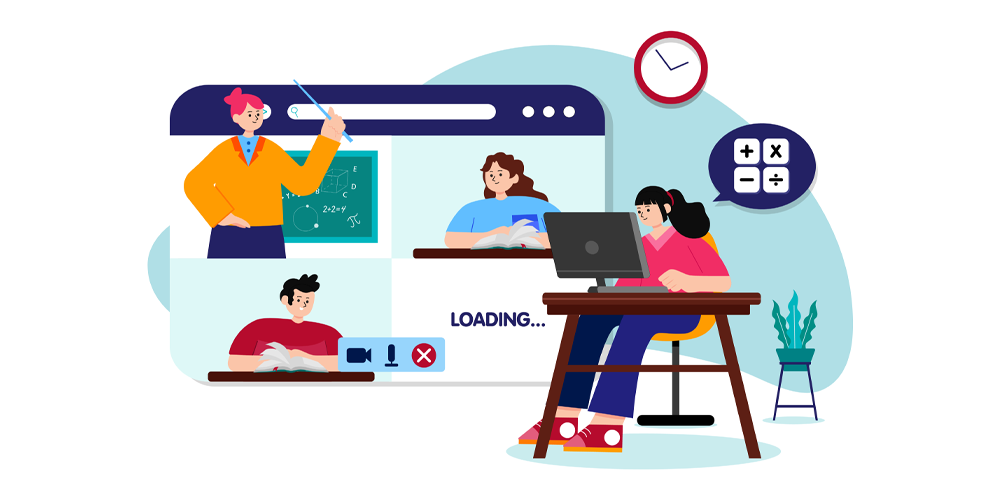
Blended learning strategies are a method of combining both aspects of physical and online classes. Blended learning allows students and individuals to engage in teaching and learning processes in an interactive and engaging way.
Blended learning strategies can be built by using webinars, videos and in person training, this makes learning accessible and convenient.
Blended learning integrates both face to face communication and digital learnings to enhance the learning outcome of students.
Blended learning provides students with flexible and personalised learning opportunities as well as enhances their knowledge retention in education. The blended learning approach is not only limited to academics but also essential for workplaces.
Blended learning strategies allow students to gain hands-on training as well as achieving flow in education.
Blended learning integrates various strategies such as flipped classroom, flex model, classroom model, rotational model, etc.
Blended learning helps in enhancing teacher-student relationships through interactive and fun in learning approaches.
What are blended learning strategies?
Blended learning strategies can be defined as the technique of combining online learning and traditional learning.
In short, it combines the traditional schooling teaching method with technology to enhance learning outcomes through interactive digital tools.
Blended learning is also known as mixed learning, hybrid learning , or combined learning, that uses face-to-face teaching methods with the contribution of technology in education .
The strategies of blended learning allows students to adapt according to their learning preferences as well as gives them personalized learning.
With the e-learning evolution , the teaching and learning process has changed to a new aspect, which makes education more fun interactive.
Blended learning uses various fun learning approaches such as videos, simulations, games, animations, stories, quizzes, tutorials, etc.
Even for effectiveness teachers can use Learning Management System (LMS) in education and Students Management System (SMS) to maintain students’ track records.
Blended learning strategies are not only limited to schools and institutes but are widely used in corporations and public works.
Top 8 blended learning strategies
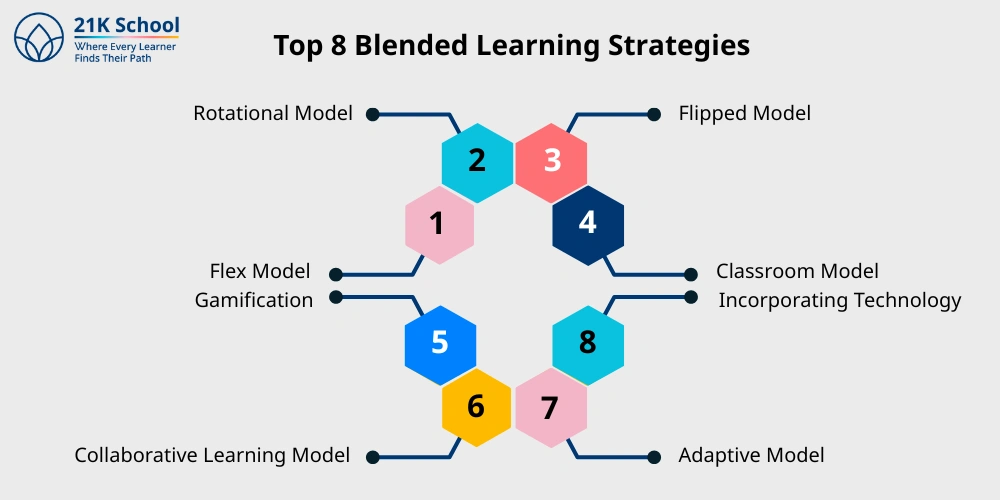
Blended learning has various strategies that make education more impactful. These strategies help to find the learning style of individuals and allows them to learn as per their comfortability.
Blended learning strategies help in making education more engaging and also enhance problem-solving skills through breaking the fixed style of learning. Here you can check the strategies of blended learning mentioned below.
1. Flex model
Flex model is a blended learning strategy that combines both aspects of traditional and online classes. This model gives autonomy to students where they can get flexibility to choose when to complete their online activities.
In this method students acquire knowledge through a physical classroom and access all the educational resources in online mode with the help of computers and the internet.
This method allows students to enhance their learning progress and provides them with support and guidance.
2. Rotational model
The rotational model is an interactive blended learning approach where students are given an opportunity to experience every blended learning method.
In this strategy students were rotated between different learning models such as face to face learning, online group activities , project works, group discussions, e-learning , etc.
These rotational methods allow students to cater for their learning style and flexibility.
These models can be rotated on a weekly basis based on students’ preferences. This method helps in promoting dynamic education and gives students autonomy about their decisions.
3. Flipped model
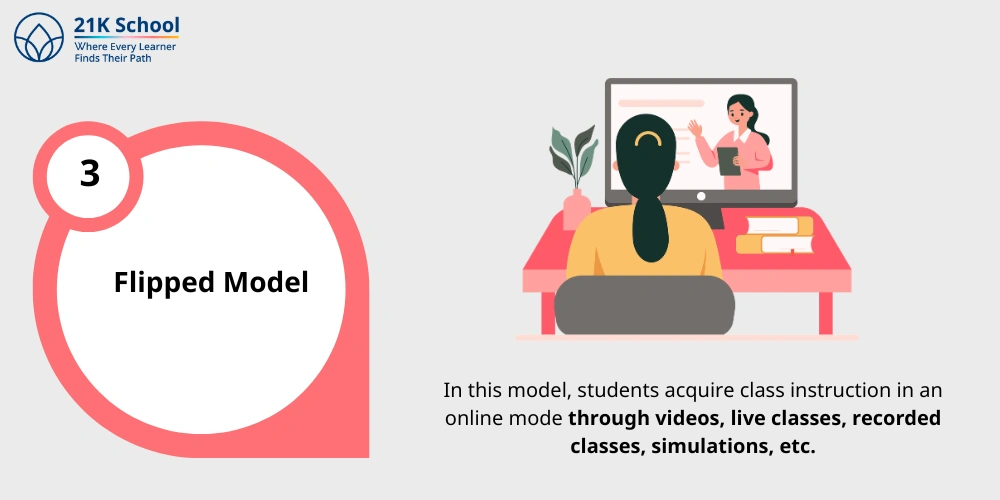
The flipped model is a classic model that inverts the process of the traditional approach of education.
In this model, students acquire class instruction in an online mode through videos, live classes, recorded classes, simulations, etc.
During class hours, they share knowledge that they have acquired, indulge in group activities, assignments, project work, etc.
This strategy provides flexible and more personalized education where students can learn faster or at their own pace and comfortability.
4. Classroom model
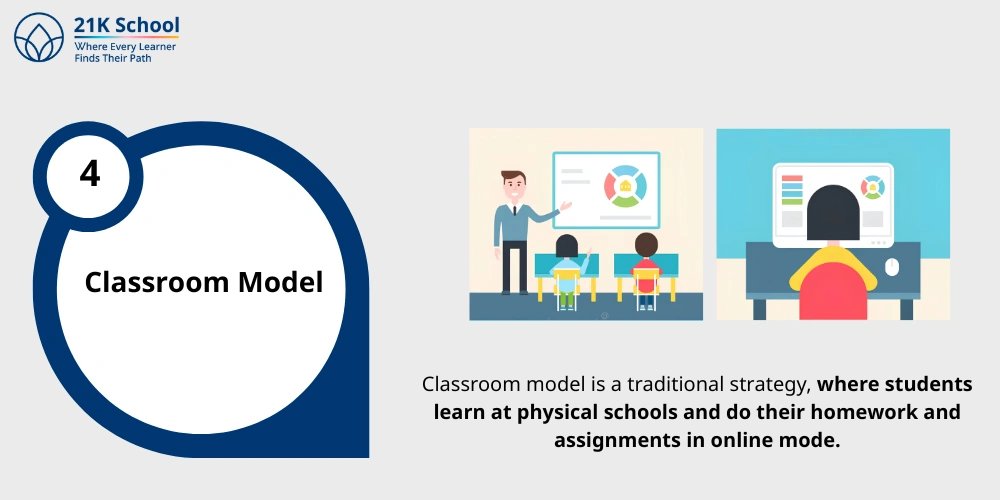
Classroom model is a traditional strategy, where students learn at physical schools and do their homework and assignments in online mode.
This model enhances cognitive development of children as well as enhances their confidence to participate in class activities without any hindrances.
The Classroom Model mainly focuses on face-to-face interaction, which gives them a rich experience of hands-on training.
This method is a common method which is used by most schools as a blended learning approach.
5. Gamification
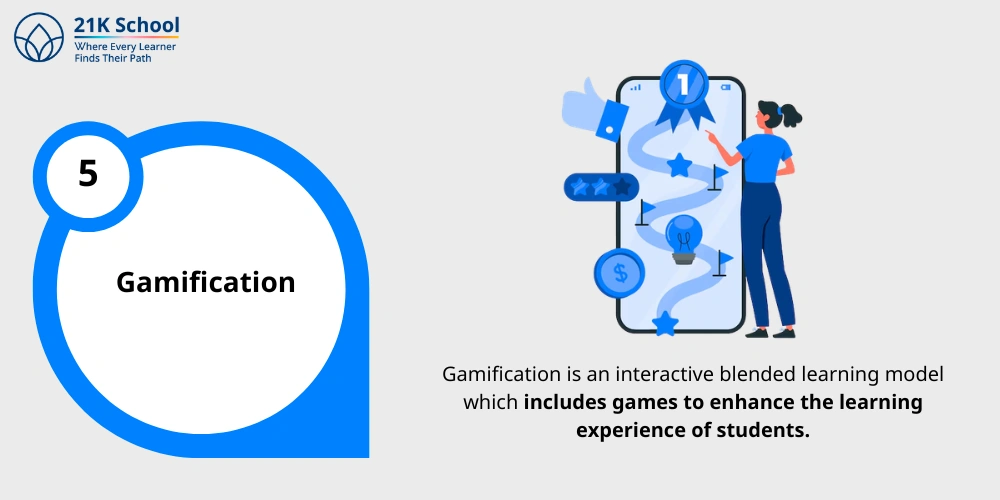
Gamification is an interactive blended learning model which includes games to enhance the learning experience of students.
Gamification in blended learning allows students to stay concentrated and grasp difficult concepts into simpler ones.
This model enhances knowledge retention as well as promotes active learning. Using game-like elements enhances students’ participation and builds a positive learning environment .
This model allows students to become more engaged and enhance their motivation in learning.
6. Collaborative learning model
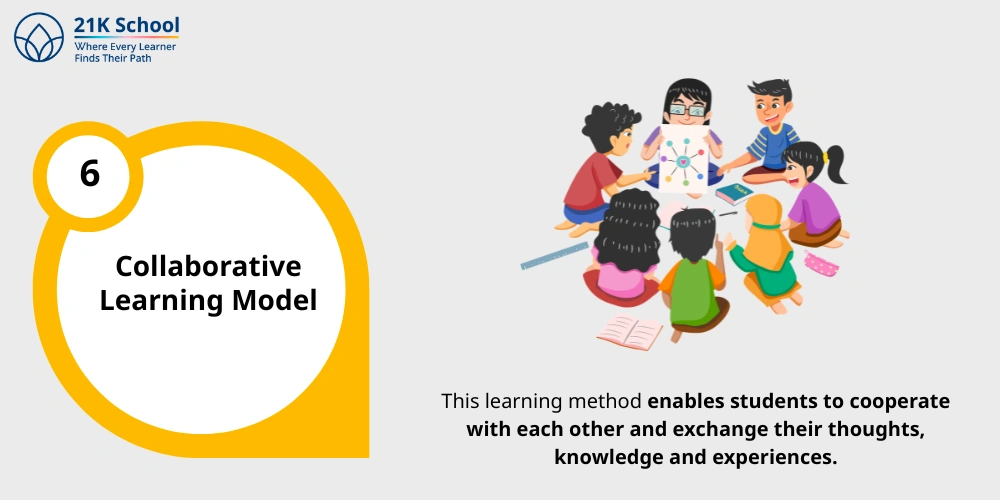
Collaborative learning model is a type of blended learning strategy where students collaborate with each other. This learning method enables students to cooperate with each other and exchange their thoughts, knowledge and experiences.
This model helps in promoting peer-to-peer learning and cooperative learning between students. This approach enhances student engagement as well as makes education more interactive and accessible.
7. Adaptive model
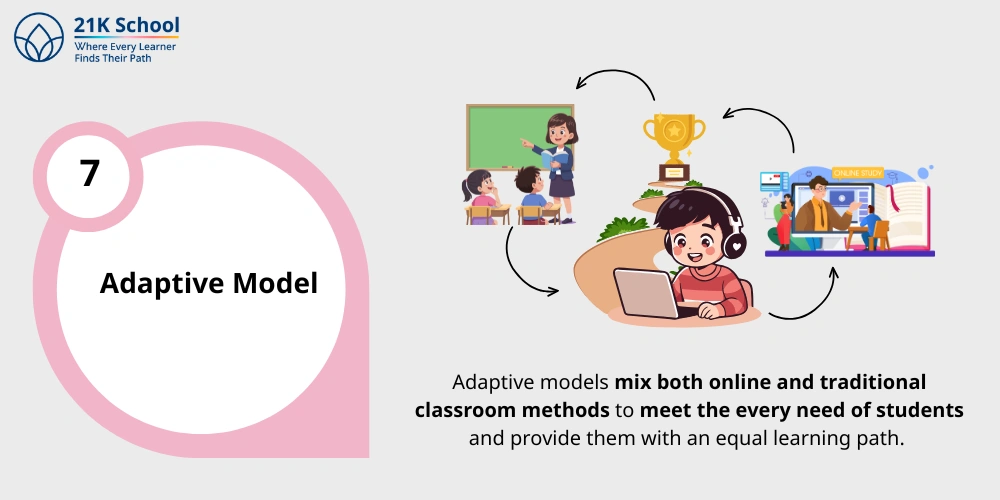
Adaptive model is a popular blended learning strategy that focuses on providing personalised learning. Adaptive models mix both online and traditional classroom methods to meet the every need of students and provide them with an equal learning path.
This model focuses on providing customizable education, which ensures that every student stays on the right track in teaching and learning process.
This approach of learning methods ensures that every student makes a detailed analysis of their content, which enhances their confidence as well.
8. Incorporating technology
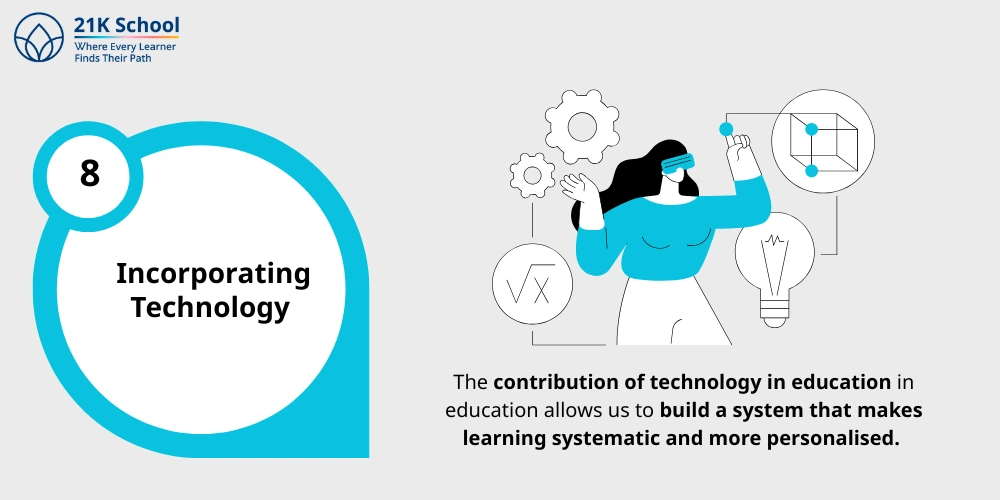
Incorporating technologies is one of the effective approaches to making learning more interactive and simpler. The contribution of technology in education allows us to build a system that makes learning systematic and more personalised.
Technology in blended learning is the key aspect which makes it more productive and helps childrens to develop creative thinking skills as well.
Advantages of blended learning strategies
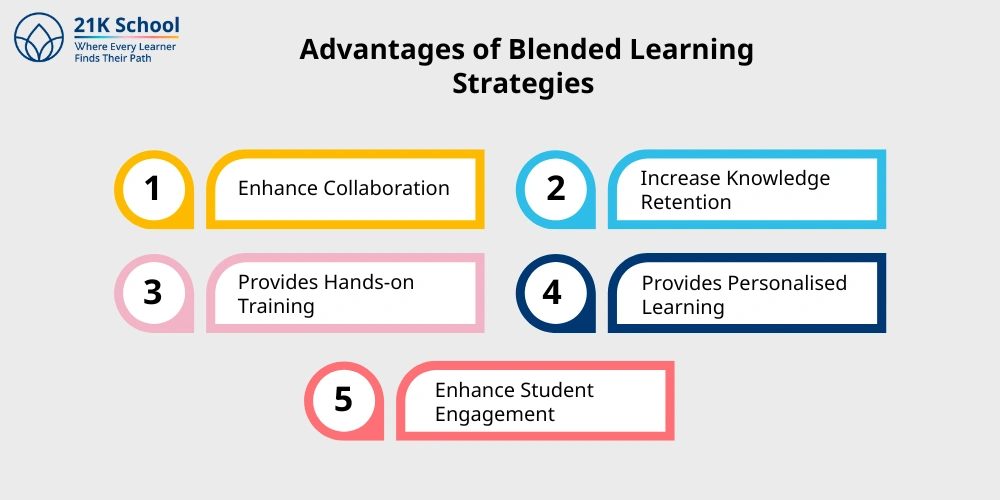
Blended learning strategies are known for their advantages and quality learning. Blended learning enhances student engagement and allows them to develop positive relationships with others.
This method of learning provides students with personalised learning and makes education fun, which allows them to see difficult problems as opportunities instead of challenges.
Here you can check the benefits of blended learning strategies mentioned below.
1. Enhance collaboration
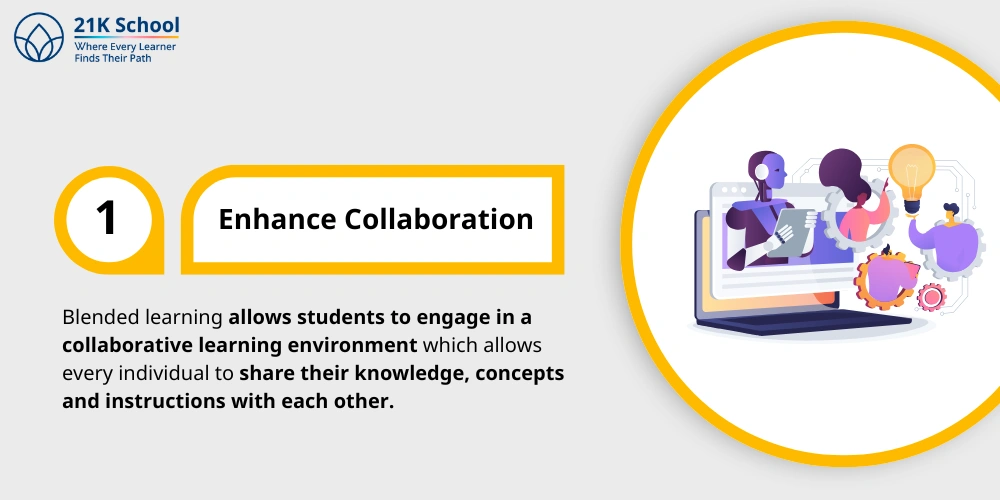
Blended learning allows students to engage in a collaborative learning environment which allows every individual to share their knowledge, concepts and instructions with each other.
Blended learning uses digital tools which enables students to promote the benefits of peer to peer learning .
This approach of learning enhances students’ problem-solving abilities and effective knowledge sharing among peers.
2. Increase knowledge retention
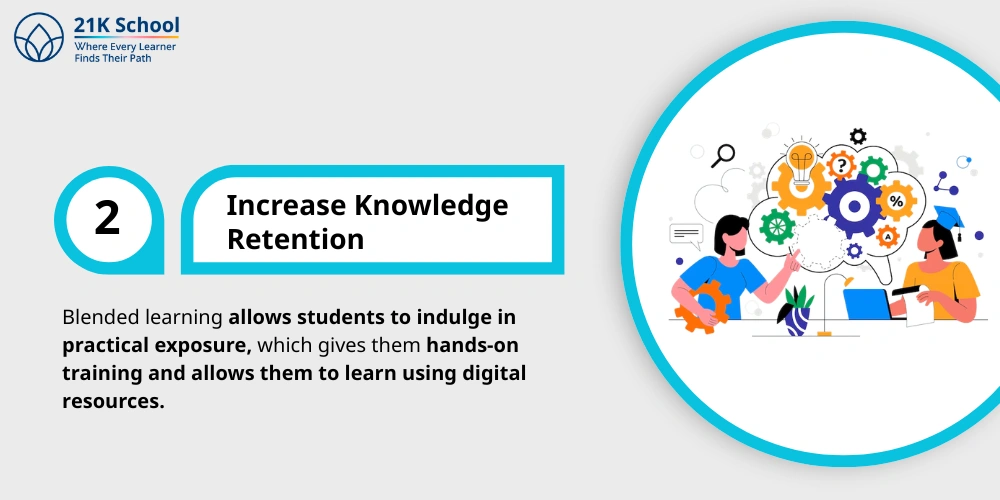
Blended learning strategies help students to enhance their knowledge retention through self-paced learning.
Blended learning allows students to indulge in practical exposure, which gives them hands-on training and allows them to learn using digital resources.
Practical exposure and personalised learning aspects through a blended learning approach helps them to solidify their understanding level and makes it easy for them to communicate with others.
Problem solving and analytical skills are also very important for knowledge retention, you can also check the tips to develop a child's problem solving and analytical skills.
3. Provides hands-on training
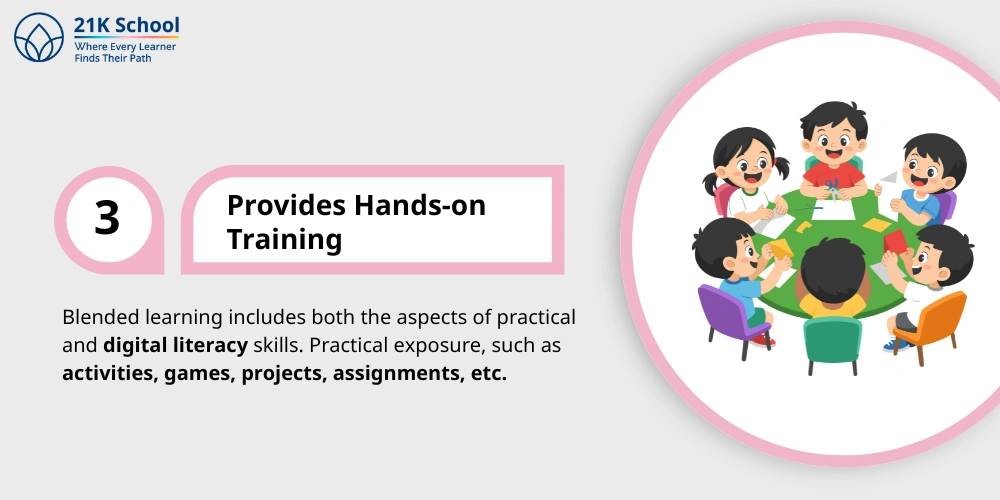
One of the effective advantages of blended learning strategies is that it provides students with hands-on experience.
Blended learning includes both the aspects of practical and digital literacy skills. Practical exposure, such as activities, games, projects, assignments, etc.
This allows students to understand the concepts practically, and online learning allows them to enhance their memorisation skills.
Hands-on training allows students to find solutions for practical problems and create new ideas for existing difficulties.
4. Provides personalised learning
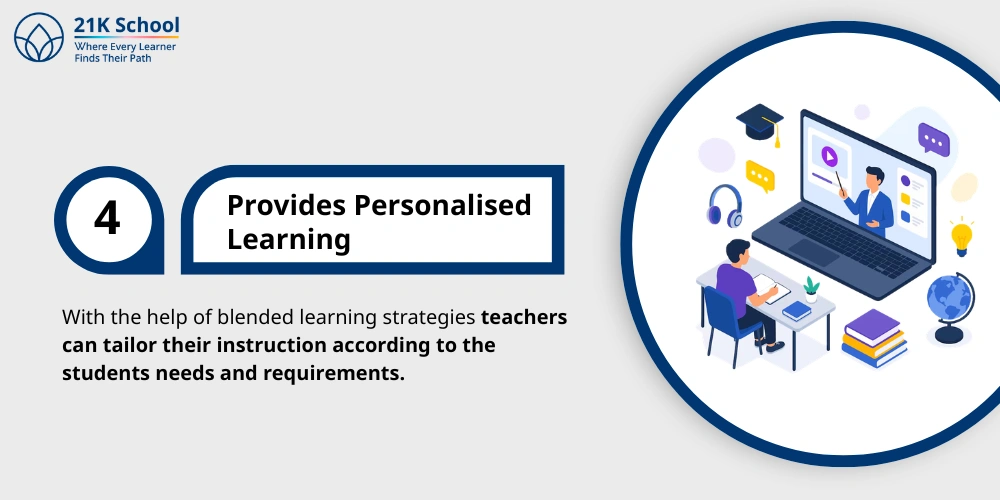
Blended learning strategies provide personalised and flexible education to students. With the help of blended learning strategies teachers can tailor their instruction according to the students needs and requirements.
The benefits of personalized learning allows students to learn at their own pace, as every student has their own learning style.
Tailored instruction allows students to develop confidence and enhance their participation in class activities in an interactive way.
5. Enhance student engagement
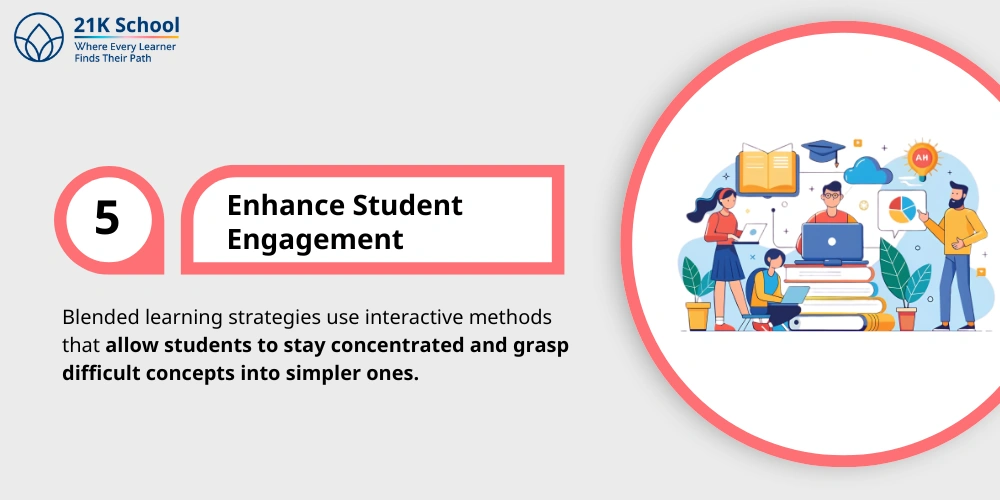
Another important aspect of blended learning is that it enhances student engagement .
Blended learning strategies use interactive methods that allow students to stay concentrated and grasp difficult concepts into simpler ones.
This method allows students to interact with others effectively and assist them to work in a group.
Final thoughts
Blended learning techniques are a revolutionary approach to education that blends contemporary digital tools with conventional in-person instruction.
Blended learning improves student engagement and knowledge retention by providing flexibility, individualised learning experiences, and opportunities for practical training.
Different learning styles and preferences are accommodated by the different models, including the flex rotational, flipped and gamification strategies, which promote an interactive and cooperative learning environment.
The use of technology in blended learning will be essential in preparing students for the challenges of the future as education develops further, as it will make learning more impactful, pleasurable and accessible.
Frequently asked questions
5 questions
How does blended learning enhance knowledge retention?
Blended learning enhances knowledge retention through incorporating self-paced learning and giving them practical exposure, which solidifies their understanding level and makes it easy for them to communicate with others.
What is the VARK learning system?
VARK learning system is a learning approach which contains four aspects of learning styles, such as Visual, Auditory, Reading, and Kinesthetic. This approach enhances active learning among students.
What are the five important strategies of blended learning?
There are various important strategies of blended learning, but the most essential strategies are the Flipped Model, Flex model, Adaptive Model, Rotational Model and Collaborative Learning Model.
What are the flip classroom strategies?
In the flipped classroom strategy, students acquire class instruction in an online mode through videos, live classes, recorded classes, simulations, and during class hours, they share the knowledge that they have acquired through online instruction.
How does blended learning promote collaborative learning?
Blended learning develops collaborative learning through online resources such as internet, videos, online activities, discussion boards, etc., it makes collaboration easier and enables students to interact and share ideas outside of the conventional classroom.
About the author
Kumar Shivam
Content Specialist
Kumar Shivam is currently a content writer at 21K School, where he focuses on creating content structures and developing blogs. With over 5 years of experience, he has crafted SEO-friendly content including blogs, articles, press releases, and social media content. He is passionate about learning and always eager to expand his skills. Apart from his professional commitments, he enjoys reading novels, writing poetry, and is currently working on his own book, which he hopes to publish soon.
Every 21K School guide is written by our education team and reviewed by a subject facilitator before publishing.
Exploring a CBSE-pathway online school?
Talk to an advisor about 2026–27 admissions — no obligation.
Talk to an advisorComments
No comments yet — be the first to share your thoughts or ask a question.