Importance of Inclusive Education for Equal Learning Opportunities

Last modified: Aug 31, 2026 7 min read
What is inclusivity?
Ever asked yourself, how would it feel to be accepted by the world just the way you are.
Now think,
How would it be to learn in an environment that supports diversity and how would it feel to walk into a classroom full of children whom each one of them is welcomed and understood with his/ her strengths, deficits, culture, disability, and learning potential.
“Diversity is being invited to the party; inclusion is being asked to dance.”
This is the crux of inclusion: it means changing education, expanding the concept of what constitutes teaching, and in essence forging a civilization in which differences are appreciated, and all learners are given the same chances to bloom.
It is very easy to blame the situation or the person, but it is very difficult to understand the relation between the situation and the reaction.
As it is in the current day world where a little cooperation from people can help in the development of intercultural communication competence, understanding and tolerance for things.
This will not only promote a healthy environment but will have a prominent impact on mental health and emotional wellbeing.
Inclusivity is not just an idea, or it doest only make space for each person, but it is about making every person feel comfortable in that space - with no judgments.
Perhaps, if you now want to know about the importance of inclusive education, its conceptual meaning and challenges it faces at the same time pondering on how it reshapes learning paradigms - read more....
Inclusive education is an innovative learning process - well designed - well structured - systematic ; it means that in a classroom, each kid has the same rights as other learners regardless of the existence of learning or physical disability, financial, or social status (nothing more counts other than the fact that the student is willing to learn)
Not only is it efficient in the sphere of education, but it contributes to character building, and the formation of the ideas of empathy, cooperation, and self awareness.
But it is very important for a student to analyse the benefits of inclusive education. And it is more important to know :
What is inclusive education?
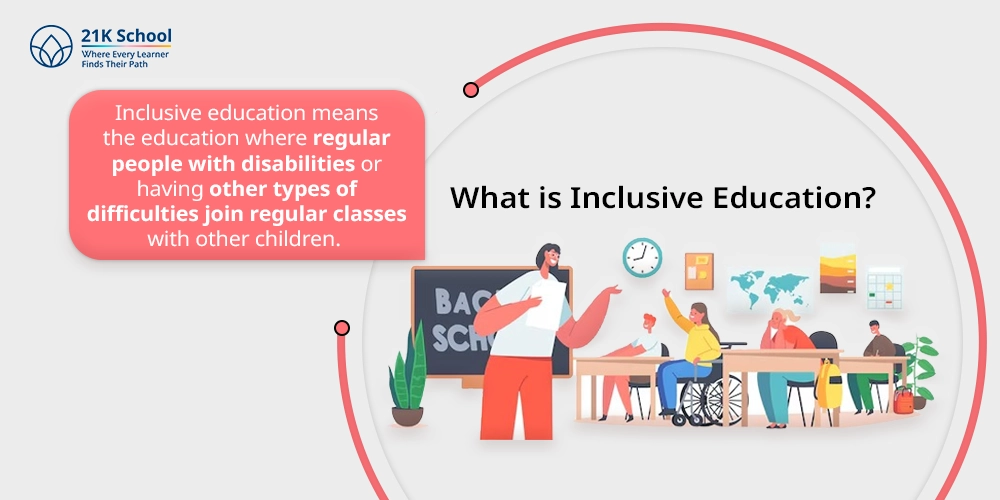
Inclusive education means the education where regular people with disabilities or having other types of difficulties join regular classes with other children.
It stresses on the acceptance of diversity and need for integrated schooling as well as using differentiated instruction. (i.e inclusivity with a hint of personalisation)
Such a model contributes to the elimination of limitations to education and guarantees no kid is left behind, these are often considered as special education.
inclusive education thus ensures that any learning environment that supports learning also supports diversity to enhance children's academic, social and emotional development.
The importance of inclusive education: A overview
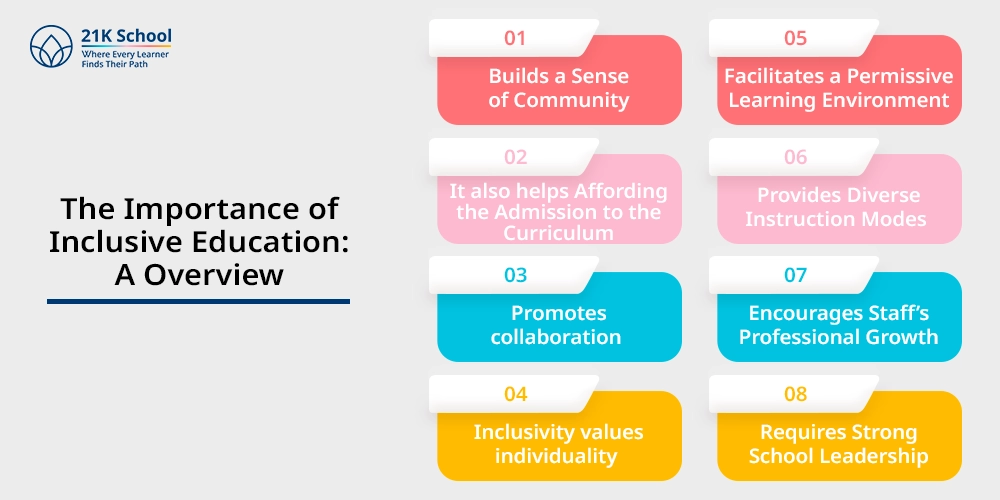
There are certain key aspects to keep in mind when comparing the importance on inclusive education in learners life:
1. Builds a sense of community
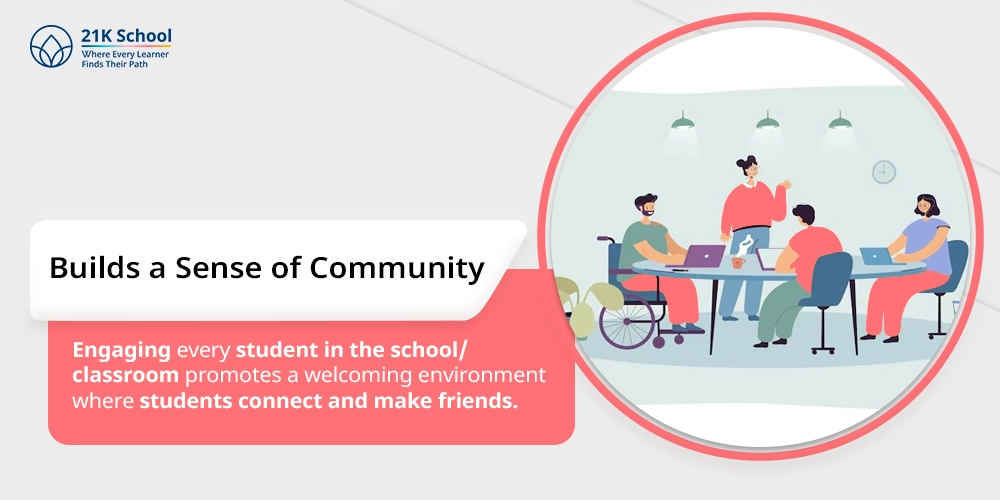
What It Means: Engaging every student in the school/ classroom promotes a welcoming environment where students connect and make friends.
Why It Matters : from a student’s perspective it inculcates an understanding, reduces bullying, and creates a positive and healthy school climate.
2. It also helps affording the admission to the curriculum
What it means : inclusivity ensures that all students, regardless of their abilities, are given equal access to the same curriculum; promoting equality and self awareness.
Why it is important: It encourages teachers to adapt lessons for inclusivity, improving quality and awareness for all learners; benefits everybody involved in the process one or other way.
3. Promotes collaboration
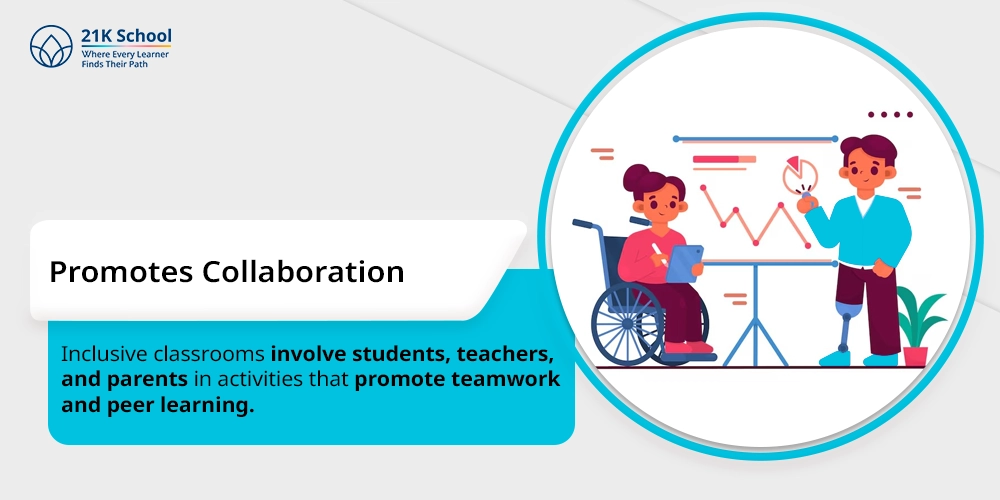
What does it means: Inclusive classrooms involve students, teachers, and parents in activities that promote teamwork and peer learning.
Why it matters : it Enhances interpersonal skills and breaks down the stigma and social barriers, nurturing mutual respect and cooperation, for learners across all age groups.
4. Inclusivity values individuality
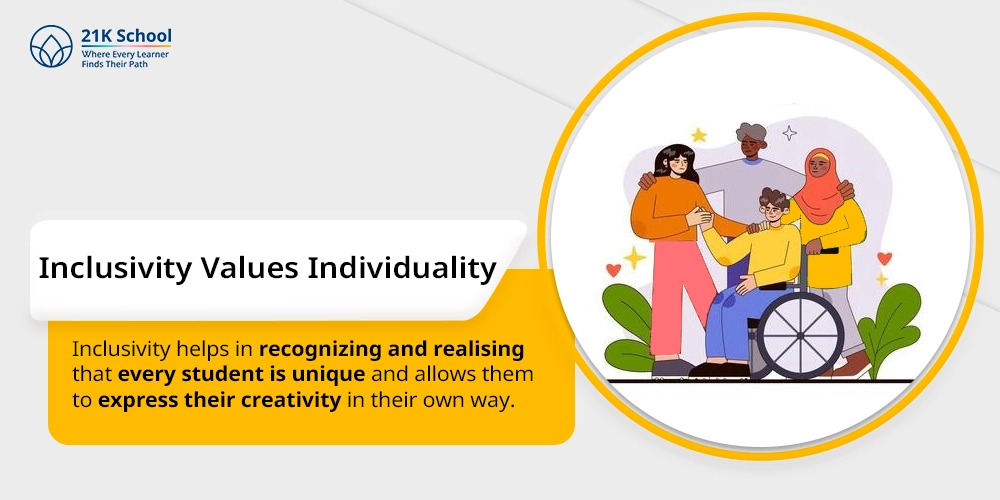
Means: inclusivity helps in recognizing and realising that every student is unique and allows them to express their creativity in their own way. Nobody is perfect or similar; it’s good to embrace differences.
How does it affect: Acceptance boosts self-esteem, developing a culture where students feel valued and respected for who they are.
5. Facilitates a permissive learning environment
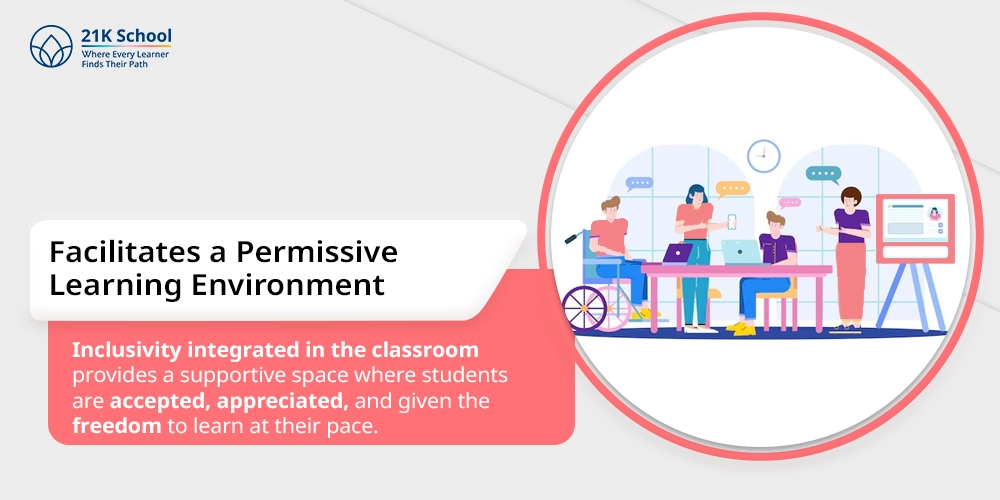
What It Means : Inclusivity integrated in the classroom provides a supportive space where students are accepted, appreciated, and given the freedom to learn at their pace.
And it makes a major difference in the learners’ development process.
How does it matter : encourages personalised learning, where students' unique needs and desires are prioritised for overall growth.
6. Provides diverse instruction modes
What it matters : with inclusivity being introduced, teachers use varied techniques to meet the needs of every student, ensuring inclusive participation from learners in all aspects; social, psychological,academic and even long term.
And it really matters, but why ?
Inclusivity not only benefits students with special needs but enriches learning for all, making lessons engaging and dynamic. It’s a smart way of promoting acceptance and tolerance, inculcating the values for life.
7. Encourages staff's professional growth
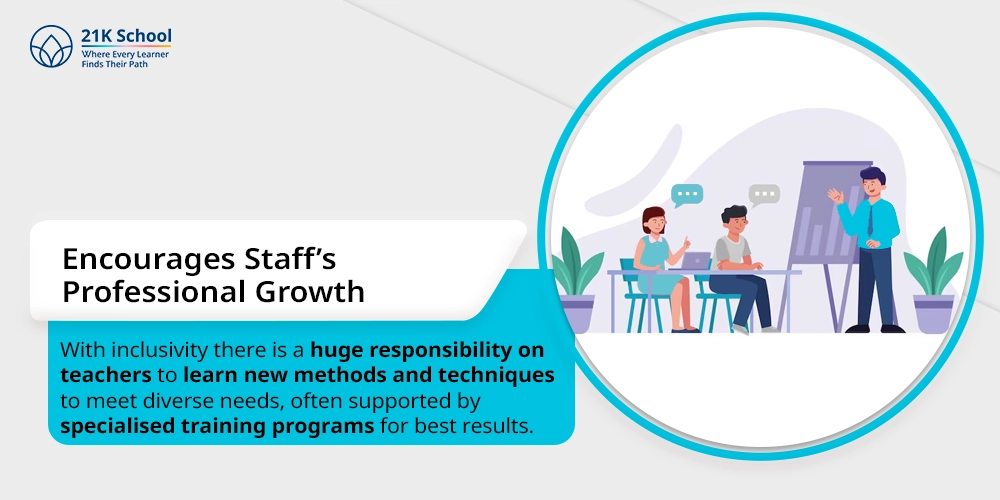
What it means : with inclusivity there is a huge responsibility on teachers to learn new methods and techniques to meet diverse needs, often supported by specialised training programs for best results.
Why it matters: It promotes professional development and helps teachers in handling classrooms more effectively; ultimately contributing to professional satisfaction.
8. Requires strong school leadership
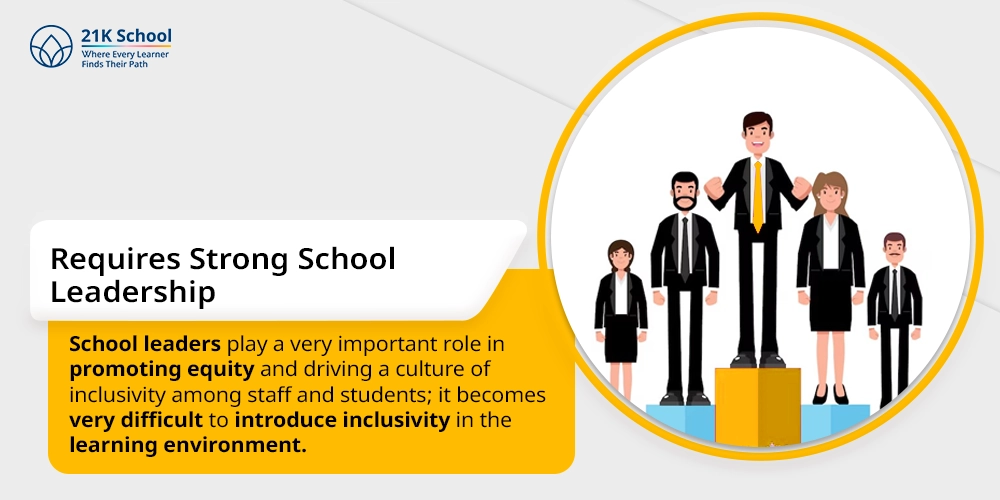
What it means : Inclusivity is not just a concept. School leaders play a very important role in promoting equity and driving a culture of inclusivity among staff and students; it becomes very difficult to introduce inclusivity in the learning environment.
It marks the beginning of the sustainable change happening in the environment promoting social cohesion and acceptance.
Challenges in implementing inclusive education
| Challenges | Description | Impact and Solutions |
|---|---|---|
| Resource Limitations | Lack of teaching aids, infrastructure, and tools for students with disabilities. | Reduces effectiveness of inclusive practices; calls for increased funding and resource allocation. |
| Lack of Training and Awareness | Teachers often struggle due to limited guidance on managing diverse classrooms effectively. | Leads to challenges in supporting students; emphasises the need for comprehensive teacher training programs. |
| Attitudinal Barriers | Prejudices or misconceptions about students with disabilities or differences persist in some settings. | Hampers inclusivity; requires awareness campaigns and empathy-building initiatives to overcome biases. |
Also Read, Top 11 Challenges of Inclusive Education
Conclusion
Will just integrating inclusivity be enough?
inclusion is not a simple act of integrating learners with learning disabilities into the customary schools; instead, it is a process of cultivating equality in schools.
Equality of opportunities, regardless of any factor that comes with it.
Promoting inclusivity in schools will be effective for all learners who have unique attributes but, potentially, worth.
At 21K school, inclusivity is introduced at every stage of the learning process, making sure every easter feels connected to their course and feels comfortable in exchanging ideas and creativity with others, this contributes to their holistic development, making them ready to face the world with confidence.
Frequently asked questions
What is the importance of inclusion?
Inclusion ensures that all individuals feel valued and have equal opportunities, fostering a society that respects diversity and promotes equity.
What are the aims of inclusive education?
The primary aims are to provide equal access to quality education, celebrate diversity, and promote social integration.
Why is exclusive education important?
Exclusive education focuses on specialised programs for specific needs, which can be vital for certain learners requiring intensive support.
About the author
21K School Team
Education Content Specialist
21K School Team is a group of highly talented and like-minded professionals focused on the creation of informative and engaging content for the audience. Coming from diverse writing backgrounds, the team comes up with unique ideas for sharing information with the 21K School audience. When not writing, you can find the 21K School Team members working closely with interdisciplinary teams for impactful content marketing.
Reviewed by
Charu Joshi
Senior Secondary Facilitator
A Delhi based psychology educator and researcher with 9 years of experience in the social and education sectors. Charu integrates digital tools and project-based learning to foster creativity, critical thinking, and real-world problem-solving skills.
Every 21K School guide is written by our education team and reviewed by a subject facilitator before publishing.
Exploring a CBSE-pathway online school?
Talk to an advisor about 2026–27 admissions — no obligation.
Talk to an advisorComments
No comments yet — be the first to share your thoughts or ask a question.