Relationship Between Aims of Education and Curriculum: Simply Explained!
 Written byAnkita SinghaContent Specialist
Last modified: Jul 28, 2026 5 min read
Education is a powerful, purposeful, and systematic process through which students gain knowledge throughout their lives
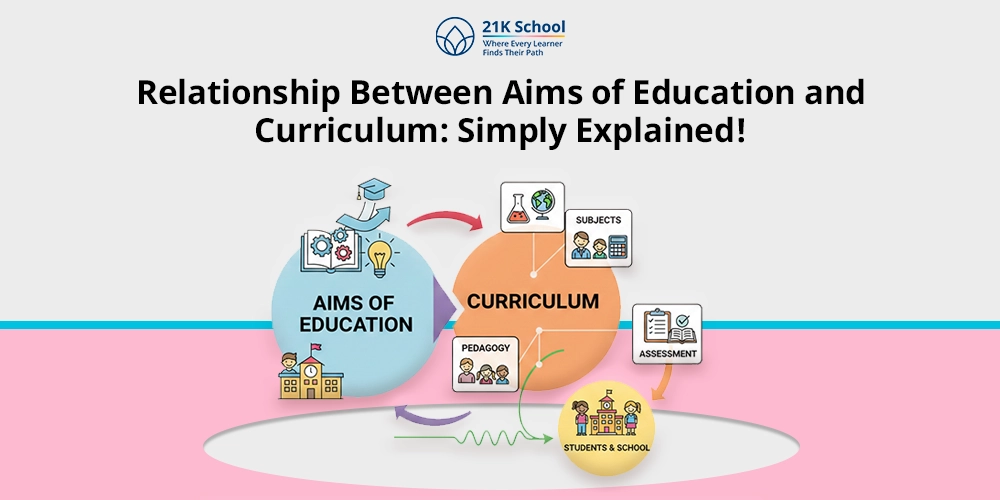
And the two major terms are aims of education and curriculum. Aims of education represents what society expects from its learners and to achieve these aims education requires a practical framework known as curriculum .
This showcases an effective relationship between aims of education and curriculum which help students to enhance their learning experiences.
To explore the relationship between aims of education and curriculum, benefits and challenges, let’s go through a detailed blog.
What are the aims of education?
The aim of education simply means the specific goals or objectives which helps the education system to continue the process of teaching and learning without obstacles.
Some of the key aims of education are:
- intellectual development
- personal growth
- moral development
- social responsibility
What are the aims of curriculum?
Curriculum is a structured set of learning experiences or activities which guides the education process in an academic year in institutions like schools and colleges.
The aim of the curriculum is focusing on overall learning objectives , educational philosophy, and skills development.
Key aims of curriculum:
- intellectual development
- personal growth
- social and cultural transmission
- citizenship
- skill acquisition
- holistic development
- adaptability
Relationship between aims of education and curriculum
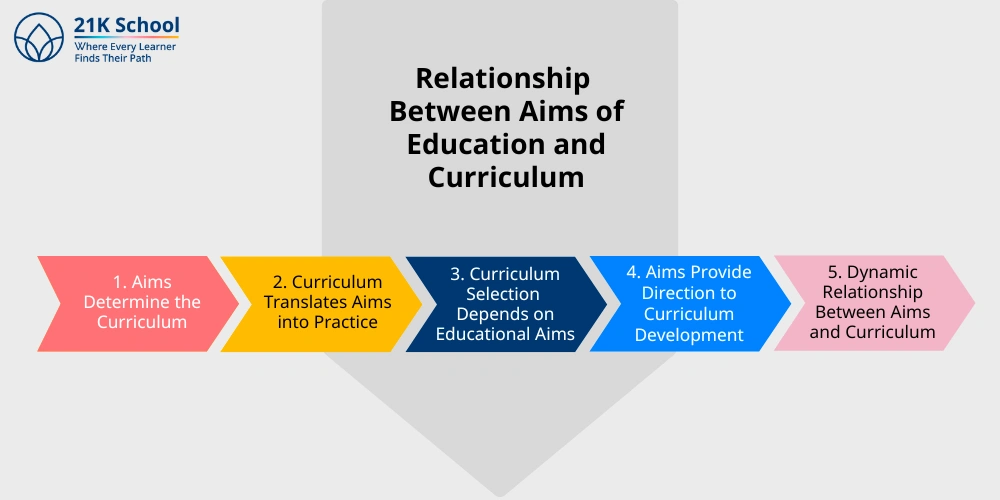
For better understanding of the relationship between aims of education and curriculum, go through the following points:
1. Aims determine the curriculum
For curriculum development, the aim of education works as an initial point. That’s why before creating a curriculum it’s important to define what they want learners to achieve.
For example, including value education and ethical discussions in curriculum to fulfill the aim of moral development.
2. Curriculum translates aims into practice
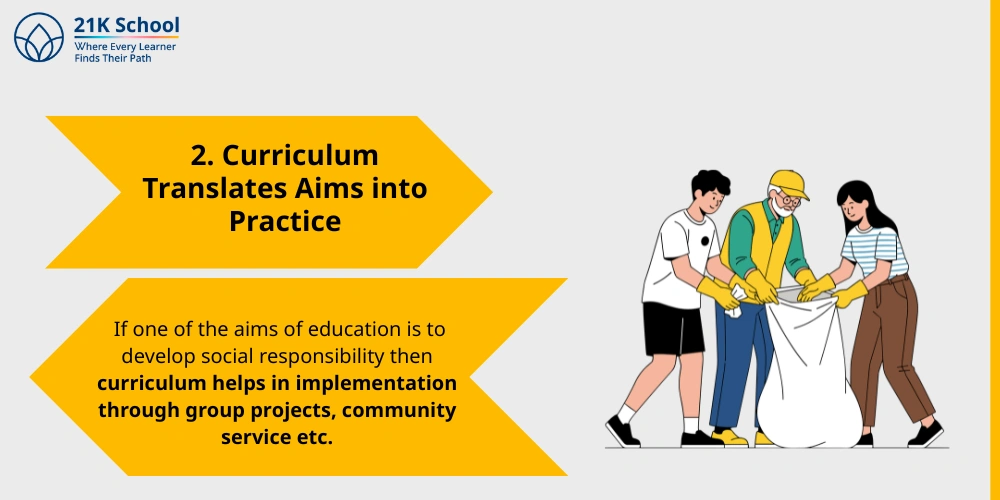
Curriculum translates aims into practice by implementing in the right ways.
For example, if one of the aims of education is to develop social responsibility then curriculum helps in implementation through group projects, community service etc.
3. Curriculum selection depends on educational aims
The curriculum selection depends on the aims of education to make education relevant and purposeful.
For example, selection of subjects, topics, and activities etc should be based on future goals.
4. Aims provide direction to curriculum development
Educational aims are crucial to guide curriculum objectives, teaching-learning strategies and assessment methods.
This ensures consistency and effective structure of learning.
5. Dynamic relationship between aims and curriculum
The relationship between aims of education and curriculum is dynamic in nature. Both evolve and adapt according to societal needs.
For example, technology integration in education to meet the needs of the digital world.
4 benefits of maintaining the relationship between aims of education and curriculum
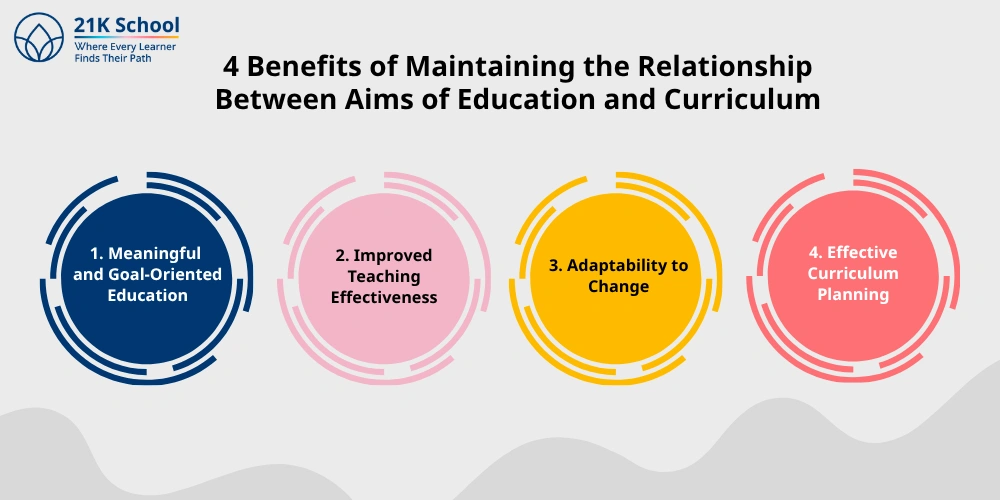
To understand the relationship between aims of education and curriculum go through the benefits:
1. Meaningful and goal-oriented education
Curriculum aligned with aims of education is more effective and meaningful which offers goal-oriented education to learners.
This helps students to understand their learning objectives and contribution to development.
2. Improved teaching effectiveness
The relationship between aims of education and curriculum improves teaching effectiveness where teachers align lessons effectively.
By selecting the right techniques, resources, and assessments, teachers can contribute to learning goals .
3. Adaptability to change
Including aims of education and curriculum help in meeting the requirements of 21st century learning.
This ensures education is not static, it is rapidly changing with the world.
4. Effective curriculum planning
Effective planning is helpful for better learning outcomes, and balanced development of learners for the long run.
4 common issues in maintaining the relationship between aims of education and curriculum
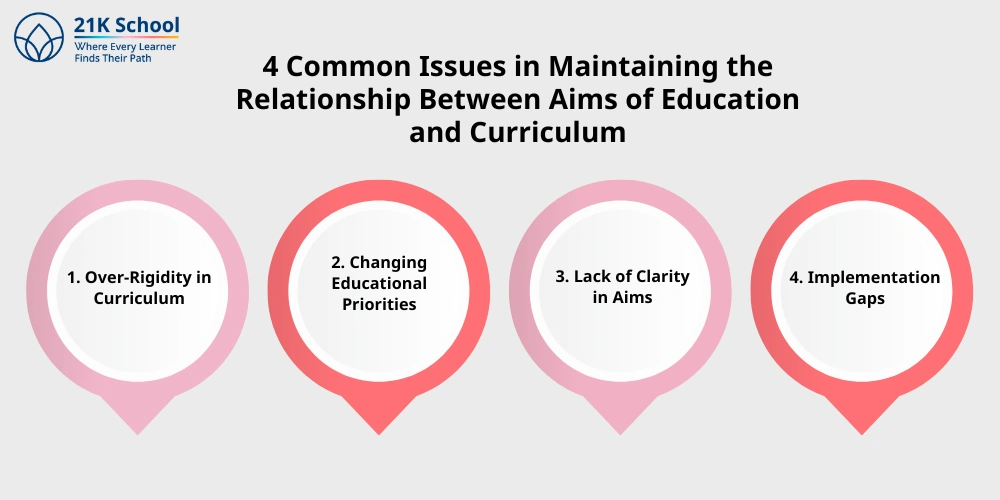
Given below are the common challenges or issues faced in maintaining the relationship between aims of education and curriculum:
1. Over-rigidity in curriculum
Over-Rigidity in Curriculum is one of the challenges faced by schools while implementing the aims of education and curriculum.
2. Changing educational priorities
With time educational objectives and societal needs change and evolve.
Frequent change in policies and curriculum can impact on students’ learning.
3. Lack of clarity in aims
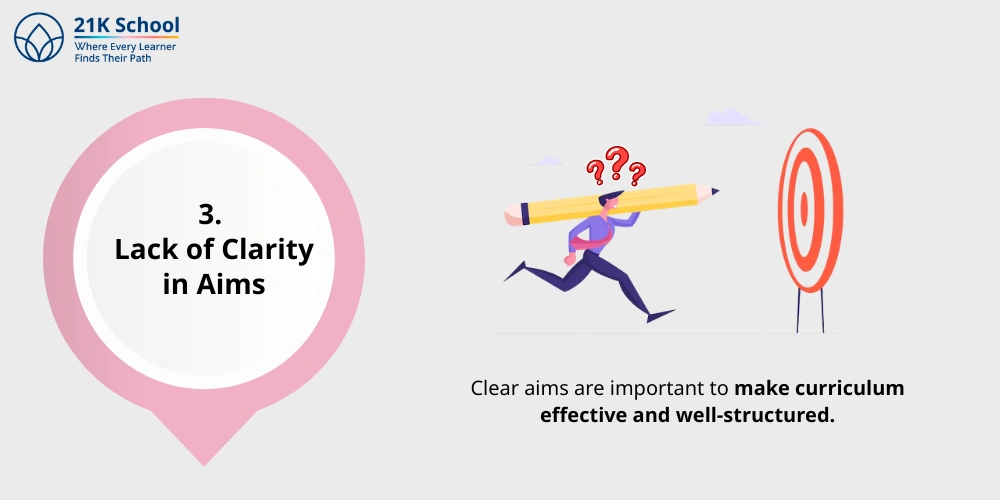
One of the common issues that arise if aims are poorly defined can lead to confusion.
Clear aims are important to make curriculum effective and well-structured.
4. Implementation gaps
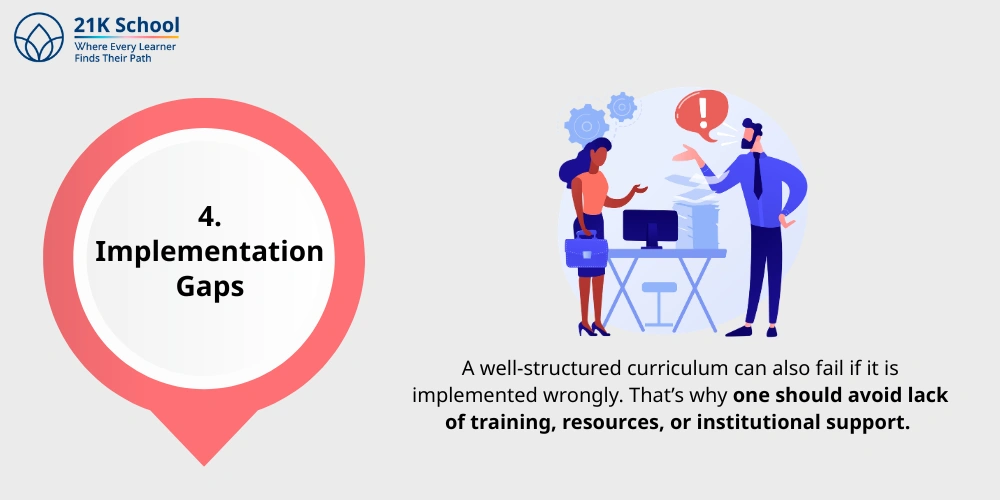
A well-structured curriculum can also fail if it is implemented wrongly.
That’s why one should avoid lack of training, resources, or institutional support.
Conclusion
A clear understanding of the relationship between aims of education and curriculum ensures the success of any educational system.
Both work together to enhance students’ experience for lifelong learning . The aims of education and curriculum ensures that education fulfills its true purpose.
Frequently asked questions
5 questions
Why are aims important in curriculum development?
The aims important in curriculum development because it provide: direction and vision framework for objectives assessment alignment relevance and future preparation
Can curriculum exist without educational aims?
No. A meaningful curriculum cannot truly exist without educational aims. It is because without educational aims the direction, purpose, and measurement of success are lost.
How do changing societal needs affect curriculum design?
In the 21st century, changing societal needs affect curriculum design by demanding new skills, relevant content, and adaptable teaching methods.
What is the aim of physical education class 11?
The aim of physical education class 11th focus on: physical development social development psychological development health and knowledge development motor skill development lifelong fitness It is important to note here that these aims may vary by educational board/curriculum, or cite specific CBSE documentation.
What is the vocational aim of education?
The vocational aim of education helps people to prepare for particular jobs and careers where they can improve practical skills, technical knowledge, and positive work attitudes for employment and self-growth.
About the author
Ankita Singha
Content Specialist
Ankita Singha is an Education Content Specialist at 21K School, India’s first accredited fully online K-12 School. She focuses on the in-depth research and creation of the well-drafted guides on early childhood education, school admission processes, and CBSE/ICSE curriculum guidance. With more than 2 years of experience at 21K School, a fully accredited institute- Cambridge International (IA702) and Pearson Edexcel (94883), Ankita works closely with the school’s curriculum heads and academic coordinators. Ankita’s every article reflects on the official board guidelines, practical realities, and current policies of online education in 78+ countries. Ankita’s content has helped thousands of parents in understanding the topics like RTE eligibility, NIOS pathways, and age-appropriate admission criteria.
Every 21K School guide is written by our education team and reviewed by a subject facilitator before publishing.
Exploring a CBSE-pathway online school?
Talk to an advisor about 2026–27 admissions — no obligation.
Talk to an advisorComments
No comments yet — be the first to share your thoughts or ask a question.