

Is the education that our children are getting in repeated traditional curriculums enough?
We have been practicing the same learning methods and for decades, but our motive is to create wholly-developed individuals, rather than just skilled employees.
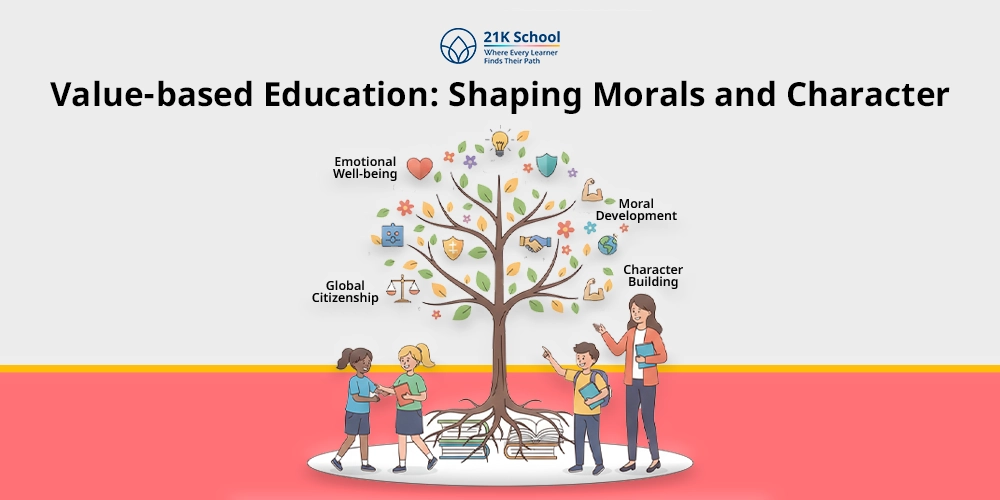
Value-based education focuses on learning along with developing moral and ethical values that would drive the behaviour of human beings.
It enables the learners to become more responsible emotionally, and develop integrity toward themselves as well as others.
The following article will introduce you to the basics of value-based education and how it can be carried out in present schools .
Contents
What is Value-Based Education?
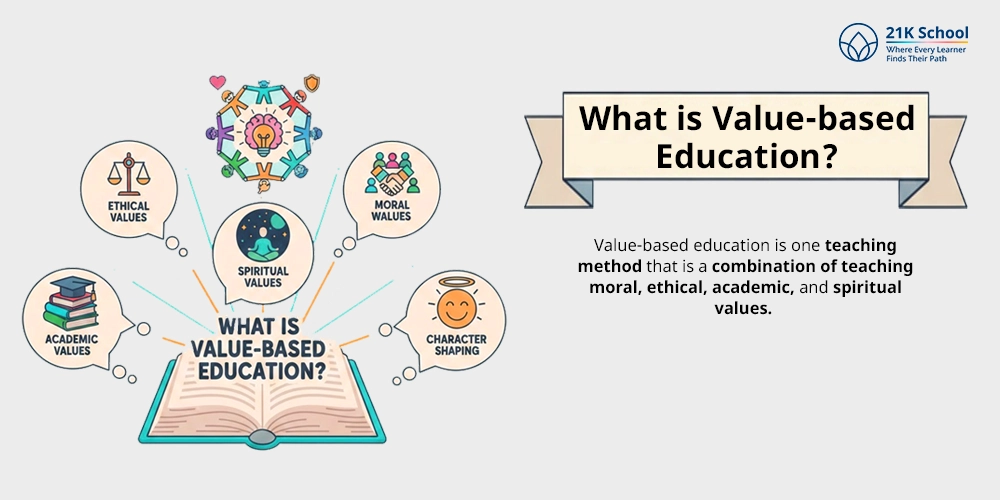
Value-based education is one teaching method that is a combination of teaching moral, ethical, academic, and spiritual values.
It emphasizes on shaping the character of the students in general by inculcating the universal human values which include honesty, respect, love, peace, and responsibility.
Learning in this system encompasses the way of living in society and making a positive impact on the world.
Value-based education makes students form ethical choices, respect one another by maintaining justice, and compassion in everything they do in life.
5 Importance of Value-Based Education
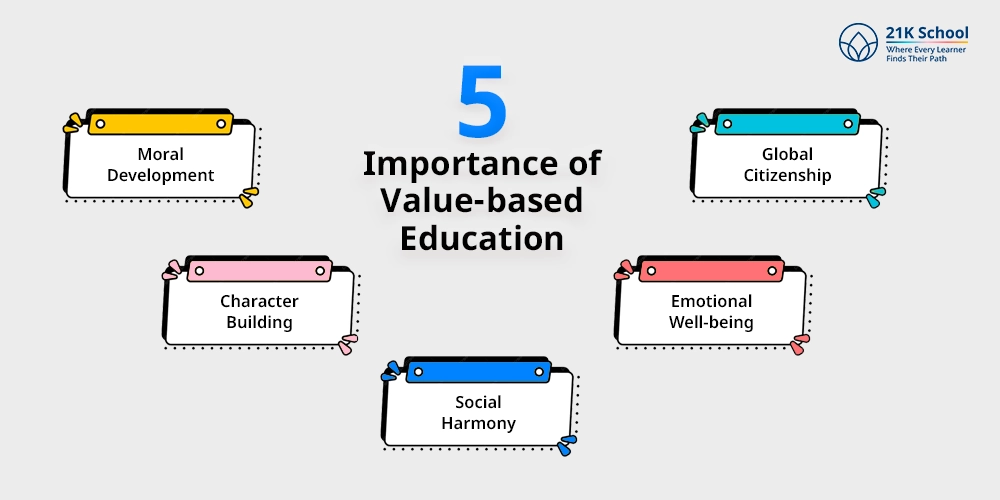
Value-based education is an important factor in the development of individuals and societies.
These are five significant reasons as to why value-based education is a big deal:
1. Moral Development
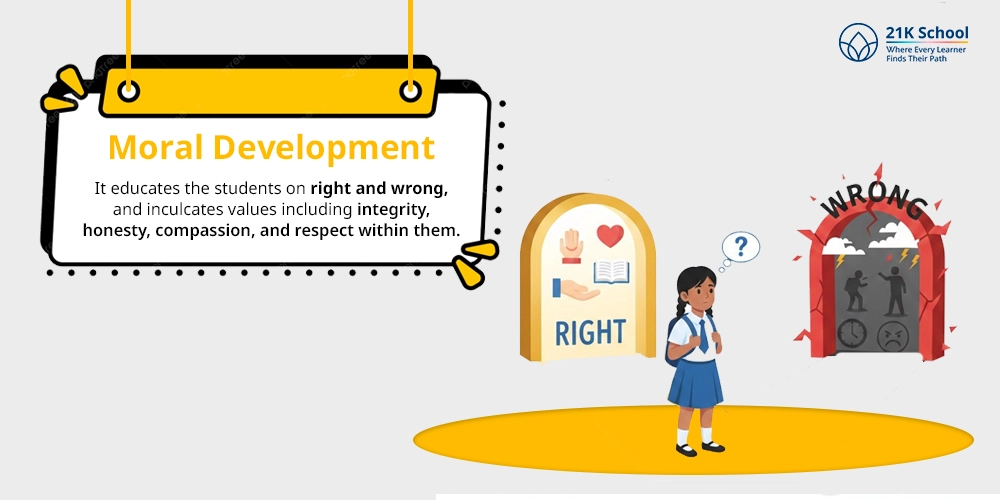
The most crucial goal of value-based education is to enhance morality.
It educates the students on right and wrong, and inculcates values including integrity, honesty, compassion, and respect within them.
Moral education instills courage in the learner to have a good conscience that they use to make viable decisions.
It arms them to confront ethical dilemmas in a wise manner so that they will not behave in unethical ways, at personal or professional levels.
2. Character Building
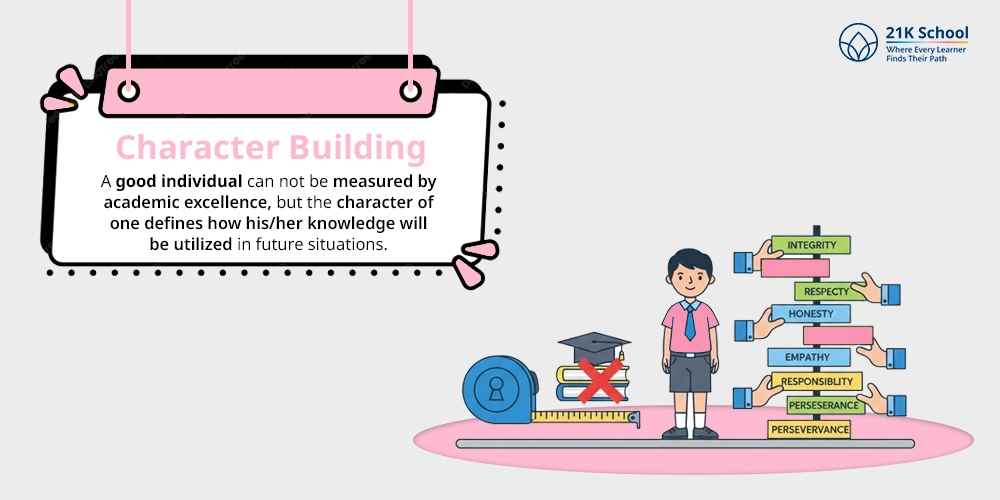
Another crucial part of value-based education is character building.
A good individual can not be measured by academic excellence, but the character of one defines how his/her knowledge will be utilized in future situations.
Values such as discipline, empathy , humility and perseverance are taught through value-based education that shapes them into accountable, and respectful people.
It establishes a good moral base that results in self-development and social coexistence.
3. Social Harmony
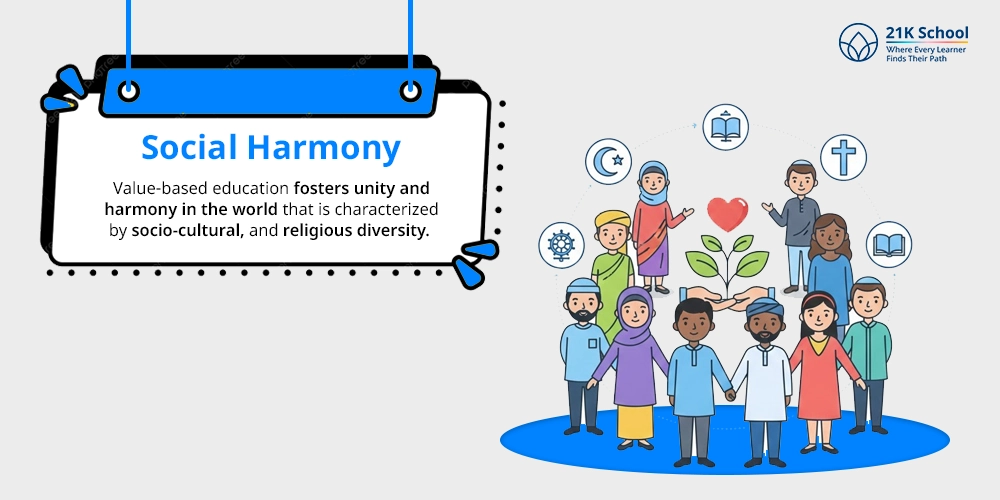
Value-based education fosters unity and harmony in the world that is characterized by socio-cultural, and religious diversity.
It promotes tolerance towards differences and a feeling of unity amongst people of diverse backgrounds.
In establishing a society of equal communities, students also get to know the significance of cooperation, equality, and justice.
Hence, resulting in better communities and a peaceful society.
4. Emotional Well-being
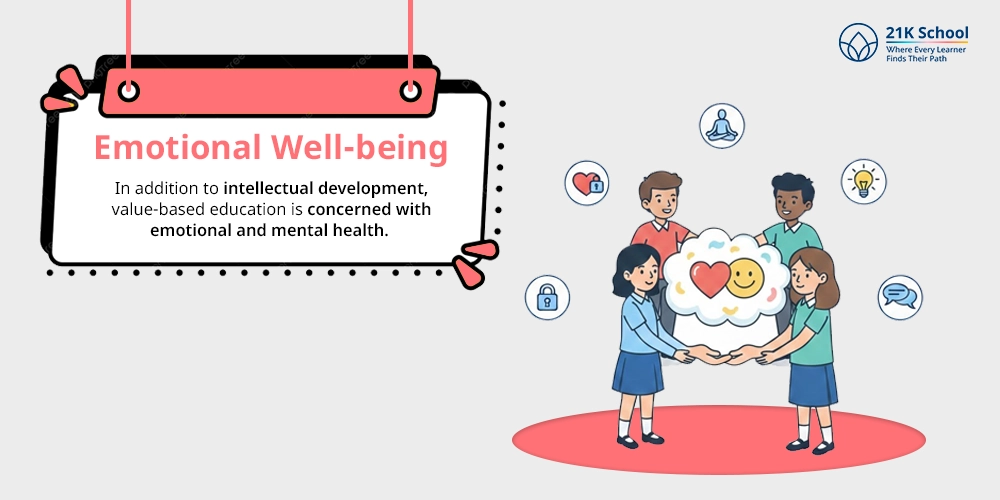
In addition to intellectual development, value-based education is concerned with emotional and mental health.
It also educates learners to deal with anger, fear, jealousy, and stress in a mindful yet empathetic way.
Emotionally stronger and resilient students are the learners that practice values like gratitude, forgiveness, empathy, and compassion.
This emotional intelligence enables them to build good relationships, make good decisions for living balanced and fulfilling lives.
5. Global Citizenship
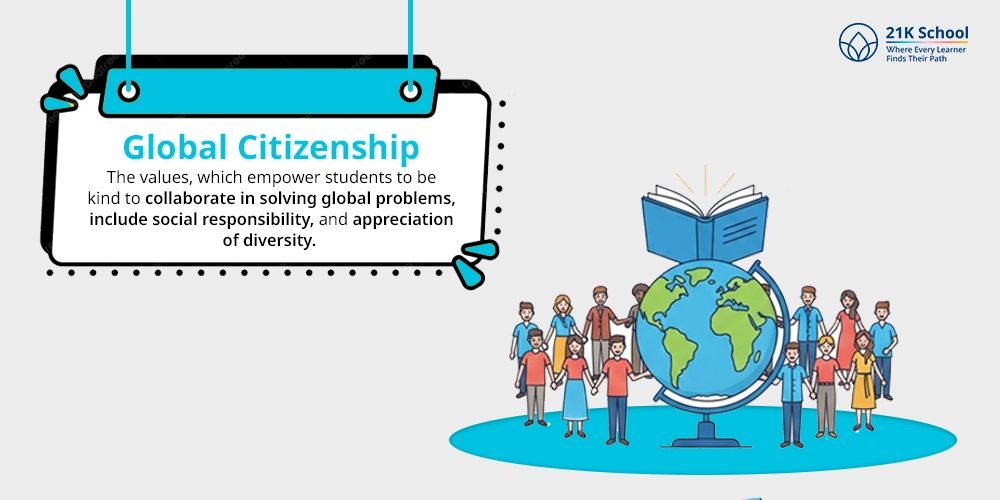
Education that is based on values develops the attributes of being global citizens.
It encourages the learners to look past their own national interests, and strive towards the overall well-being of humanity.
The values, which empower students to be kind to collaborate in solving global problems, include social responsibility, and appreciation of diversity.
This kind of education fosters responsible leaders who would do anything to make the world just and peaceful.
Objectives of Value-Based Education
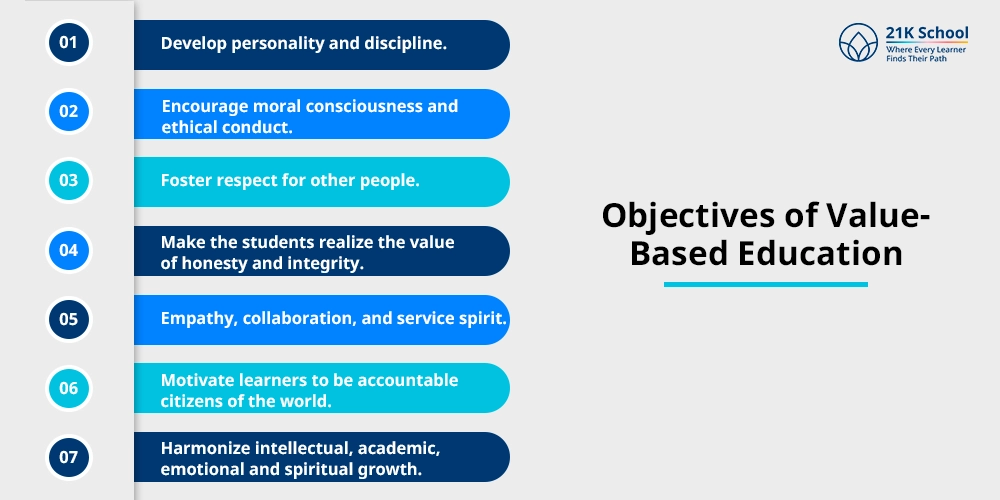
Value-based education has more than academic achievements as its objectives. They want to be able to raise moral, and responsible human beings.
Key objectives include:
- To encourage moral consciousness and ethical conduct.
- To foster respect for other people, despite dissimilarities.
- To make the students realize the value of honesty and integrity.
- To come up with empathy, collaboration, and service spirit.
- To motivate learners to be accountable citizens of the world.
- To harmonize intellectual, academic, emotional and spiritual growth.
Implementation of Value-Based Education
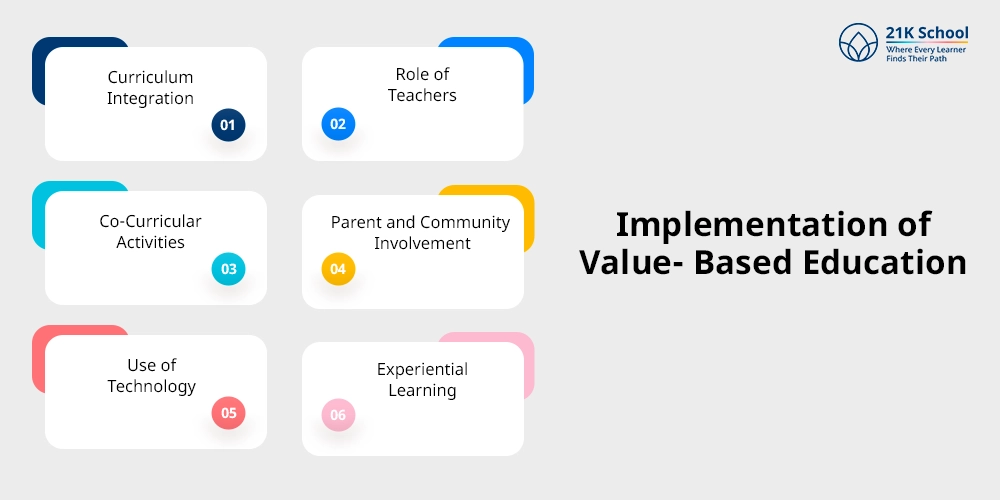
Value-based education is something that should be implemented in collaboration between teachers, parents, schools, and communities.
Considering it as a separate subject would be less beneficial than assigning it as a constituent component of the whole educational experience.
The following are some of the effective implementation of value-based education:
1. Curriculum Integration

Ethics have the capacity to be instilled in other subjects such as literature, history, philosophy, or even science.
As an example, moral values for students can be emphasized by means of stories and biographies.
The historical events can show the effects of ethical or unethical behavior.
Reflective discussions, or debates, are also activities that can be added by teachers so that students analyze the ethical problems and implement the practicable values.
2. Role of Teachers
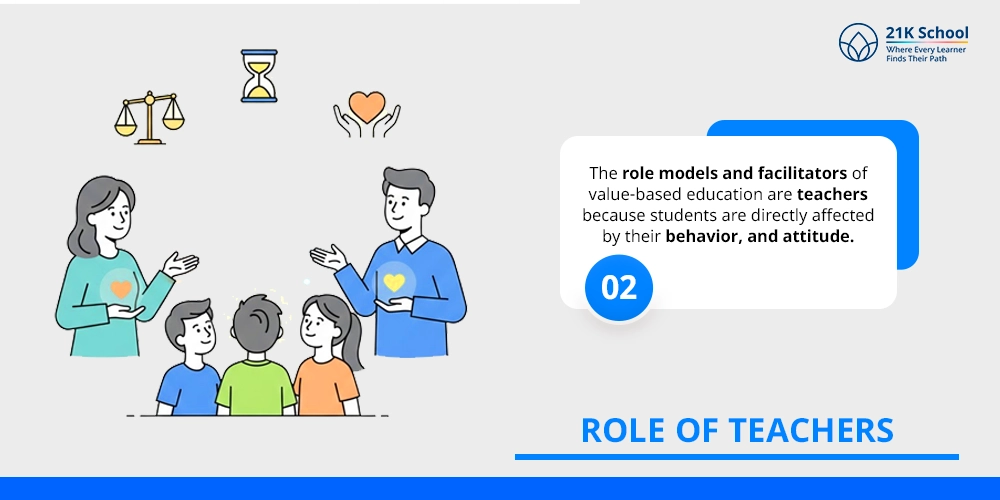
The role models and facilitators of value-based education are teachers because students are directly affected by their behavior, and attitude.
Teachers can set examples of fairness, patience, and compassion to make students follow these three virtues.
They are also able to foster a transparent dialogue on morals, accountability, and empathy.
Hence, the classroom becomes a supportive environment on moral development.
3. Co-Curricular Activities
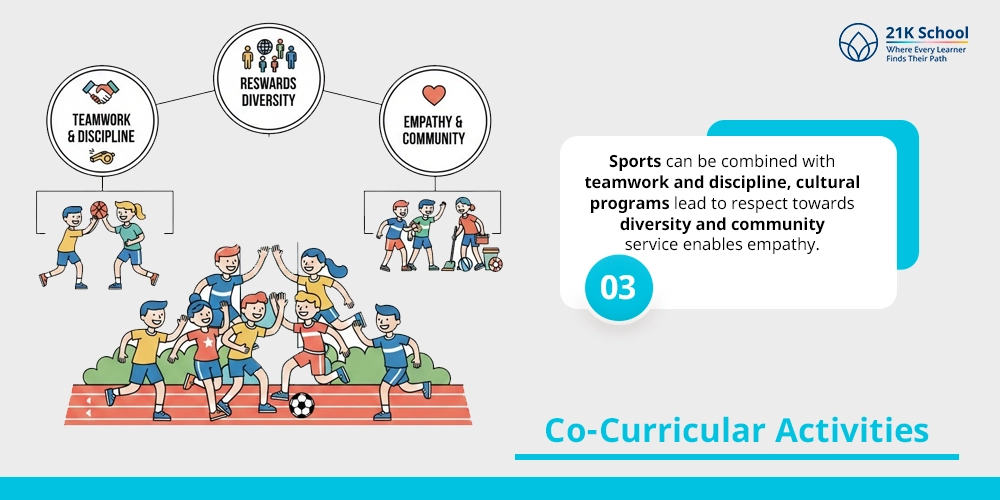
Co-curricular activities are significant in inculcation of values.
Sports can be combined with teamwork and discipline, cultural programs lead to respect towards diversity and community service enables empathy.
An effective method of assisting students to develop values is through the means of clubs, debates, art competition and environmental campaigns.
4. Parent and Community Involvement
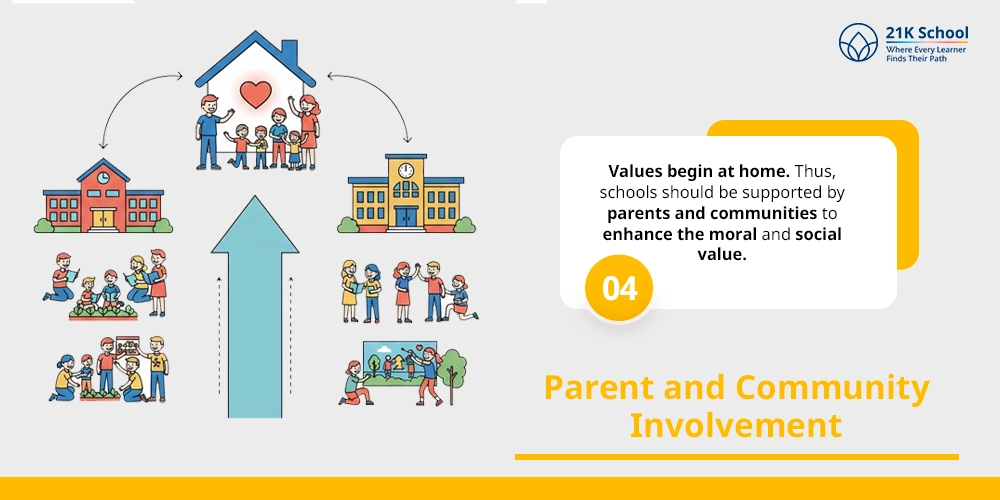
Values begin at home. Thus, schools should be supported by parents and communities to enhance the moral and social value.
Parents are supposed to be at the forefront, by acting as models of integrity, kindness and respect.
Moral values are also enhanced among the youths through community engagement activities such as the social service drives or environmental awareness program.
5. Use of Technology
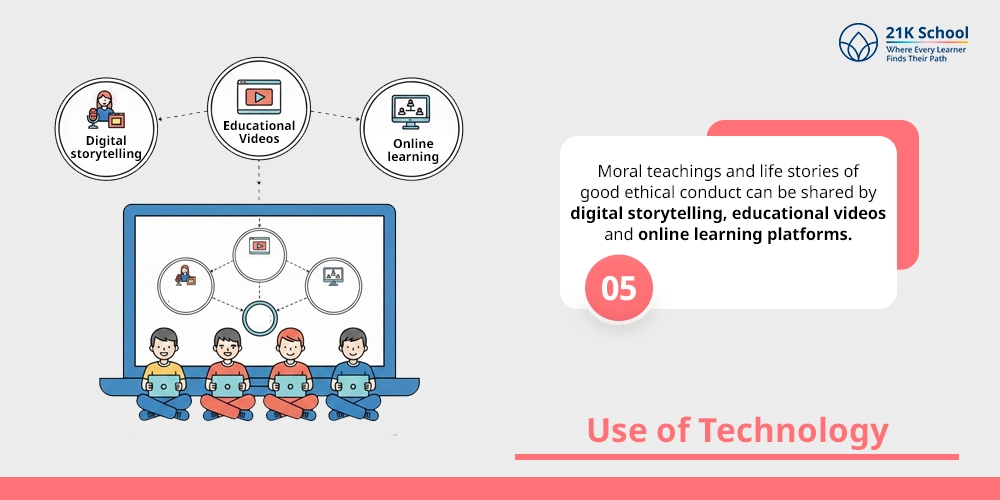
Value-based learning can be facilitated by the use of technology.
Moral teachings and life stories of good ethical conduct can be shared by digital storytelling, educational videos and online learning platforms .
But there must be responsible use of technology with meaningful content.
It promotes compassion, integrity and increased awareness instead of being distracting and misleading.
6. Experiential Learning
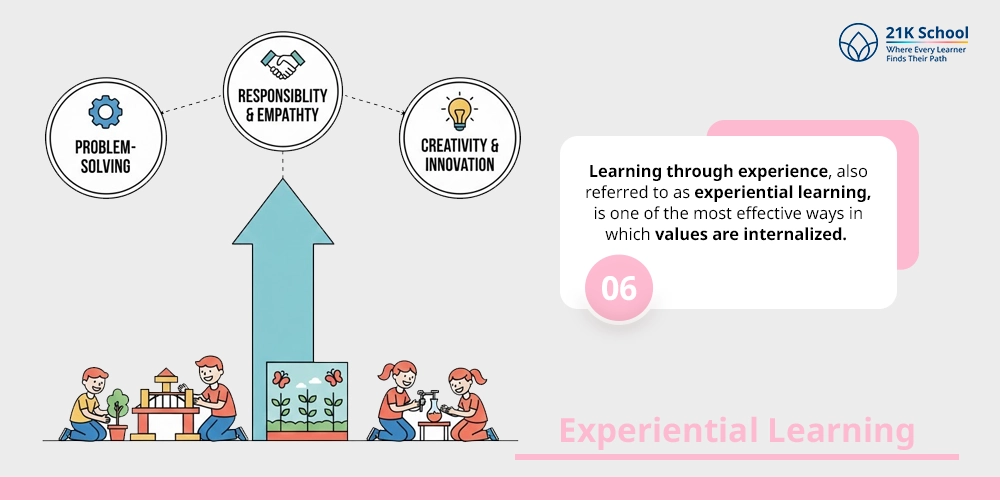
Learning through experience, also referred to as experiential learning , is one of the most effective ways in which values are internalized.
Students may engage themselves in volunteering, environmental-related work, or mentorship when they have an opportunity to practice empathy and responsibility.
The values, which are otherwise abstract notions, are brought to life by such real world experiences into actions.
Challenges in Implementing Value-based Education
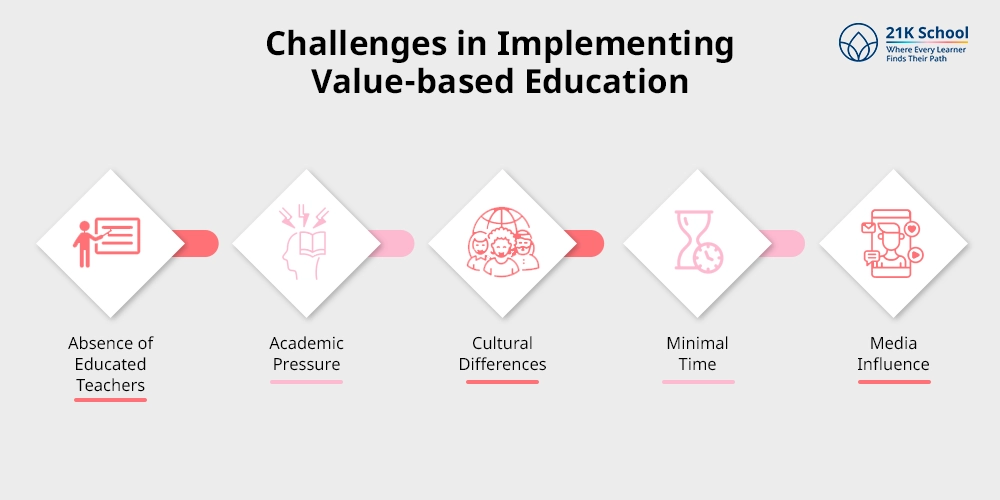
Though there are many benefits of value-based education plans, some challenges make it tough to execute in the classes:
- Absence of Educated Teachers: There are a lot of teachers who are poorly or least trained to impart values in their teachings.
- Academic Pressure: Academic institutes tend to put attention on just increasing grades in examinations rather than on some moral growth.
- Cultural Differences: The cultural differences in the way values are perceived may result in a challenge of developing a common basis.
- Minimal Time: Insufficient academic time for a huge syllabus limits the time to have value-based purposeful sessions.
- Media Influence: Children are today exposed to negative consumerism. It influences the teachings of morality poorly.
Concluding Comments
Value-based education is the foundation of a significant, and well-rounded education system, which transcends academics to learnings from heart, and soul.
We would have a better world if value-based education is applied more actively.
“Education which does not mould character is absolutely worthless”, as Mahatma Gandhi once said.
Thus, schools, parents, and communities need to collaborate to make sure that every child learns from values.
This is to build valuable academic strengths in them and shape them as accountable residents of the nation.

You may also want to read