

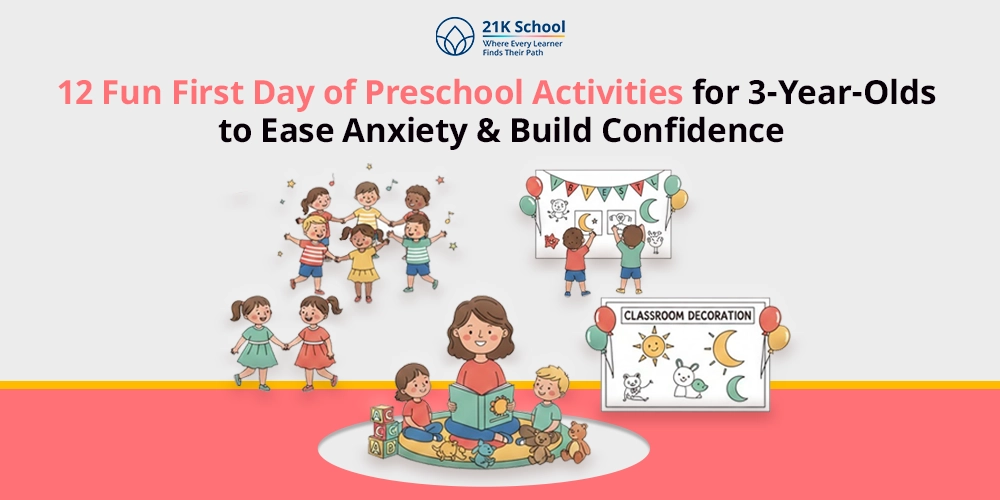
What do you think are the fun and exciting activities that can make the first day of preschool a happy, confident and memorable experience for a 3-year-old child?
The opening day of preschool is a very thrilling and significant day for the 3-year-olds as they enter the new learning world. The first day of activities allow children to feel secure and glad, as if they are in their home in the classroom.
Easy, entertaining, and activity-based learning games facilitate social interaction, foster trust with the educators, and decrease the level of separation anxiety.
These activities make young children adapt easily, gain confidence , and embark on a joyful and curious journey in preschool by being playful, creative, and routine.
Contents
Top 12 First Day of Preschool Activities for 3-Year-Olds
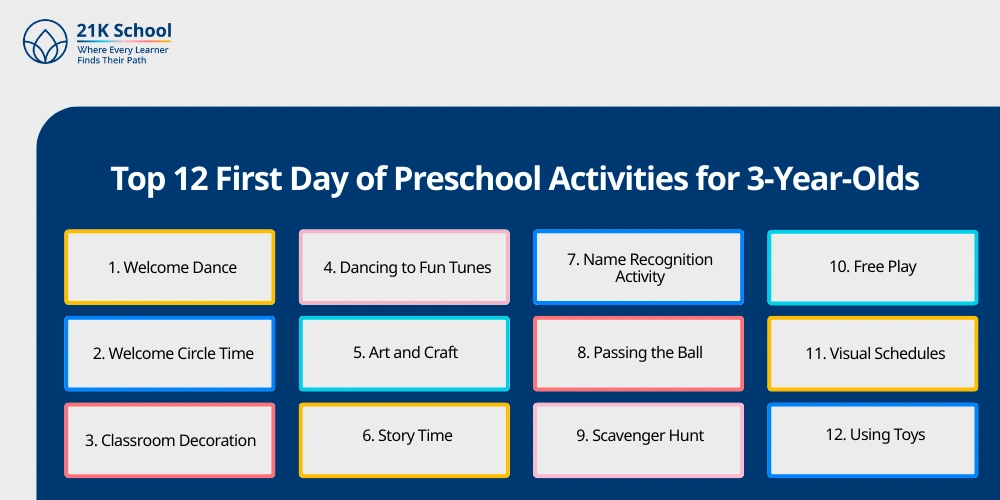
The activities of the first day of preschool with 3-year-old children are oriented to make the children feel safe, happy, and comfortable in a new place. The activities involve play, interaction and routine to minimise student stress , confidence building and social bonding; this is done on the first day itself.
1. Welcome Dance
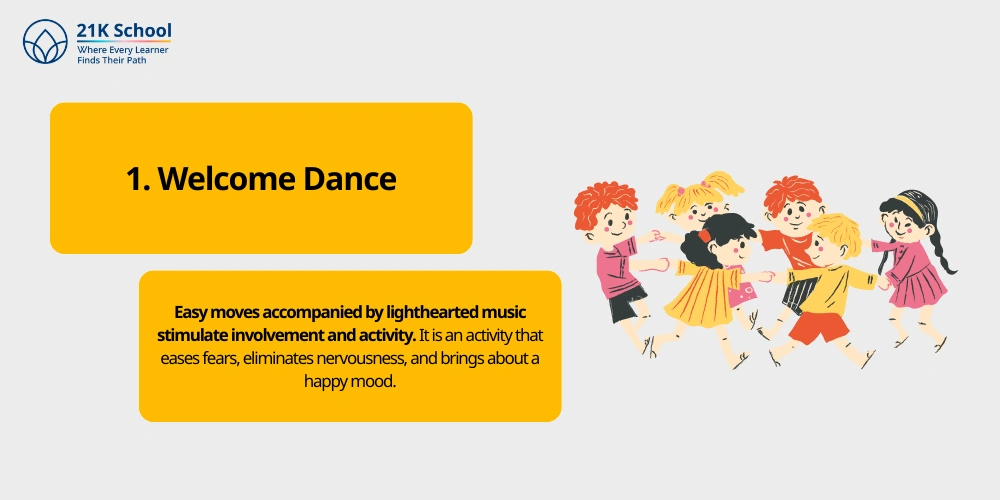
One of the most entertaining activities is a welcome dance that would make the children happy and comfortable on their first day in preschool. Easy moves accompanied by lighthearted music stimulate involvement and activity. It is an activity that eases fears, eliminates nervousness, and brings about a happy mood.
It also promotes motor skills and enables the children to feel attached to the classroom and the teacher.
2. Welcome Circle Time
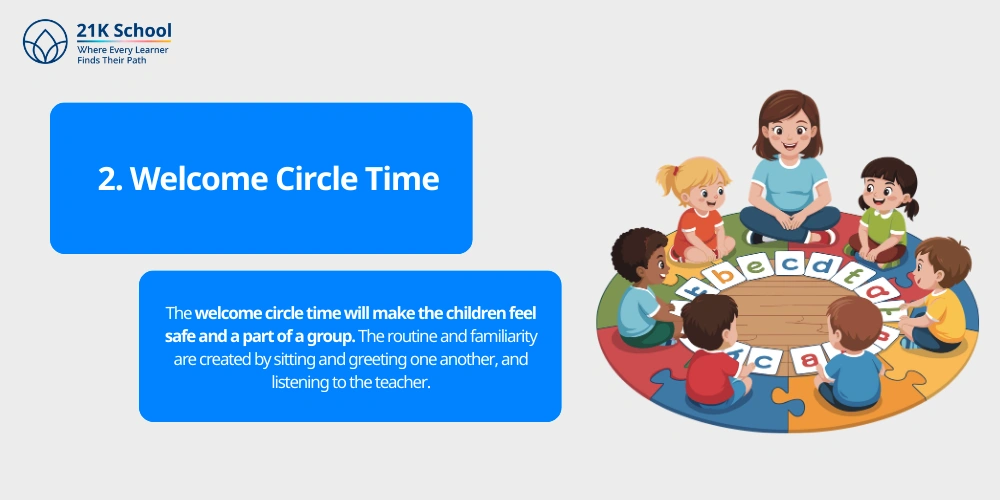
The welcome circle time will make the children feel safe and a part of a group. The routine and familiarity are created by sitting and greeting one another, and listening to the teacher.
The activity enhances listening, promotes social skills , interaction, and makes children realise that the classroom is a welcoming and positive learning environment .
3. Classroom Decoration
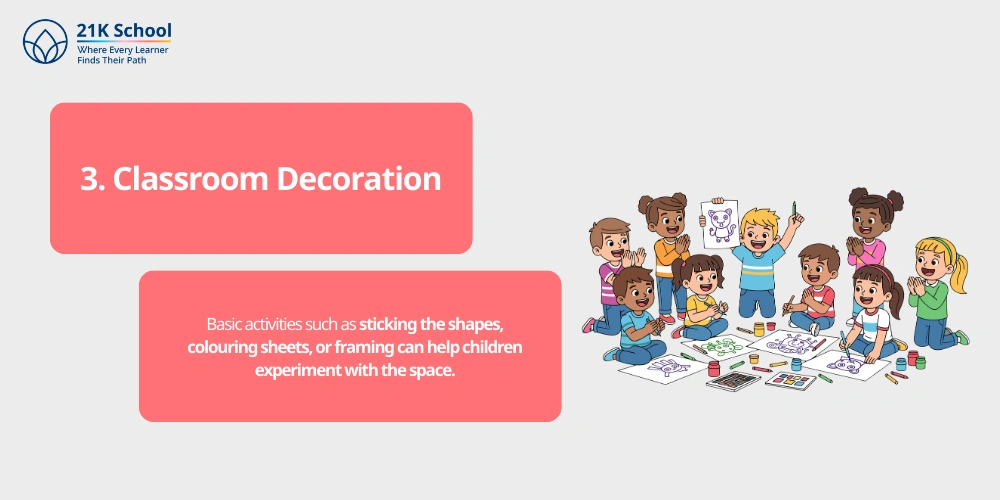
Child participation in classroom decoration also makes the children feel that they own and belong. Basic activities such as sticking the shapes, colouring sheets, or framing can help children experiment with the space.
This exercise enhances creativity, fine motor skills and makes children feel proud and attached to the classroom environment.
4. Dancing to Fun Tunes
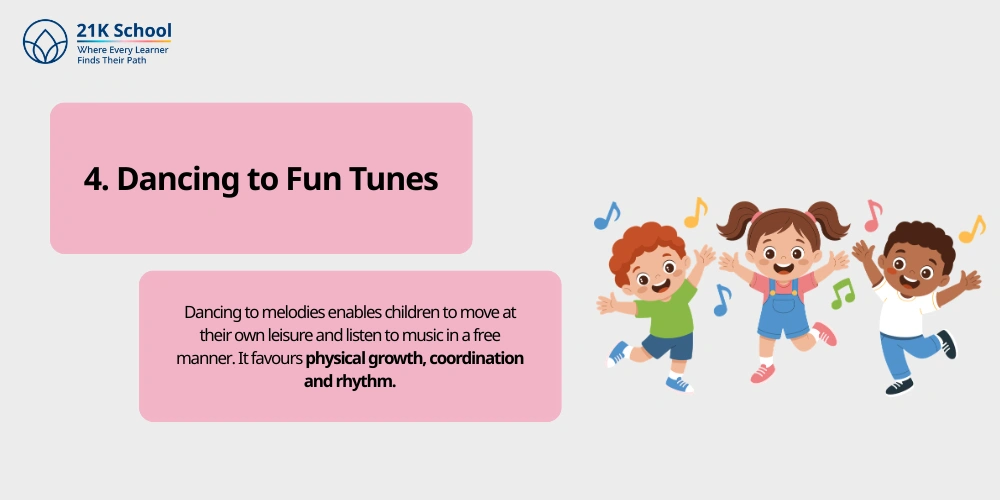
Dancing to melodies enables children to move at their own leisure and listen to music in a free manner. It favours physical growth, coordination and rhythm.
The activity will allow the children to get rid of additional energy and get less nervous, establishing an optimistic atmosphere, thus making them more adaptable to the preschool study routine .
5. Art and Craft
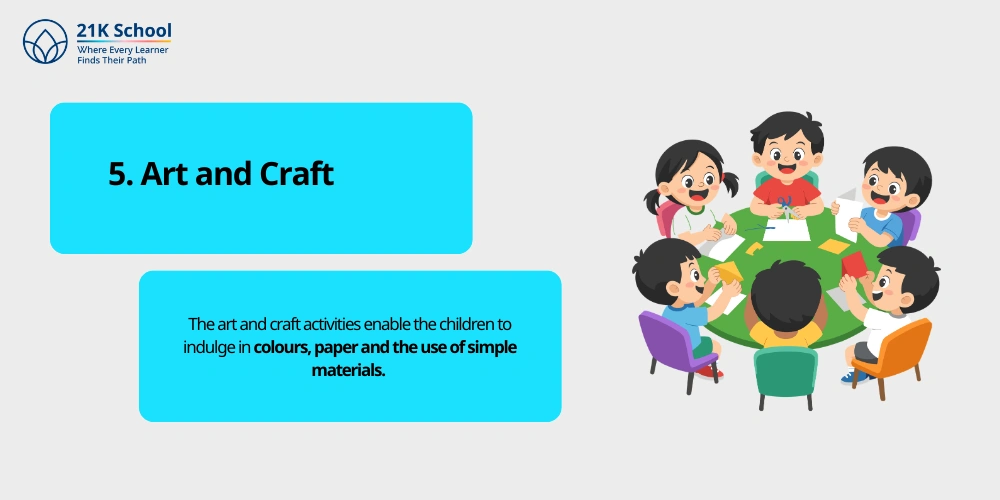
The art and craft activities enable the children to indulge in colours, paper and the use of simple materials. These exercises enhance hand-eye coordination, fine and gross motor skills and concentration.
Art can also be used to make the classroom more pleasant and enjoyable as it enables the children to relax, gain self-confidence and have fun in creating something special.
6. Story Time
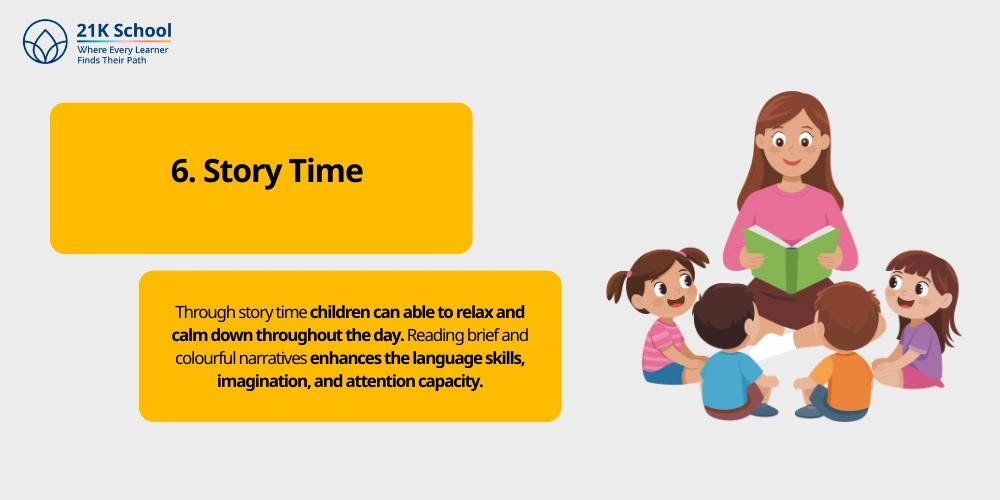
Through story time children can able to relax and calm down throughout the day. Reading brief and colourful narratives enhances the language skills , imagination, and attention capacity.
It also makes the children emotionally stable as they identify with the teacher. The topic of story time presents learning in a friendly and fun in learning manner.
7. Name Recognition Activity
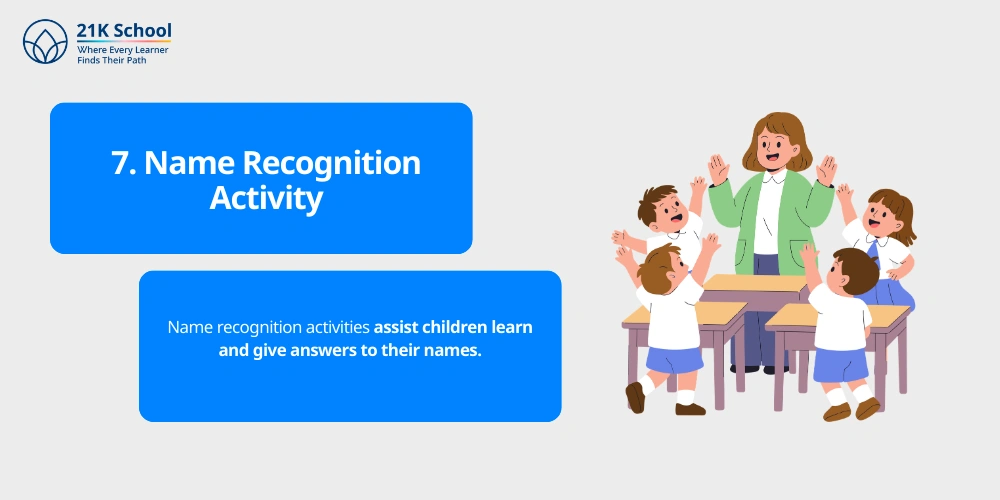
Name recognition activities assist children learn and give answers to their names. The familiarity and confidence are developed using name cards, songs, or pictures.
The activity facilitates early childhood education , enhances attention and makes the children feel valuable and appreciated in the classroom as individuals.
8. Passing the Ball
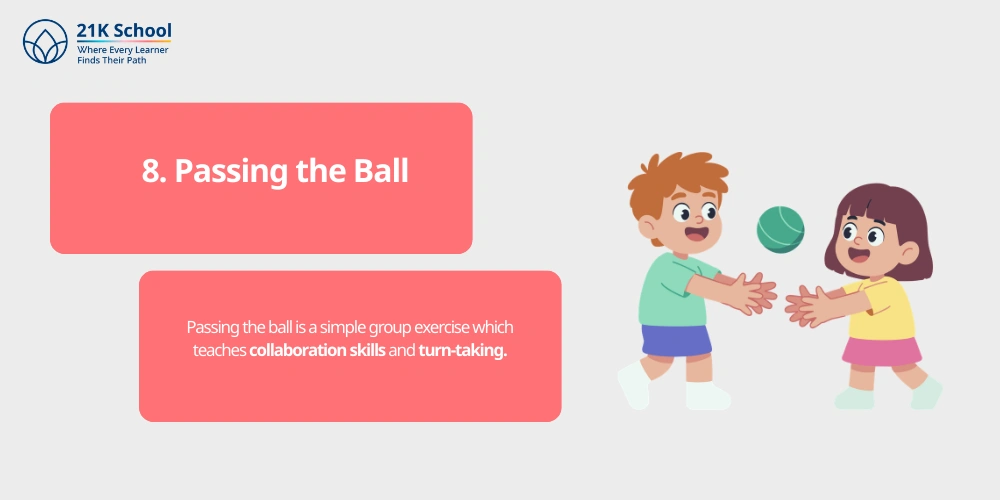
Passing the ball is a simple group exercise which teaches collaboration skills and turn-taking. Children are also taught patience and obedience to simple instructions.
The activity promotes motor prowess, coordination and helps children in social interaction, as well as enabling the children to learn how to contribute to group play in a fun and supportive manner.
9. Scavenger Hunt
The scavenger hunt is quite an easy game that enables children to play around their new classroom in a fun manner. Interest and trust emerge through the discovery of familiarity.
Engaging in this activity will aid movement, observation, and curiosity and make children feel at ease and accustomed to their surroundings and classroom materials.
10. Free Play
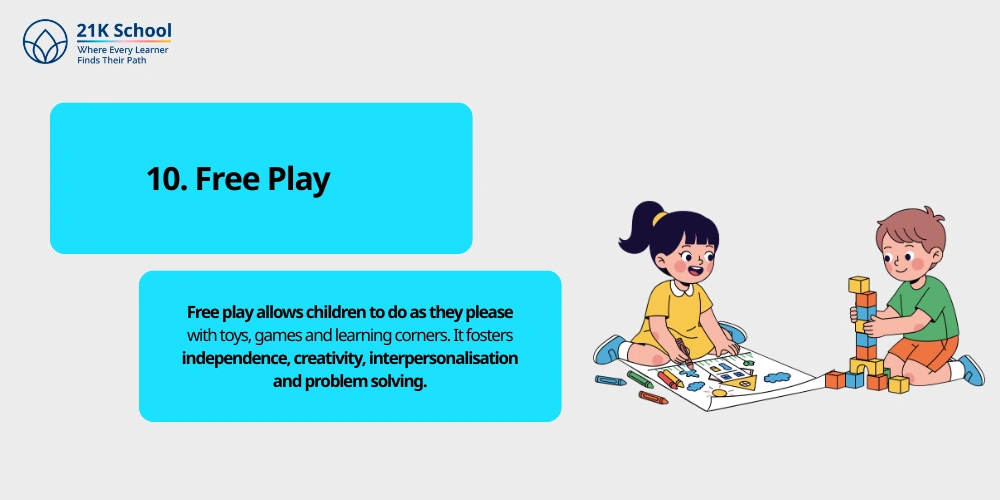
Free play allows children to do as they please with toys, games and learning corners. It fosters independence, creativity, interpersonalisation and problem solving .
As those children become accustomed to the classroom environment, they are able to socialise, make choices and become comfortable with the process. This is an unorganised play required in the emotional, cognitive development and social development of the preschoolers.
11. Visual Schedules
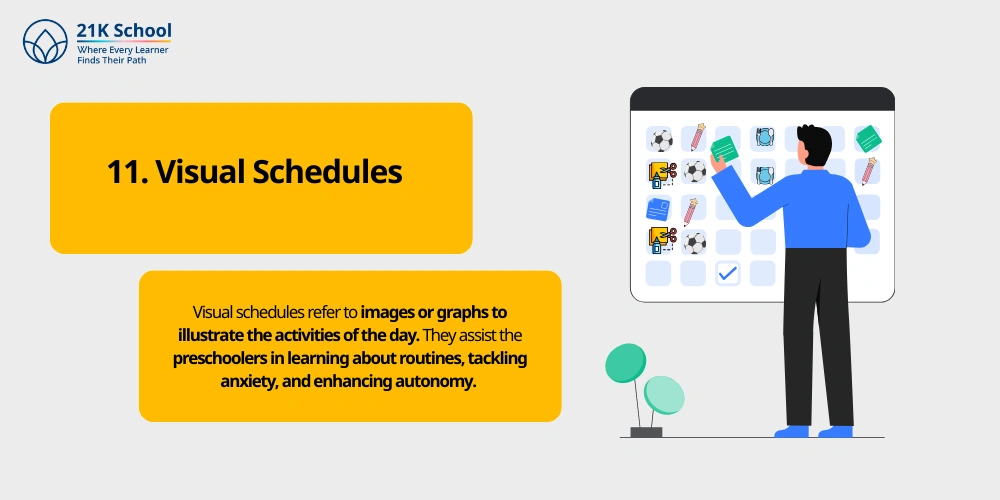
Visual schedules refer to images or graphs to illustrate the activities of the day. They assist the preschoolers in learning about routines, tackling anxiety, and enhancing autonomy.
Children feel safe and concentrated by being aware of what is going to happen next. The visual schedules also facilitate memory, time, and easy transitions between activities, and the classroom setting is child-friendly and predictable.
12. Using Toys
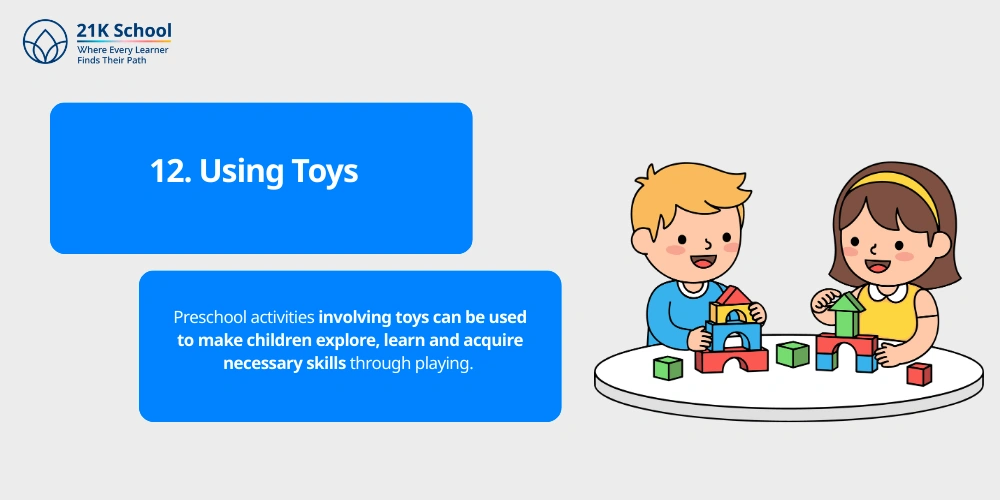
Preschool activities involving toys can be used to make children explore, learn and acquire necessary skills through playing. Toys stimulate creativity, imagination and problem-solving skills and enhance fine motor skills.
Also, they facilitate social interaction, sharing, and collaborative play, which makes children feel at home in the surroundings and eventually adjust to the routine of the classroom in a fun and interactive manner.
Conclusion
The first day of preschool is known to be the determinant of a learning experience of a child, especially among 3-year-old children. Frivolous, simple and fun learning activities make children feel safe, accepted and at ease in a new environment.
Music, interaction, play and art help children to establish trust, friendship and belonging.
The first-day activities will be properly arranged to reduce anxiety, encourage participation, transform a classroom into a happy place and assist young learners to enter the preschool excited, comfortable, and inquisitive.

You may also want to read