

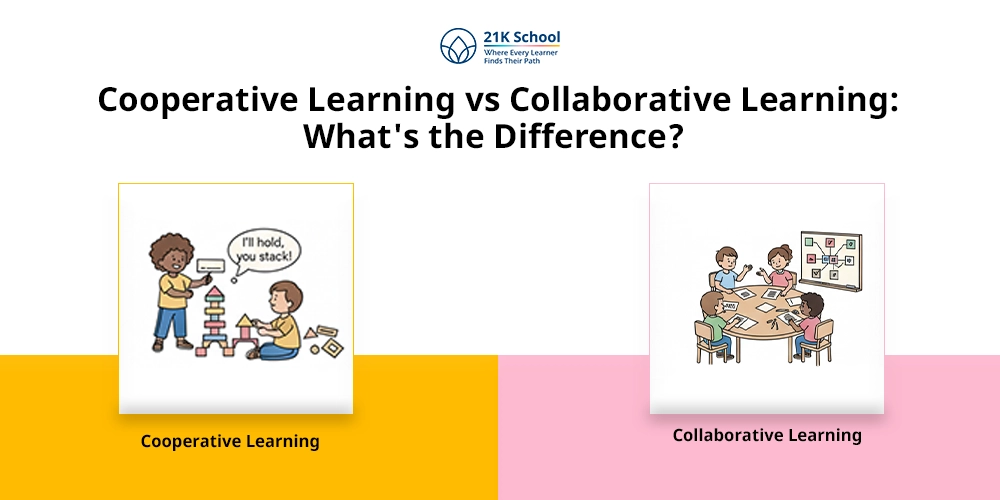
With time teaching and learning strategies are evolving and modern classrooms are now designing beyond traditional learning .
Various popular techniques such as cooperative and collaborative learning are common examples. Both techniques are effective and used to make modern education meaningful.
But, sometimes both the terms are used interchangeably. That’s why understanding the difference between cooperative learning vs collaborative learning is important.
Whether you are a teacher, parent, or student, this guide will take you to the journey where we explore what cooperative and collaborative learning mean and the key difference between.
Contents
What Is Cooperative Learning?
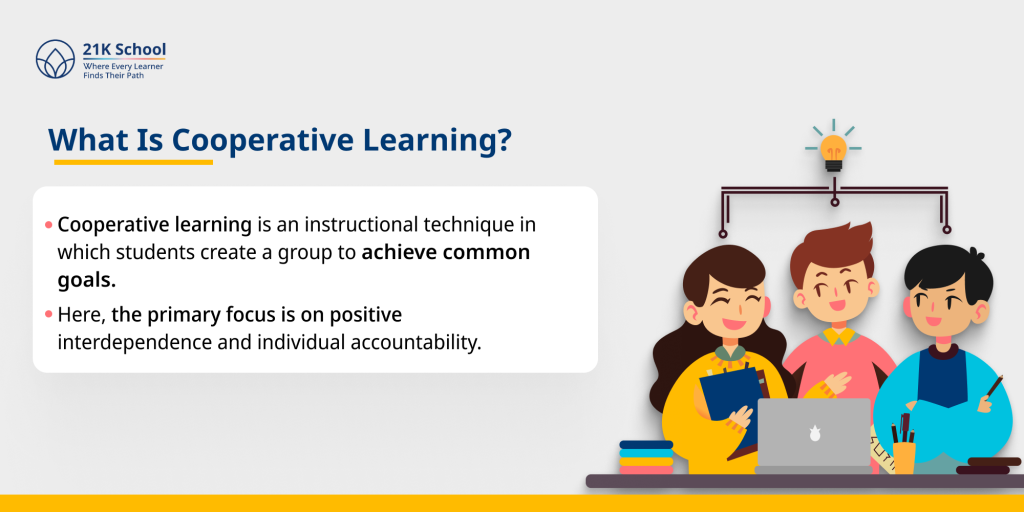
Cooperative learning is an instructional technique in which students create a group to achieve common goals.
Here, the primary focus is on positive interdependence and individual accountability.
The process is structured in which tasks are divided and assigned as a responsibility to promote teamwork skills and management.
What Is Collaborative Learning?
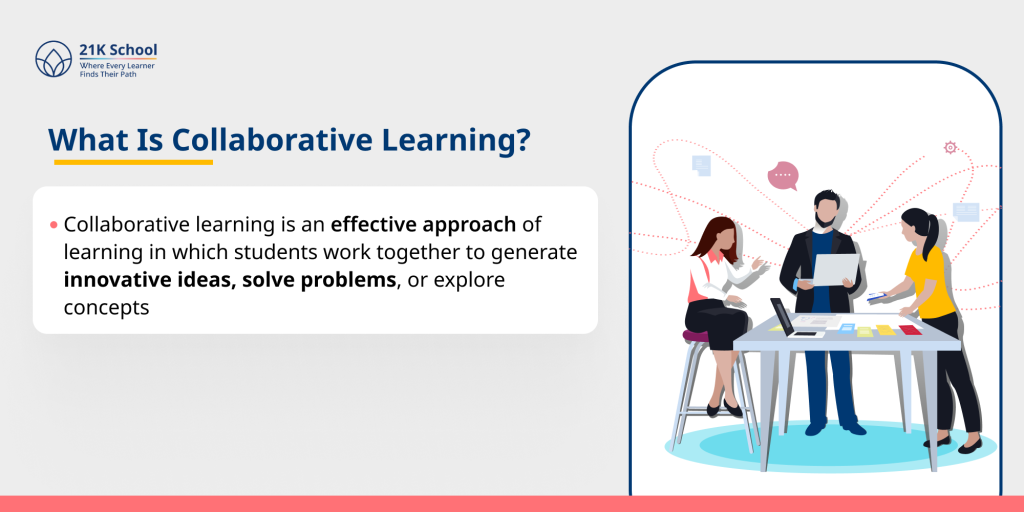
Collaborative learning is an effective approach of learning in which students work together to generate innovative ideas, solve problems, or explore concepts.
One of the benefits of collaborative learning is teachers don’t assign tasks instead students are free to self-organise the responsibilities.
Cooperative Learning vs Collaborative Learning: Key Differences
Both cooperative learning and collaborative learning are different and the below-mentioned table showcase the clear comparison:
| S No. | Particulars | Cooperative Learning | Collaborative Learning |
| 1. | Structure | Highly structured | Flexible, open-ended |
| 2. | Teacher Role | Planner, organiser, supervisor | Facilitator, guide |
| 3. | Student Role | Follows assigned tasks/roles | Self-managed decision-making |
| 4. | Dependency | Positive interdependence; success relies on everyone completing assigned parts | Shared responsibility with mutual negotiation |
| 5. | Assessment | Individual accountability + group performance | Mostly group-based outcomes; reflective assessment |
| 6. | Goal | Mastery of specific content | Development of higher-order thinking and shared knowledge |
| 7. | Autonomy Level | Low to moderate | High |
| 8. | Task Type | Clearly defined, segmented tasks | Open-ended, exploratory, creative tasks |
| 9. | Accountability | Individual + group accountability | Shared group accountability |
| 10. | Examples | Jigsaw, Think-Pair-Share, structured investigations. | Group debates, PBL, research projects, design tasks. |
1. Structure
Cooperative Learning: It is a structured and teacher-controlled approach planned in advance.
Collaborative Learning: It is a flexible approach where students decide how to organise work in a group.
2. Teacher Role
Cooperative Learning: The role of a teacher in cooperative learning designing, assigning, and monitoring tasks.
Collaborative Learning: The role of a teacher in collaborative learning is to act as a facilitator, observe and guide if needed.
3. Student Role
Cooperative Learning: The main role of students in cooperative learning is to follow instructions based on assigned roles.
Collaborative Learning: The main role of students in collaborative learning are free to work as per strength and interest.
4. Dependency
Cooperative Learning: Here, students are positively dependent on each other and teacher to complete tasks.
Collaborative Learning: In collaborative learning, students share responsibilities of particular tasks.
5. Assessment
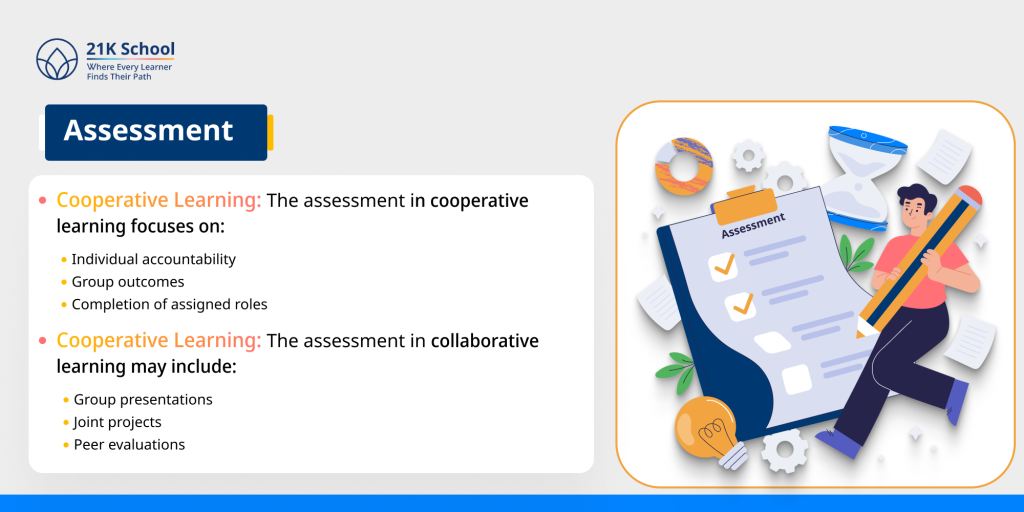
Cooperative Learning: The assessment in cooperative learning focuses on:
- Individual accountability
- Group outcomes
- Completion of assigned roles
Collaborative Learning: The assessment in collaborative learning may include:
- Group presentations
- Joint projects
- Peer evaluations
6. Goal
Cooperative Learning: The goal of cooperative learning is understanding and mastering specific academic content.
Collaborative Learning: The goal of collaborative learning is to share knowledge and develop various skills such as higher-order thinking skills , critical thinking, and social skills .
7. Autonomy Level
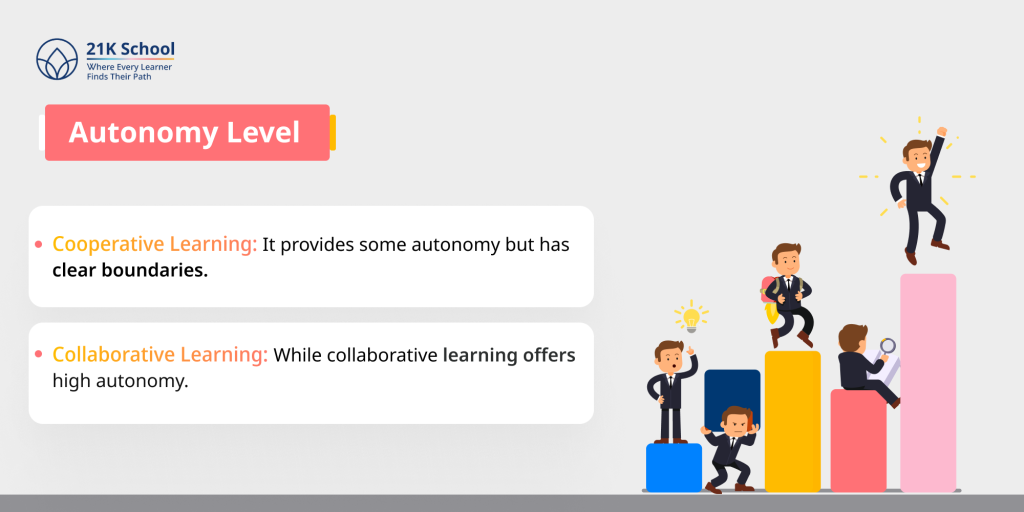
Cooperative Learning: It provides some autonomy but has clear boundaries.
Collaborative Learning: While collaborative learning offers high autonomy.
8. Task Type
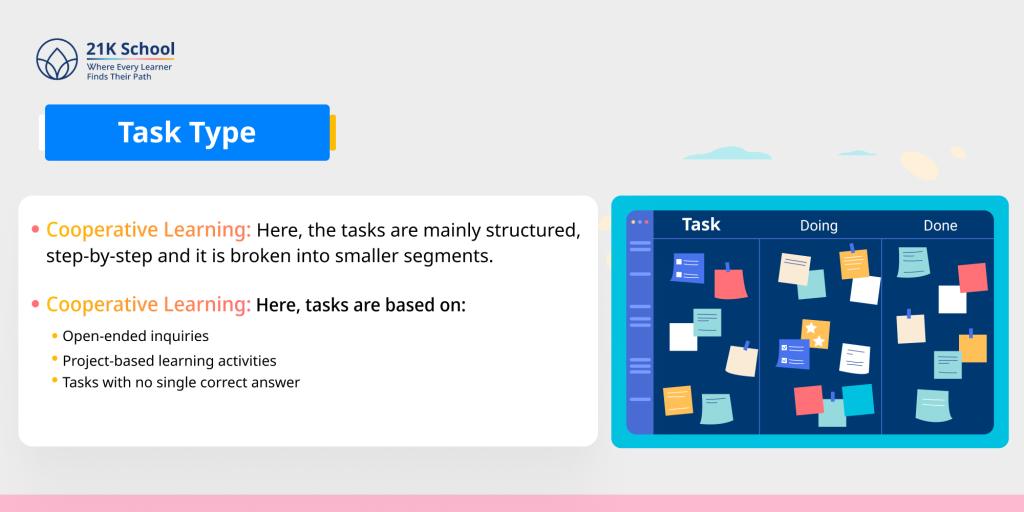
Cooperative Learning: Here, the tasks are mainly structured, step-by-step and it is broken into smaller segments.
Collaborative Learning: Here, tasks are based on:
- Open-ended inquiries
- Brainstorming
- Project-based learning activities
- Tasks with no single correct answer
9. Accountability
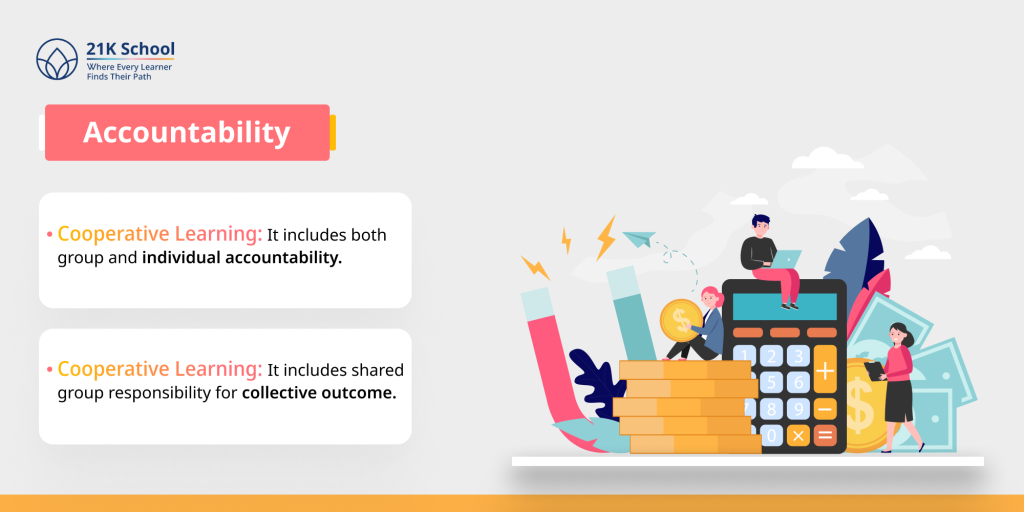
Cooperative Learning: It includes both group and individual accountability.
Collaborative Learning: It includes shared group responsibility for collective outcome.
10. Examples
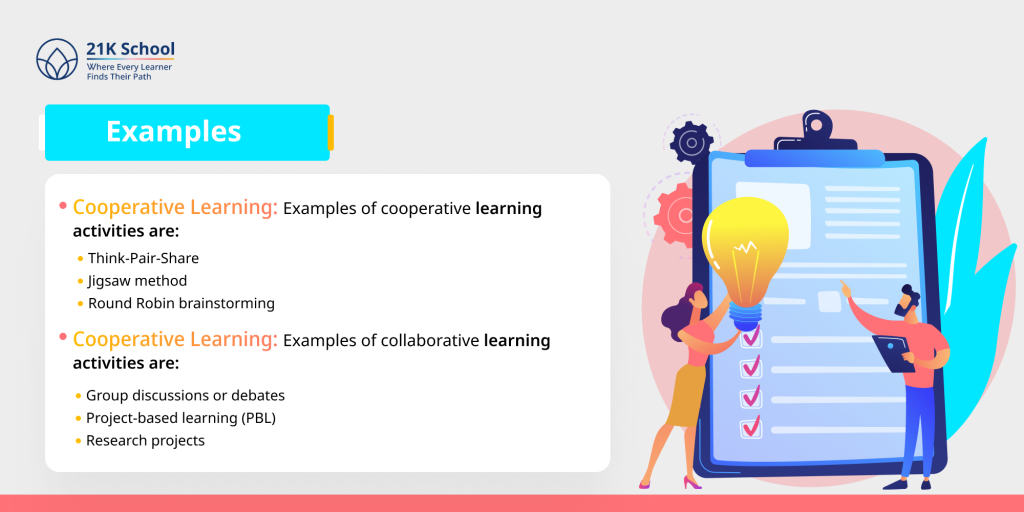
Cooperative Learning: Examples of cooperative learning activities are:
- Think-Pair-Share
- Jigsaw method
- Round Robin brainstorming
Collaborative Learning: Examples of collaborative learning activities are:
- Group discussions or debates
- Project-based learning (PBL)
- Research projects
Conclusion
Including powerful strategies in day-to-day learning are helpful to fulfill today’s need. Some of the popular names are cooperative and collaborative learning.
These skills are ideal for classroom learning to promote student engagement , teamwork, and active learning.
Hopefully, you have understood both the terms clearly through its meaning, comparison table, and detailed explanation.
An effective use of both cooperative and collaborative learning ensures a meaningful learning experience.

You may also want to read
What is CBSE? Full Form, History, Structure & Key Benefits

- Last updated on: 09 Mar, 2026
- 14 min read