

Is ethics education the missing element in the current system of learning?
Ethical education is necessary to bring out individuals with socially responsible behaviour that is honest, responsible and respectful. It informs the students about right and wrong and encourages them to make fair and sensible decisions.
Ethical education develops personality and emotional intelligence through instilling such virtues as empathy, kindness, and integrity. It also teaches learners to have an insight into how their actions affect other people and society.
Ethical education also helps them in a fast-evolving world to meet the demands of the world through giving a moral backbone that will enable them to overcome the challenges, establish good relationships and help in giving back to their communities.
Contents
What is Ethical Education?
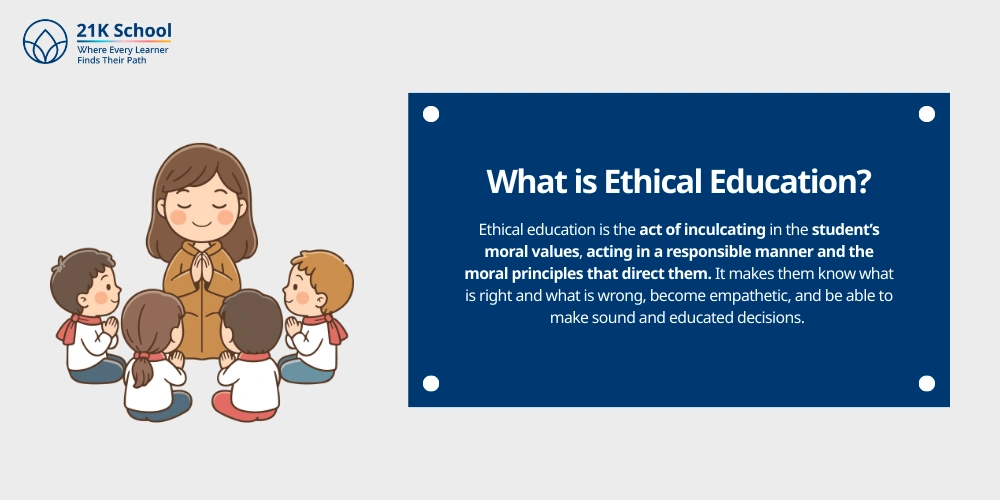
Ethical education is the act of inculcating in the students moral values , acting in a responsible manner and the moral principles that direct them. It makes them know what is right and what is wrong, become empathetic, and be able to make sound and educated decisions.
With the assistance of lessons on truthfulness, respect, integrity, and kindness, the development of ethical education is possible to form a powerful personality and emotional consciousness. It educates the learners to consider the impact of their actions on other individuals and society.
This type of education will prepare people to deal with real-life issues and responsibly contribute to society through instilling good morals and ethics.
History of Ethical Education
Ethical education has a long history; the first civilisations had moral teaching as the main topic of their life.
Socrates, Plato and Aristotle were such philosophers who concentrated on virtue and character and the importance of moral thinking. Some of the ancient books that disseminated the virtues of honesty, compassion, and duty in ancient India are the Vedas and the teachings of Buddha.
The ethical education of the modern-day education system has adopted the shape of a formal education system whereby good behaviour, citizenship and universal values are taught.
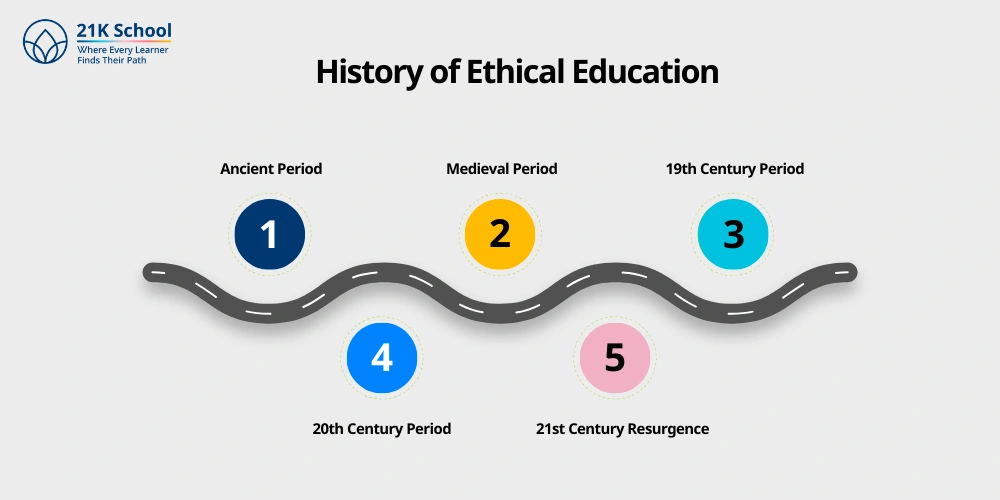
1. Ancient Period
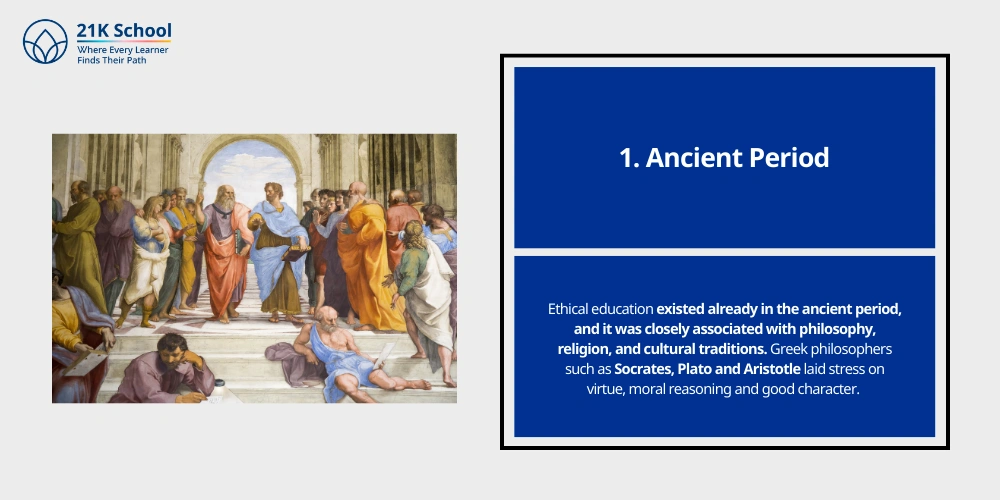
Ethical education existed already in the ancient period, and it was closely associated with philosophy, religion, and cultural traditions. Greek philosophers such as Socrates, Plato and Aristotle laid stress on virtue, moral reasoning and good character.
Values such as truth, compassion, duty, and righteousness were encouraged in India through the writings of Buddha, the Upanishads, and the Vedas. Ethics was learned in the form of stories, dialogue and communal practices.
2. Medieval Period
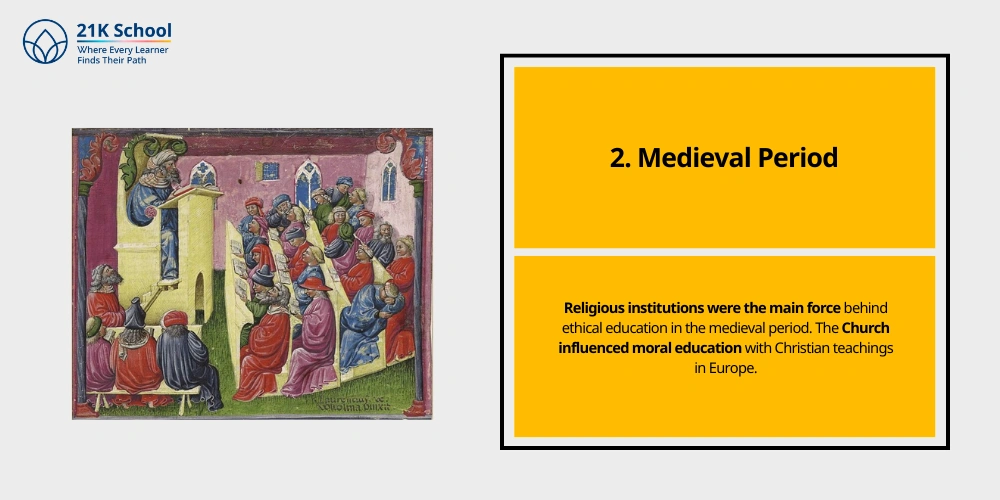
Religious institutions were the main force behind ethical education in the medieval period. The Church influenced moral education with Christian teachings in Europe. Scholars in the Islamic world advocated justice, honesty and discipline.
In India, the system of Gurukul and religious scriptures served as a medium of transmitting ethical values. Spiritual growth and social order were related to moral behaviour.
3. 19th Century Period
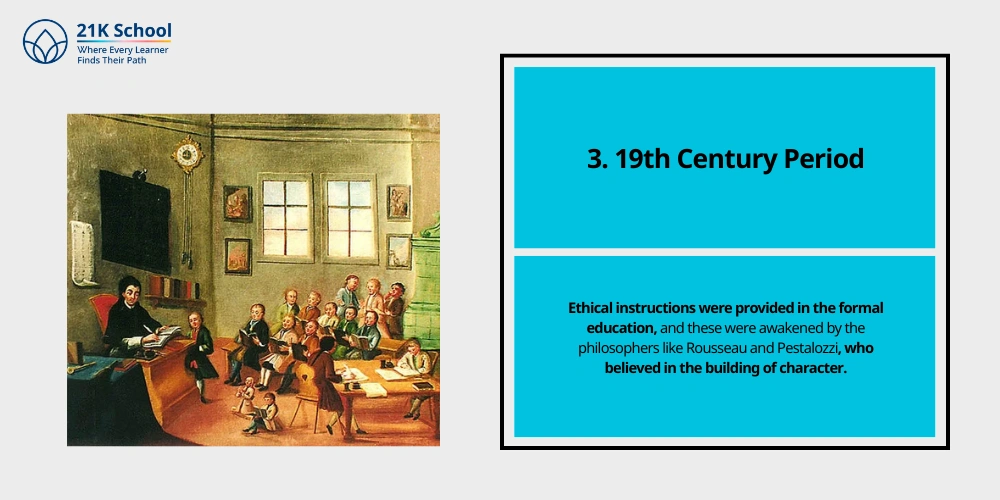
The 19th century brought about radical changes in education. Ethical instructions were provided in the formal education, and these were awakened by the philosophers like Rousseau and Pestalozzi, who believed in the building of character.
Many countries applied moral teachings in order to produce responsible individuals. Education took a new dimension to be taught on civic responsibilities, discipline , and social values, besides academic studies.
4. 20th Century Period
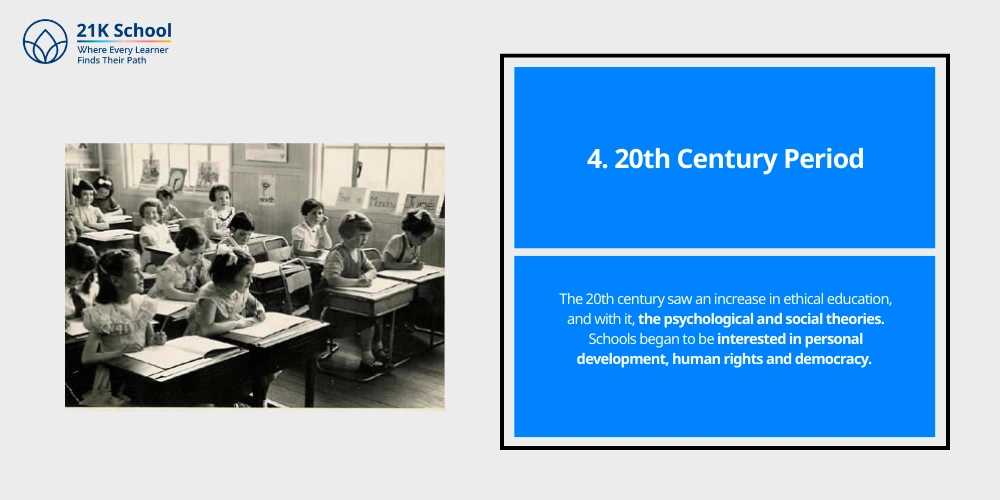
The 20th century saw an increase in ethical education, and with it, the psychological and social theories. Schools began to be interested in personal development, human rights and democracy. World Wars and world conflicts had to bring about peace education.
Ethical education was better ordered, where equality, cooperation, empathy and responsibility to the world were emphasised.
21st Century Resurgence
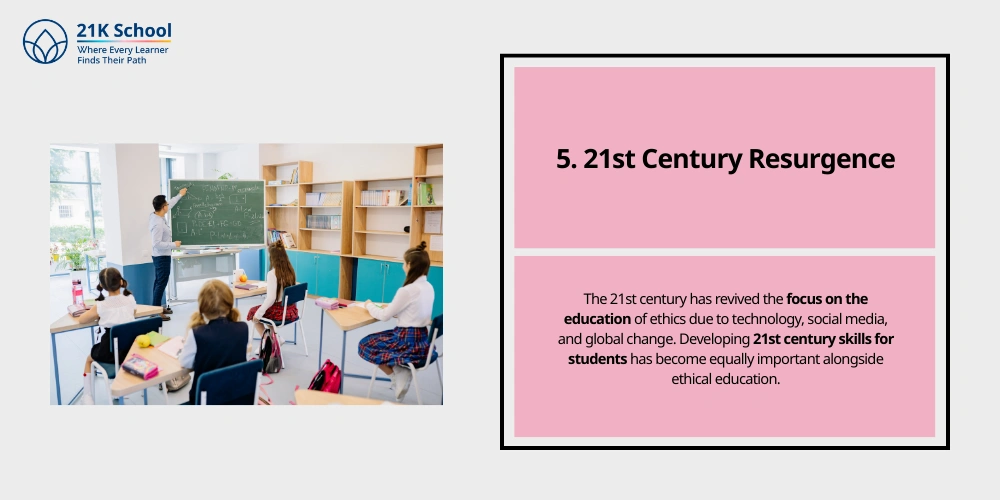
The 21st century has revived the focus on the education of ethics due to technology, social media, and global change. Modern programs prioritise digital ethics, environmental responsibility,
emotional intelligence
and inclusivity in the modern programmes.
Education is valuable, life skills and character development are integrated in schools across the globe to prepare the learner with the elaborate moral dilemma in contemporary society.
5 Common Impacts of Ethical Education on Students
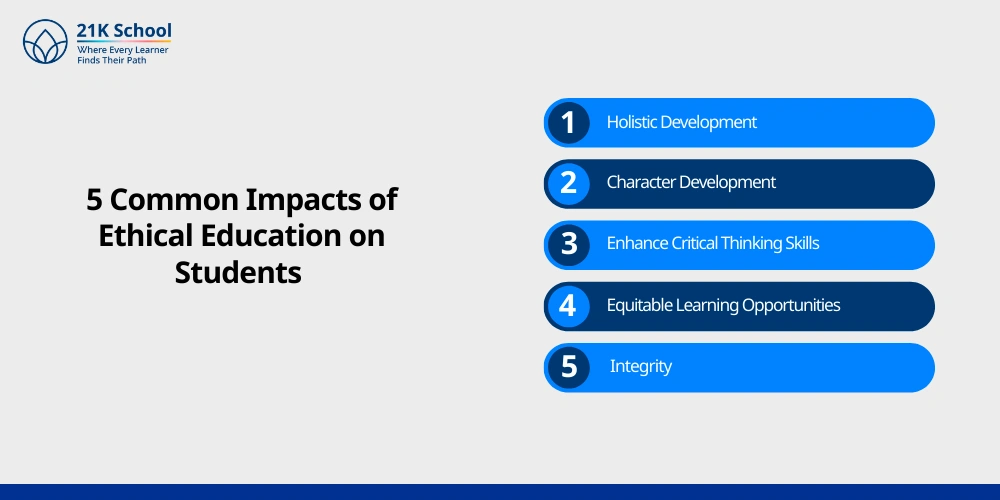
Ethical education is significant in personal, social and academic growth in learners. It helps them develop and create a good character, critical thinking and emotional intelligence and inculcate responsibility and integrity. This is the influence of ethics education on students.
1. Holistic Development
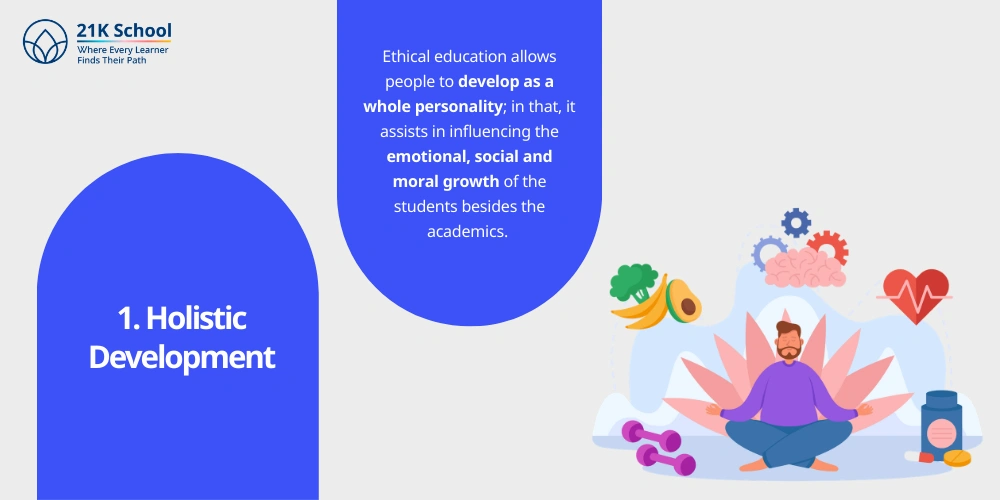
Ethical education allows people to develop as a whole personality; in that, it assists in influencing the emotional, social and moral growth of the students besides the academics. It helps them to appreciate and value, have compassion and build healthy relationships.
This general development assists the learners to develop into holistic persons who can tackle the personal, social and academic issues in a responsible way.
2. Character Development
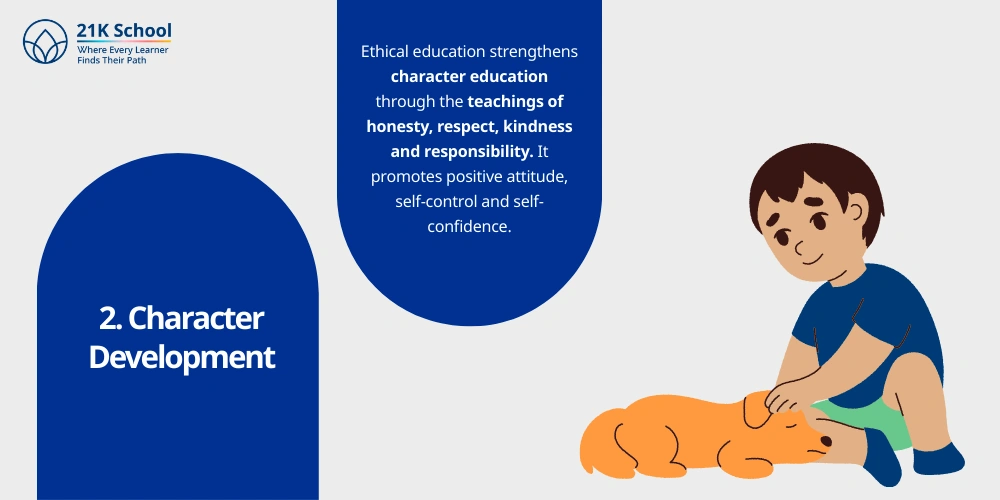
Ethical education makes students better characters through the teachings of honesty, respect, kindness and responsibility. It promotes positive attitude, self-control and self-confidence .
Through ethical values in day-to-day life, students can have a sound moral base that they follow in their lives in making their decisions and actions.
3. Enhance Critical Thinking Skills
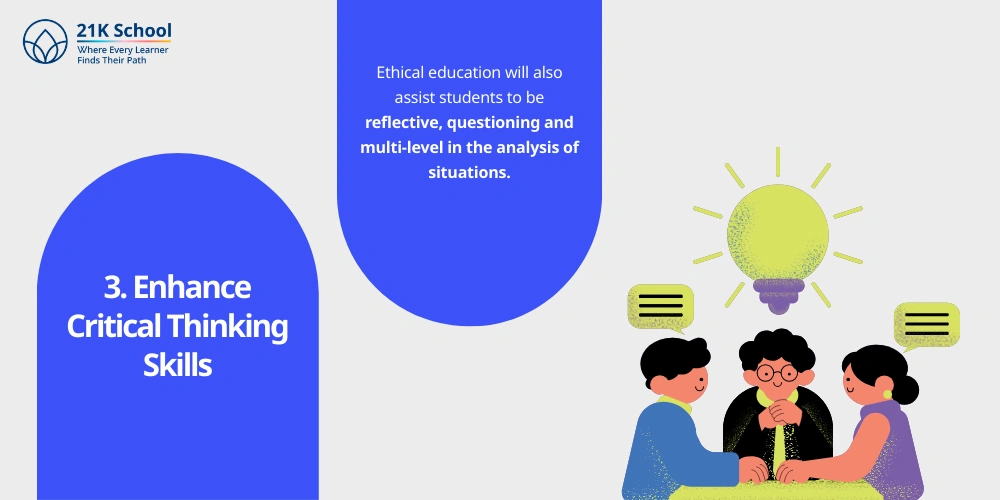
Ethical education will also assist students to be reflective, questioning and multi-level in the analysis of situations. It helps in the promotion of decision-making skills and is applicable in promoting the learners to consider the implications of their behaviour.
This will assist the students in critical thinking, better problem-solving skills , and prepare them to make justifiable and sensible decisions in complex situations.
4. Equitable Learning Opportunities
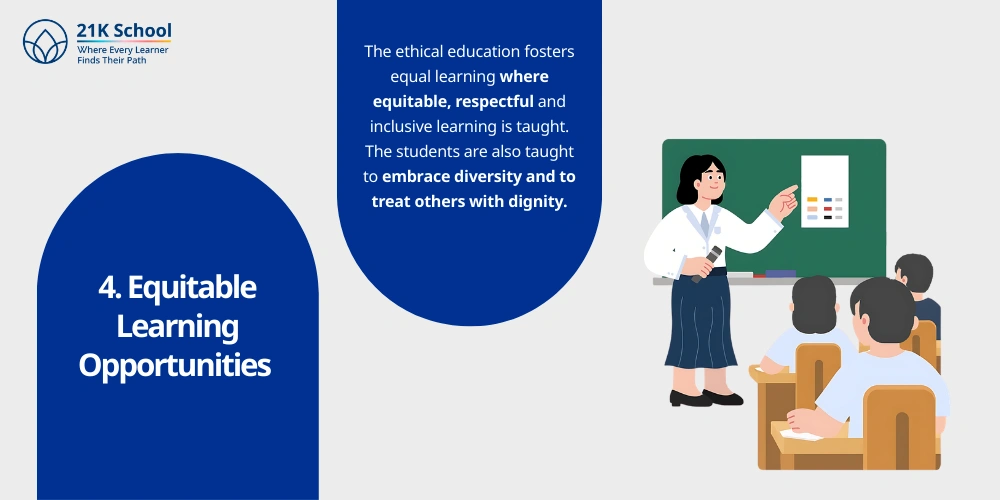
The ethical education fosters equal learning where equitable, respectful and inclusive learning is taught.
The students are also taught to embrace diversity and to treat others with dignity. This would make the place less discriminatory and more collaborative learning in such a manner that everyone will feel safe, respected, and included, regardless of their background and abilities.
5. Integrity
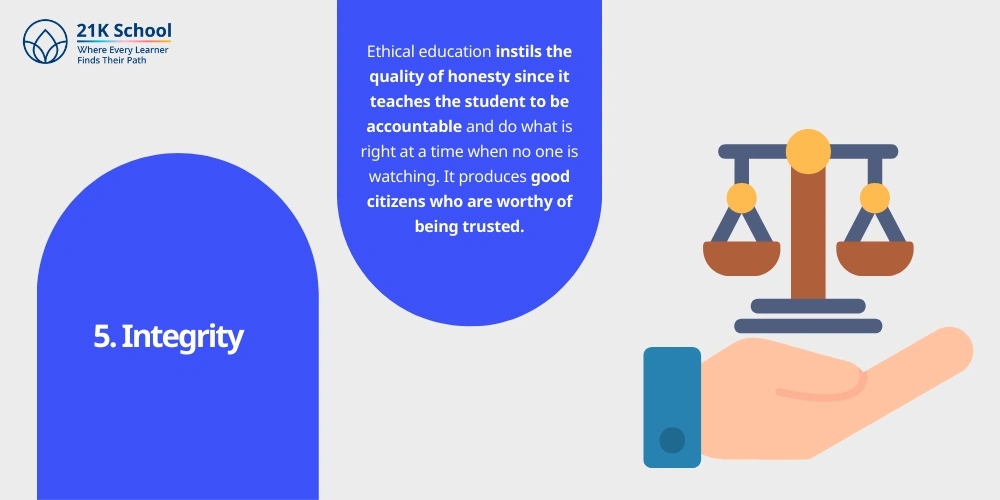
Ethical education instils the quality of honesty since it teaches the student to be accountable and do what is right at a time when no one is watching. It produces good citizens who are worthy of being trusted.
The importance of this value is to create a strong character and receive respect in personal and academic life.
Role of Ethical Education in Schools
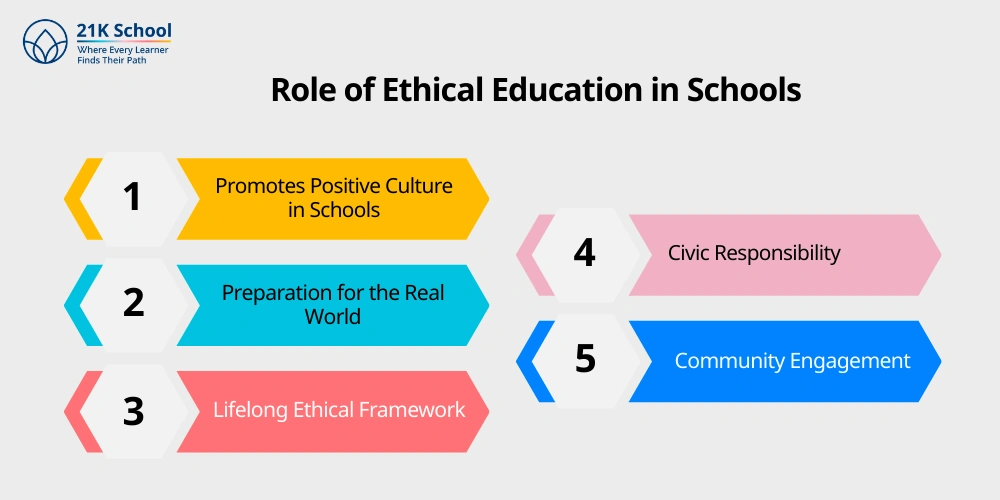
School ethics education is significant in developing values, attitudes and behavioural levels of the students. It extends beyond the academic to develop moral judgement, social responsibility and personal integrity. This is where the importance of ethical education in schools lies.
1. Promotes Positive Culture in Schools
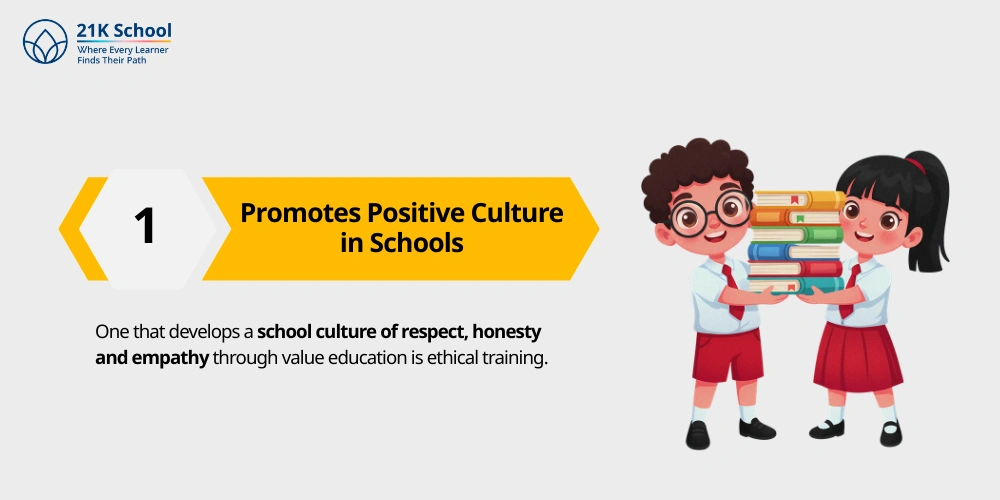
One that develops a school culture of respect, honesty and empathy is ethical training. The learners learn the ability to collaborate, resolve conflicts and help each other.
It reduces bullying, discrimination and negativity with the promotion of fairness and understanding. Being supportive will create a safe and inclusive learning environment where everybody can learn and grow together, and thus, well-being and positive relationships overall.
2. Preparation for the Real World
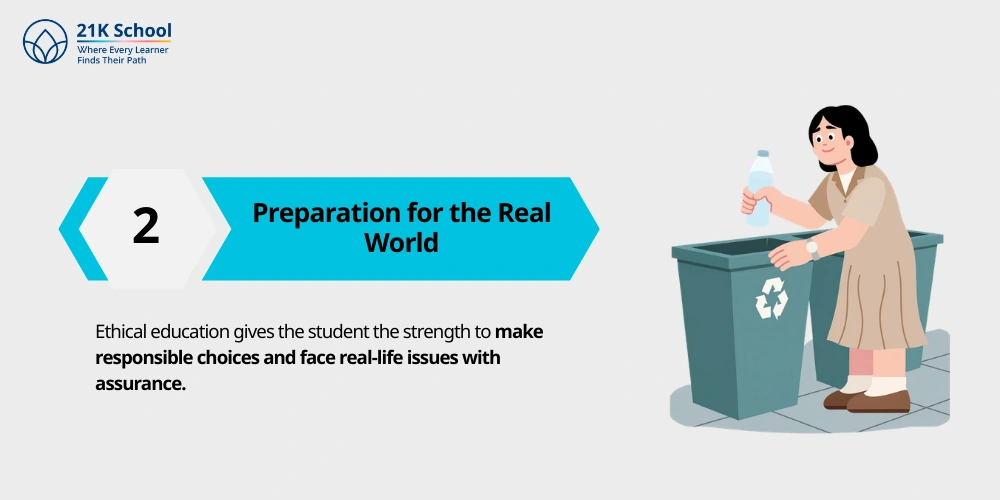
Ethical education gives the student the strength to make responsible choices and face real-life issues with assurance.
Having the ability to determine what is right and what is wrong, to analyse the outcomes and to consider the well-being of other people, students can obtain experience of moral thinking.
3. Lifelong Ethical Framework
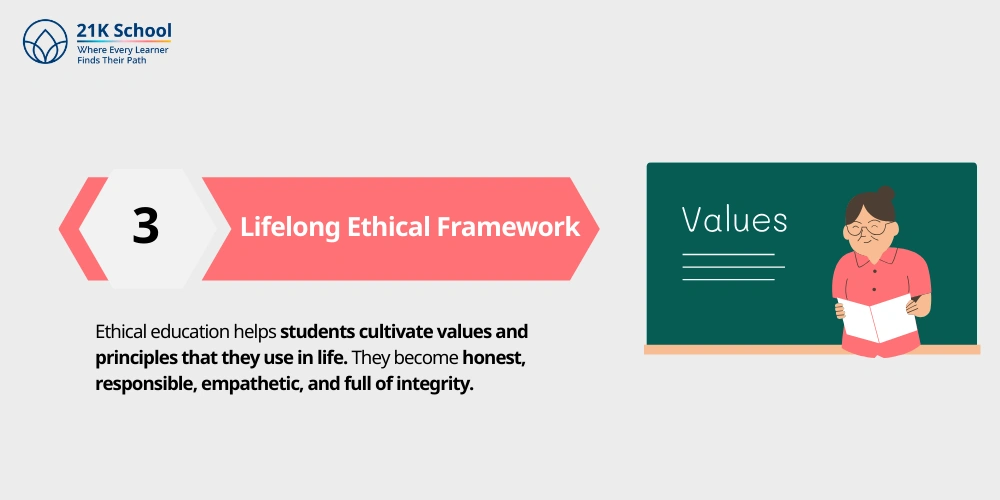
Ethical education helps students cultivate values and principles that they use in life. They become honest, responsible, empathetic, and full of integrity. This base helps in individual development, career ethics and associations with other people.
It guarantees the consistency of moral decision-making that enables people to live principled, meaningful and socially responsible lives.
4. Civic Responsibility
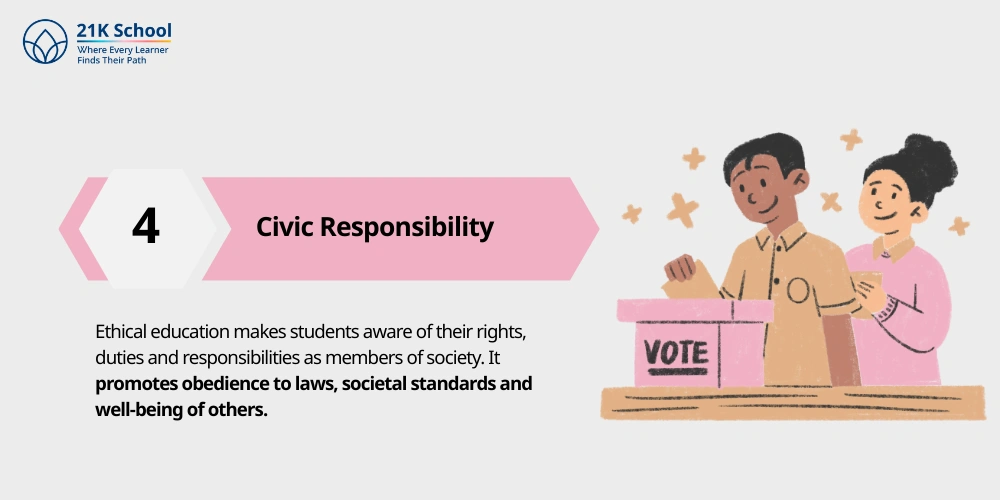
Ethical education makes students aware of their rights, duties and responsibilities as members of society. It promotes obedience to laws, societal standards and well-being of others.
Through instilling civic responsibility and moral awareness, students get to learn to be active members of their communities, uphold justice and play fair, ethical and constructive roles in contributing to the development of their societies.
5. Community Engagement
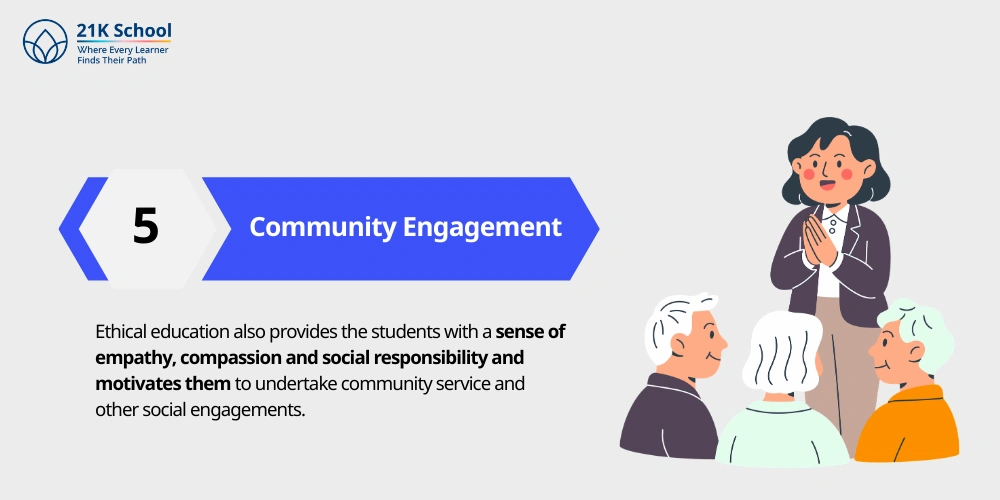
Ethical education also provides the students with a sense of empathy, compassion and social responsibility and motivates them to undertake community service and other social engagements.
The relationships with society get better with the involvement in volunteering, environmental activities and benefiting the poor. It also facilitates community participation in the improvement of the community’s well-being, collaboration and social harmony to the benefit of everyone.
7 Benefits of Ethical Education
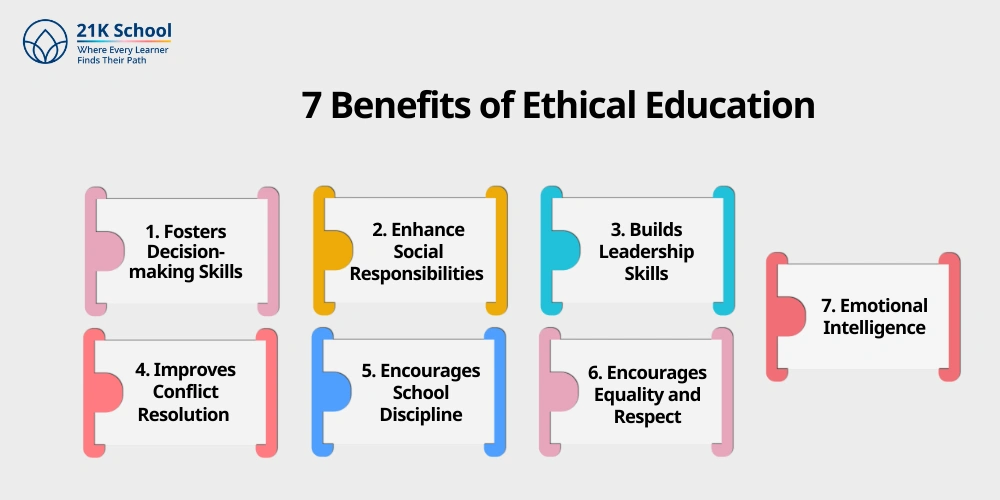
Ethical learning plays an essential role in holding people accountable and ethical. It leads to the students developing a fine character, decision-making ability, empathy and leadership . Ethical education has the following benefits.
1. Fosters Decision-making Skills
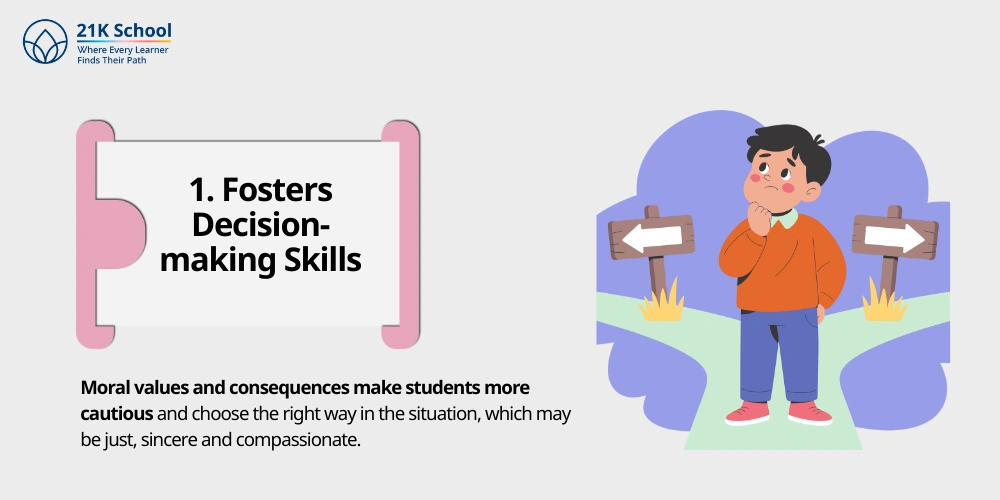
Ethical training contributes to the strength of sound and responsible decision-making among students. Moral values and consequences make students more cautious and choose the right way in the situation, which may be just, sincere and compassionate.
This helps them to develop good judgement, problem-solving , besides to face real-life issues with confidence and clarity.
2. Enhance Social Responsibilities
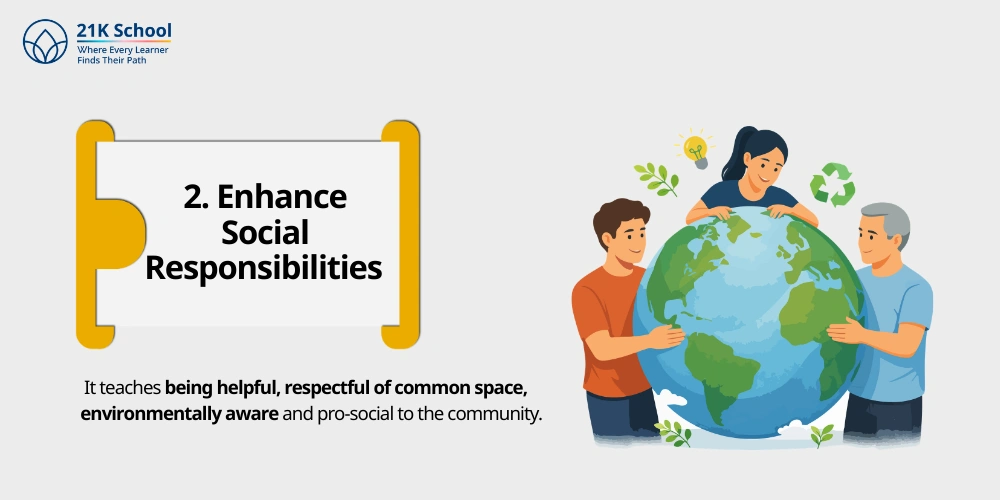
Ethical education will make students aware of their position in society and to become responsible towards other people. It teaches being helpful, respectful of common space, environmentally aware and pro-social to the community.
When students learn to be caring and civically responsible, they get to be more responsible and active citizens, and they advance the growth of society.
3. Builds Leadership Skills
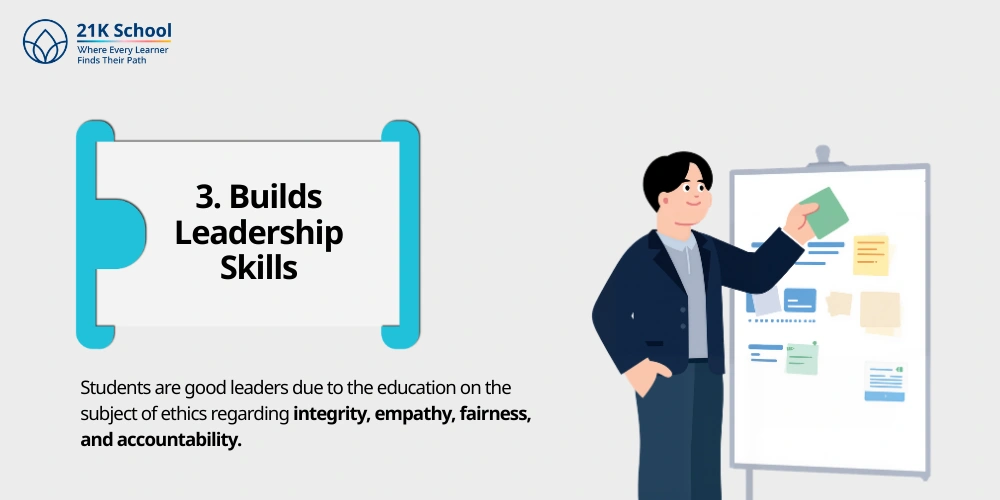
Students are good leaders due to the education on the subject of ethics regarding integrity, empathy, fairness, and accountability. It encourages them to become initiators, mentors and ethical decision-makers.
These values allow students to familiarise themselves with the ability to motivate others, resolve challenges, and lead others with confidence, integrity, and by making the right moral choices.
4. Improves Conflict Resolution
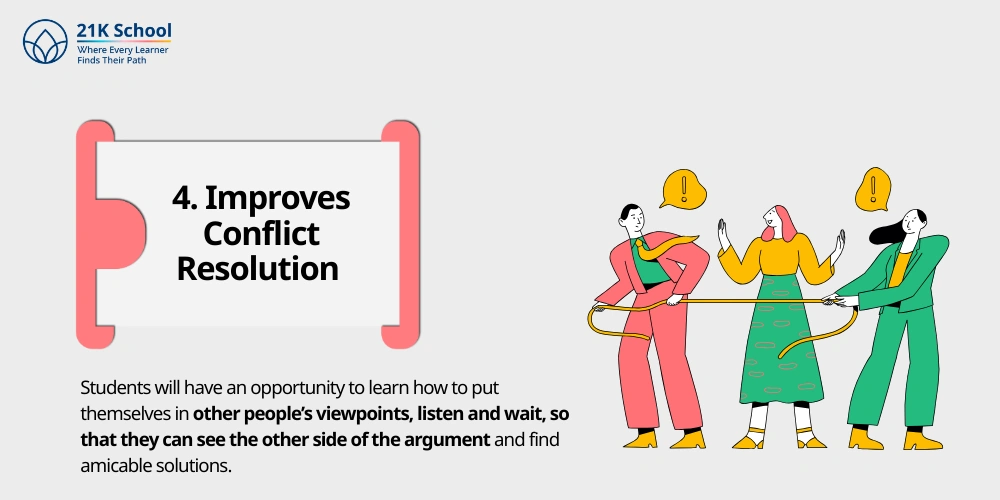
Students will have an opportunity to learn how to put themselves in other people’s viewpoints, listen and wait, so that they can see the other side of the argument and find amicable solutions.
This minimises conflicts, bullying and misunderstandings in classes. It assists the students to deal with emotions, express themselves in a respectful manner, and establish better teacher students relationship , and with family members.
5. Encourages School Discipline
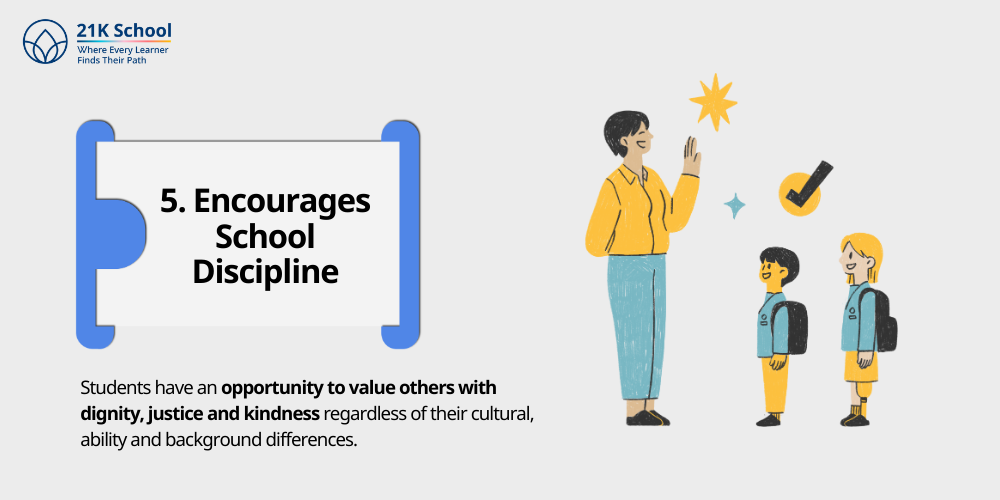
Ethical education promotes attitudinal features of responsibility, commitment, and self-control that lead to academic success. Students get to know the value of being punctual, doing assignments on time, staying focused, and taking care of honest academic practices.
This disciplined approach enhances study skills, increases motivation and the establishment of a positive learning attitude, which contributes towards long-term academic success.
6. Encourages Equality and Respect
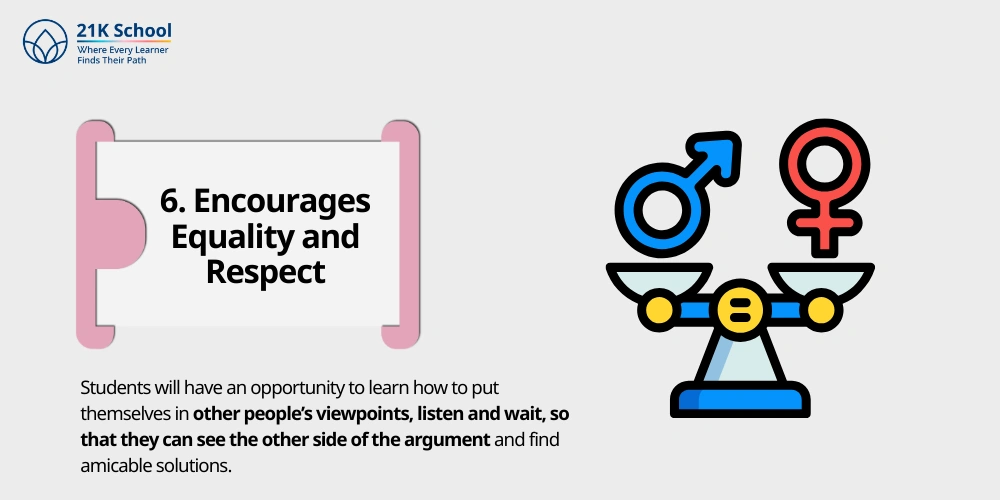
Students have an opportunity to value others with dignity, justice and kindness regardless of their cultural, ability and background differences. Ethical education reduces bigotry and encourages an inclusive attitude.
It has assisted students in knowing how to create a positive learning environment in which everyone feels their safety, valued, and supported in education.
7. Emotional Intelligence
Individual awareness, compassion and control of emotions are what ethical education provides to the students in terms of emotional intelligence.
They are conditioned to understand how to feel themselves, how to perceive other people and improve communication and relations. Emotional intelligence will ensure the students address stress situations, resolve cases amicably and address issues positively both academically and personally.
5 Ethical Issues in Education
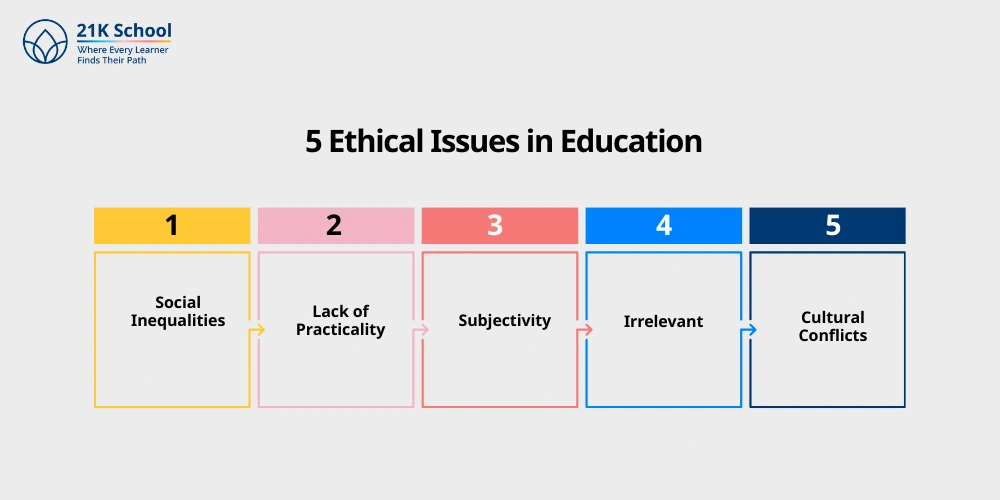
Even though ethical education is a valuable part of value and character building, it has certain limitations. One of the issues that may reduce its effectiveness is social inequalities, subjectivity and cultural conflicts. These are the issues of ethical education.
1. Social Inequalities
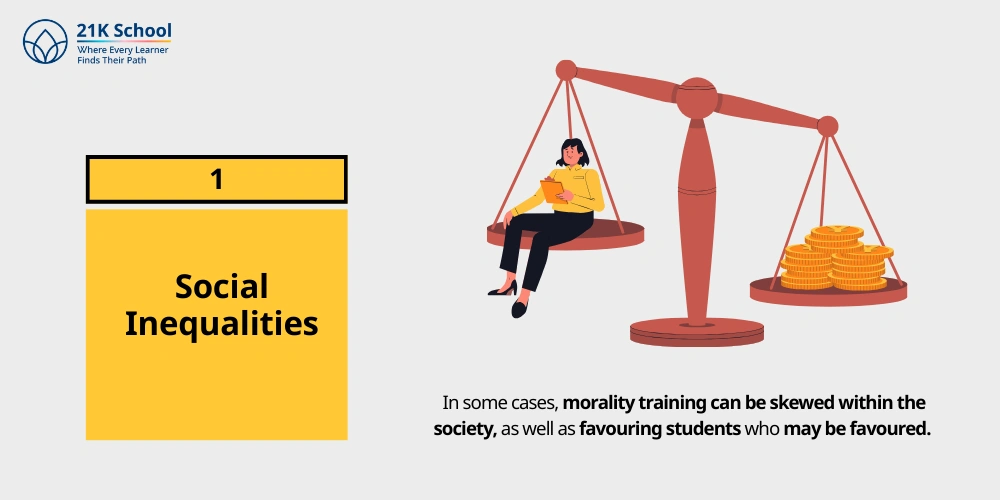
In some cases, morality training can be skewed within the society, as well as favouring students who may be favoured. Those children who lack resources or are not able to receive a high-quality education may not get the same guidance, and therefore, they may not learn about the moral values equally.
This disjuncture can also reinforce social dissimilarity as opposed to mediating the same in order to limit the ethical learning method of each student.
2. Lack of Practicality
Other ethical training programmes are overly theoretical and not practical. In the classroom, the students can be taught values and morals, but fail to apply them in their everyday lives.
Absent real-life experience, role-playing and practical knowledge , the lessons can be abstract and therefore diminish the effectiveness of ethical education on behaviour and decision-making.
3. Subjectivity
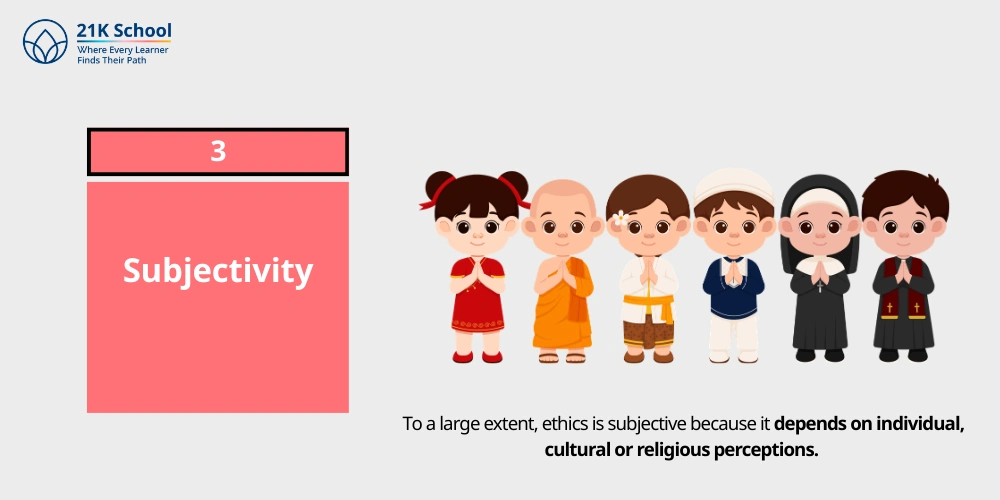
To a large extent, ethics is subjective because it depends on individual, cultural or religious perceptions. What is considered moral by a given community may not be the same as that which may confuse the students.
Unconsciously, teachers may transfer their personal beliefs, and this may end up in prejudice and limit the capacity of the learners to reason morally and think critically.
4. Irrelevant
Ethical education may seem to have no correlation to the individual interests or existing issues of society. The old-fashioned examples or idealistic lessons could not be capable of motivating the learners and address the problems of the modern age.
This could make teaching ethics useless and reduce the interest and involvement of the students in moral education.
5. Cultural Conflicts
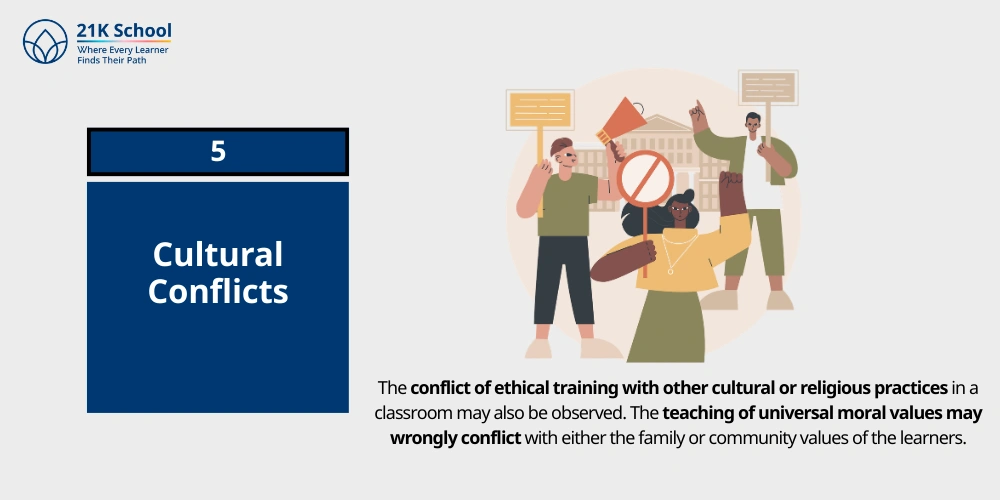
The conflict of ethical training with other cultural or religious practices in a classroom may also be observed. The teaching of universal moral values may wrongly conflict with either the family or community values of the learners.
All these fights are likely to cause confusion, resistance or even tension among the students, and it may be hard to offer a uniform ethical guidance without the cultural awareness being compromised.
Effective Strategies to Create an Ethical Learner Environment
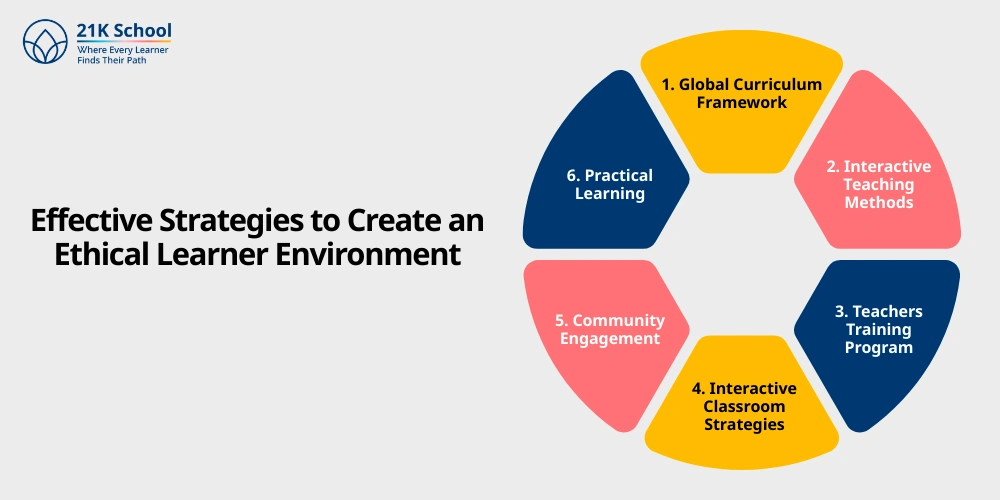
An ethical learner environment will necessitate considerate strategies that will determine the values, behaviour, and decision-making skills of the students. Here are the strategies to create an ethical learner environment.
1. Global Curriculum Framework
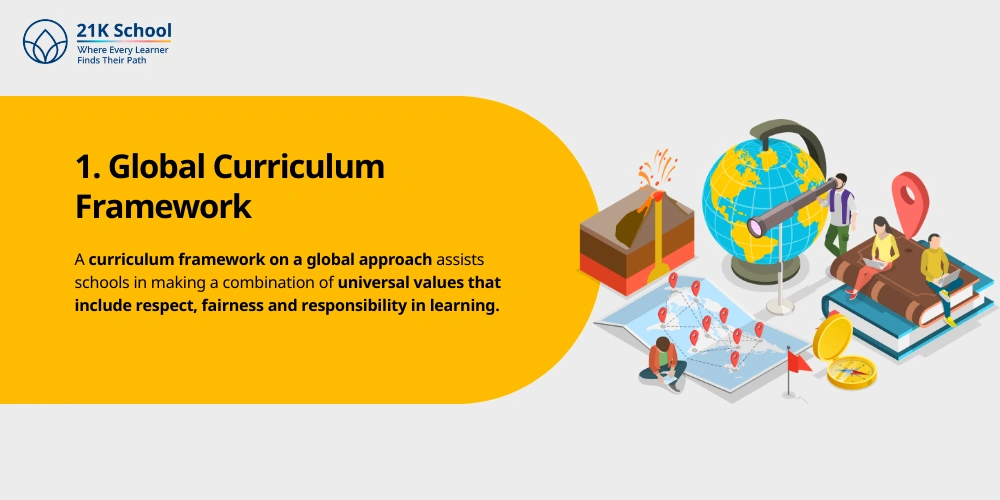
A curriculum framework on a global approach assists schools in making a combination of universal values that include respect, fairness and responsibility in learning. It exposes the students to different cultures, ethical views and global matters, stimulating open-mindedness and empathy.
Relating moral messages to the global situations, students are able to get a more comprehensive overview of the morally correct conduct and how to behave in a world where everyone is related.
2. Interactive Teaching Methods
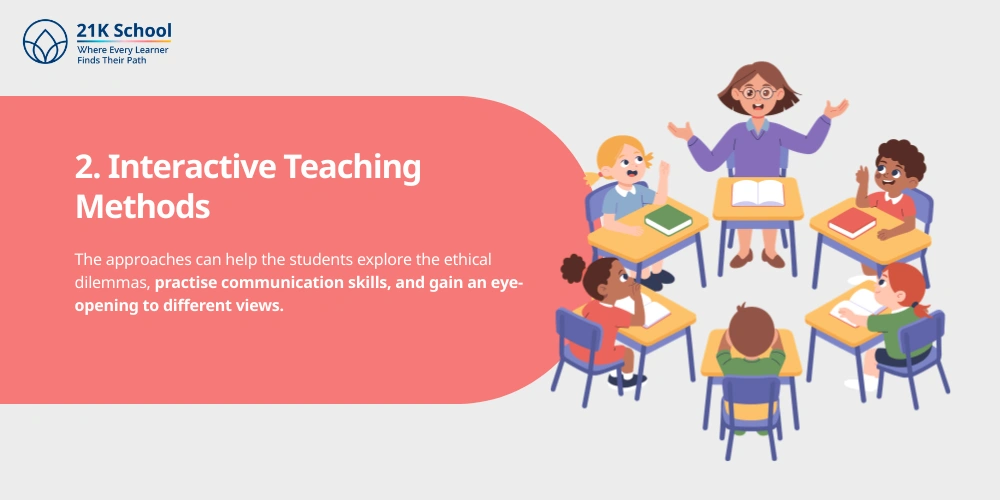
Active participation and critical thinking- interactive styles of teaching such as discussions, role plays, debates, and group activities. The approaches can help the students explore the ethical dilemmas, practise communication skills , and gain an eye-opening to different views.
The teacher may employ real-life moral situations to render the ethical concepts more applicable so that the students can apply the values to real-life situations and develop improved decision-making abilities.
3. Teachers Training Program
A teacher training programme must also be well-designed to enable the teachers
to possess knowledge and skills
of teaching ethics. Training is an act of learning the psychology of a child, handling ethical issues, being just and acting as an example.
Well-prepared teachers are confident and offer support in the classroom, thus making the students honest, respectful and moral.
4. Interactive Classroom Strategies
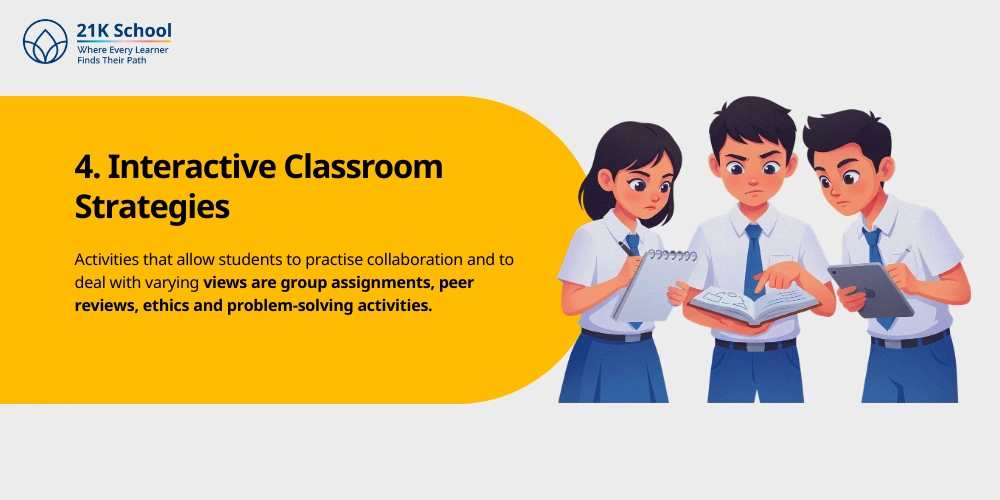
The interactive classroom practices promote collaboration, communication and ethical behaviour. Activities that allow students to practise collaboration and to deal with varying views are group assignments, peer reviews, ethics and problem-solving activities
These types of strategies bring about trust, responsibility and empathy in day-to-day experience and thus the classroom becomes a place where ethical values can be experienced and learned without any need to work on it.
5. Community Engagement
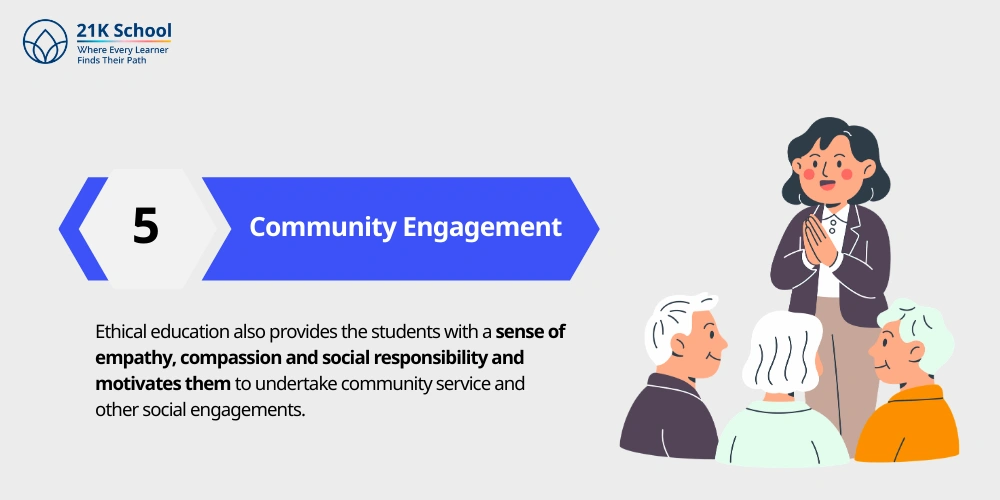
Community participation is a way of relating classroom education to real-life responsibility. Volunteering, social campaigns, environmental activities, and local activities are some of the ways of educating students on compassion, service and active citizenship.
It makes them conscious of the requirements of society and increases their commitment to the good change in the long term. These experiences add meaning to the existence of moral values and encourage learners to act as servants of society.
6. Practical Learning
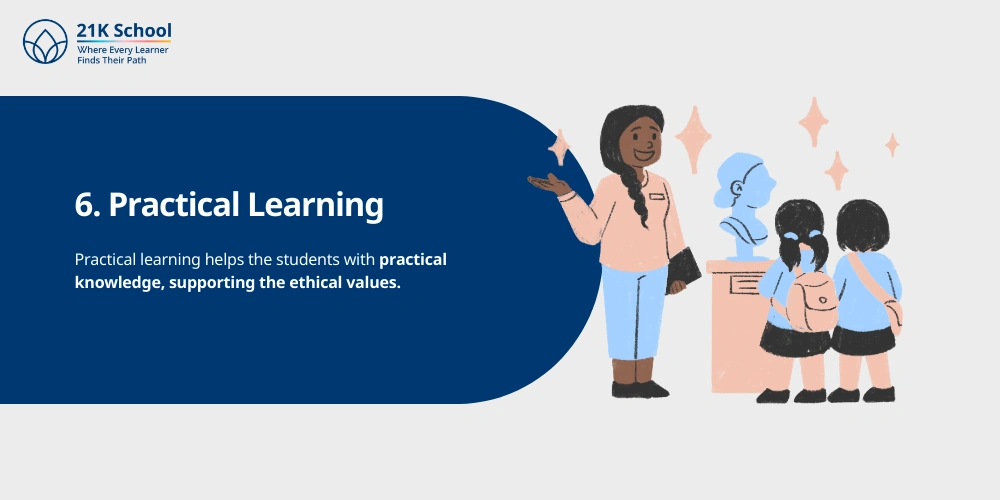
Practical learning helps the students with practical knowledge , supporting the ethical values. Real-life projects, simulation, field trips and problem-based learning help students to understand how they can apply moral values to real-life examples.
This will improve critical thinking, accountability and morality. The correlation between theory and practice allows the student to know the real consequences of their actions and possess a strong moral character of morality.
Conclusion
Personal, social and academic growth depends on ethical education as one of its underpinnings. It also equips the students with morals, mental capacity and emotional intelligence to make responsible choices and serve in society.
Despite some of its shortcomings, such as cultural differences, implementation gaps, and so on, it does not imply that it cannot be deemed an essential part of modern education because it has some positive sides to holistic growth, character building, and leadership and social accountability.
Inclusion of ethical education is a certain formula in making ethical, principled and competent individuals, who can easily navigate the complexity of the contemporary world.

You may also want to read