

In students’ life, education is important to develop confidence, personal and professional growth.
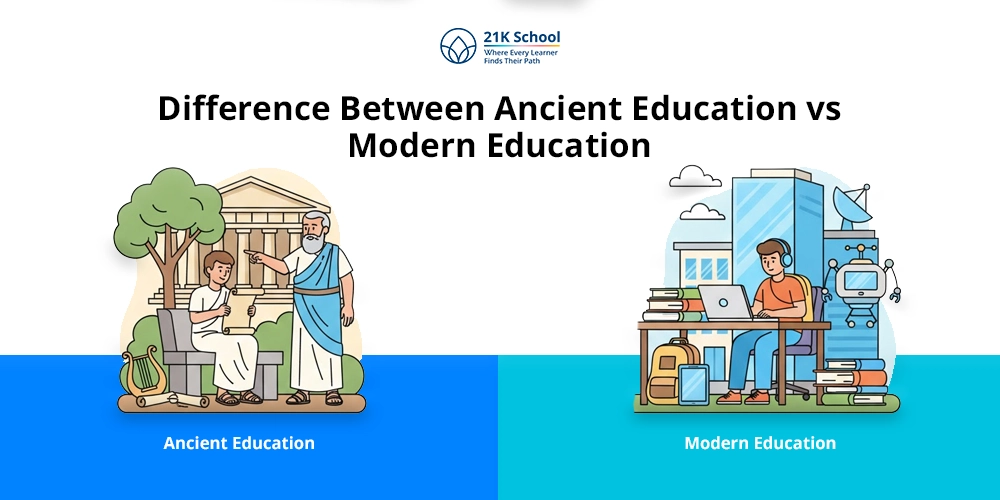
But, change in education from past to present is adverse. Ancient education vs modern education are two different things based on roles, purpose, values etc.
Understanding the difference between ancient education vs modern education helps to implement the needful strategies and determine the importance of change with time.
Contents
What Is Ancient Education?
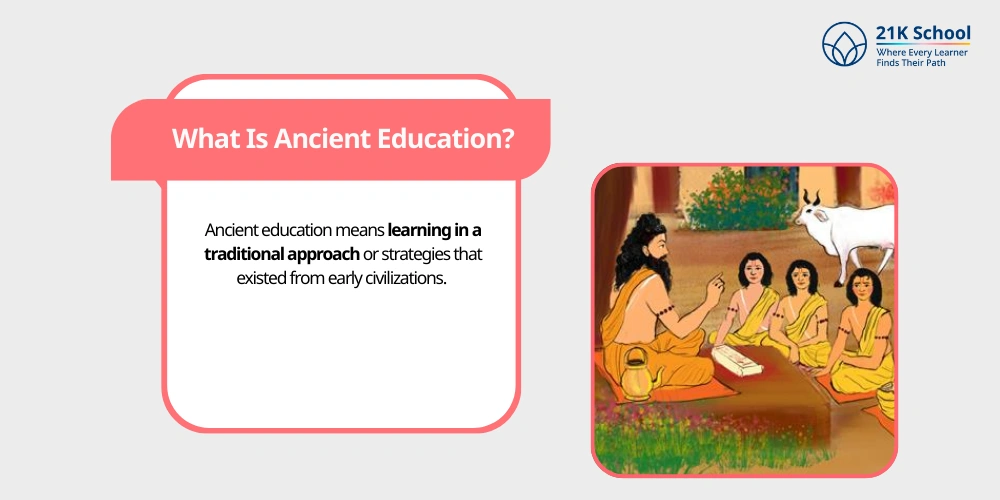
Ancient education means learning in a traditional approach or strategies that existed from early civilizations.
The Gurukul system is one of the popular ancient education systems in which students live with their gurus to learn life skills, philosophy etc.
The main aim of ancient education is shaping responsible, disciplined, and ethics.
What Is Modern Education?
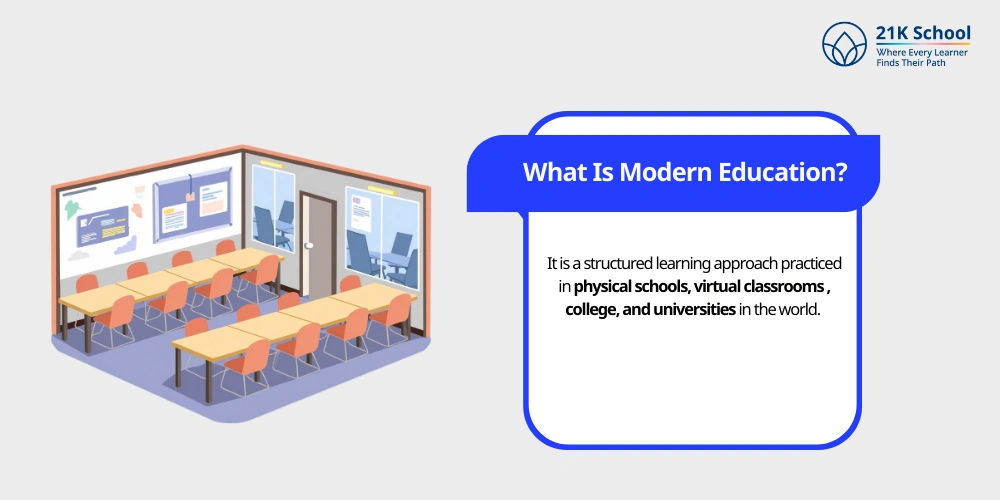
It is a structured learning approach practiced in physical schools, virtual classrooms , college, and universities in the world.
The main aim of modern education is to gain knowledge, learn skills and grow with technology.
Ancient Education vs Modern Education: 11 Key Differences
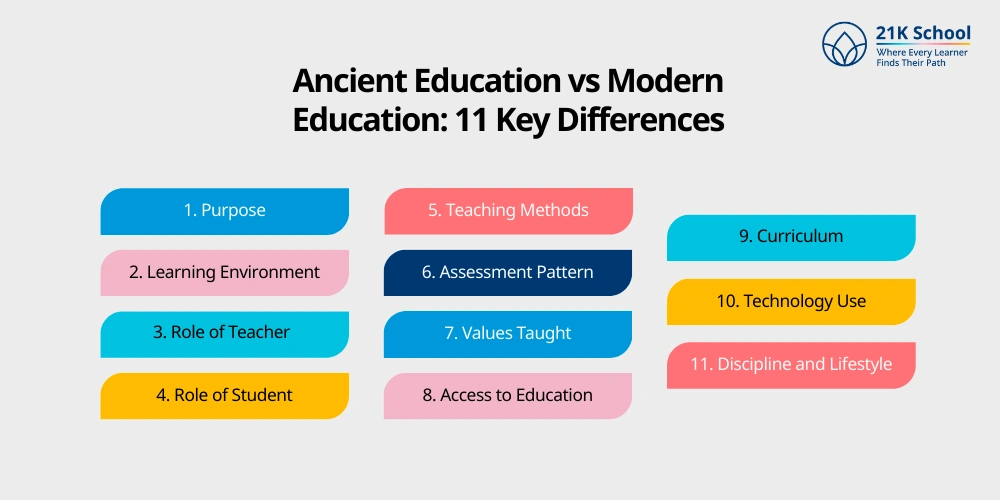
To understand a quick difference between ancient education vs modern education, go through below-mentioned table:
| S No. | Perriculars | Ancient Education | Modern Education |
| 1. | Purpose | Moral development, character building, life skills. | Academic excellence, career readiness, innovation. |
| 2. | Learning environment | Gurukuls, open spaces, nature-based. | Classrooms, labs, digital platforms. |
| 3. | Role of teacher | Central authority, mentor, moral guide | Facilitator, guide, subject expert |
| 4. | Role of student | Obedient learner, follower of rules | Active participant, creative thinker |
| 5. | Teaching methods | Oral tradition, observation, practical work | Lectures, activities, projects, technology-based learning |
| 6. | Assessment pattern | Continuous observation, no formal exams | Tests, assignments, standardised exams |
| 7. | Values taught | Discipline, respect, spirituality, ethics | Diversity, freedom, innovation, global citizenship |
| 8. | Access to education | Limited to certain groups | Universal access for all |
| 9. | Curriculum | Personalised, holistic, guru-designed | Structured, standardized, subject-based |
| 10. | Technology use | None | Extensive use of digital tools; smart learning |
| 11. | Discipline and lifestyle | Strict discipline, simple living | Balanced lifestyle, flexible discipline |
Explore the detailed comparison between ancient education vs modern education:
1. Purpose
Ancient Education: The main purpose of ancient education is Moral development, character building, and development of life skills.
Modern Education: The main purpose of modern education is students academic excellence, career readiness, and innovation.
2. Learning environment
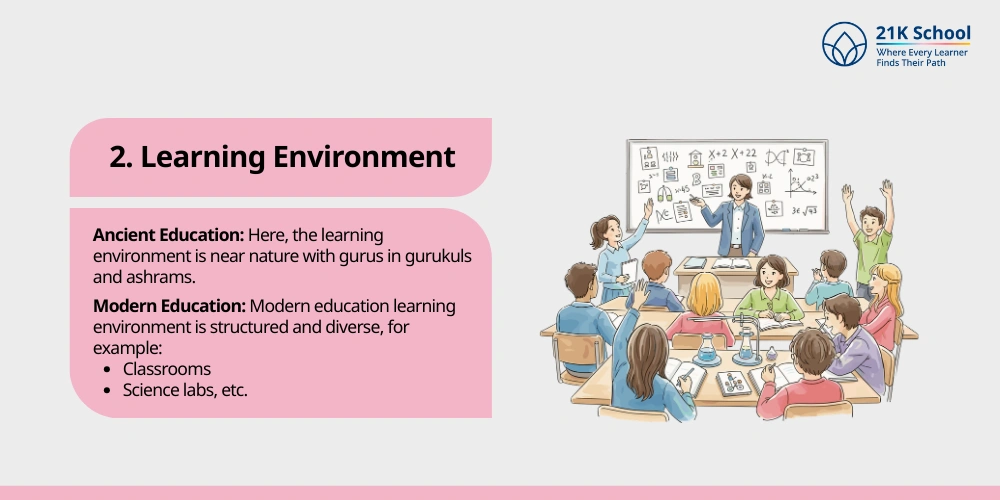
Ancient Education: Here, the learning environment is near nature with gurus in gurukuls and ashrams.
Modern Education: Modern education learning environment is structured and diverse, for example:
- Classrooms
- Science labs
- Computer labs
- Smart classrooms
3. Role of teacher
Ancient Education: In this education, the role of teacher or guru is central authority, mentor, moral guide.
Modern Education: In this education, teachers act as a facilitators play major role to:
- Deliver curriculum content
- Support independent learning
- Motivate students
- Use technology and innovative methods
4. Role of Student
Ancient Education: The role of students in ancient education is to become an obedient learner, follower of rules.
Modern Education: While in modern education the role of students is becoming active participants, creative thinkers.
5. Teaching Methods
Ancient Education: In ancient education the teaching methods are oral tradition, observation, practical work.
Modern Education: While in modern education the teaching methods are lecture-based, activities, projects, technology-based learning.
6. Assessment Pattern
Ancient Education: Assessment pattern it involves:
- Continuous observation
- Daily tasks
- Practical demonstrations
- Guru’s feedback
Modern Education: Assessment pattern today includes:
- Written exams
- Assignments and projects
- Standardised exams
- Grading systems
7. Values Taught
Ancient Education: The values taught here are discipline , moral and spiritual values etc.
Modern Education: The values taught in modern education are diversity, freedom, innovation, and global citizenship.
8. Access to Education
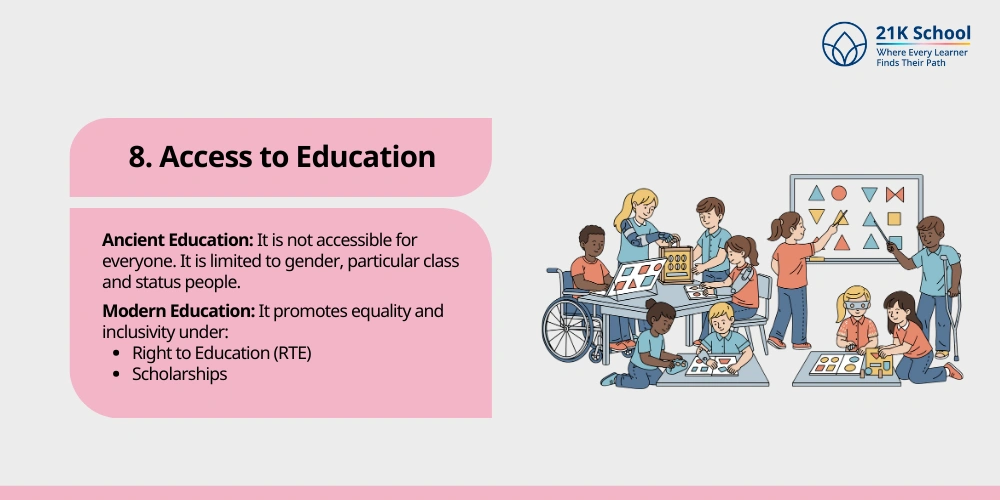
Ancient Education: It is not accessible for everyone. It is limited to gender, particular class and status people. While there were significant barriers, particularly for lower castes and women, scholarly research indicates the situation was more complex.
Modern Education: It promotes equality and inclusivity under:
- Right to Education (RTE)
- Scholarships
- Inclusive education policies
9. Curriculum
Ancient Education: The curriculum here is personalised, holistic, guru-designed.
Modern Education: While the curriculum here is structured, standardised, subject-based.
10. Technology Use
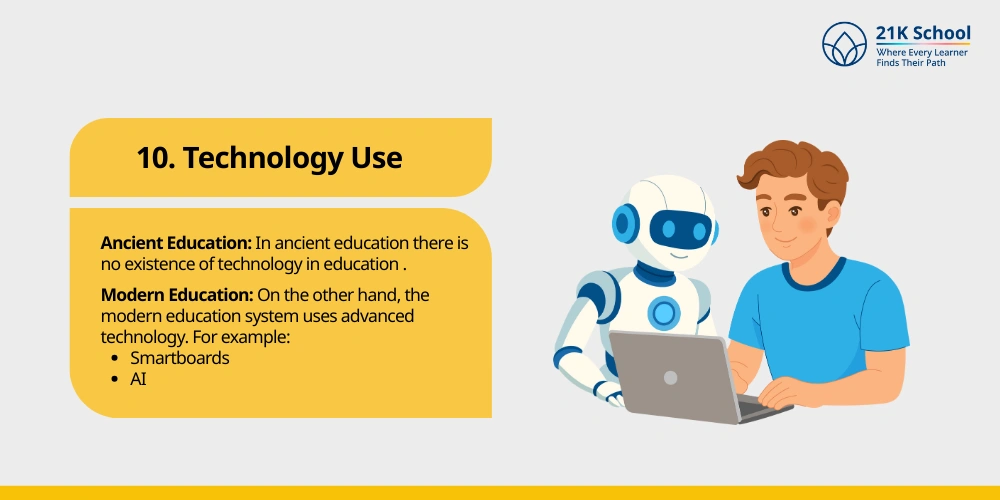
Ancient Education: In ancient education there is no existence of technology in education .
Modern Education: On the other hand, the modern education system uses advanced technology. For example:
- Smartboards
- AI
- Virtual labs
- Online classes
11. Discipline and Lifestyle
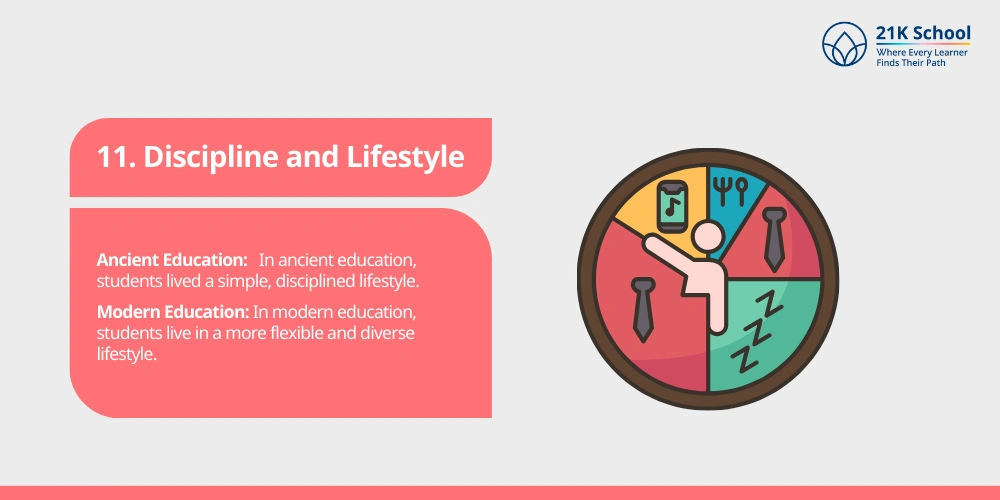
Ancient Education: In ancient education, students lived a simple, disciplined lifestyle. It includes:
- Early waking
- Physical activities
- Meditation
Modern Education: In modern education, students live in a more flexible and diverse lifestyle. It includes:
- Balancing academics
- Extracurricular activities
- Mental well-being
Conclusion
Both ancient education and modern education aim for students’ growth and development.
By understanding its purpose, methods, values, and access, students can differentiate both the terms to prepare students for upcoming challenges.
However, these systems have various advantages and students can also implement a combination of both to determine success.

You may also want to read
What is CBSE? Full Form, History, Structure & Key Benefits
- Last updated on: 02 Mar, 2026
- 14 min read