

Are you aware of the difference between formal education and informal education?
Education is an important factor which results in knowledge, skills and overall development of an individual. The manifestations of it are numerous, and the most common ones are formal and informal education.
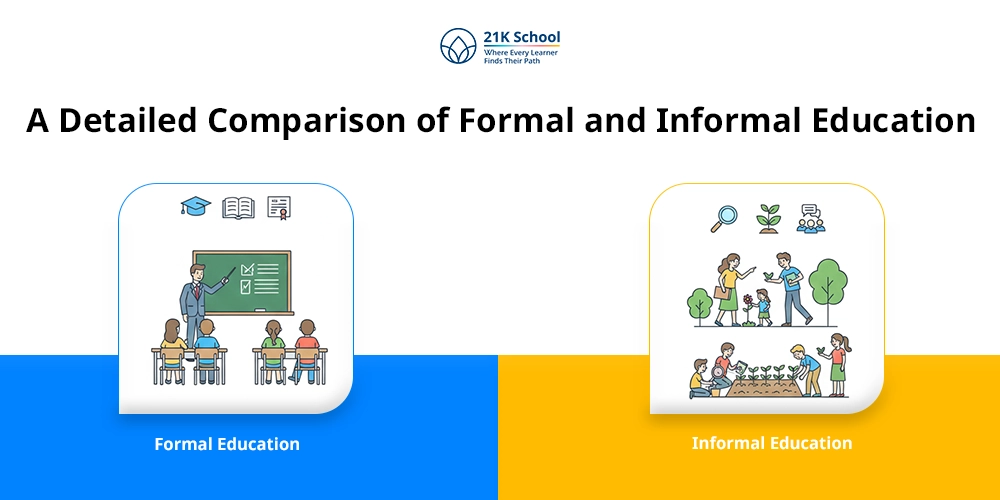
Formal education, on the other is acquired in an organised form during schooling and through a set programme; informal on the other is acquired in everyday experiences, interactions and also during personalised learning .
We can make ourselves aware of the difference between formal and informal education so that we can see the importance of both in our own growth and education throughout our lives.
Contents
What is Formal Education?
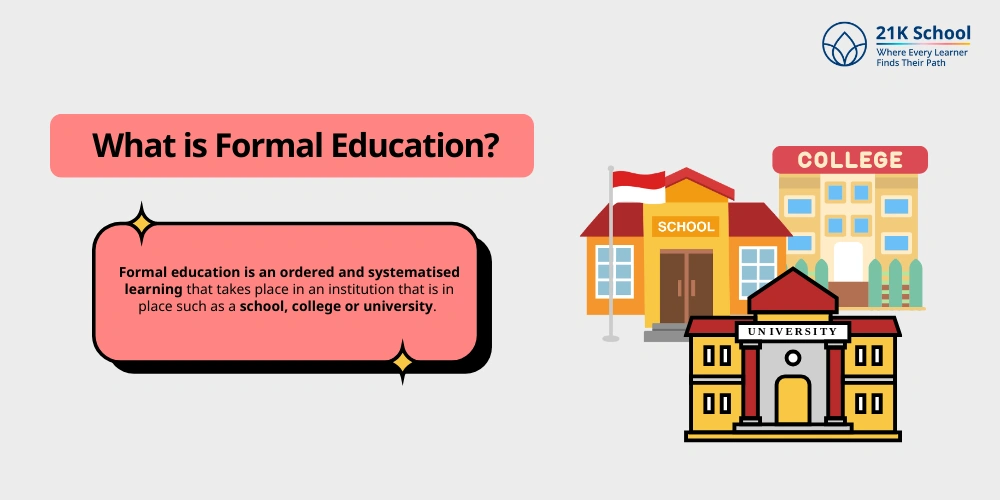
Formal education is an ordered and systematised learning that takes place in an institution that is in place such as a school, college or university. It has a structured curriculum , it is taught by trained teachers and has levels through which it flows, primary, secondary education and higher education .
Formal education is marked by recognised certifications or degrees and is administered by a rule system, schedules and examinations.
It is mainly geared towards the systematic building of knowledge, skills and understanding in a learner in various fields of study or profession.
What is Informal Education?
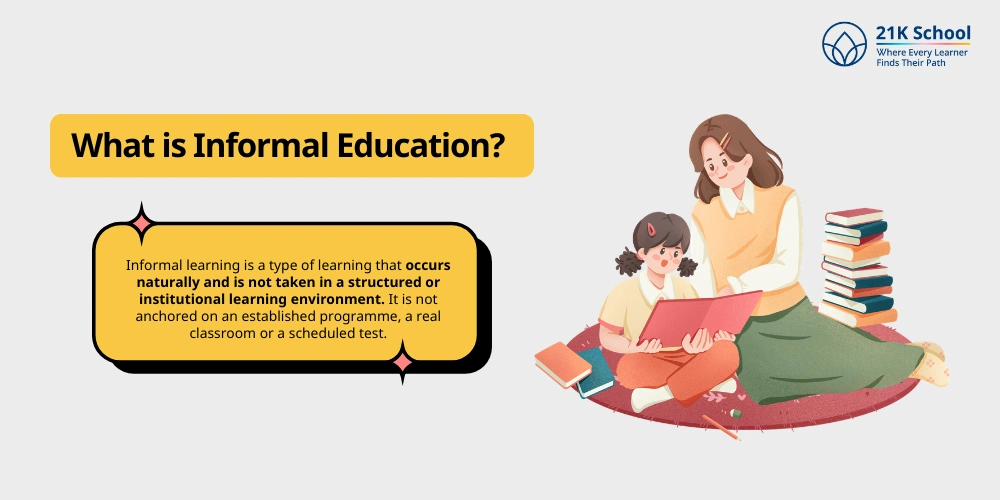
Informal learning is a type of learning that occurs naturally and is not taken in a structured or institutional learning environment. It is not anchored on an established programme, a real classroom or a scheduled test.
Rather, it occurs during day-to-day life activities like communications, observation, family education, community interaction, exposure and personal searching using the media.
The informal education is dynamic and constitutive, and continuous, thus helping the individual to devise practical knowledge, values, skills and attitudes during the process of negotiation in real-life situations.
Key Difference Between Formal and Informal Education
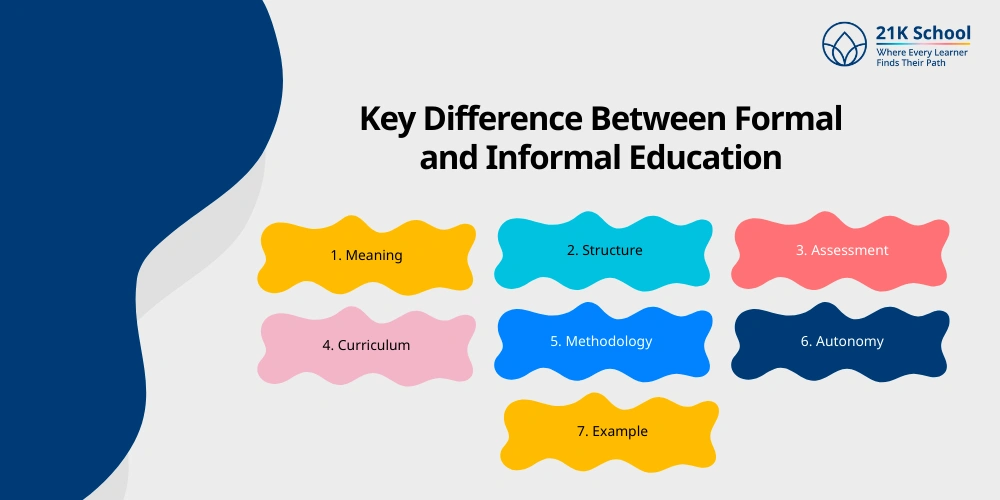
The significant contrasts between formal and informal education would enable us to realise the functions performed by each of them in the process of learning .
Formal education is organised with a certain curriculum whereas informal education is always spontaneous and occurs through daily experiences.
| Aspect | Formal Education | Informal Education |
| Meaning | Formal education refers to structured education, and it is provided in organised learning institutions like colleges and schools. | Informal education is learning that is spontaneous and learned in everyday life. |
| Structure | Formal education is on a strict schedule, rules and a rigid framework. | Informal education has no strict format, and it takes place without schedules or structure. |
| Assessment | Formal education incorporates frequent tests, examinations and assignments. | Informal education involves no formal testing; education is manifested in behaviour or skills, or personal development. |
| Curriculum | A formal education is taught through a standardised, approved and planned curriculum. | The informal kind of education does not have a fixed curriculum, and it develops according to interests, situations, or experiences. |
| Methodology | Formal education is characterised by systematic teaching, which may be lectures, classroom work, and guided instruction. | Observation, imitation, discussions and pragmatics are informal approaches used in informal education. |
| Autonomy | Formal education does not have much freedom, and students have to abide by rules, schedules and curriculum. | Informal education gives high autonomy whereby individuals learn at their, and interest rate. |
| Example | Formal education: attending school, a college degree, or a certified training course. | Learning to cook as a family, learning to act by doing hobbies, and learning by doing through everyday events and life. |
1. Meaning
Formal Education: Formal education is an institutionalised education that is administered by institutionalised organisations through schools, colleges and universities. It is challenging and oriented at the education of academic, professional and society skills .
Informal Education: Informal education, however, is not organised and natural in a manner of occurrence in day-to-day life. It entails family, peer, media, as well as environmental learning and that helps people to acquire practical knowledge , values and life skills.
2. Structure
Formal Learning: Formal learning is highly ordered with a time schedule, grade scale, classroom, requirements and rules that are laid down in the institution. It abides by the systematic way of growing through to higher education.
Informal Education: There is no structure in informal education and yet, this is how it occurs and operates in our lives. It does not depend on a certain situation or time and enables the method of learning to be emancipated in regards to the situation, personal interest or communication with other individuals.
3. Assessment
Formal Education: In formal education, tests are planned and standardised like exams, tests and assignments and projects. These are tests that examine the academic development of the learner and the grades or academic development.
Informal Education: Informal education lacks the use of formal assessment ; learning is assessed in a casual manner through observation, personal growth, behaviour or increased competency.
4. Curriculum
Formal Education: The formal education is guided by a well-structured curriculum which has been approved by the education authorities. It outlines content, learning objectives , and teaching/ evaluation plans. Teachers adhere to this curriculum because they have to bring about homogeneous learning.
Informal Education: Informal education does not have any fixed study schedule ; it is created according to the daily life interests and the practical needs. Learning is dynamic, responsive and personalised because individuals learn what interests them or is required by the circumstances.
5. Methodology
Formal Education: Formal training is formal education that entails lectures, discussions, homework , demonstrations and classroom activities. The objectives of the curriculum and cohesive learning will be dealt with using these practices.
Informal Education: There will be no schedules and limitations and the students will be given the freedom to learn on their level, according to their interests.
6. Autonomy
Formal Education: In this case of education, the learner in one way or the other is independent since the learner can opt to abide by the set schedules, regulations, syllabuses and institutional demands. The students do not have sufficient control over how, what and when they learn.
Informal Education: Informal education is very autonomous since individuals are given a chance to learn at their convenience and have what they prefer. There is no involvement of time schedules and limitations, and students will be at liberty to study at their own pace depending on their interests.
7. Example
Formal Education: Formal education may be the existence of schooling, college schooling, job training or a written course.
Informal Education: This is learning the art of cooking with the parents, and learning a language through talking, learning by doing with respect to hobbies and learning by watching with respect to social behaviour. Explore the benefits of learning a new language .
Ending Note
Education, both formal and informal, plays a key role in the learning process of an individual. Informal education adds to the formal education despite the structure, based on what is provided to these strategies, as a student acquires more knowledge through practical means and lifelong learning , life skills as an individual goes through his day to day life.
Together, they help in the full growth of an individual, making one fit, think in the right way and succeed either in academics or in real life.

You may also want to read