

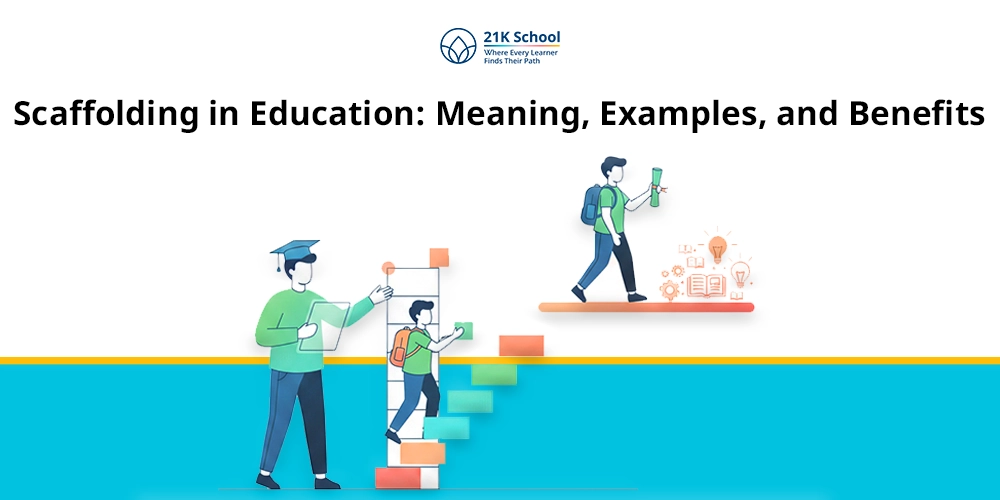
Each student has their own strengths and weaknesses. Some need support in the beginning stage of learning a new concept or subject.
To ensure students are on the right path of learning, teachers often use different learning techniques and one of the popular approaches is “scaffolding in education”.
In this blog, we will go through what scaffolding in education is, its types, benefits and many more. Let’s begin.
Contents
What is Scaffolding in Education?
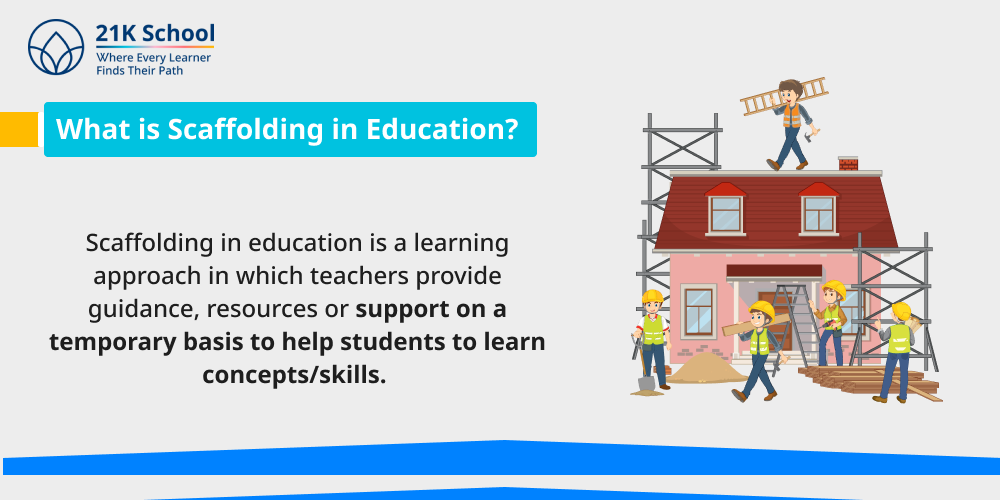
Scaffolding in education is a learning approach in which teachers provide guidance, resources or support on a temporary basis to help students to learn concepts/skills.
Students often struggle with new topics, skills or tasks and short-term help make them feel confident to participate in future tasks without fear.
Lev Vygotsky’s “Zone of Proximal Development” (ZPD), represents the space between what a learner can do unsupported and what they can achieve with guidance.
Also, the term “scaffolding” was formally introduced in 1976 by David Wood, Jerome S. Bruner, and Gail Ross in their paper “The Role of Tutoring in Problem Solving.
Here, students get a chance to gain expert assistance to become independent and self-assured learners.
5 Types of Scaffolding in Education
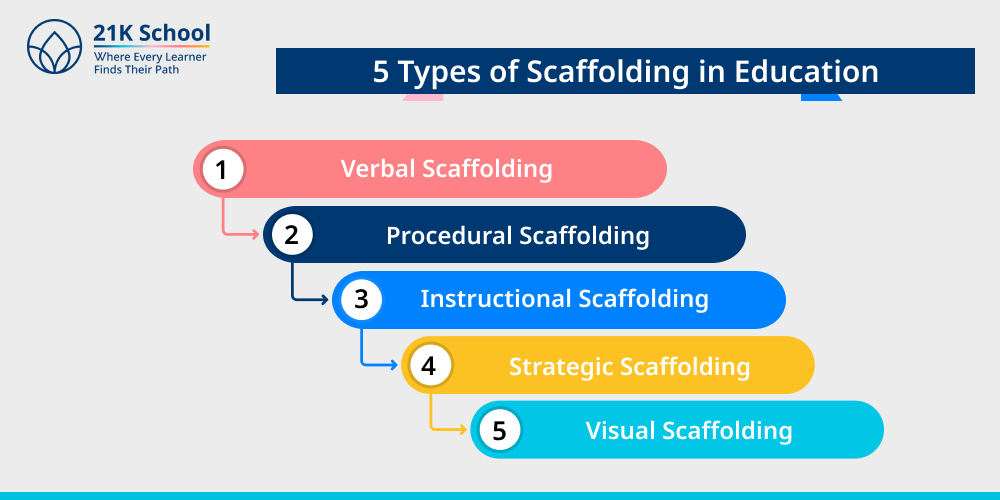
There are different types of scaffolding in education used by teachers to support students. Se common types are:
1. Verbal Scaffolding
Verbal scaffolding is a support teachers offer by using spoken language.
Here, they ask open-ended questions, giving hints, rephrasing or simplifying information etc to make learning easy.
2. Procedural Scaffolding
In procedural scaffolding, students get well-designed steps or tools to complete the task effectively.
Some common examples include graphic organisers, templates, checklists, step-by-step instructions, etc.
3. Instructional Scaffolding
In this type the main objective is how the content is delivered.
Teachers help students in breaking down tasks/chapters into smaller parts to learn without challenges.
4. Strategic Scaffolding
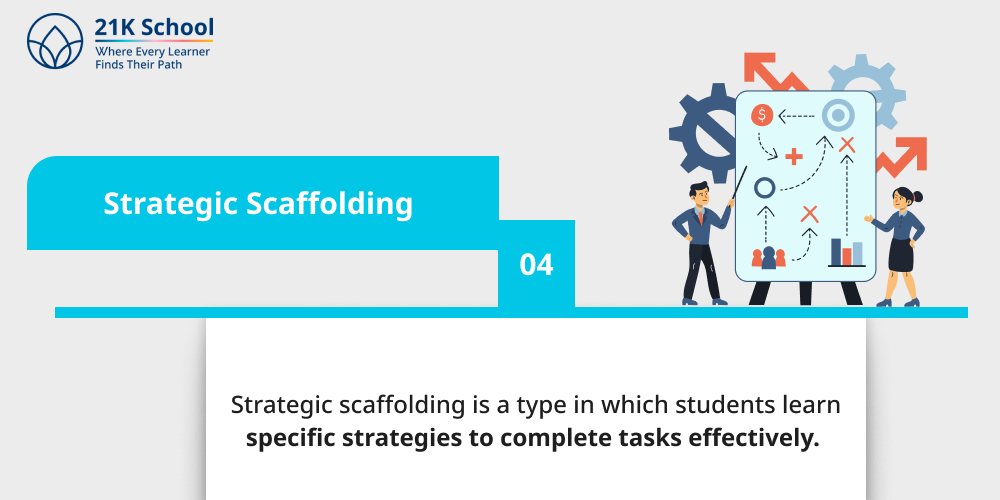
Strategic scaffolding is a type in which students learn specific strategies to complete tasks effectively.
Students learn various skills such as:
- Problem-solving strategies
- Study skills
- Cognitive tools
- Learning methods
5. Visual Scaffolding
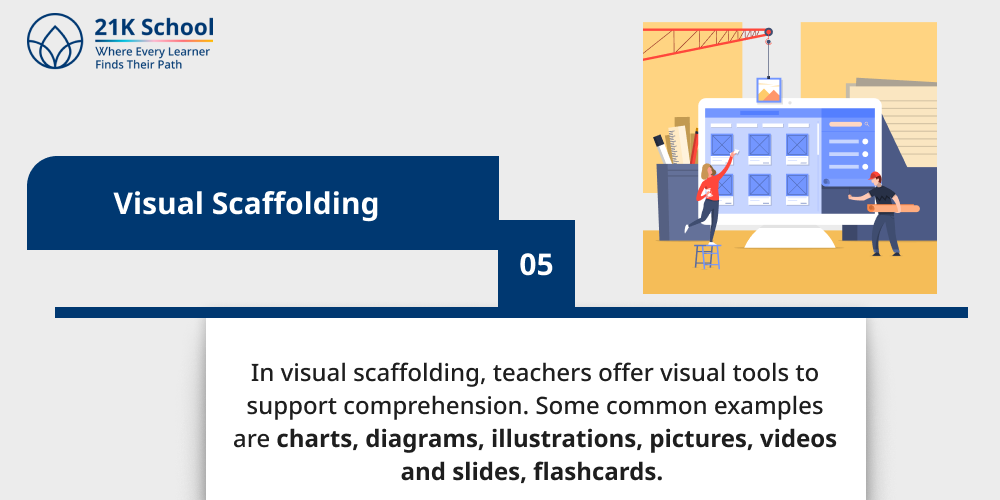
In visual scaffolding, teachers offer visual tools to support comprehension. Some common examples are charts, diagrams, illustrations, pictures, videos and slides, flashcards.
Students can also use creative mind map ideas which enables students to memorise for a longer period of time.
How Does Scaffolding in Education Work?
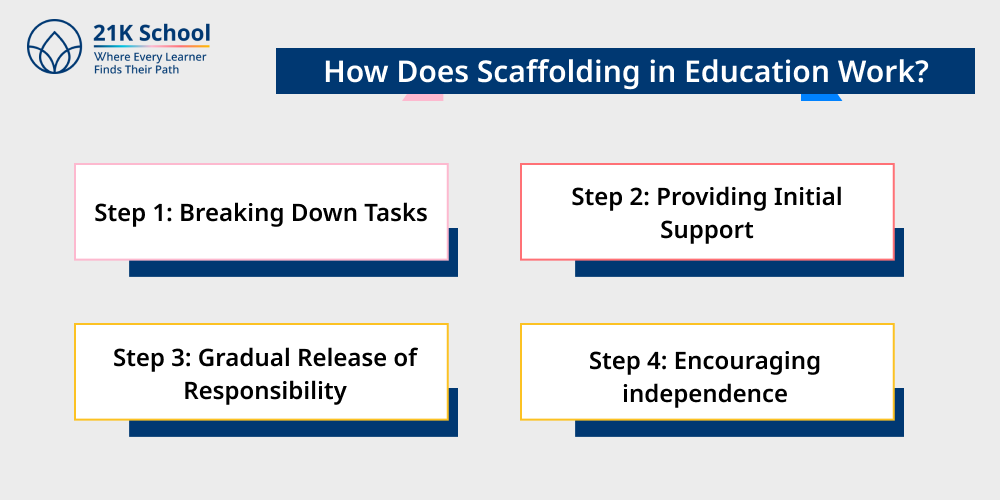
Given below is a four step process on how does scaffolding in education work for students:
Step 1: Breaking Down Tasks
In step one teachers look at the needs of students and break down tasks into smaller ones to achieve easily.
This helps them to understand their unique learning style and confidence of completion.
Step 2: Providing Initial Support
The next step is about providing initial support like helping in writing without grammar mistakes or suggesting formulas to solve in different ways.
In this way, students explore solutions which lead to better end results.
Step 3: Gradual Release of Responsibility
Teacher and student collaborative working in a beginning stage supports students. Here, students get different tools, learning methods, resources etc.
However, in this stage teachers gradually release responsibility and let students take ownership of their learning.
Step 4: Encouraging independence
At last, students are encouraged to work independently and strengthen their understanding, confidence and critical thinking .
6 Benefits of Scaffolding in Education for Students
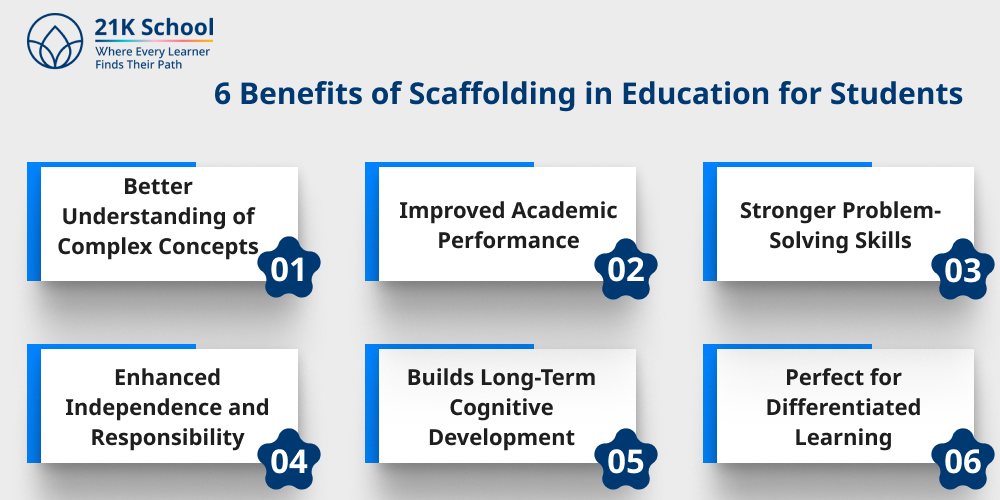
Given below are some of the benefits scaffolding in education for students:
1. Better Understanding of Complex Concepts
By breaking down tasks for complex topics students can gain better understanding. It reduces students’ exam stress , concept confusion, and promotes deep learning.
2. Improved Academic Performance

To improve students academic performance , scaffolding in education plays a crucial role in which teachers provide temporary guidance.
With time they become independent learners and work according to academic objectives.
3. Stronger Problem-Solving Skills
For stronger problem-solving skills , teachers offer various learning methods/ strategies that help students to understand problems, look for alternatives, and choose the most effective solutions.
4. Enhanced Independence and Responsibility
Through scaffolding in education students are able to develop self-discipline, confidence, decision-making skills and ownership of tasks.
In this way, students can change the methods of learning to see better results.
5. Builds Long-Term Cognitive Development
To build long-term cognitive development , scaffolding strengthens the mental abilities of students.
It is ideal for long-term academic progress and personal growth of individuals.
6. Perfect for Differentiated Learning
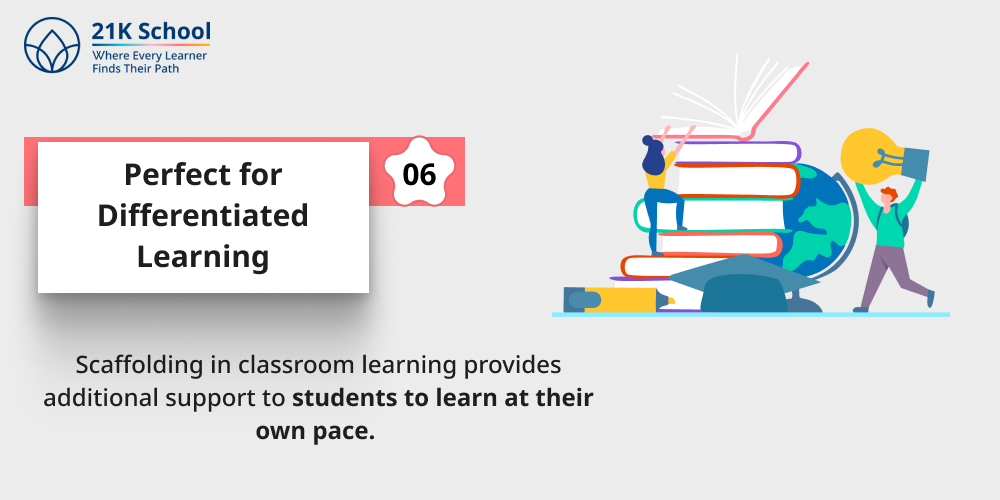
As we know each student is different and their needs vary depending on various factors.
Scaffolding in classroom learning provides additional support to students to learn at their own pace.
Common Challenges and Solutions with Scaffolding in Education
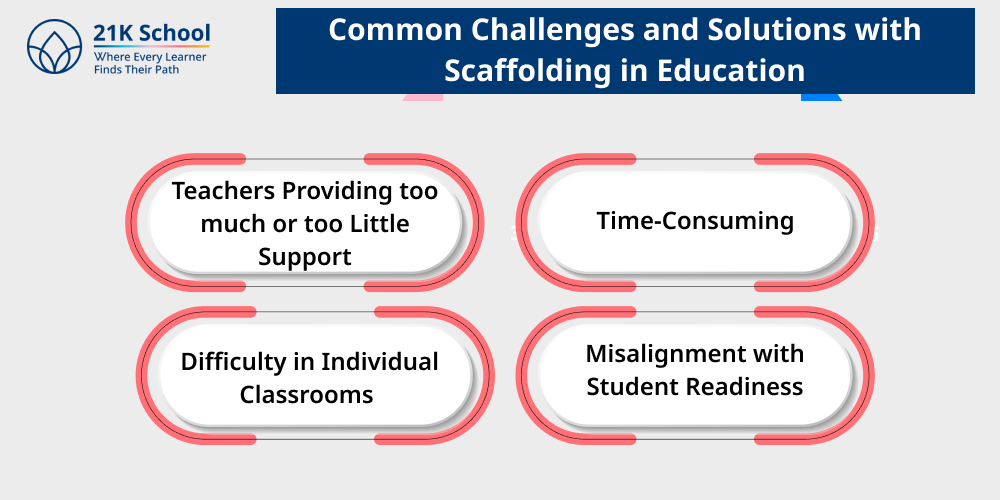
Some common challenges and solutions with scaffolding in education includes:
1. Teachers Providing too much or too Little Support
Sometimes teachers provide too much or too little support that negatively impacts student learning.
The solution is teachers regularly assess student progress, adjust support based on readiness, and use fade-out methods to balance.
2. Time-Consuming
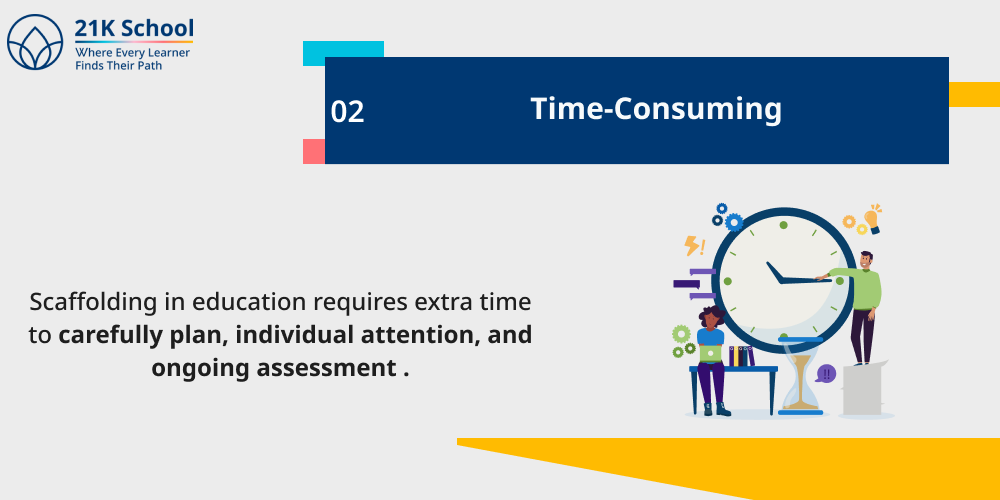
Scaffolding in education requires extra time to carefully plan, individual attention, and ongoing assessment .
However, time can be managed by using ready-made scaffolding tools, implementing collaborative learning , and planning in advance.
3. Difficulty in Individual Classrooms
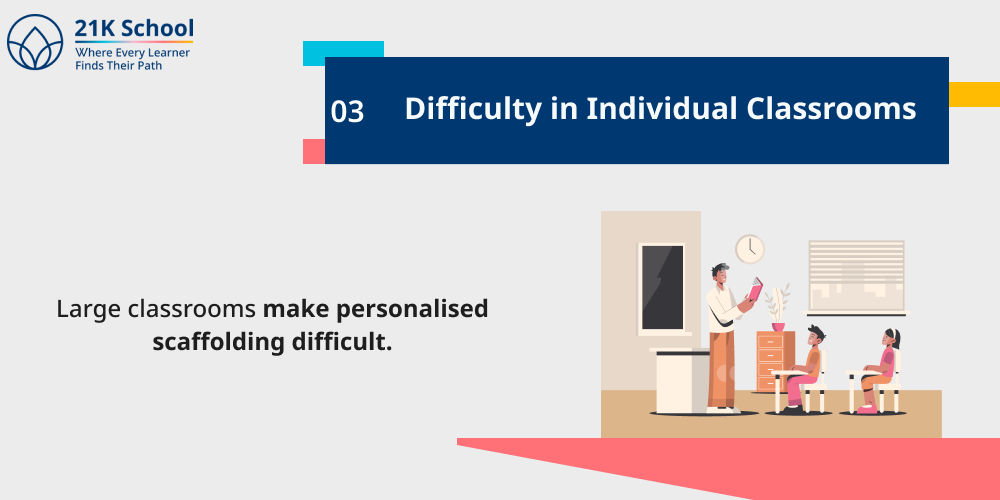
Large classrooms make personalised scaffolding difficult.
But, using student-led peer support systems and digital tools can make a difference.
4. Misalignment with Student Readiness
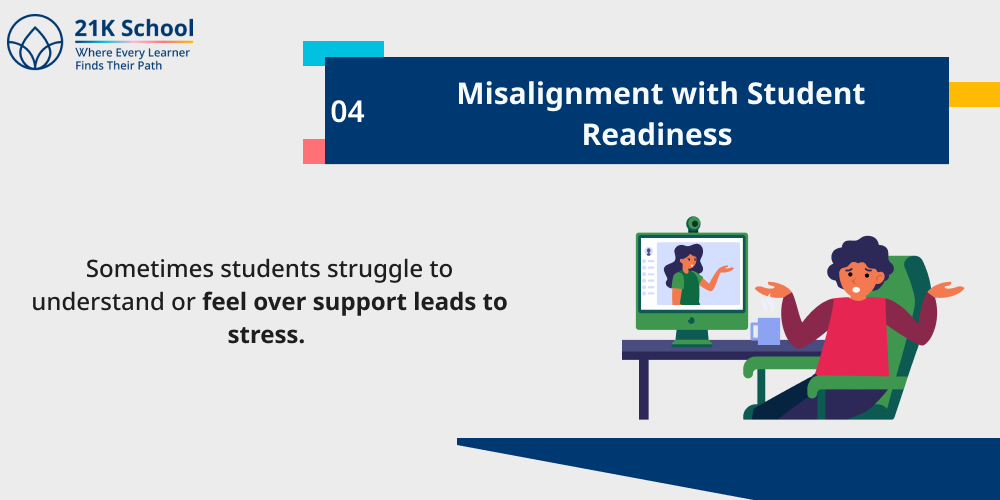
Sometimes students struggle to understand or feel over support leads to stress.
Teachers need to understand the requirements of students and guide only when they really need to.
Examples of Scaffolding in Education
Some popular real-life examples of scaffolding in education for guidance:
1. Reading Comprehension Examples
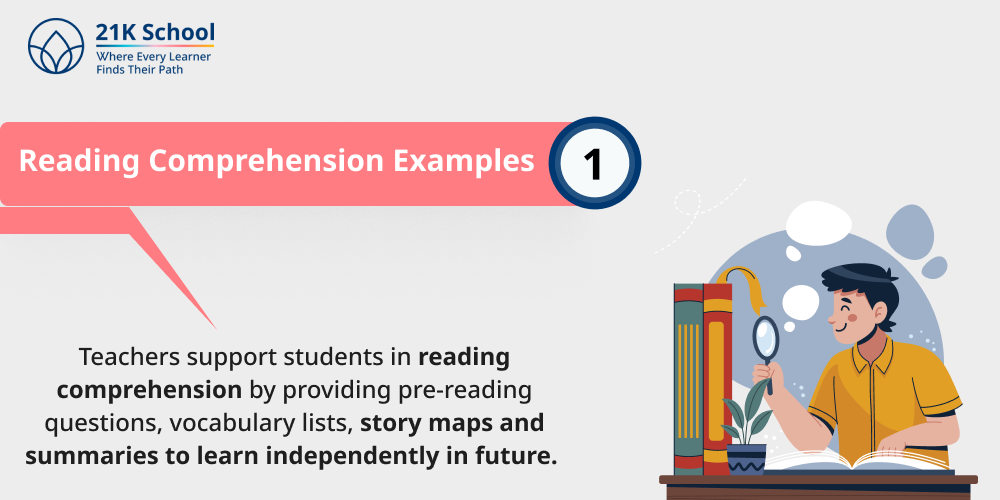
Teachers support students in reading comprehension by providing pre-reading questions, vocabulary lists, story maps and summaries to learn independently in future.
2. Science Experiments Examples
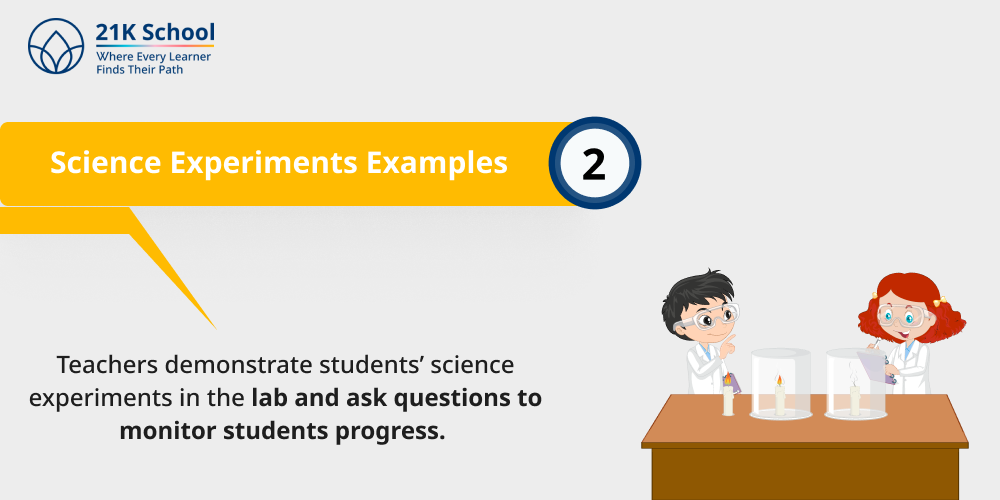
Teachers demonstrate students’ science experiments in the lab and ask questions to monitor students progress.
3. Math Problem-Solving Examples
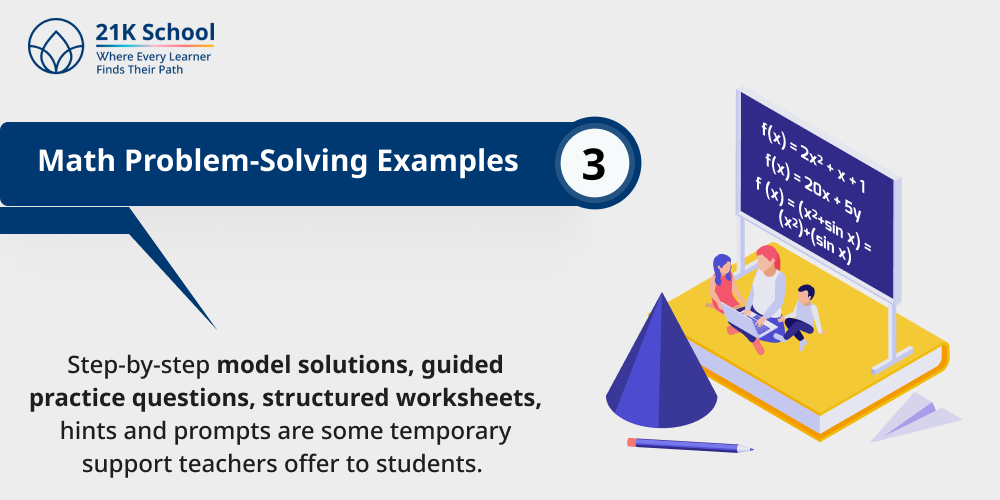
Step-by-step model solutions, guided practice questions, structured worksheets, hints and prompts are some temporary support teachers offer to students.
It helps them to learn problem-solving and critical thinking skills .
Conclusion
Implementing one of the effective teaching strategies like scaffolding in education is ideal to build confident, and independent learners.
Teachers here guide students in the beginning stage and carefully release control to let them explore and understand their own ways.
Hopefully, the above-mentioned information is helpful to understand what scaffolding in education is and why one should implement it to get better results.

You may also want to read