

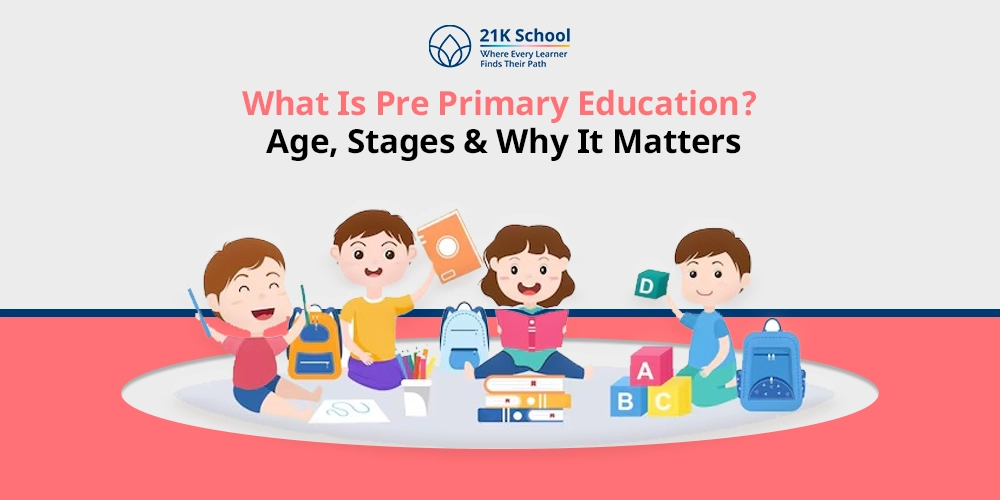
Education at the pre-primary stage is critical in creating the basis of learning and development of a child. It is the start of organised education of a child in a supportive and nurturing environment.
Pre-primary education makes children adjust slowly to life in school and
prepares them to succeed in upper stages of education
by involving the children in meaningful learning
and enjoyable learning activities.
Pre-primary education teaches children to acquire the simplest forms of skills through activity-based learning, narratives, songs and instructed interactions that allow them to gain skills of communication, creativity, problem-solving, and collaboration.
Contents
What is Pre-Primary Education?
The first level of formal education attained by the children is pre-primary education, which they receive before starting primary education, which is usually after the ages of three to six years. This includes physical development, emotional development, social development and intellectual development.
The child-centred, play-based and fun learning activities will help the children acquire the basic language, motor and social skills.
Pre-primary education is also important in providing children with confidence and independence, and positive learning attitudes that will help them to successfully transition to primary education.
Types of Pre-Primary Education
Pre-primary education includes Kindergarten, Nursery School, Anganwadi, Balwadi and Montessori that handle early learning, skills, and prepare the child for the basic preparations to primary education.
1. Kindergarten
Kindergarten is an early childhood education curriculum for children who are usually aged 4-6 years. It is also concerned with building fundamental literacy, numeracy, social skills, and creativity with the help of play-based education, group work, and formal lessons.
Kindergarten is a form of preparation for children to go to school through cognitive, emotional and physical growth under an environment that is nurturing.
2. Nursery School
Nursery schools are schools that accommodate children between the ages of 2 and 4 years and offer a secure and challenging environment where children learn in their early years.
They focus on socialisation, rudimentary language and motor skills, and pretend play. Nursery schools make children grow in terms of confidence, curiosity and basic skills required in kindergarten and further academic achievement.
3. Anganwadi
Early childhood care and education Anganwadi centres are included in the government-funded education and care programme in India. They target child health, nutrition and preschool education for children at the age of 0-6 years.
Anganwadis are also providing basic education, immunisation education and additional nutrition, especially to the poor communities and towards the general development of the children.
4. Balwadi
Balwadis are schools in India whose target is children aged 3-5 years. They give fundamental education as play, stories and activities that develop cognitive, social and physical skills.
Balwadis also prepare the children for primary school, besides promoting early literacy and emotional literacy.
5. Montessori Education
Montessori education is a theory based on children, which encourages self-directed education through exploration and practical activities. Autonomy, innovation and problem solving.
The Montessori school setting emphasises the whole person development, with respect to intellectual, emotional, social and practical life capacities, and personal interests and pace of the child.
Right Age to Start Pre-Primary Education
The pre-primary education is supposed to start as one ages between 3 and 6. At this age, the children are developmentally ready to go through certain structured yet play-based learning activities.
Pre-primary attendance at such tender ages will help children to acquire the social, emotional, language and motor skills which they sorely need.
It further fosters curiosity, creativity and early learning habits, allowing the child to transition gradually to a school environment, which makes the transition to primary education easier and more efficient.
Importance of Pre-Primary Education
The value of pre-primary school is that it gives a good foundation of learning, enhances the social, emotional, and cognitive capacities, and equips children to join the formal school level. Here are the importance of pre-primary education.
1. Holistic Development
The pre-primary education assists in the general development of a child in respect to physical, emotional, social and intellectual development.
Play, group activities and guided learning teach children how to express themselves, communicate with other people and acquire motor skills. This balanced development helps the children to be self-confident, self-dependent and prepared to confront the learning development in the future.
2. Building a Robust Foundation
Overall, pre-primary education provides a solid base for future academic achievements because it presents fundamental ideas of language, numbers, and problem-solving skills. Early literacy and numeracy are learned in an entertaining and appealing way by children.
This childhood exposure creates confidence, interest and preparedness to primary school, which makes subsequent learning comfortable and efficient.
3. Develops Set Routines
Education in pre-primary levels assists the children to ensure they familiarise themselves with the structured day-to-day activities like routines, schedules and classroom rules and regulations. Study routines are an excellent way to be disciplined, manage time and become responsible.
It also gives them a feeling of security and stability, which makes the children comfortable with the learning environment and easily adapt to formal learning.
4. Instils Values
In the pre-primary level, children are introduced to core values of sharing, cooperation, respect and empathy. Children get to know good behaviour and social responsibility through stories, group play and teacher guidance.
These are the initial pieces of training that contribute to the development of good character traits and morality that determine behaviour in life.
5. Cognitive Growth
Thinking, reasoning, and creativity are triggered in pre-primary education, which provokes cognitive development of children. Puzzles, storytelling for learning, music and games can help children to improve memory, attention and problem-solving
This process of the mind at this age improves brain growth and the desire to study, which is supplemented by studies in adulthood.
Objectives of Pre-Primary Education
Pre-primary education aims at getting the primary skills, social skills, creativity and groundwork to further studies. Below you can check the objectives of pre-primary education.
1. Promotes Independence
Pre-primary education teaches children to do simple tasks on their own, and this might involve sorting out things, making choices, and taking care of personal needs. The activities help children to make decisions and be self-reliant.
Learning gradually to work alone makes them responsible, and the children will know how to cope with new circumstances with confidence in their later education stages.
2. Boosts Confidence
Pre-primary education instils confidence with a background of a safe and positive learning environment where the children feel free to express themselves.
Group activities, storytelling, and play give children the opportunity to exchange ideas and talents. Teachers should give positive encouragement that will make children overcome hesitations, build self-esteem, and gain confidence in themselves.
3. Diversity and Inclusion
Pre-primary education prepares children to different cultures, languages, and talents in a non-discriminatory environment. Children can be taught to respect, accept, and empathise through mutual play and activities.
Early exposure to diversity lowers prejudice, promotes social harmony, and makes children learn to appreciate differences to develop inclusive attitudes at a tender age.
4. Engagement of Parents
The pre-primary education focuses on the active participation of the parents in the learning process of a child. Communication, regular meetings, and joint activities assist the parents know the progress and needs of the child.
This collaboration between the parent and the teacher enhances learning at home, aids emotional growth and the continuity of guidance to the child.
5. Prepares for Formal Schooling
Pre-primary education is the one that prepares children to attend normal schooling as they are made familiar with the classroom routine, rules, and patterns of learning. Children acquire introductory academic skills, social behaviour and listening skills.
This training at an early stage breaks the anxiety, builds up the preparation and serves to prepare children to progress to primary school without fear and hesitation.
Benefits of Pre-Primary Education
The pre-primary education provides the child a strong ground since it enhances cognitive development, social, and emotional development, fosters curiosity, creativity, and social bonds and prepares the child to succeed in formal education. The benefits of pre-primary education are mentioned below.
1. Develops Early Literacy
The pre-primary stage introduces the children to simple reading and writing skills through the forms of stories, rhymes and identification of letters. Early literacy practices cause the children to acquire the patterns of language, comprehend it and learn to love to read.
The skills provide a great base for academic learning and communication skills in the future, and therefore, the transition to primary education becomes easier.
2. School Readiness
The pre-primary school children learn routines, classroom behaviour and low-level academic issues, which prepare them to join formal school. They become accustomed to structured learning, directions and interaction with the teacher and peers.
Anxiety and confidence are reduced through this preparation, and this will ensure that the process of adjusting to the expectations and learning conditions in primary school will become easier.
3. Enhance Vocabulary
The children get to come across new words through conversations, stories, songs and interactive activities in pre-primary education. The repetitive application of the language in various situations improves their vocabulary, communication skills, and knowledge.
A large vocabulary helps children to express themselves freely, formulate questions and participate in the process of learning, and this helps in promoting social and academic growth.
4. Improves Gross and Fine Motor Skills
Pre-primary education involves both the development of fine motor skills and gross motor skills through participating in activities, including drawing, building blocks, running and climbing.
The activities assist in the physical development, coordination, and confidence and prepare a child to engage in activities at school that include writing, cutting, gameplay, and other activities.
5. Social Development
Pre-primary education promotes social interaction, whereby children can engage, whereby they can engage in group activities together as they play and share. Children are trained how to cooperate, empathise, how to communicate and how to solve conflicts.
The precursor social skills would allow children to make friends, adapt to new environments, and form emotional intelligence, which is crucial to personal and academic success.
6. Develops Curiosity
Pre-primary education involves exploration, questioning, and discovery of things by engaging in practical activities and play learning. Through encouragement of curiosity, children gain problem-solving skills, creativity, and learn to love learning.
Promotion of inquiries and experimentation can make children learn about the surrounding environment and acquire a lifelong learning behaviour.
Problems of Pre-Primary Education
Pre-primary education has a number of challenges, and they include poor infrastructure, insufficient funding for pre-primary education, inequity, poor parental participation, and poor awareness, which impact the early learning and development of children.
1. Inadequate Infrastructure
Many pre-primary schools do not have the right classrooms, learning resources, playgrounds, and sanitation. Inefficient infrastructure restricts efficient education, safety and development of the child.
Young learners are unable to participate in any significant learning activities without a well-equipped environment, which impacts their early cognitive, social and physical developments.
2. Lack of Funding
Lack of financial resources limits access to trained teachers, learning materials and contemporary learning tools in pre-primary education.
The low budget can lead to overcrowded classrooms, poor teaching and inaccessibility for poor kids. The safe, stimulating, and inclusive learning environment that is required by all young learners can be accomplished through an adequate amount of funding.
3. Lack of Equity
Pre-primary education is never equal, and children of disadvantaged or rural backgrounds are disadvantaged. Practices of inequality in access to and quality of education exist, which arise due to gender, socio-economic status and geographic location.
Equity is lacking, and this deprives each child of the early learning process that they require in order to have a good educational background.
4. Low Parental Engagement
The role of parents in early childhood education is usually minimal, which impacts the learning performance of children. The success of pre-primary programmes is reduced when the parents are ignorant or incapable of supporting the development of their child at home.
Home-based learning reinforced by active participation is a key to holistic development and school preparedness.
5. Lack of Awareness
The significance of pre-primary education to cognitive, social and emotional development is not known to many parents and communities. The result of this ignorance is low enrollment, incomplete attendance, and underestimation of the early learning programmes.
Awareness promotion is the way to provide children with the basis to live and succeed in their lifetime.
Conclusion
The first and most important part of the learning process of a child is pre-primary education. It develops physically, emotionally, socially, and cognitively and helps them to develop curiosity, creativity, and a desire to learn.
Play-based activities and structured activities enable children to be more confident and independent, and learn the necessary skills to be ready to enter school and life.
Pre-primary education is a good foundation that provides smooth access to primary schooling, instilling good values in a child and preparing them to succeed in their academic life and in general development as a person.

You may also want to read