


With the announcement of upcoming exams, comes the fear of failing or not being able to score the highest.
This fear and anxiety might lead to some remorseful mistakes that are hard to change once exams are conducted.
Even students who are well-prepared feel this exam stress , due to which they commit some silly mistakes in papers, thus resulting in lesser marks and dissatisfaction.
This article will portray some ways to avoid silly mistakes in exams, after understanding the reasons behind learners committing such mistakes.
Contents
- Why Do Silly Mistakes Happen in Exams?
- How to Avoid Silly Mistakes in Exams: Effective Strategies
- 1. Read the Question Carefully-Twice
- 2. Improve Time-management Skills
- 3. Practice Mock Tests Under Exam Conditions
- 4. Develop Stronger Reading and Comprehension Skills
- 5. Write Neatly and Organize Your Work
- 6. Double-Check Your Answers
- 7. Stay Calm and Manage Stress
- 8. Break Difficult Questions Into Steps
- 9. Build Stronger Basics Through Regular Practice
- 10. Improve Concentration and Focus
- 11. Avoid Overconfidence
- 12. Maintain Good Physical and Mental Health
- Wrapping Up
Why Do Silly Mistakes Happen in Exams?
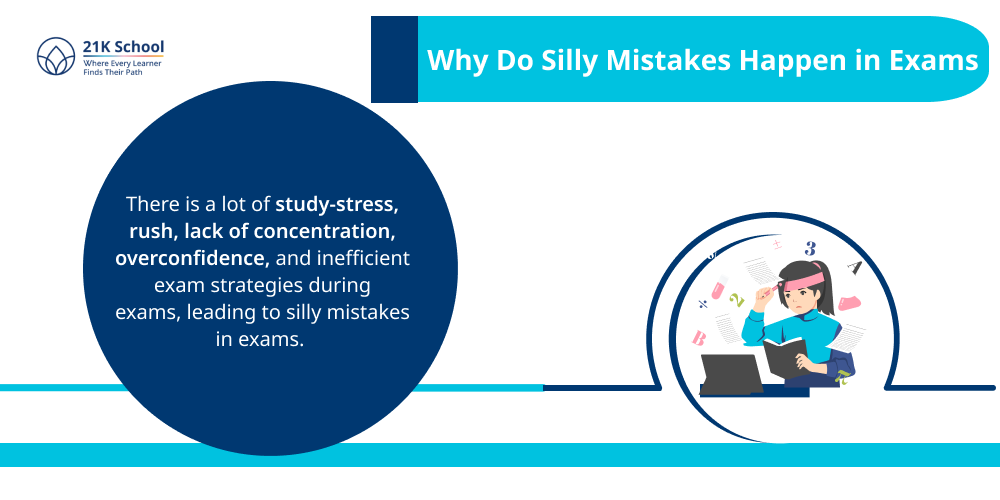
There is a lot of study-stress , rush, lack of concentration, overconfidence, and inefficient exam strategies during exams, leading to silly mistakes in exams.
Students often panic when they are giving exams, which may result in hasty reading or omission of necessary steps.
Some students are under pressure to read faster than normal, due to which they might misread questions or might make calculation errors.
Mental-tiredness is another probable cause. Excessive study-hours , sleeplessness, fatigue, and anxiety may cause a decrease in concentration and increase the chances of errors.
In certain cases, students might fail to comprehend the question properly and then write wrong answers according to their wrong interpretation.
There are the situations when learners end-up with the wrong assumption of the question, even when it’s a known-one, thus missing its real meaning.
Generally, silly mistakes occur since exams challenge your knowledge level along with attention, time-management , on-spot thinking, and concentration level.
How to Avoid Silly Mistakes in Exams: Effective Strategies
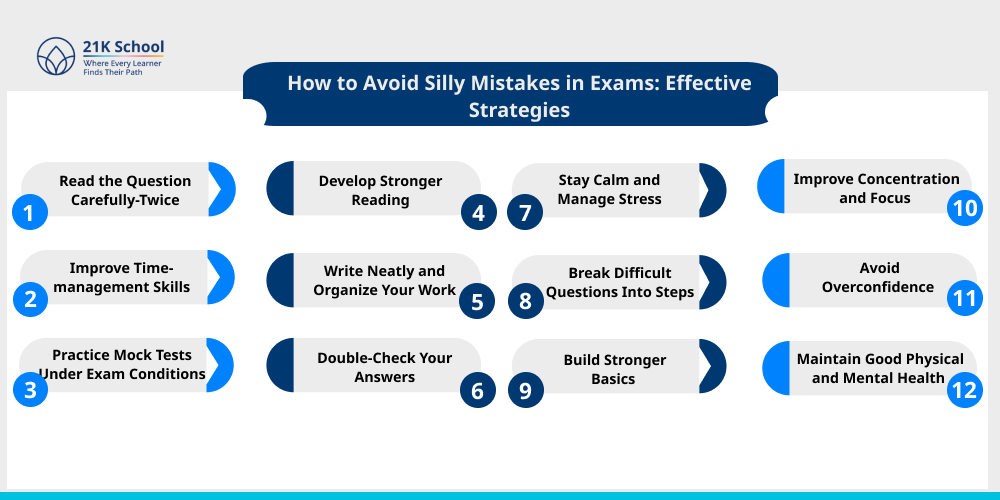
Some effective strategies that can help you avoid silly mistakes in exams are given as following:
1. Read the Question Carefully-Twice
Reading questions at a slow pace is one of the best methods to avoid errors.
There are a lot of mistakes that occur when students take the question as something different from what it actually asks.
It is advisable to read the question twice to make sure you go through all keywords, and instructions properly and then answer.
One of the most frequent mistakes that learners make is missing negative words like not, never, except. This may end up altering the meaning of a question entirely.
2. Improve Time-management Skills
Failure to properly manage time leads to situations where students answer a question in hurry leading to committing errors.
Knowing how to spend time adequately on each question or section would take you a long way while giving papers.
This can be done by practicing tests within given time periods by setting a stopwatch and then monitoring your performance.
When time is managed effectively, you will be able to divide your workload effectively and attempt all questions.
Before reading ahead, learn more about time-management skills .
3. Practice Mock Tests Under Exam Conditions
You can take mock-tests that can replicate actual examination pressure and assist in determining your challenging areas.
By practicing in exam-like conditions, which are timed and interruption-free, facilitates the brain to adapt to the real environment.
This exposure helps in lowering exam-anxiety levels, enhances familiarity as well as training your brain to be able to focus even when under pressure.
It is also useful to revise mock tests at the end, during revisions. You will easily see some of your weak concepts that require quick scanning.
4. Develop Stronger Reading and Comprehension Skills
A lot of reckless errors are made out of misinterpretation of what the question entails.
Improving book-reading and comprehension will assist the students to evaluate questions correctly.
Reading exercises with summaries of passages would suffice for the time spent on enhancing students vocabulary while reading comprehension .
As a learner develops reading capabilities , learning becomes easier because confidence levels increase and chances of misunderstanding instructions are reduced.
5. Write Neatly and Organize Your Work
Handwriting is another important skill to avoid examination mistakes.
You can go through some practices to learn how to improve your handwriting before your exams approach.
When your work is tidy, then it is easy to notice mistakes as you look it over. It is also easy to award marks when the answers are clearly presented to the teacher.
Clear and well-organized answers to problems that need a lot of writing can prevent the loss of needed points.
6. Double-Check Your Answers
One of the easiest yet most effective ways of preventing errors is checking your work at least twice before submission.
Most learners think that answers are correct but going through the questions and answers once again can assist in avoiding any mistake.
It can be easily done while reading in calculations, grammar, or even dates.
Checking implies looking thoroughly for anomalies or missed details.
The habit of having some time left in advance after completing the exam can highly enhance accuracy.
7. Stay Calm and Manage Stress
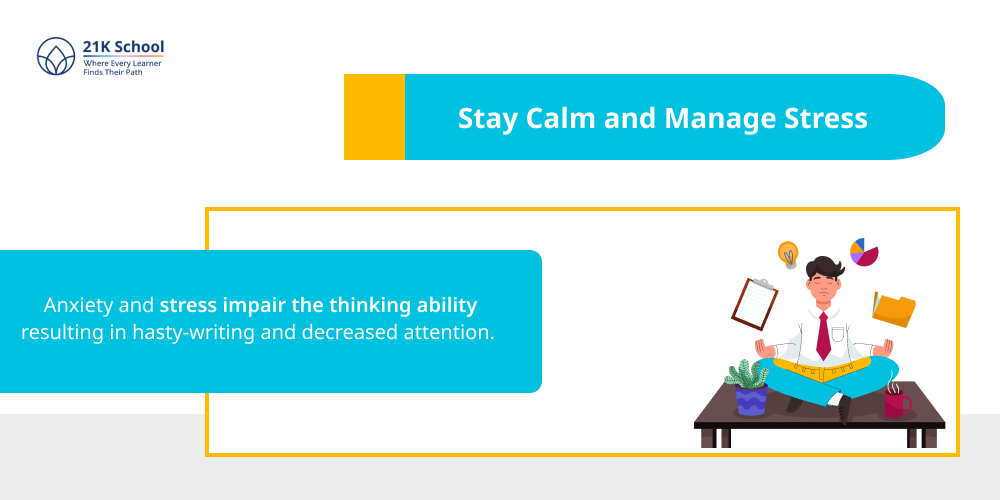
Anxiety and stress impair the thinking ability resulting in hasty-writing and decreased attention.
Having a cool temper while attempting questions in exams also enables students to think rationally and clearly.
You can relax your mind by light stretching, practicing meditations, or breathing exercises before the exams.
With a composed emotional-state during the examinations helps to eliminate the chances of panicking and misinterpreting the questions.
8. Break Difficult Questions Into Steps
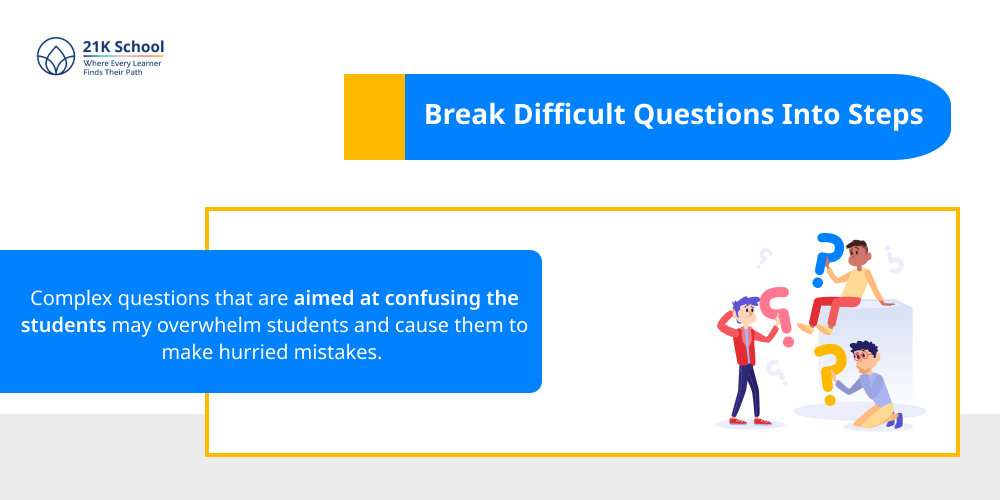
Complex questions that are aimed at confusing the students may overwhelm students and cause them to make hurried mistakes.
This can be prevented by attempting these questions into small manageable steps that minimizes the number of errors.
It would offer you the time to think rationally and take up each section of the question systematically.
Step-by-step problem-solving helps in being accurate whether it is math, science, or long-answer-based subjects.
9. Build Stronger Basics Through Regular Practice
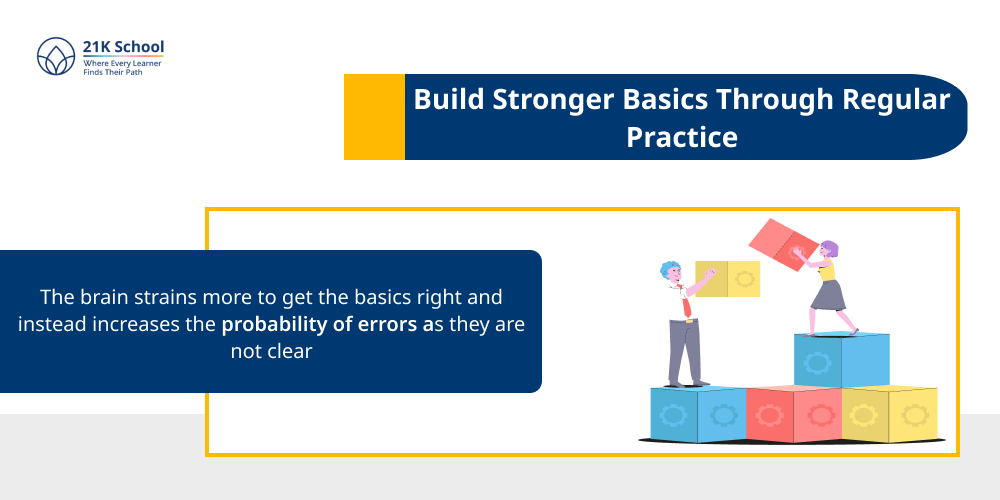
Poor basic knowledge of common concepts asked in exams can lead to silly mistakes.
The brain strains more to get the basics right and instead increases the probability of errors as they are not clear.
With constant practice, the basics become strong and quick to recall.
Be it about formulas, rules of grammar, or historical dates, solid fundamentals make the students answer positively and avoid confusion.
10. Improve Concentration and Focus
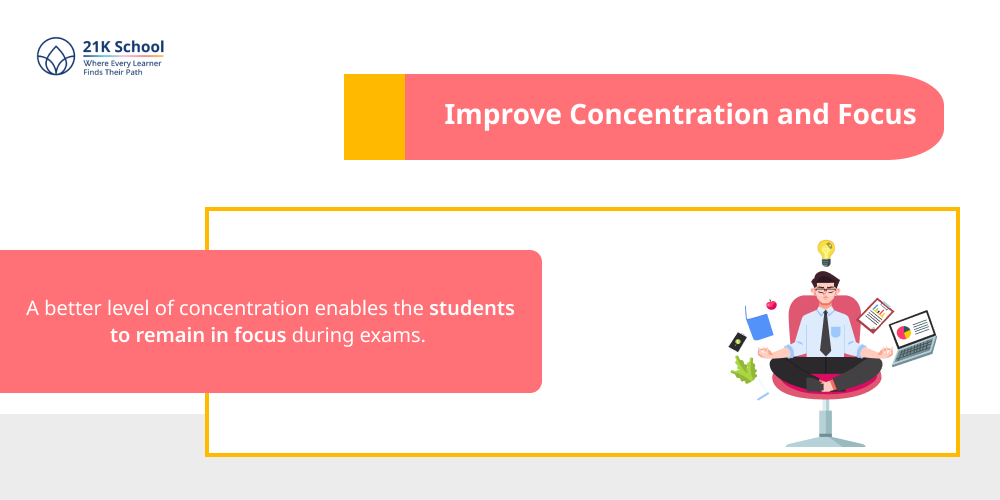
The most significant reason for silly errors is a wandering mind.
A better level of concentration enables the students to remain in focus during exams.
Studying in distraction-free areas, practicing mindfulness, aiming small to complete tasks during study, and having a good rest before exams are some of the techniques used to enhance focus.
When having exams, one should concentrate on one question at a time to minimize mistakes.
Learn how to concentrate on studies before failing in your failing exams.
11. Avoid Overconfidence
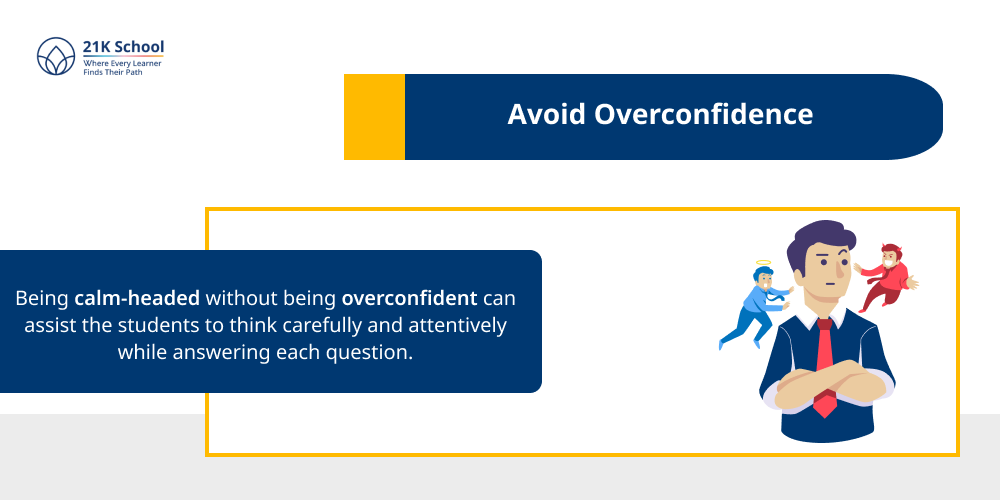
Overconfidence is just as dangerous as a lack of confidence.
Some learners wish to appear intelligent, and they therefore end up being in a hurry to respond to questions.
They might end up avoiding specific steps while concluding that what they have written is correct. Such a stance usually causes avoidable errors.
Being calm-headed without being overconfident can assist the students to think carefully and attentively while answering each question.
12. Maintain Good Physical and Mental Health
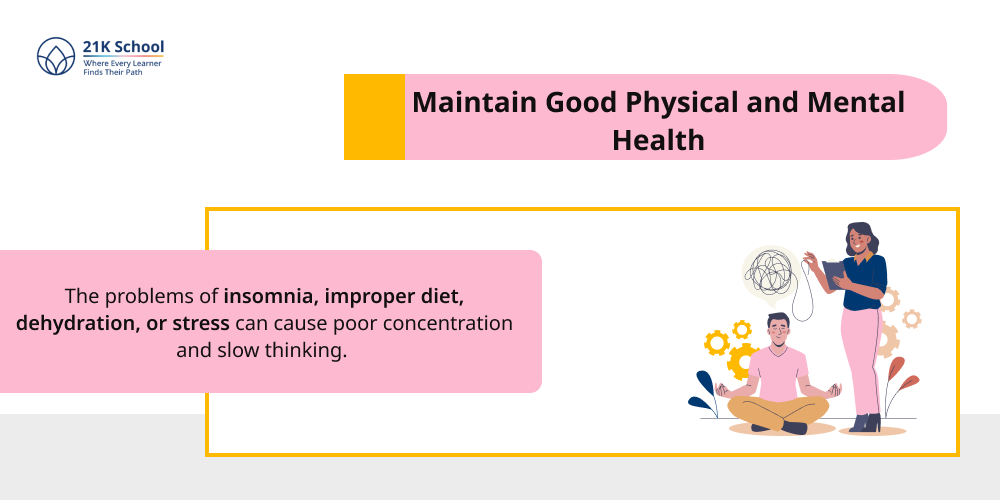
An excellent body positively results in having a clear mind.
The problems of insomnia, improper diet, dehydration, or stress can cause poor concentration and slow thinking.
Mental alertness improves when people engage in regular exercises, sleep well, maintain proper hydration, and have well-balanced meals. Maintaining good student mental-health is also a great thing.
Productive and healthy students with a positive attitude towards stress can easily cope and prevent burnout, thus making fewer mistakes.
Wrapping Up
Silly mistakes in exams are common as we grow and give several exams.
This is why avoiding these small errors is necessary, so that we can land a secure future job in the 21st century .
By practicing some smart plan-of-action, improving sleep-schedule, having a well-managed study-routine, and eating healthy can prevent these mishappennings.
So, note down the given tips and prove yourself in your upcoming exams.

You may also want to read
CBSE Passing Marks Out of 100: Theory, Practicals & Grading
- Last updated on: 23 Mar, 2026
- 7 min read