


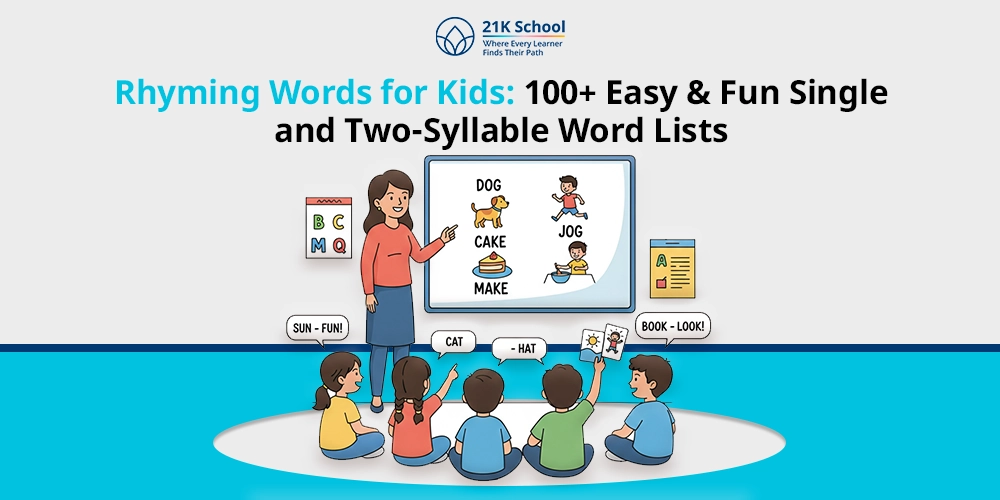
Is it possible to use rhymed words in learning, reading and spelling having fun?
Speaking of rhyme, children can learn language and it is great and entertaining. Sound pairs (cat and hat or ball and tall) are used to make the children understand the sound patterns.
Children will have an opportunity to develop their listening skills, speaking, and reading skills and abilities with the help of playing with songs, reading, and poems as well as performing some playful acts – much like the structured fun found in preschool nursery rhymes.
Rhyming is also the foundation of early literacy and communication skills
, as well as make learning interesting.
Contents
What are Rhyming Words for Kids?
Rhyming words refer to words that have a similar sound at their ends, such as cat and hat or sun and fun. To children, learning rhyming words is a fun in learning method of enhancing language, reading, speaking as well and listening.
It aids kids in the realisation of sound patterns, the enlargement of vocabulary , and phonemic awareness. Kids can have fun learning using rhymes, songs, and games, which will provide a firm base of reading and communication skills.
Top 50 Single-Syllable Rhyming Words
Single-syllable rhyming words refer to words with one syllable which have words with the same ending sound. The words are simple to pronounce and memorise, and, therefore, they are used in early language education
.
Single-syllable rhyme practices can also assist the children to identify sound patterns, enhance pronunciation and develop a solid basis for reading and spelling skills.
| Words | Rhyms |
| Cat | Rat, Bat, Mat, Hat |
| Dog | Jog, Hog, Log, Fog |
| Day | Hay, May, Say, Pay |
| Cake | Make, Wake, Lake, Take |
| Bell | Fell, Sell, Tell, Well |
| Light | Right, Bright, Fight, Night |
| Bug | Jug, Rug, Hug, Dug |
| Ball | Hall, Fall, Tall, Call |
| King | Ring, Sing, Bring, Wing |
| Book | Look, Cook, Took, Hook |
| Sun | Run, Fun, Bun, Gun |
| Tree | Bee, See, Knee, Free |
| Road | Toad, Load, Code, Mode |
| Rain | Pain, Gain, Train, Chain |
| Nose | Rose, Hose, Those, Close |
| Bear | Hair, Chair, Care, Share |
| Boat | Coat, Goat, Note, Dote |
| Car | Star, Far, Jar, Bar |
| Fish | Dish, Wish, Swish, Squish |
| Sheep | Deep, Keep, Sleep, Creep |
| Moon | Soon, Spoon, Noon, Tune |
| Hand | Sand, Band, Land, Stand |
| Feet | Meet, Street, Sweet, Beat |
| Box | Fox, Socks, Rocks, Locks |
| Smile | Mile, Pile, While, Tile |
| Fly | Sky, Try, Cry, Dry |
| Pen | Ten, Hen, Den, When |
| Red | Bed, Fed, Led, Shed |
| Chip | Ship, Trip, Slip, Flip |
| Cut | But, Nut, Shut, Hut |
| Brown | Town, Down, Crown, Frown |
| Cold | Gold, Hold, Bold, Fold |
| Meat | Heat, Seat, Neat, Treat |
| Sail | Tail, Mail, Nail, Pail |
| Dice | Rice, Mice, Nice, Twice |
| Back | Pack, Sack, Track, Black |
| Pink | Drink, Think, Sink, Blink |
| Pot | Hot, Dot, Lot, Spot |
| Jet | Pet, Wet, Get, Set |
| Lamp | Camp, Stamp, Damp, Clamp |
| Thing | Spring, String, Sting, Cling |
| Snow | Bow, Grow, Flow, Glow |
| Game | Name, Same, Fame, Blame |
| Luck | Duck, Truck, Stuck, Pluck |
| Blow | Show, Slow, Throw, Know |
| Best | Nest, Test, Rest, West |
| Jump | Bump, Pump, Dump, Lump |
| Stone | Bone, Phone, Cone, Zone |
| Bride | Ride, Hide, Side, Wide |
| Grape | Tape, Shape, Cape, Drape |
Top 50 Two-Syllable Rhyming Words
Words that contain two syllables and have the same end sound are two-syllable rhyming words. Knowing these rhymes can make kids understand that there is a rhythm and patterns in the words, which enhance their pronunciation, makes reading faster, and listening abilities.
Compared to single-syllable rhymes, two-syllable rhymes are a little bit more difficult, but they are nonetheless a good method for children to develop vocabulary and language skills .
| Words | Rhymes |
| Better | Letter, Sweater, Wetter, Setter |
| Happy | Snappy, Scrappy, Nappy, Flappy |
| Yellow | Mellow, Fellow, Bellow, Hello |
| Garden | Harden, Pardon, Warden, Lardon |
| Magic | Tragic, Logic, Topic, Comic |
| Money | Honey, Funny, Sunny, Bunny |
| Teacher | Preacher, Feature, Creature, Bleacher |
| Paper | Caper, Taper, Draper, Vapor |
| Winter | Splinter, Printer, Hinter, Sprinter |
| Nation | Station, Ration, Patient, Patience |
| Monster | Sponsor, Lobster, Roster, Foster |
| Running | Cunning, Stunning, Gunning, Sunning |
| Simple | Dimple, Pimple, Temple, Tremble |
| Balloon | Cartoon, Harpoon, Monsoon, Platoon |
| Action | Reaction, Traction, Faction, Attraction |
| Baby | Maybe, Daily, Shady, Lady |
| Perfect | Affect, Deject, Reflect, Refect |
| Mountain | Fountain, Certain, Curtain, Captain |
| Answer | Dancer, Cancer, Glancer, Prancer |
| Circus | Surface, Purpose, Nervous, Service |
| Talking | Walking, Chalking, Stalking, Baulking |
| Silent | Violent, Client, Giant, Compliant |
| Open | Broken, Token, Spoken, Woken |
| Season | Reason, Treason, Freezing, Pleasing |
| Finger | Linger, Singer, Ringer, Swinger |
| Always | Hallways, Railways, Highways, Pathways |
| Morning | Warning, Dawning, Yawning, Spawning |
| Between | Machine, Marine, Routine, Canteen |
| Never | Clever, Lever, Sever, Haver |
| Children | Building, Willing, Filling, Killing |
| Inside | Besides, Decide, Provide, Divide |
| Tiger | Fighter, Lighter, Tighter, Brighter |
| Father | Rather, Gather, Lather, Bother |
| Sister | Mister, Blister, Twister, Glister |
| Later | Greater, Waiter, Crater, Hater |
| Finish | Spinach, Diminish, Replenish, Blemish |
| Problem | Bottom, Autumn, Blossom, Possum |
| Window | Rainbow, Elbow, Shadow, Meadow |
| Question | Mention, Tension, Pension, Dimension |
| Little | Middle, Fiddle, Riddle, Brittle |
| Fancy | Nancy, Chancy, Prancy, Glancy |
| Crayon | Bacon, Taken, Waken, Shaken |
| Summer | Drummer, Hummer, Plumber, Bummer |
| Famous | Shameless, Aimless, Blameless, Nameless |
| Harbor | Barber, Farmer, Armour, Arbour |
| Candy | Handy, Sandy, Dandy, Brandy |
| Follow | Hollow, Swallow, Wallow, Apollo |
| Thunder | Wonder, Blunder, Plunder |
| Power | Tower, Flower, Shower, Hour |
| Berry | Cherry, Merry, Ferry, Very |
Importance of Rhyming Words for Kids
Early childhood learning depends significantly on the rhyming of words. They assist children in identifying sound patterns, enhance language and love words.
Songs, rhymes and playful activities enable the kids to learn more easily without having to lay a strong background to reading, listening and speaking skills.
1. Enhance Phonemic Awareness
Rhyming of words makes the children identify and learn similar sounds in words. This enhances phonemic awareness, which is the capacity to listen, recognise and manage oneself with sounds.
Good phonemic awareness promotes early reading and spelling and enables children to decode words with less difficulty — a key skill developed further through structured reading activities.
2. Enhance Vocabulary
The idea of learning rhyming words presents new words to the children in an easy and entertaining manner.
Children can acquire the rhyming partners of a word they are taught with the same ease. This increases vocabulary, enhances word recognition and makes children comprehend the meaning of words and their application in various contexts.
3. Enhance Command over Words and Language
Word rhyming enhances mastery of language by children as it makes them grasp the pattern and sound of words and their structure.
Frequent rhyming exercise allows pronunciation, fluency and sentence composition to be improved – skills that also connect with teaching children to write English alphabets correctly. It also enhances childs confidence in speech, reading and clarity of idea expression.
4. Makes Learning Fun
Learning through rhyming words is enjoyable because it comes in the form of songs, poems, games, and playful activities. Playful learning helps the children to remain active, be less stressed on learning, and stimulates them children to participate.
Children are more encouraged to use language skills more often when learning occurs to be fun for them.
5. Improves Listening Skills
Rhyming exercises prevent children from having poor listening skills as they make them pay attention to sounds and endings of words.
Listening can also make kids recognise rhymes, instructions, and comprehend spoken language, and this can aid communication and classroom learning .
Conclusion
The word rhyming is a crucial element of the first language development of a child. They make the process of learning fun, besides enhancing the skills
of listening, speaking, reading, and spelling.
Children can identify the pattern of sounds, vocabulary, and phonemic awareness by practising single-syllable and two-syllable rhymes.
In general, the rhyming of words provides a very good base of literacy and even lifelong education and interest in learning and language.

You may also want to read
Types of Studies: Everything You Need to Know with Examples

- Last updated on: 18 Mar, 2026
- 7 min read