Pullela Sai Vishnu
Enrolment No. 470002203027
He was a National champion in the sub-junior category 2018. Badminton World Federation Ranking 539

21K School offers the Senior School Programme under the Indian Curriculum through NIOS as a Private Candidate. NIOS, or the National Institute of Open Schooling, is a national board established by the Government of India. It is an "open school" that caters to the diverse needs of a heterogeneous group of learners up to the pre-degree level.
NIOS was initially launched in 1979 as a project with in-built flexibilities by the Central Board of Secondary Education (CBSE) as an open school project. In 1986, the National Policy on Education recommended strengthening the Open School System to extend open learning opportunities at the secondary level across the country as an independent system with its own curriculum and examination framework leading to certification.
Consequently, the Ministry of Education (MoE), Government of India, established the National Open School (NOS) in November 1989, amalgamating CBSE's pilot project on open schooling with it. Through a Resolution (No. F.5-24/90 Sch.3 dated 14 September 1990, published in the Gazette of India on 20 October 1990), NOS was vested with the authority to register, examine, and certify learners enrolled in its programmes up to the pre-degree level.
In July 2002, the Ministry of Education amended the organisation's nomenclature from the National Open School (NOS) to the National Institute of Open Schooling (NIOS). This change reflected its mission to provide relevant and continuing education at the school stage, up to the pre-degree level, through the open learning system. The mission aligns with national policy objectives and aims to serve prioritised learner groups as an alternative to the formal education system.
NIOS works towards:
NIOS operates through a network of five departments, 23 Regional Centres, two Sub-Regional Centres, two NIOS Cells, and over 7,400 Study Centres (AIs/AVIs) across India and abroad. It is the world's largest open schooling system, with a cumulative enrollment of approximately 4.13 million learners over the past five years. Recently, NIOS has also launched its own Virtual School.
NIOS collaborates with the Commonwealth of Learning (COL) and UNESCO open schooling, capacity building, and resource sharing. It also operates study centres for Indian expatriates in the United Arab Emirates, Oman, Kuwait, Nepal, Canada, the Kingdom of Saudi Arabia, Australia, the United Kingdom, New Zealand, Malaysia, Singapore, and the United States of America, in addition to Bahrain.
NIOS is accepted by universities and colleges across India and is accorded recognition equivalent to boards such as CBSE and ICSE. Learners who complete their 10+2 education through NIOS are eligible to appear for various competitive examinations, including JEE Main and JEE Advanced, among others. As per the latest updates, NIOS certification is also accepted by IIMs and other prestigious institutions.
Learners studying at 21K School can complete their academic programme online and appear for examinations conducted by NIOS as Private Candidates. Like any other board examination, NIOS issues mark sheets and certificates to learners upon successful completion of the board examinations, which are conducted in pen-and-paper mode at designated NIOS study centres.
At NIOS, learners can enrol in the following two-year programmes:
The Secondary Course is equivalent to the Class 10 standard. Learners may choose subjects from the Scheme of Studies offered by 21K School. For certification, learners are required to successfully complete a minimum of five subjects, including at least one language and a maximum of two languages, which is compulsory. Board examinations are conducted only at the end of the second year.
The Senior Secondary Course is designed for learners who have successfully completed the Class 10 or an equivalent examination from a recognised board and wish to continue their education towards a Senior Secondary Certification, equivalent to the Class 12 standard.
Learners may select subjects from the Scheme of Studies offered by 21K School. For certification, learners must complete a minimum of five subjects, including at least one language and a maximum of two languages, which is compulsory. Board examinations are conducted only at the end of the second year.
At 21K School, it is believed that education in the senior grades should be not only career-oriented but also flexible for learners. The curriculum is designed to empower learners to make informed career choices without limiting their passions or alternative pathways. Undoubtedly, these decisions play a significant role in shaping one's future. Learners are encouraged to explore the wide range of subjects offered.
The Scheme of Studies for both the Secondary and Senior Secondary courses is outlined in the table below. To obtain a Pass Certificate, a learner must pass a minimum of five subjects, including one or a maximum of two languages from Group 'A' and three or four subjects from Group 'B'. Learners may opt for up to two additional subjects, allowing them to study a maximum of seven subjects.
Learners may pursue NIOS courses either on a full-time or part-time basis. Under the full-time option, learners study any five subjects from the approved list, with the respective subject codes prefixed.
| GRADE 9 & 10: Scheme of Studies | |||
|---|---|---|---|
| Mandatory | Additional Language (optional) | Group B: Core Subjects (Minimum 3 subjects is mandatory) (Maximum 5 subjects from below) |
Vocational Subjects |
| English - 202 | Hindi - 201 | Accountancy - 224 | Basic Computing - 608* |
| Business Studies - 215 | Entrepreneurship - 249 | ||
| Data Entry Operations - 229* | Yoga - 614* | ||
| Economics - 214 | |||
| Home Science - 216* | |||
| Indian Culture & Heritage - 223 | |||
| Mathematics - 211* | |||
| Painting - 225* | |||
| Psychology - 222 | |||
| Science & Technology - 212* | |||
| Social Science - 213 | |||
| Folk Art - 244 | |||
Note: Folk Art (244) is applicable for Grade 9 only.
Subjects with an asterisk * have a theory as well as practical work.
| GRADE 11 & 12: Scheme of Studies (See foot notes) | |||||||
|---|---|---|---|---|---|---|---|
| Mandatory | Additional Language (optional) |
Core Subjects | |||||
| Group A | Group B | Group C | Group D | Group E | Group F | Vocational Subjects |
|
| English-302 | Hindi-301 | Mathematics - 311 | Physics - 312* | Chemistry - 313* | Biology-314* | Computer Science - 330* | Data Entry Operations - 336 |
| Home Science - 321* | History-315 | Political Science - 317 | Accountancy - 320 | Sociology-331 | Yoga Assistant - 667* | ||
| Psychology - 328 | Environmental Science - 333* | Mass Communication - 335 | Intro to Law - 338 | Web Development-660* | |||
| Geography - 316* | Library and Information Science - 339* | Entrepreneurship - 349 | |||||
| Economics - 318 | Tourism - 337 | ||||||
| Business Studies - 319 | |||||||
| Painting - 332* | |||||||
| Gender Studies - 340 | |||||||
Learners studying at another school, those who are home-schooled, or those enrolled as private candidates may opt to study one or more subjects online through 21K School. Learners following any other curriculum may also register with us. This broadens opportunities for learners to demonstrate their learning, particularly for undergraduate university programmes. A wider choice of subjects at the Secondary level also helps learners select appropriate subject combinations for the Senior Secondary level. By taking advantage of this option, learners can obtain the required academic qualifications while continuing to attend classes at their regular school. Additionally, this provides an opportunity for learners who are unable to appear for other board examinations due to illness or other unavoidable reasons.
The option to study selected NIOS subjects online also enables learners to reappear for examinations if they wish to improve their scores to meet university admission requirements. Furthermore, it allows learners who are academically advanced to complete their courses earlier than the traditional school calendar. Collectively, these features make 21K School an attractive option for learners seeking greater flexibility and control over their educational journey.
If a learner intends to use the NIOS certificate for higher studies, it is in their best interest to remain mindful of the admission requirements of the boards or universities they wish to apply to after completing the Secondary or Senior Secondary course through NIOS. Certain boards or universities prescribe specific subject combinations for admission to their affiliated institutions. For example, medical programmes typically require learners to have completed a combination of Chemistry, Physics, Biology or Biotechnology, along with one or two languages.
Similarly, a learner who wishes to join a formal school board at the Class XI level after passing the NIOS Class X examination should choose subject combinations (five or six subjects, as applicable) that are acceptable to the respective formal school boards, without prejudice to the rights and regulations of NIOS.
We follow NIOS course materials
Former Secondary or Senior Secondary learners from recognised Boards of School Education who have passed at least one subject but have not qualified for the course may seek admission to the corresponding course under NIOS and avail themselves of the Transfer of Credit (TOC) facility for a maximum of two subjects.
Under this provision, a learner who is currently studying in a regular school, or who has already passed the Secondary or Senior Secondary examination or any higher course from a recognised board or university, may opt to study up to four subjects of their choice to update their knowledge and educational qualifications. However, upon successful completion, only a marksheet will be issued, and no certificate will be awarded. Entry requirements for Dual Enrolment and Part Admission shall be as per NIOS admission rules.
The admission criteria at 21K School are aligned with the eligibility conditions defined by NIOS for its examinations. NIOS conducts examinations twice a year—April/May (Block 1) and October/November (Block 2). There are four streams of NIOS registration, designed to cater to learners with varying educational needs. Admissions under these four streams are mutually exclusive, meaning a learner may opt for only one stream.
21K School provides schooling only for Stream 1 learners. Stream 1 online admissions at 21K School are open to all eligible learners who meet the prescribed criteria for the Secondary and Senior Secondary courses. Learners seeking admission under the Transfer of Credit (TOC) option are also eligible to enrol at 21K School.
21K School does not admit learners eligible under Stream 2. This category includes learners who have already passed the Secondary or Senior Secondary examination from a recognised board and wish to take Part Admission in one subject or up to four subjects to upgrade their qualifications, as well as learners who appeared for but did not clear, or were eligible but could not appear for, the Secondary or Senior Secondary public examinations conducted by a recognised examination board.
21K School enrols learners only at the Grade 9 and Grade 11 levels. These learners are required to study for two academic years to obtain NIOS certification as private candidates. In exceptional cases, learners who have previously studied in Grades 10 or 12 and are already registered for board examinations may be considered for admission, subject to approval by the Admissions Team, led by the Academic Leadership Crew at 21K School.
The eligibility criteria prescribed by NIOS for appearing in Board or Public Examinations are outlined below.
No, a Transfer Certificate (TC) is not a mandatory document unless specifically required by the NIOS authorities in exceptional cases. In such situations, applicants may submit a self-declaration letter if a TC is not available.
If you were home-schooled until Grade 8, you may register with 21K School, as NIOS permits self-declaration stating: "Certified that I have studied adequately to pursue the Secondary Level course."
21K School also reserves the right to conduct diagnostic assessments, where necessary.
No. To be admitted to the Senior Secondary course, a learner must have successfully passed the Secondary course from a recognised board. Additionally, there must be a minimum gap of two years between the Secondary and Senior Secondary examinations.
In the words of the National Education Policy, "Learning should be holistic, integrated, enjoyable, and engaging." While NIOS offers flexibility in subject choice, admissions, and examinations, 21K School works intensively towards the holistic development of every learner. For those wondering what NIOS education looks like at 21K School, here is how we reimagine learning within an open schooling framework.
Skill-based education empowers learners to take ownership of their learning and bridge learning gaps. Our teaching and learning approaches are guided by deliberate strategies, skills, and attitudes that permeate the learning environment. These approaches, intrinsically linked with the Habits of Mind, enhance learner preparedness for board examinations and beyond.
At 21K School, learners engage in a variety of assessments and hands-on activities that give them greater control over their learning journey. Through skill-based learning, learners develop leadership capabilities and acquire real-world skills that are purposeful, application-oriented, and aligned with clear learning objectives—areas traditionally overlooked in conventional education.
The Habits of Mind comprise 16 problem-solving and life skills that foster strategic thinking, perseverance, creativity, insightfulness, and craftsmanship. These habits are essential for navigating both academic and real-world challenges.
21K School is committed to becoming a Habits of Mind School by training its facilitators, which in turn shapes learner behaviour and mindset. We firmly believe that empowering educators is the first step towards empowering learners. Consequently, we place strong emphasis on nurturing flexible, creative, and self-directed learners. As the Habits of Mind are integral to our curriculum, they are embedded in everyday learning experiences, enabling learners to reap lifelong benefits.
Positive learner development includes a clearly defined pathway to career success. Research shows that learners' motivation and academic performance improve when they recognise the relevance of their education. At 21K School, learners are provided with ample opportunities to discover their interests and strengths through initiatives such as career talks, literature festivals, Shark Tank simulations, TED-Ed internships, and more.
These experiences expose learners to a wide spectrum of career possibilities, enabling them to make informed choices aligned with their interests, skills, and values. Our career counsellors design personalised career pathways for each learner based on their personality traits, academic performance, and aspirations. Whether a learner is an aspiring sportsperson, a budding artist, or pursuing higher education in India or abroad, 21K School provides structured guidance and support.
Technology plays a vital role across professional domains, and its integration into education prepares learners for future careers. At 21K School, technology-enhanced learning enables learners to feel confident and familiar with digital tools from an early stage.
We promote collaboration among learners with diverse learning styles, enhancing engagement and interaction. Virtual laboratories are emphasised to support practical learning, while our robust Learning Management System (LMS) enables learners to track assignments, attendance, and academic progress. The LMS also facilitates access to live classes, recorded sessions, digital libraries, and continuous interaction with facilitators.
21K School strongly supports personalised learning through well-designed rubrics that ensure objective, consistent, and meaningful assessment. Learners benefit from live classes, recorded sessions, interactive experiments, and a rich digital resource library available through the LMS.
Missed a live session? Learners can access recorded classes anytime, anywhere, allowing flexibility without compromising learning continuity.
We believe that a sense of belonging is central to learner success. At 21K School, learners feel valued, supported, and included within a nurturing academic community. This sense of belonging enhances motivation, engagement, academic performance, and progression.
Research highlights that learner retention is closely linked to belonging and connection. To extend this community beyond learners, 21K School also offers 21K Social, a dedicated parent community that facilitates networking, collaboration, and information sharing among parents.
Learners are encouraged to be socially conscious and recognise their ability to create positive change. 21K School nurtures future leaders who are accountable, ethical, and globally aware.
Through initiatives such as Model United Nations, Shark Tank, Social Awareness Week, and Joy of Giving, learners engage with sustainability, social responsibility, and leadership in action. Activities such as plantation drives and waterbody clean-up campaigns further reinforce environmental stewardship and real-world application of learning.
Inclusive education at 21K School refers to an environment where learners with and without disabilities learn together with equity and respect. Inclusion focuses on providing equal opportunities while acknowledging individual needs.
Learners from diverse backgrounds and with varying physical and cognitive challenges share the same learning spaces. The curriculum is designed to ensure every learner, regardless of barriers, has an equal opportunity to learn, grow, and succeed. Collaboration and peer interaction help foster empathy, acceptance, and mutual respect.
Learners with disabilities such as blindness, low vision, speech impairment, locomotor disability, or any condition that affects writing examinations are provided with need-based accommodations, including amanuensis support and assistive technologies. These provisions are offered in accordance with procedures notified by NIOS from time to time.
Learners with special needs registered under Special Accredited Institutions for Education of the Disadvantaged (SAIED) will have their study centres designated as examination centres. NIOS-appointed invigilators will supervise the examination process. To ensure accessibility, selected schools may also be designated as examination centres. However, NIOS reserves the right to allocate an alternative centre in the learner's best interest and feasibility. In such cases, all necessary support will be extended to ensure a fair and accessible examination experience.
21K School offers learners a wide range of experiences designed to develop their skills and strengthen their socio-emotional learning. The Habits of Mind (HOM) embedded in 21K School's academic practices form a well-researched and proven framework for nurturing capable learners and educators. Habits of Mind are the attitudes and dispositions that help learners become effective thinkers and problem-solvers—especially when answers are not immediately apparent.
Learners who consistently demonstrate these attributes skilfully apply a broad range of cognitive and socio-emotional skills, including resilience, self-motivation, and self-regulation, enabling them to manage their performance effectively.
In addition to regular classes and academic activities, full-time learners participate in a variety of enrichment programmes such as inter-house activities, Lit-Fest, Shark Tank, Mathalon, Social Fest, Model United Nations (MUN), master classes, community service initiatives, internships, debates, yoga, mindfulness sessions, stress management, time management, goal-setting workshops, and more.
Field trips, excursions, and learner exchange programmes provide full-time learners with opportunities to interact with peers across cities and countries, broadening their perspectives and real-world understanding.
Field trips offer learners alternative ways of viewing and engaging with the world by encouraging observation, communication, questioning, and exploration of real-life issues. Through inquiry-based learning, learners develop a deeper understanding of the environments in which they live, learn, and interact. At 21K School, field trips also enable learners to socialise and connect with peers beyond the virtual classroom.
Annual excursions at 21K School serve as opportunities to strengthen relationships between learners and facilitators. These experiences expose learners to environments beyond their routine learning spaces and often include activities such as camping and collaborative challenges. Past excursions have been enriching and thoughtfully planned to combine experiential learning with meaningful community bonding.
The learner exchange programme at 21K School is designed to provide meaningful national and international exposure. These programmes offer a holistic exchange experience that enhances global awareness and intercultural understanding. Through immersive participation, learners gain practical language exposure, develop analytical and problem-solving skills, explore diverse learning approaches, and cultivate a broader perspective on global issues and communities.
Educational institutions often overlook how assessments can be meaningfully integrated into the learning process. Since learning is continuous, educators must adopt assessment methods that promote conceptual understanding rather than rote memorisation. At 21K School, weekly internal assessments are conducted and are not limited to textbook-based learning. These periodic assessments help gauge learners' academic progress effectively.
In addition, we provide an extensive repository of sample question banks to support learners in their board examination preparation. Our Assessment Portal offers detailed analytics on learners' performance at both unit and concept levels. This comprehensive dashboard enables facilitators and learners to identify areas of improvement and build on existing strengths.
Public (Board) Examinations are conducted twice a year by NIOS, in April–May and October–November, on dates prescribed by NIOS. Learners will not be permitted to appear for examinations unless the examination fee is paid within the stipulated timelines.
To appear for the NIOS examination, learners must register only online by completing the Examination Form and paying the requisite fee directly to NIOS. 21K School provides necessary guidance and support throughout this process.
(For reference only)
Learners can register for public examinations only online. Examination fees can be paid through Credit Card, Debit Card, or Net Banking only.
Learners admitted to the Senior Secondary Course must ensure a minimum gap of two years from the year of passing the Secondary examination to be eligible for certification at the Senior Secondary level.
If a learner does not fulfil the two-year gap requirement, they may appear for a maximum of four subjects in the forthcoming April–May examination and the subsequent October–November examination. If registered for more than four subjects, only the first four subjects will be considered for examination. Learners may appear for the remaining subjects only after completing the mandatory two-year gap.
In such cases, the examination fee paid will be adjusted for the first four subjects, and any additional fee paid for other subjects will be forfeited.
The allotment of examination centres is the sole prerogative of NIOS. Examination centres are generally located at District Headquarters, Sub-Divisional Headquarters, or other designated locations near the Accredited Institutions (AIs).
No Migration Certificate will be issued unless learners successfully complete their course of study.
To pass a subject and qualify for the Secondary or Senior Secondary certificate, learners must meet the criteria prescribed by NIOS. A minimum of 33% aggregate marks (theory and practical, where applicable) is required to pass a subject. For certification, learners must pass at least five subjects, including a minimum of one and a maximum of two languages.
There are three National Boards of School Education in India, namely NIOS, CBSE, and CISCE. NIOS offers school education through the Open and Distance Learning (ODL) mode, while CBSE and CISCE follow a face-to-face learning model.
The National Institute of Open Schooling is an autonomous institution under the Ministry of Education, Government of India, authorised to provide school education up to the pre-university level, conduct examinations, and award certificates. As all National and State Boards follow the National Curriculum Framework prescribed by the National Council of Educational Research and Training (NCERT), certificates awarded by these boards are considered equivalent. Accordingly, NIOS certificates are recognised for higher education, government employment, and all other purposes.
However, certain boards or universities may prescribe specific eligibility criteria based on their individual requirements. Therefore, learners seeking admission through NIOS are advised to review the latest eligibility criteria of the respective boards or universities they intend to apply to.
Our vision is to create a joyful learning environment through an experiential mode of learning that is interactive, inspiring, and stress-free—one that nurtures a genuine love for learning and instils self-responsibility and commitment towards life. This vision comes to life through the dedicated efforts of our dynamic team of facilitators, who work tirelessly and selflessly. The vibrancy and creativity of our teaching community bring life to every teaching–learning session.
Facilitators focus on the learning process and actively encourage collaboration and self-directed learning. Their approach stimulates discussion, prompts critical questioning, and enables meaningful peer-to-peer interaction. They support learners in identifying learning strategies that work best for them, taking ownership of their learning, and contributing effectively to group discussions.
The crew at 21K School is recruited based on qualifications, training, and expertise. They are individuals who believe in the school's vision and mission and possess the experience required to add value to the organisation. They are confident, responsible, reflective, innovative, and deeply engaged in the learning process.
The prerequisite for employment at 21K School is the relevant academic qualification along with a minimum of two years of teaching experience in a CBSE, CISCE, or NIOS school. Leadership roles typically require 5–10 years of experience. While most facilitators are full-time members of the 21K School faculty, some subject experts may be engaged on a part-time basis. Guest lectures and workshops conducted by industry professionals are also integral to academic delivery.
Crew members receive structured in-house training at various levels throughout the academic year. In addition, they participate in training programmes conducted by external professionals and organisations. Facilitators are regularly exposed to global webinars, podcasts, and online conferences. Emerging global trends are shared through blogs, vlogs, and expert resource persons. Selected team members enrol in certification programmes as part of their professional development journey.
All facilitators undergo mandatory training in child safety, cyber security, and cultural sensitivity.
The leadership at 21K School strives to translate the school's vision into practice. The leadership team works diligently to build an organised and effective system through meticulous planning, realistic goal-setting, and precise scheduling.
The leadership team comprises the Heads of School, Principals, Facilitators, and Subject Group Leaders (SGLs), all of whom are qualified, trained, and experienced across Indian and international boards. They are well-versed in board requirements and align closely with the vision and mission of 21K School and CBSE, CISCE, and NIOS. The Academic Leadership Crew adopts a learner-centred approach and demonstrates strong pedagogical and instructional leadership. They are responsible for nurturing a school culture that enables facilitators and learners to realise their full potential.
The Academic and Pedagogical Training Head oversees the training requirements of the school and coordinates leadership participation accordingly.
As education increasingly embraces digital innovation, technical support services play a vital role at 21K School. The Technical Crew is a specialised team with expertise across various technological domains essential for an online learning environment. Their support ensures a seamless, efficient, and engaging learning experience.
The Learner Success Team acts as a liaison between parents and the academic, technical, and admissions teams. They serve as the primary point of contact for scheduling meetings and resolving queries, with a committed turnaround time of 24 hours.
The Learning Kit is provided by NIOS upon registration for examinations. We recommend that Learners purchase the recommended books from NIOS or through any other source. All the essential coursebooks and workbooks will be available digitally on 21K School LMS at no extra cost.
Learners would get access to our web-based Learning Platform, and Parents have access to Mobile Apps on Android and iOS. Through the Learning Platform, Learners can access the following resources:
| Programmes: NIOS as a Private Candidate - Secondary Course (Grade 9 & 10) | |
|---|---|
| Age: | 14 to 16 years |
| Open for Both Full-time and Part-time Learners | |
| Academic Year begin date: | April 2026 |
| Assessment Series: | April/May 2028 Block 1 (Grade 10) or October-November 2028 (Block 2) |
| Entry Requirements: | Learners must have completed Grade 8 from any recognised Board. Entry is permissible at Grade 9 only. |
| Class size: | 24 Learners per batch |
| Facilitators: | Subject Expert Facilitator |
| Class Hours: | Based on the number of subjects selected |
| Batches: | Classes are conducted from 9.30 am IST to 5.30 pm IST. Learners will be required to attend classes as per the subject selected. |
| Mode of Classes: | Live Classes, Synchronous learning on our learning platform |
| Learning kit: | None. |
| Programmes: NIOS as a Private Candidate - Senior Secondary Course (Grade 11 & 12) | |
|---|---|
| Age: | 15 to 18 years |
| Open for Both Full-time and Part-time Learners | |
| Academic Year begin date: | April 2026 |
| Assessment Series: | April/May 2028 Block 1 (Grade 10) or October-November 2028 (Block 2) |
| Entry Requirements: | Learners must have completed Secondary Course from any recognised Board. Entry is permissible at Grade 11 only |
| Class size: | 24 Learners per batch |
| Facilitators: | Subject Expert Facilitator |
| Class Hours: | Based on the number of subjects selected |
| Batches: | Classes are conducted from 9.30 am IST to 5.30 pm IST. Learners will be required to attend classes as per the subject selected. |
| Mode of Classes: | Live Classes, Synchronous learning on our learning platform |
| Learning kit: | None |
1. How is the programme conducted – class time, schedule, weekdays?
Classes are conducted from 9:30 a.m. to 5:30 p.m. Learners attend classes as per their chosen subjects. On average, learners participate in approximately four hours of live classes daily, with adequate breaks in between. All classes are conducted live and are recorded, allowing learners to access sessions anytime, anywhere for revision and reinforcement. Classes are held from Monday to Friday, with Saturday dedicated for co-curricular activities and enrichment classes and Sunday as a holiday.
2. What about books and learning material? How do I access them?
Learners have access to a wide range of digital resources, including a digital library, online laboratories, and personalised notes prepared by subject facilitators. All learning materials are available on the school's Learning Management System (LMS). Once the registration process is completed, NIOS dispatches the prescribed textbooks directly to the learners.
3. What is the system of examination in NIOS as well as 21K School?
NIOS conducts public/board examinations, which include theory and practical components, assessed through internal and external evaluations. At 21K School, learners are mentored and prepared comprehensively for these public examinations. Additionally, learners undergo periodic formative and summative assessments to monitor academic progress and identify areas for improvement.
4. What are the criteria for admission at 21K School?
To seek admission at 21K School, learners must have a sound academic background and clear the diagnostic assessment conducted after submitting the enrolment form. Learners with a recognised sports or arts background may receive concessions in the diagnostic assessment. The eligible age group for admission to the NIOS programme at 21K School is 13 to 18 years. For Grades 11 and 12, learners must have secured a minimum of 55% aggregate in their Secondary Examination.
5. What is the process of admission to 21K School?
After submitting the enrolment form, learners are required to complete a diagnostic test through a virtual interaction. An opportunity to interact with and clarify doubts with the Academic Leadership Crew is also provided as part of the admission process.
6. What is the class size for each session?
Each class comprises a maximum of 24 learners per subject and batch, ensuring personalised attention and effective interaction.
7. How do I decide which subject is best for me?
21K School offers a wide range of subject choices, allowing learners the flexibility to select subjects based on their interests and future goals. The academic team provides personalised guidance to help learners make informed decisions. Subject changes are permitted as per NIOS deadlines.
8. How do I register for NIOS exams? Where are they conducted? Will they be online?
NIOS examinations are public and conducted offline. During registration, learners select a study centre close to their location. Learners are required to attend Personal Contact Programmes (PCPs) and appear for practical and theory examinations at their respective study centres.
9. How will I know about important dates (especially for Grade 10 Board Exams)?
All important dates—from registration to examination schedules—are communicated through the 21K School LMS after admission. Learners are also advised to regularly check their NIOS dashboards for official updates.
10. What is the last date of admission to 21K School?
Grade 9: 01 September
Grade 11: 01 August
In exceptional cases, admissions may be considered later, subject to successful NIOS registration and the learner's willingness to cover missed lessons through recorded sessions.
11. My Grade 10 results are awaited. Can I enrol in Grade 11/12?
Admissions are recommended after the declaration of results. However, in case of delays, provisional admission may be granted based on a parental undertaking, confirming that the learner will continue only upon securing a minimum of 55% aggregate in Grade 10.
12. I am 13 years old. Can I appear for Senior Secondary? What about Secondary?
To appear for Secondary (Grade 10) examinations, the learner must be at least 14 years old. Therefore, a 13-year-old learner is not eligible to appear for Senior Secondary (Grade 12) examinations. The minimum age to appear for Senior Secondary examinations is 15 years.
13. I am 21 years old. Can I enrol with 21K School?
No. 21K School admits learners only between the ages of 13 and 18 years.
14. I live outside India. Can I enrol?
Yes. 21K School has learners across the globe. Parents must ensure the availability of NIOS operational study centres abroad. If unavailable, learners may need to travel to India to appear for examinations at a designated study centre.
15. How are science practicals conducted?
Science practicals are taught through exclusive virtual laboratories during online classes. Additionally, NIOS learners complete offline practical examinations during Personal Contact Programmes at their chosen study centres.
16. What is the pattern of assessment at 21K School?
Grades 9 and 11: Two formative assessments and one summative assessment per term
Board Classes (Grades 10 and 12):
Term 1: Two formative assessments and one summative assessment
Term 2: Two Pre-Board examinations
17. What is the impact of the National Credit Framework (NCrF) on subject allocation?
The National Credit Framework (NCrF) aims to integrate academic education with vocational and skill-based learning. Learners can earn and accumulate credits through academic subjects and skill-based courses, which can be utilised for future learning pathways. This flexibility allows learners to pursue education across multiple disciplines and, in some cases, across more than one board—encouraging interdisciplinary and multidisciplinary learning. NCrF seeks to unify various educational frameworks under a single system.
18. How qualified are the teachers at 21K School?
All facilitators at 21K School are highly qualified professionals, holding a postgraduate degree in their subject area along with a recognised degree in education. They specialise in their respective disciplines and bring rich academic expertise to the classroom.
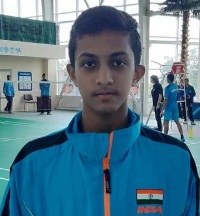
Enrolment No. 470002203027
He was a National champion in the sub-junior category 2018. Badminton World Federation Ranking 539
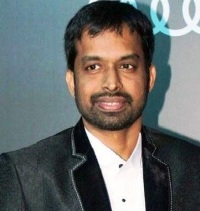
Padma Bhushan Pullela Gopichand, International Badminton Player & National Coach and father of Pullela Gayatri Gopichand & Pullela Sai Vishnu who successfully completed Secondary & Senior Secondary course of NIOS.

Enrolment No. 470002172034
Won Silver Medal in Mixed team and Bronze Medal in Woman's Doubles in Birmingham Commonwealth Games 2022

Enrolment No. 12000143210
Winner of Bronze Medal of LONDON Olympics - 2012
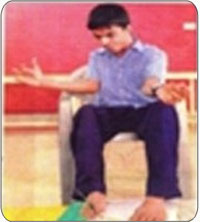
Enrolment No. 09003392011
Differently abled Draws Painting with Leg

Enrolment No. 090008103065
Kerala's Leading Actress State Award Winner
Based on National Curriculum Framework

Highly Engaging facilitator
Only 10 learners per class
Personal Attention and Care

1-2 Hours of Live Engaging Classes, Monday to Friday

Academic structure and support to parents for stress-free learning
#Being21K
Make Some Rain While The Sun Shines Outside
#Being21K
A Little Play in Between Classes
#Being21K
Why did you choose 21K online school for your children?
Taking you to WhatsApp now. If nothing happens, tap here to open the chat.