

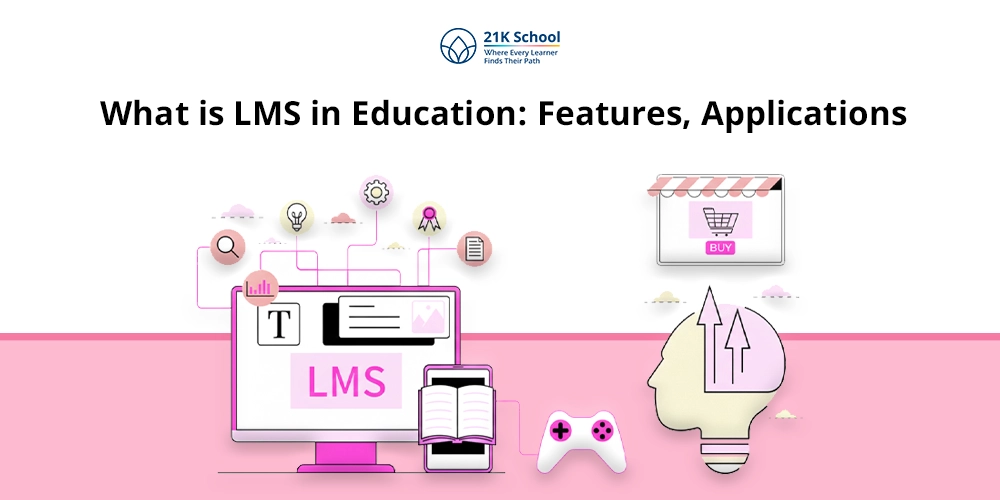
Do you know how LMS in education makes learning and assessment easy?
In the contemporary digital world, technology has changed how students study and teachers teach. The Learning Management System (LMS) is one of the most significant tools of present-day education .
An LMS is used to assist schools, colleges, and teachers in organising lessons, sharing study material, monitoring student progress, and conducting online assessments .
It simplifies the teaching process for the teacher as well as making the learning process more accessible, flexible and interesting to the students. Knowledge about the nature of an LMS will make us understand the benefits of an LMS in facilitating efficient and effective learning.
Contents
What is LMS in Education?
In education, a Learning Management System (LMS) refers to an online tool that is used to plan, deliver and facilitate learning.
It enables the teachers to post the learning materials, hold online classes, give homework , make quizzes and follow the progress of the students without much difficulty. Students are able to view lessons, deliver assignments, discuss and learn at their own pace and at any place.
LMS facilitates learning through making it more flexible, interactive and efficient by integrating all learning materials in one system. It accommodates both the traditional and online learning , whereby the schools and institutions can enhance communication, ease teaching and increase the overall learning experiences of the students.
Why is LMS Used in Education?
It is applied in education, where an LMS helps to increase the flexibility, efficiency, and engagement of learning. It assists teachers to structure the lessons, monitor developments, and evaluating students, as well as give learners easy access to learning materials at any time and place. This is the reason why LMS is applicable in education.
1. Flexibility
LMS is flexible as students and teachers are able to access learning materials anytime and anywhere. It facilitates self-directed learning where learners handle courses on their own time.
Teachers are able to post materials, teach through the internet and administer coursework effectively. Such flexibility eliminates time and location constraints, and thus, it makes learning more convenient, particularly to remote learners or those who have other obligations.
2. Higher Engagement
LMS applications enhance the level of student interaction because they provide interactive resources like videos, quizzes, discussion rooms, and gamification. LMS makes learning dynamic and fun.
Students will have access to easy communication with their teachers and classmates, be able to ask questions and take part in group work. The use of digital content will encourage and engage the learners to enhance their learning and experience.
3. Wide Range of Assessment
An LMS offers different types of assessments such as quizzes, assignments, polls and interactivity. There are various formats that can be used by teachers in order to test the knowledge and abilities of the students.
The system automatically records the scores, gives immediate feedback, and identifies the gaps in learning . This diversity ensures better assessment of students as it is more accurate, personalised and effective and students are tested in the manner that favours various learning methods .
4. Improve Time management Skills
LMS also assists students to master time management since they can plan the lessons, deadlines, tasks, and study schedules in the same platform. Students are reminded about their assignments, have an opportunity to organise their studying process and control the learning speed.
The teachers also gain through a more effective use of resources, as well as decreasing the administrative efforts. This is a well-organised system that promotes learning discipline and improved academic performance of child .
5. Saves Cost
An LMS helps to lower the cost of the institution and students by limiting the usage of real materials like printed books, paper, classrooms, and travel costs. Online classroom, digital learning materials and assessments reduce the cost of operation.
Educational institutions are able to save the several resources on the Internet, reuse the material, and automate the processes. This is a low cost strategy that ensures quality education becomes affordable and accessible.
Features of LMS in Education
The characteristics of an LMS make the learning and teaching more efficient, organised, and interactive. They offer content management, student assessment, collaboration , and customisation tools, which assist the educators to administer lessons in an effective manner and maintain the learning needs of the students. These features of LMS in education are the followings.
1. Content Management
The LMS enables the teacher to develop, post, arrange, and control different learning resources like videos, notes, presentations, quizzes, and e-books. Every resource is centrally stored and easily available to the students at any time.
It is easy to update, reuse and share the content, which makes the learning material always up to date and make the learning feel organised.
2. Proper Student Evaluation
LMS systems have an integrated solution of assessment tools such as quizzes, tests, assignments, and interactive activities. The teachers will be able to monitor the performance of students, assess the strengths and weaknesses and give timely feedback.
Automated grading is time and accuracy saving. The features provide a fair, consistent and efficient way of evaluation of students and allow the teachers to track progress and modify instruction when necessary.
3. Integration of Multiple Tools
A LMS facilitates the combination of multiple online tools including video conferencing applications, discussion forums, cloud applications, calendars, and third party e-learning platforms .
This will bring about a single platform on which students are able to study, cooperate, and access materials easily. Integrating enhances the overall learning process making the system more interactive, functional and user friendly.
4. Scalability
On LMS systems, the number of students, teachers, courses and resources can be increased without compromising performance. It is easy to add more classes or end users as required in a school or an institution.
This renders LMS appropriate in both small learning institutions and in large colleges. Scalability guarantees the long-term applicability and seamless operations even with a changing educational requirement.
5. Customisation
Through an LMS, the institutions can customise the platform to meet their needs. The teachers are able to personalise courses, tests, themes and pedagogies and the students can customise settings according to their learning styles.
Certain features or branding can also be added to the schools. Customisation also ensures that the system is more pertinent, interactive and efficient to various learning objectives and settings.
Top 6 Applications of LMS in Education
The uses of LMS in education go way beyond merely delivery of online lessons. LMS allows individual learning, effective course administration, gamification, enhanced accessibility, blended learning, and interaction between students and instructors. The following are the education uses of LMS.
1. Personalisation
LMS platforms enable personalised learning by enabling students to learn at their pace, access customised learning materials and select learning activities that match their learning style. Individual needs in learning can be adjusted by the teachers in terms of lesson, assessment, and feedback.
This customised system can aid students to learn more, become motivated, and have a better learning result.
2. Course Management
A LMS assists instructors to develop, arrange and control courses with ease. They are able to post lessons, classes, give homework, monitor the study progress of students , and make updates at any time.
Online course tools facilitate the teaching process, minimise the use of paperwork and make education more systematic. All course related materials are easily accessed in a single place by the students.
3. Gamification
Learning becomes fun and interesting with the help of gamification such as badges, points, leaderboards, interactive challenges, etc. These factors encourage students to be active and accomplish tasks.
Gamification makes learning more enjoyable and rewarding to students by increasing interest, enhancing competition in a healthy manner and improving retention.
4. Improve Accessibility
An LMS enhances accessibility with the ability of the student to gain access to learning content at any time and using any device.
It facilitates audio, video, text, and aids to students with special needs. This will provide an equal learning opportunity to all including remote learners or learners who are unable to attend physical classes on the regular basis.
5. Blended Learning
LMS assists in blended learning and involves integrating both digital and traditional classroom instructions. The online videos and quizzes and notes can be used by teachers as a way of reinforcing classroom lessons.
The learning process is able to become more flexible and effective as the students can revise the concepts prior to or after a lesson. This will improve the learning process and suit different styles of learning.
6. Collaboration
LMS promotes group work by use of discussion forums, online group projects , chats and shared documenters. Students are able to communicate, share their ideas and solve problems . Easy communication between teachers and students / parents is also possible.
Teamwork, communication, and learning community are all created on the platform with the help of collaborative learning tools.
Ending Note
Learning Management System (LMS) has transformed education into a better, more effective, and interactive process. It pulls resources, promotes evaluation, improves accessibility, and fosters teamwork .
Using LMS, students are able to study at their pace by accessing and using technology in learning , as well as, teachers are able to administer courses efficiently.
Regardless of the school, college, or online institution, LMS enhances learning, reduces expenses, and equips students with the technologies that they will need in the future, which makes it a vital part of education in the 21st century .

You may also want to read