


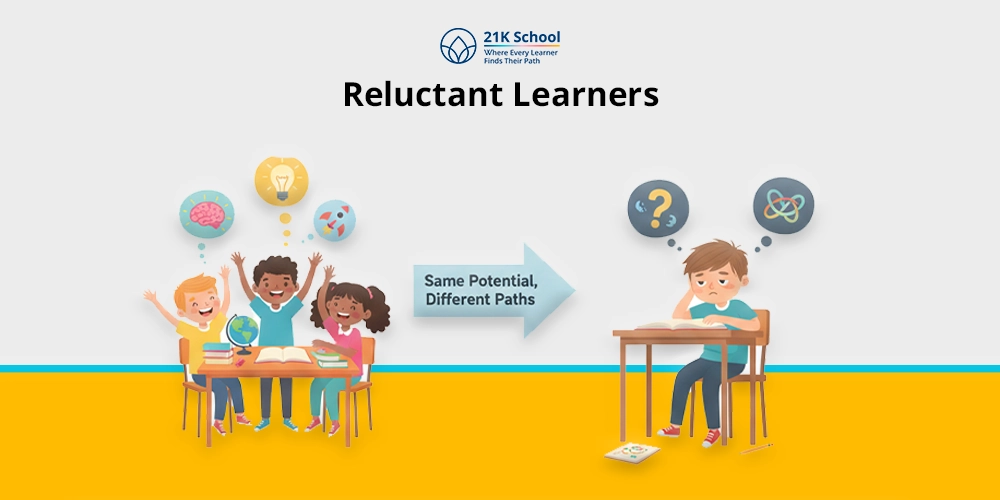
Education is lifelong, and it not only defines what students know but also the way they think, feel and their relationship with the world. Yet, not all learners go through this route with passion and interest.
There are those students who are eager to learn and to perform well in classroom learning environments, and those who have problems engaging in and avoiding academic activities, or they may not appear to be interested in learning. Reluctant learners do not lack skill or smartness.
Their disengagement, in most instances, is occasioned by emotional, social, psychological or environmental barriers which come between their engagement in learning. It is important to know the characteristics of unwilling learners, the reasons why they are disengaged, and effective approaches in helping them be educated fairly to obtain equal education for all learners.
Contents
- Who are Reluctant Learners?
- Common Characteristics of Reluctant Learners
- Possible Causes of Reluctant Learning
- Evidence-Based Frameworks for Understanding Reluctant Learners
Who are Reluctant Learners?
The reluctant learners can be defined as those students who have general tendencies of low engagement or evasion of academic scenarios regardless of their ability to perform excellently. They can work only when under pressure, attend the classes with little or no participation, or even tend to demonstrate their indifference towards school.
In comparison to learners with learning disabilities , reluctant learners have normal, or even higher, intellectual capacity. They do so due to certain internal/external impediments, but not mental inadequacies.
The existence of unwilling learners exists in every aspect of age and the education system, whether it be the primary school or even the university. One should learn to realise that reluctance is not a premeditated feature but a symptom of certain underlying issues.
Common Characteristics of Reluctant Learners
Reluctant learners normally show a combination of behavioural, emotional, and attitudinal behaviours that are a pointer to disengagement during the learning method . With knowledge of such features, educators and parents can intervene at an early age. The typical traits of unwilling learners are the following.
1. Lack of Motivation or Engagement
Reluctant students will not become very interested in academic subjects. They are capable of performing the jobs only when they need to do it, and barely meet the minimum standards.
It is the external rewards or the avoidance of punishment that makes them develop their learning behaviour rather than the interest to learn. Procrastination, incomplete homework , or even acting passively in the classroom are some of the ways of expressing this loss of self-motivation.
2. Low Confidence
Most reluctant learners have the problem of self-doubt. They might feel that they are not good enough, and this will discourage them, hence they avoid academic challenges. This leads to a self-fulfilling prophecy because they are not confident enough to even do anything that will help them develop their competence.
Good students as well will not perform well since they will not trust or believe in their potential. This sense of inefficacy is a confirmation of the resulting disengagement that leads to the vicious cycle of unwillingness and poor performance.
3. Fear of Failure
The fear of failure is one of the emotional hurdles or student stress that can be very significant. These students will develop a misconception of failures as personal incompetence.
They take mistakes as evidence that they are not good enough rather than considering such as one of the aspects of the learning process. They might not want to take risks, do not want to do hard things and are not interested in success in order to save their self-esteem.
4. Inconsistent Participation and Negative Attitude
Reluctant learners prefer to attend lessons intermittently or even in group activities. They might appear distracted, uninterested or uncooperative in teaching.
In many cases, they tend to show negative feelings in such statements as school is boring or this is useless. This kind of negativity may be demotivating to the morale of the classroom and may even demoralise the motivated students.
5. Preference for Passive Learning
Rather than engaging in the learning process, reluctant learners will be happy with passive forms of learning like listening, watching or taking notes.
They do not often start questions and discussions, and like to be unnoticed. It is a behaviour that is usually a result of anxiety, lack of confidence, or fear of errors or reproach.
Possible Causes of Reluctant Learning
There is hardly one fact that causes learning reluctance. On the contrary, it is a product of a combination of various factors, personal, environmental, social, and educational. The knowledge of these assists teachers in devising meaningful interventions. Potential reasons for reluctant learning are as follows.
1. Personal Factors
Individual factors are low self-image, inability to control emotions or inappropriate mental conditions, such as anxiety and depression. There are other issues with executive functioning in other people, such as organisation, attention and self-control.
The previous failures or negative remarks during the previous phases of carrying out academic tasks may also cause an unwelcome sense of incompetence, which blocks any further efforts.
2. Environmental Factors
The home environment and school environment play a great role in influencing the attitudes towards learning in a student. Poverty, racial problems in schools , instability in the family or lack of support from parents may reduce focus on education. Without books, technology and a quiet study room, students are hardly able to learn.
Cultural awareness may also contribute to engagement. Some families may tend to value short-term economic contribution more than academic success may affect motivation.
3. Teaching-Related Factors
Instructional practices have a great influence on student motivation. When the lessons are irrelevant, too strict or do not suit the learning styles of the students engagement is lost. Excessive attention to testing, punitive grading or limited creativity may demoralise the participation.
Negative teacher-student relationships , which are characterised either by prejudice, criticism, or even lack of empathy , can further alienate the unwilling learners.
4. Social Factors
The peer learning relationships are influential in attitude towards school. Students who feel bullied, marginalised or pressured by their classmates may fail school.
This may particularly apply to teenagers, who may be performing badly just to make sure that they are accepted into a group that does not appreciate academic performance. Nobody would like to be humiliated or feel like a loser in front of their colleagues.
5. Academic Factors
Other students have experienced true learning gaps . In case the academic demands are too high and the level of their performance is low, they might experience a sense of being overwhelmed and surrender.
On the other hand, students who consider the coursework easy can get bored and disinterested. When there is a lack of fit between the task difficulty and the ability, one can become reluctant, frustrated or apathetic.
Evidence-Based Frameworks for Understanding Reluctant Learners
The reasons and possibilities to rejuvenate the learners among the various psychological and educational theories can provide a good insight into the matter. Evidence-based framework for understanding reluctant learners are the following.
1. Self Determination Theory (SDT)
As suggested by Edward Deci and Richard Ryan, SDT postulates that motivation is founded on three psychological needs, namely autonomy, competence and relatedness.
Autonomy: The students need to have a sense of responsibility for what they learn. They are demotivated when they get the perception that learning is imposed on them rather than being a decision. The ownership is augmented by allowing alternatives in assignments, subjects or techniques.
Competence: The students are expected to experience competence. Confidence may be attained through proper challenging tasks, positive feedback and marking of progress.
Relatedness: It is a feeling of belonging and relatedness that improves involvement. The students would tend to be active when they feel valued by their teachers and their peers.
Unless one is fortunate to be an intrinsically motivated learner and deprived of one or more of these things, intrinsically motivated learning is generally nonexistent, which leads to the absence of intrinsic motivation.
2. The ARCS Model of Motivation
John Keller developed the ARCS Model, which is focused on four aspects, i.e. Attention, Relevance, Confidence, and Satisfaction. By the way, the methods of how teachers can capture the attention of students are curiosity, storytelling, or lesson variety.
Attention – Provoke interest within the student through variety, story telling or curiosity.
Relevance– Cite lessons on the interests, goals or life of the students.
Confidence – Help the students feel that they can make it by addressing the challenges step-by-step and motivating them.
Satisfaction – Feedback and appreciation of valuable feedback.
Relevance plays a role in the prioritisation of the goal and interest of life in learning. The confidence-building process will make the students believe that they are able to achieve their goals through a number of small challenges. The positive feedback and recognition provide reinforcement of learning to provide satisfaction.
3. Attribution Theory and Growth Mindset
The Attribution Theory describes the perception of failure and success by the learners. The reluctant students will think that they had done something out of nothing, or they had done something with the assistance of others, and they had not done the same, because they were not in a position to do so. The attitude will lead to learned helplessness.
Growth Mindset Theory of Carol Dweck is a solution- training the students that abilities can be trained with the help of hard work, planning, and patience. This will lead the learners to be stronger and prepared to be involved, even in a case where there is difficulty and where they feel that they can do it.
Strategies to Engage Reluctant Learners
The strategy towards the unwilling learners should be a multi-layered strategy that would take care of both needs: emotional and academic. This will enable the students to be active and learn without incurring any disjointure. Some of the measures that will be used to capture the reluctant learners are as follows.
1. Building Motivation
Building motivation drives learning. The teachers are also able to link lessons with real life, offer small goals that are attainable as well and offer positive feedback.
The availability of alternatives in activities and awareness of the minor accomplishments assist students in gaining confidence . The students can also be encouraged to be more active and interested in learning with the help of games or rewards, and make the lessons fun .
2. Personalised Learning
One such learning is personalised learning , which is a tailor-made instruction based on the needs, strengths and interests of a student. The teachers ought to be in a position to make every learner interested by giving them a flexible pace and alternative learning methods.
The purposefulness of the lessons is achieved by involving the hobbies or goals of students, and by the focus on individual progress, which is why a sense of confidence is established, and success is achieved intensely.
3. Active Learning
Active learning entails having the students be urged to learn but not to listen. Students would learn more through discussing, group projects, solving problems and practical tasks.
Technology can be used to make learning interactive by the use of tools like quizzes or simulations. Such an approach builds critical thinking skills , confidence and teamwork skills , especially in reluctant learners.
4. Establishing a Positive Learning Environment
The positive learning environment will reduce fear and build confidence. The teachers must be supportive, compassionate, and tolerant, praising and appreciating student activities and improvement.
Involvement is promoted through the culture and a safe, inclusive learning environment, which does not instil any fear of failure. The establishment of routines and the creation of respect make reluctant learners feel valued, self-confident and more open to learning.
5. Parental Involvement
Parents would play a role in motivating the reluctant learners. The ability to be responsible can be trained through maintaining contact with the teachers, through an organised school schedule, and by being interested in schoolwork.
A positive comment about the effort instead of the grades, showing the example of curiosity, and promoting the emotional condition in the house makes the child more confident and motivated in the process of studying.
Technology Tools and Resources for Engaging Reluctant Learners
Technology can generate curiosity, instil confidence and establish inclusive learning environments that motivate the most hesitant students to attend and succeed.
Interactive tools, learning games and improved e-learning platforms make learning more personalised, dynamic and enjoyable. The tools and resources that may be employed to reach the reluctant learners are the following.
1. Gamification and Educational Games
Gamification refers to the incorporation of components of play, such as points, rewards and monitoring of progress in learning, in order to make it more exciting and fun. The lessons may be made into a game with educational games like Kahoot, Quizizz, and Classcraft that will help to keep the attention and motivation.
The offered approach provides instant satisfaction, the process of the feeling of accomplishment, and it encourages engagement and inspires the less eager learners to see the learning process as something enjoyable, fruitful, and interesting rather than a burden and a dullness.
2. Interactive and Multimedia Tools
The multimedia and interactive aids help in changing the normal lessons to interactive and multisensory lessons. Flipgrid, Padlet and PhET simulations are web-based learning technologies that are based on exploration, creation and collaborative learning . Such tools are more realistic and attractive to the abstract ideas due to the mixture of images, sound, and movement.
They also fit diverse learning styles, aid creativity, and motivate the non-enthusiasts to keep up with it through variety, choice and participatory learning as opposed to passive listening or memorising.
3. Adaptive Learning Technologies
The adaptive learning technologies moderate the process of learning by evaluating the student’s progress and adjusting the material, pace, and challenges in real time. The programs, like IXL, DreamBox, and Lexia, also detect the strengths and weaknesses and offer specific practice and instantaneous criticism.
This personal process will eliminate frustrations and boredom, and the learner will be given a chance to operate at their own level, which will be comfortable to them and will develop with time. The adaptive tools instil self-confidence, autonomy, and ongoing interaction with potential challenges and noticeable improvement in the reluctant learners.
Role of Teachers in Supporting Reluctant Learners
The educators serve as the recognisers and helpers of the reluctant students. The knowledge, waiting, and intervening in a strategic approach are the issues that may inspire the lack of engagement. The roles of the teachers in relation to helping unwilling learners are as follows.
1. Implementation of the Early Intervention Program
The reluctance is detected and rectified at a tender age before it develops into a major issue. The teachers will be able to monitor the behaviour of the students and will assist them, and will also be able to modify the process of teaching to be individualistic towards each student.
Teachers can prevent harmful developments of the decline in academic performance and motivate and restore confidence in the students when they detect the initial signs of inactivity and offer guidance or counselling.
2. Encouraging Peer Collaboration and Mentorship
Teams make one feel part of and learn to work together. The reluctant learners can be supported by their classmates using the form of group activities, peer tutoring, or mentorship programs in a non-threatening way.
Team learning develops communication skills , confidence, and students learn through each other, and thus the learning process becomes more interactive and social.
3. Providing a Supporting Environment
The classroom climate of support fosters safety, trust and empathy. Educators will be able to set the routines, realistic expectations and open communication.
Providing emotionally safe environments, in which students feel appreciated and understood, the educators decrease the anxiety, promote their engagement, and assist reluctant students to change their attitude towards learning and self-improvement.
4. Showing Empathy and Patience
A person needs to be empathetic and patient when dealing with reluctant learners. Teachers who simply listen and comprehend the predicament of the students, and yet provide some positive reinforcement to them, can develop a good rapport with the students.
Being aware of the fact that the process of progress is not something that can be done too fast, showing kindness and appreciating the little things can be a way to build an element of trust, persistence, and new inspiration to study.
Reluctant Learners: When to Seek Additional Support
There are also cases of resistant learners whose progress might not be realised even when consistent strategies are used, hence some professional help might be required.
Constant lack of interest, emotional deprivation or a problem with schooling can be a sign of some other problem that can only be handled professionally. Here is when to seek additional support.
1. Learning disabilities vs Reluctance
Sometimes learning disabilities such as dyslexia or ADHD are masked by reluctance. The appearance of such students might be unmotivated, yet they have issues with information processing. The formal assessment of these conditions will enable teachers to give the right support and accommodations.
Assistive tools, differentiated instructions and modified learning objectives can lessen frustration and foster confidence, which will make the students participate more positively and achieve more academically.
2. Mental Health Red Flags
Learning reluctance can be caused by mental issues like anxiety or depression, or chronic stress. Some of the warning signs may be irritability or abrupt deterioration in academic performance, or withdrawal.
The teachers and the parents are supposed to be sensitive about the mentioned changes, and the school counsellors or psychologists should be called in such a case. The short-term emotional assistance would assist the students in developing their resilience, focus, and gaining greater learning abilities.
3. Trauma-informed Considerations
Traumatised students may not allow learning because they have fear, mistrust or emotional stimulations. This causes them to be reluctant as they are not likely to feel safe or threatened. The teaching is centred on sympathy, safety, and consistency, which is the trauma-centred teaching.
The teachers can do this by creating predictable environments and creating a supportive relationship with the students to enable them to feel safe enough to attend and re-attend the learning process, feeling safe enough to attend and trust it.
4. When to involve specialists (counsellors, psychologists, special education)
In case the lack of interest in a student persists even with the frequent classroom interventions, then it is time to seek the assistance of specialists. Needs can be assessed and early interventions can be offered, as well as individualised support plans developed by school counsellors, psychologists and special educators .
They offer an opportunity to have emotional and academic support, which increases the learning process and the overall well-being of students, as they are professionals.
5. Professional Resources and Referrals
External support can be contacted by parents and educators through educational psychologists, speech therapists or mental health organisations. It is possible to consult paediatricians or academic specialists and identify underlying causes and prescribe relevant programs.
The referral of the professional gives systematic help and support, so that the unwilling learners get regular and specialised support that encourages them to be motivated to continue their studies.
Conclusion
Reluctant learners have helped us know that learning is not only intellectual, but it is also emotional and social. Such students do not lack motivation at will, and many of them are usually victims of invisible obstacles that may inhibit interaction.
Teachers can use psychological knowledge, differentiated instruction, positive relationships and modern technology in education to restore the interest and believing nature of unenthusiastic students.
These students require the involvement of families, frequent motivation, and, in certain instances, professional support as the ecosystem they require to succeed in their lives.

You may also want to read

What is CBSE? Full Form, History, Structure & Key Benefits

- Last updated on: 23 Dec, 2025
- 14 min read