


Have you ever thought that learning needs the right study environment to focus? Students often seek right material, effective strategies, and motivation.
But with the proper material and technique, the study environment plays a crucial role in making learning fun , easy and effective at the same time.
Think about a calm and comfortable place that motivates students to learn and explore new things. A good study environment always helps to improve academic goals .
Let’s understand what the study environment means, its importance, types, mistakes to avoid etc in detail.
Contents
- What is a Study Environment?
- 8 Types of Study Environments
- 5 Importance of a Good Study Environment
- 7 Easy Ways to Improve Students Study Environment
- How to Create the Perfect Study Environment for Online Learning?
- Best Study Environment For Students
- 4 Common Mistakes Students Make in Their Study Environment
- Conclusion
What is a Study Environment?
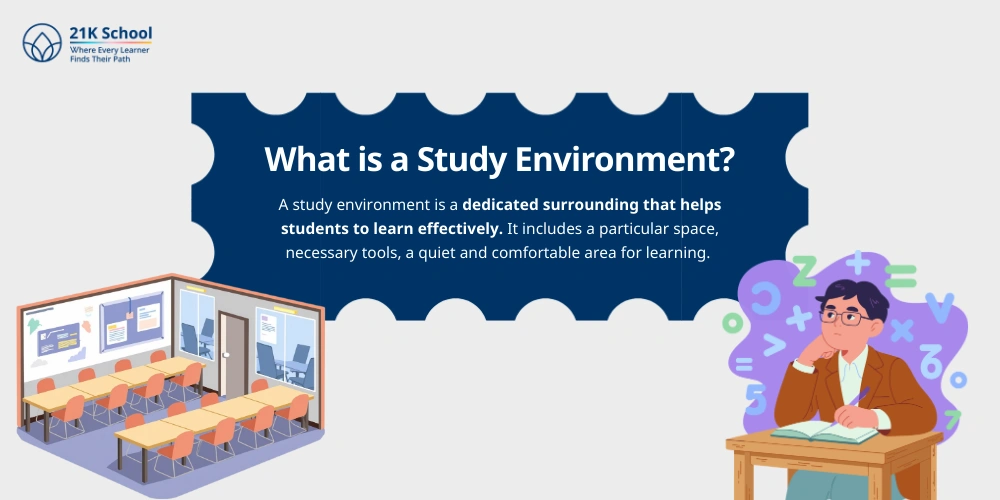
A study environment is a dedicated surrounding that helps students to learn effectively. It includes a particular space, necessary tools, a quiet and comfortable area for learning .
A powerful study environment includes:
- Concentration
- Memory retention
- Motivation
- Productivity
- Mental clarity
8 Types of Study Environments
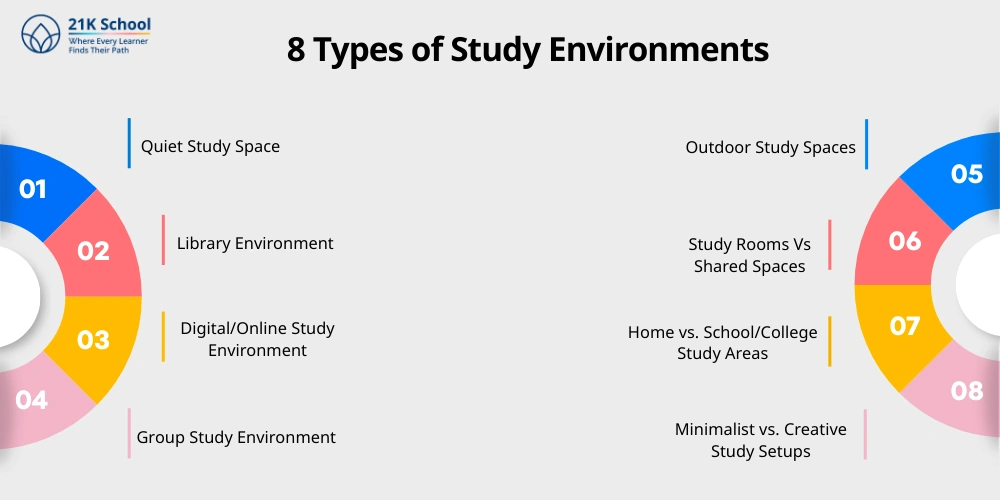
There are different kinds of study environments students can prefer. Some common types include:
1. Quiet Study Space
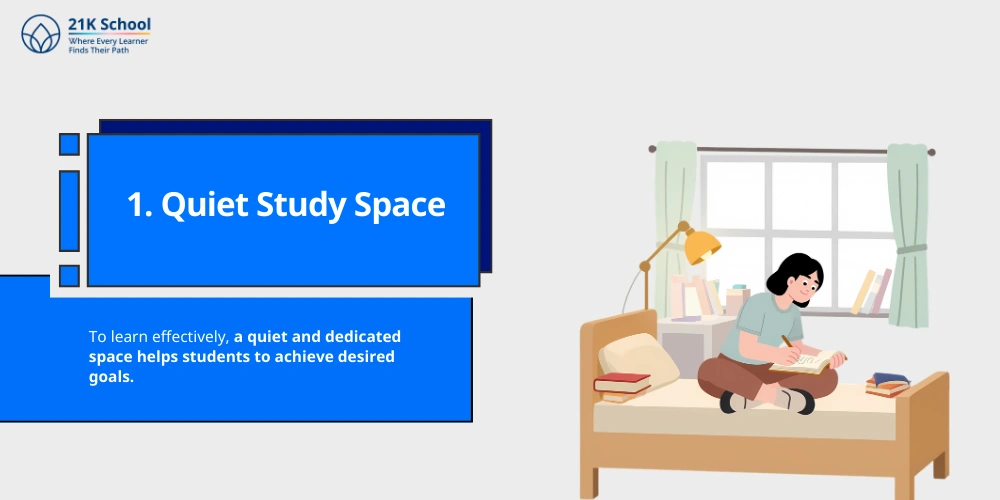
To learn effectively, a quiet and dedicated space helps students to achieve desired goals.
It is ideal space for students to:
- Solve maths
- Memorise formula
- Practice writing quickly
2. Library Environment

Students often choose a library environment for learning because it promotes discipline in education .
Some common benefits of libraries are minimal noise, access to a wide range of books, study groups etc.
3. Digital/Online Study Environment
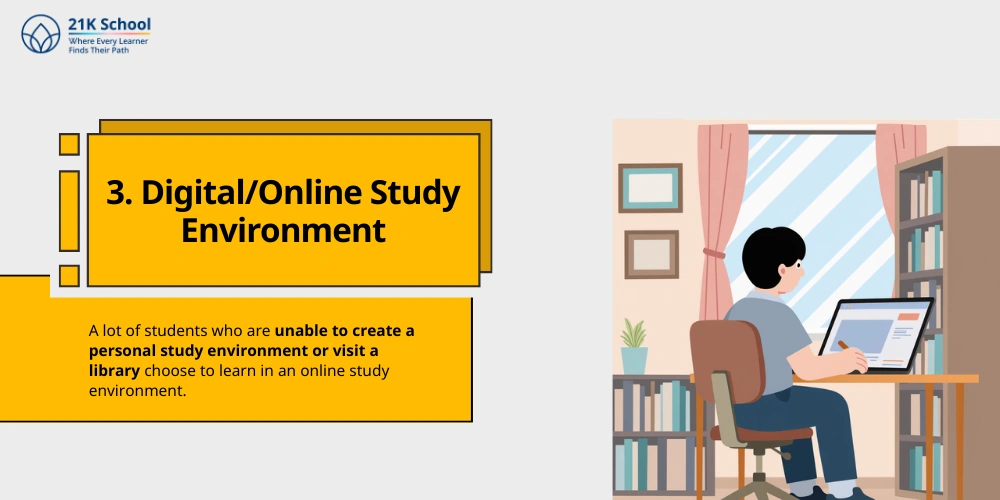
A lot of students who are unable to create a personal study environment or visit a library choose to learn in an online study environment.
It is helpful because students can access other benefits such as:
- E-books and online notes
- Apps and platforms
- Virtual classrooms
4. Group Study Environment

Learning with peers is also one of the environments that motivates students to learn without distractions.
In group study environment, students can:
- Discussions
- Sharing notes
- Solving doubts
5. Outdoor Study Spaces
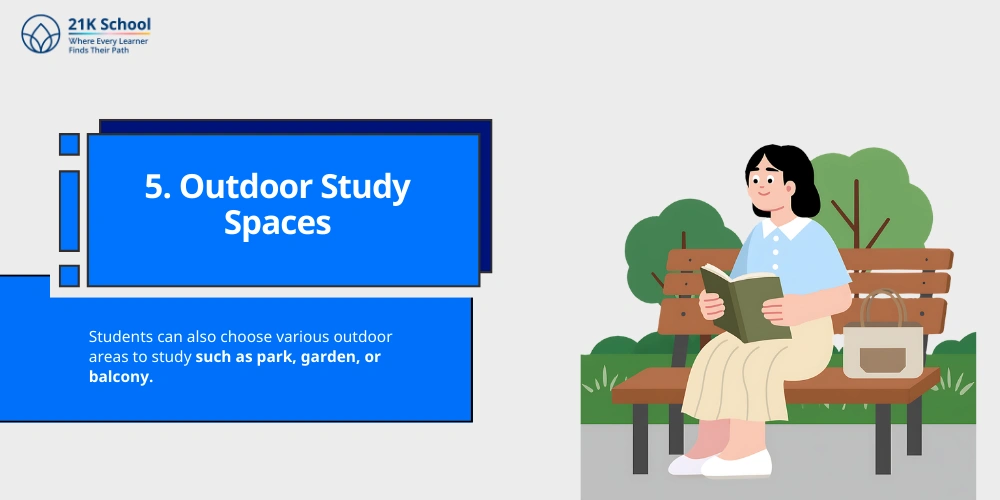
Students can also choose various outdoor areas to study such as park, garden, or balcony.
In this way, students enjoy the fresh environment of learning which improves creativity and focus.
However, students must ignore other distractions like kids playing on the ground.
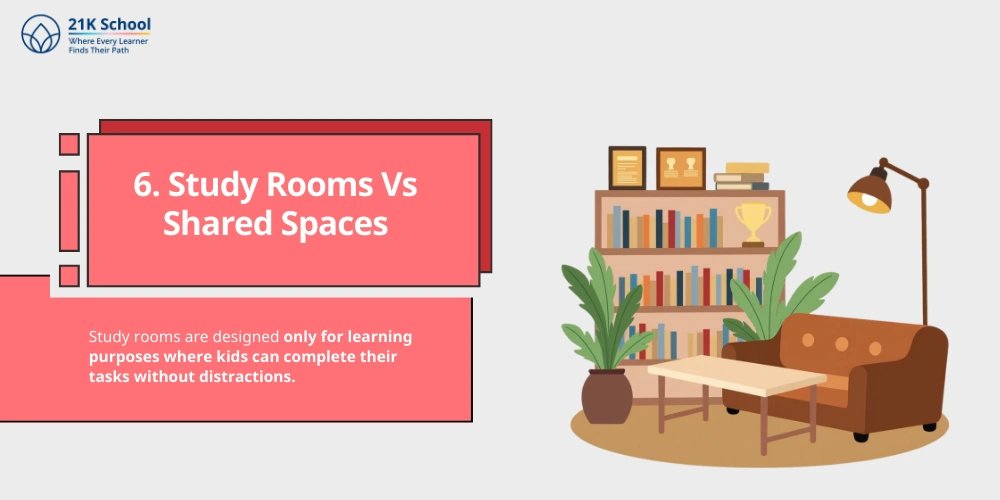
Study rooms are designed only for learning purposes where kids can complete their tasks without distractions.
A shared space is an area like the living room or dining table. It is often a cluttered and busy environment. That’s why choosing study rooms is better.
7. Home vs. School/College Study Areas

Both home and school/college study areas are impactful for students. At home they can create their own comfortable environment.
On the other hand, school offers a structure surrounded by classmates where students can quickly clear doubts.
8. Minimalist vs. Creative Study Setups

In a minimalistic setup, students organise required material which is often beneficial to reduce distractions.
On the other hand, some students like creative study setups to get motivation for learning .
5 Importance of a Good Study Environment
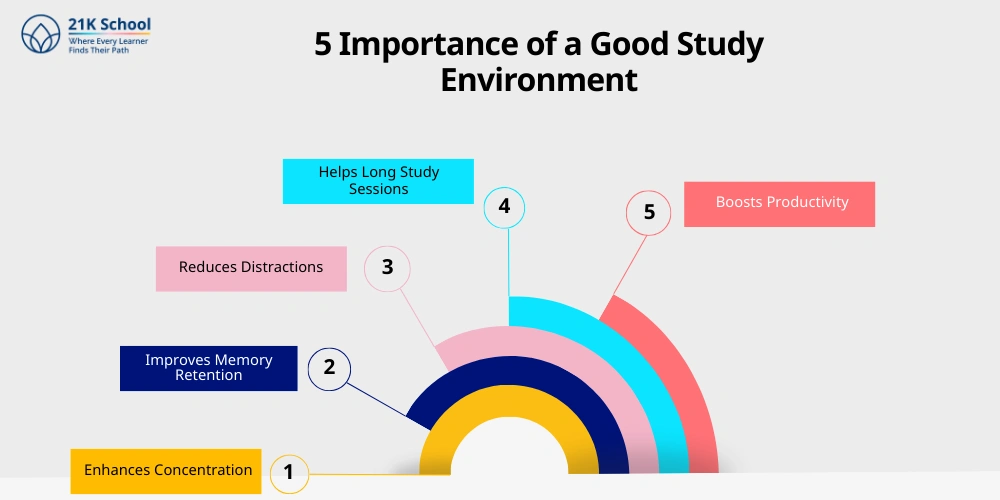
Go through detailed information on the importance of a good study environment in students’ lives.
1. Enhances Concentration
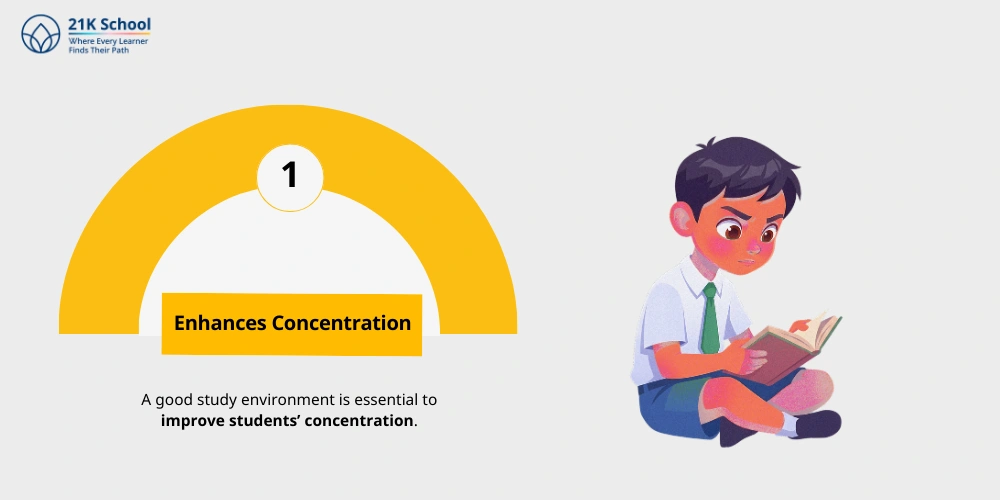
A good study environment is essential to improve students concentration . The space helps them to think creatively and spend needful time without interruption.
2. Improves Memory Retention
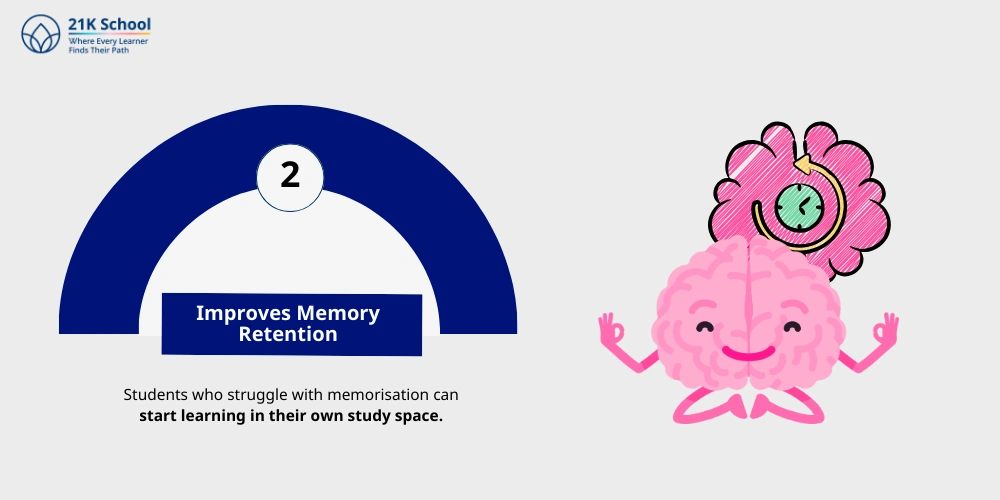
Students who struggle with memorisation can start learning in their own study space.
A quiet and less cluttered place is helpful to train the mind and long-term memory retention.
3. Reduces Distractions
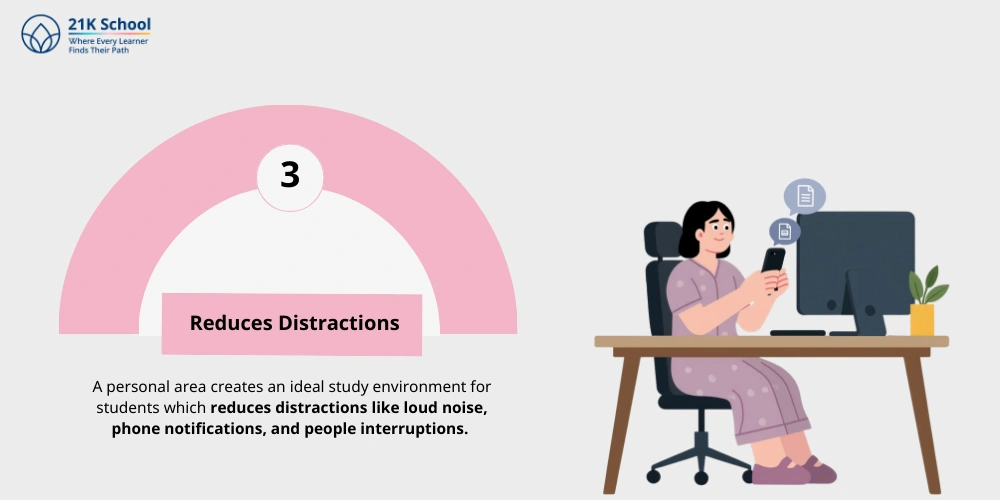
A personal area creates an ideal study environment for students which reduces distractions like loud noise, phone notifications, and people interruptions.
4. Helps Long Study Sessions
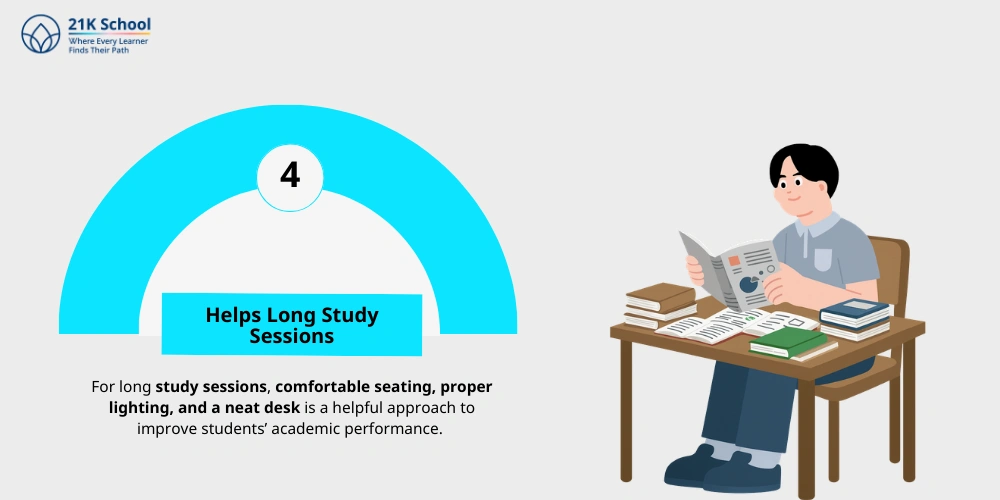
For long study sessions , comfortable seating, proper lighting, and a neat desk is a helpful approach to .
In this way, students feel comfortable to explore new areas and learn with interest.
5. Boosts Productivity

It is often seen that studying in the right environment is effective to retain knowledge and increase productivity which leads to a better career.
7 Easy Ways to Improve Students Study Environment
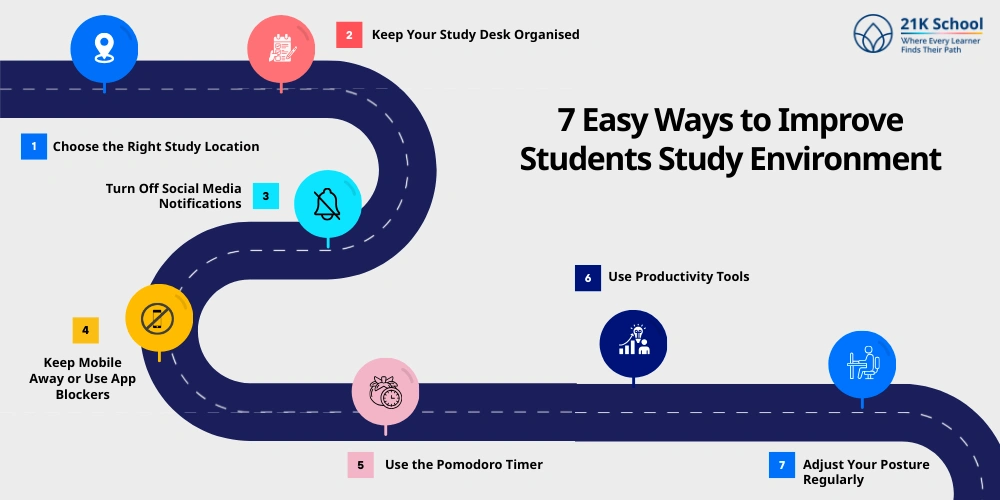
To learn effectively here are 7 easy ways to improve students study environment:
1. Choose the Right Study Location
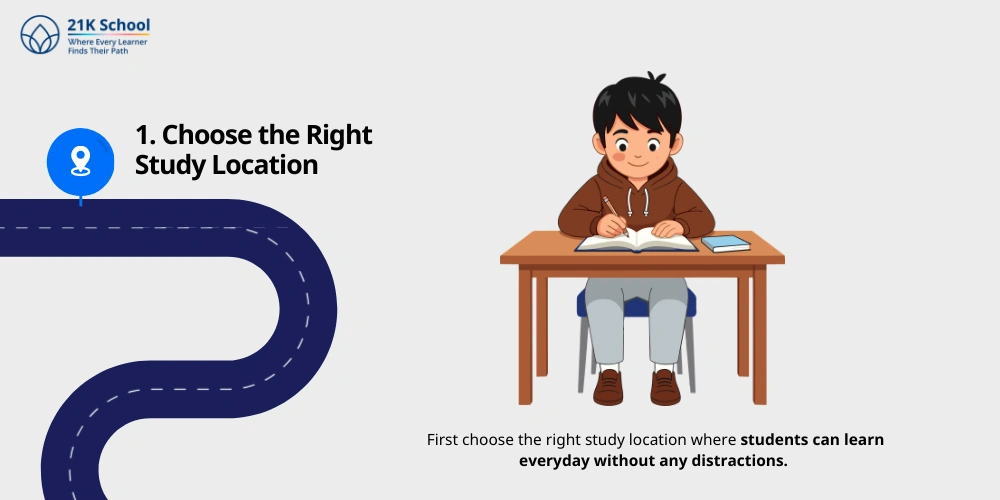
First choose the right study location where students can learn everyday without any distractions. To build habit of studying one must require:
- A quiet room
- A corner of your home
- A library
- A garden or balcony
2. Keep Your Study Desk Organised

For keeping the objectives clear one must stay organised by keeping required materials like:
- Books
- Notebook
- Pens
- Laptop
3. Turn Off Social Media Notifications

By turning off social media notifications students can focus on studying and break.
In this way, one can learn without any obstacles.
4. Keep Mobile Away or Use App Blockers
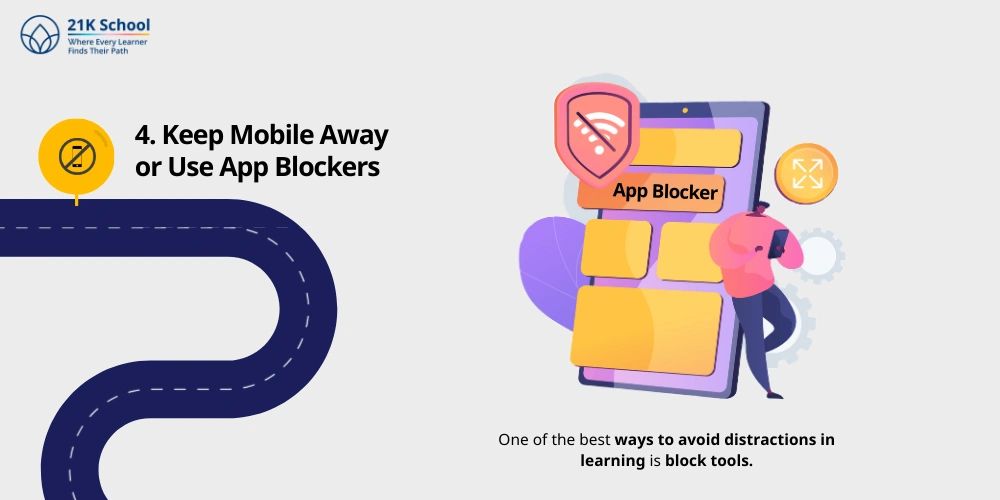
One of the best ways to avoid distractions in learning is block tools. Some common examples such as:
- Forest
- StayFocusd
- Freedom
5. Use the Pomodoro Timer
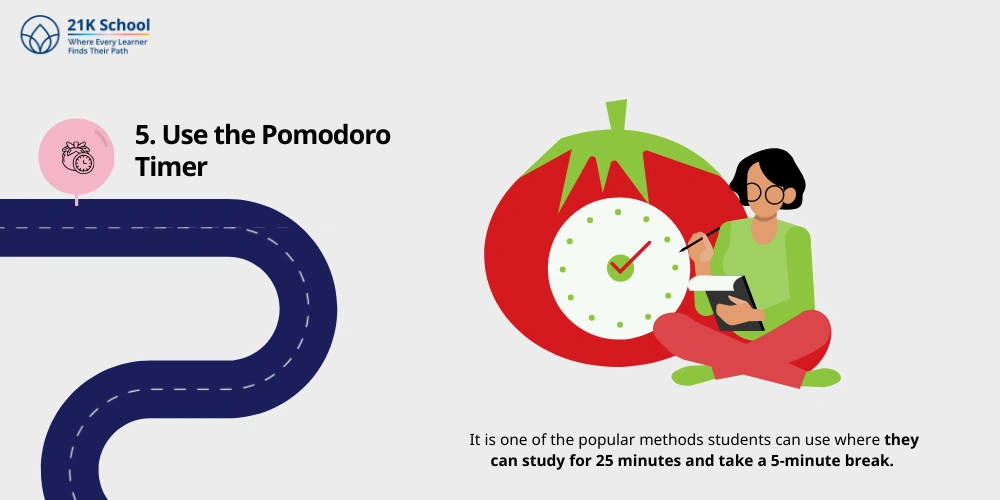
It is one of the popular methods students can use where they can study for 25 minutes and take a 5-minute break.
It is effective because it:
- Prevents from burnout
- Helps maintain focus
- Makes studying feel easier
- Creates a disciplined routine
6. Use Productivity Tools
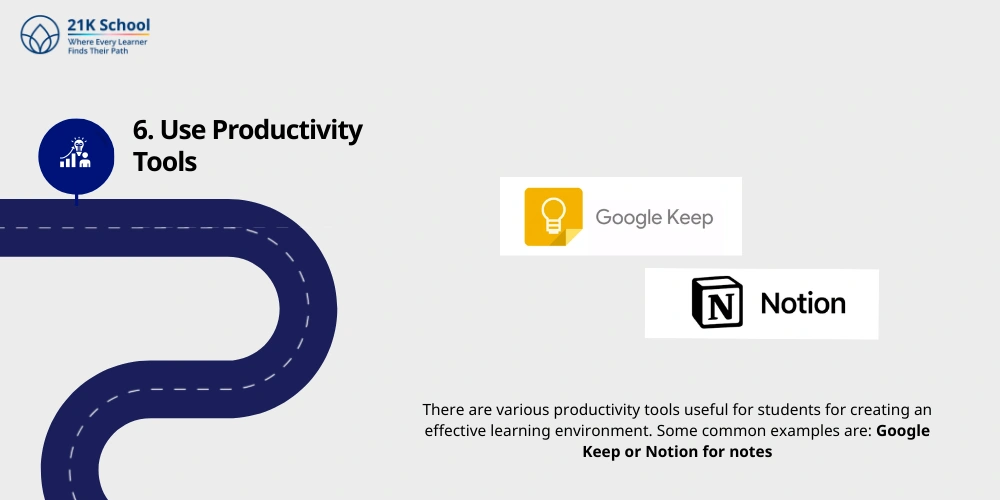
There are various productivity tools useful for students for creating an effective learning environment.
Some common examples are:
- Google Keep or Notion for notes
- Microsoft To-Do for task lists
- Trello for assignment tracking
- Quizlet for flashcards
7. Adjust Your Posture Regularly
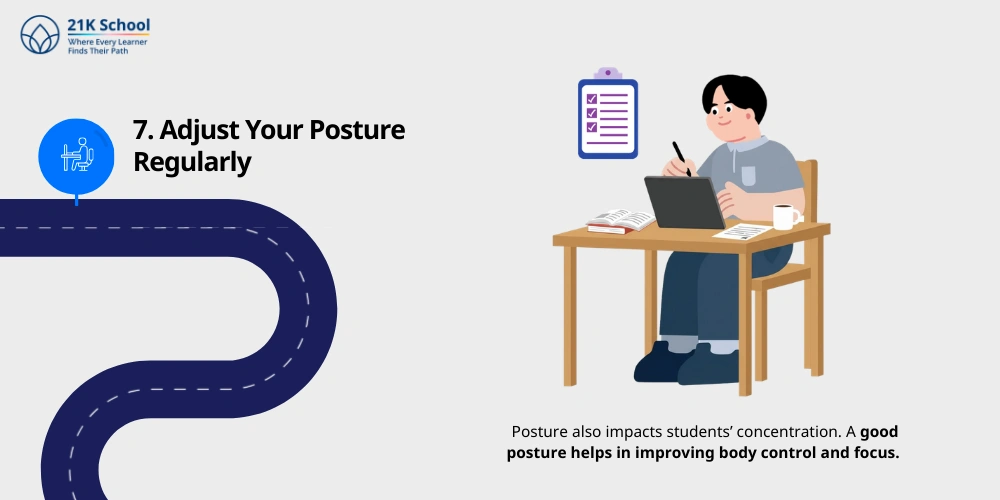
Posture also impacts students’ concentration. A good posture helps in improving body control and focus.
One need to:
- Sit with your back straight
- Use a comfortable chair
- Take short stretch breaks
- Keep the screen at eye level
How to Create the Perfect Study Environment for Online Learning?
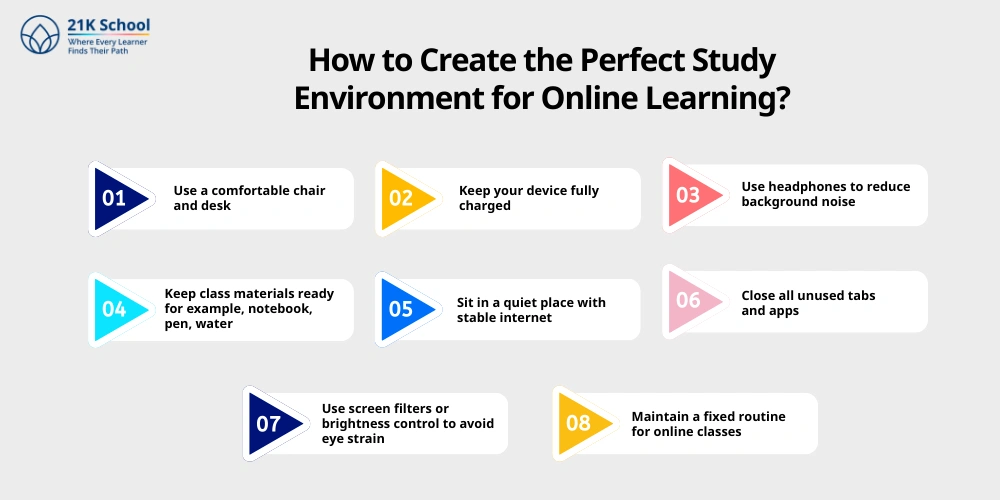
To create the perfect study environment for online learning one need to focus on:
- Use a comfortable chair and desk
- Keep your device fully charged
- Use headphones to reduce background noise
- Keep class materials ready for example, notebook, pen, water
- Sit in a quiet place with stable internet
- Close all unused tabs and apps
- Use screen filters or brightness control to avoid eye strain
- Maintain a fixed routine for online classes
Best Study Environment For Students
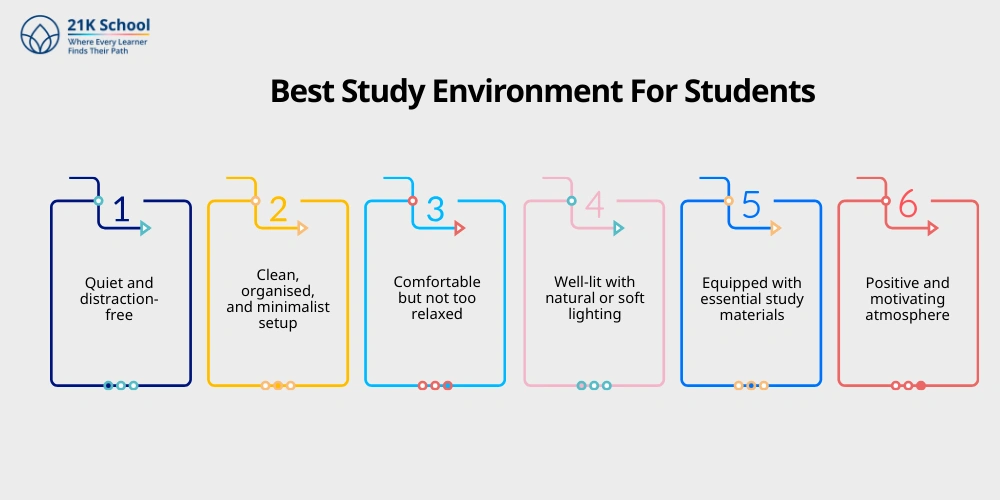
Each student has a different purpose, goals, and learning style . Creating your own study space and environment is crucial.
Students can use the library, free period, or school grounds to learn. However, quality study requires:
- Quiet and distraction-free
- Clean, organised, and minimalist setup
- Comfortable but not too relaxed
- Well-lit with natural or soft lighting
- Equipped with essential study materials
- Positive and motivating atmosphere
4 Common Mistakes Students Make in Their Study Environment
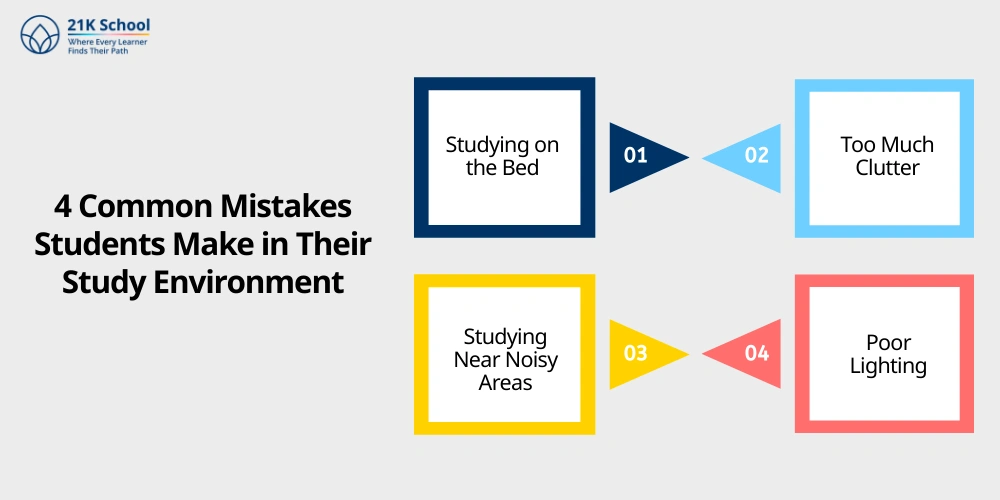
Some major common mistakes students make in their study environment are:
1. Studying on the Bed
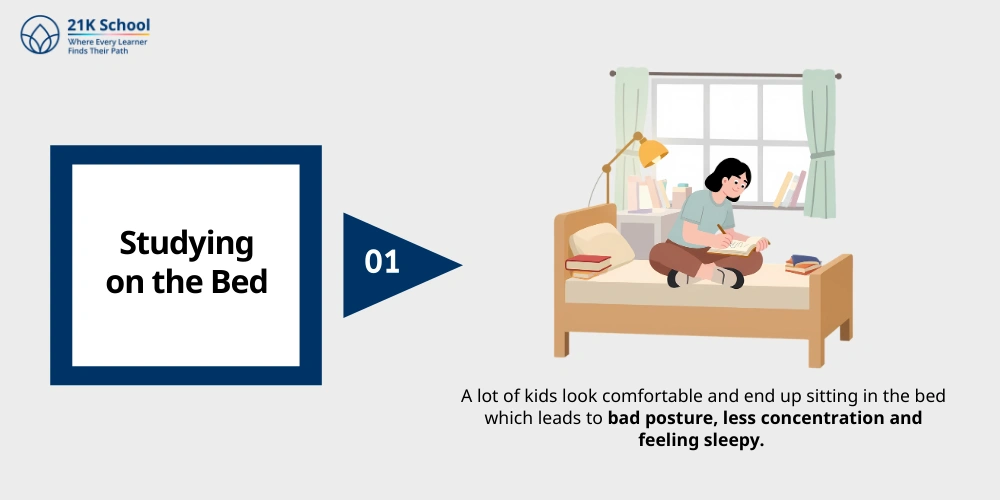
A lot of kids look comfortable and end up sitting in the bed which leads to bad posture, less concentration and feeling sleepy.
One must avoid learning in bed and use particular spaces like tables and chairs.
2. Too Much Clutter
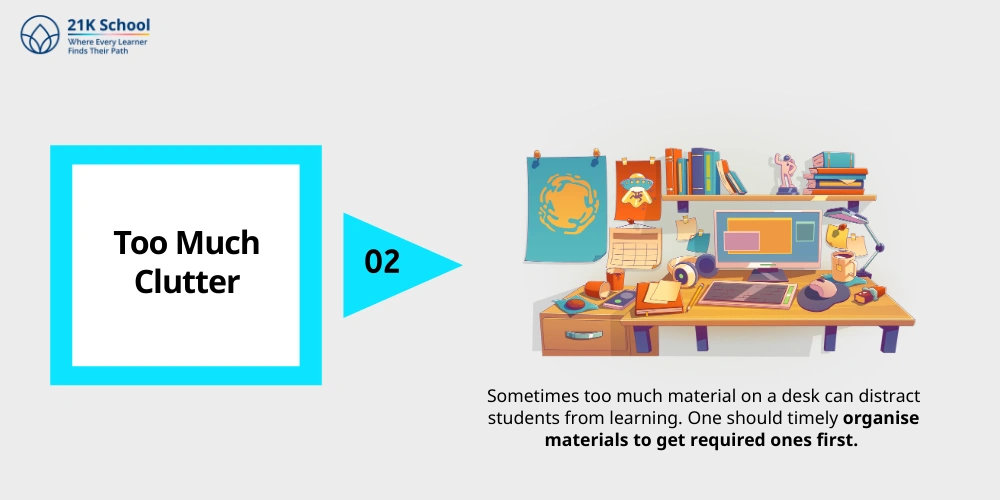
Sometimes too much material on a desk can distract students from learning. One should timely organise materials to get required ones first.
3. Studying Near Noisy Areas
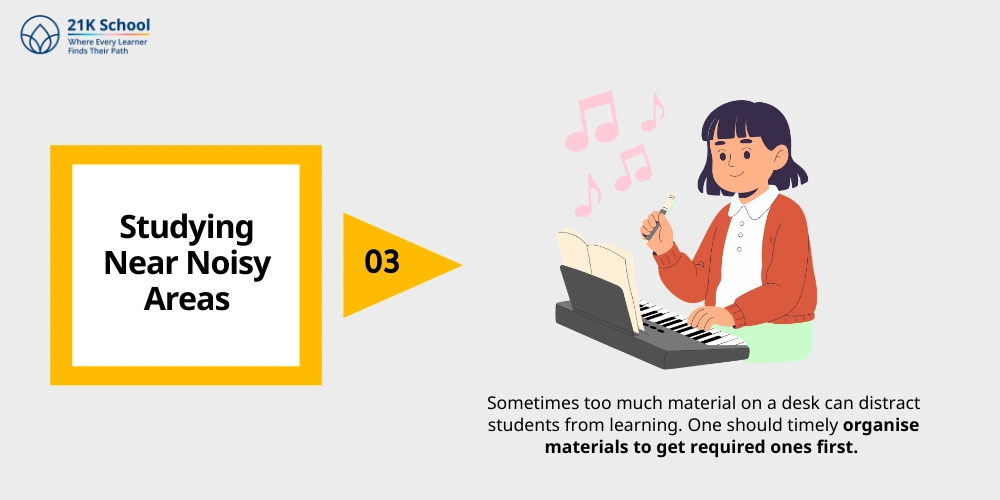
Studying near noisy areas can negatively impact learning especially when a kid is memorising important points.
That’s why creating a noise free study environment is important. Also, learn how to study in a noisy environment .
4. Poor Lighting
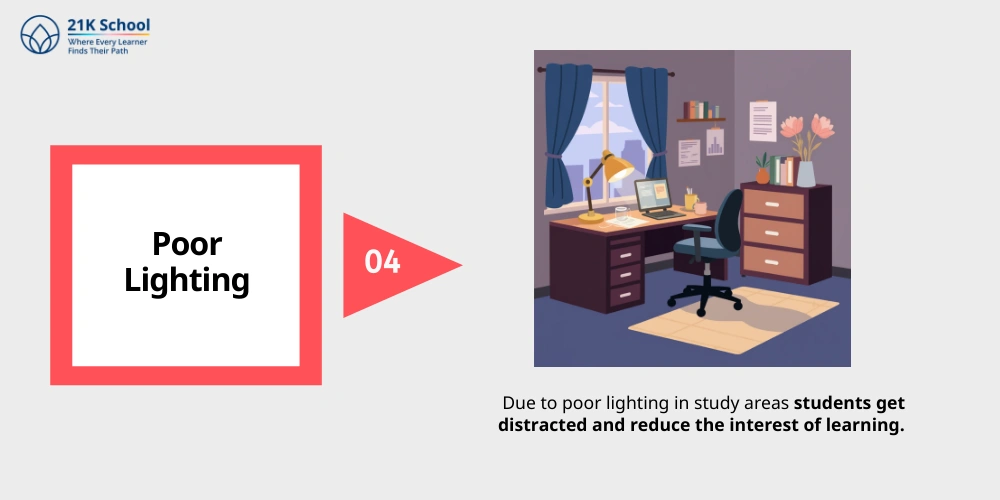
Due to poor lighting in study areas students get distracted and reduce the interest of learning.
Make sure to learn in the proper light to avoid learning problems.
Conclusion
For effective learning, students need a right learning environment. Some choose indoor space like home, school, and outdoor like living room according to preference.
To feel motivated students can create a positive learning environment which includes a comfortable, distraction free, and powerful zone.
Remember with small changes one can create a big difference to achieve the academic goals.

You may also want to read


Types of Studies: Everything You Need to Know with Examples

- Last updated on: 19 Mar, 2026
- 7 min read