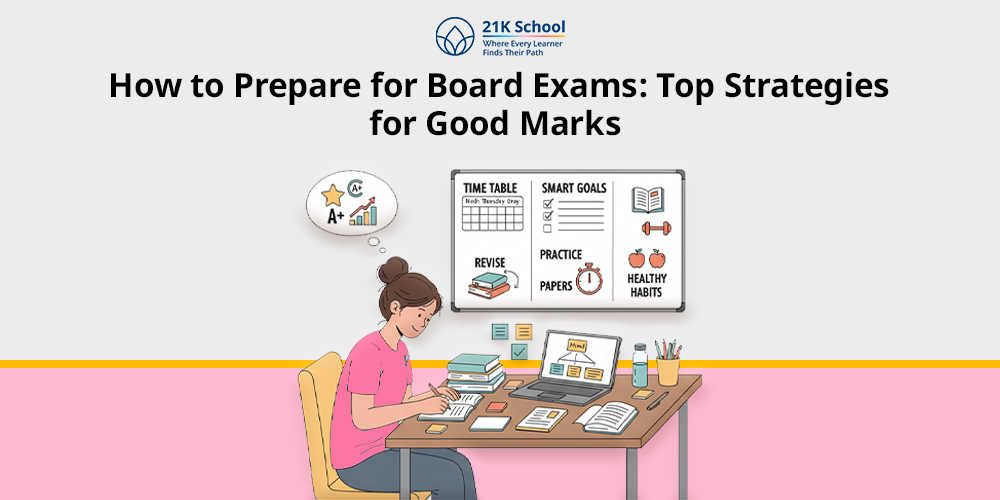
How to Prepare for Board Exams: 15 Effective Tips for Students
 Written byAnkita SinghaContent Specialist
Last modified: Jul 23, 2026 7 min read
Board examinations are often considered as an important part of a student’s educational journey. But have you ever thought why?
This is because it opens new doors for students. It is ideal for better career opportunities, better time management skills , improved confidence etc.
But, students are stuck on one common question: How to Prepare for a Board Exam? The question is obvious for Class 10th and Class 12th students.
To understand in-depth, let’s explore the top 15 smart and effective ways to prepare for board exams and score good grades.
15 smart ways on how to prepare for board exams
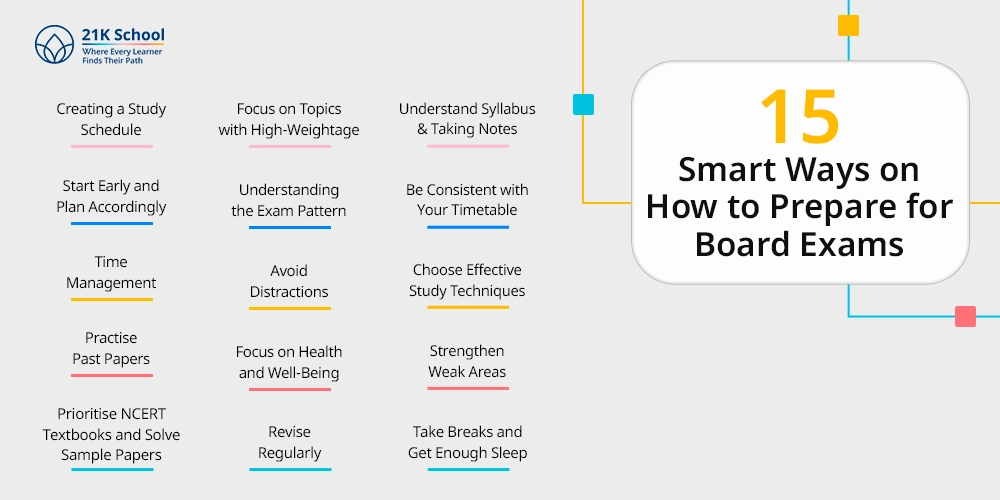
Mentioned below information is a detailed understanding of 15 smart ways on how to prepare for board exams:
1. Creating a study schedule
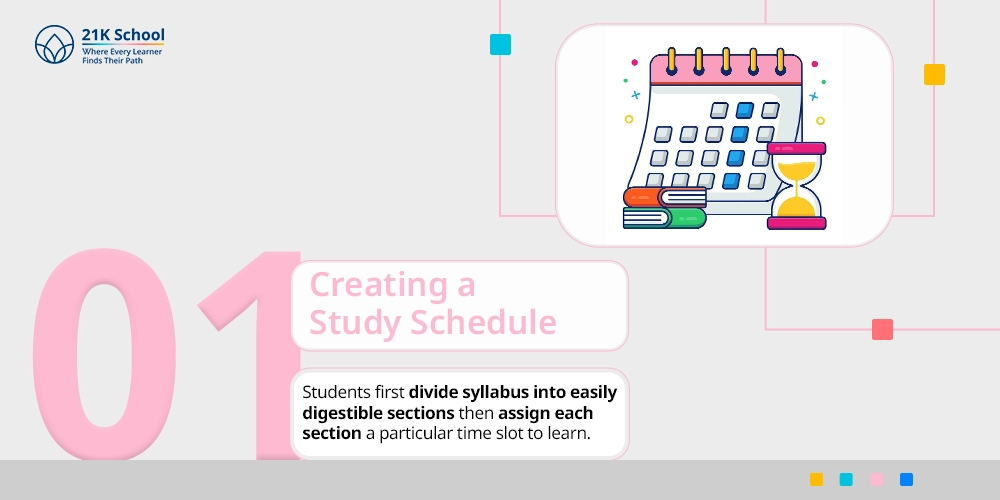
Students can start preparing by creating an effective study schedule for board exams.
It is a roadmap in which students first divide syllabus into easily digestible sections then assign each section a particular time slot to learn.
One must remember to add breaks, revision time, and mock tests in schedule. Creating a study schedule helps in perfect alignment of daily tasks.
2. Start early and plan accordingly
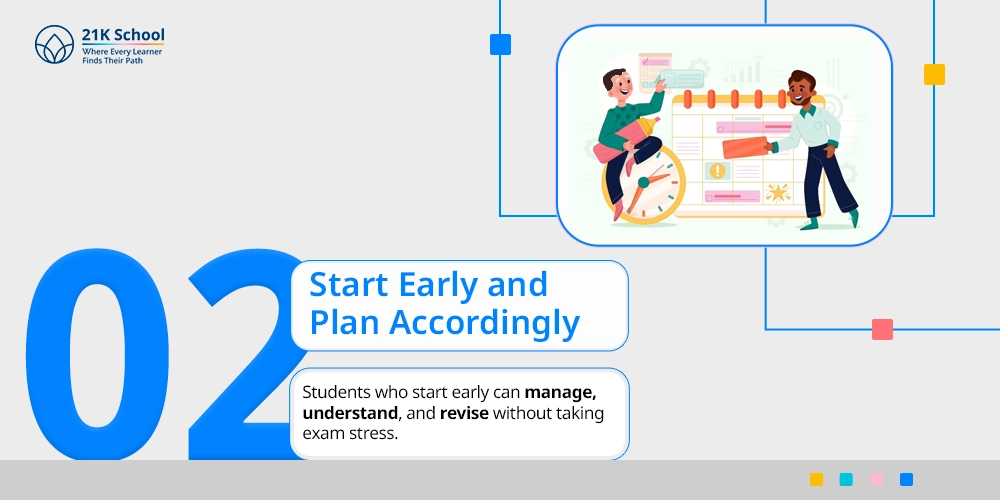
Students who start early can manage, understand, and revise without taking exam stress .
It also helps in understanding the strengths and weaknesses and time to work on them without stressing out.
Students must go through syllabus to explore easy and tough topics to align them accordingly.
3. Time management
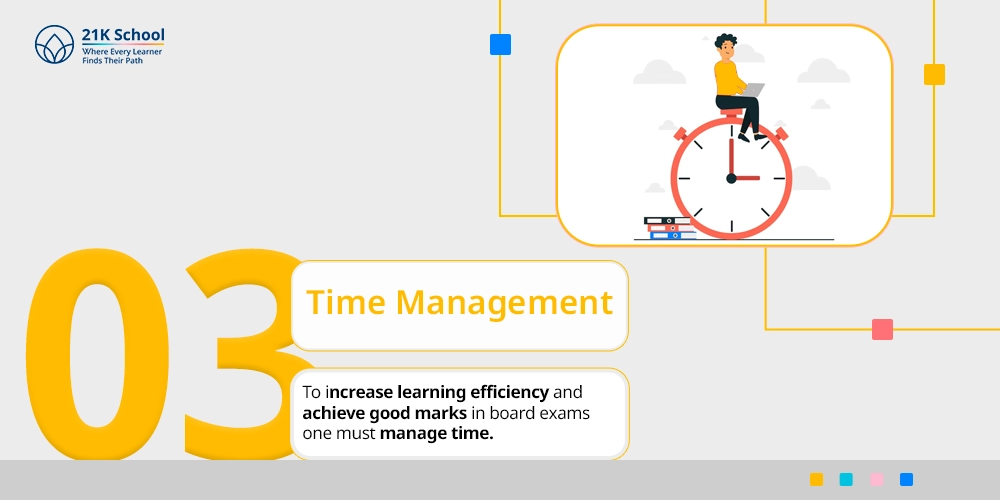
Time management is a key to student success. To increase learning efficiency and achieve good marks in board exams one must manage time.
A daily routine including study time, revision, exercise, meals, and relaxation brings discipline in life especially during preparation.
Using teaching methods like the Pomodoro method is an ideal way for time management.
4. Practise past papers
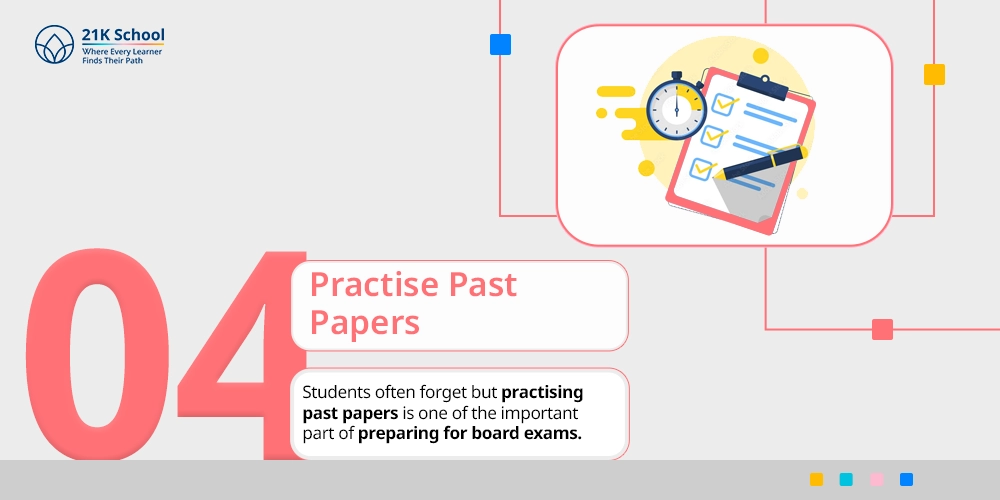
Students often forget but practising past papers is one of the important part of preparing for board exams.
By this way students can discover exam patterns, question types, and difficulty level of board exams.
One must try to solve it with a timer to increase the speed and accuracy. Analyse the result and work on feedback.
5. Prioritise NCERT textbooks and solve sample papers
Prioritising NCERT textbooks and solving the latest sample papers is important because there is a possibility that questions repeated in upcoming exams are similar.
Early preparation can be beneficial for students. One must go through important formulas, definitions, and points in your NCERT books.
6. Focus on topics with high-weightage
Systematic and structured learning is a more powerful approach than unstructured. Students should focus on topics with high-weightage to get good marks.
By this way learners can analyse their progress and area of improvement in future.
7. Understanding the exam pattern
Each exam has its own and different purpose. Preparation is incomplete if students are unable to understand the exam pattern.
To know how to score students need to explore the types of questions for example MCQs, short and long answers, marking scheme, and section-wise weightage.
8. Avoid distractions
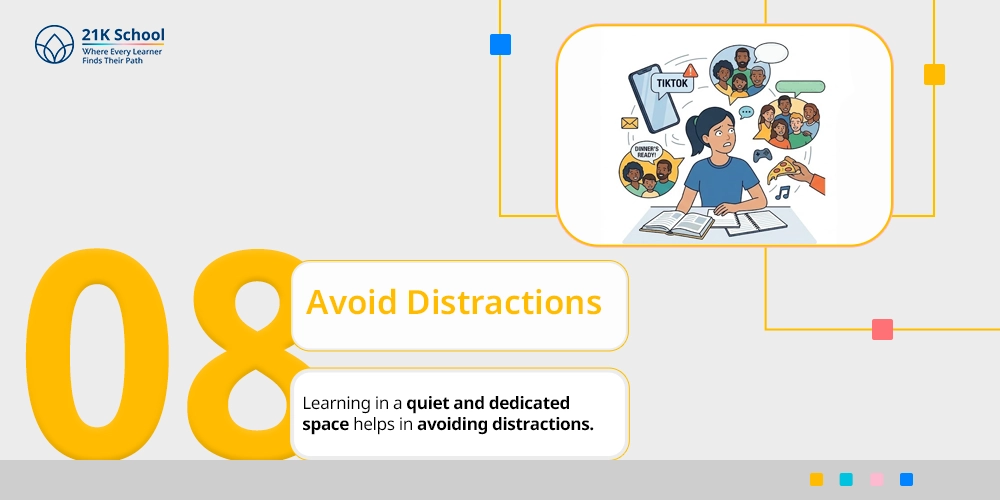
Learning brings challenges like distractions due to phone, family, peer or other. But, learning in a quiet and dedicated space helps in avoiding distractions.
A positive learning environment , effective study schedule, and continuous learning are some ideal ways to minimise interruptions.
9. Focus on health and well-being
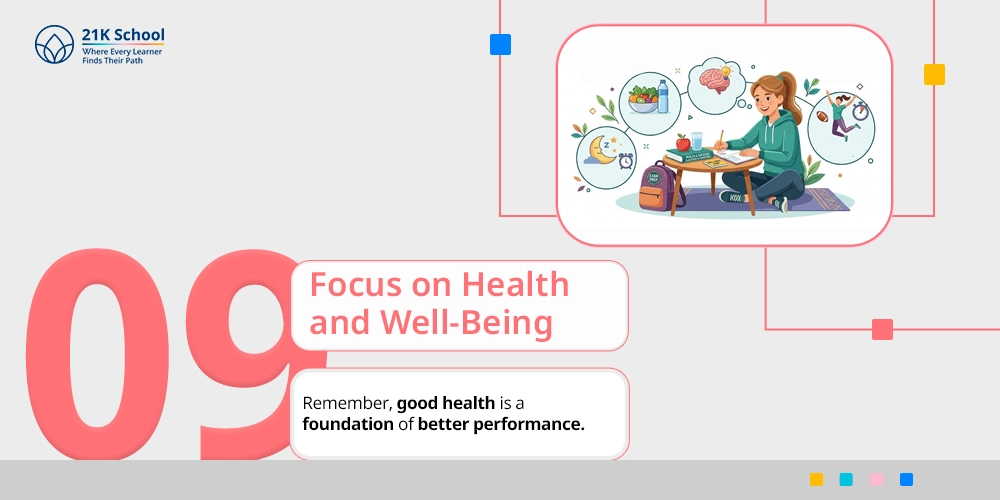
Board examination is a crucial step for each learner whether students are in class 10th or 12th. Remember, good health is a foundation of better performance.
Start with nutritional supplements, timely sleep, drink plenty of water, and meditate for focus and confidence to learn effectively.
10. Revise regularly
Smart learning is not enough. Students need to revise regularly for long-term knowledge retention. Exams analyse the memory power with critical thinking skills .
Students can also use various teaching methodologies for effective revision like The Feynman Technique, promote Pomodoro Technique etc.
11. Understand syllabus & taking notes
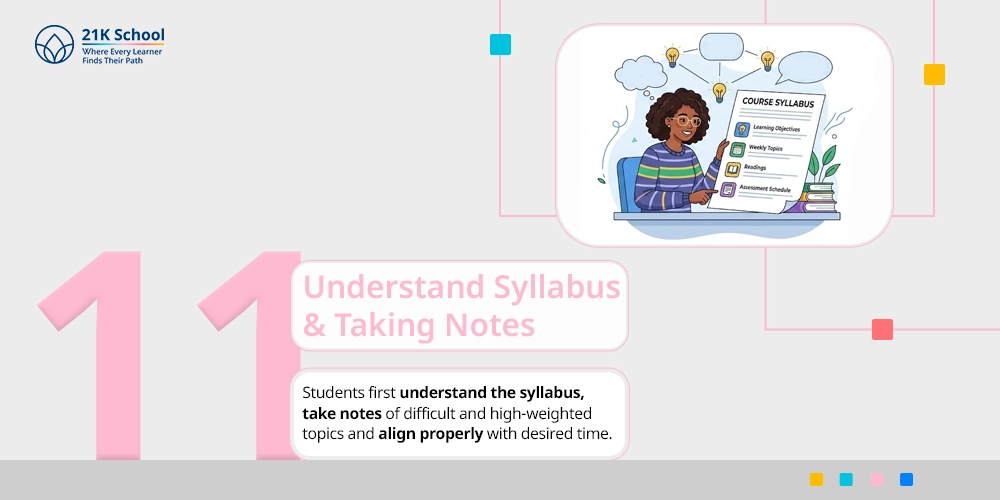
Starting preparation before understanding the syllabus can be harmful which negatively impacts the study routine .
Students first understand the syllabus, take notes of difficult and high-weighted topics and align properly with desired time.
By this way one can avoid wasting time on irrelevant topics.
12. Be consistent with your timetable
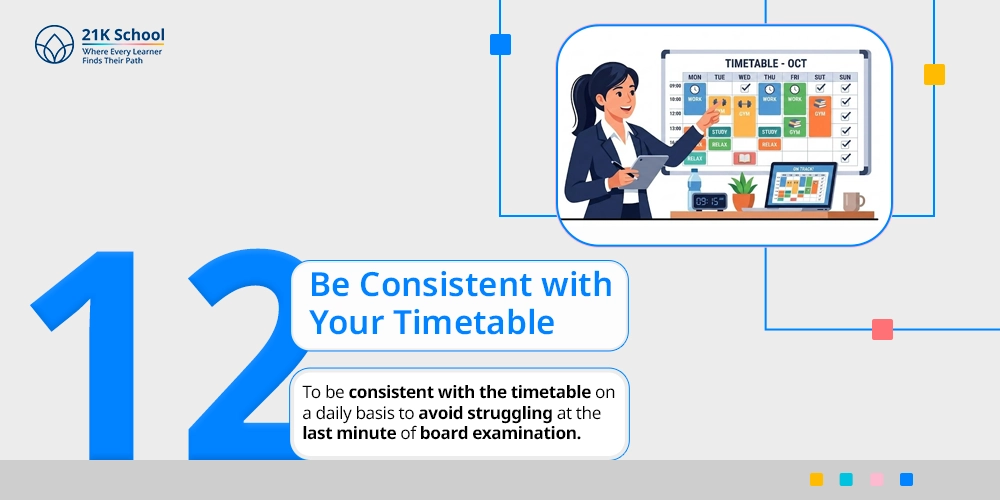
Students often lack a study timetable which can affect board exams and restrict them from getting good marks.
Remember, to be consistent with the timetable on a daily basis to avoid struggling at the last minute of board examination.
13. Choose effective study techniques
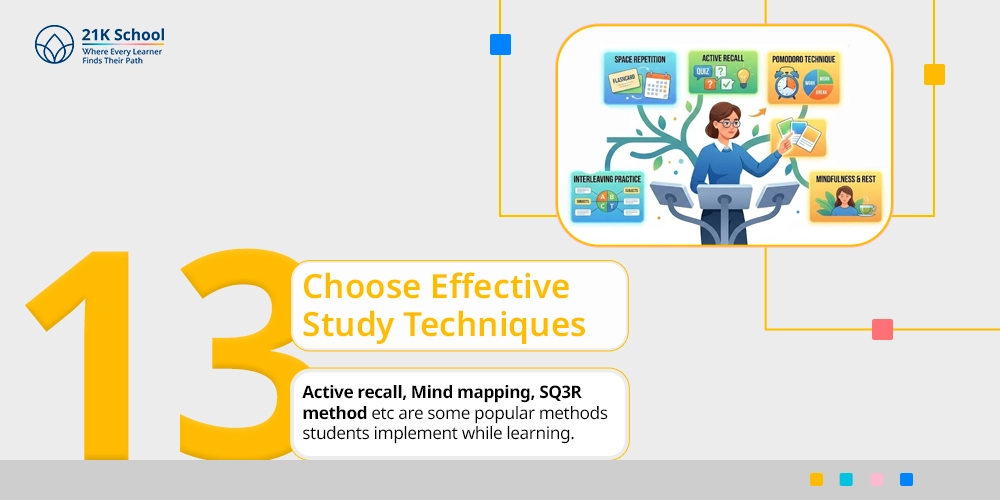
Each student is different and need different approaches to gain good marks in board exams. One can experiment with study techniques.
This helps them to get the ideal way of learning without distraction or difficulties.
Active recall, Mind mapping , SQ3R method etc are some popular methods students implement while learning.
14. Strengthen weak areas
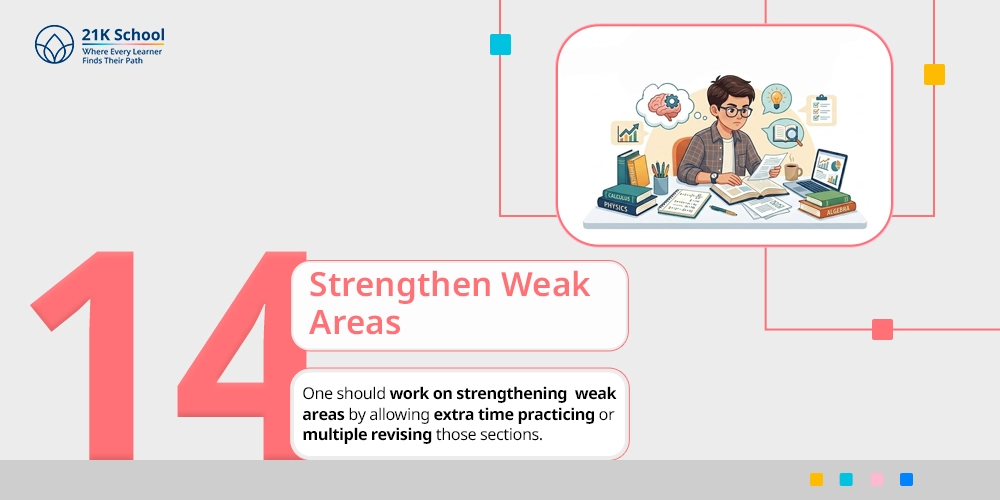
Students often neglect weak areas or difficult topics. But, practice makes man perfect and continuous learning ensures success.
That’s why one should work on strengthening weak areas by allowing extra time practicing or multiple revising those sections.
Creating a doubt notebook for every subject is also an ideal way to revise.
15. Take breaks and get enough sleep
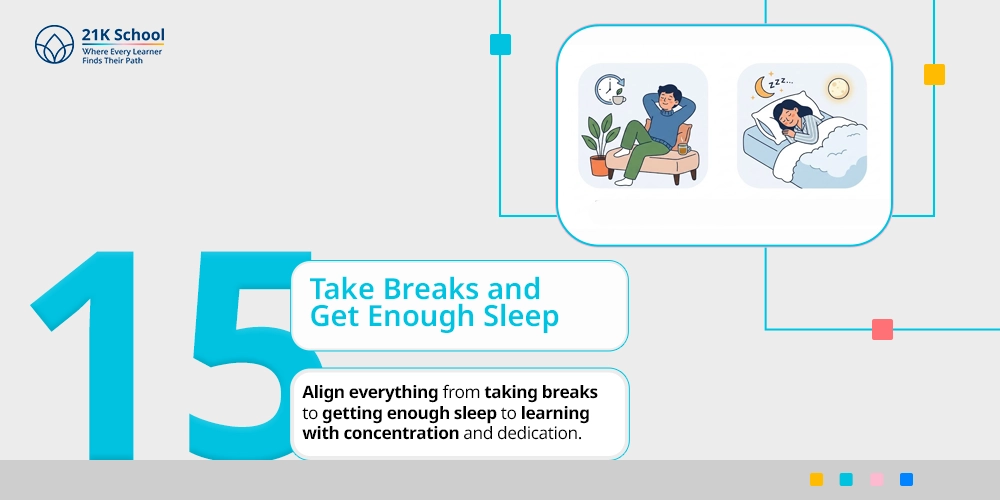
The importance of board exams is comparatively more, which doesn’t mean students learn nonstop without caring about health.
They must align everything from taking breaks to getting enough sleep to learning with concentration and dedication.
Stretch, hydrate, take a short walk or quick snacks for a fresh mind and prevent burnout.
Conclusion
Preparing for board exams is not a one day task, it is a long journey. Journey of patience, empathy , responsibility, dedication, and ability to achieve.
Students eager to gain good marks for career growth and popularity. Remember, it’s not about learning twenty hours a day, it’s about how effectively you study.
By following the above mentioned 15 smart ways on how to prepare for a board exam students can gain desired results in class 10th or 12th.
Follow the strategies to build confidence and calmness in mind to challenge the world and get success.
Frequently asked questions
8 questions
Why are board exams important for a student's career?
For a student's career growth, board exams are important because they determine access to higher education, influence career path choices, and showcase correct academic performance.
How to manage stress while studying for board exams?
Students can manage stress while studying for board exams by: Creating study schedule with breaks Stay organized with materials Maintain a healthy lifestyle Revise thoroughly Take test and reward for improvement
Can parents help students prepare for board exams?
Yes, parents help students prepare for board exams by encouraging kids with a positive mindset, avoiding comparison, celebrating effort over results and small wins.
What are the common mistakes to avoid while preparing for board exams?
Some of the common mistakes to avoid while preparing for board exams are: Poor time management Procrastination Neglecting Panicking during the exam Solving few sample question papers
How can I top in the board exam?
By implementing and properly following the strategies like creating a timetable, covering the entire syllabus, practising consistently, timely revisions, and using effective teaching strategies.
What is the 1-3-5 rule in studying during exams?
It is a productivity method is called the 1-3-5 rule which involves completing 1 big task, 3 medium tasks, and 5 small tasks per day
Is scoring 90% A1 or A2?
Based on the CBSE grading system, scoring 90% is considered under A2 grade.
How can I score 95% in 15 days before an exam?
Students who want to score 95% in 15 days before an exam should focus on completing their study plan, reducing distractions, and working on high-weightage topics and past papers.
About the author
Ankita Singha
Content Specialist
Ankita Singha is an Education Content Specialist at 21K School, India’s first accredited fully online K-12 School. She focuses on the in-depth research and creation of the well-drafted guides on early childhood education, school admission processes, and CBSE/ICSE curriculum guidance. With more than 2 years of experience at 21K School, a fully accredited institute- Cambridge International (IA702) and Pearson Edexcel (94883), Ankita works closely with the school’s curriculum heads and academic coordinators. Ankita’s every article reflects on the official board guidelines, practical realities, and current policies of online education in 78+ countries. Ankita’s content has helped thousands of parents in understanding the topics like RTE eligibility, NIOS pathways, and age-appropriate admission criteria.
Every 21K School guide is written by our education team and reviewed by a subject facilitator before publishing.
Exploring a CBSE-pathway online school?
Talk to an advisor about 2026–27 admissions — no obligation.
Talk to an advisorComments
No comments yet — be the first to share your thoughts or ask a question.