Remedial Education: Meaning, Need, Objectives, Principles, Advantages & More!
 Written byAnshu KumariContent Specialist
Last modified: Sep 1, 2026 14 min read
Have you heard of remedial education that gives training to students who lack competency for a certain level of education?
It understands that students have different levels of intelligence, language proficiency, learning styles, and other challenges.
Though many schools have aimed at providing remedial education to the students who need it, they have lagged behind in providing the right assistance.
To know more about remedial education, look through the article below and read about its objectives, importance, principles, strategies to implement, and challenges that lie ahead.
What is remedial education?
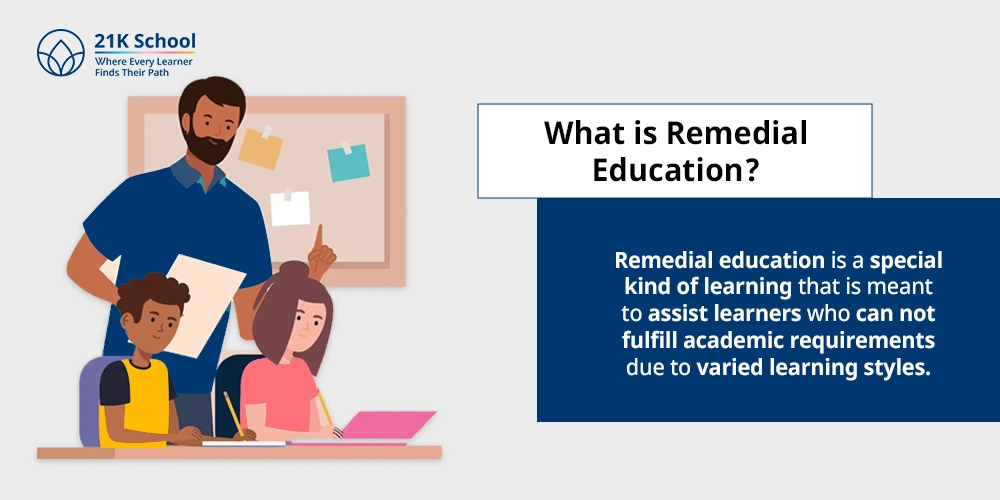
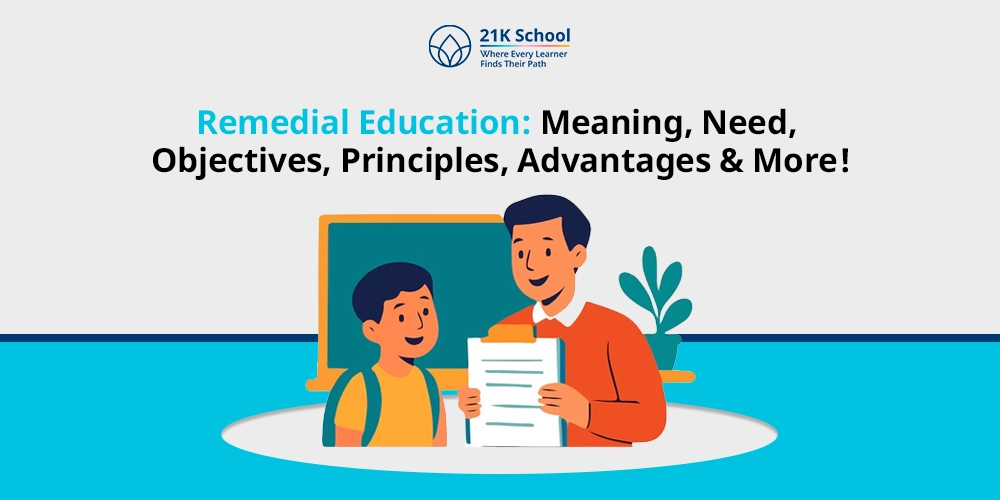
Remedial education is a special kind of learning that is meant to assist learners who can not fulfill academic requirements due to varied learning styles.
It aims at minimizing certain learning gaps by offering extra training and personalized instructions.
As the name suggests, remedial education improves or corrects the learning methods of students and enhances their exam results.
According to educational professionals, remedial training first diagnoses the learning challenges and reasons behind a poor performance, and then plans the most accurate teaching strategies for the students.
It insists on reviewing basic areas, improving the background knowledge, and adopting alternative instructional strategies too.
Remedial education is not the same as normal classroom instructions in a number of ways.
Whereas normal teaching is guided by a rigid curriculum and rhythm, remedial education is flexible and student-oriented.
It can be done either one-on-one or with a small group, in or out of the classroom, or offered as an extra-curricular activity.
The main objective of remedial education is academic growth and holistic growth of the learner including their emotional and inspirational aspects.
Simply put, remedial education is a necessary approach that makes a support system to guarantee educational equity.
It is an effort to deal with learners who require additional support to achieve their learning outcomes.
6 objectives of remedial education
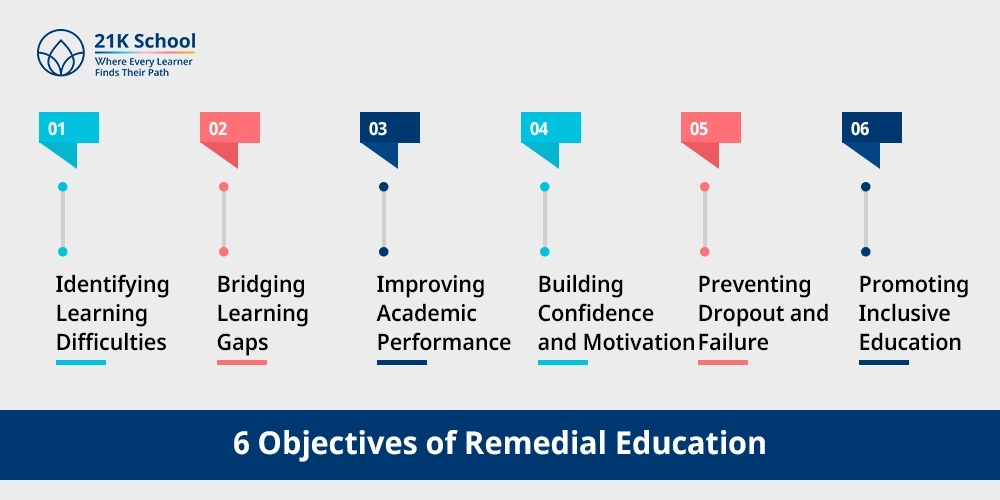
Remedial education consist of the following main objectives:
1. Identifying learning difficulties
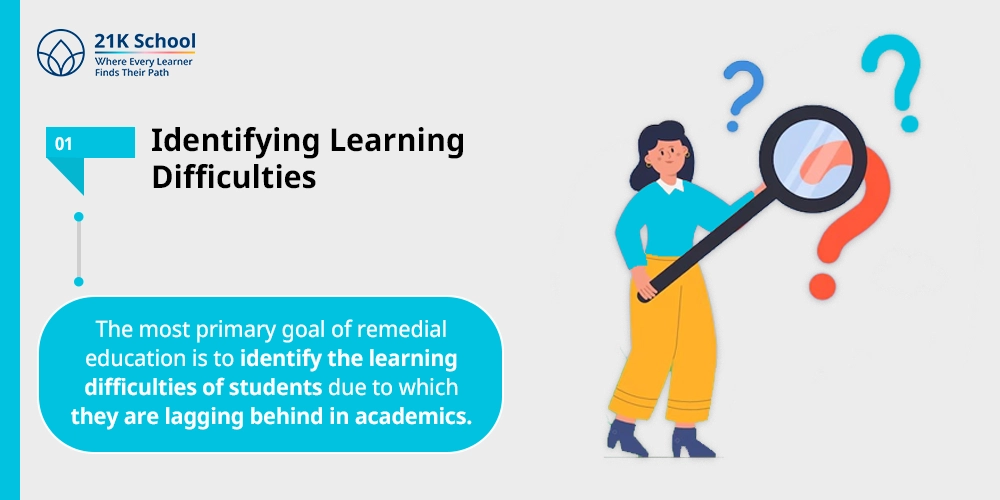
The most primary goal of remedial education is to identify the learning difficulties of students due to which they are lagging behind in academics.
These academic barriers can be in the form of poor understanding, writing, reading, or problem-solving in mathematics.
The diagnostic tests, observations, and repeated assessments used by the teacher help them to know the nature and the level of the problem of each learner.
Proper diagnosis assists in designing the suitable remedial action other than generalized teaching strategy.
2. Bridging learning gaps
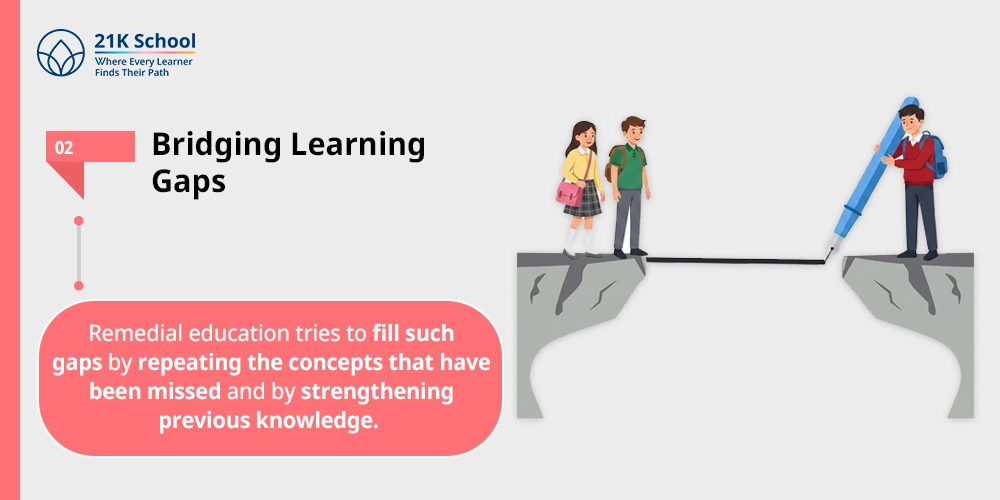
The learning gaps may arise when students cannot obtain the simplest aspects. This can then impact their understanding of the complicated aspects.
Remedial education tries to fill such gaps by repeating the concepts that have been missed and by strengthening previous knowledge.
This makes the learners better equipped to fulfill the present and future academic requirements by teaching them the basics.
3. Improving academic performance
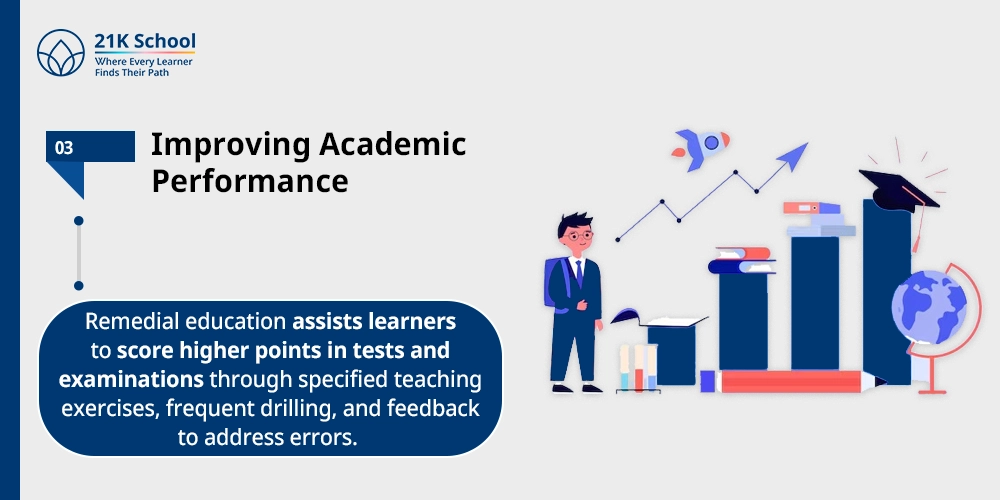
The other important goal is to enhance the performance of students academically.
Remedial education assists learners to score higher points in tests and examinations through specified teaching exercises, frequent drilling, and feedback to address errors.
Better performance improves academic performance and also helps in lessening study-stress.
4. Building confidence and motivation
When students perform poorly in academics persistently, they end up having low self-esteem and feel demotivated.
Remedial education aims at motivating the learners through positive reinforcement and assigning attainable tasks.
Confidence is built up as students experience success in their learning which consequently enhances their interest in and motivation for learning.
5. Preventing dropout and failure
School dropout is one of the most poignant results of academic failure.
Remedial education aids in reducing dropouts since learning issues are resolved in the initial stages.
By helping the students in a consistent manner, there is a higher chance of them staying in school, therefore finishing their education successfully.
6. Promoting inclusive education
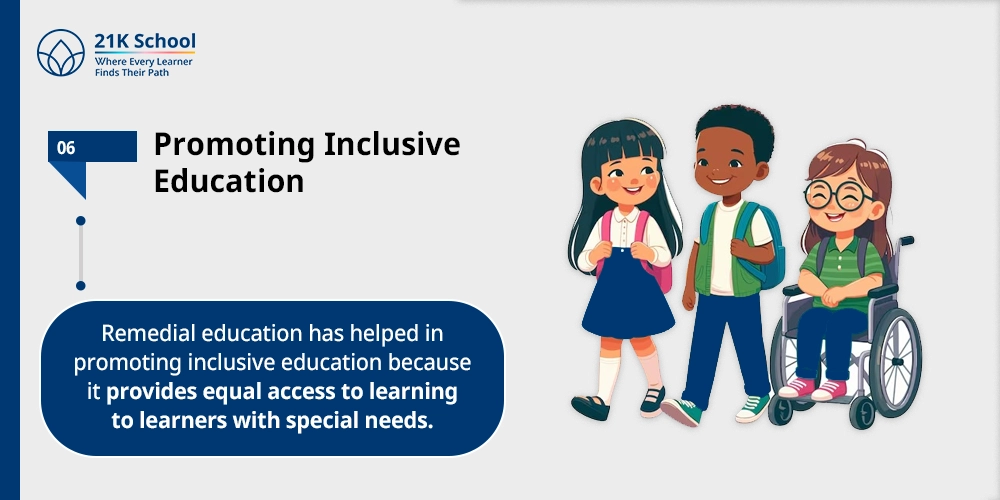
Remedial education has helped in promoting inclusive education because it provides equal access to learning to learners with special needs.
It aids in creating a setting that recognizes disparities in learning abilities, and are addressed without discrimination, thereby facilitating educational equity and social justice.
6 need for remedial education
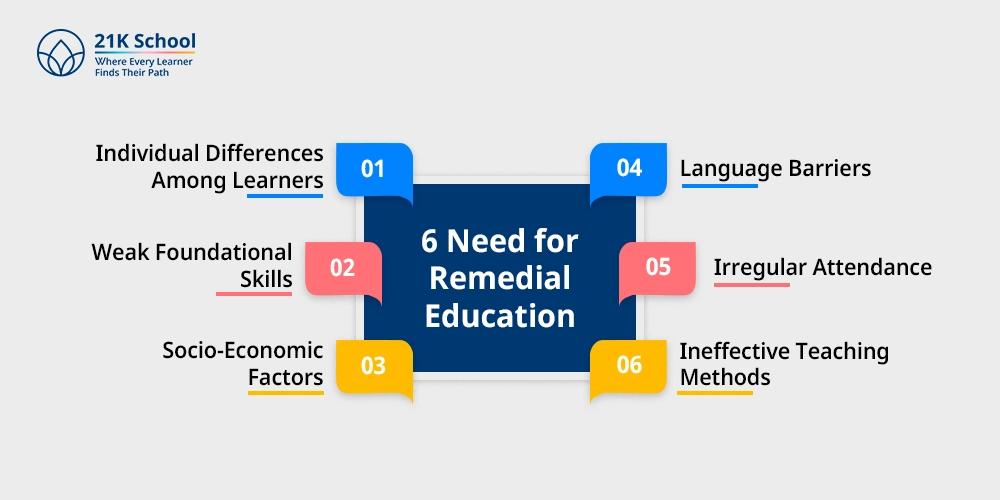
The following situations and criteria depict why remedial education is needed in the regular classrooms:
1. Individual differences among learners
Learners have a varied level of intelligence, aptitude, different learning speed, styles, and interests.
This means that while there are a certain number of students who learn fast through audio, there is also a number of students who learn better with visual aids.
All these differences are sometimes difficult to accommodate in the regular classroom teaching, and remedial education is needed to cater individual learning requirements.
2. Weak foundational skills
Most of the students lack basic skills in reading, writing, and arithmetic which are fundamental in academic success.
Lacking a strong foundation in these skills interferes with a higher-level learning in different subjects.
Remedial education assists in reinforcing fundamental skills – much like a remedial teaching action plan for slow learners helps bridge the gap gradually.
3. Socio-economic factors
Socio-economically disadvantaged students are normally exposed to poverty, parental negligence, deficiency of learning materials, and food shortages. These aspects have negative impacts on their school performance.
Remedial education offers extra support to tackle such disadvantages to facilitate equal chances in learning.
4. Language barriers
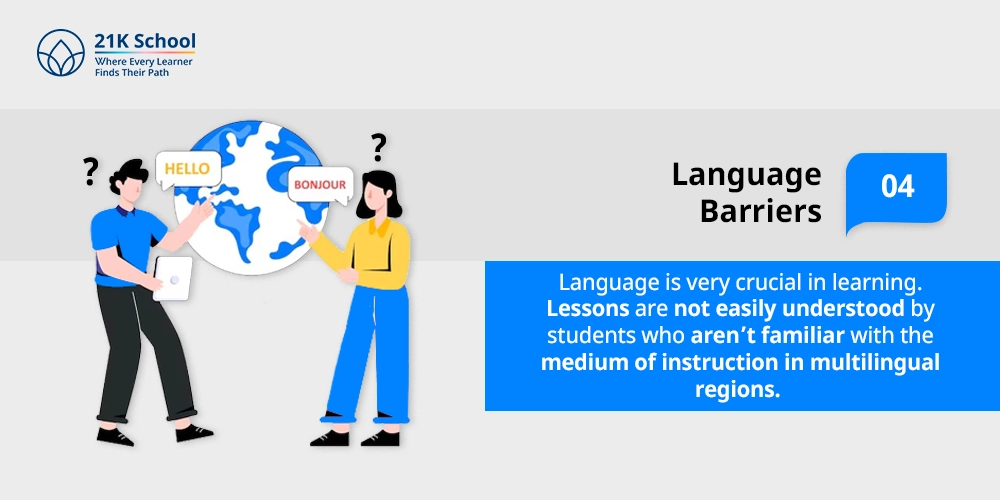
Language is very crucial in learning. Lessons are not easily understood by students who aren't familiar with the medium of instruction in multilingual regions.
Remedial education provides added assistance in learning different languages which can boost students' social bonding and academic success.
5. Irregular attendance
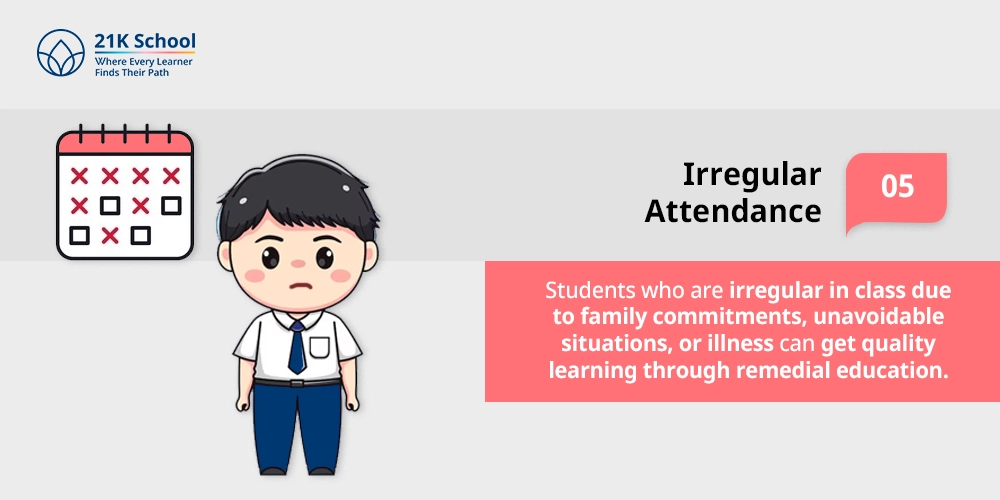
Students who are irregular in class due to family commitments, unavoidable situations, or illness can get quality learning through remedial education.
It gives them an opportunity to reconsider their learning and perform their best in upcoming exams.
6. Ineffective teaching methods
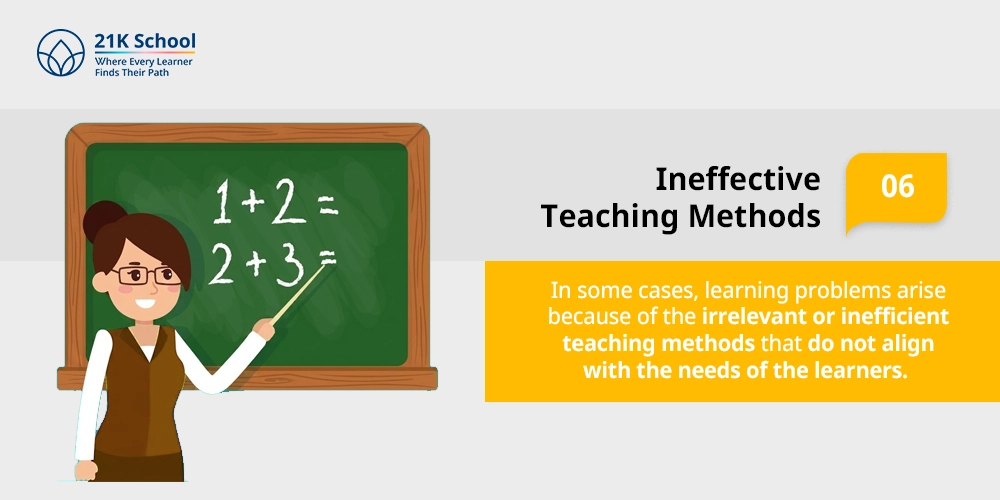
In some cases, learning problems arise because of the irrelevant or inefficient teaching methods that do not align with the needs of the learners.
Remedial education offers different strategies that would help in aiding a better understanding and retention of knowledge in education.
6 principles of remedial education
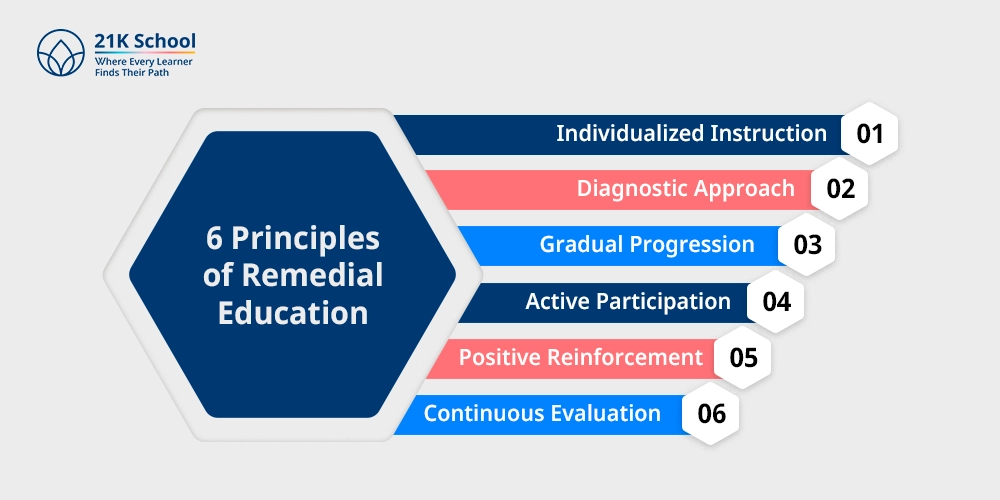
Remedial education functions on the basis of the following principles:
1. Individualized instruction
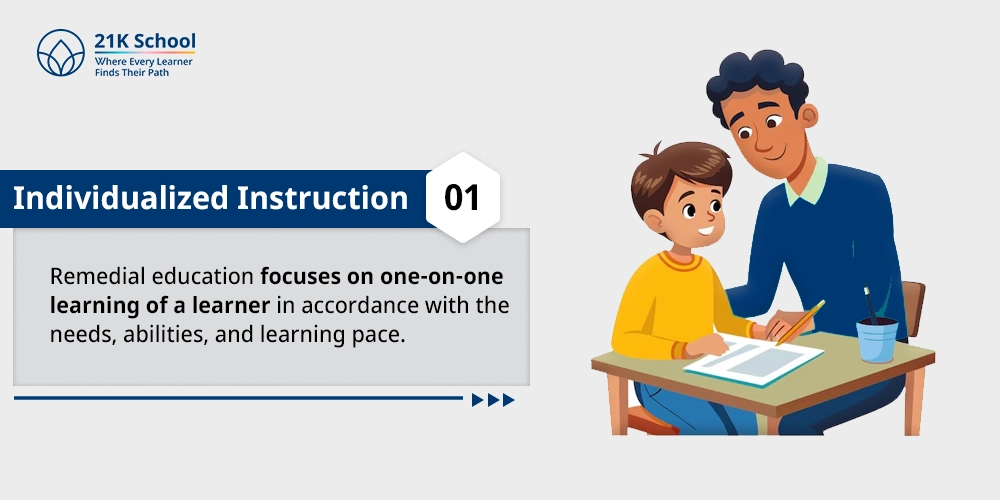
Remedial education focuses on one-on-one learning of a learner in accordance with the needs, abilities, and learning pace.
Identifying individual students to give them personal attention is more effective in addressing particular learning problems rather than applying common instructions on all students.
2. Diagnostic approach
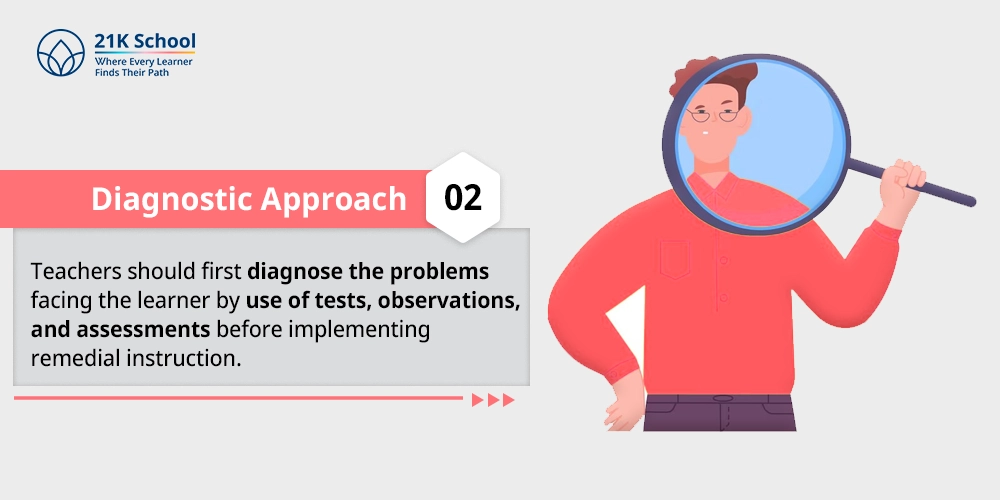
Remedial education should have a diagnostic approach.
Teachers should first diagnose the problems facing the learner by use of tests, observations, and assessments before implementing remedial instruction.
This makes sure that remedial measures are accurate and meaningful.
3. Gradual progression
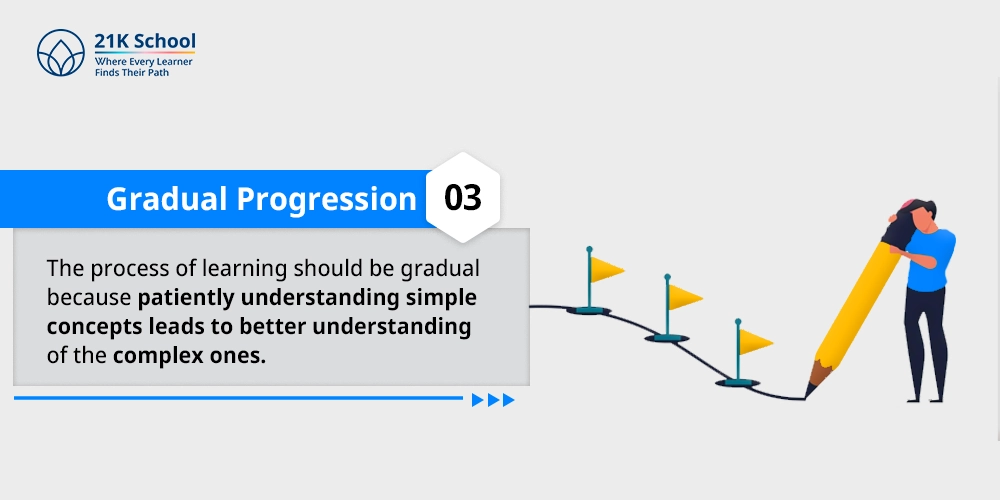
The process of learning should be gradual because patiently understanding simple concepts leads to better understanding of the complex ones.
Remedial teaching is step-by-step in nature in which the learners are enabled to grasp one concept before proceeding to another.
This minimizes distraction and builds confidence.
4. Active participation
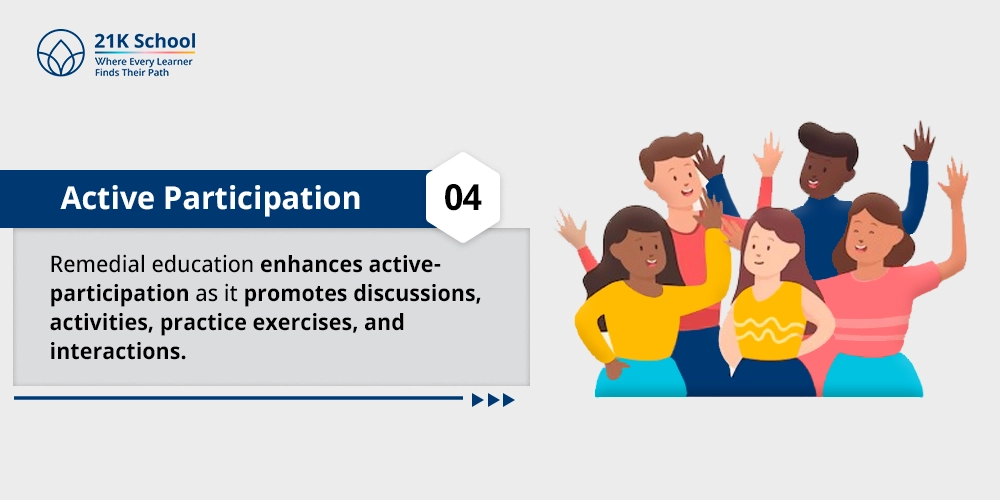
The learning process should actively engage learners.
Remedial education enhances active-participation as it promotes discussions, activities, practice exercises, and interactions.
Student-engagement helps to understand and memorize the concepts better.
5. Positive reinforcement
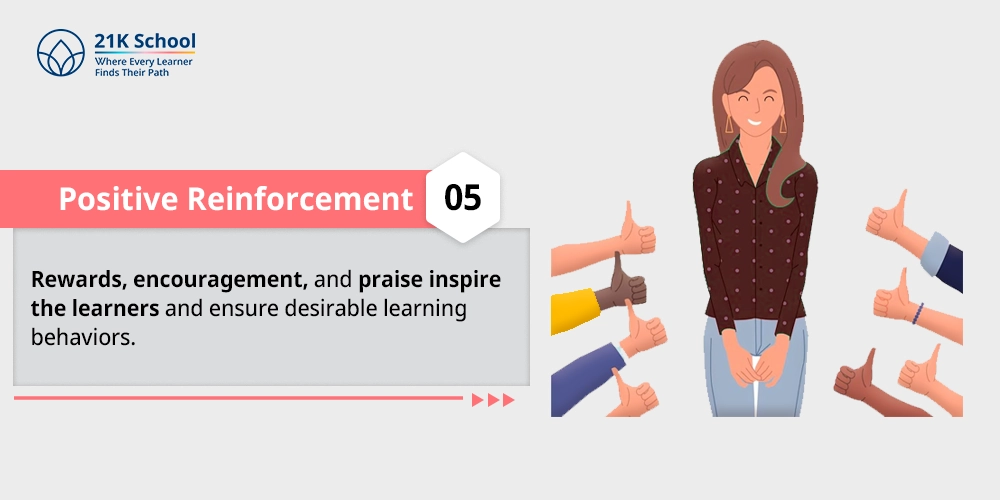
In remedial education, positive reinforcement is very imperative.
Rewards, encouragement, and praise inspire the learners and ensure desirable learning behaviors. This assists in developing a friendly and positive learning environment.
6. Continuous evaluation
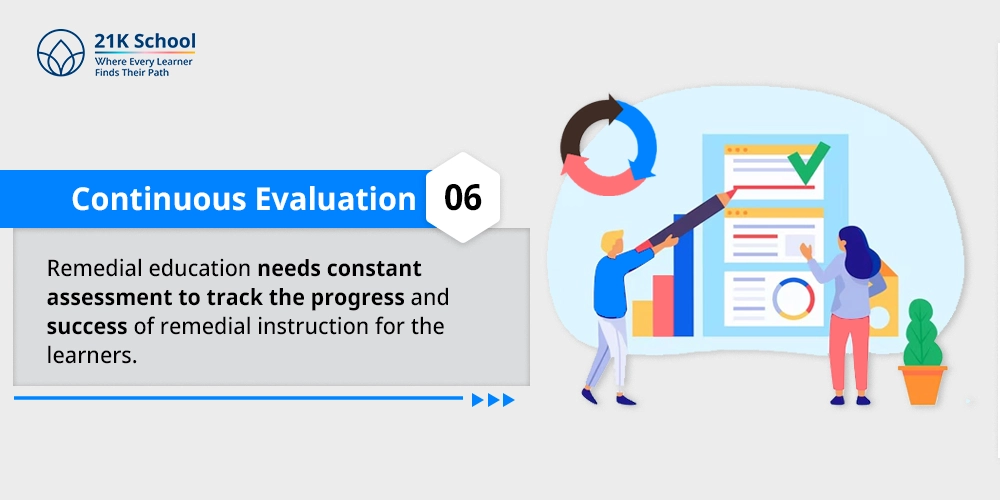
Remedial education needs constant assessment to track the progress and success of remedial instruction for the learners.
It also provides directions for changing teaching techniques to ensure continuous progress of learners.
Who needs remedial education?
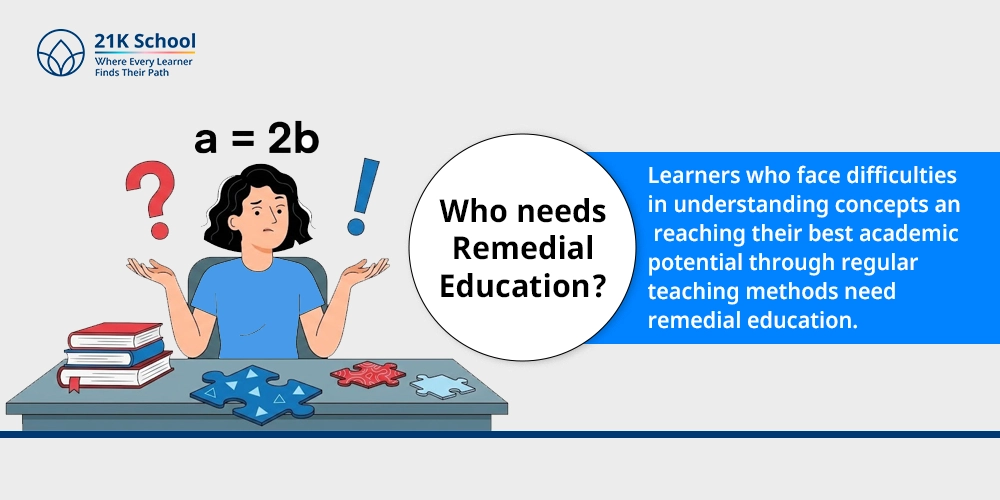
Learners who face difficulties in understanding concepts and reaching their best academic potential through regular teaching methods need remedial education.
This would include students with learning disabilities, slow learners, underachievers, learners facing language barriers, and students from poor socio-economic status.
It is also advantageous to the students whose schooling has been missed because of illness or personal reasons.
All in all, remedial education can be offered at primary, secondary, or even higher education levels to students who need it.
7 methods and strategies of remedial education
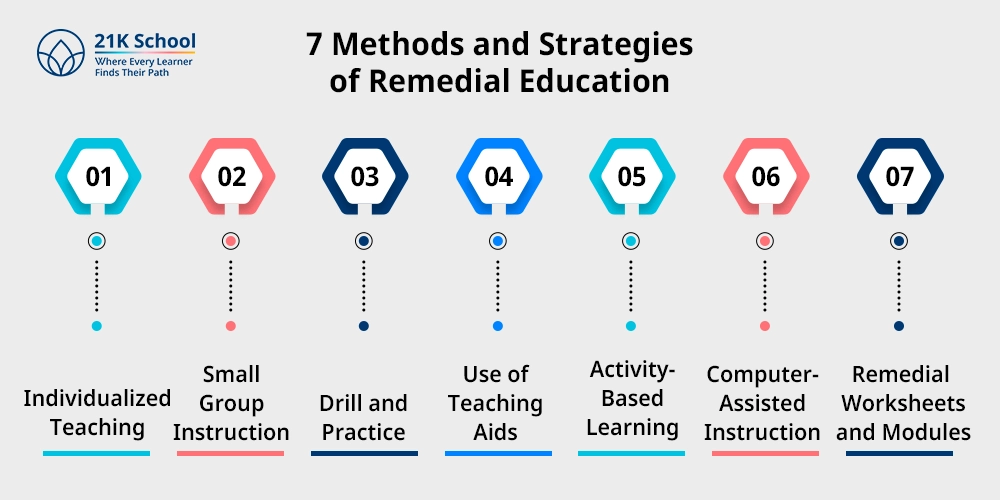
Remedial education work best with the below mentioned methods and strategies:
1. Individualized teaching
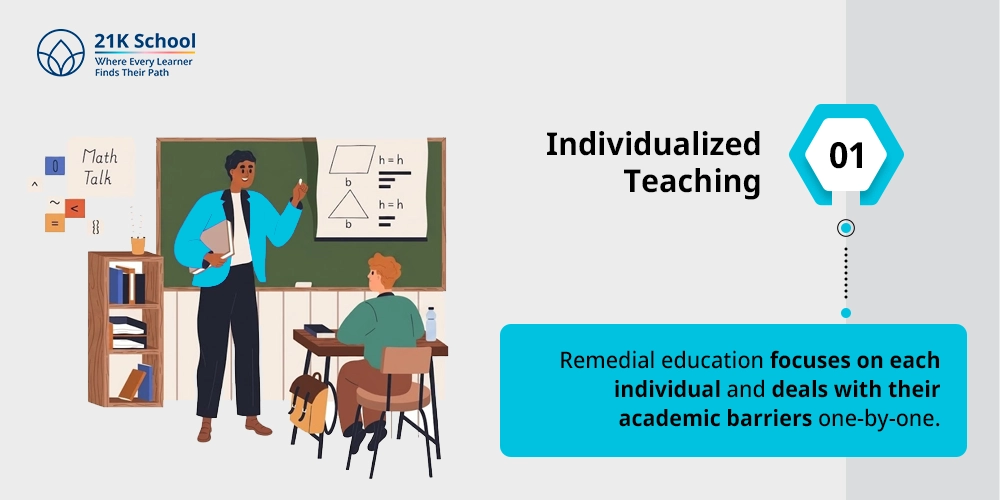
Remedial education focuses on each individual and deals with their academic barriers one-by-one.
This individualized teaching enables learners to get the learning resources and methods that suit them best.
2. Small group instruction
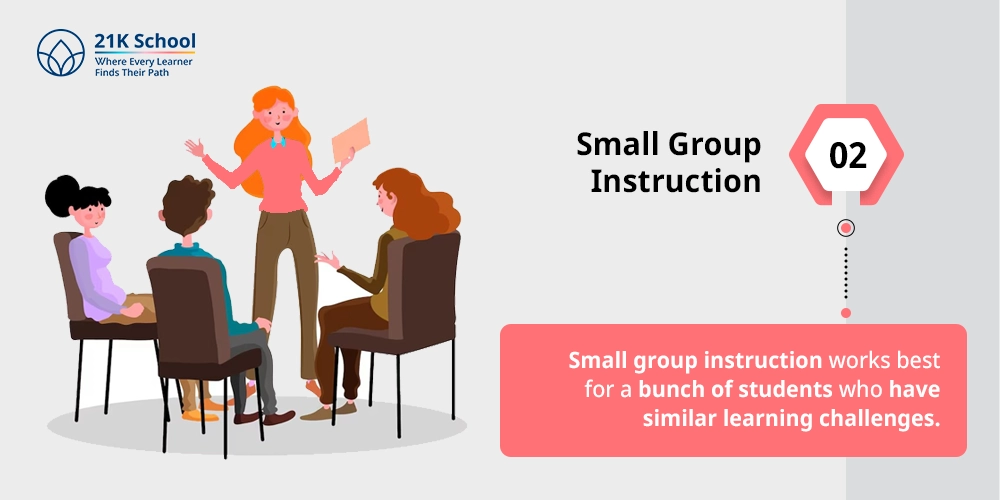
Small group instruction works best for a bunch of students who have similar learning challenges.
In such settings, students feel a sense of belonging where they learn through peer learning, interactions, and sharing ideas on a particular topic.
3. Drill and practice
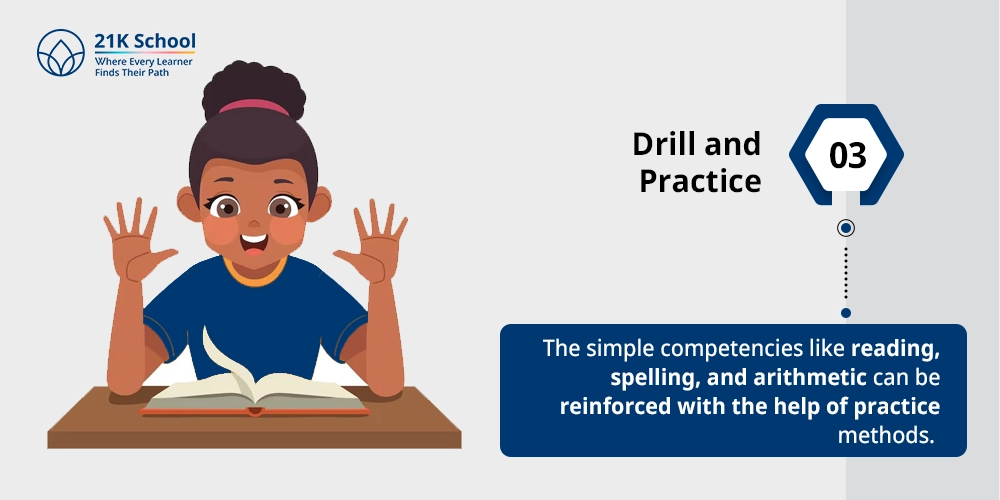
The simple competencies like reading, spelling, and arithmetic can be reinforced with the help of practice methods.
Practicing again and again plays a part in enabling the learners to achieve mastery and increases precision and speed.
4. Use of teaching aids
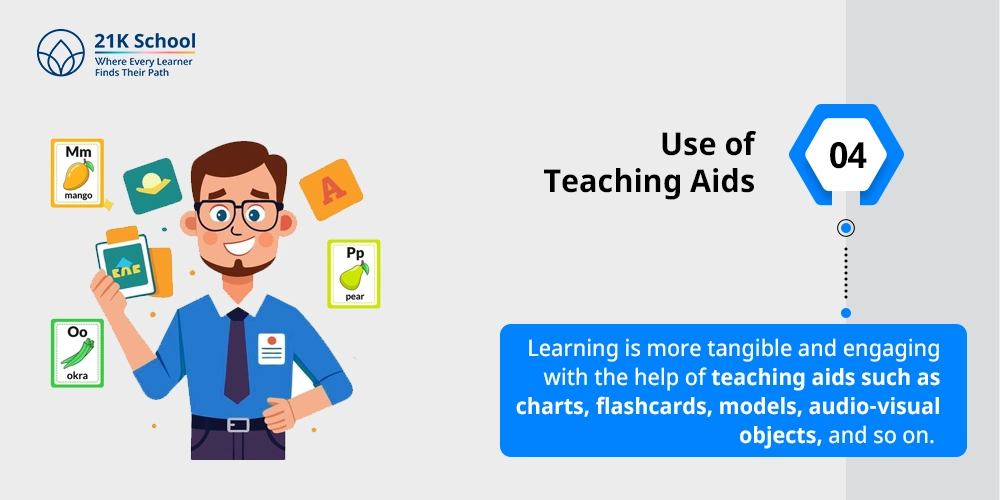
Learning is more tangible and engaging with the help of teaching aids such as charts, flashcards, models, audio-visual objects, and so on.
They assist the learners in comprehending abstract ideas in a more straightforward manner.
5. Activity-based learning
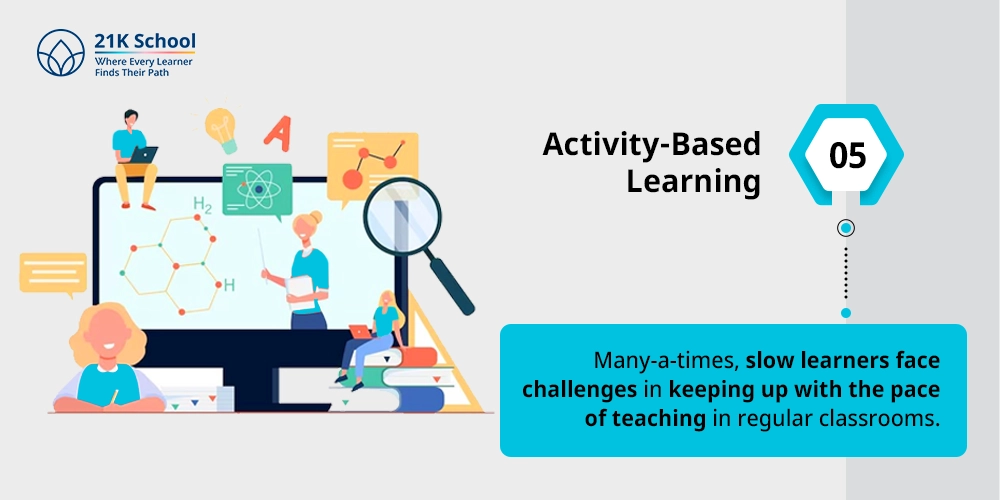
Many-a-times, slow learners face challenges in keeping up with the pace of teaching in regular classrooms.
The lessons that are designed and executed through activity-based learning are grasped easily by such students and encourages active-participation.
6. Computer-assisted instruction
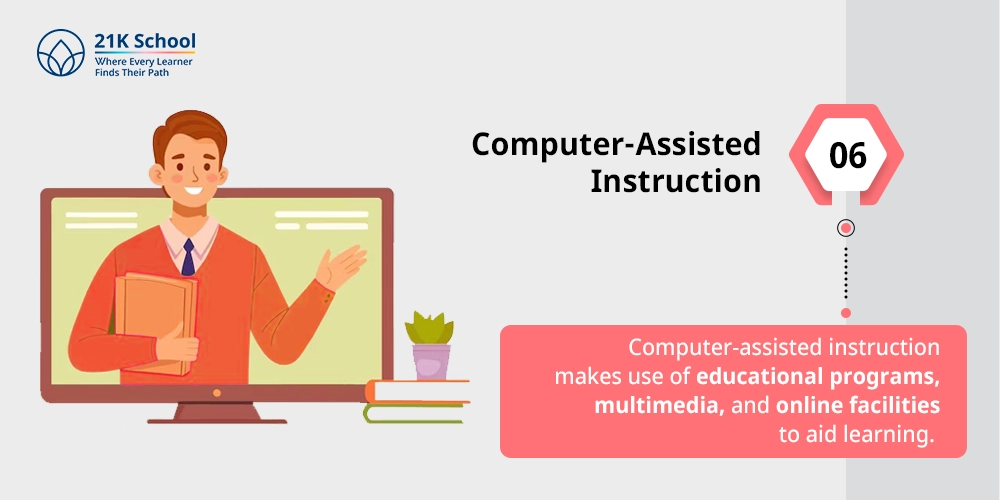
Computer-assisted instruction makes use of educational programs, multimedia, and online facilities to aid learning.
Interactive programs offer instant feedback and it gives the learners the ability learn at their own pace.
7. Remedial worksheets and modules
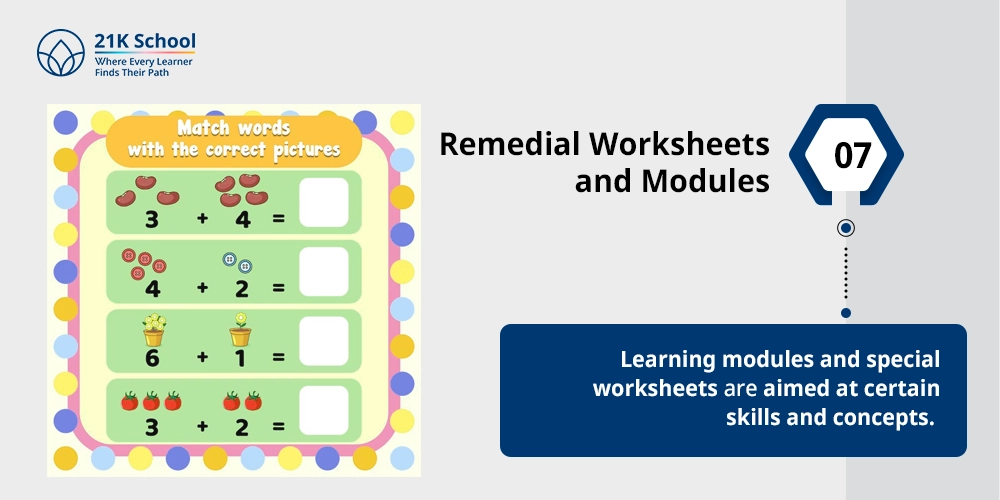
Learning modules and special worksheets are aimed at certain skills and concepts.
They give orderly practice and assist the learning process by allowing learners to revise and reinforce the learning on their own.
6 advantages of remedial education
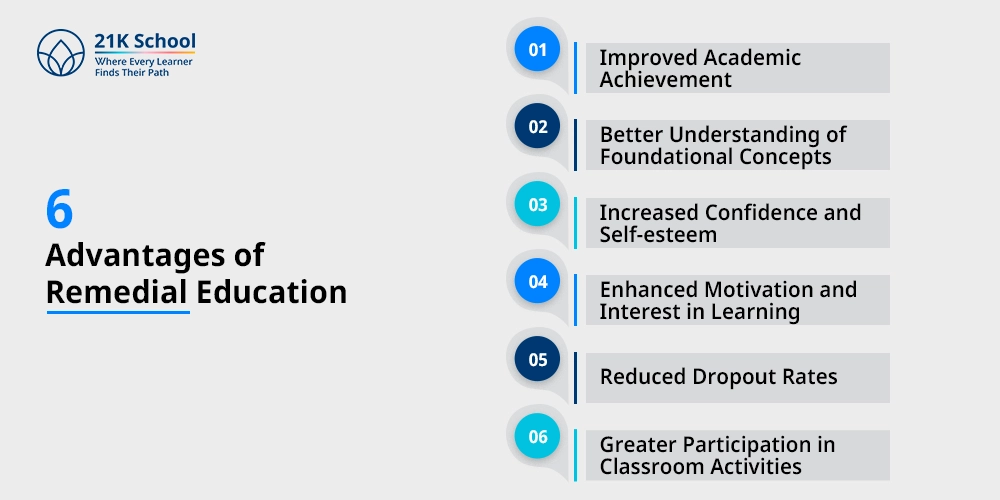
The following are the most common advantages of remedial education:
1. Improved academic achievement
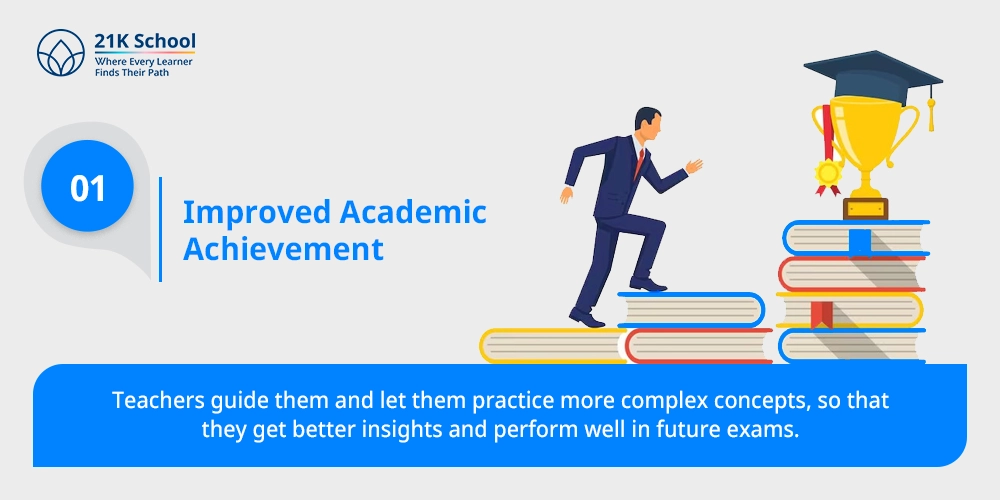
Students are motivated to boost their academic results through remedial education and assistance from teachers.
Teachers guide them and let them practice more complex concepts, so that they get better insights and perform well in future exams.
The training and individual attention make students confident as they know their weaknesses and work on it.
2. Better understanding of foundational concepts
The main focus of remedial education is to improve the basics comprising numeracy, writing, reading skills, and language.
This is because remedial education understands the importance of basic knowledge and how it shapes future learning.
A strong comprehension of basics ensures a smoother learning in their studies.
3. Increased confidence and self-esteem
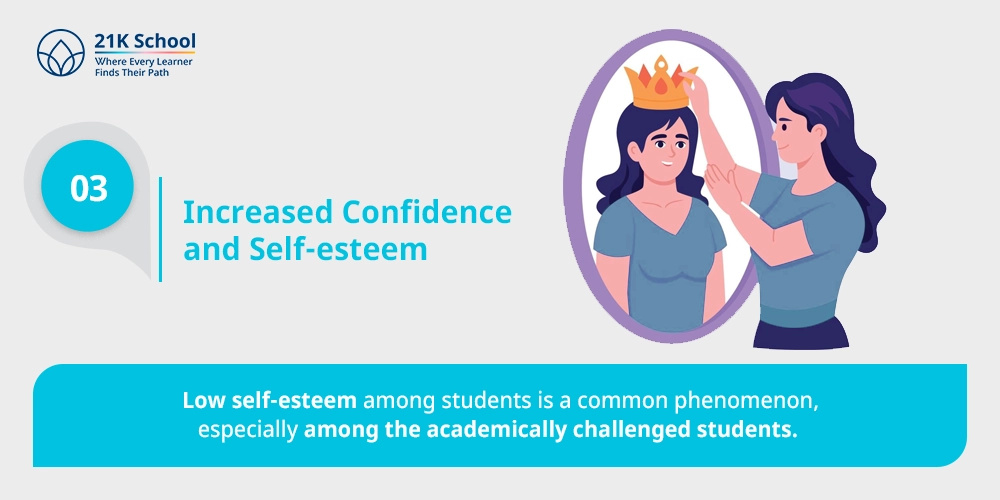
Low self-esteem among students is a common phenomenon, especially among the academically challenged students.
Remedial learning aids them to achieve success by setting attainable goals and positive reinforcement.
The better the performance of the learners, the more the learners become confident in their abilities, which lets them develop a good self-image.
4. Enhanced motivation and interest in learning
Remedial instructional techniques are formal, interactional, and participatory.
Once students start to make sense of the learning, the interest in learning increases.
This increases the level of motivation due to which attitude towards education becomes more positive.
5. Reduced dropout rates
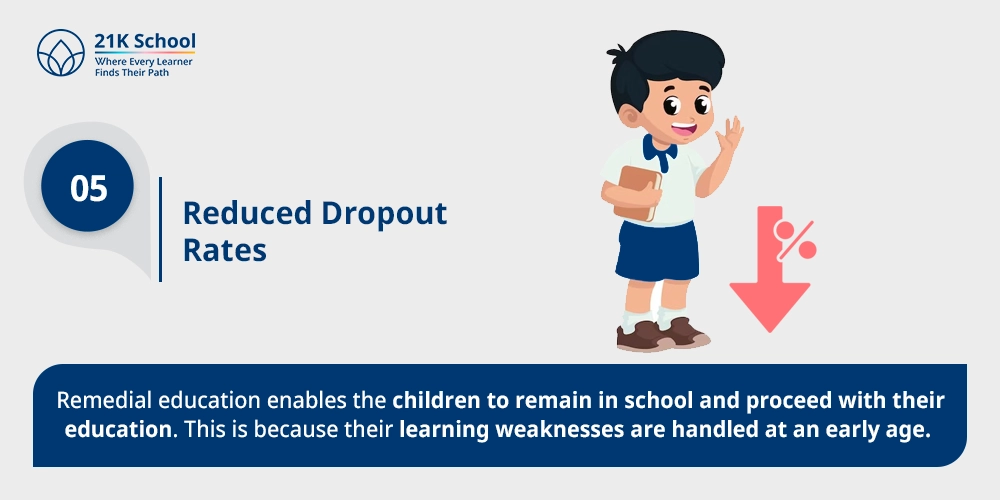
One of the reasons why students drop out from schools is academic failure.
Remedial education enables the children to remain in school and proceed with their education. This is because their learning weaknesses are handled at an early age.
This leads to improved retention and success in the long run.
6. Greater participation in classroom activities
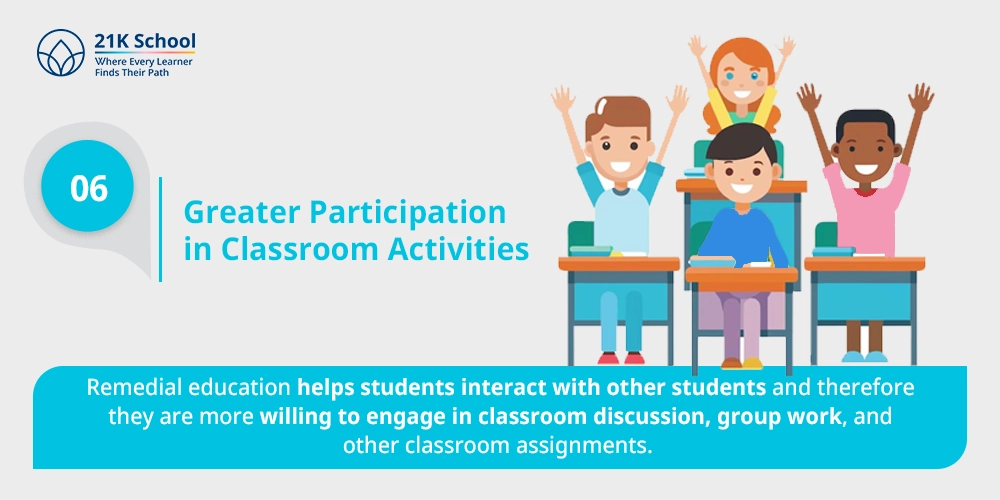
Enhanced participation leads to social interaction and team learning.
Remedial education helps students interact with other students and therefore they are more willing to engage in classroom discussion, group work, and other classroom assignments.
5 challenges in remedial education
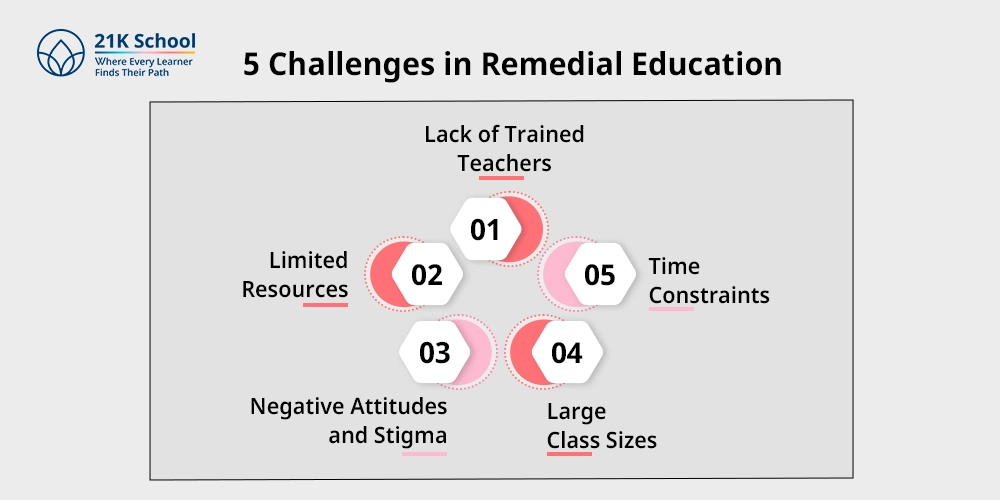
The following challenges make the implementation of remedial education difficult in regular classrooms:
1. Lack of trained teachers
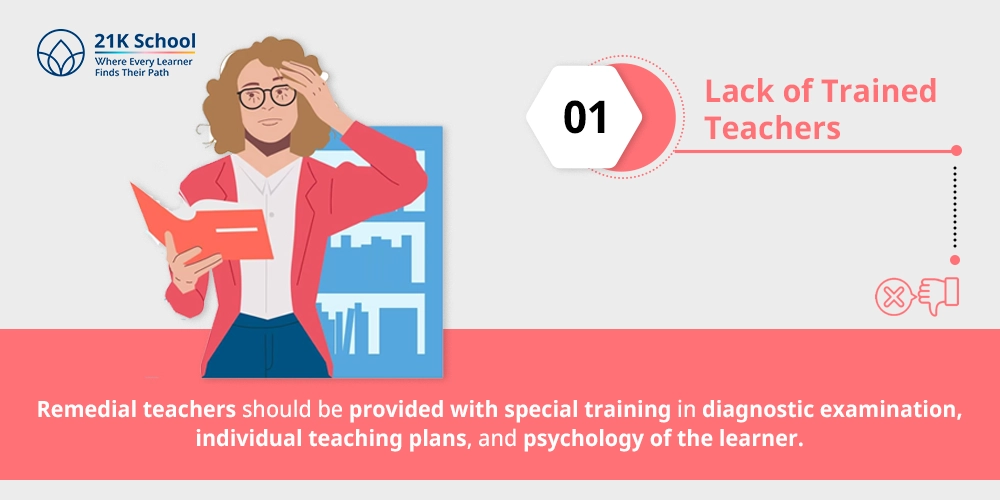
Though remedial education is beneficial to students, lack of trained teachers make it unattainable.
Remedial teachers should be provided with special training in diagnostic examination, individual teaching plans, and psychology of the learner.
These teachers should also embrace the principle of inclusive education, thus involving all students who require remedial training.
2. Time constraints
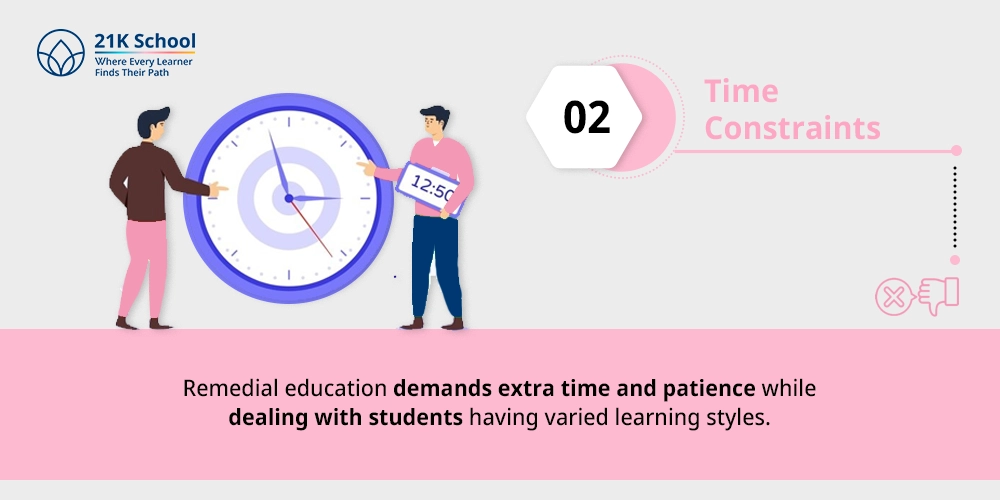
Remedial education demands extra time and patience while dealing with students having varied learning styles.
Due to strict curriculums and the pressure of completing syllabus before exams can force teachers to reduce the efficiency of lesson planning. This can affect the academic outcomes of remedial education.
3. Large class sizes
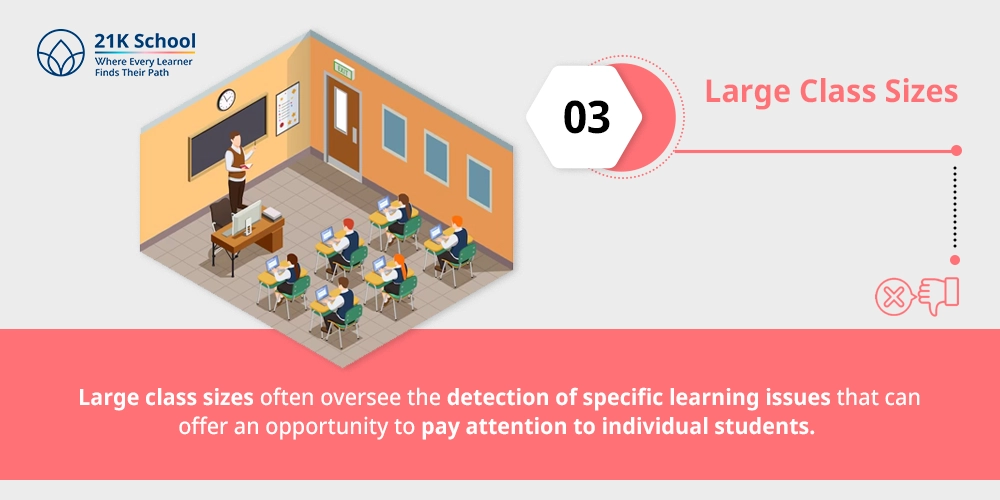
Large class sizes often oversee the detection of specific learning issues that can offer an opportunity to pay attention to individual students.
Remedial education works best in case of one-on-one interactions or small groups instruction, something that is not always possible with overcrowded classes.
4. Negative attitudes and stigma
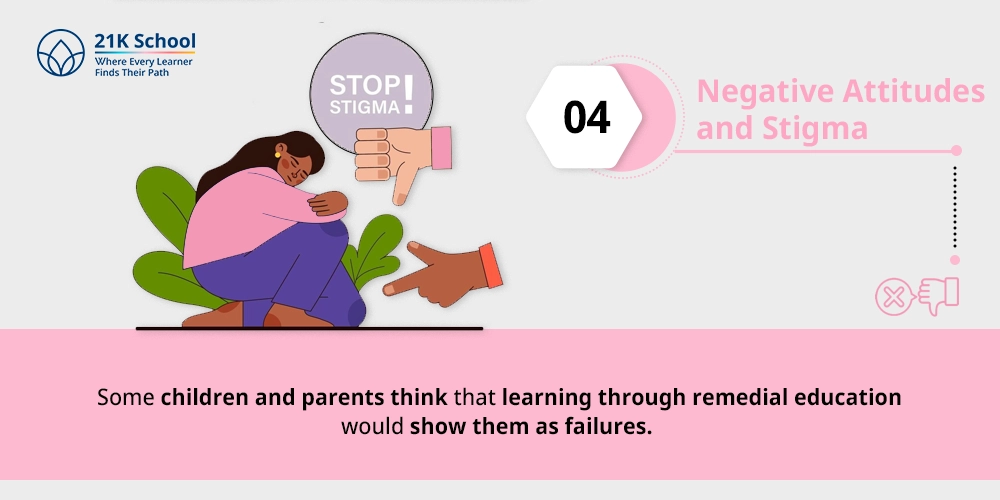
Some children and parents think that learning through remedial education would show them as failures.
Remedial education is a chance of improvement for their children and the negative stigma around these things is limiting their learning.
Parents miss to realize that remedial education is for every student who needs improvement, regardless of having learning disabilities or not.
5. Limited resources
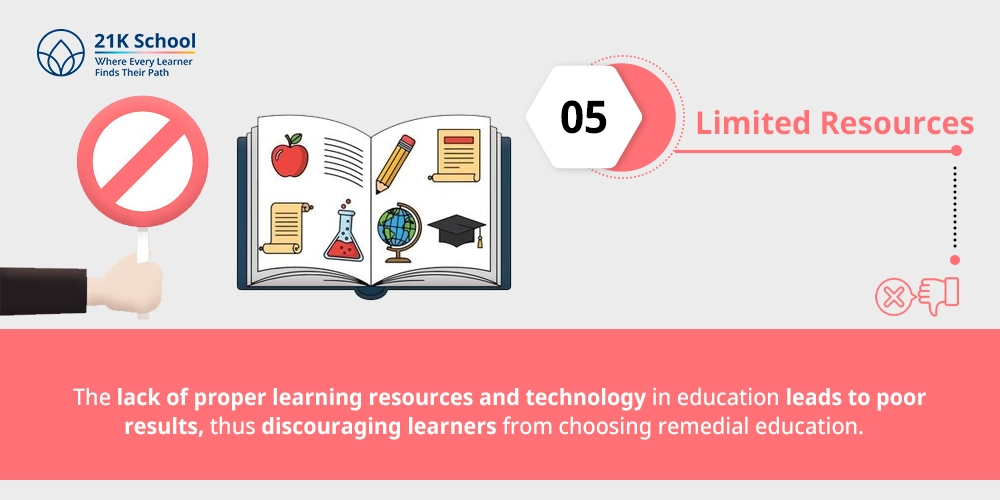
Most schools do not have sufficient teaching facilities needed to execute efficient remedial programs.
The lack of proper learning resources and technology in education leads to poor results, thus discouraging learners from choosing remedial education.
Limited funding also means reduced coverage and quality in the remedial programs.
Conclusion
Remedial education is the fundamental education that is required by learners who struggle academically.
This is an assistance program that includes additional training in basic skills including maths, writing, or reading.
It works on the principle of maintaining educational equity without distinguishing between two learners.
Remedial education can be created for any student, regardless of whether they have special needs, whereas special education is created especially for kids with disabilities and special needs. If administrators focus on professional development of teachers, provide required resources, and remove stigma around remedial education, it can benefit a large number of students.
Frequently asked questions
8 questions
What is remedial education?
Remedial education is teaching that aids the learners who need more training and assistance to pass their level of learning.
Who needs remedial education?
Students who fail in exams because of their learning gaps, lack of base skills, language barrier, less attendance, or socio-economic reasons.
Is remedial education only for slow learners?
No, remedial education does not just only apply to slow learners. It is also useful in case of underachievers, disabled learners, dropout students, and students who have temporary academic problems.
What are the main objectives of remedial education?
To reduce learning gaps, enhance academic achievement, instill confidence, decrease dropout rates, incorporate inclusion, and detect learning difficulties are the central goals of remedial education.
What are the prime topics covered in remedial education?
Remedial education commonly covers core subject areas like language, writing, spelling, mathematics, and reading.
How can you get a remedial teacher or special educator at home?
You can get a home tutor at home by contacting local home-tutor service providers, from online tuition teachers, or from specialized rehabs.
How to teach declarative knowledge?
Clear explanations, examples, repetition, visual aids, and questioning form a set of strategies that can be used to teach declarative knowledge.
What is an example of declarative knowledge in math?
An example of declarative knowledge in maths can be 10+2=12 because it is based on facts instead of processes.
About the author
Anshu Kumari
Content Specialist
Anshu Kumari is an Education Content Specialist at 21K School- a fully accredited institute- Cambridge International (IA702) and Pearson Edexcel (94883). She focuses on the in-depth research and creation of the well-drafted guides on NIOS admission, Indian Education Policy, and competitive exam preparation. With around 2 years of experience at 21K School, her psychology background informs her approach to the education content and hence focuses on creating guides to address the real anxieties of the guardians. She writes well-researched articles on competitive exam timelines, stream selection, and board choices by referring to the official resources. All Anshu’s content pieces are fact-checked against the board and primary government official resources and is dedicatedly reviewed by the school’s academic team.
Every 21K School guide is written by our education team and reviewed by a subject facilitator before publishing.
Exploring a CBSE-pathway online school?
Talk to an advisor about 2026–27 admissions — no obligation.
Talk to an advisorComments
No comments yet — be the first to share your thoughts or ask a question.