Social Emotional Learning in Early Childhood: A Guide for Parents and Educators
 Written byNaira HatkarContent Specialist
Last modified: 27 Jul 2026 9 min read
The early years of a child set the stage for how they think, feel, and engage with the world. From playtime to coping with big feelings, children begin to form emotional and social habits that will serve them throughout their lives.
Social Emotional Learning (SEL) comes into play to help young children learn life skills, get along with others, and navigate daily life. Introducing SEL in early childhood is a precious investment in long-term success and well-being.
What is Social Emotional Learning (SEL)?
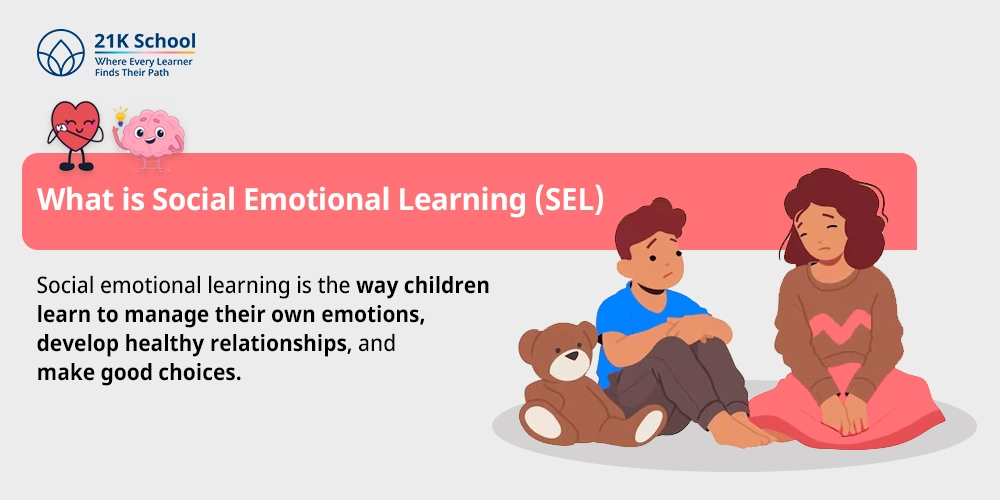
Social emotional learning is the way children learn to manage their own emotions, develop healthy relationships, and make good choices. It's not only about behaviour, but learning to develop a healthy sense of self and empathy for others.
SEL is how children learn to discuss feelings, manage frustration, listen with focus, and work together. These are learned through daily routines, guided play, literature, and positive adult relationships. It’s learning to develop both the heart and the mind.
Why social emotional learning in early childhood matters?
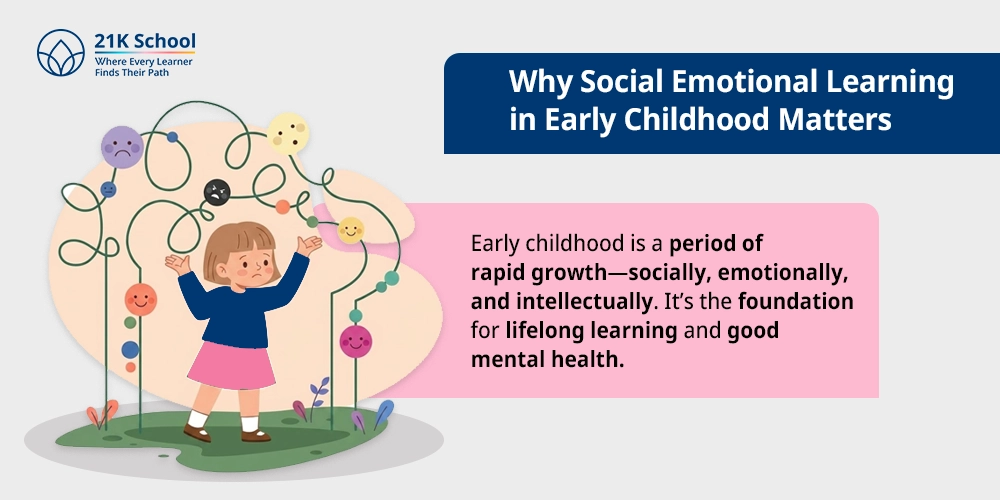
Early childhood is a period of rapid growth-socially, emotionally, and intellectually. It’s the foundation for lifelong learning and good mental health.
Teaching SEL in early childhood allows children to cope with stress, make friends, and feel secure in new situations.
Research shows that children with well-adjusted social-emotional skills are more likely to be successful academically , well-behaved in the classroom, and socially accepted in many social situations.
Read about why SEL is important for students
Early childhood milestones in social-emotional development
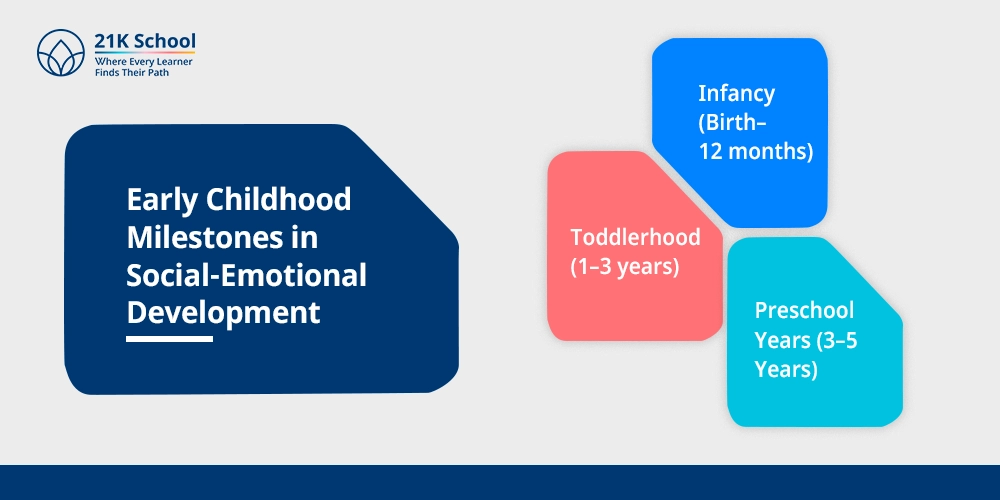
Milestones in social-emotional development during early childhood involve a child’s developing ability to experience, regulate, and express emotions, establish meaningful relationships, and explore the world.
1. Infancy (Birth-12 months)

Infants can’t speak yet, but they begin learning about emotional expression, comfort, and trust. They respond to voice tones, facial expressions, and physical touch.
Eye contact, gentle soothing, and consistent care help them feel safe. Smiling and cooing are the first signs of social contact. Secure attachment at this stage sets the emotional groundwork for relationships in the future.
2. Toddlerhood (1-3 years)

Toddlers begin to assert independence and also experience strong emotions that they don’t know how to handle. Tantrums, clinginess, and mood swings are typical.
They can differentiate between feelings of happiness, anger, and fear and can imitate the adults’ behaviours.
Toddlers can be taught to recognise their feelings, verbalise them, and start communicating words to resolve small conflicts with proper guidance.
Explore the top SEL activities for toddlers
3. Preschool years (3-5 years)

Preschoolers explore friendship, fairness, and empathy. They are more aware of rules and can articulate their feelings. They begin to ask "why" questions and use pretend play to help them learn about others' perspectives.
This is a great time to teach structured SEL activities such as role-play, group games, and discussions of right and wrong.
Core components of SEL for young children
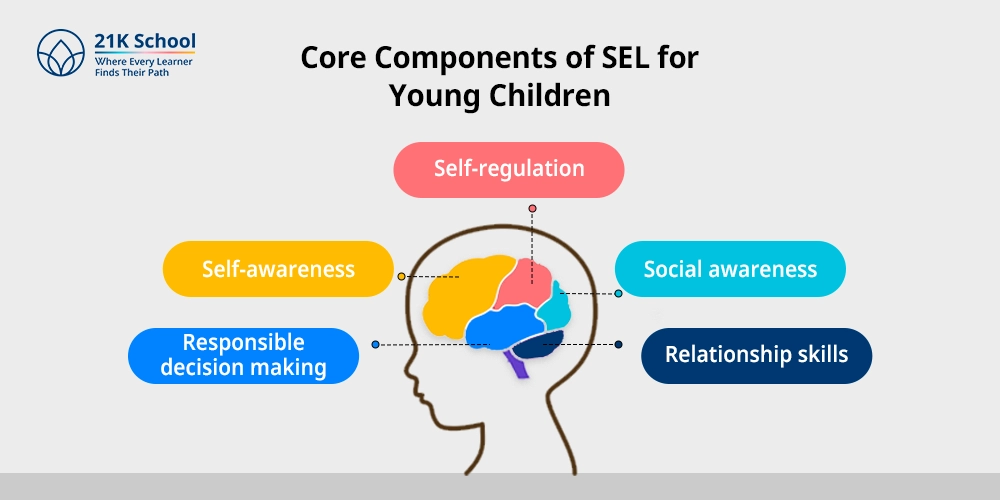
There are five pillars of SEL, which together give children the capacity to be reflective, compassionate human beings.
- Self-awareness: Awareness of feelings and how they influence behaviour.
- Self-regulation: Learning to regulate impulses, stay in control when angry, and obey rules.
- Social awareness: Recognising and appreciating others’ feelings, cultures, and beliefs.
- Relationship skills: Learning the skills
- of sharing, listening, working together, and being friends.
- Responsible decision making: Deciding based on safety, kindness, and fairness.
Here are 14 best self-awareness activities for students for you to read on.
Role of parents and caregivers in early SEL
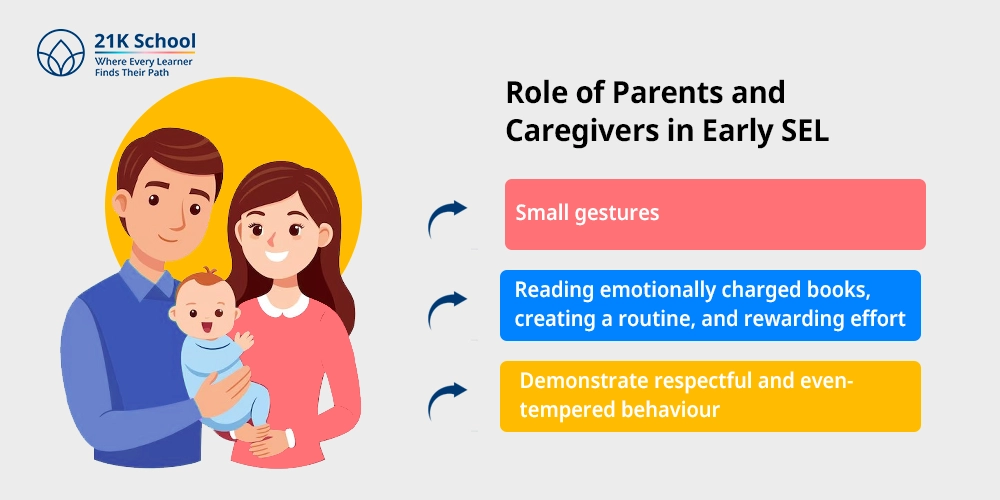
Parents and caregivers are the child’s first teachers. Their daily interactions are replete with boundless opportunities for the nurturing of social-emotional skills.
Small gestures-offering a child comfort when upset, identifying their emotions, or guiding them through conflicts-can last an entire lifetime.
Reading emotionally charged books, creating a routine, and rewarding effort over outcome all assist children in becoming emotionally resilient.
If adults demonstrate respectful and even-tempered behaviour, children will automatically begin to imitate them.
SEL activities and strategies for early learners
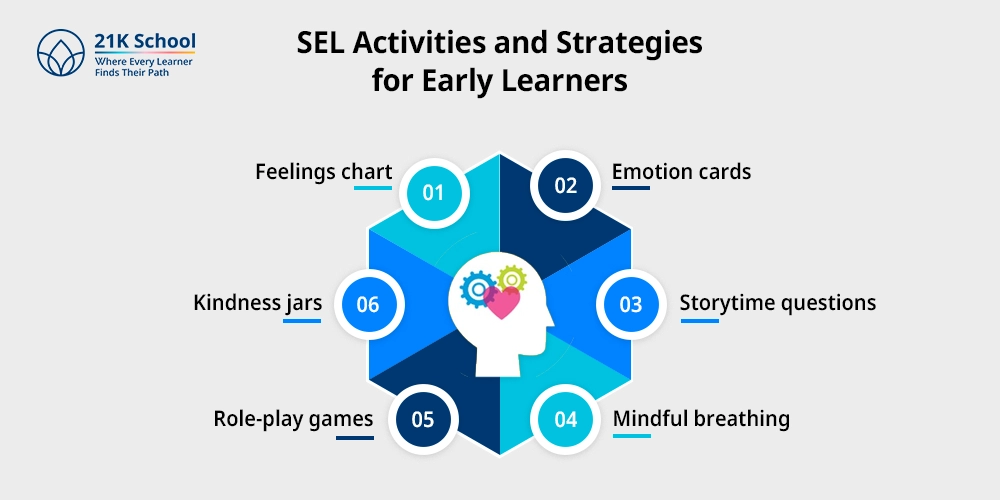
Learning SEL through fun, experiential activities is the ultimate way to promote learning. Some simple strategies include:
- Emotion cards: Use pictures of faces to ask children to identify the emotion.
- Feelings chart: Allow children to point out how they feel each morning.
- Storytime questions: Pause to ask, “How does this character feel?”
- Mindful breathing: Teach children to take deep breaths when they feel upset.
- Role-play games: Act out scenarios, i.e., asking for a turn, or saying sorry.
- Kindness jars: Each time someone performs an act of kindness, we add a bead to the jar.
Discover more engaging SEL activities here.
Also, learn more about the social emotional learning curriculum
Long-term benefits of early SEL skills
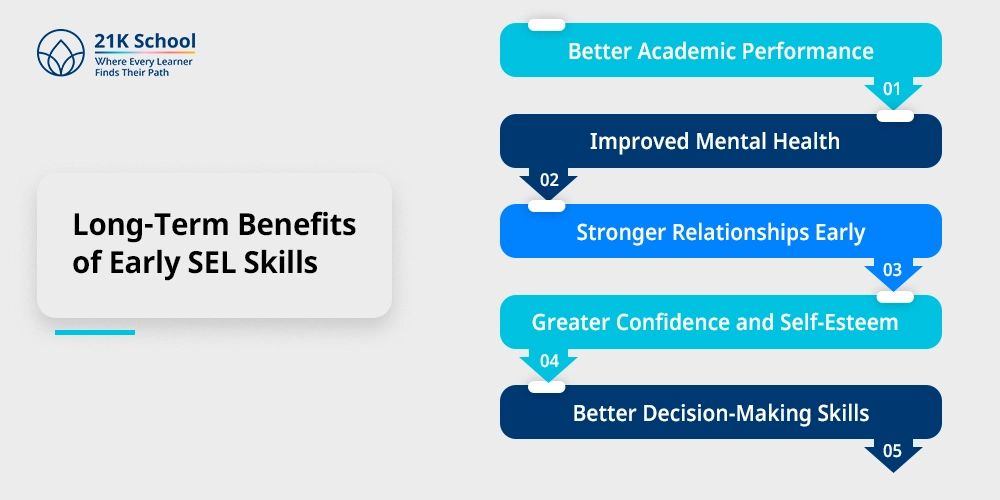
SEL in early childhood has a multitude of benefits that only get better as children grow. These benefits include:
1. Better academic performance
Children who are proficient at developing SEL skills are more engaged, motivated, and able to collaborate with peers, which contributes to learning across areas of study.
2. Improved mental health
SEL provides children with the tools to acknowledge and regulate emotions that lead to decreased feelings of anxiety and stress, as well as behavioural challenges.
3. Stronger relationships early
SEL helps to develop empathy, active listening , and collaborative learning in children that will lead to healthier relationships with friends and family members.
4. Greater confidence and self-esteem
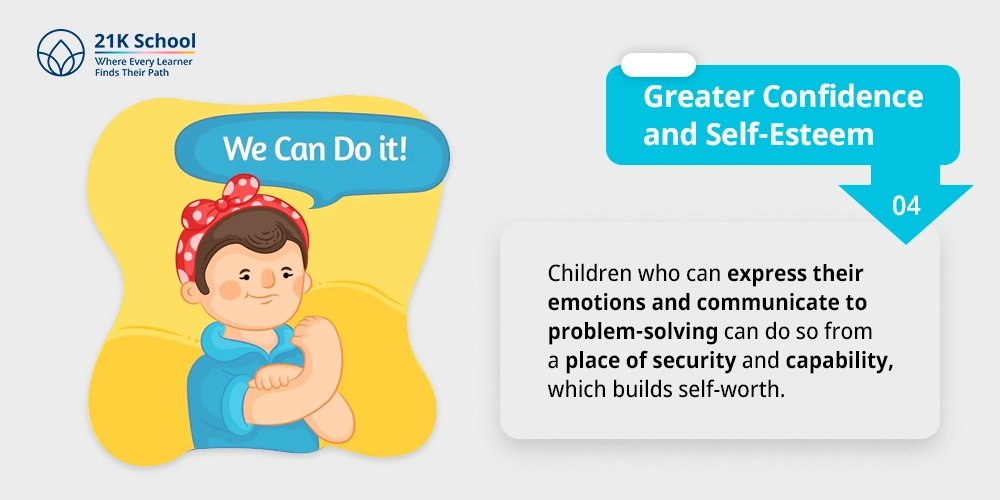
Children who can express their emotions and communicate to problem-solving can do so from a place of security and capability, which builds self-worth.
5. Better decision-making skills
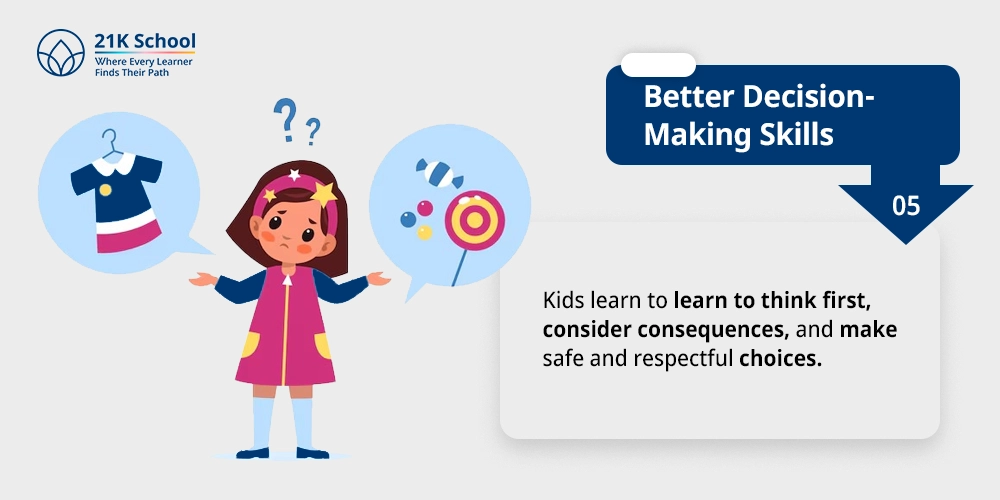
Kids learn to learn to think first, consider consequences, and make safe and respectful choices.
Challenges of implementing SEL in early childhood
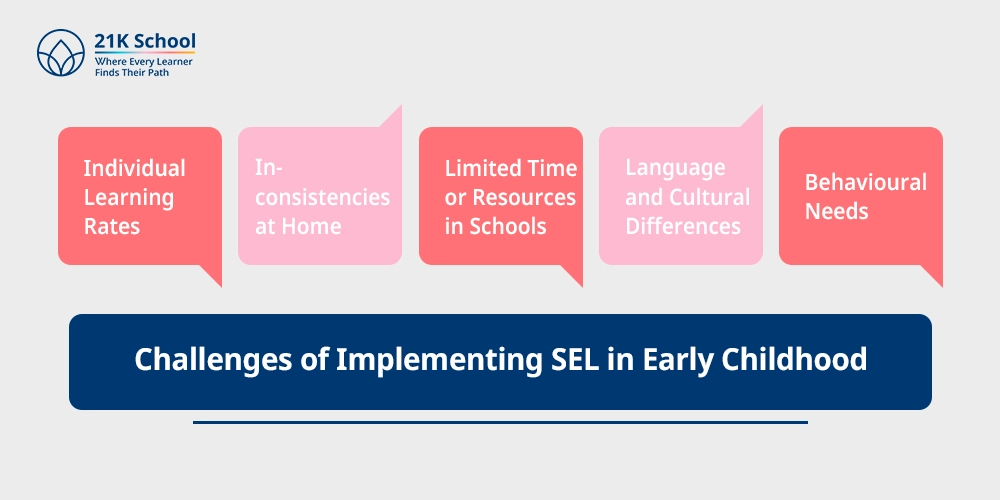
Even though SEL has many benefits , there are obstacles to teaching and implementing it well. These challenges include:
1. Individual learning rates
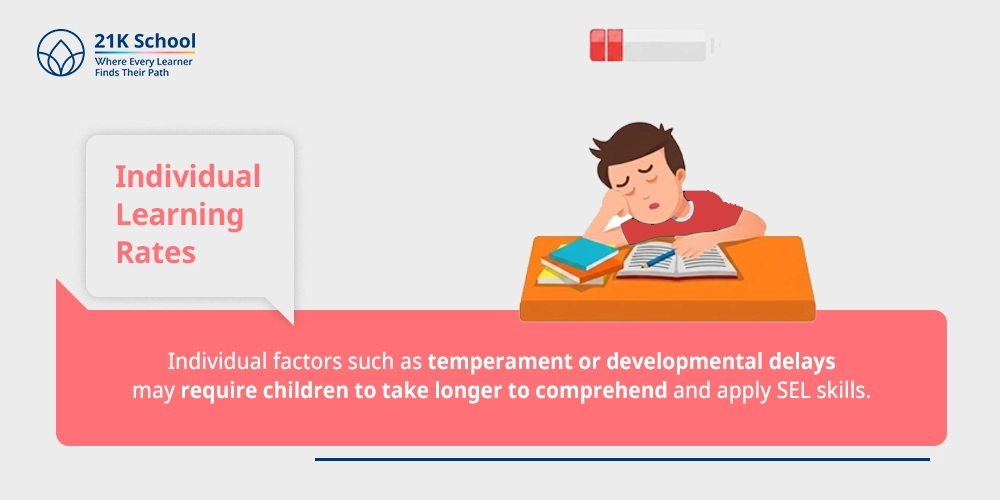
Individual factors such as temperament or developmental delays may require children to take longer to comprehend and apply SEL skills.
2. Inconsistencies at home
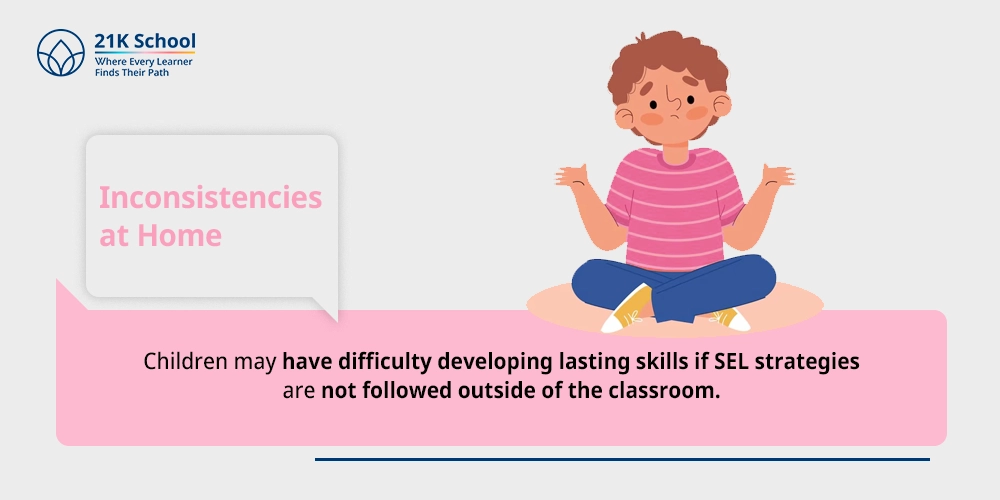
Children may have difficulty developing lasting skills if SEL strategies are not followed outside of the classroom.
3. Limited time or resources in schools
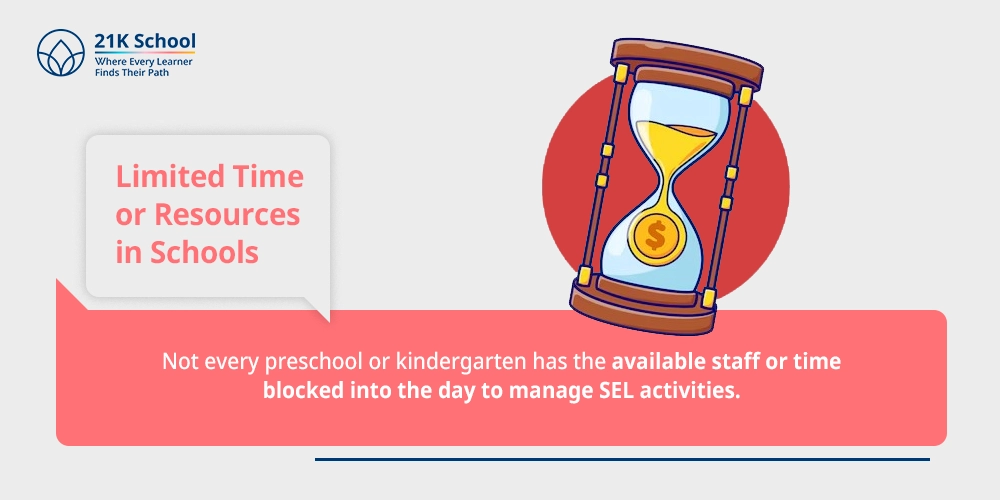
Not every preschool or kindergarten has the available staff or time blocked into the day to manage SEL activities.
4. Language and cultural differences
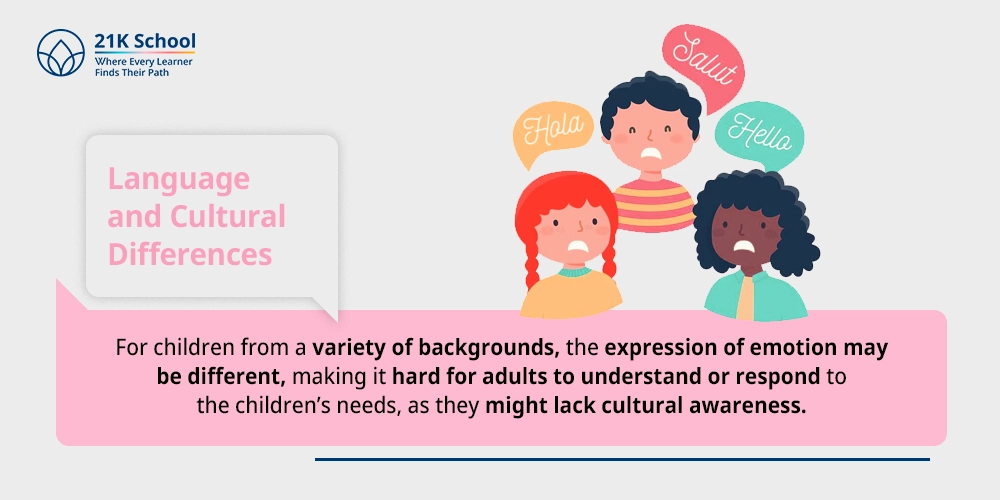
For children from a variety of backgrounds, the expression of emotion may be different, making it hard for adults to understand or respond to the children's needs, as they might lack cultural awareness .
5. Behavioural needs
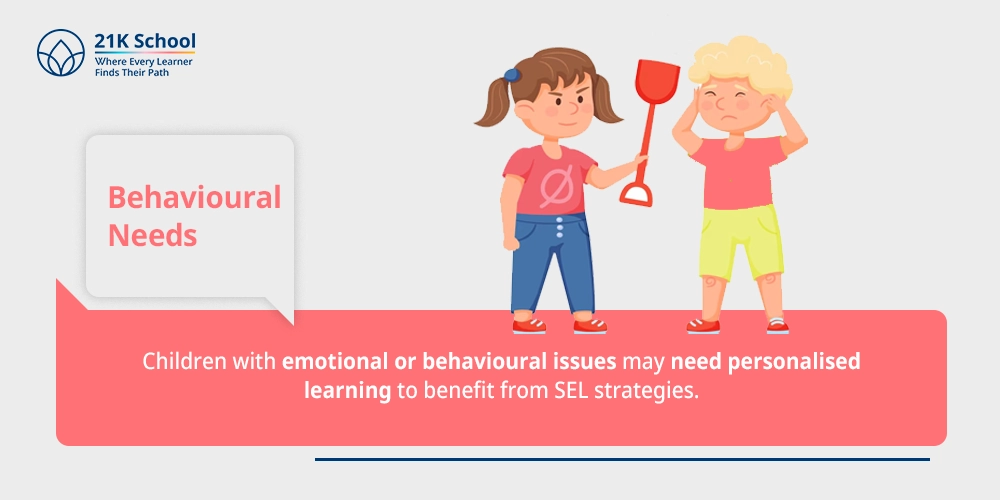
Children with emotional or behavioural issues may need personalized learning to benefit from SEL strategies.
Technology and SEL: Helpful tools for young minds
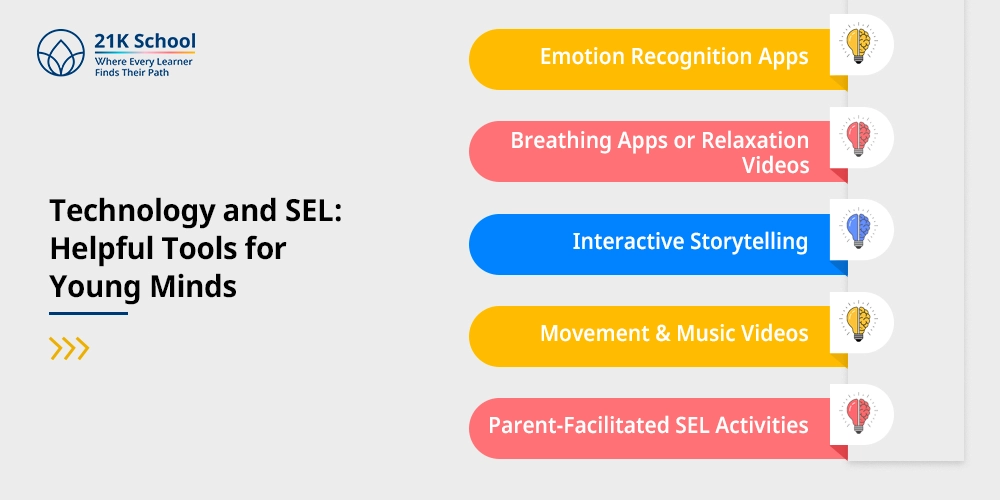
If used thoughtfully, technology can enhance some aspects of SEL learning in the early years.
1. Emotion recognition apps
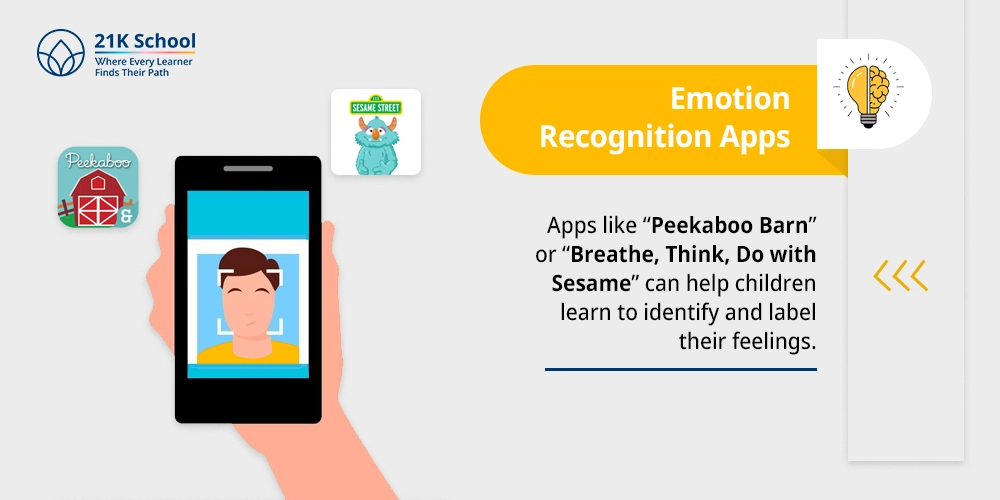
Apps like “Peekaboo Barn” or “Breathe, Think, Do with Sesame” can help children learn to identify and label their feelings.
2. Breathing apps or relaxation videos
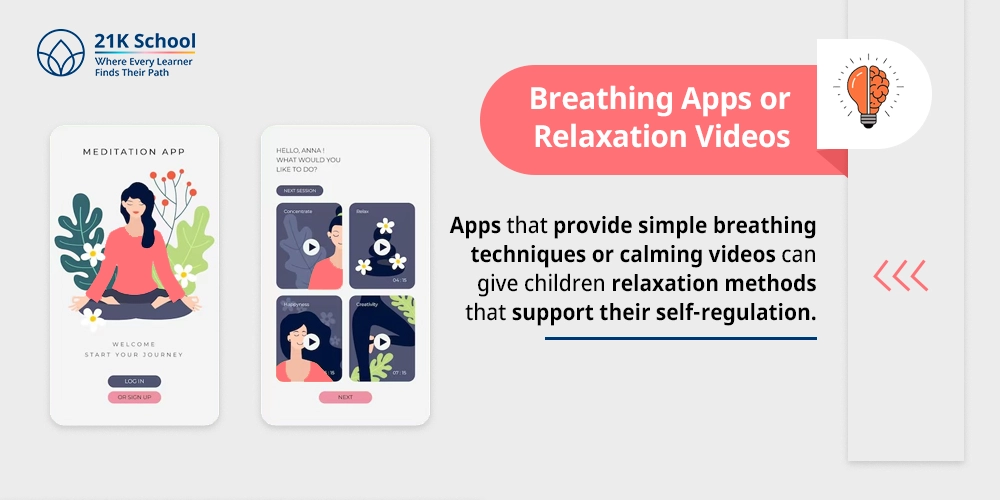
Apps that provide simple breathing techniques or calming videos can give children relaxation methods that support their self-regulation.
You should also read: Mindfulness activities for students
3. Interactive storytelling
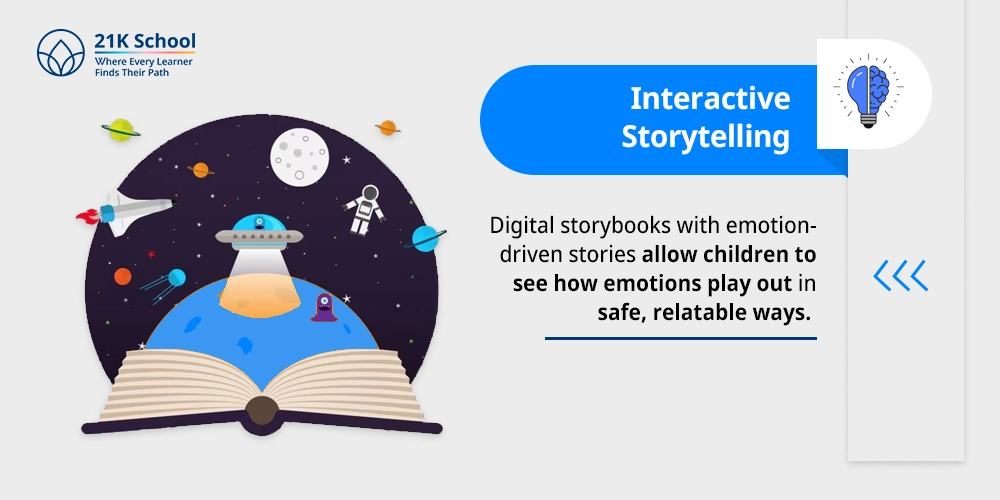
Digital storybooks with emotion-driven stories allow children to see how emotions play out in safe, relatable ways.
4. Movement & music videos
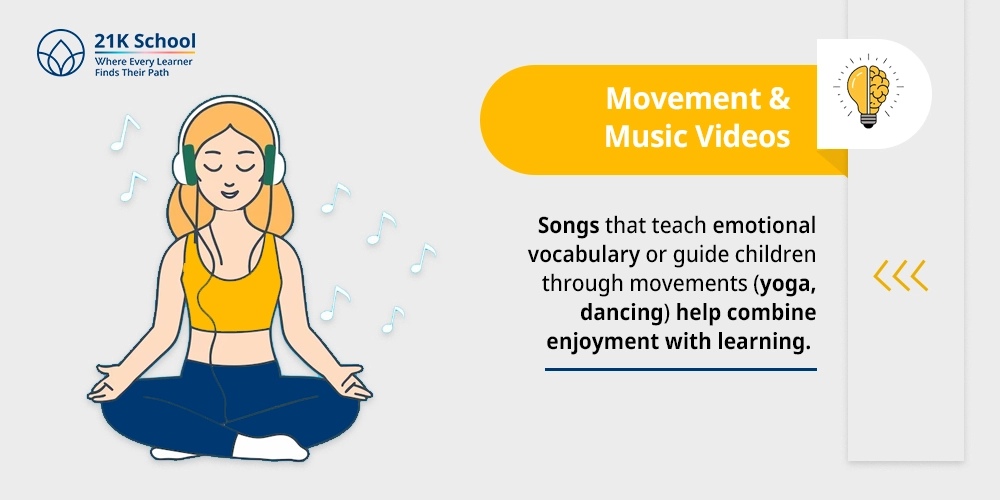
Songs that teach emotional vocabulary or guide children through movements (yoga, dancing) help combine enjoyment with learning.
5. Parent-facilitated SEL activities
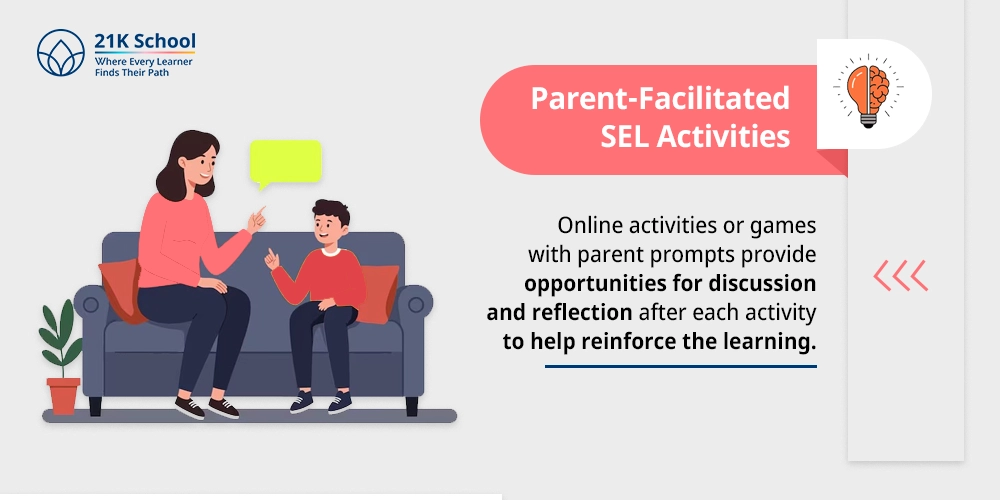
Online activities or games with parent prompts provide opportunities for discussion and reflection after each activity to help reinforce the learning.
Final thoughts: Building strong emotional foundations early
SEL in the early years goes beyond being a classroom tool; it is also a life skill.
Children who learn how to recognise and manage their feelings, build relationships with others, and thoughtfully make choices across a variety of contexts will be ready for the future.
When adults model and support children's SEL learning at home and in educational settings, they enable children to develop strong social-emotional foundations and to practice learning, social connection, and lifelong happiness.
Investing in supporting these skills early on is one of the most worthwhile things we can do to help all children flourish.
Frequently asked questions
5 questions
What are the key benefits of SEL in early childhood?
SEL helps children identify and manage their emotions, support healthy relationships, and help them make good decisions. It makes children more focused on their learning, can minimise behaviour issues, and sets the stage for children's success later in life.
How can parents teach social-emotional skills at home?
Parents can help identify emotions, read stories that demonstrate empathy and perspective taking, practice routines, and use positive modelling with their child.
What are some fun SEL activities for preschoolers?
Fun activities like emotion matching games, role-play scenarios, feeling charts, weekly kindness jar, and storytime group discussions are all great ways to support preschoolers' learning social-emotional skills, all while having fun.
Why is emotional regulation important for young children?
Emotional regulation is important in early childhood because it helps children stay calm, allows them to articulate their feelings more clearly, and helps kids cope with stress.
How can teachers include SEL in classrooms?
Early childhood educators can incorporate SEL through a variety of group activities, stories, routines, or just having a calm-down space. Teachers can also model positive behaviour, which teaches children about being positive, kind, and respectful members of the classroom.
About the author
Naira Hatkar
Content Specialist
Naira Hatkar is a second-year media student with three years of writing experience. She is currently working as a content writing intern at 21K School, where she continues to develop her skills in creating engaging and informative content. In her free time, she enjoys baking and watching movies.
Every 21K School guide is written by our education team and reviewed by a subject facilitator before publishing.
Exploring a CBSE-pathway online school?
Talk to an advisor about 2026–27 admissions — no obligation.
Talk to an advisorComments
No comments yet — be the first to share your thoughts or ask a question.