



Robotics + design
Builder work may use Avishkaar, Arduino Nano and Arduino Uno for mobile robots, obstacle avoidance, line following, traffic systems, Bluetooth control and robotic grippers. Blender supports more independent 3D modelling.
Older learners can deepen one pathway or combine several disciplines in work that requires planning, testing, judgement and presentation.
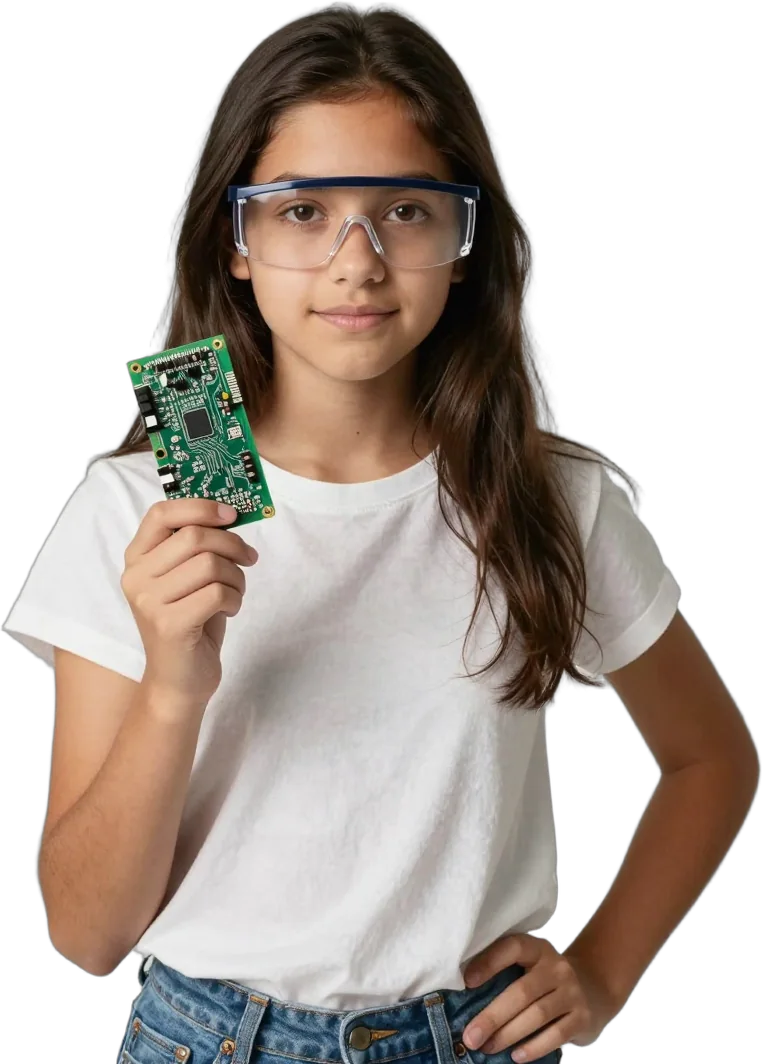
The starting level reflects prior understanding, not age alone.
A learner can enter Starter without previous coding, robotics or electronics experience. Those with relevant exposure may begin at Explorer or Builder after the Garage team reviews their interests and knowledge. Age 12 appears in the adjacent browsing group so the recommendation can reflect actual readiness.
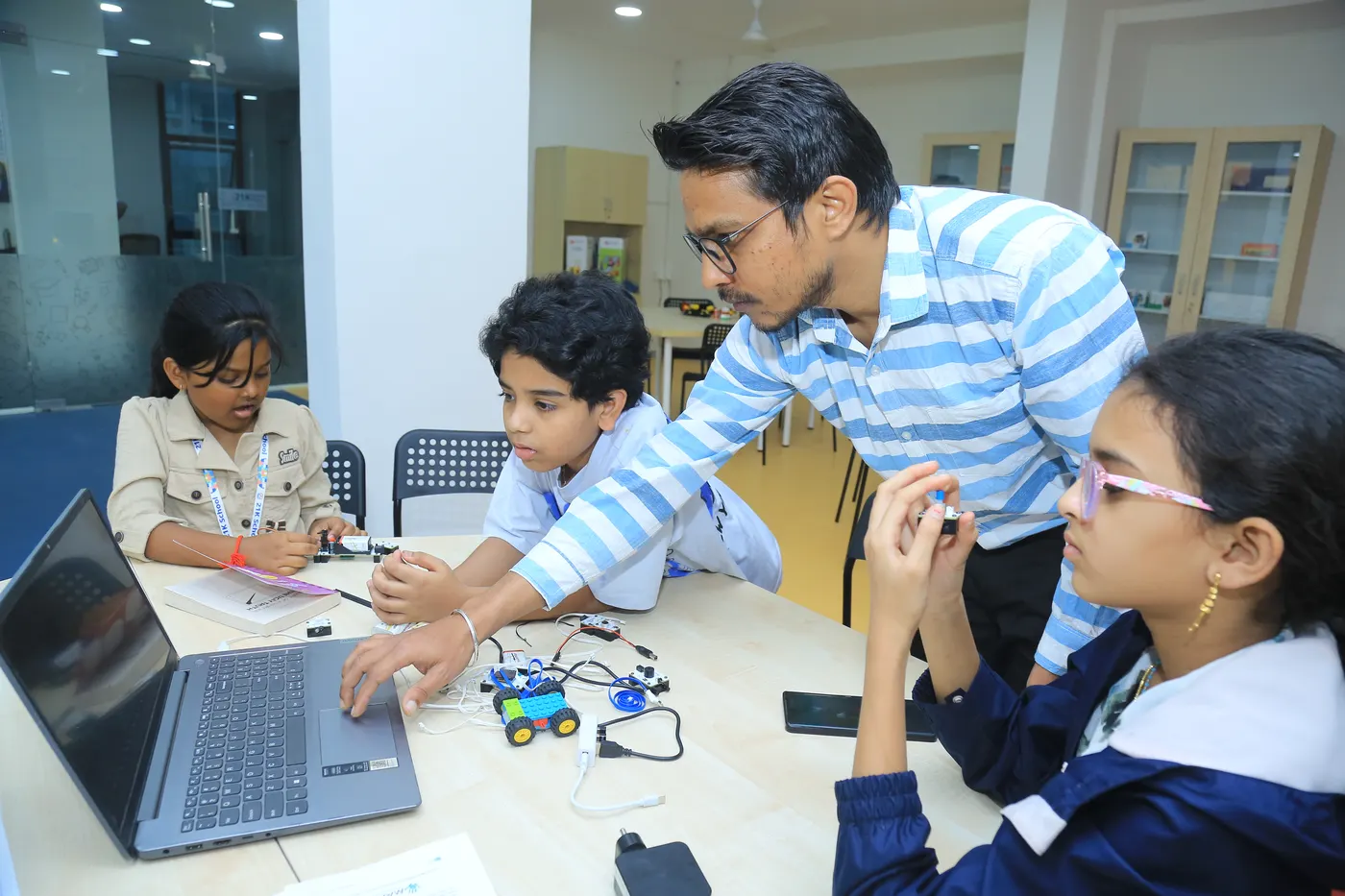
Older learners can develop deeper technical fluency without being limited to one subject.
Builder work may use Avishkaar, Arduino Nano and Arduino Uno for mobile robots, obstacle avoidance, line following, traffic systems, Bluetooth control and robotic grippers. Blender supports more independent 3D modelling.
Learners can progress through advanced HTML and CSS, Python, object-oriented concepts, GDevelop and Pygame. The focus moves from completing an exercise to designing and debugging a functional project.
Advanced work may include Arduino systems, soldering, zero-PCB boards and PCB design in KiCad. A recommended minimum age of 13 applies to soldering and PCB work, alongside a readiness check and facilitator supervision.
Projects may combine Thunkable applications, Teachable Machine, Edublocks, Avishkaar and Cretile in smart-home, security, parking, feeder or automation systems. Responsible use remains part of the pathway.
Advanced learners can define a problem, research and plan the approach, build, code, test, debug, improve and present an original project.
Learners own more decisions while instructors retain responsibility for safety and appropriate tool access.
Electrical work, soldering, cutting, fabrication and 3D printing remain facilitator-operated or supervised. The instructor also checks whether a project can be completed with the available time, tools and materials.
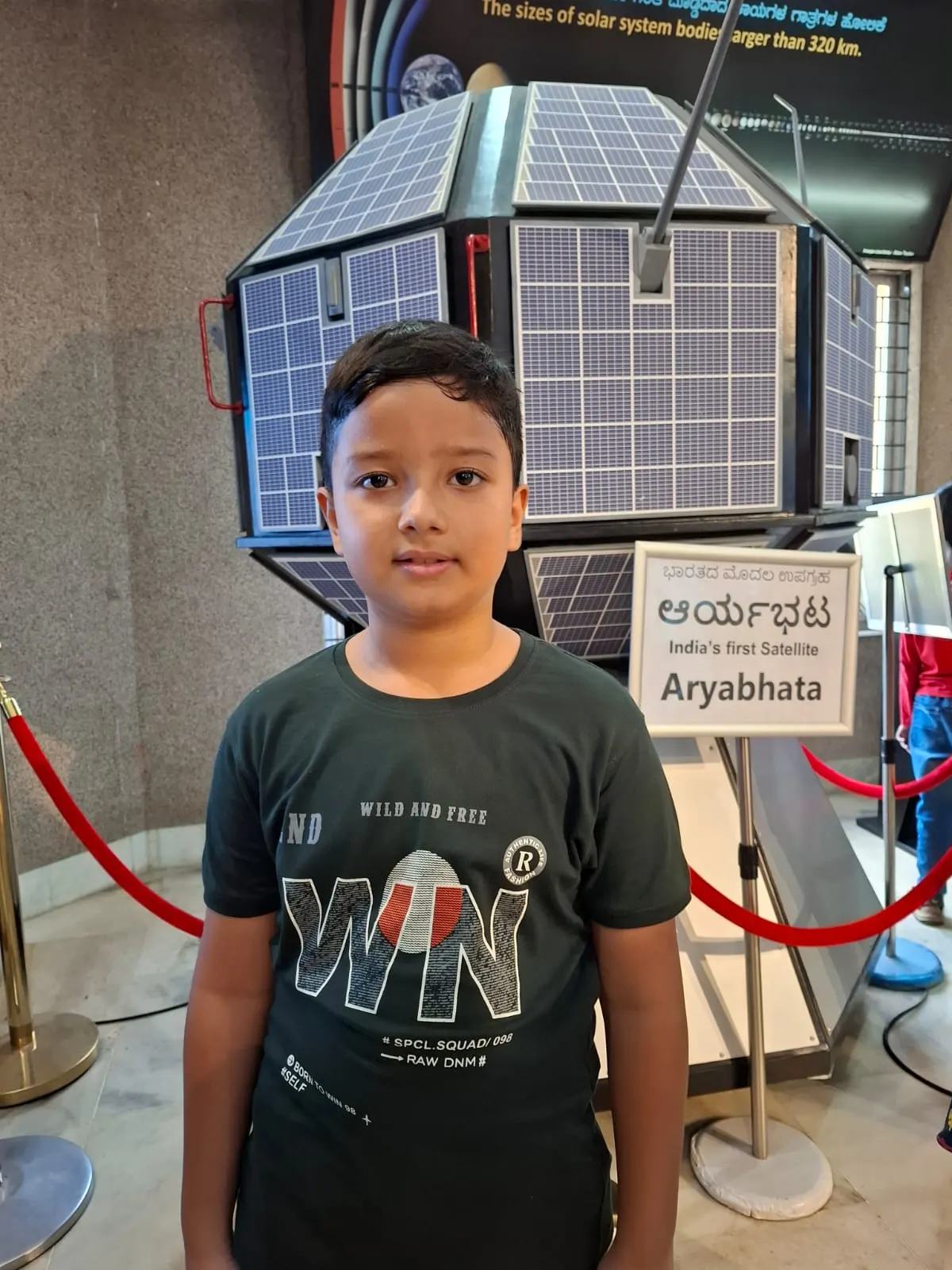
Documentation, eligible digital files, photographs with consent and presentations can record what the learner actually built.
Certificates are issued by 21K Learning Garage after the applicable sessions and project presentation. They record Garage completion and the demonstrated level; they are not positioned as an external academic qualification.
Direct answers to common questions before you book.
Yes. Starter provides the foundations, and the eligibility conversation identifies a suitable pathway and project.
Project files, documentation and presentations can demonstrate the learner’s work. The family should present the certificate as evidence of Learning Garage completion, not as an externally awarded qualification.
Advanced Electronics work such as soldering and PCB design has a recommended minimum age of 13 and also requires a readiness check.
Yes, when the learner has the required foundations and the proposed scope is safe, practical and achievable.
Explore the five By interest pages, or book a session to discuss an advanced pathway or Capstone.
Cookies on 21K School
Essential cookies keep the site working. With your OK we also use analytics and marketing cookies. Privacy policy · Cookie policy