
Inside a Balanced and Structured School Day at 21K
Live classes, independent learning, and flexibility built around your child
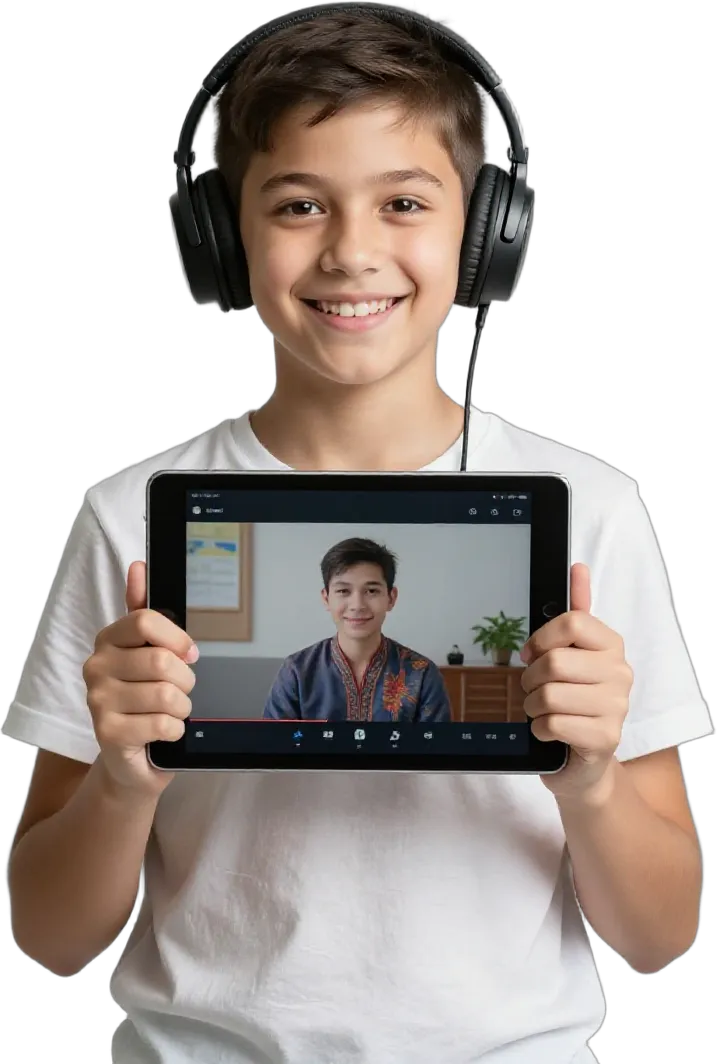



A school day should have structure without making every learner live the same day. At 21K School, live classes, independent work, activities, movement, conversations and feedback come together in a rhythm appropriate to the learner’s age and pathway.
Live classes run Monday to Friday: one hour for Nursery, two hours for KG, about three hours for Primary and four hours for Middle School. Our teachers, whom we call facilitators, follow subject-based timetables across broader operating windows.
Active live classes: The anchor of the learning day
Live online classes offering structured learning and balanced screentime
Learners meet their facilitators and classmates in scheduled live classes from Monday to Friday. Lessons include explanation, questioning, discussion, guided practice, collaboration and opportunities to apply learning.
We’ve successfully conducted 137,200 hours of live online teaching in the academic year 2025–26. The remainder of learning happens through reading, writing, practice, projects, assignments, reflection and exploration away from the live screen.

Customised daily schedules based on learner’s age
From one hour in nursery to subject timetables in senior school
21K School’s day supports every stage of your child’s growth. Here is a quick glance at our daily schedules:
| Stage | Live Hours a Day | Timing Options | Class Size |
|---|---|---|---|
| Preschool | Nursery: 1 hour · KG1 & KG2: 2 hours | 4 batches: Morning, Mid-Morning, Afternoon, Evening | Up to 15 learners |
| Primary School | About 3 hours | 4 batches: Morning, Mid-Morning, Afternoon, Evening | Class of 24 · Class of 20 |
| Middle School | 4 hours | 4 batches: Morning, Mid-Morning, Afternoon, Evening | Class of 24 · Class of 20 |
| High School | Full school day (8 hours) with breaks | 4 batches: Morning, Mid-Morning, Afternoon, Evening | Based on the subject selection |
- Stage
- Preschool
- Live Hours a Day
- Nursery: 1 hour · KG1 & KG2: 2 hours
- Timing Options
- 4 batches: Morning, Mid-Morning, Afternoon, Evening
- Class Size
- Up to 15 learners
- Stage
- Primary School
- Live Hours a Day
- About 3 hours
- Timing Options
- 4 batches: Morning, Mid-Morning, Afternoon, Evening
- Class Size
- Class of 24 · Class of 20
- Stage
- Middle School
- Live Hours a Day
- 4 hours
- Timing Options
- 4 batches: Morning, Mid-Morning, Afternoon, Evening
- Class Size
- Class of 24 · Class of 20
- Stage
- High School
- Live Hours a Day
- Full school day (8 hours) with breaks
- Timing Options
- 4 batches: Morning, Mid-Morning, Afternoon, Evening
- Class Size
- Based on the subject selection
Preschool
Nursery learners attend one hour of live classes a day. KG1 and KG2 learners attend two hours. Sessions use stories, songs, movement, music, show-and-tell, conversation and hands-on activities. A learning coach stays with your child throughout the live class, which can be a parent, guardian, or any other adult individual.
Primary school
Primary learners attend approximately three hours of live classes. Their day combines core subjects, languages, interaction, movement and age-appropriate independent work.
Middle school
Middle School learners attend approximately four hours of live classes. They work with subject specialists, participate in projects and begin taking greater responsibility for assignments and study.
Senior school
Senior School does not follow one continuous block. Classes are scheduled by subject across two operating windows: 9:30 a.m. to 5:40 p.m. IST and 11:10 a.m. to 7:20 p.m. IST. Learners attend only the sessions assigned to their chosen subjects.
21K’s live class: Beyond lectures and classrooms
Interactive and collaborative learning with practice and feedback in one lesson
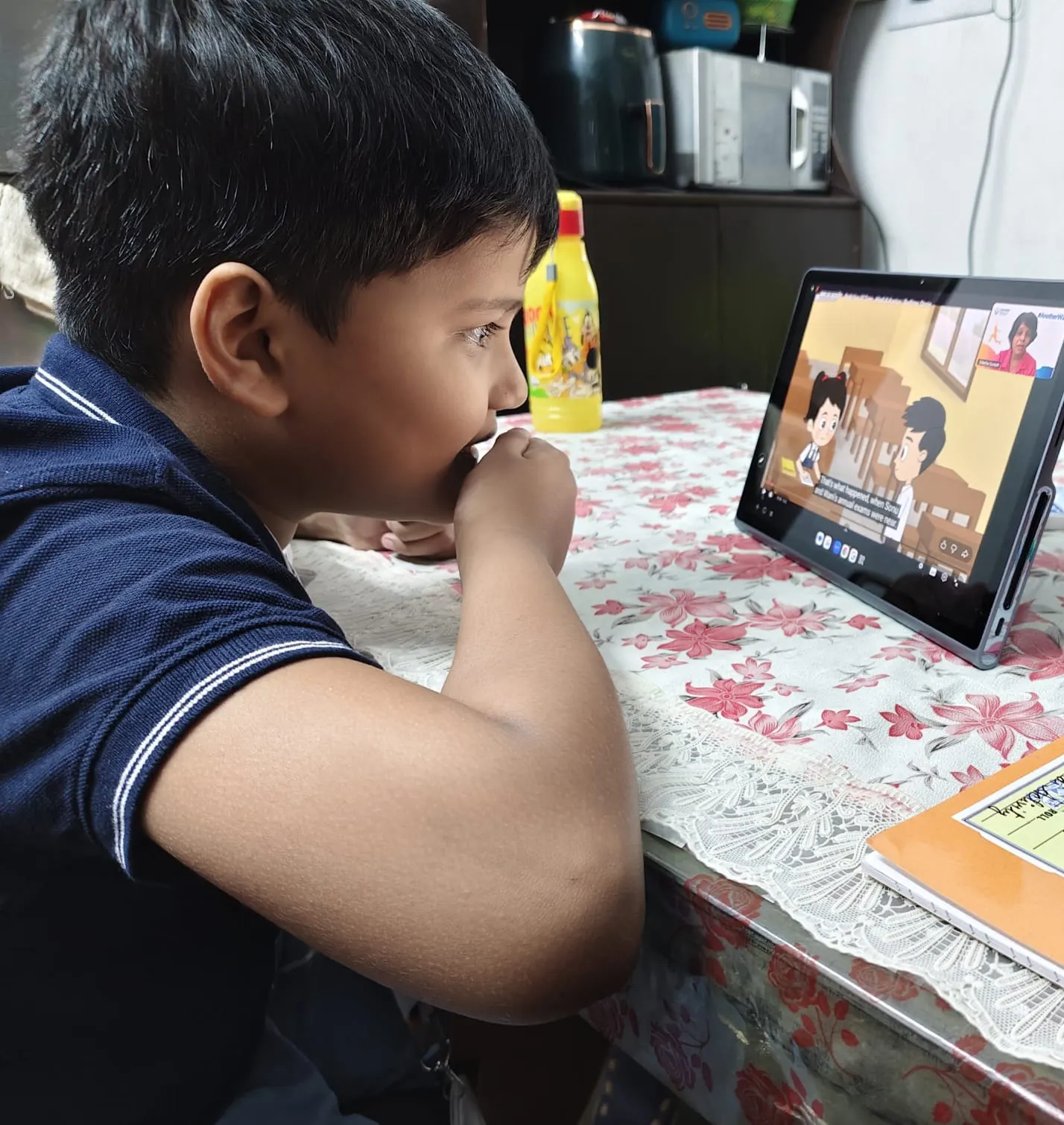
A live lesson may begin with a question, demonstration or real-world problem. Facilitators build understanding through explanation and dialogue, check learning through questions and tasks, and give learners opportunities to practise, collaborate or present.
| During the class | What your child experiences | Why it matters |
|---|---|---|
| Connect & recall | The facilitator may begin with a question, prompt or quick retrieval activity that connects to earlier learning. | Helps learners activate prior knowledge and see connections between ideas. |
| Explore the idea | Learners encounter a concept through questions, examples, demonstrations, stories, problems or other age-appropriate experiences. | Encourages curiosity before moving towards explanation. |
| Think & discuss | Learners answer questions, explain their reasoning, listen to peers and consider different approaches. | Makes thinking visible and develops communication and reasoning. |
| Learn with guidance | The facilitator explains, models and clarifies concepts, responding to what learners are showing during the lesson. | Gives learners expert support when they need it. |
| Apply the learning | Learners may solve a problem, analyse information, write, investigate, create or complete a quiz. | Moves learning from understanding an idea to being able to use it. |
| Collaborate | Where appropriate, learners discuss, solve or create with classmates. | Develops listening, perspective-taking and the ability to work with others. |
| Receive feedback | Facilitators question, clarify misconceptions and give feedback during the learning process. | Helps learners understand what is working and what to improve next. |
| Reflect & close | A class may end with a reflection, recap, exit question or next step. | Helps learners recognise what they have understood and what still needs attention. |
- During the class
- Connect & recall
- What your child experiences
- The facilitator may begin with a question, prompt or quick retrieval activity that connects to earlier learning.
- Why it matters
- Helps learners activate prior knowledge and see connections between ideas.
- During the class
- Explore the idea
- What your child experiences
- Learners encounter a concept through questions, examples, demonstrations, stories, problems or other age-appropriate experiences.
- Why it matters
- Encourages curiosity before moving towards explanation.
- During the class
- Think & discuss
- What your child experiences
- Learners answer questions, explain their reasoning, listen to peers and consider different approaches.
- Why it matters
- Makes thinking visible and develops communication and reasoning.
- During the class
- Learn with guidance
- What your child experiences
- The facilitator explains, models and clarifies concepts, responding to what learners are showing during the lesson.
- Why it matters
- Gives learners expert support when they need it.
- During the class
- Apply the learning
- What your child experiences
- Learners may solve a problem, analyse information, write, investigate, create or complete a quiz.
- Why it matters
- Moves learning from understanding an idea to being able to use it.
- During the class
- Collaborate
- What your child experiences
- Where appropriate, learners discuss, solve or create with classmates.
- Why it matters
- Develops listening, perspective-taking and the ability to work with others.
- During the class
- Receive feedback
- What your child experiences
- Facilitators question, clarify misconceptions and give feedback during the learning process.
- Why it matters
- Helps learners understand what is working and what to improve next.
- During the class
- Reflect & close
- What your child experiences
- A class may end with a reflection, recap, exit question or next step.
- Why it matters
- Helps learners recognise what they have understood and what still needs attention.
Want to see a live class before you decide? Ask us for a sample lesson.
Healthy breaks, movement, and balancing the screen-time
We balance classes and breaks for healthy online learning
Online learning is not designed as uninterrupted screen time. Younger learners experience movement and activity within sessions. Older learners have breaks between classes and complete substantial work away from live lessons.
The quality of screen time matters as much as duration. Conversation, problem-solving, creation and collaboration use the screen as a doorway to learning: not as a substitute for thinking or doing.
Learning beyond scheduled classes
Assignments and extracurriculars extends the learning day
Assignments, projects, independent reading, revision and practice consolidate what was taught live. Assemblies, clubs, celebrations, competitions, leadership opportunities and selected events extend the school experience. Learners receive 1 - 2 independent working assignments per day, based on subject requirements and practice needed.
Preparing your space for online learning
A learning coach for preschoolers, internet, device for live classes, and a quiet space
Learners need a suitable device, reliable internet, basic learning materials and a quiet space. Younger children require a Learning Coach. Older learners need increasing independence, while parents remain informed through reports and school communication.
Not sure your home set-up is ready? Get a quick checklist for your child’s grade.
Questions parents ask about the school day
Does my child sit online all day?
No, your child never sits online all day. Live classes are scheduled for defined periods, with breaks and independent work away from the live classroom. None of our live classes last more than one to four hours daily, depending on the learner’s stage.
Can we choose a class timing?
Yes, you can choose the suitable class timing based on the learner and your schedule. The availability of the different class timings depends on the selected grade and pathway of your learners. The allocation of the class timing is subject to the availability.
Are classes recorded?
Yes, all our classes are recorded to ensure dedicated learning support in revision and continuity to every learner, even when the class is over. Class recordings help our learners to revisit a lesson or catch up quickly. The access to our class recordings is based on the school’s recording and attendance policy.
Is attendance compulsory?
Yes, regular attendance is compulsory at 21K School. The minimum percentage attendance depends on the learner’s grade and pathway. Our class recordings support learning continuity but never replaces active class participation, discussion, and feedback. We expect every learner to maintain a minimum threshold 75% attendance through the year, unless discussed and approved by the academic leadership team.
Find a school day that complements your schedule
Talk to us about class timings and extracurriculars
A predictable learning rhythm can coexist with sport, travel, health needs, creative work and family priorities. Speak with us to understand the timing that fits your child.