


In today’s world, education is no longer limited to textbooks. Many educational methods have emerged that allow students to develop themselves in their own way; activity-based learning is one of them.
Activity-based learning is a popular learning technique through which learners participate and strengthen their knowledge.
To know more about activity-based learning, let’s go through a detailed guide.
Contents
What is Activity-Based Learning (ABL)?
Activity-based learning is a popular educational method designed for learners.
In this method, students are taught through various activities.
Schools must include this method in the curriculum. It aims to teach through projects, experiments, and various games.
This improves:
- Problem-solving skills
- Hands-on learning approach
- Knowledge retention
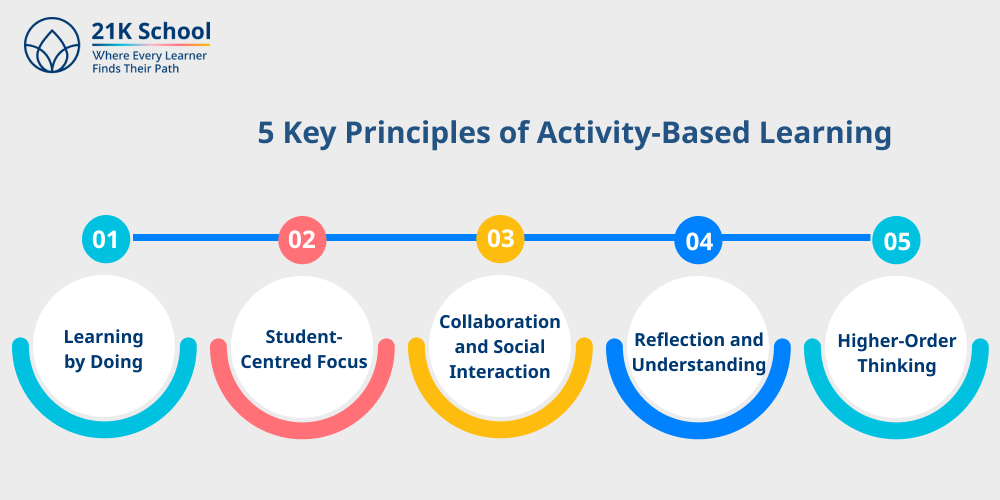
5 Key Principles of Activity-Based Learning
In this educational method, students also have to work in different groups, thus becoming familiar with teamwork.
Several important principles are discussed below.
1. Learning by Doing

Learning by doing simply means acquiring knowledge through hands-on experience.
This learning method teaches students to learn independently. Students acquire this knowledge in their own way.
Hands-on learning results in learners developing an in-depth understanding of the subject.
2. Student-Centred Focus
This education system is student-centred and controlled by the students themselves.
Here, students acquire education according to their own wishes and preferences. The role of the teachers is simply to guide the students. This education system teaches students flexibility.
3. Collaboration and Social Interaction
In this education system, students are formed into groups to make various choices. The students then fulfil their responsibilities within those groups. Here, students gain knowledge about teamwork.
Each student must rely on everyone else’s opinions.
4. Reflection and Understanding
Reflection and understanding are important foundational pillars of activity-based learning. It helps in transforming the simple “hands-on” tasks into long-term cognitive development and meaningful learning.
It further helps in bridging the gap between theory and practice, relies on constructive learning, and builds flexible knowledge that can be applied to real-world situations.
5. Higher-Order Thinking
Since this education system is project-based, students have to conduct a lot of research to successfully complete the project. Students have to think and plan extensively while working on these projects.
As a result, their logical thinking skills improve, and they also become aware of their strengths and weaknesses.
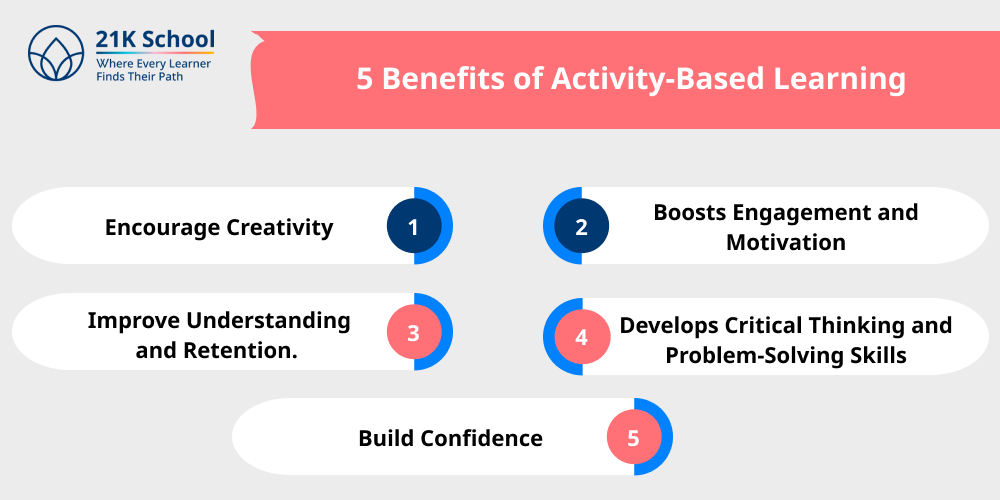
5 Benefits of Activity-Based Learning
Through activity-based learning, a student acquires knowledge willingly and with full focus. This increases the student’s confidence and concentration.
1. Encourage Creativity
Through this education system, students are taught various types of experiments. Students perform these experiments with enthusiasm. Therefore, their understanding of the subject matter increases.
This education system further encourages students to do new things. Students learn things they enjoy and apply them in real life. This motivates them to learn new things.
2. Boosts Engagement and Motivation
In this method, students learn with enthusiasm and enjoyment. When students see that the things they learn through practical application are being used in real life, they become even more delighted and interested in that education.
Students become self-motivated and become more eager to undertake such projects.
3. Improve Understanding and Retention
In this learning method, when students gain education through doing it on their own, they gain a lot of understanding of their specific topics. When a student learns through this method with responsibility, their knowledge increases more.
Students have to think much more to complete the project.
Since students understand the concept better, they retain information for a longer time.
4. Develops Critical Thinking and Problem-Solving Skills
Students acquire knowledge at their own pace because it is led by students.
It promotes group-based practical exercises. To successfully complete these practicals, learners are required to conduct in-depth research.
If the practicals are completed correctly, the students’ problem-solving abilities improve.
5. Build Confidence
In all these methods, the student has to take responsibility for their own learning. In this educational institution, students are taught through various activities. These activities boost a student’s self-confidence.
When a student completes an activity, their morale is boosted.
This enhances the student’s problem-solving skills, along with their critical thinking abilities .
Example of Activity-Based Learning
In this age of technology, we use science in various activities every moment. The learning that students acquire through activities in subjects like Mathematics and Science remains in their memory for a long time.
Several examples are given below.
1. Mathematics
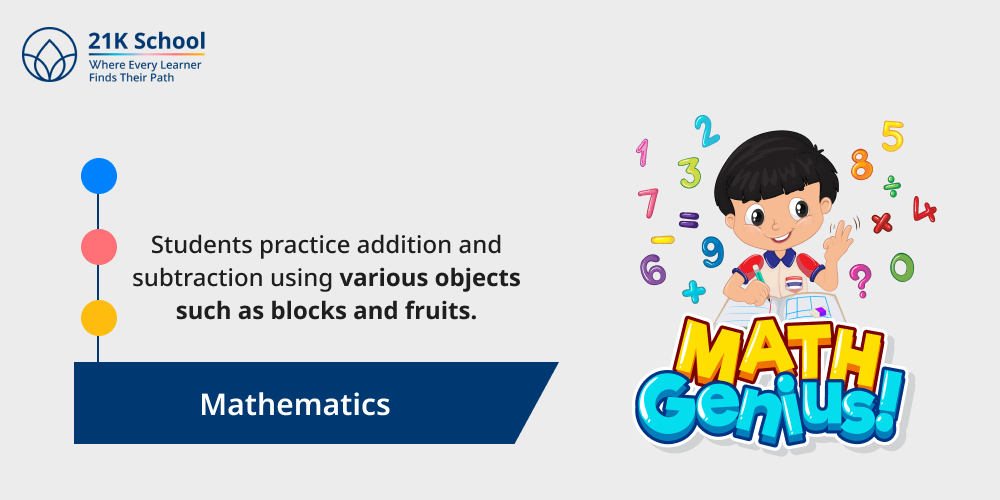
Students practice addition and subtraction using various objects such as blocks and fruits. They also practice by drawing lines with a pen in their notebooks.
2. Science

In their daily lives, students use science in various ways. Our surroundings are full of the gifts of science. They learn by making paper boats and floating them on the water.
3. Language
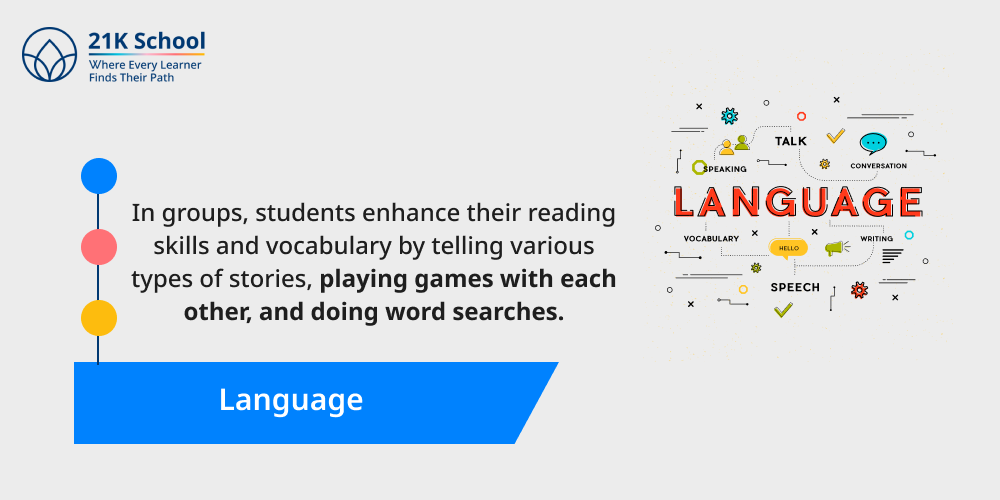
In groups, students enhance their reading skills and vocabulary by telling various types of stories, playing games with each other, and doing word searches.
Challenges of Activity-Based Learning
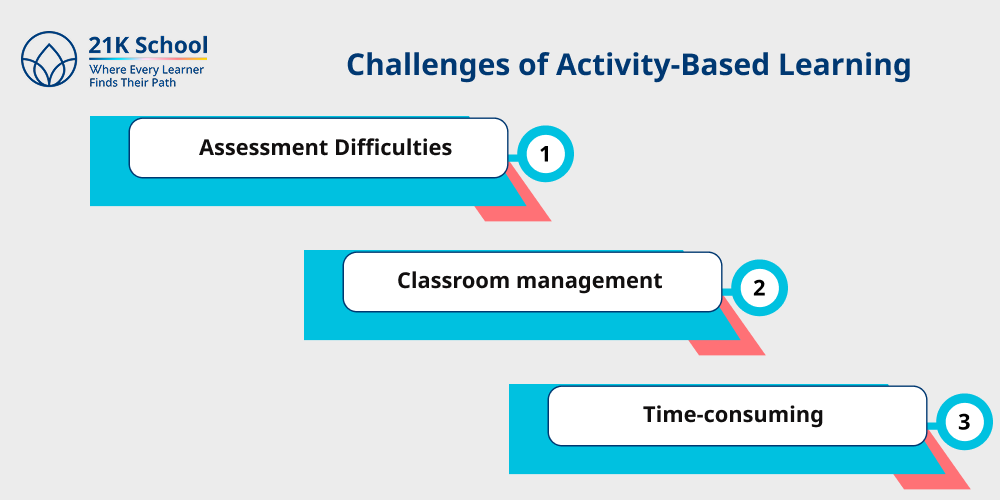
Activity-based learning not only helps students in their education, but this method of learning also has some drawbacks.
These are discussed below.
1. Assessment Difficulties
Here, the teacher’s role is comparatively less, which leads to a problem with assessment. Because this education system is project-based, students may still face pressure from project deadlines and presentations.
Teachers have to observe these projects thoroughly, which takes a considerable amount of time.
2. Classroom management
Since this teaching method is project-based, teachers need active involvement to manage and guide activities.
Because the students’ preferences prevail here, the teachers have to adapt and go along with the students’ wishes.
As the education is project-based or practical-based, there is little scope for listening to lectures in the classroom.
3. Time-consuming
Students have to spend a considerable amount of time conducting research before starting a project. It takes a long time for the project to be completed.
Teachers also need to observe these projects thoroughly, which also adds to the time required.
Activity-Based Learning vs Traditional Learning?
Activity-based learning takes place in accordance with the student’s wishes, whereas in traditional education, the student is controlled by the teachers.
| Aspect | Activity-based learning | Traditional learning |
| Teaching Approach | In a student-centred education system, the teacher acts as a facilitator. | In a teacher-centred education system, the teacher’s importance is paramount. |
| Student role | Students learn by experimenting in their own way. | The students follow the guidelines provided by the teacher. |
| Assessment method | Assessment is conducted through projects and presentations. | Assessment is conducted through written tests. |
| Focus of learning | The focus is on hands-on learning. | The focus is on academic results. |
| Classroom environment | Flexibly structure | Structured |
| Learning style | Education is provided through group-based projects. | Students have to learn by listening to lectures delivered by teachers. |
1. Teaching Approach
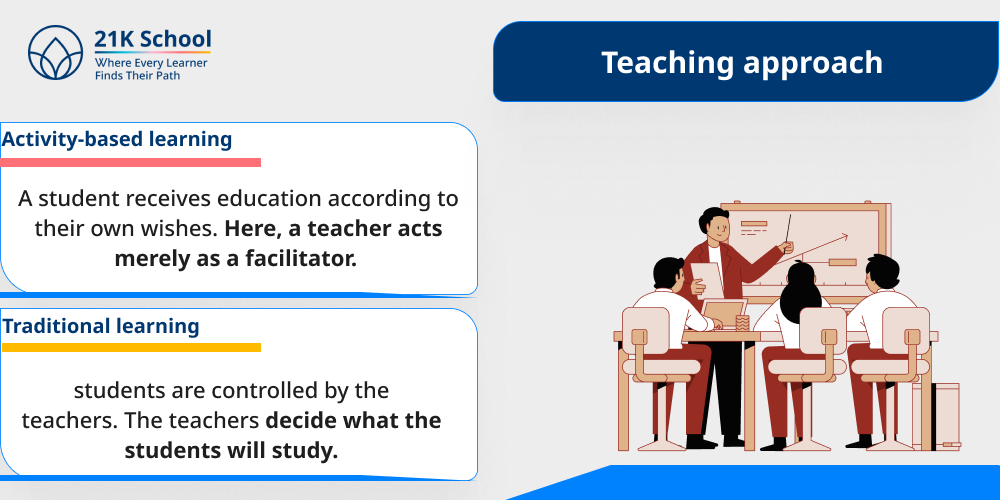
The core principle of activity-based learning is student-controlled. A student receives education according to their own wishes. Here, a teacher acts merely as a facilitator.
Traditional learning, on the other hand, is completely different; students are controlled by the teachers. The teachers decide what the students will study.
2. Student Role
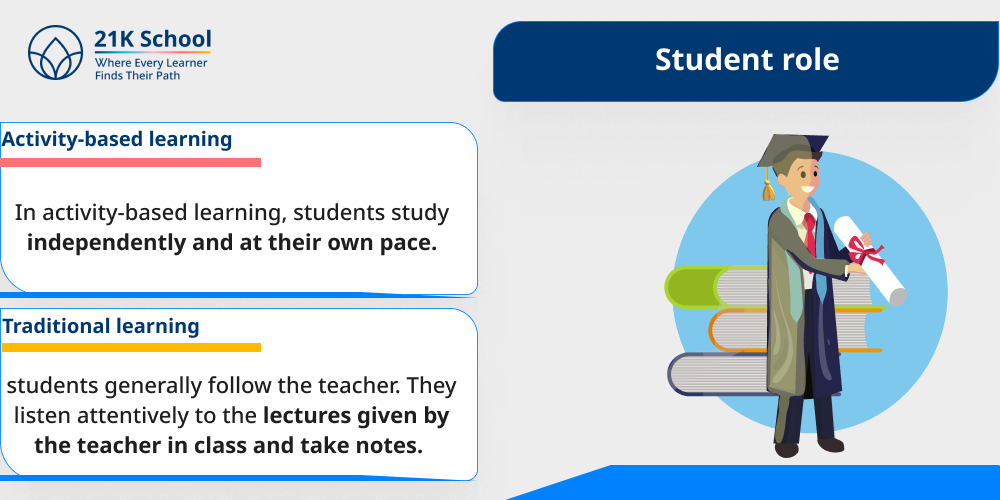
In activity-based learning, students study independently and at their own pace. Students learn by conducting experiments within the group. This helps to boost students’ self-confidence and communication skills .
In traditional learning, students generally follow the teacher. They listen attentively to the lectures given by the teacher in class and take notes. This usually improves the students’ academic results.
3. Assessment method
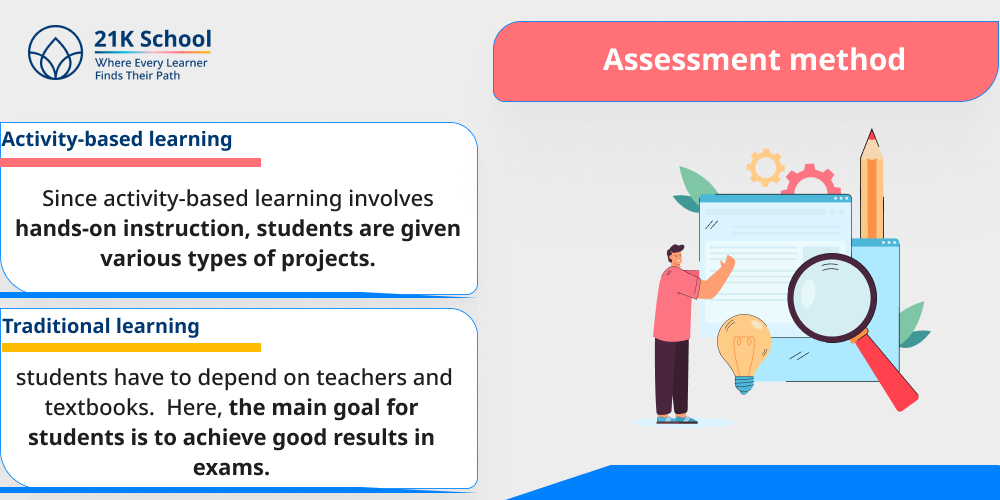
Since activity-based learning involves hands-on instruction, students are given various types of projects. Their assessment is conducted through these projects, which they have to complete individually or in groups.
In traditional education, students have to depend on teachers and textbooks. Here, the main goal for students is to achieve good results in exams. Assessment is done through homework and various written tests.
4. Focus of Learning
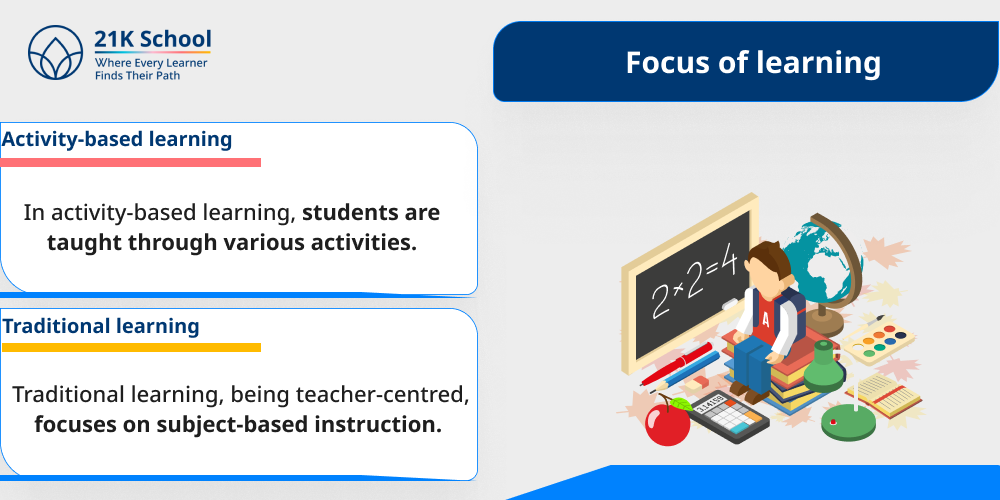
In activity-based learning, students are taught through various activities. Students take responsibility for their own learning through projects. Here, students receive hands-on learning experiences.
Traditional learning, being teacher-centred, focuses on subject-based instruction. In this approach, emphasis is generally placed on students’ academic results. Students learn primarily to achieve good results in their exams.
5. Classroom Environment
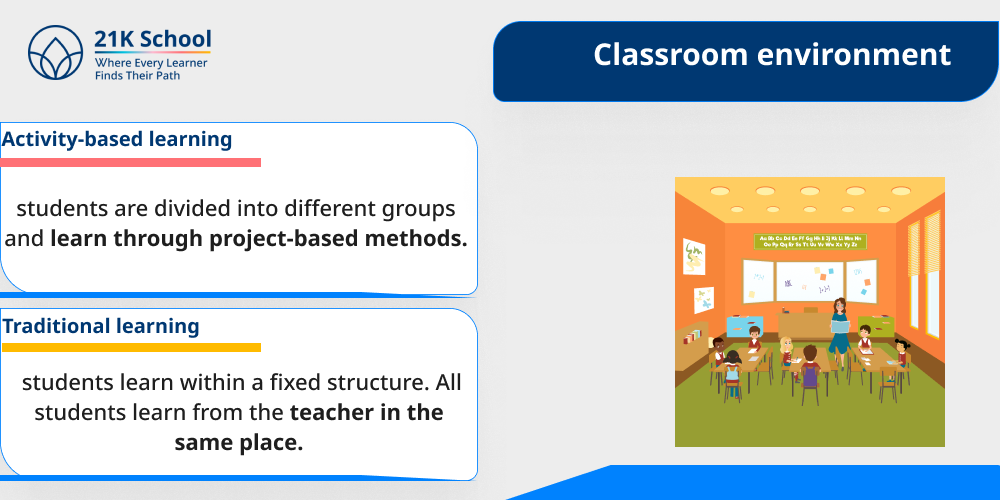
In activity-based learning, students are divided into different groups and learn through project-based methods. Learning may extend beyond classrooms, but is usually guided within structured environments.
In traditional learning, students learn within a fixed structure. All students learn from the teacher in the same place, and they must follow the teacher’s instructions.
6. Learning style
In activity-based learning, students learn within groups. Here, students focus more on practical application than on textbooks. As a result, students gain more knowledge about the subject. This helps students solve problems in real life.
In traditional learning, students are more dependent on textbooks. Here, students have to listen attentively to the teacher’s lectures in class to understand the material. This method of education helps students prepare for exams.
Conclusion
Activity-based learning makes the learning process more effective, practical and enjoyable for students. In this method, students are not limited to book knowledge only, but can learn and understand on their own through various activities.
Therefore, their thinking power, problem-solving skills and creativity are significantly improved.
In addition, this type of learning environment ensures active participation of students. They learn to work in teams, express opinions, and are able to connect learning with real life.
Overall, activity-based learning is a modern and effective teaching method that plays an important role in the overall development of students and makes them more prepared for the future.

You may also want to read