


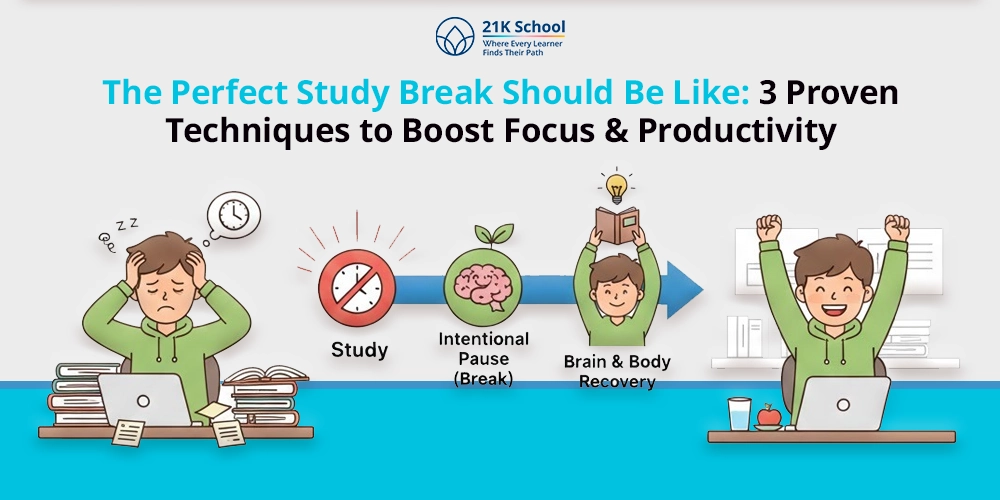
Learning is a part of daily routine which helps students to improve their lifestyle. It helps them develop physically, mentally, and socially.
Learning for long hours can also impact negatively. However, breaks play an essential role to reduce stress and burnout.
Do you know what the perfect study break should be like?
Just like other activities like rest and exercise, breaks refresh and recharge students from long-term studying.
Let’s explore what the perfect study break should be like, proven break techniques, effective activities and what to avoid.
Contents
What is a Study Break?
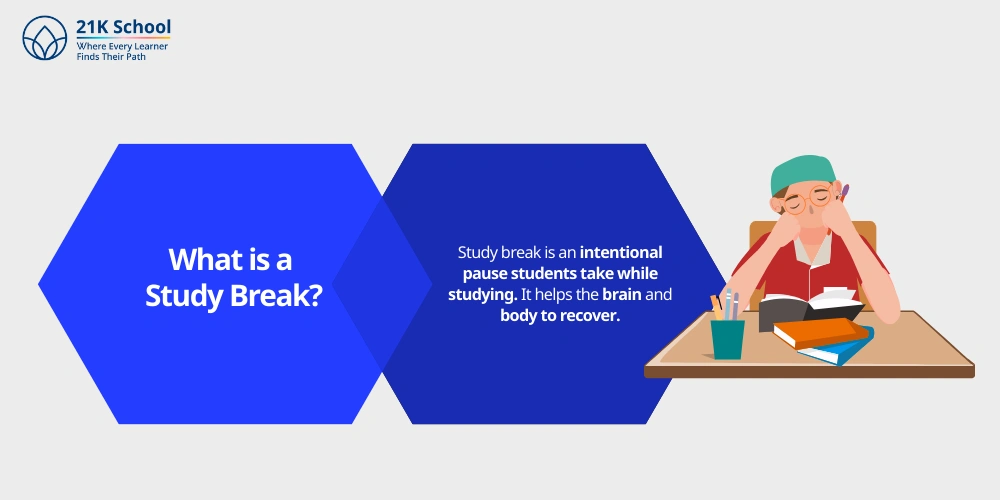
Study break is an intentional pause students take while studying. It helps the brain and body to recover.
The main objective of a study break is not distraction from learning, but refreshing to learn with concentration.
The perfect study break:
- Improve focus while studying and memory
- Boosts productivity
- Reduces stress and anxiety
The Perfect Study Break Should Be Like
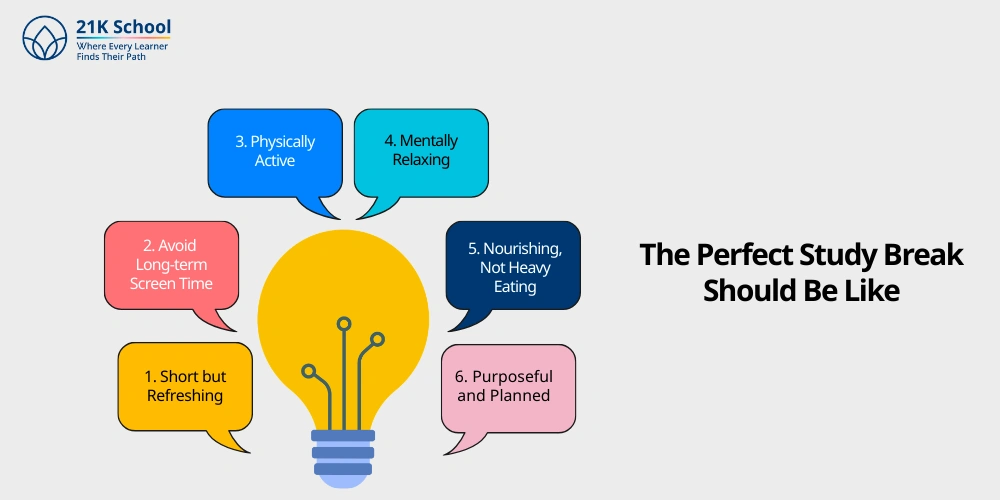
To understand how the perfect study break should be like, go through below mentioned details:
1. Short but Refreshing
Starting with a short but refreshing break while studying helps in creating a positive learning environment .
Breaks give opportunity to get a quick activity without pulling out from study mode completely. A student who takes breaks becomes more productive than one who stops studying.
2. Avoid Long-term Screen Time
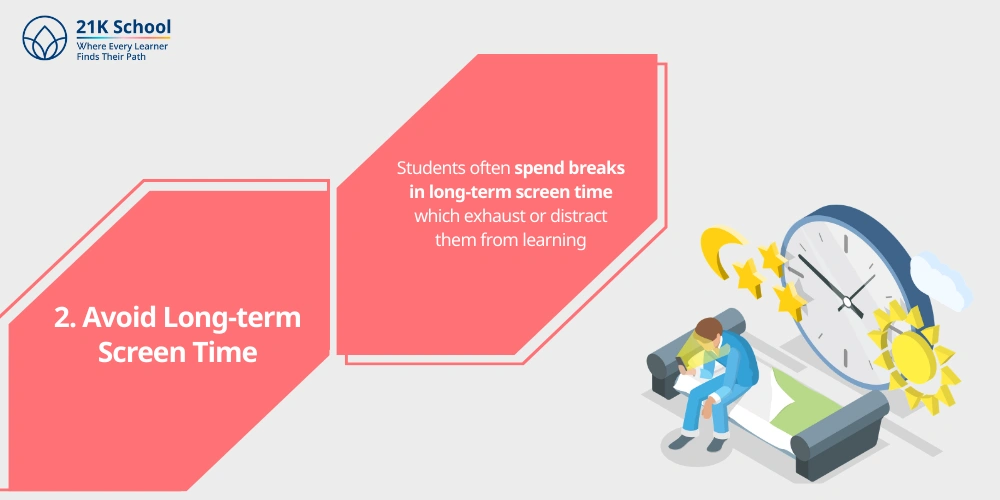
Students often spend breaks in long-term screen time which exhaust or distract them from learning.
To avoid these kinds of mistakes, reduce screen exposures like watching social media, reels, and videos.
3. Physically Active
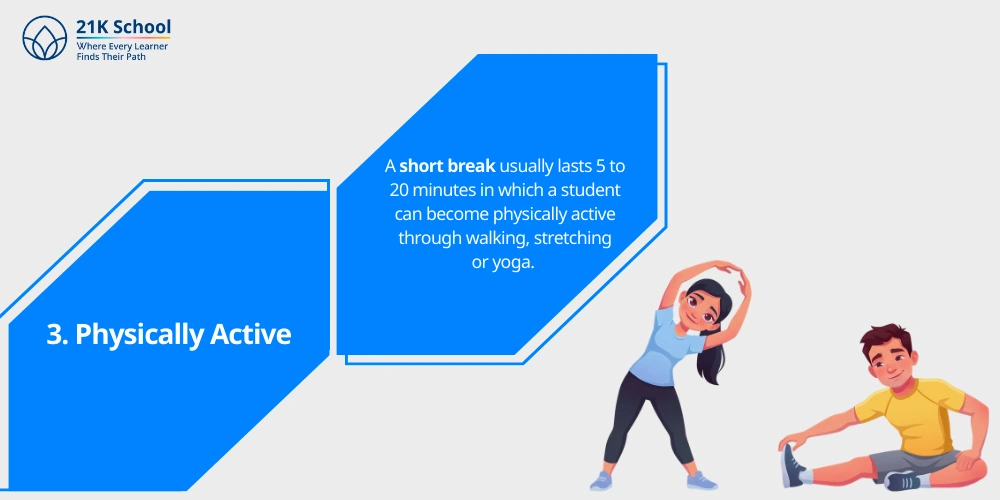
A short break usually lasts 5 to 20 minutes in which a student can become physically active through walking, stretching or yoga.
It is an ideal way to boost blood circulation and oxygen flow to the brain. Remember, don’t push for intense exercise to distract.
4. Mentally Relaxing
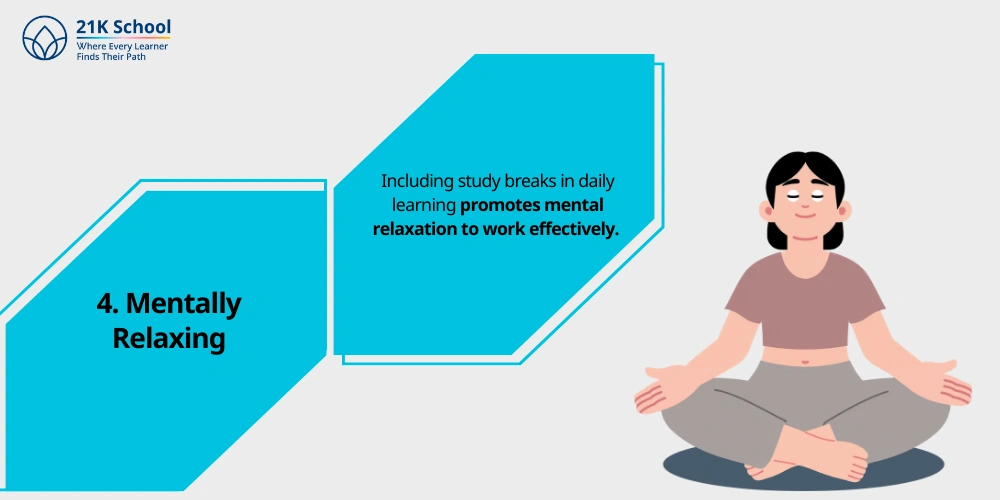
Including study breaks in daily learning promotes mental relaxation to work effectively. In this way students can balance their personal and academic life.
Add activities such as mindfulness , yoga, meditation etc for focus.
5. Nourishing, Not Heavy Eating
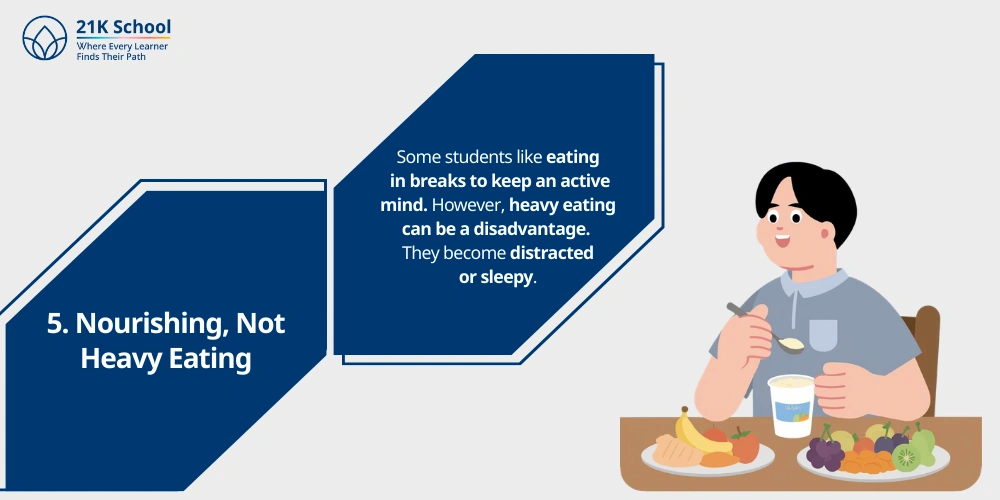
Some students like eating in breaks to keep an active mind. However, heavy eating can be a disadvantage. They become distracted or sleepy.
The perfect study break snack should be light food easy to digest. For example, fruits, yogurt, cornflakes etc.
6. Purposeful and Planned
Random breaks are less effective and can make individuals distracted. Instead purposeful and planned breaks create a roadmap to achieve desired goals.
One can also use a timer or set a target to take breaks.
The Perfect Study Break Should Be Like: Top 3 Easy Techniques
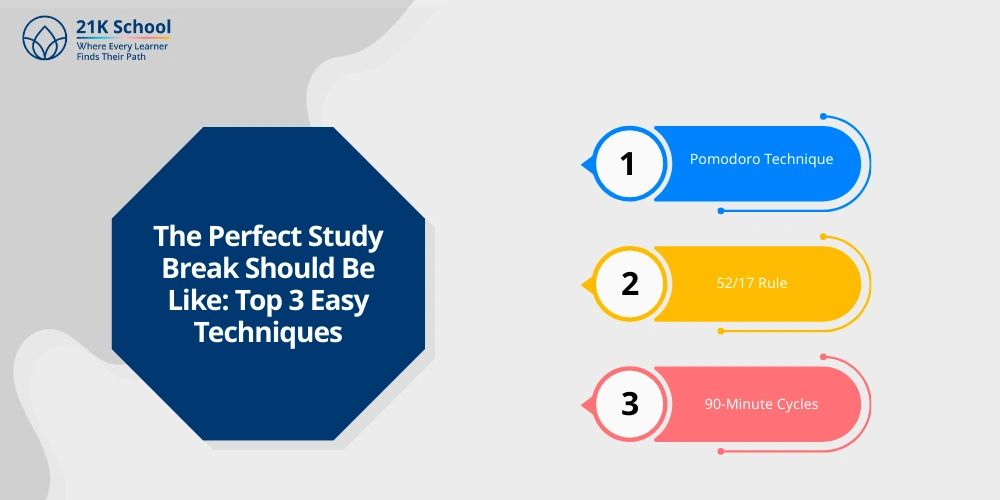
Using top 3 easy and effective techniques can help students to balance both study and rest effectively.
1. Pomodoro Technique
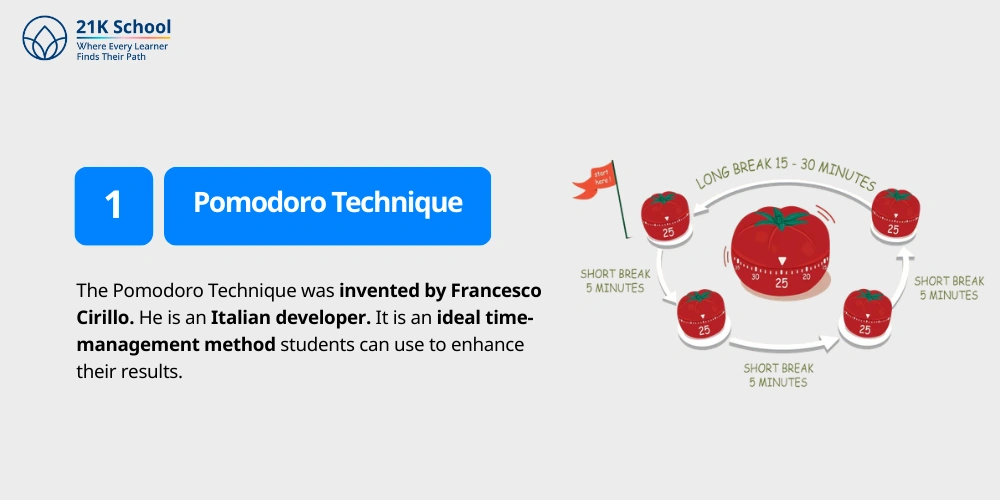
The Pomodoro study Technique was invented by Francesco Cirillo. He is an Italian developer. It is an ideal time-management method students can use to enhance their results.
It is beneficial for high focus, prevents burnout, and makes learning less overwhelming.
How it works:
- Study for 25 minutes
- Take a 5 minute break
2. 52/17 Rule
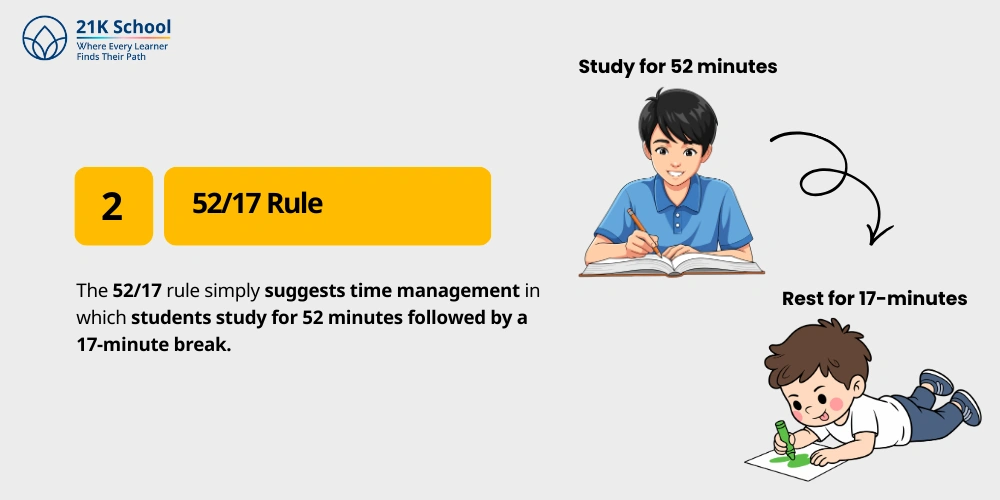
The 52/17 rule simply suggests time management in which students study for 52 minutes followed by a 17-minute break.
It is beneficial for students to deep focus, effective breaks, and ideal for complex topics. It is an ideal method for the perfect study break.
3. 90-Minute Cycles
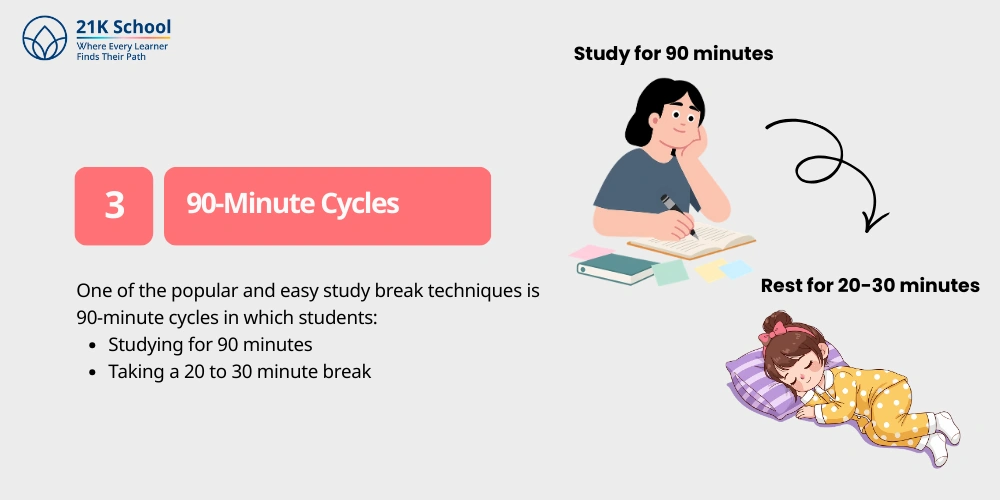
One of the popular and easy study break techniques is 90-minute cycles in which students:
- Studying for 90 minutes
- Taking a 20 to 30 minute break
The technique is beneficial for concentration and long-term knowledge retention .
The Perfect Study Break Should Be Like: 5 Effective Break Activities
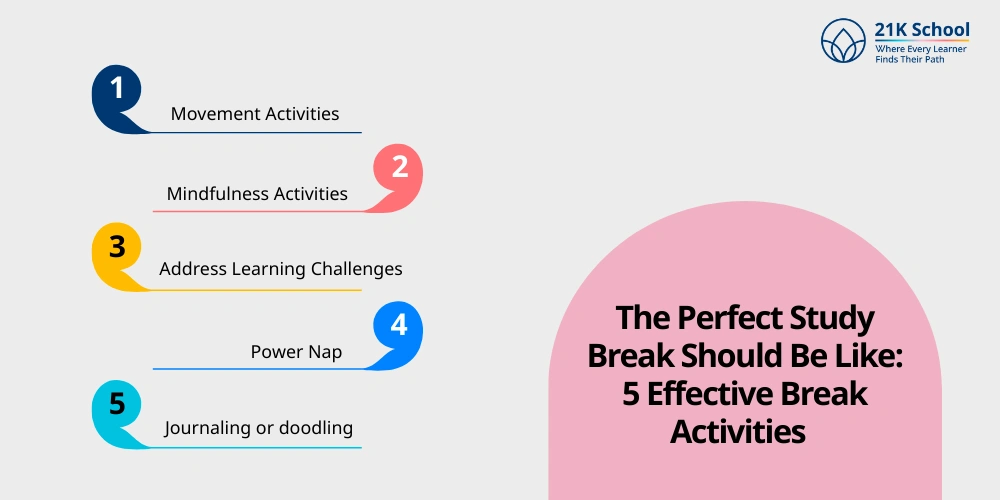
To make learning effective, learning with concentration and taking breaks to refresh the mind is important. Students often try to manage their time for both learning and break.
Some common activities for the perfect study break should be like:
1. Movement Activities
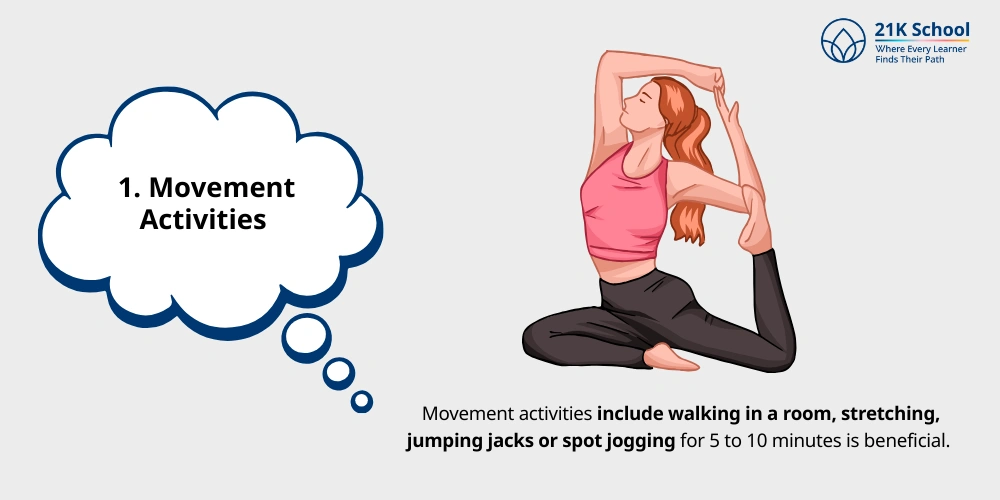
Movement activities include walking in a room, stretching, jumping jacks or spot jogging for 5 to 10 minutes is beneficial.
This not only boosts energy but refreshes the mind for active learning.
2. Mindfulness Activities
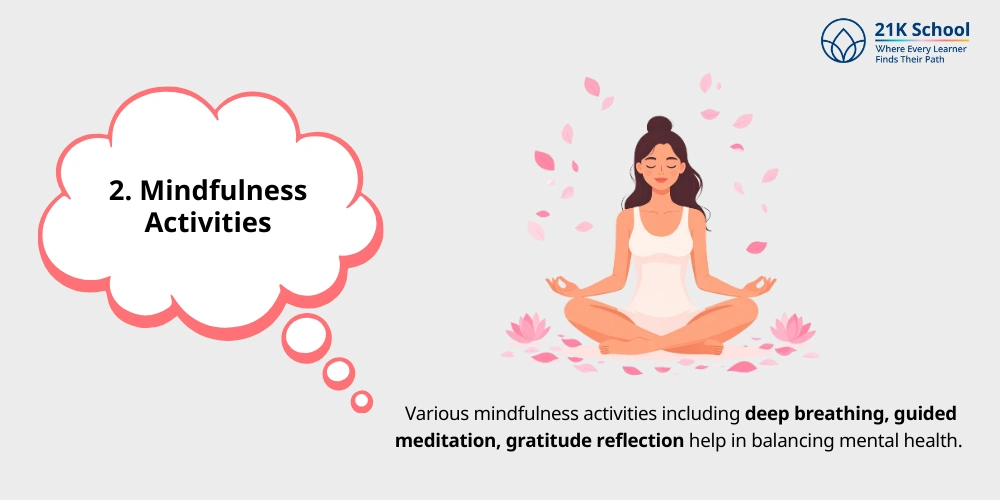
Various mindfulness activities including deep breathing, guided meditation, gratitude reflection help in balancing mental health .
In this way, students can reduce their anxiety, exam stress , and focus after returning to the study table.
3. Power Nap
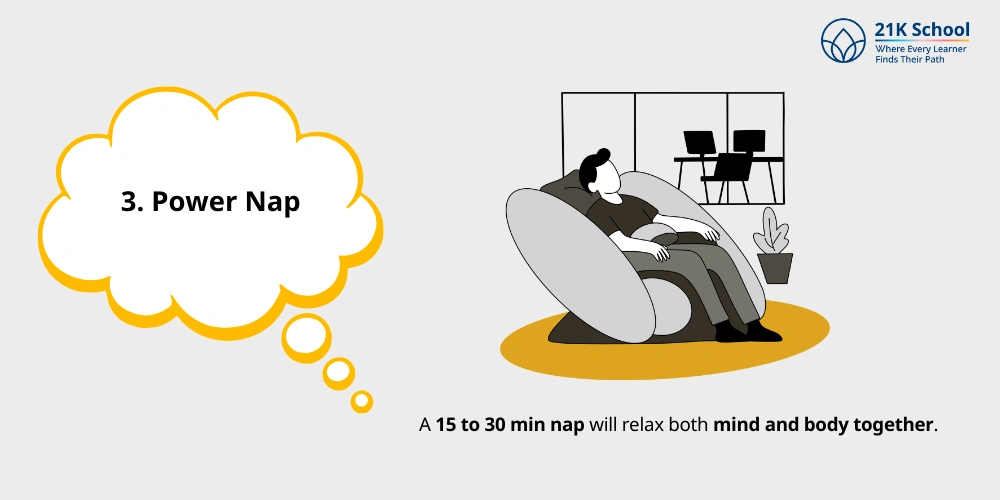
One of the best activities for a perfect study break should be power nap. A 15 to 30 min nap will relax both mind and body together.
In this way, students can learn effectively and retain the information deeply.
4. Take Quick Refresh
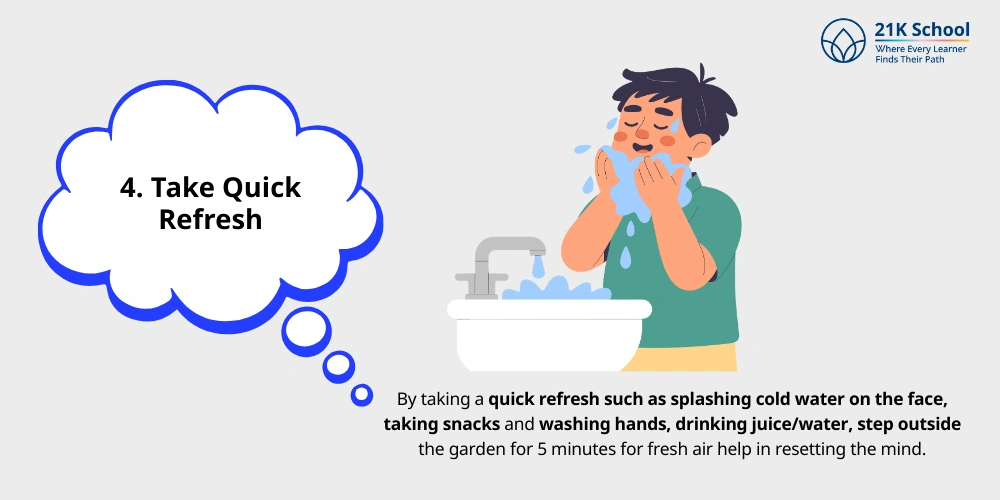
By taking a quick refresh such as splashing cold water on the face, taking snacks and washing hands, drinking juice/water, step outside the garden for 5 minutes for fresh air help in resetting the mind.
This helps individuals refresh after long-term studying.
5. Journaling or doodling
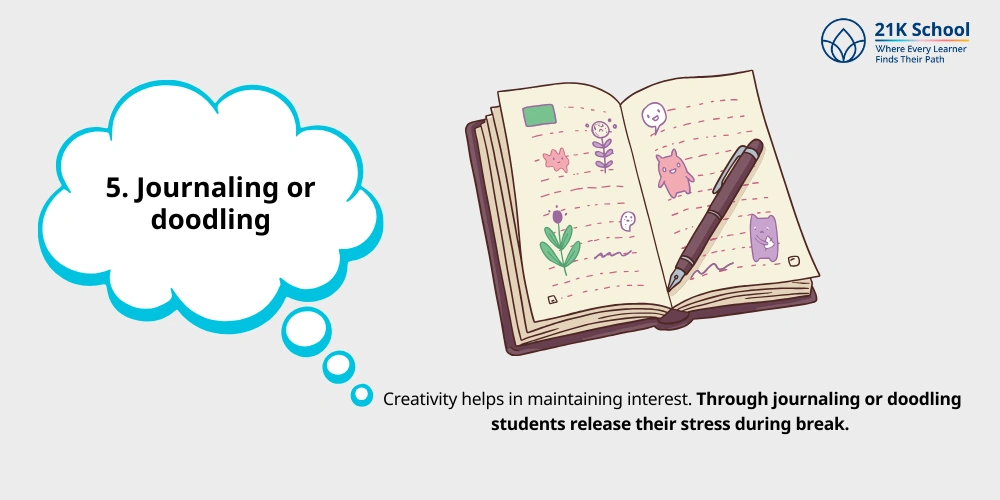
Creativity helps in maintaining interest. Through journaling or doodling students release their stress during break.
This clears the mind and stimulates students’ learning.
3 Activities to Avoid During Study Breaks
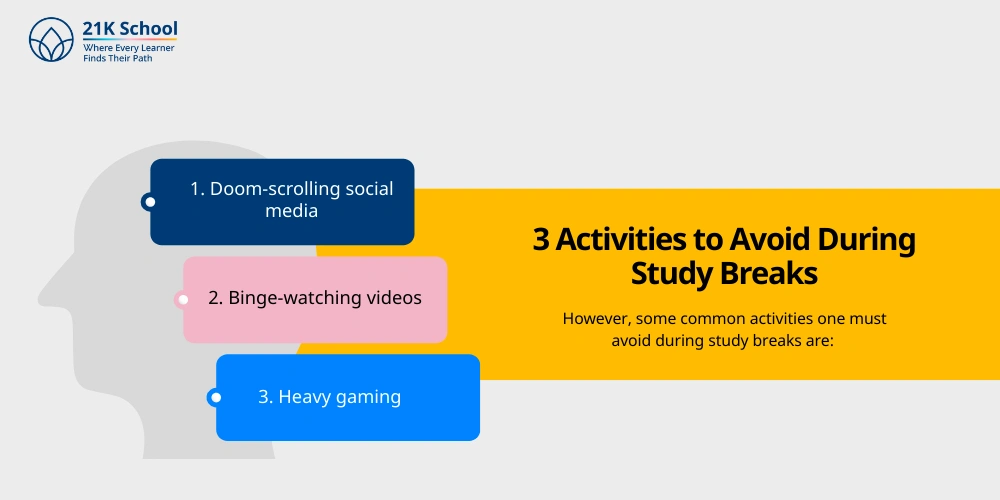
There are various popular activities students can include to manage study and breaks. However, some common activities one must avoid during study breaks are:
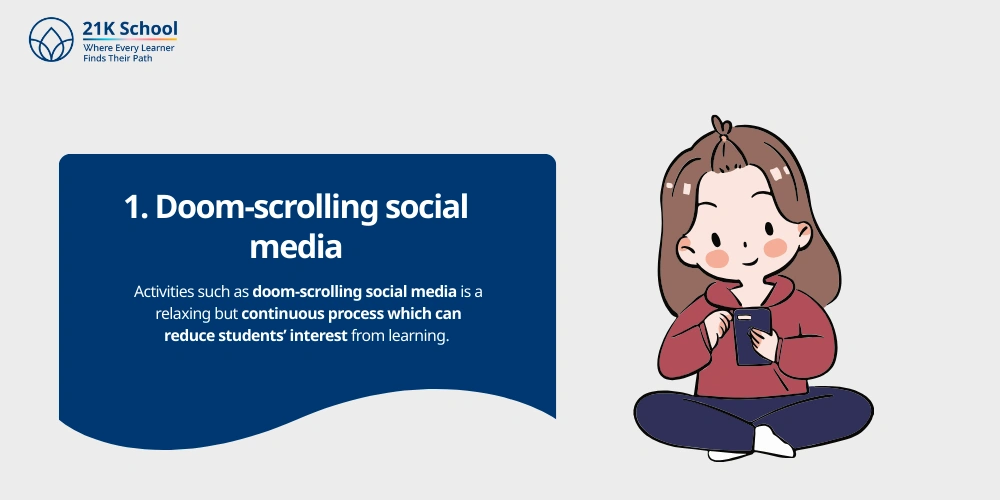
Activities such as doom-scrolling social media is a relaxing but continuous process which can reduce students’ interest from learning.
2. Binge-watching videos
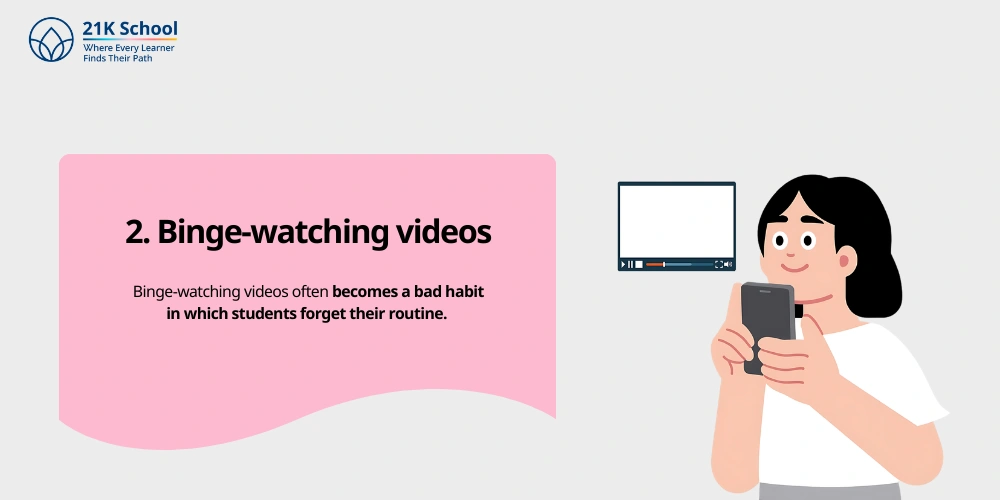
Binge-watching videos often becomes a bad habit in which students forget their routine. The activity can shift attention towards videos making harder to resume learning.
3. Heavy gaming

Gaming is helpful but excessive focus and emotional involvement limit students to switch back for learning.
Avoid long-term gaming activities during study breaks to complete tasks.
Conclusion
The perfect study break should be like maintaining the balance between learning and breaks.
Remember, breaks are not about escaping from education. But, it’s an ideal way to refresh and resume learning without burnout or academic stress.
To maintain study and breaks, students can create a realistic study routine and follow accordingly.

You may also want to read