


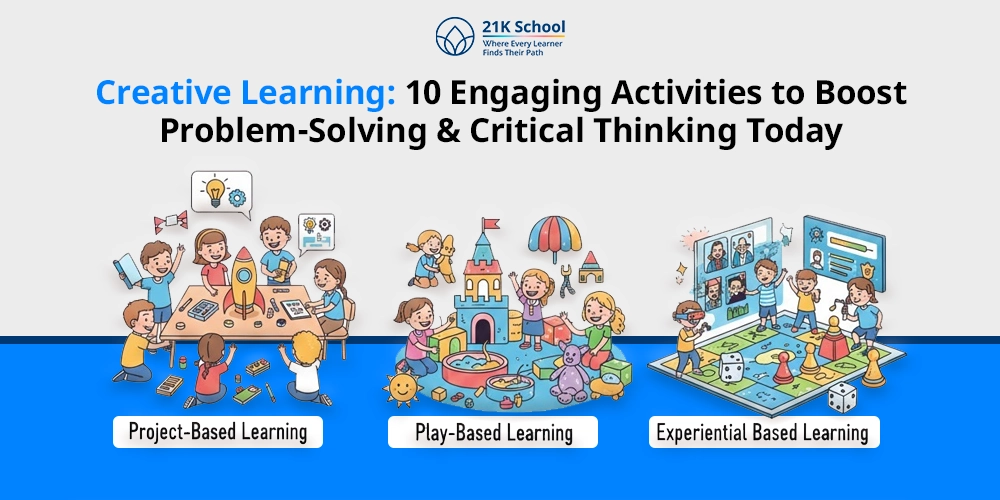
Creative learning is relevant in turning education into an exciting and significant experience for students. A modern education is not restricted to memorisation and textbooks. Students will learn better when they are given an opportunity to investigate ideas, ask questions and give their thoughts in an open manner.
Creative learning is a method of learning that helps students to be more creative, independent in thinking and be able to express themselves in meaningful ways. It emphasises the use of imagination, problem solving , teamwork and practical activities in learning as opposed to memorisation.
Creative learning assists in developing curiosity, confidence , and enthusiasm because it enables students to learn through activity, cooperation, and real-life experiences.
It fosters a good learning atmosphere in which students like to learn, acquire new skills and grow both academically and personally.
Contents
What is Creative Learning?
Creative learning is a learning method that stimulates the students to approach ideas, think creatively and learn through activities and real-life experiences. It is centred on learning by being creative, solving problems , and co-operating instead of memorising.
Creative learning raises the level of curiosity, confidence and student engagement by encouraging the students to give their thoughts and ideas freely.
It is also beneficial in building valuable competencies such as critical thinking , communication, flexibility and innovation, and therefore, learning becomes fun, significant, and productive towards academic and personal development in the long run.
5 Popular Creative Learning Methods
Creative approaches to learning aim at involving students in the active process and real-life experiences. These strategies assist students to be creative, gain knowledge deeply and have fun in the learning process using various strategies of interaction. The common methods of creative learning include the following.
1. Project-Based Learning
Project-based learning enables students to learn by working on real-world projects within a certain time. Students build study habits , organise, discuss and present their work, which would enhance the ability to solve problems and the ability to work in a team.
This approach promotes creativity, responsibility, and understanding through relating learning to actual life circumstances and significant results.
2. Inquiry-Based Learning
Inquiry-based learning dwells on questioning, digging, and finding answers via investigation. Students are also made to think critically, research and make conclusions independently.
It approaches curiosity, independence of thinking and analytical capacities and assists students in gaining a more profound knowledge of concepts as they explore.
3. Play-Based Learning
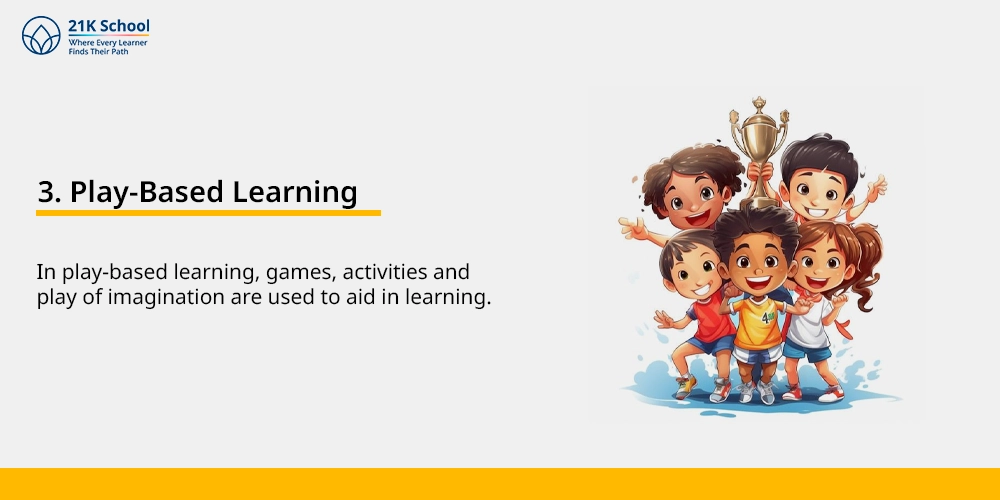
In play-based learning, games, activities and play of imagination are used to aid in learning. It allows learners to learn in a natural way as they have fun, particularly in the early years.
Play enables students to acquire creativity, communication, social and problem-solving skills , hence, making the learning process enjoyable, interesting, and not so stressful.
4. Experiential Learning
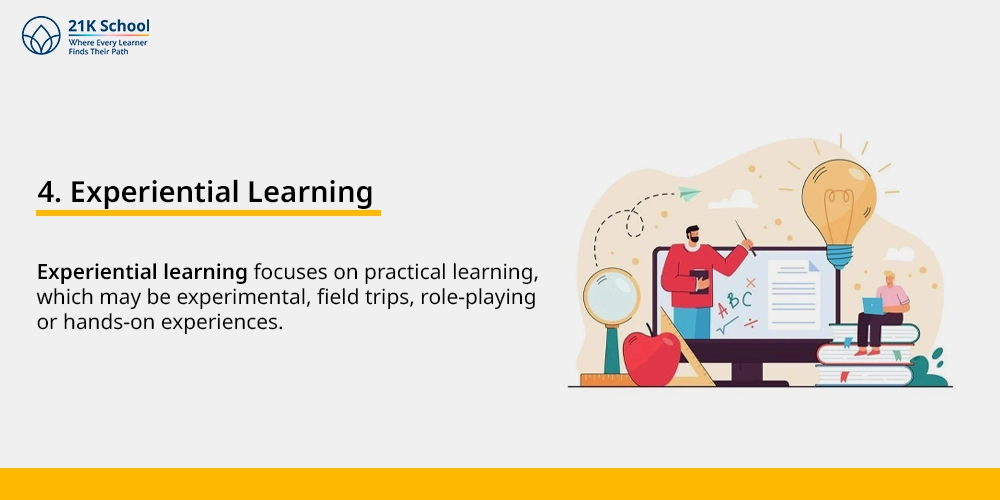
Experiential learning focuses on practical learning, which may be experimental, field trips, role-playing or hands-on experiences. The students acquire knowledge through experience and reflection.
This is a better way of strengthening knowledge and enhancing retention, improves concentration and enables students to use their knowledge in real-life circumstances, making learning a worthwhile process.
5. Gamification
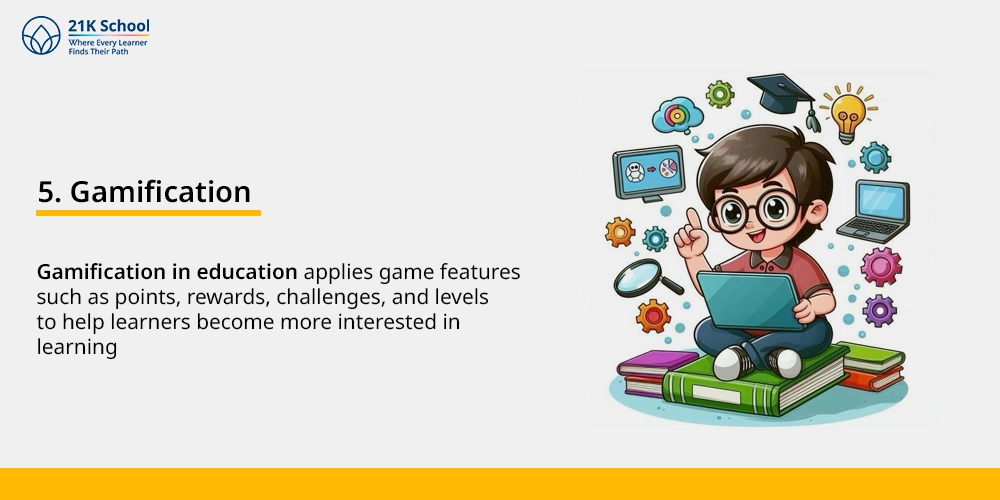
Gamification in education applies game features such as points, rewards, challenges, and levels to help learners become more interested in learning. It encourages the students to engage in learning and improve their attention span.
Gamification promotes healthy competition, motivation, and makes lessons interactive by allowing the student to build problem-solving and decision-making skills .
The Top 6 Importance of Creative Learning
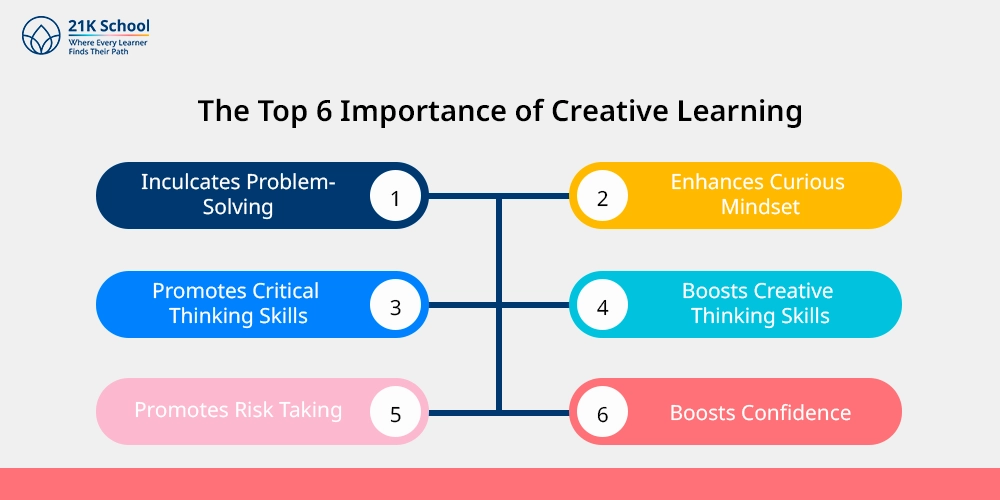
The significance of creative learning is that it allows students to gain the required skills beyond those taught in books. It arouses interest, problem solving, critical thinking and confidence and equips students to achieve success in academics and in life circumstances. In this respect, creative learning comes into play.
1. Inculcates Problem-Solving
Creative learning assists students in having good problem-solving skills as they are able to think on their own and have alternative ways of solving problems.
Students are not taught to memorise answers but to analyse a situation, seek solutions and implement ideas into practice. This strategy equips the students to deal with both academic and life problems with a lot of confidence.
2. Enhances Curious Mindset
Creative learning creates curiosity through allowing students to raise questions and discuss matters in depth. Students will be motivated to explore and experiment, which makes them interested in learning more.
This curiosity-based learning is known to sustain students in learning, enhance and encourage them to learn outside of a textbook.
3. Promotes Critical Thinking Skills
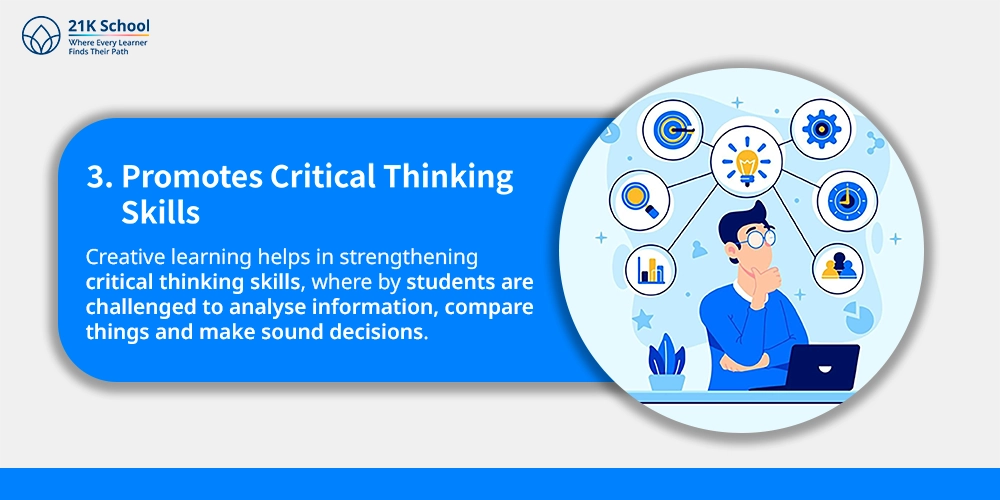
Creative learning helps in strengthening critical thinking skills , whereby students are challenged to analyse information, compare things and make sound decisions. Students get to learn to be interrogative, interpret results, and reflect upon their learning process.
These are skills that enable the learners to comprehend the subjects better and make rational decisions both in their studies and in life.
4. Boosts Creative Thinking Skills
Creative learning offers the students a chance to present ideas differently. Brainstorming, storytelling and practical projects, among others, assist students to think creatively and promote their creative thinking skills .
The approach promotes imagination, innovation and originality, thus students are able to think in new ways and gain creative confidence.
5. Promotes Risk Taking
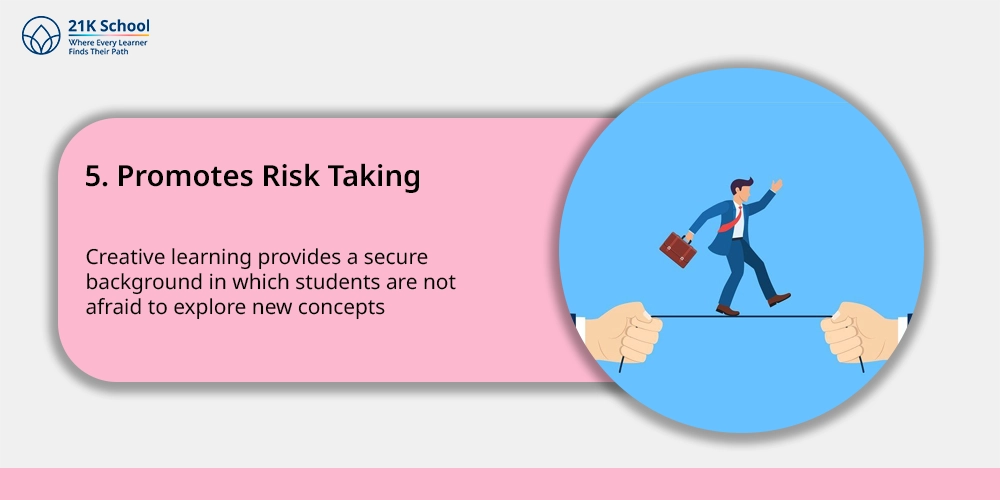
Creative learning provides a secure background in which students are not afraid to explore new concepts. It promotes exploration and lessons learned.
Taking risks creates resilience, flexibility and confidence in students to handle challenges, which are all factors in student development, both in academics and in personality development .
6. Boosts Confidence
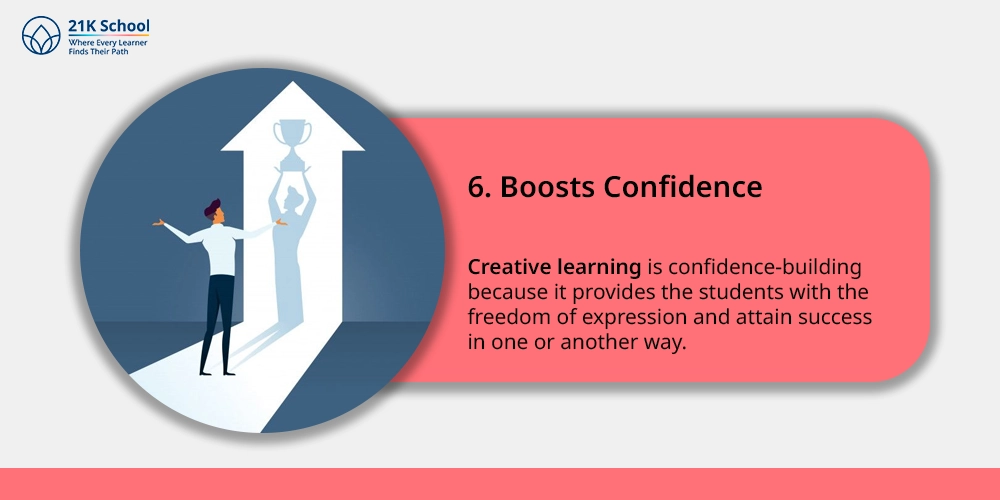
Creative learning is confidence-building because it provides the students with the freedom of expression and attain success in one or another way.
When the students understand that their ideas are important, this gives them self-belief. Creative activity helps to develop communication skills , reduce the fear of making mistakes, and decrease the fear of their potential.
5 Benefits of Creative Learning for Students
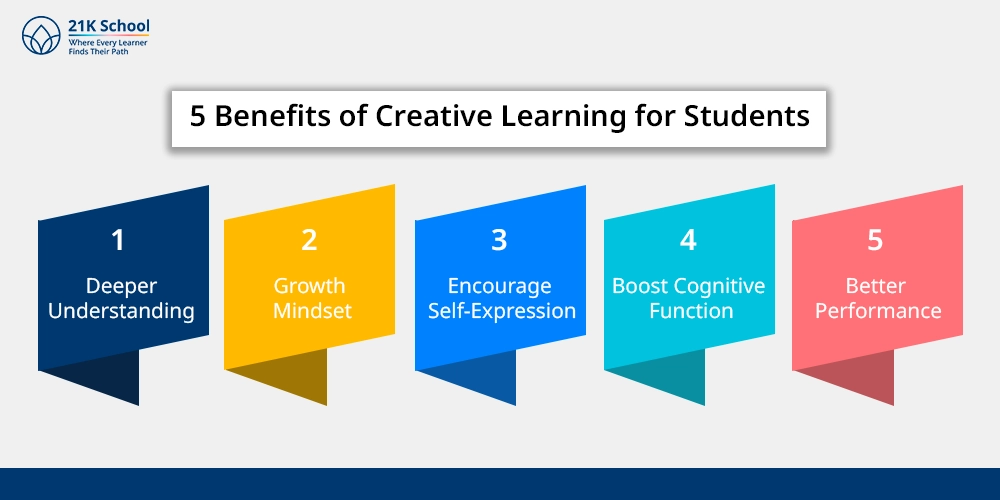
Creative learning has a lot of benefits, which aid not just in the achievement of education but also in personal growth.
This is in the sense that it helps the students to learn better, think with a lot of creativity, speak with a high degree of confidence, and stay motivated, thereby making the learning process significant, enjoyable and effective. The benefits of creative learning among the students are as follows.
1. Deeper Understanding
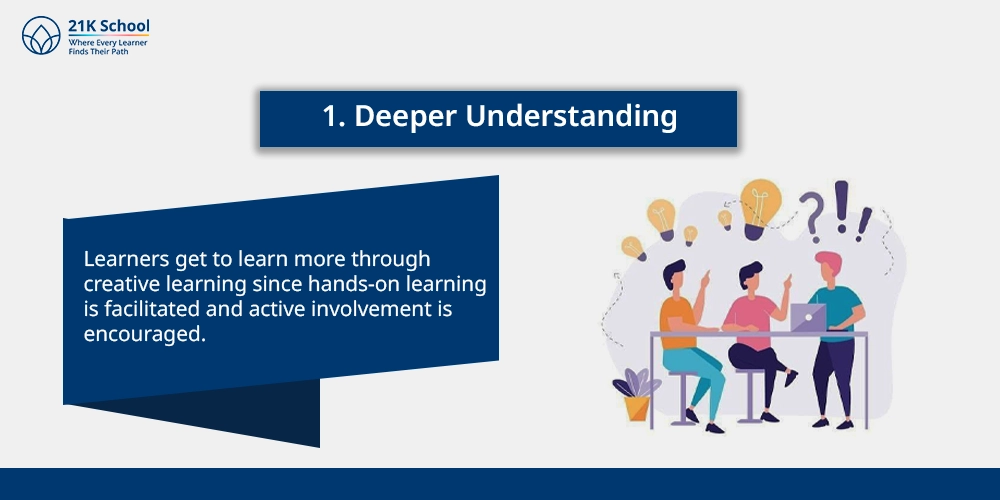
Learners get to learn more through creative learning since hands-on learning is facilitated and active involvement is encouraged. Students do not learn information by heart; they research, inquire and apply the information to practical situations in life.
This assists in improving retention, conceptual definition and makes the students connect learning with real-life experiences.
2. Growth Mindset
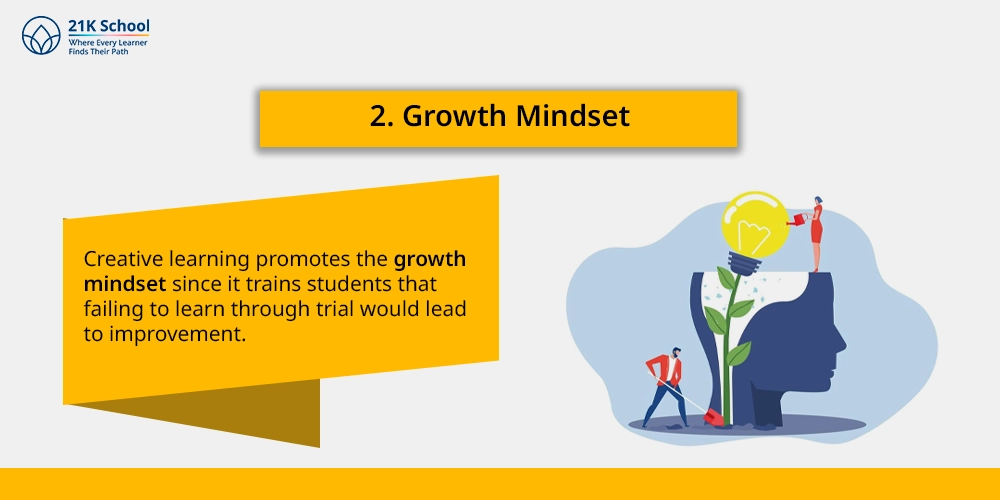
Creative learning promotes the growth mindset since it trains students that failing to learn through trial would lead to improvement. The students are also encouraged to experiment and test new ideas, and interpret findings.
This develops strength, perseverance and optimism towards obstacles, and the students perceive learning as a continuous process.
3. Encourage Self-Expression
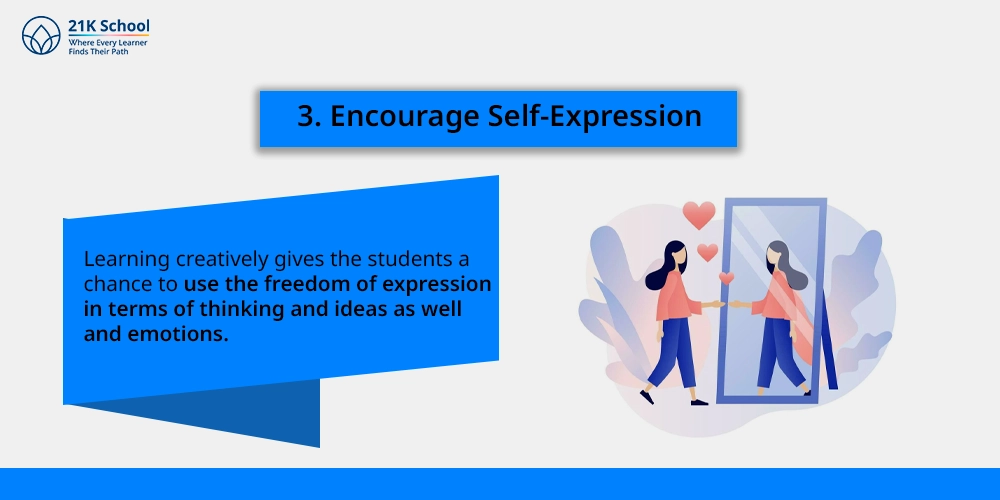
Learning creatively gives the students a chance to use the freedom of expression in terms of thinking and ideas as well and emotions.
The students become confident in sharing perspectives through such activities as art, writing, discussions, and projects. Self-expression assists in enhancing communication, emotional perception, and creativity, as well as personalising and making learning more meaningful.
4. Boost Cognitive Function
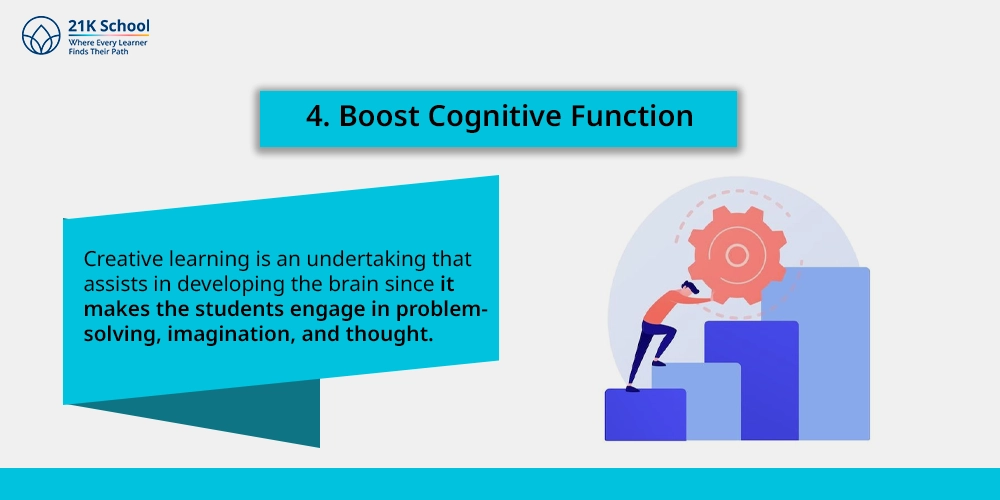
Creative learning is an undertaking that assists in developing the brain since it makes the students engage in problem-solving, imagination, and thought.
With the activities, memory, attention and reasoning are improved. Creative learning helps in fostering cognitive development of children since it exposes the brain to various challenging environments, and it also helps the students process the information in a more efficient manner.
5. Better Performance
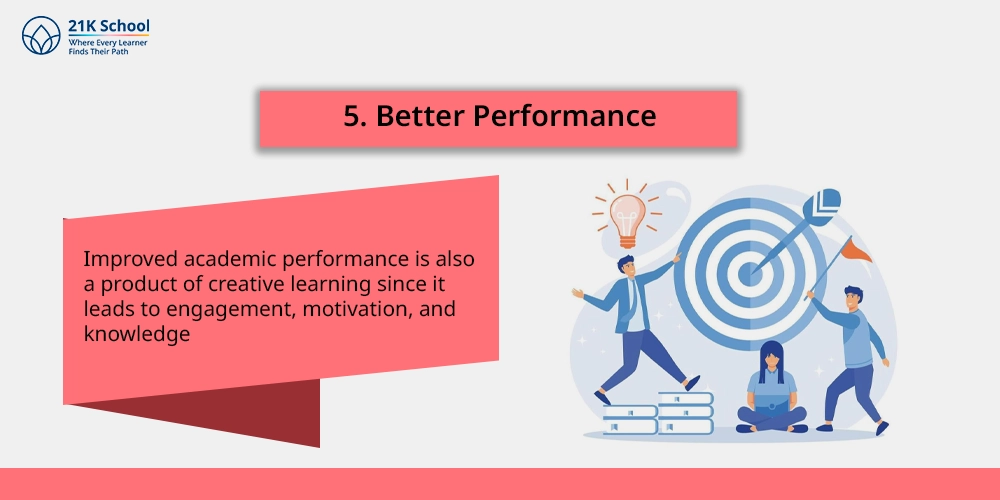
Improved academic performance is also a product of creative learning since it leads to engagement, motivation, and knowledge. When learners enjoy the learning process, they engage in the learning process, which helps them to study for long hours .
This will ease in achieving performance in tests, classroom learning and overall performance and acquisition of essential skills in life, other than academic success.
Top 10 Creative Learning Activities for Students
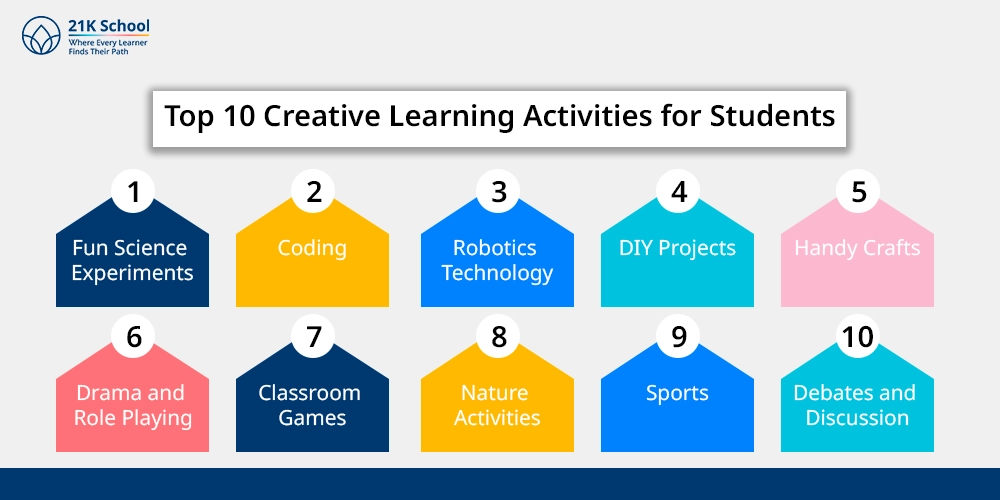
The creative learning activities help students to learn in interesting and enjoyable, and meaningful ways.
These are fun and productive activities since they encourage creativity, curiosity and active participation in the form of involving hands-on activities, collaboration skills , and real experience, thus making learning fun and efficient to the students. The following are the creative learning activities of the students.
1. Fun Science Experiments
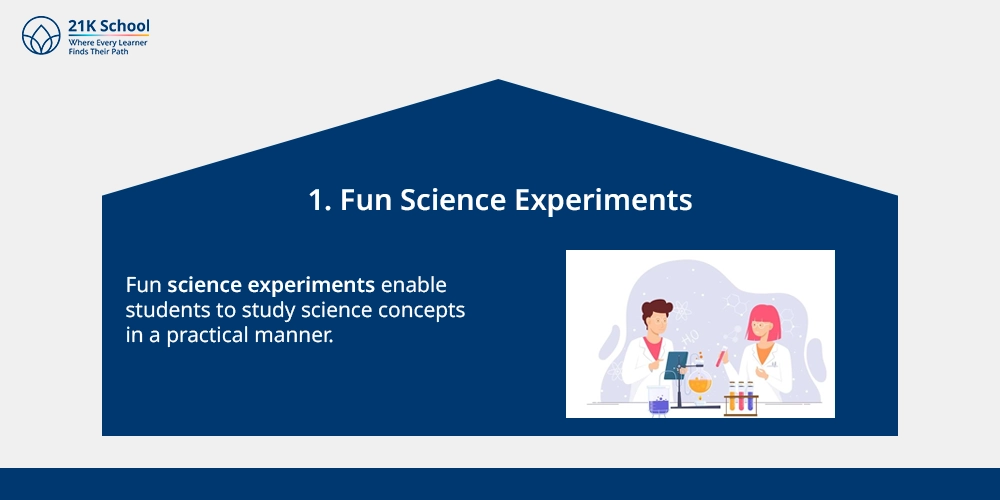
Fun science experiments enable students to study science concepts in a practical manner. Students acquire curiosity and critical thinking by observing reactions, testing ideas and making predictions.
Learning with experimentation is also exciting and makes students learn theories more vividly. They also help in promoting collaborative learning , observation, and an interest in discovery by way of real-life learning.
2. Coding
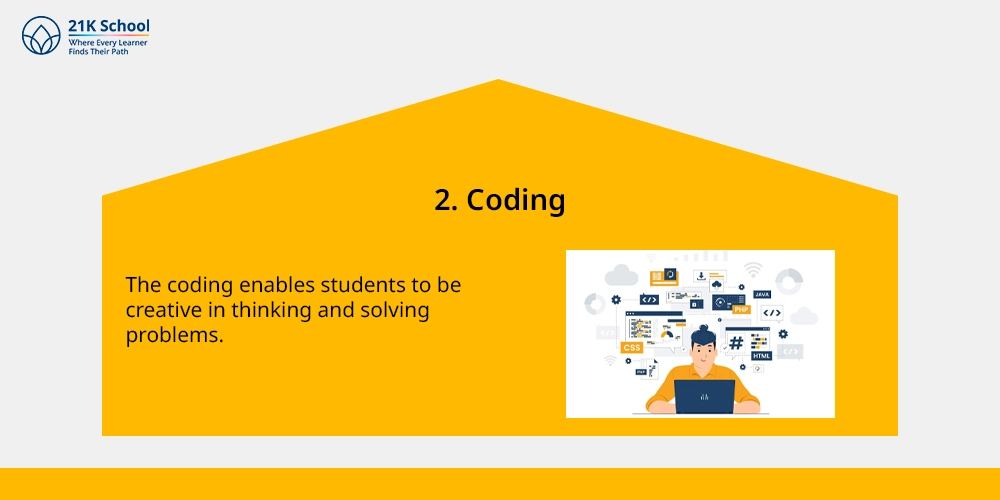
The coding enables students to be creative in thinking and solving problems. Using simple codes of programmes, students are taught how instructions operate, and how to debug programmes.
Coding enhances creativity, teaches students better computational thinking and prepares them to work in digital skills in the future, besides making the learning process more interactive and engaging.
3. Robotics Technology
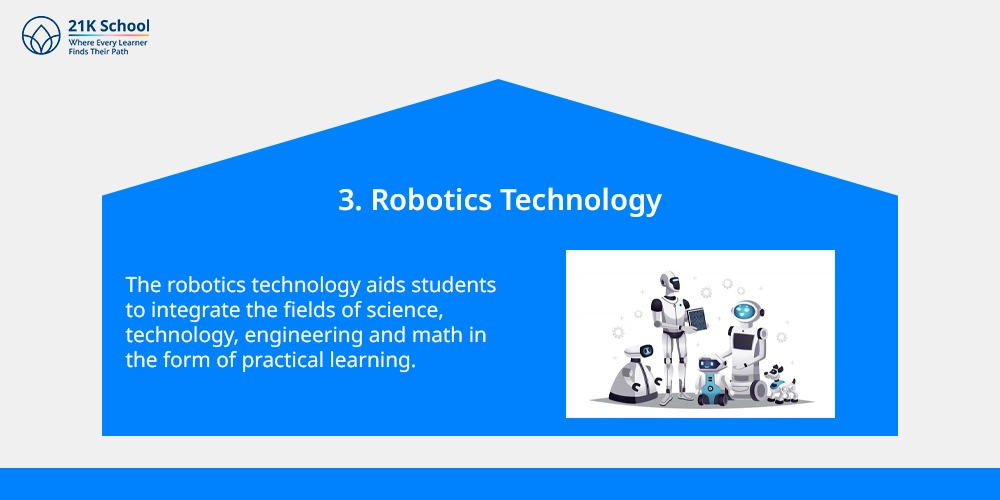
The robotics technology aids students to integrate the fields of science, technology, engineering and math in the form of practical learning. Robotics in education and computer programming improve innovativeness, collaboration, and reasoning.
Learning is exciting and future-oriented, as students get to know how machines perform, how to solve technical problems and also apply their theoretical knowledge practically.
4. DIY Projects
Good DIY projects help students to make useful or decorative objects with simple materials. Such activities encourage creativity, self-reliance, problem-solving ability, fine and gross motor skills .
Planning, designing, and putting into practice is taught to the students as they take pleasure in the process. Diversionary activities such as DIY projects are also good at enhancing focus, patience and confidence by means of creative experiences.
5. Handy Crafts
Handy crafts assist students in being creative in art and design. Paper crafting, painting and modelling are activities that enhance fine motor skills and concentration.
Craftwork helps in both imagination and attention to detail, besides being a relaxing learning experience, which helps in emotional health and creativity.
6. Drama and Role Playing
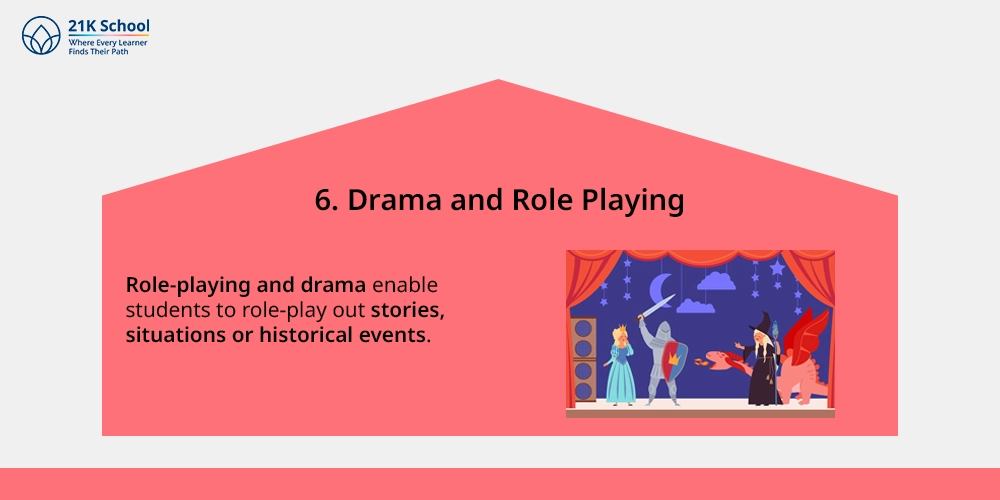
Role-playing and drama enable students to role-play out stories, situations or historical events.
These exercises enhance communication, confidence and empathy Experiencing roles in various places, students comprehend concepts better, demonstrate emotions, and become more creative and make the learning process more interactive and fun.
7. Classroom Games
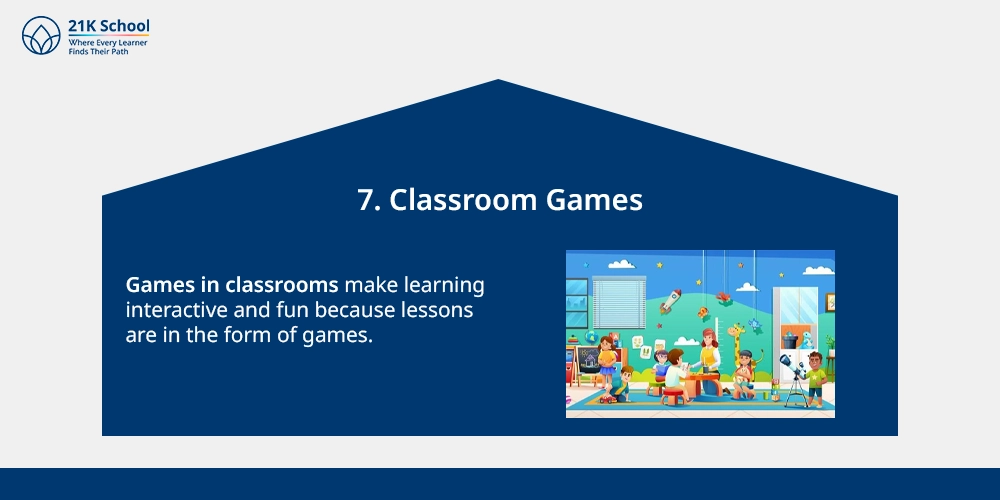
Games in classrooms make learning interactive and fun because lessons are in the form of games. Games enhance participation, teamwork and problem-solving.
They assist the students to learn relaxedly, relieve students stress , and promote healthy competition without losing focus and interest to learn.
8. Nature Activities
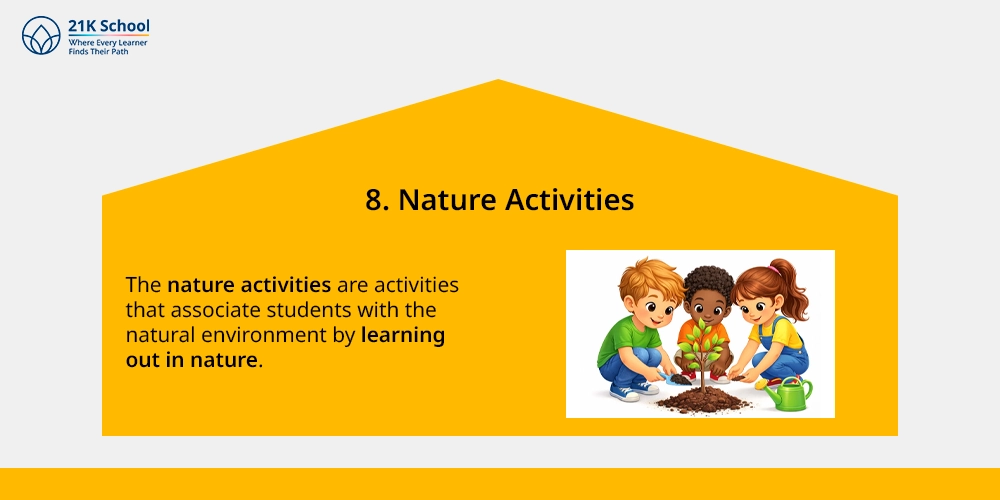
The nature activities are activities that associate students with the natural environment by learning out in nature. Gardening, nature walks, and observation are such activities that enhance curiosity and awareness.
These experiences include physical activity, environmental responsibility, and creativity and contribute to the students relaxing, concentrating, learning outside and practicing mindfulness in classroom .
9. Sports
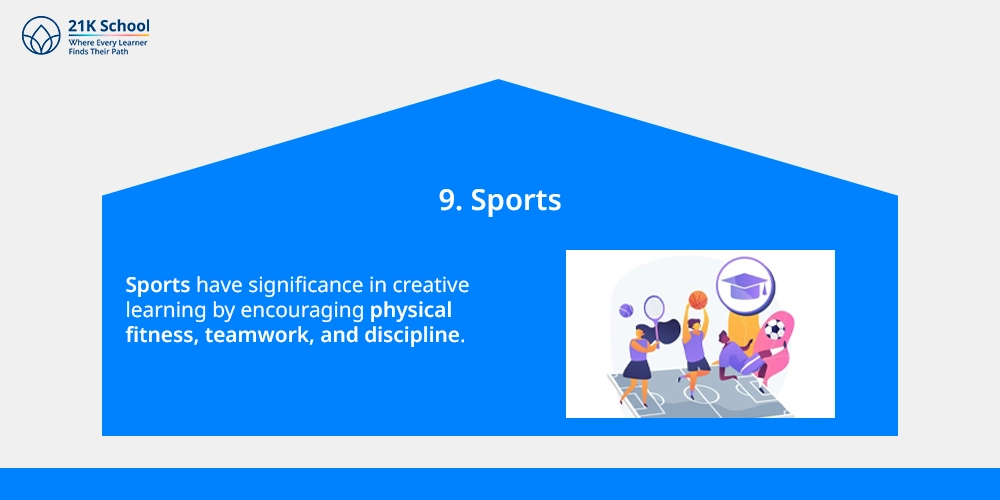
Sports have significance in creative learning by encouraging physical fitness, teamwork, and discipline. Sports enable students to be leaders, coordinate and think strategically.
Exercises also alleviate study stress , enhance focus, and maximise the general mental and physical health, which helps in academic excellence.
10. Debates and Discussion
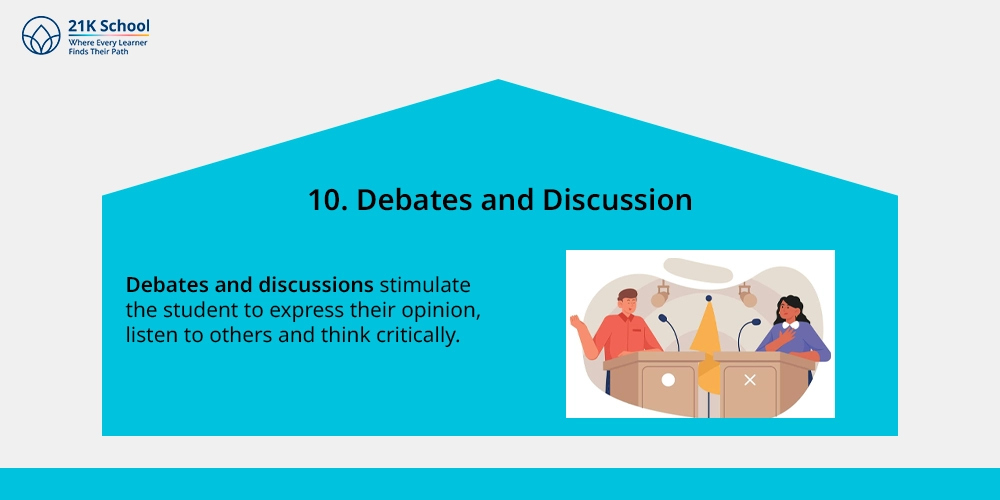
Debates and discussions stimulate the student to express their opinion, listen to others and think critically. These exercises enhance communication, confidence and reasoning skills.
Learning is interactive and thought-provoking because the students learn to value alternative opinions and ways of thinking, structure ideas, and provide them with a rationale.
How to Implement Creative Learning for Teachers?
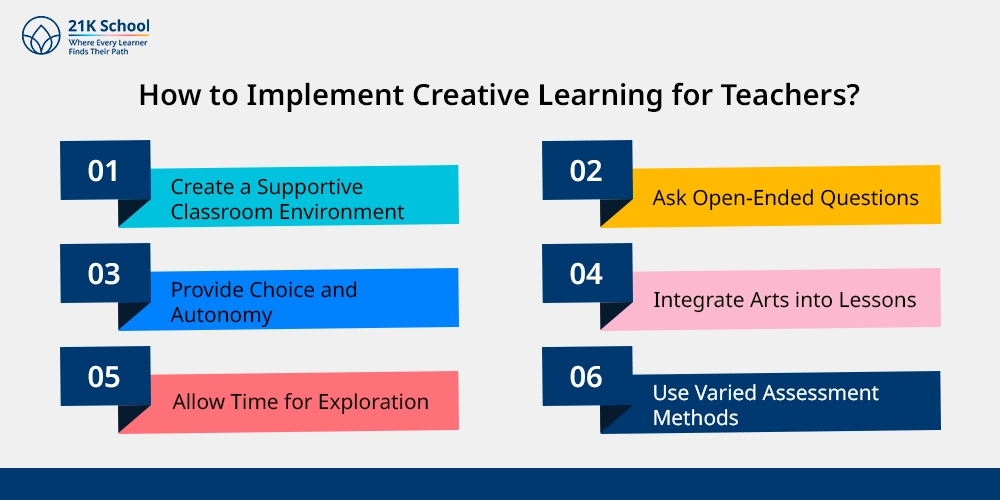
Teachers can apply creative learning to make it more interesting and meaningful to the students.
Teachers can enhance the classroom by creating a flexible teaching approach, exploring and encouraging the ideas of students and facilitating a classroom environment that encourages creativity, curiosity, and active participation in the learning process. This is the way instructors will be able to use creative learning.
1. Create a Supportive Classroom Environment
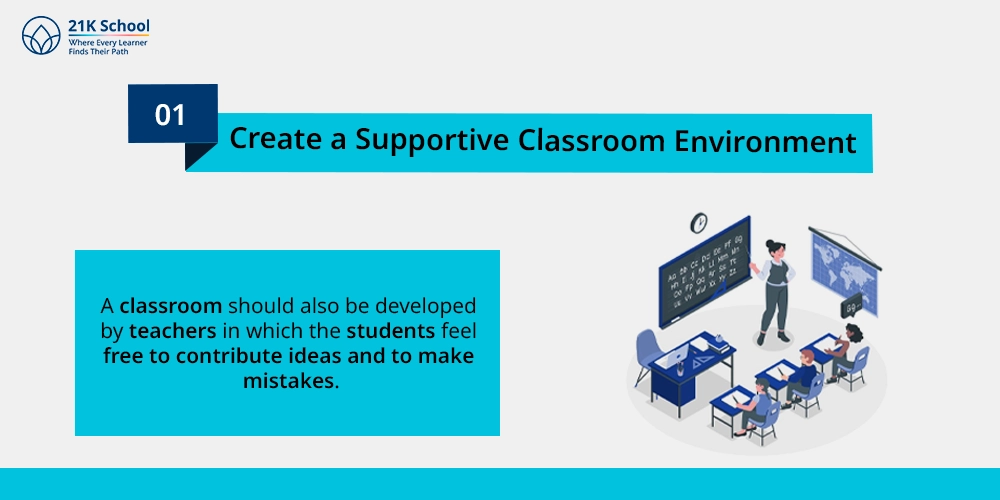
A classroom should also be developed by teachers in which the students feel free to contribute ideas and to make mistakes.
Positive feedback, respect and encouragement will help the students to be creative without fear. A positive learning environment fosters trust, confidence, and encourages the student to engage in creative learning processes.
2. Ask Open-Ended Questions
Open-ended questions make students think and be able to share their thoughts. Students are not expected to have a single correct answer, but rather they are expected to search a variety of possibilities.
This method allows critical thinking, discussion, and imagination and enables teachers to get a better insight into the thought processes and learning styles of students.
3. Provide Choice and Autonomy
Providing students with option of topics, activities, or the methods of the presentation will enhance the involvement and ownership of the learning.
Autonomy assists the students in investigating their interests and talents. Students also become responsible in learning, more motivated, creative and confident when they make decisions.
4. Integrate Arts into Lessons
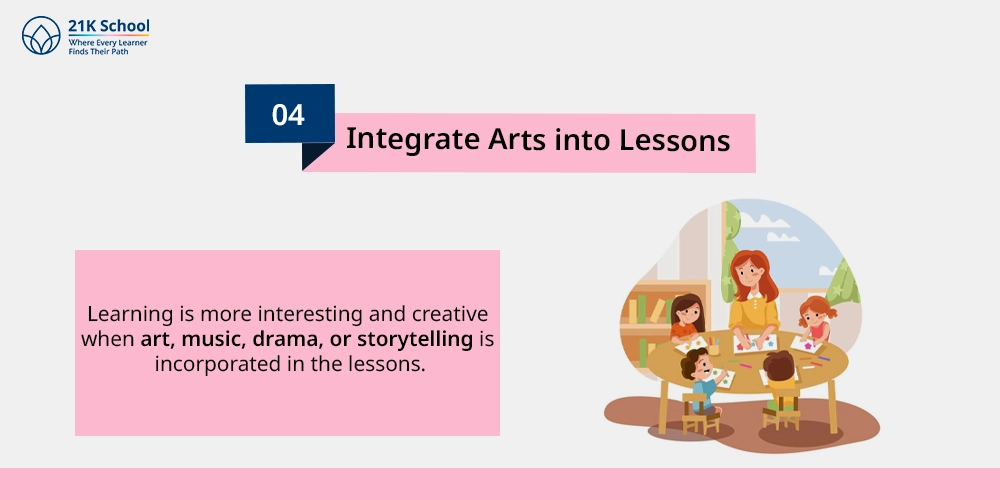
Learning is more interesting and creative when art, music, drama, or storytelling is incorporated in the lessons. Arts help students to express themselves differently and improve understanding.
Such a method allows conveying emotions, fantasy, and imagination and also makes the academic material more enjoyable and easier to remember.
5. Allow Time for Exploration
The learners need to experiment, think and speculate. Exploration would be helpful to guide the students in seeking solutions by themselves and learning from mistakes.
This style encourages inquisitiveness, patience and understanding and encourages innovative thinking.
6. Use Varied Assessment Methods
Through creativity, students can show learning by applying different assessment methods to portray learning, which include projects, presentations, and portfolios, as well as discussion.
It values other forms of talents and learning styles. Differentiated tests helps in stress management and offer general knowledge and enhancement of the student.
Final Thought
Creative learning is beneficial to the students by making it enjoyable, entertaining, and useful. It promotes curiosity in childrens , creativity and independent thinking since it places emphasis on practical activities and experiences.
Using imaginative approaches and exercises, students acquire valuable skills such as problem-solving, critical thinking and confidence.
Creative learning is also better in enhancing understanding, motivation, and general academic performance and making students intellectually, emotionally, and socially developed and ready for challenges in the future.

You may also want to read